Indigo Bunting or Lazuli Bunting?
Here's how to tell the difference


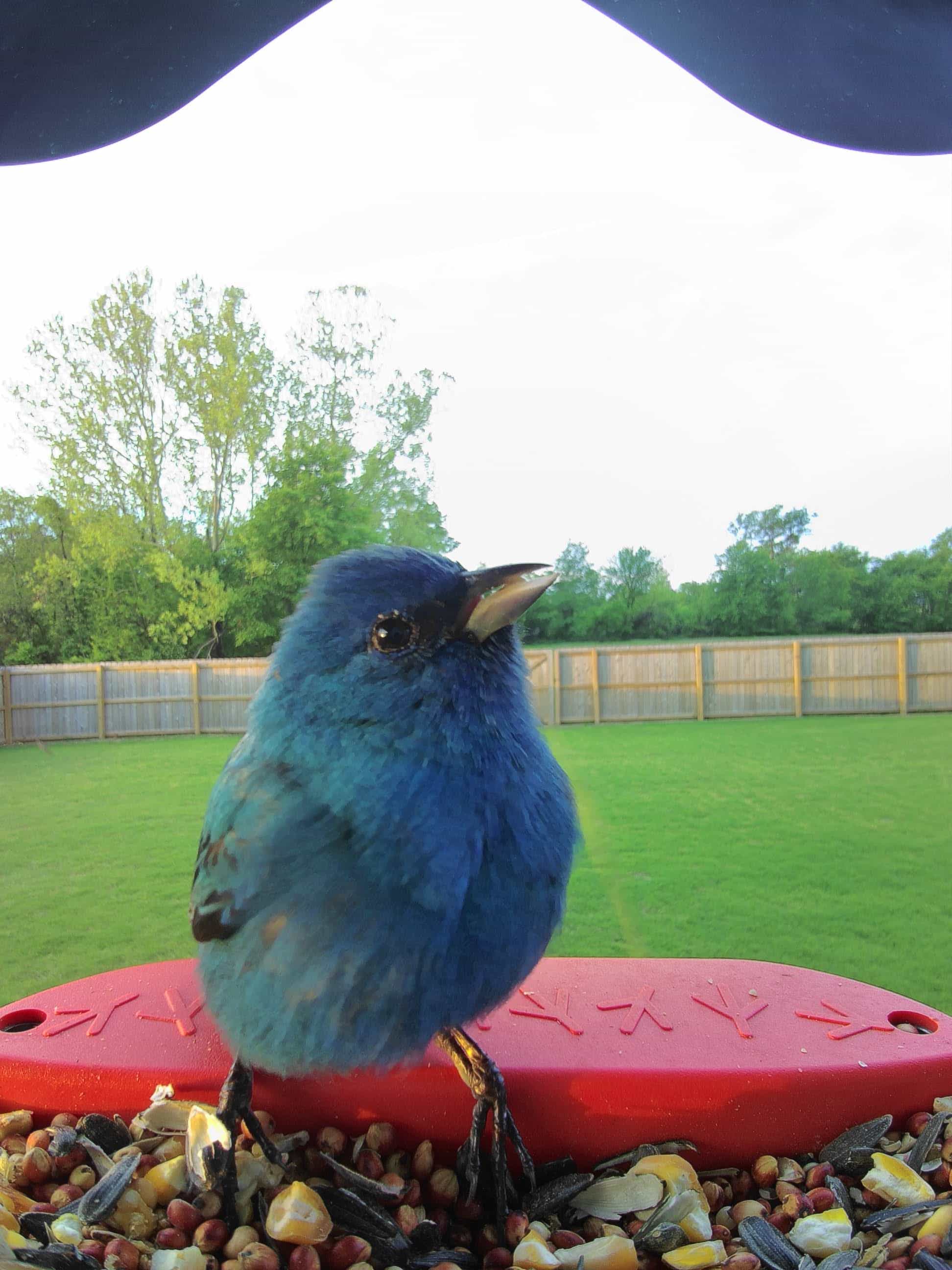


Indigo Bunting
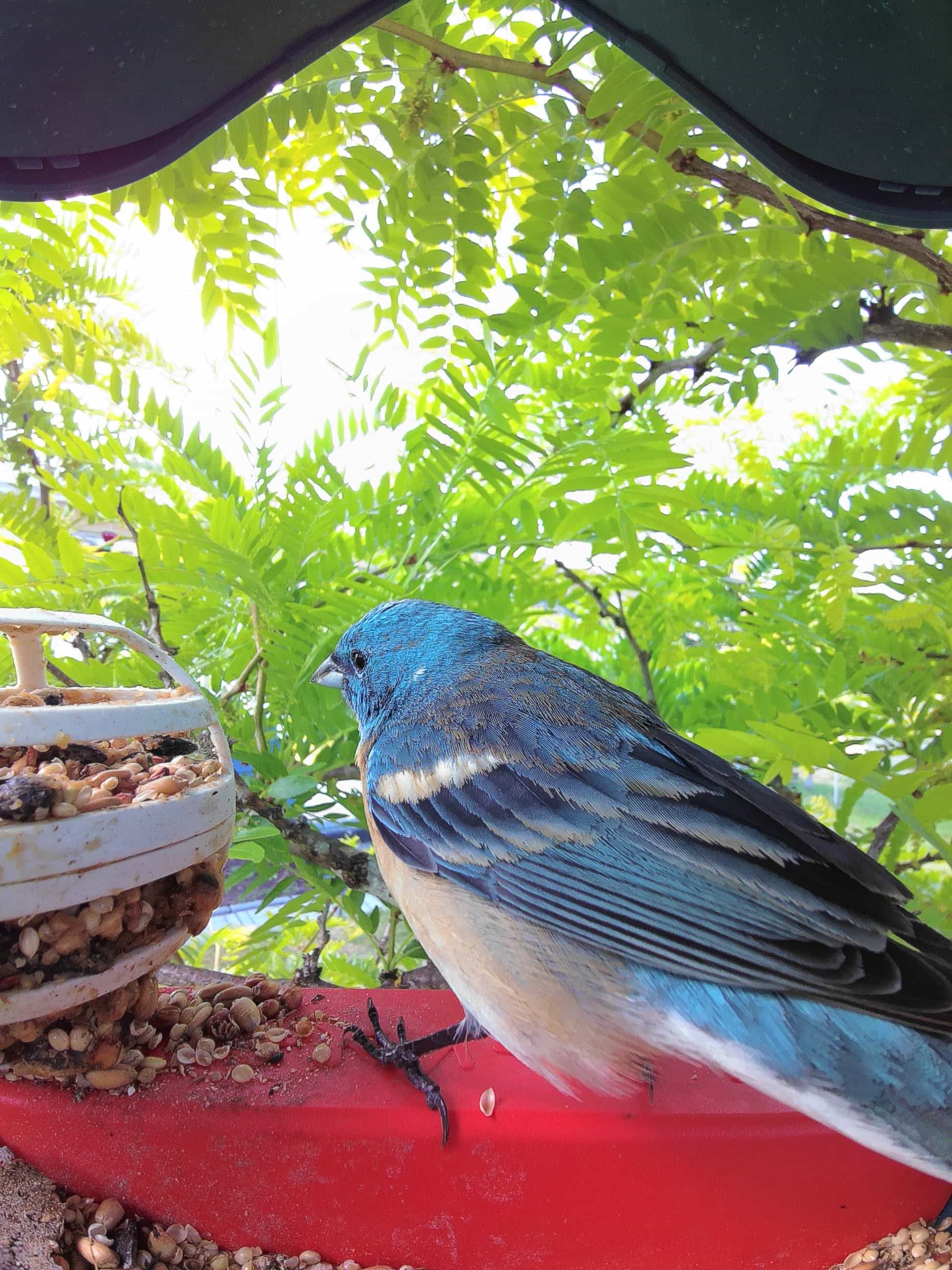


Lazuli Bunting
Indigo Bunting
Passerina cyanea
General appearance
The Indigo Bunting is characterized by a size comparable to a Sparrow, around 5 1/2 inches or 14 cm. Its main features include a rounded wing shape and a tail which can be notched, squared or rounded. Some seasonal variations can influence its coloration.
Male vs female
Adult males stand out with a dark blue color in spring/summer. However, during autumn, males along with females transition to a brown tone. They normally exhibit fine streaks on their chest and a blue tinge on their tail.
Juvenile
One-year-old males during summer could exhibit a distinctive marking, taking on a blue shade interspersed with a white belly. This can make them unique compared to their adult counterparts.
Size
4.7 - 5.1 in/0.4 - 0.6 oz
There's more to learn about Indigo Bunting
View full detailsLazuli Bunting
Passerina amoena
General appearance
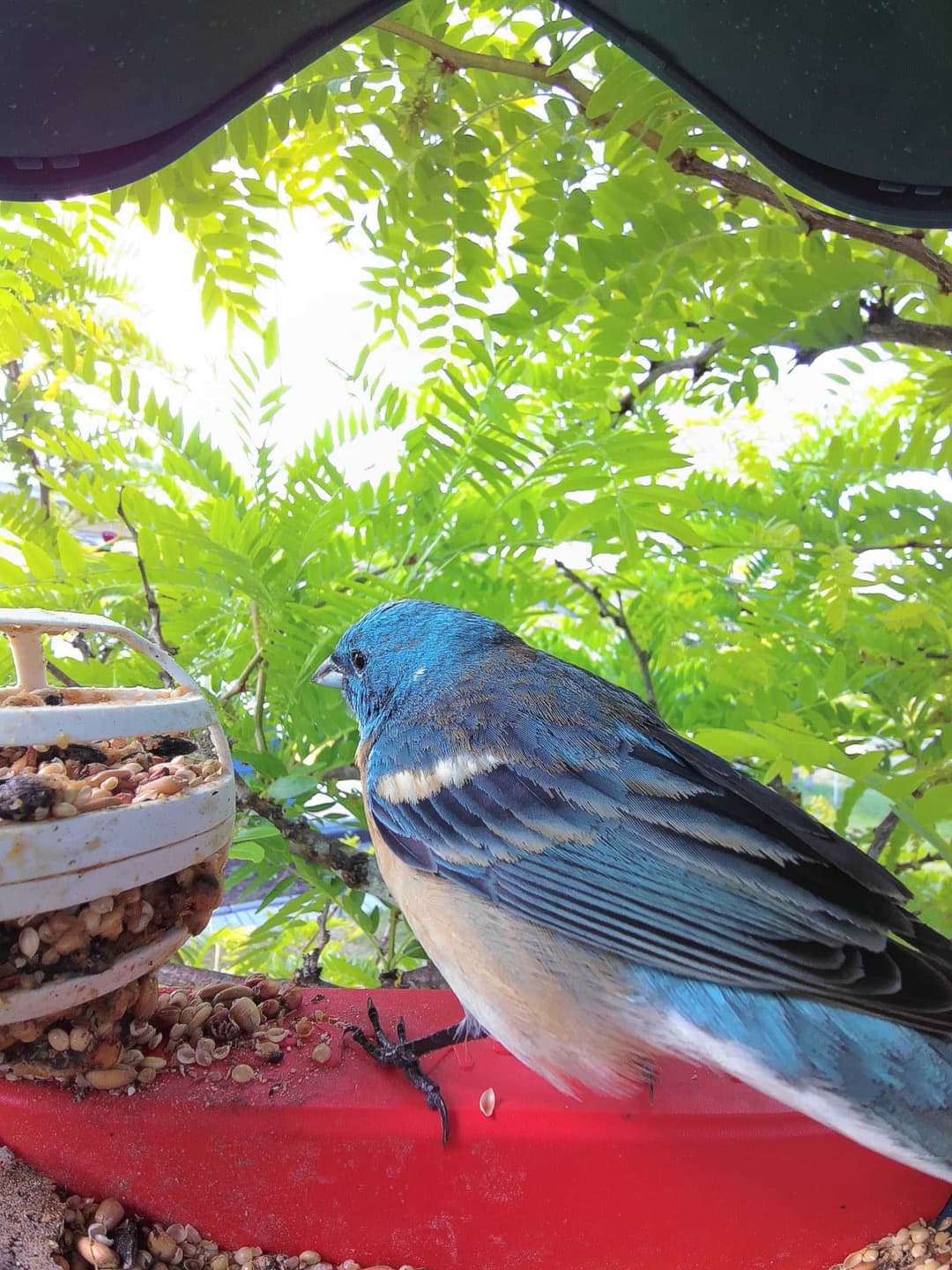
The lazuli bunting is a small passerine bird with a compact body and a distinctive blue and orange coloration. Its short, conical bill is well-suited for seed-eating. The bird's wings and tail feathers are dark with bluish edges, offering a striking contrast to its vibrant body colors.
Male vs female
Males are renowned for their bright blue plumage on the head and back, contrasting with a vivid orange breast and white belly. Females, however, are more subdued with brownish tones overall, tinges of blue on the wings and tail, and paler underparts. This sexual dimorphism helps in easy identification.
Juvenile
Juvenile lazuli buntings resemble females in their coloration with predominantly brown feathers. As they mature, young males gradually develop the characteristic blue and orange plumage seen in adults. During this transition, they may exhibit a patchy mix of brown and emerging blue feathers.
Size
5.1 - 5.9 in/0.5 - 0.6 oz
There's more to learn about Lazuli Bunting
View full detailsHow to tell the Indigo Bunting from the Lazuli Bunting
Visual differences
The Indigo Bunting is smaller, about 5 to 5 1/2 inches long, while the Lazuli Bunting is slightly larger, around 5 1/4 to 6 inches. Adult male Indigo Buntings are a uniform deep blue, whereas male Lazuli Buntings have a bright blue head and back with an orange breast and white belly. Female Indigo Buntings are more uniformly brown with a hint of blue, while female Lazulis are brown with pale undersides and hints of blue on the wings and tail. Both species have short, conical bills, but Lazuli Buntings have darker wing and tail edges.
Key differences and behavior
Indigo and Lazuli Buntings, both small seed and insect-eating passerines, differ notably in their behavior and habitat preferences. Indigo Buntings breed in brushy pastures and wood edges, often sing communally, and navigate using star patterns, reflecting their nocturnal migration habits. In contrast, Lazuli Buntings prefer open grassy areas and form unique song neighborhoods, defending territories even from Indigo Buntings in overlapping ranges. Both species adapt their diets seasonally, favoring insects in summer, but show slight variations; Lazuli Buntings consume weed seeds and waste grain in winter. Breeding behaviors also differ; Indigo males may mate with multiple females per territory, while Lazuli males are more territorial. These differences aid in field identification beyond their distinct songs and coloration.
Still not sure? Here are more lookalikes!
Indigo Bunting vs Painted Bunting
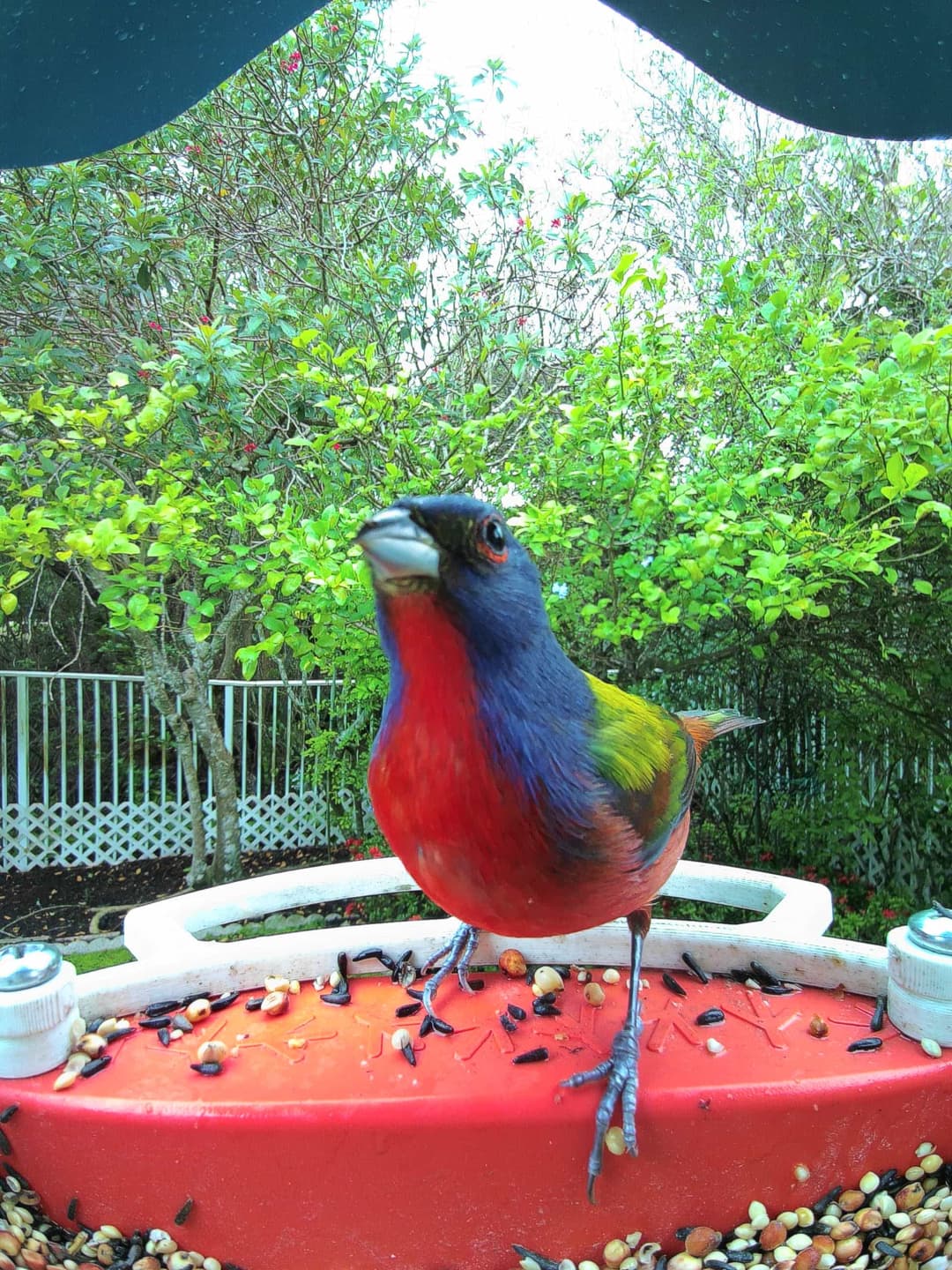
Indigo Bunting vs Eastern Bluebird

Indigo Bunting vs House Sparrow
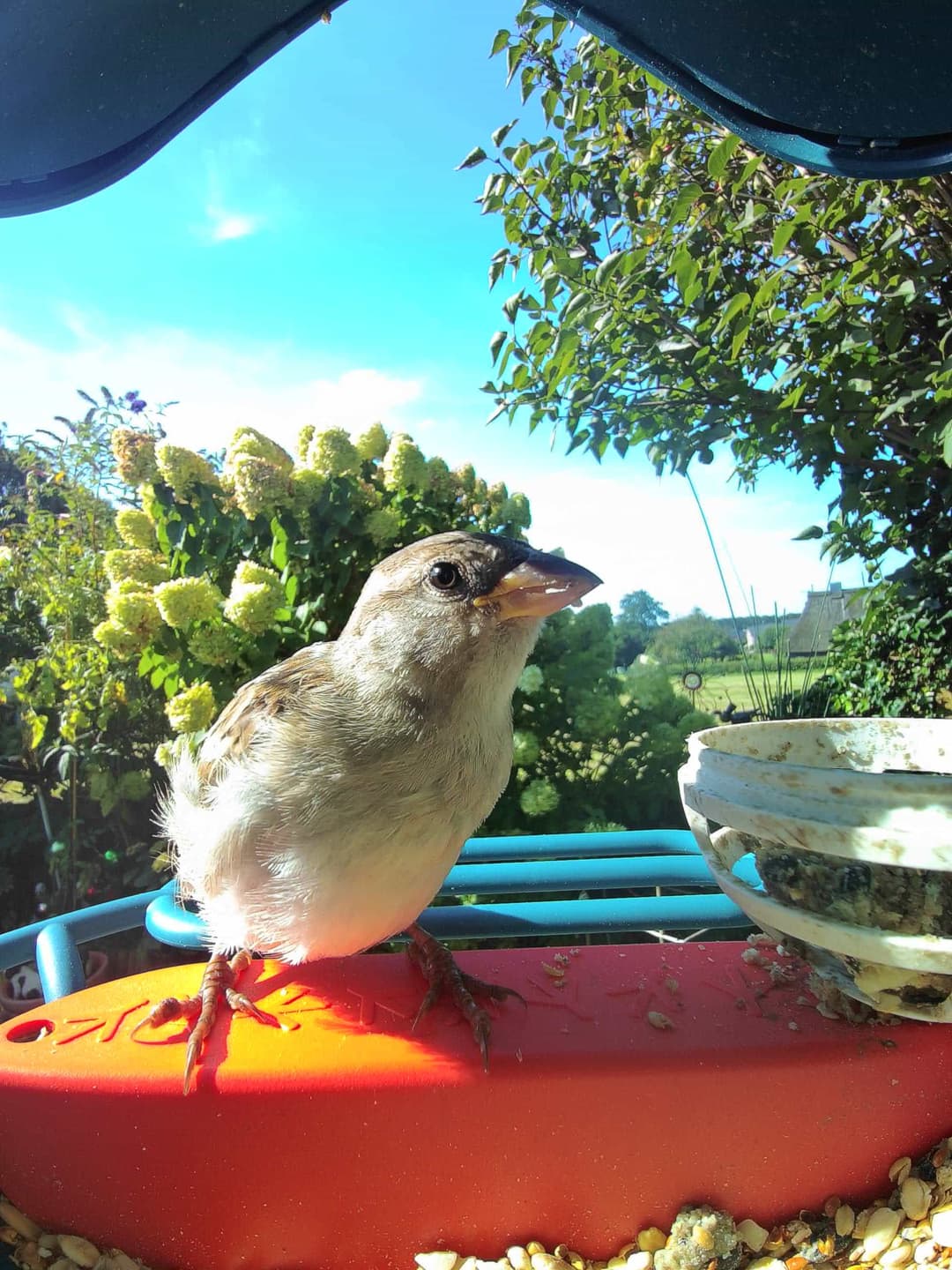
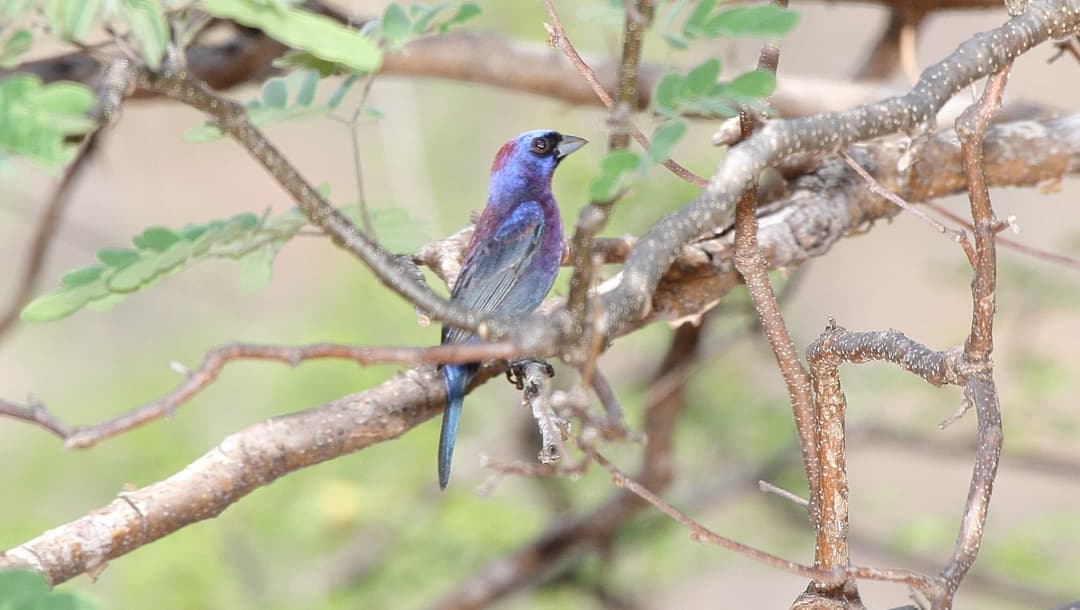
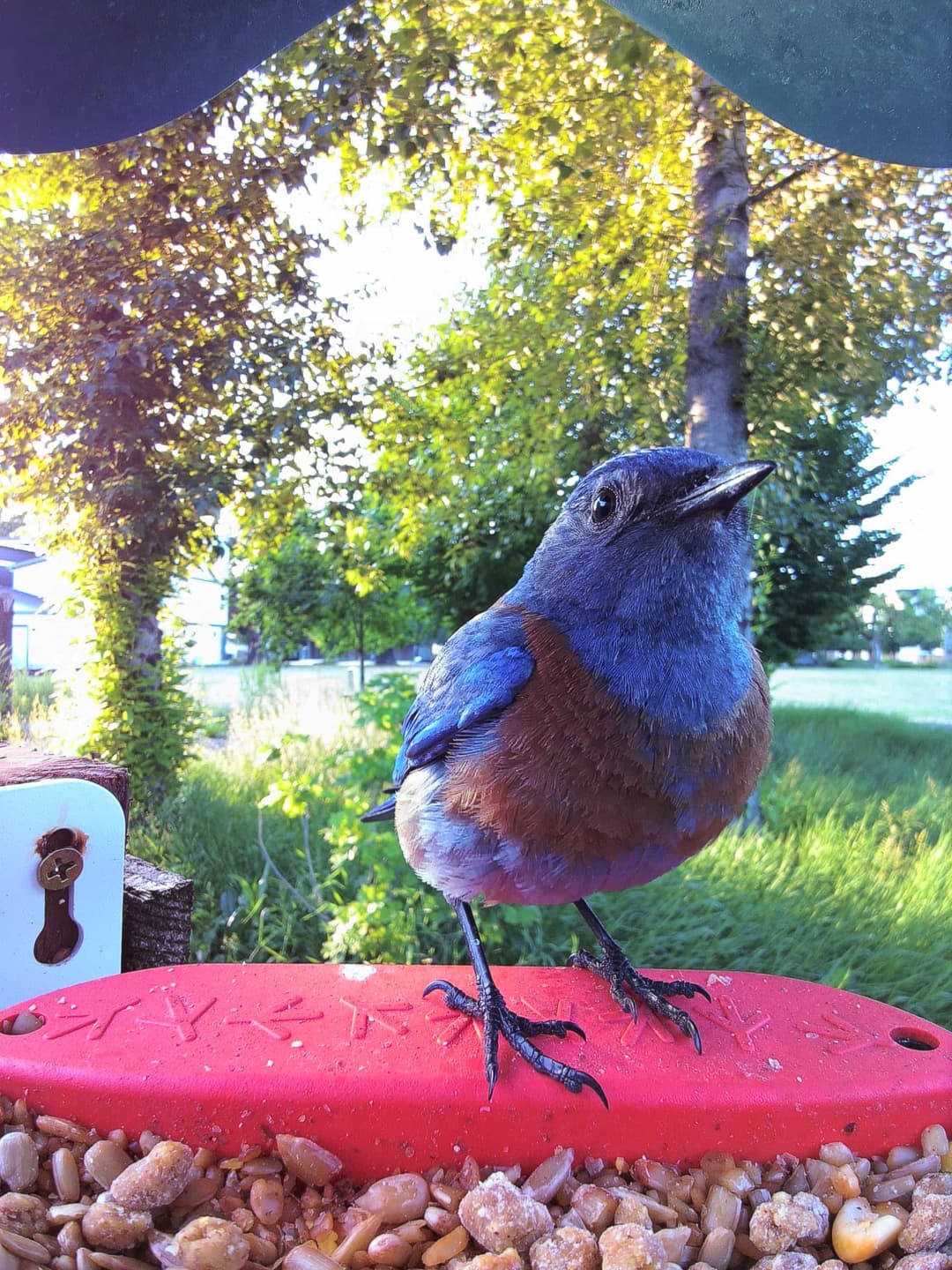
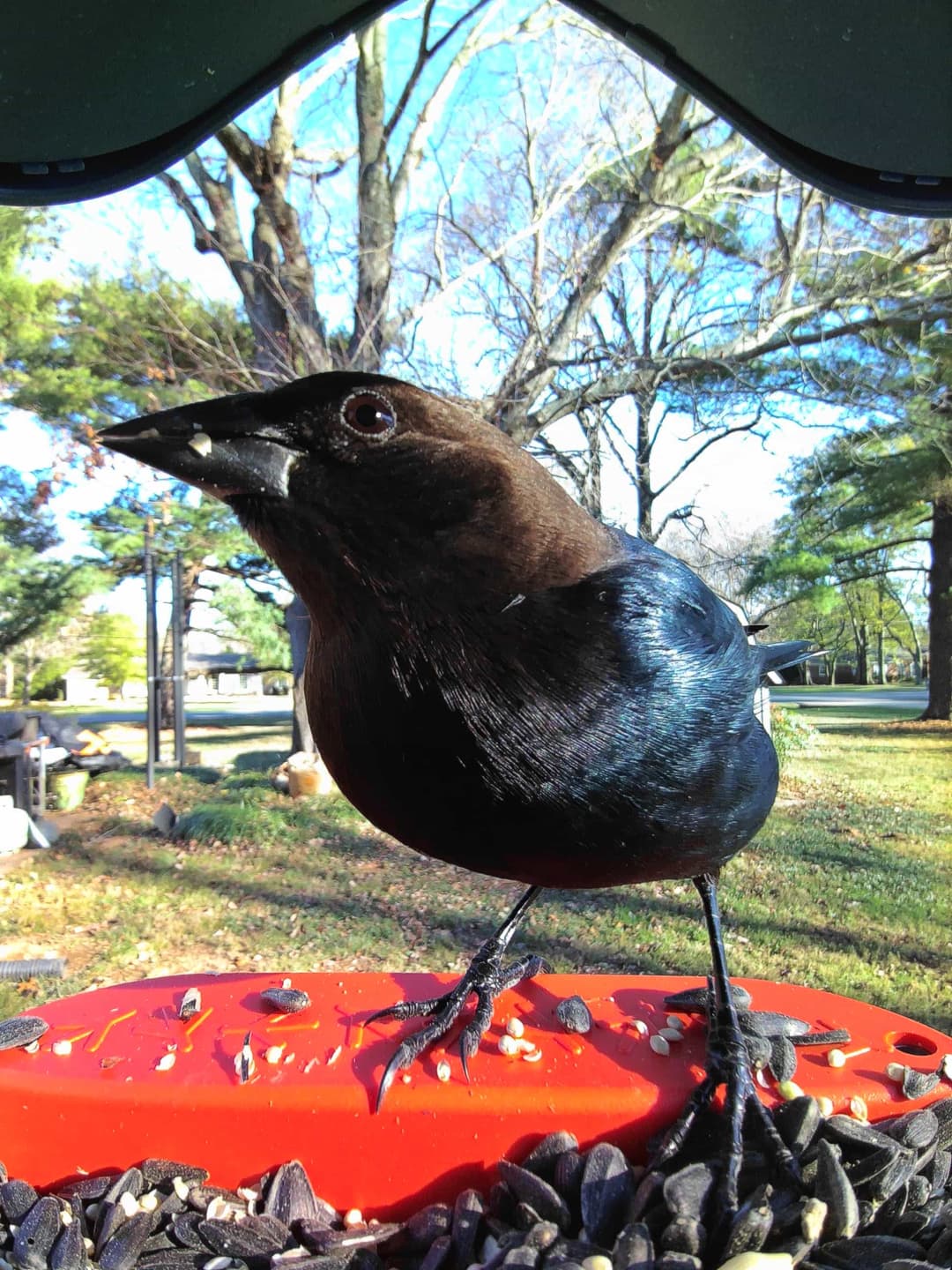
Lazuli Bunting vs Brown-Headed Cowbird
Indigo Bunting vs [Select a bird]

[Select a bird]
Pick a bird to compare
Lazuli Bunting vs [Select a bird]
[Select a bird]
Pick a bird to compare