
Eastern Bluebird
Eastern Bluebird
Sialia sialis


Quick Identification guide
Quick Identification guide
Male
- •
vivid blue upperparts including the head, wings, and tail
- •
A bright rust-orange throat and breast
- •
white belly and undertail coverts providing contrast with the darker upperparts
Female
- •
soft blue wings and tail with a more subdued tone compared to the male
- •
muted orange-brown throat and breast giving a softer appearance
- •
grayish belly and crown complementing the overall pastel coloration
What does an eastern bluebird sound like?
The Eastern Bluebird's vocalizations are typically musical, featuring a liquid blend of 'turee' or 'queedle' sounds. Its song is a soft, melodious warble. The call patterns can be falling, flat, or undulating, alternating between chirps or chips and whistles. This symphony of sounds helps to identify the Eastern Bluebird distinctly.


Description
Did you know that Eastern bluebirds are considered the harbingers of spring? These birds are blue all over; their eggs are also pale blue! They've got a remarkably good eye and can spot caterpillars in the tall grass from as far as 50 yards! And when they spot one, away they go, reaching speeds of up to 17 miles per hour.
The eastern bluebird can weigh between 28to32grams and be from16to21centimeters tall.
The typical lifespan of an Eastern Bluebird is approximately 6-10 years. This is fairly long compared to most songbirds however, it is similar to related birds like western and mountain bluebirds that have similar lifespans. Majority of bluebirds don't get to live this long due to predation, disease, and extreme weather. The oldest recorded Eastern Bluebird lived to be 10 years 5 months old.
Did you know?
Most popular questions about eastern bluebird
How to recognise an eastern bluebird?
General appearance
The eastern bluebird is a small bird around 17cm long, roughly the size of a Robin or a Sparrow. Its most distinctive features are its bright blue back and wings and its reddish-brown throat and chest. The bird's belly is white with the overall wing shape being rounded. Its tail is either notched or ends with a square tip.
Male vs female
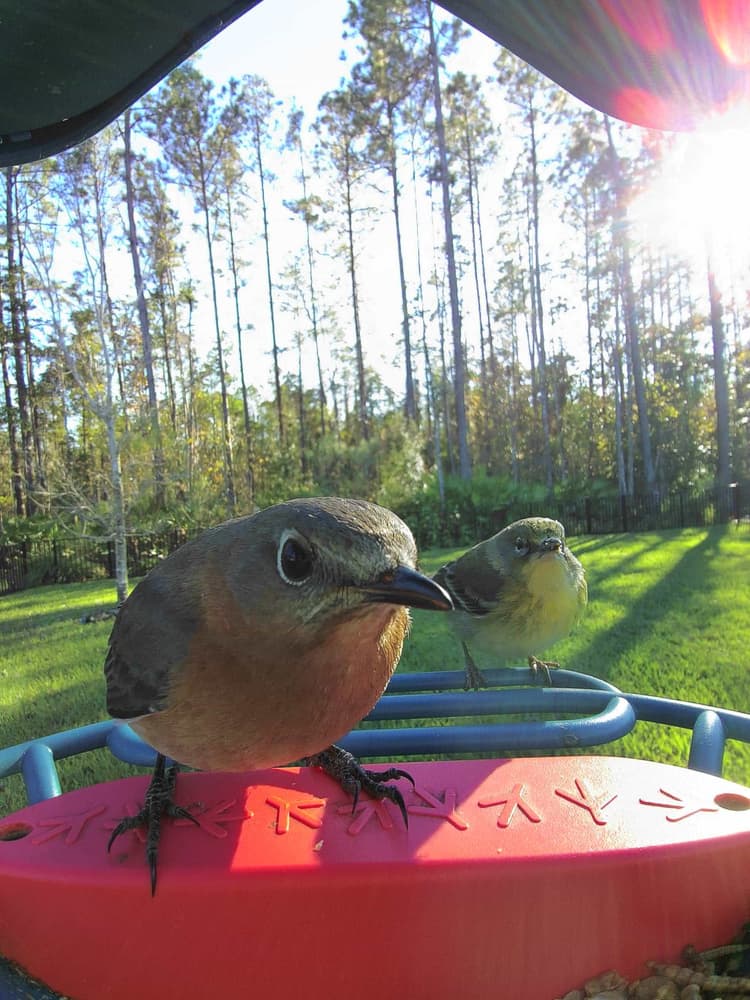
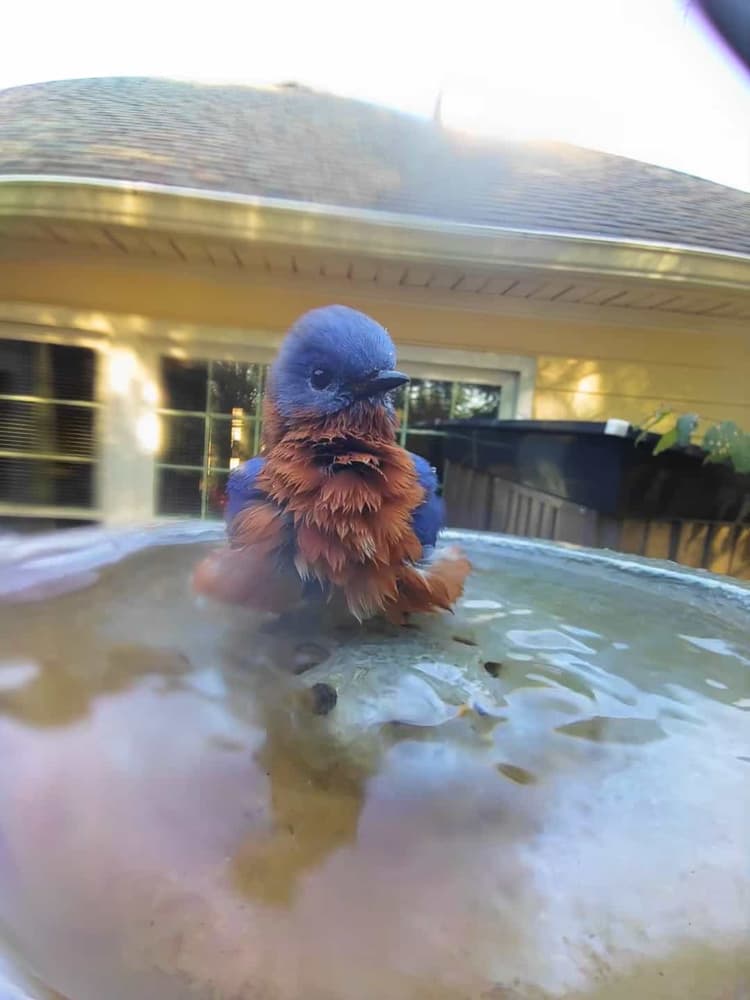
Both male and female eastern bluebirds share the same general features, though the female is generally paler and duller than the male. Delicate variations in hues are a key way to differentiate between the sexes.
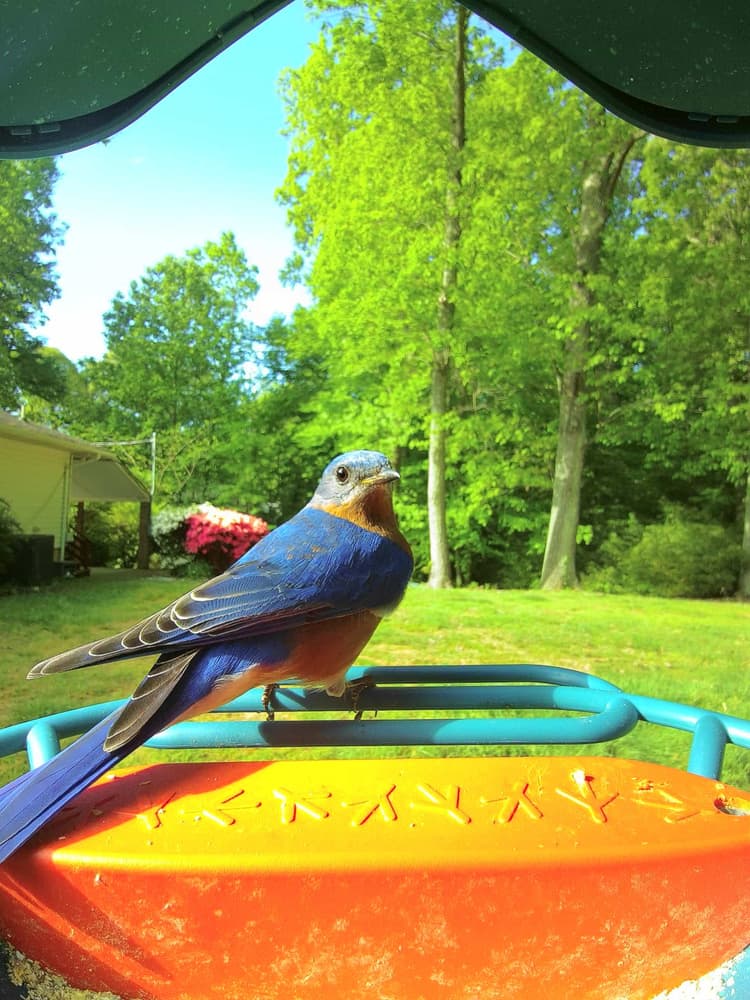
Male Eastern Bluebird
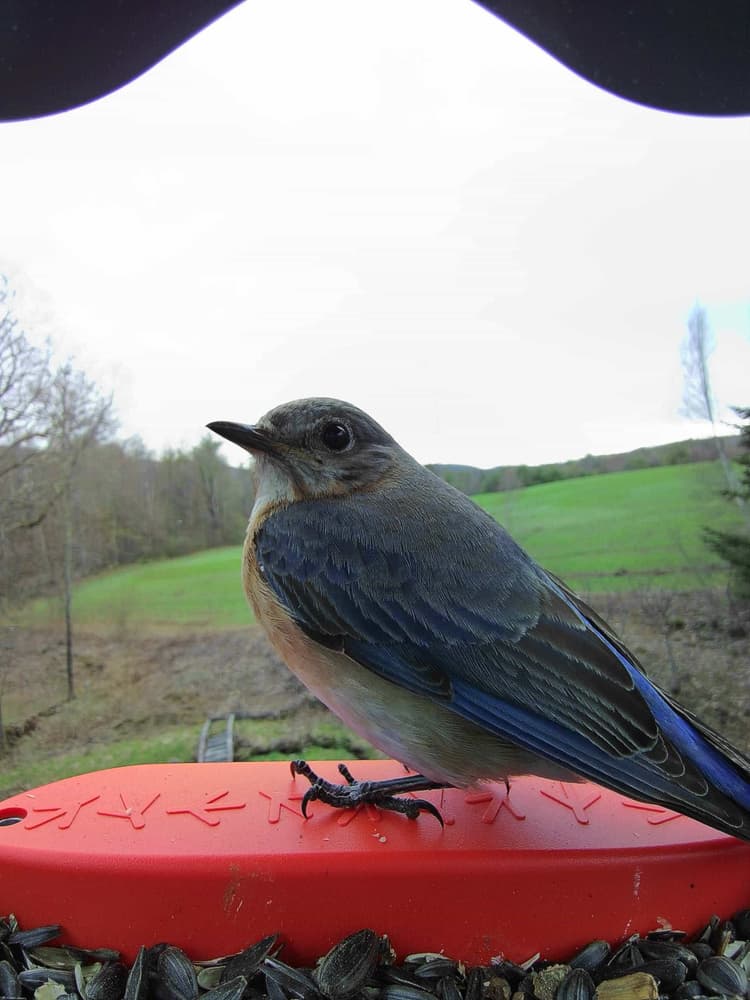
Female Eastern Bluebird
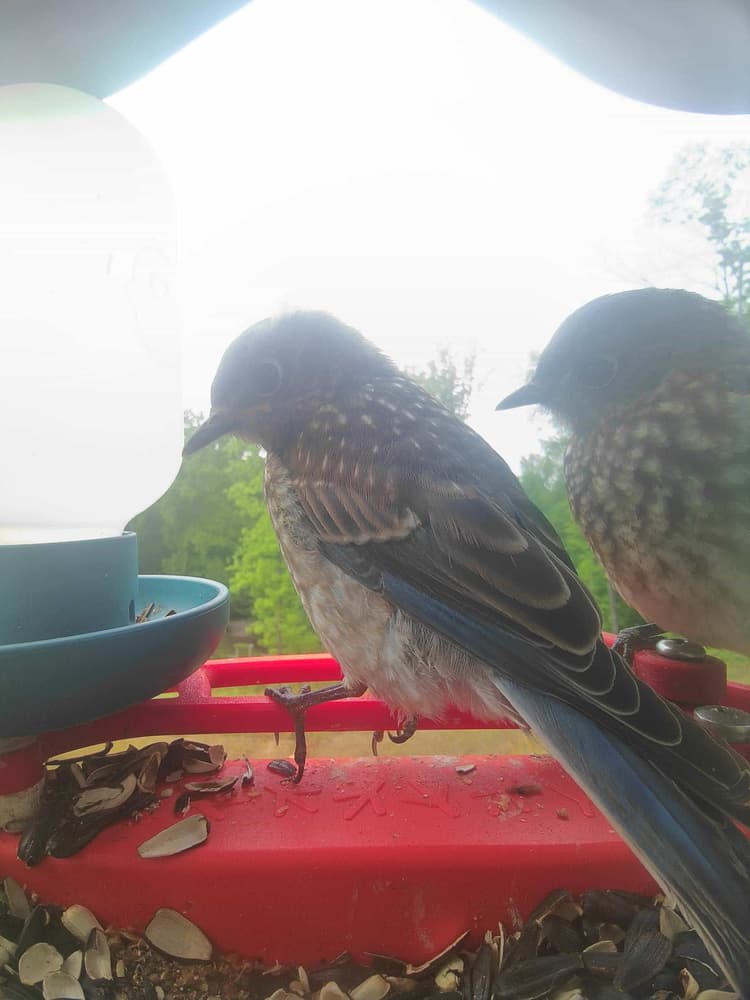
Juvenile
Juvenile eastern bluebirds can be identified by their spotted appearance, which is significantly heavier than that of adults. They also have tell-tale traces of blue above, indicative of the bright blue coloration they will develop as adults.
Often mistaken for
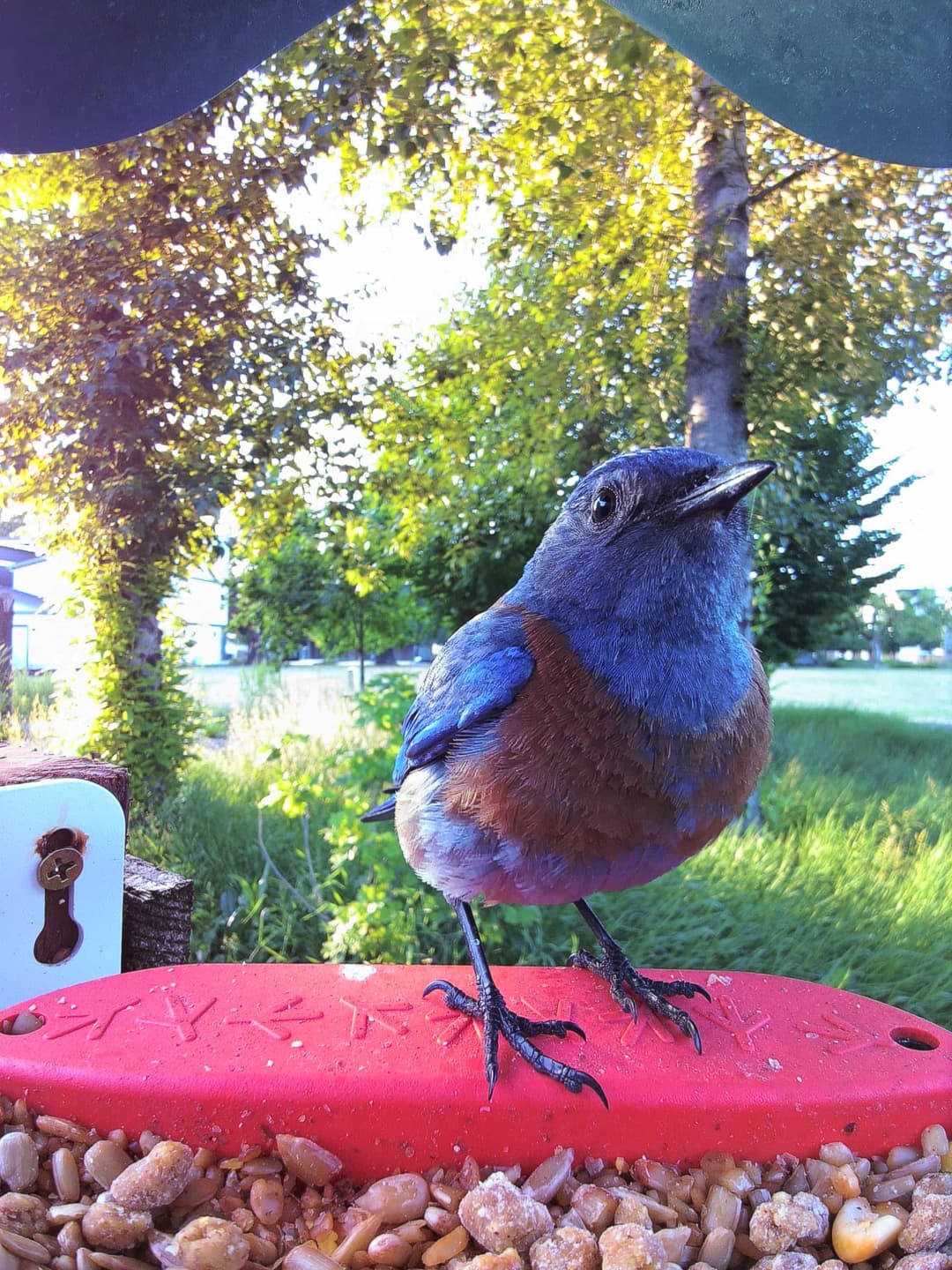
Western Bluebird vs Eastern Bluebird
Eastern Bluebirds have a brighter blue upper body and a rusty throat and breast, while Western Bluebirds exhibit a more muted blue with an orange-red chest. Western Bluebirds also have a blue throat rather than a rusty one like the Eastern.
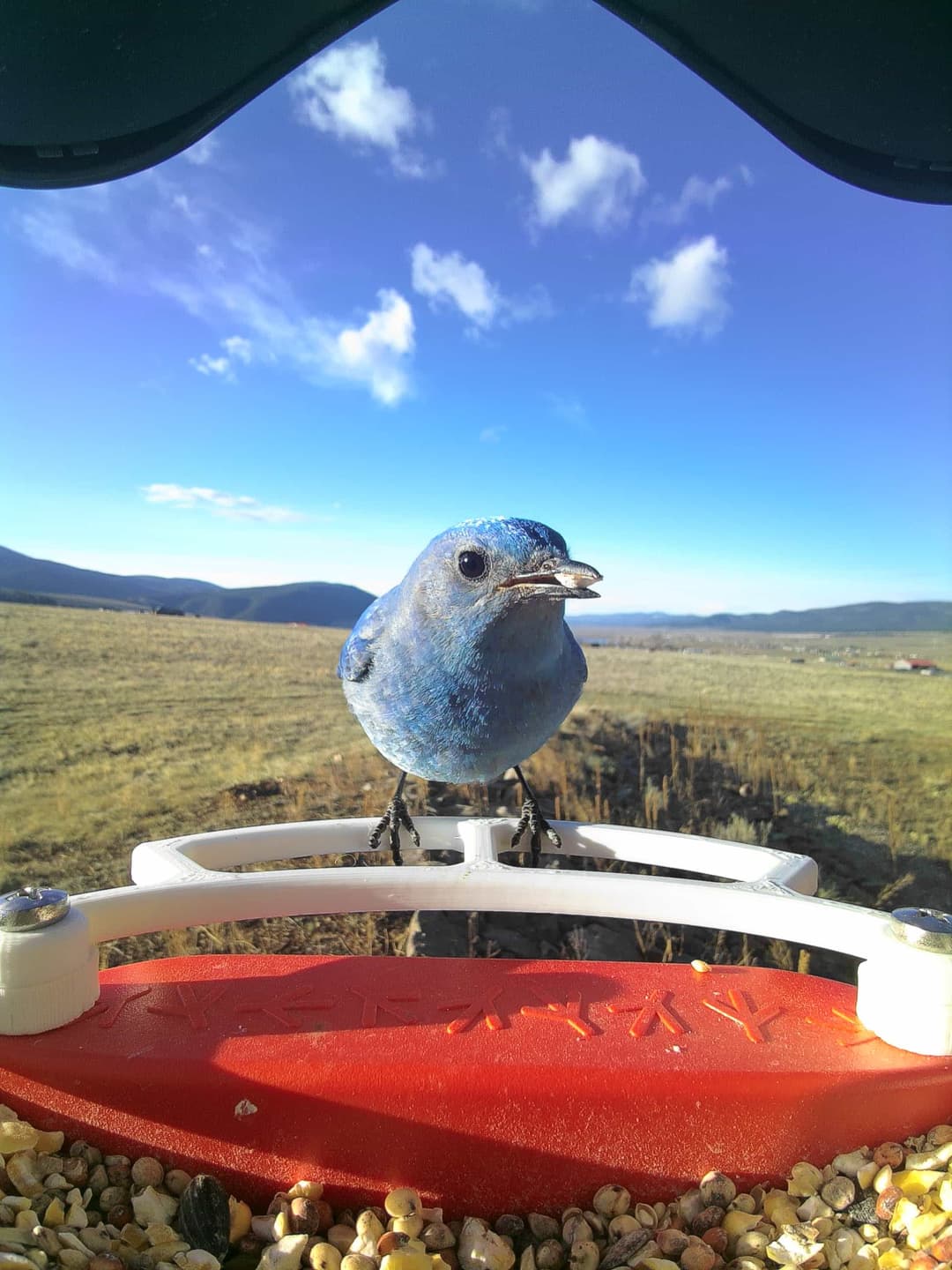
Mountain Bluebird vs Eastern Bluebird
Mountain Bluebirds are slightly larger with a sky-blue coloring all over their bodies, unlike the orange-breasted Eastern Bluebird. The Mountain Bluebird also lacks the rusty coloration on the chest and throat seen in Eastern Bluebirds.
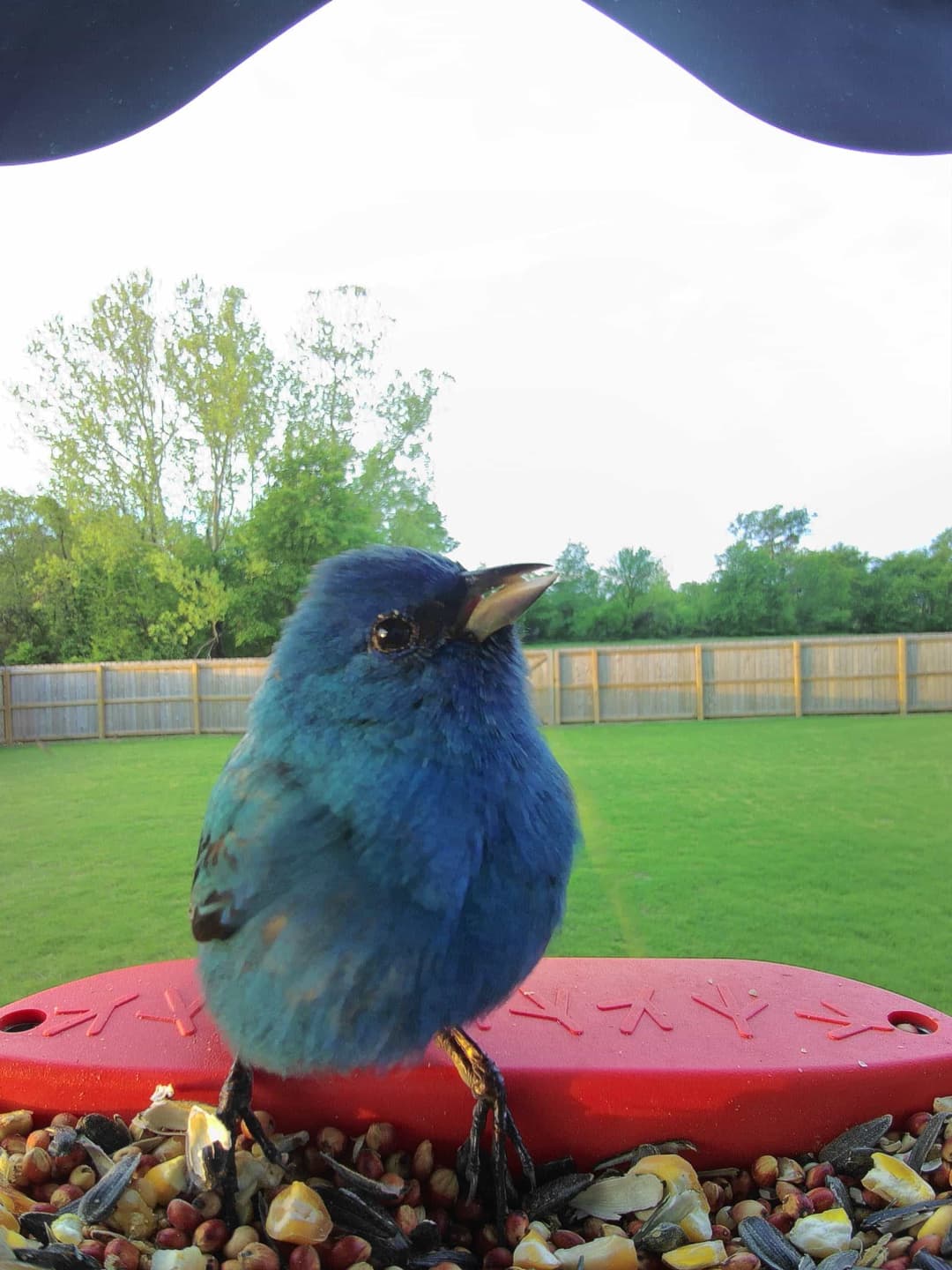
Indigo Bunting vs Eastern Bluebird
Indigo Buntings are smaller, entirely vibrant blue without the orange chest attribute of Eastern Bluebirds. Additionally, Indigo Buntings have a more uniform dark blue plumage compared to the contrasting colors of Eastern Bluebirds.
Breeding and nesting habits of the eastern bluebird
Mating behaviors
During courtship, the male eastern bluebird sings and flutters in front of the female with partially spread wings and tail. Pairs often perch close together, preening each other's feathers. The male may also feed the female as a part of courtship rituals.
Nesting details
The eastern bluebird typically nests in cavities, such as natural tree hollows, old woodpecker holes, or birdhouses. Nests are often located fairly low, 2-20 feet above the ground, but can occasionally be up to 50 feet high. The female primarily constructs the nest, creating a loose cup made from weeds, twigs, and dry grass, with finer grass, animal hair, or feathers for lining.
Eggs and chick-rearing
The female eastern bluebird lays a clutch of eggs in the constructed nest. Throughout the incubation and chick-rearing phase, the parents work cooperatively to feed and care for the young until they are ready to fledge. Maintaining a well-vegetated area and providing birdhouses can encourage nesting in gardens.
What does an eastern bluebird like to eat?
Berries
Insects
Small animals
Snails
Spiders
Worms
Natural diet
The eastern bluebird predominantly feeds on a variety of insects and berries. It consumes insects such as crickets, grasshoppers, beetles, spiders, earthworms, and snails. Occasionally, it may also eat small lizards or tree frogs. During winter, berries become an essential part of its diet.
Bird feeders
While not primarily dependent on bird feeders, eastern bluebirds can be attracted with mealworms and berries. Providing suet or chopped fruits can also make feeders appealing to them.
Attract eastern bluebirds with their favorite snacks
Eastern Bluebirds are particularly fond of insects, fruits and berries. Mealworms are a common favorite which you could provide in your bird feeders. You can also put out fruits such as berries, raisins, and apple pieces in the feeder to make it more appealing. Experts from Bird Buddy recommend the use of their seasonal seeds that are found to be most effective in attracting these colorful creatures.
Choose the right type of feeder
Selecting the right kind of feeder is a crucial factor in attracting eastern bluebirds. They are known to prefer platform feeders, which allow them to see their food clearly. Tray feeders or feeders with a tray attachment are also good options. Additionally, having feeders with large perching areas can accommodate bluebirds as they perch with their bodies parallel to the feeder.
Create a bird-friendly environment
Aside from food, providing an inviting environment is also crucial. Install a birdhouse or nesting box, as eastern bluebirds often look for hollow tree cavities to nest in. Make sure to keep the area around your feeder quiet and safe from predators. Maintaining a clean space is also crucial - ensuring that feeders are cleaned regularly helps prevent the spread of diseases.
Fun tricks to encourage bluebird visits
You can try some fun tactics like playing a soft bird song or call to attract their attention. These bird sounds can often encourage them to sing along, creating a beautiful tune in your backyard. Remember, the objective is to create a comfortable and safe space for them, that they cannot resist visiting.
Where can you find eastern bluebirds?
Based on Birdbuddy sighting data. The heatmap shows where Birdbuddy users have spotted this species.
Embed this map
This map shows the full native range based on scientific range data.
Primary habitat
The eastern bluebird thrives in open, semi-open habitats like farmlands, open pine woods, and clearings in forests. It tends to breed in scattered trees within such environs.
Additional range
They can locally adapt to suburban settings with extensive lawns and suitable nesting sites. In winter, eastern bluebirds have been known to wander to other unspecified habitats.
Do they migrate?
The eastern bluebird exhibits partial migratory behavior, depending on the region it inhabits. In many southern areas, the eastern bluebird is a permanent resident and does not migrate, staying in place throughout the year. However, in northern regions of its range, the bird exhibits a migratory pattern. In the north, eastern bluebirds depart their breeding grounds in the fall as temperatures drop and food becomes less abundant. These birds then move southward to milder climates. The migration is generally regional, with northern populations shifting slightly south but remaining within the range of the eastern United States. Migratory eastern bluebirds head to locations where they can find sufficient food and warmer conditions. They often travel in small flocks and take a leisurely pace, stopping frequently to feed. Key areas where they might overwinter include southeastern parts of the United States such as the Carolinas, Georgia, and northern Florida. Their return migration north begins early in the spring, as they arrive at northern breeding territories quite early compared to some other bird species. This early arrival allows them to establish nesting territories and take advantage of the first available insect food sources.
What is the role of eastern bluebirds in nature and how to protect them?
Conservation status
The eastern bluebird has experienced significant population declines in the past due to habitat and nesting site loss, making it vulnerable. However, in recent decades, its numbers have been increasing, thanks in large part to the widespread installation of birdhouses, which provide essential nesting sites. This conservation effort has proven effective in stabilizing and even boosting eastern bluebird populations in many areas. Although not currently endangered, maintaining suitable habitats and continuing conservation efforts remain crucial to combat ongoing threats to their habitats.
Ecological role of eastern bluebirds
Its role in the ecosystem
Eastern bluebirds serve important ecological roles, contributing significantly to pest control and seed dispersal within their ecosystem. They feed on a wide array of insects such as crickets, grasshoppers, and beetles, thus controlling the population of these pests that may otherwise damage crops or other ecological fauna. Additionally, they consume spiders, earthworms, snails, and rarely, small lizards or tree frogs, adding to their value in terms of controlling pest species or reducing competition. Apart from their diet of insects and other small invertebrates, eastern bluebirds also eat various types of berries. This dietary habit facilitates seed dispersal as the seeds consumed pass through their digestive system and are excreted in different areas, aiding in the spread of these plants. Furthermore, their nesting behavior, usually in natural hollows, old woodpecker holes, or birdhouses, can contribute to the structure and biodiversity of the ecosystem by reusing and recycling natural resources.
How to help protect eastern bluebirds
Preservation tips
Habitat preservation strategies
Promote the preservation of the eastern bluebird's natural habitat. Encourage rural landowners to dedicate some of their land for bluebird conservation. Installing nest boxes in backyard and community spaces can replicate their natural nesting sites. Planting native trees and shrubs that provide shelter, nesting material, and food sources is critical. Retain dead trees as they are utilized by bluebirds for nesting and foraging.
Community science initiatives
Create or participate in local eastern bluebird monitoring programs. Community members can contribute by observing and documenting bluebird behaviors and recording the location of sightings. These data are invaluable for tracking population trends and identifying key habitats. Also, essucational programs in schools and communities can raise awareness about the importance of bluebird conservation, and how to create backyard habitats for bluebirds.