
Painted Bunting
Painted Bunting
Passerina ciris


Quick Identification guide
Quick Identification guide
Male
- •
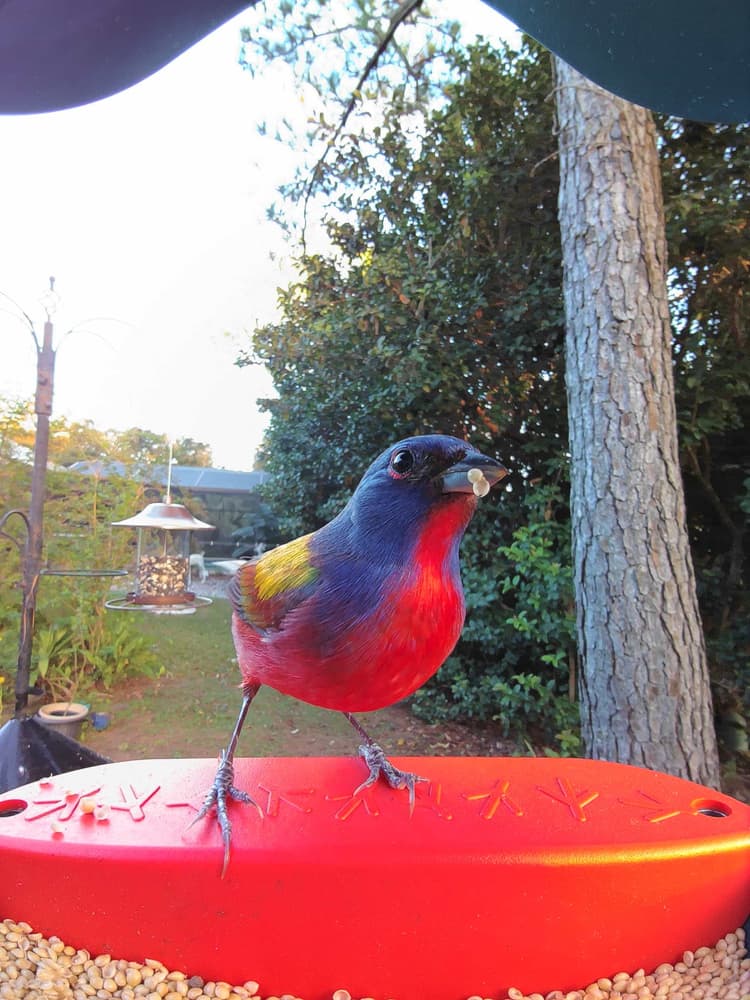
vivid blue head with a bright red underside that extends from the chest to the belly
- •
A green back that provides a vibrant contrast to the other colors
- •
A short, conical beak that is pale and typically seed-eating
Female
- •
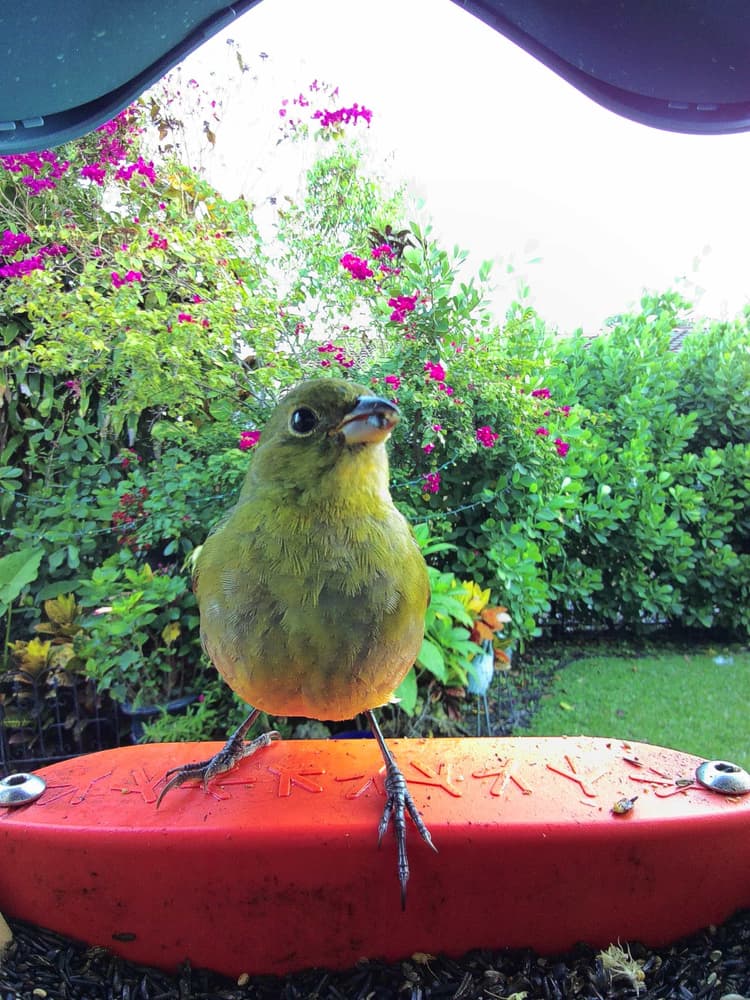
soft green plumage overall, which is more subdued compared to the male
- •
A slightly paler yellowish-green on the underside than on the back
- •
Shares the same short, conical beak as the male, adapted for seed consumption
What does a painted bunting sound like?
The painted bunting is known for its loud, clear, and variable song which consists of high-pitched musical notes, creating a complex and undulating melody. Its usual call is a sharp, metallic "tsick" sound. The call types include whistle-like sounds and chirps or chips, showcasing a diverse vocal range.


Description
Painted buntings are no doubt extremely cool-looking birds! You could say they are unlike any other, which is exactly what their name is in French – nonpareil, to be exact. Sadly, their bright colours mean they are often victims of illegal trade and, despite efforts, many are still caught and sold as cage birds. Only the males are multicoloured, while the females are an equally stunning bright green.
The painted bunting can weigh between 13to19grams and be from12to13centimeters tall.
The Painted Bunting typically lives up to 10 years, which is relatively long among songbirds. Their lifespan is significantly longer than the average 2-3 years typical in many sparrow species. However, they fall short of the lifespan of larger relatives like the Scarlet Tanager, which can live up to 15 years. Bunting survival rates highly depend on habitat conditions, threats from predators, and availability of food.
Did you know?
Most popular questions about painted bunting
How to recognise a painted bunting?
General appearance
The painted bunting is a uniquely colored bird about the size of a sparrow, with a size of 5 1/2" (14 cm). Its distinguishing physical traits include its bright, vibrant colors and its bill, which is thicker than those seen on other small greenish birds. Its wing shape is rounded and its tail can be notched, rounded or square-tipped.
Male vs female
There is a substantial difference in coloration between the male and female painted buntings. The adult male is unmistakable with a blue head, red throat and chest, and bright green back. These bold colors make the male easy to identify in the wild. The female, on the other hand, is plain green with no markings, making her more difficult to identify among other green birds.
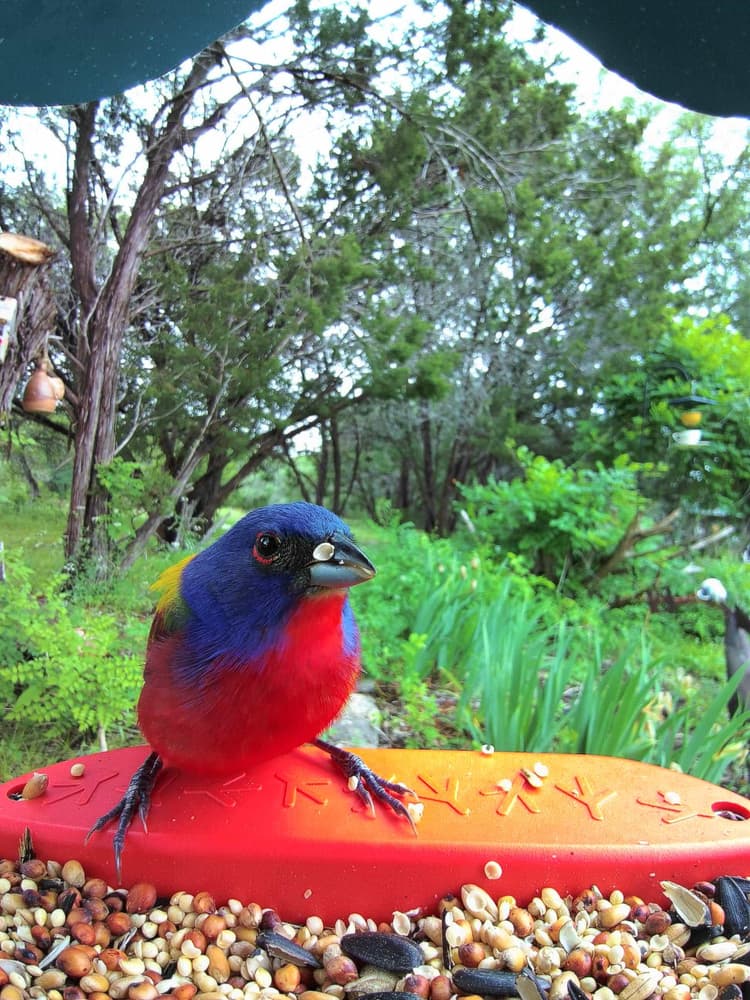
Male Painted Bunting
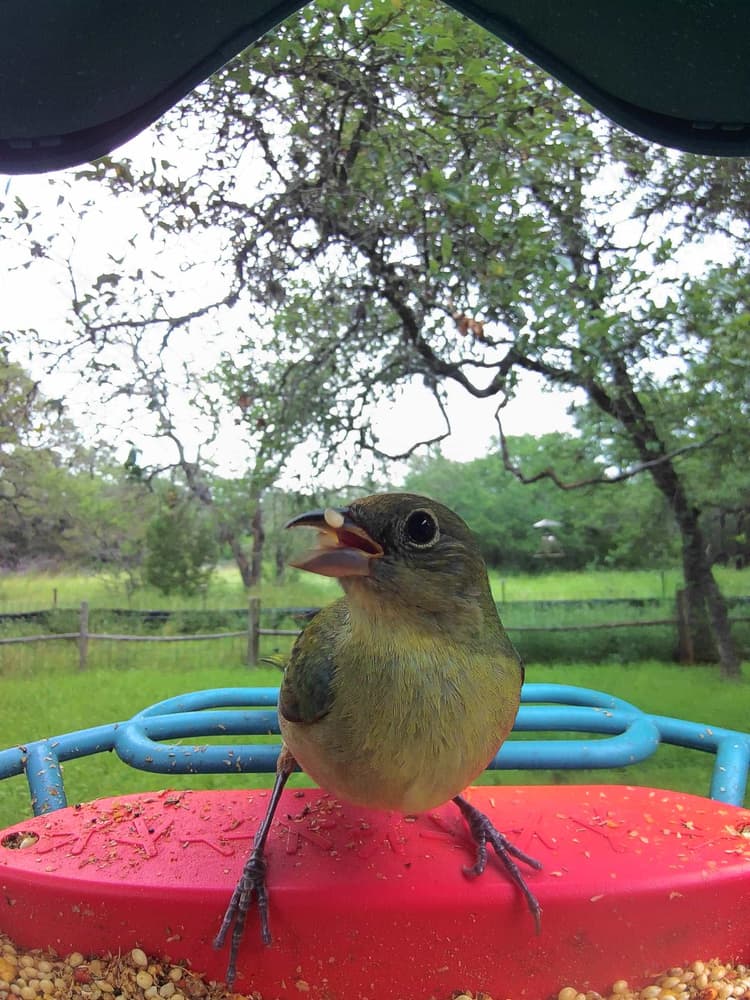
Female Painted Bunting
Juvenile
Juvenile painted buntings are much grayer than adult females at first, which distinguishes them from the adults. As they mature, their coloring gradually develops into either the striking colors of the adult male or the more discreet green of the female.
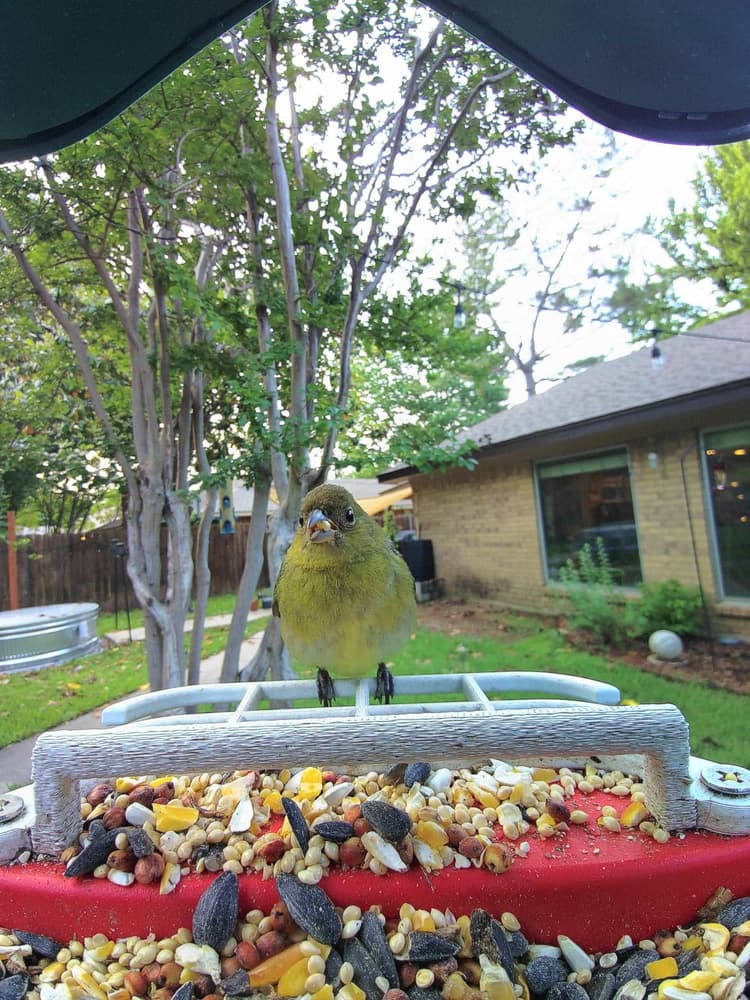
Often mistaken for
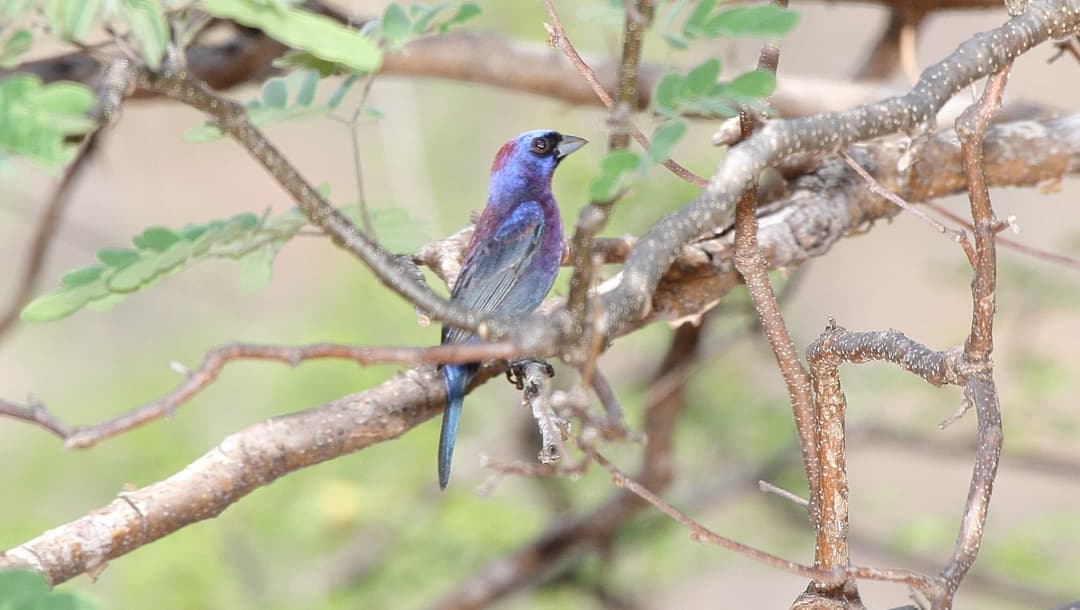
Varied Bunting vs Painted Bunting
Painted Bunting males are vibrant with a rainbow of colors including blue heads, red underparts, and green backs, whereas Varied Buntings are deep purples and blues. Females and juveniles of both are more muted, often greenish. Look for the male's distinctive color blend.
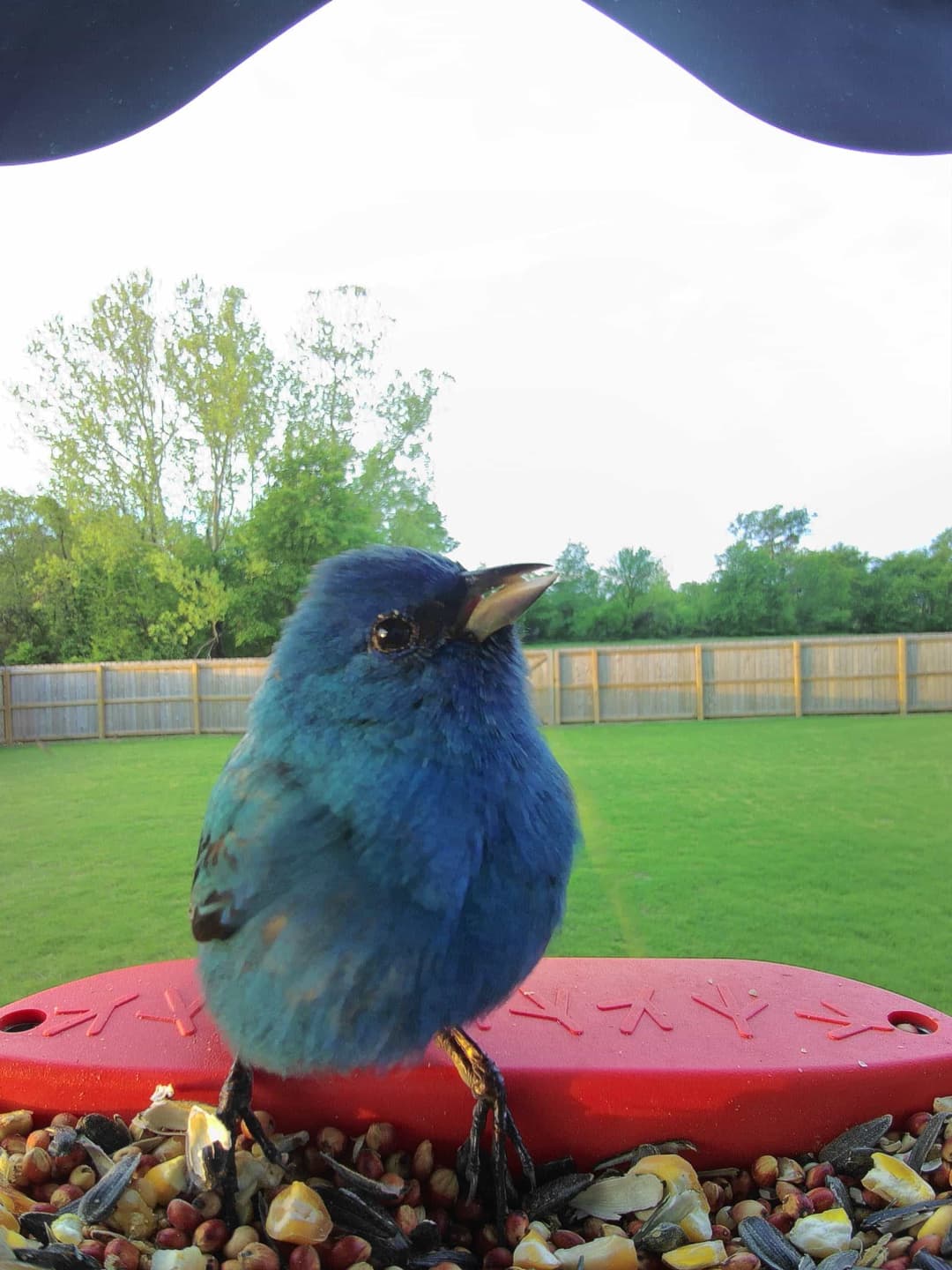
Indigo Bunting vs Painted Bunting
Indigo Bunting males are primarily deep blue all over, contrasting with Painted Bunting males that sport multiple colors. Female Indigo Buntings are brown, while female Painted Buntings are greenish. Consider the bird's overall color palette when identifying them.
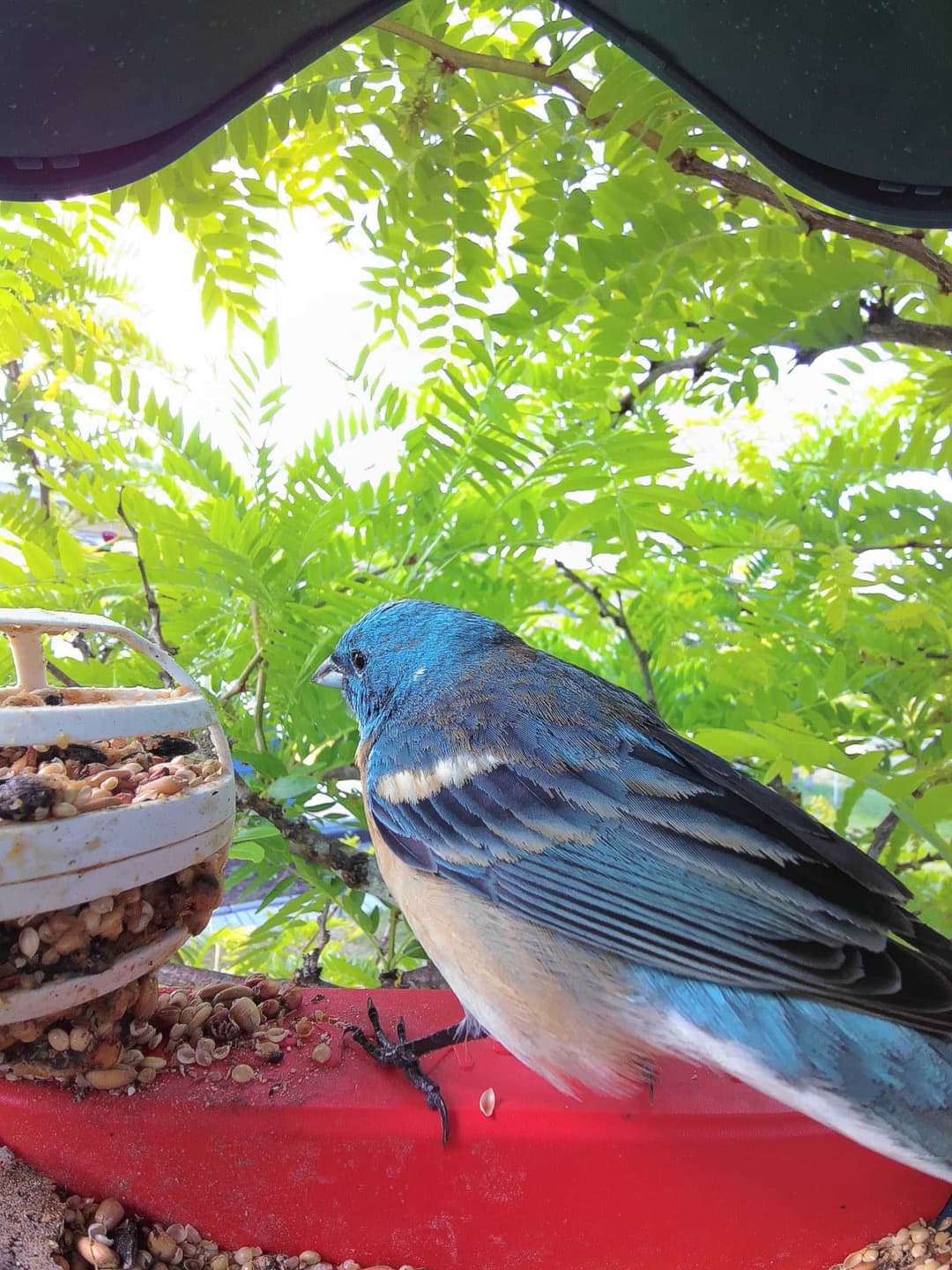
Lazuli Bunting vs Painted Bunting
Lazuli Bunting males have sky-blue heads and backs, orange breasts, and white bellies, unlike the Painted's rainbow hues. Female Lazulis are more orange-brown compared to the green-female Painted. Focus on the head and breast colors to distinguish them.
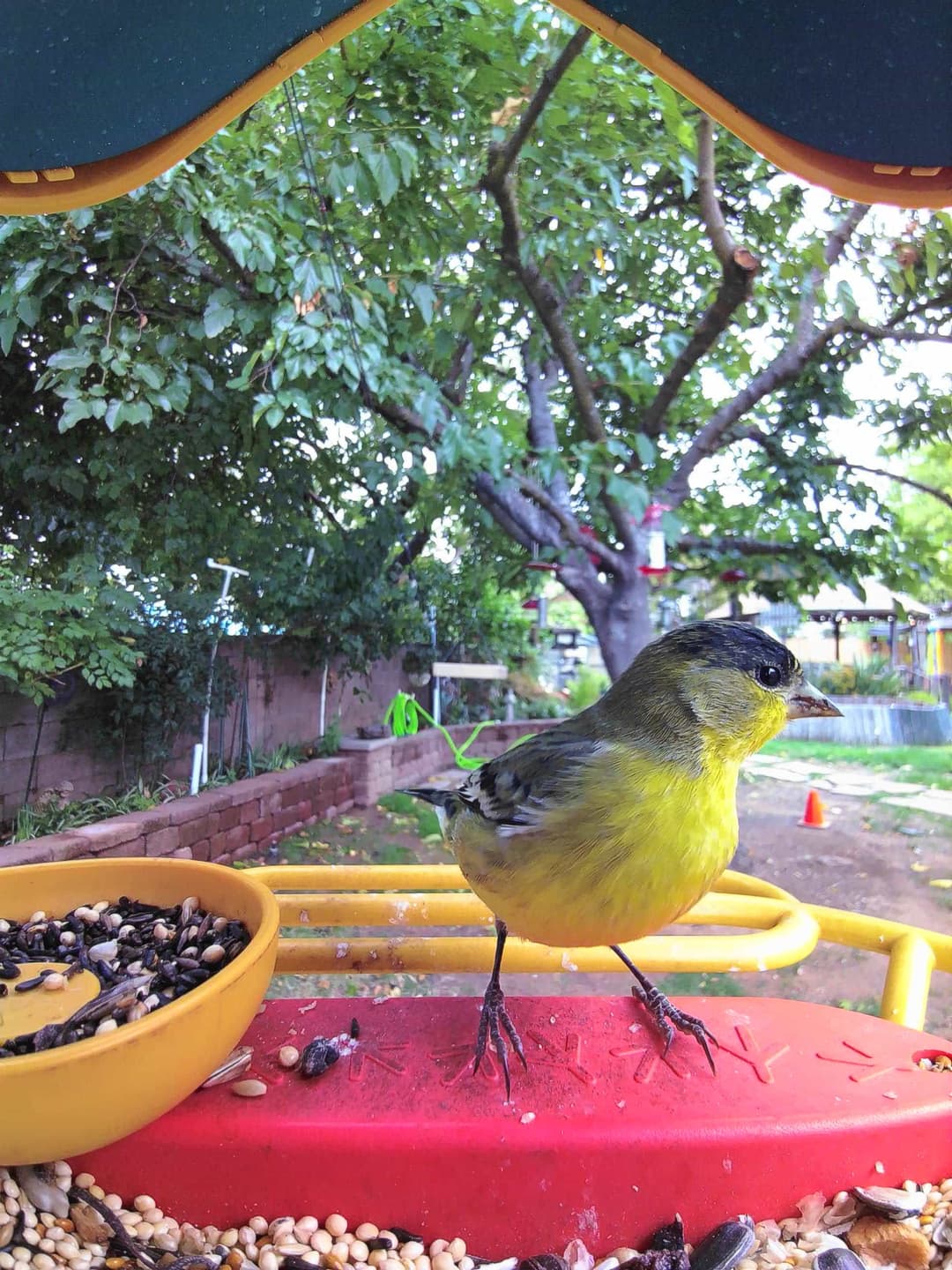
Lesser Goldfinch vs Painted Bunting
Lesser Goldfinches are mainly yellow and black, lacking the Painted Bunting's varied color combination. Painted Buntings display a distinct multi-color vibrance. Observe body color patterns to correctly identify them.
Breeding and nesting habits of the painted bunting
Mating behaviors
Male painted buntings engage in singing from raised perches, often hidden among foliage, to defend their territories. In addition to vocal displays, males may participate in serious physical fights over territorial boundaries. Polygyny is common, with one male potentially having more than one mate.
Nesting details
Nests are typically placed in dense bushes, vines, or low in trees, 3-9 feet above the ground. The female builds an open cup nest using grass, weeds, leaves, and lines it with fine grasses, rootlets, and animal hair. These habitats can be replicated in gardens by planting dense shrubs and allowing vines to flourish, creating secure nesting environments.
Eggs and chick-rearing
Upon nest construction, the female lays and incubates the eggs. Once hatched, chicks are fed by the female. Ensuring availability of seeds and insects in the garden can support feeding. Providing shallow water sources nearby can aid in the parental provision of hydration to chicks.
What does a painted bunting like to eat?
Insects
Seeds
Spiders
Natural diet
The painted bunting primarily feeds on seeds, with a strong preference for those from grasses and weeds. It occasionally eats berries and fruits. In terms of insects, its diet includes beetles, caterpillars, grasshoppers, flies, and other insect varieties. The bird tends to consume more insects during early summer, especially when feeding its young.
Bird feeders
At bird feeders, painted buntings are often attracted to white millet seeds. They are less likely to visit feeders offering typical birdseed mixes or sunflower seeds, preferring small seeds that mimic their natural diet.
Attracting painted buntings
Painted buntings love a neighborhood with plenty of shrubs and trees. Try to make your yard a natural habitat by growing local shrubs and trees. These birds appreciate water. Make sure you provide clean water in a bird bath or a shallow dish for them. Keep your yard safe from cats, as they can be major threats for these birds.
Feeding painted buntings
The best to attract these colorful creatures can be providing their favorite snacks, like millet and other small seeds. A platform feeder or a tube feeder is an excellent choice for feeding buntings. You can also spread some seeds on the ground, as painted buntings are ground feeders at times. Bird Buddy seeds are highly recommended as they are picked by experts for the season and give the best results.
Tips and tricks to keep painted buntings around
Playing soft bird songs would be a fun way to encourage these birds to stay around. Also, discourage the use of pesticides in your yard as they can affect the health of small birds. Providing ample food sources all year round can make your yard a favorite spot for buntings. Occasionally, provide some fruits like berries, as they are also favored by buntings.
Where can you find painted buntings?

Primary habitat
The painted bunting favors semi-open areas with dense low growth, such as woodland edges, roadsides, brush, towns, and gardens. It breeds in thickets, hedgerows, woodland clearings, and undergrowth.
Additional range
In winter, this bird occupies similar habitats in Florida, as well as areas of scrub and secondary growth in the tropics.
Do they migrate?
The painted bunting is a migratory bird that exhibits distinct seasonal movements. During the breeding season, these birds are found in the southern Atlantic Coast regions of the United States, specifically in states like North and South Carolina, Georgia, and Florida. However, as winter approaches, they migrate south to escape colder temperatures. Those that nest along the southern Atlantic Coast likely winter in Florida and the northwestern Caribbean, including locations such as the Bahamas and possibly Cuba. On the other hand, painted buntings that breed farther west, including areas like Texas and Oklahoma, likely migrate to wintering grounds in Mexico and Central America. During this migration, painted buntings undertake a southward journey that typically happens in late August to early October, covering thousands of miles. In spring, around April, they make the return journey north to their breeding areas, marking a complete migratory route from their wintering habitats back to their breeding grounds. This migration ensures they can exploit different ecological niches—breeding in temperate regions with ample food and nesting opportunities and wintering in warmer climates with steady resources.
What is the role of painted buntings in nature and how to protect them?
Conservation status
The painted bunting is considered vulnerable due to declining numbers in recent decades. Major threats include habitat loss, as their nests are frequently parasitized by cowbirds, reducing their reproductive success. Additionally, they are often captured and kept as cagebirds on their wintering grounds in the tropics, further impacting their populations. Conservation efforts focus on protecting habitats, reducing nest parasitism, and mitigating illegal trapping. Initiatives to preserve their breeding and wintering environments are crucial for the stability of their populations.
Ecological role of painted buntings
Its role in the ecosystem
The Painted Bunting plays a paramount role in the ecosystem, by both acting as pest control and aiding in seed dispersal. As part of its diet, the Painted Bunting consumes a variety of insects such as beetles, caterpillars, grasshoppers, and flies. Hence, it performs a vital role in controlling the population of these insects which may be harmful to vegetation and crops, thus enhancing agricultural productivity. Additionally, the Painted Bunting contributes to seed dispersal through its feeding habits. It has been reported to primarily feed on seeds, particularly those of grasses and weeds. Consumption followed by excretion of these seeds in different areas leads to the spread of these plants, thereby enhancing the biodiversity of the landscapes. Additionally, it nurtures ecological balance by providing a source of food for certain predators in its ecosystem. By performing these intricate roles, the Painted Bunting significantly contributes to the vitality and diversity of its natural habitat.
How to help protect painted buntings
Preservation tips
Habitat preservation strategies
Preserving and restoring natural habitats for the Painted Bunting is crucial. This includes managing lands for native plants upon which bunting relies, minimizing use of pesticides and herbicides which harm its food sources, and maintaining riparian buffers to provide its nesting sites. In urban environments, ensuring backyard feeders and birdbaths are clean and in place year-round assists their survival.
Community science initiatives
Involve the community in monitoring Painted Bunting populations through citizen science projects. Encourage locals to report sightings and participate in bird counts. Additionally, foster conservation stewardship through educational programs in schools and the community, highlighting the importance of the Painted Bunting and the role individuals can play in its conservation.