
House Sparrow
House Sparrow
Passer domesticus


Quick Identification guide
Quick Identification guide
Male
- •
gray head and dark bib below the chin
- •
rich chestnut brown on the back and wings
- •
short, stout beak that is blackish in color
Female
- •
buff-colored crown and plain face
- •
dull brown plumage with lighter underparts
- •
yellowish-brown beak that is stout and conical
What does a house sparrow sound like?
The house sparrow vocalizes primarily through a shrill, monotonous, and noisy chirping that can be categorized as chirp or chip and rattle in type. The call pattern is predominantly falling, presenting a flat tone. Its characteristic vocals embody a repetitive monotony, delivering a loud and shrill chorus of chirps, resonating in a disruptive and clattering rattle.


Description
House sparrows have long been our companions, living alongside us since the Stone Age and are still found in places where humans live. They are social birds that roost in groups and engage in social singing, meaning multiple birds will call together from bushes, like a little sparrow choir. Cleanliness is important and you will frequently see them taking dust baths!
The house sparrow can weigh between 27to30grams and be from15to17centimeters tall.
The house sparrow typically lives for 3 years, but can live up to 12-14 years in the wild. This lifespan is average compared to similar bird species such as finches or starlings. In comparison, larger birds like hawks or Eagles can have lifespans exceeding 20 years. Urbanisation and predation can influence a house sparrow's lifespan.
Did you know?
Most popular questions about house sparrow
How to recognise a house sparrow?
General appearance
House sparrows are small, stocky birds measuring about 16 cm in length. They have a short tail and a stout bill. Their plumage is predominantly brown, with black streaks on their back and wings. This common bird has a distinctive, somewhat rounded head and a smooth body shape that helps in identifying it in urban and rural areas alike.
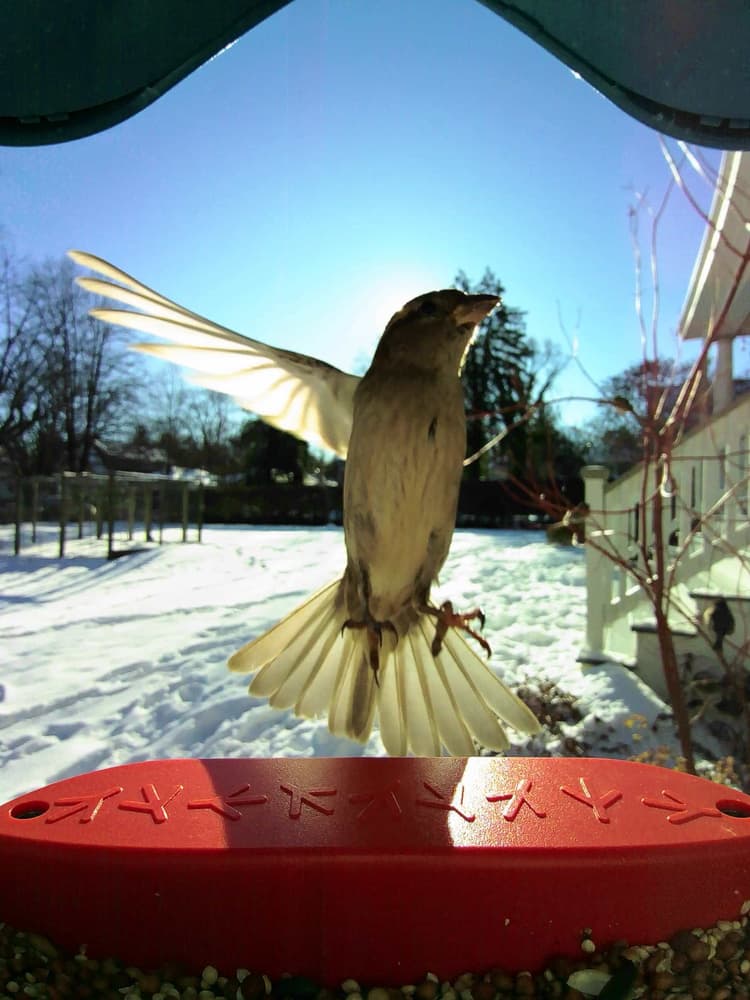
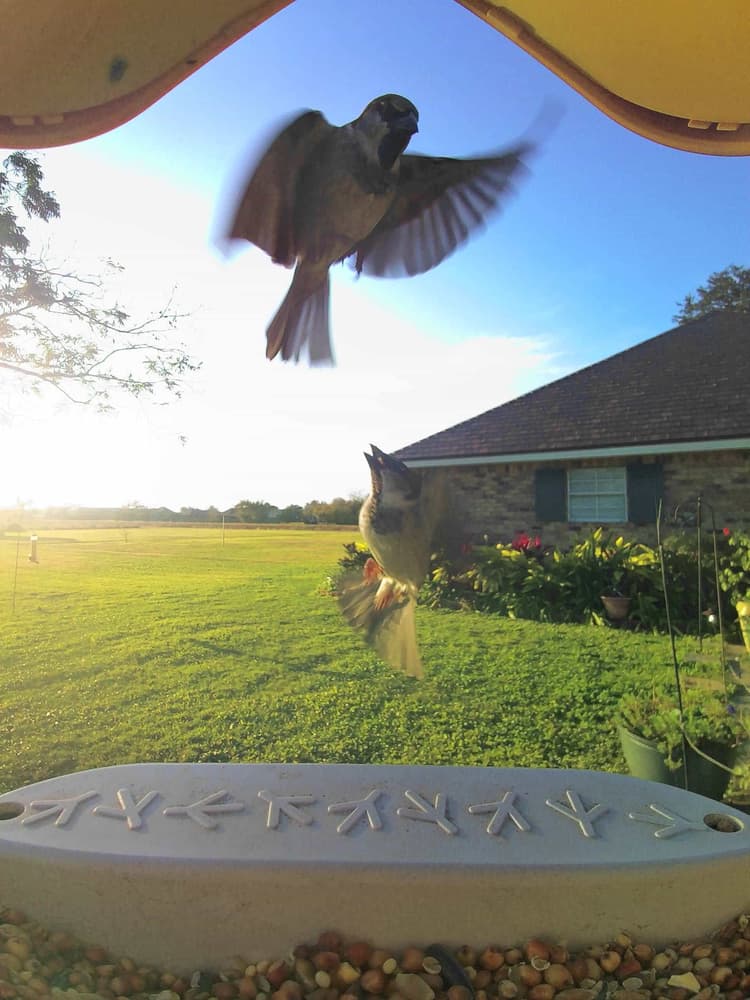
Male vs female
Male house sparrows are more vibrant with a gray crown, a chestnut-brown nape, and white cheeks. They have a distinctive black bib on their throat, which can vary in size seasonally. In contrast, females are duller with a more uniform brown coloration, lacking the bold markings of males. Their underparts are a plain grayish-brown, and they have a more pronounced eye stripe behind the eye.

Male House Sparrow
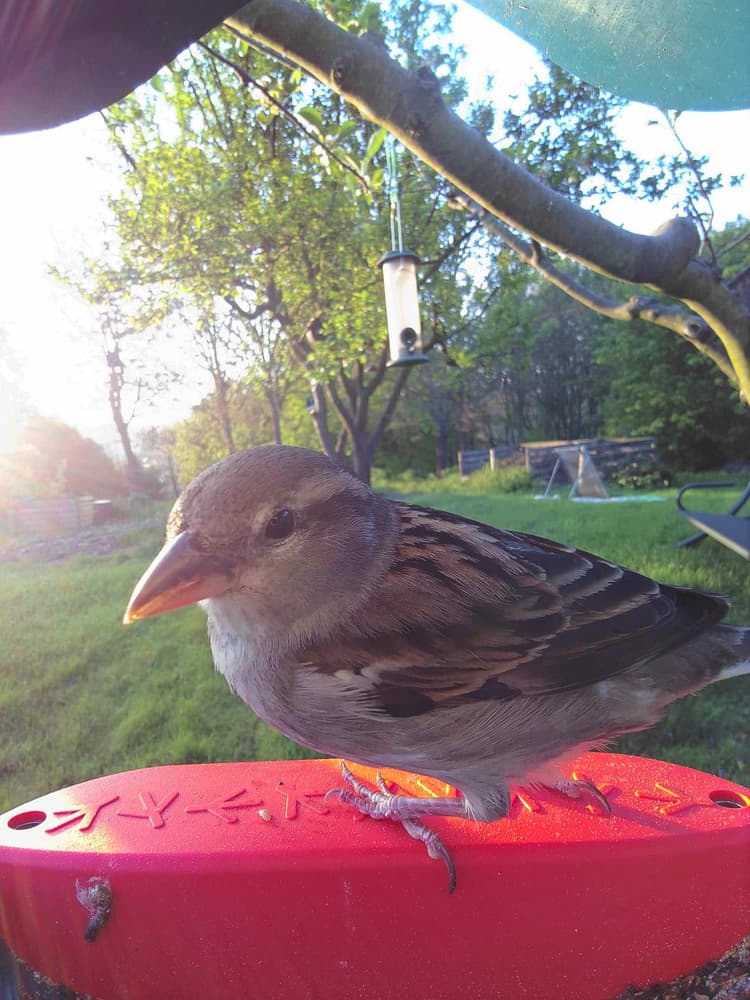
Female House Sparrow
Juvenile
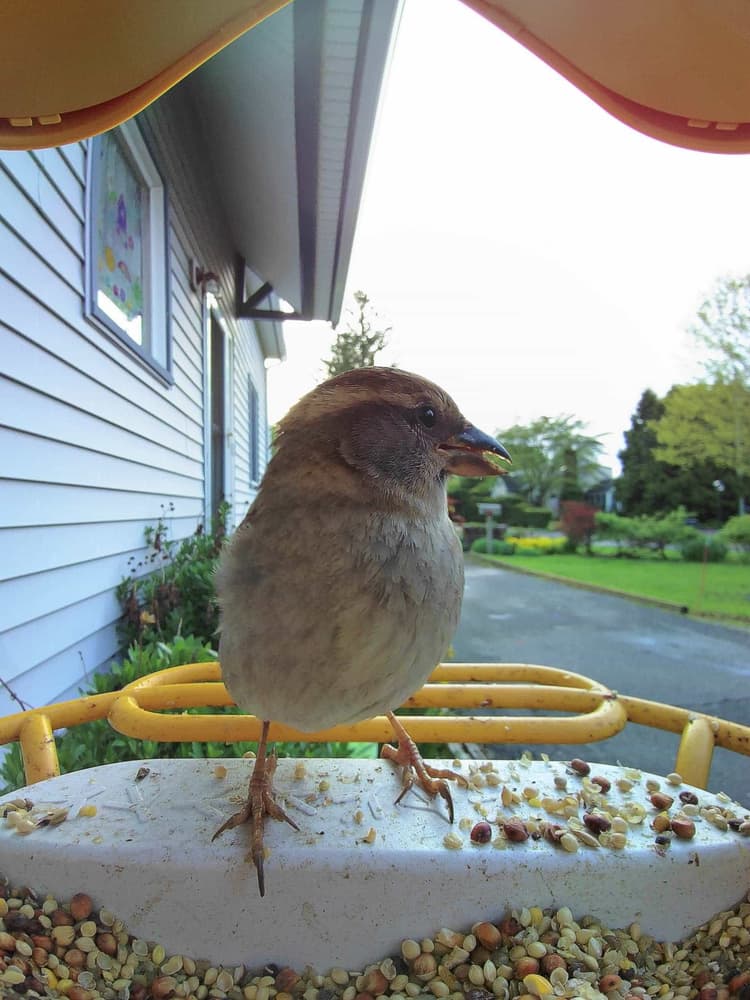
Juvenile house sparrows resemble females but are even paler, with grayish-brown plumage and softer streaks. They lack the developed throat patch and bright head pattern found in adults. Juveniles gradually acquire adult coloration through moulting, becoming distinguishable by their more uniform brown appearance and subtler facial markings.
Often mistaken for
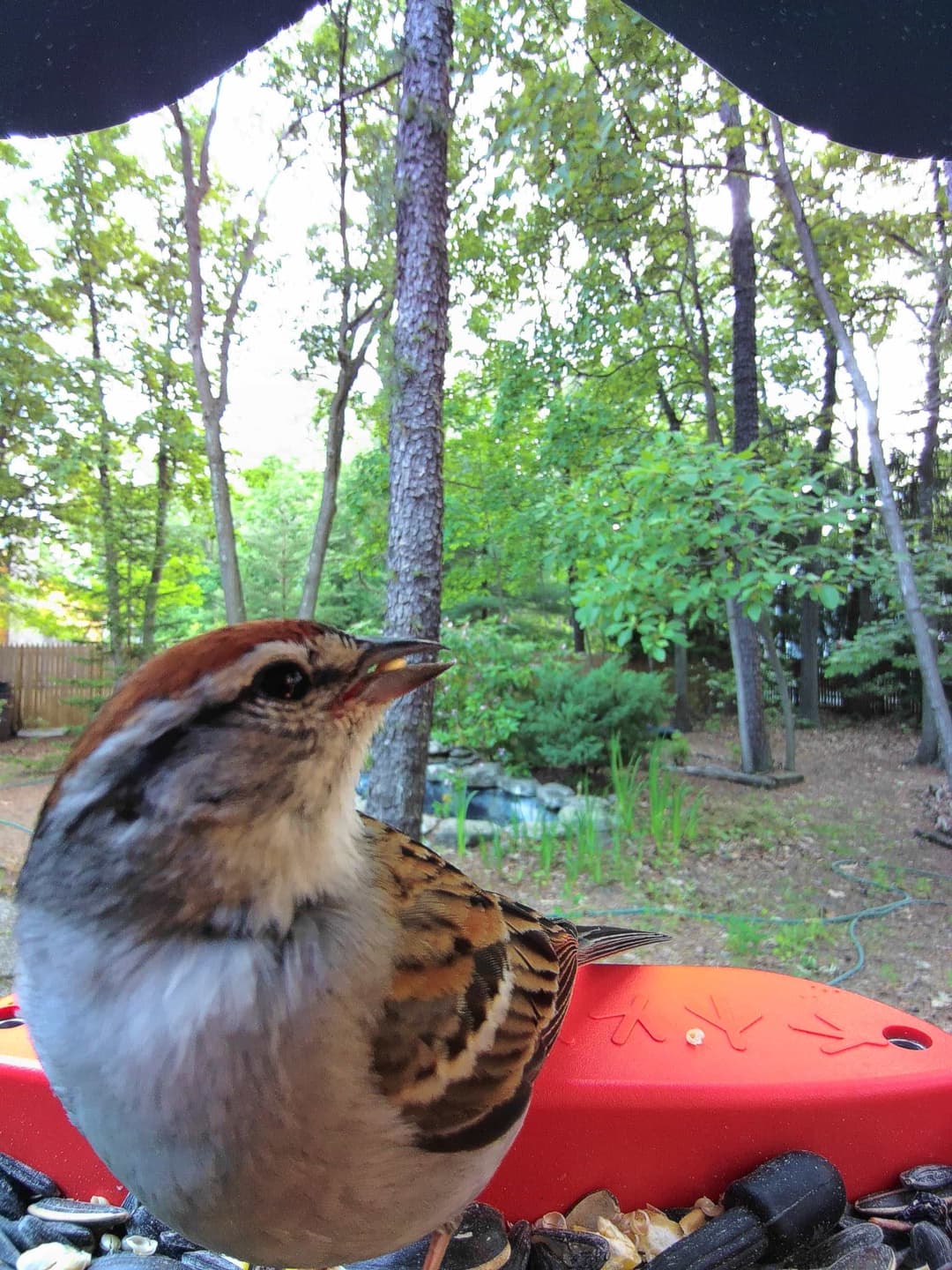
Chipping Sparrow vs House Sparrow
Chipping Sparrows have a distinctive rusty crown and a black line through the eye, whereas House Sparrows have a brown cap and more uniform coloration.
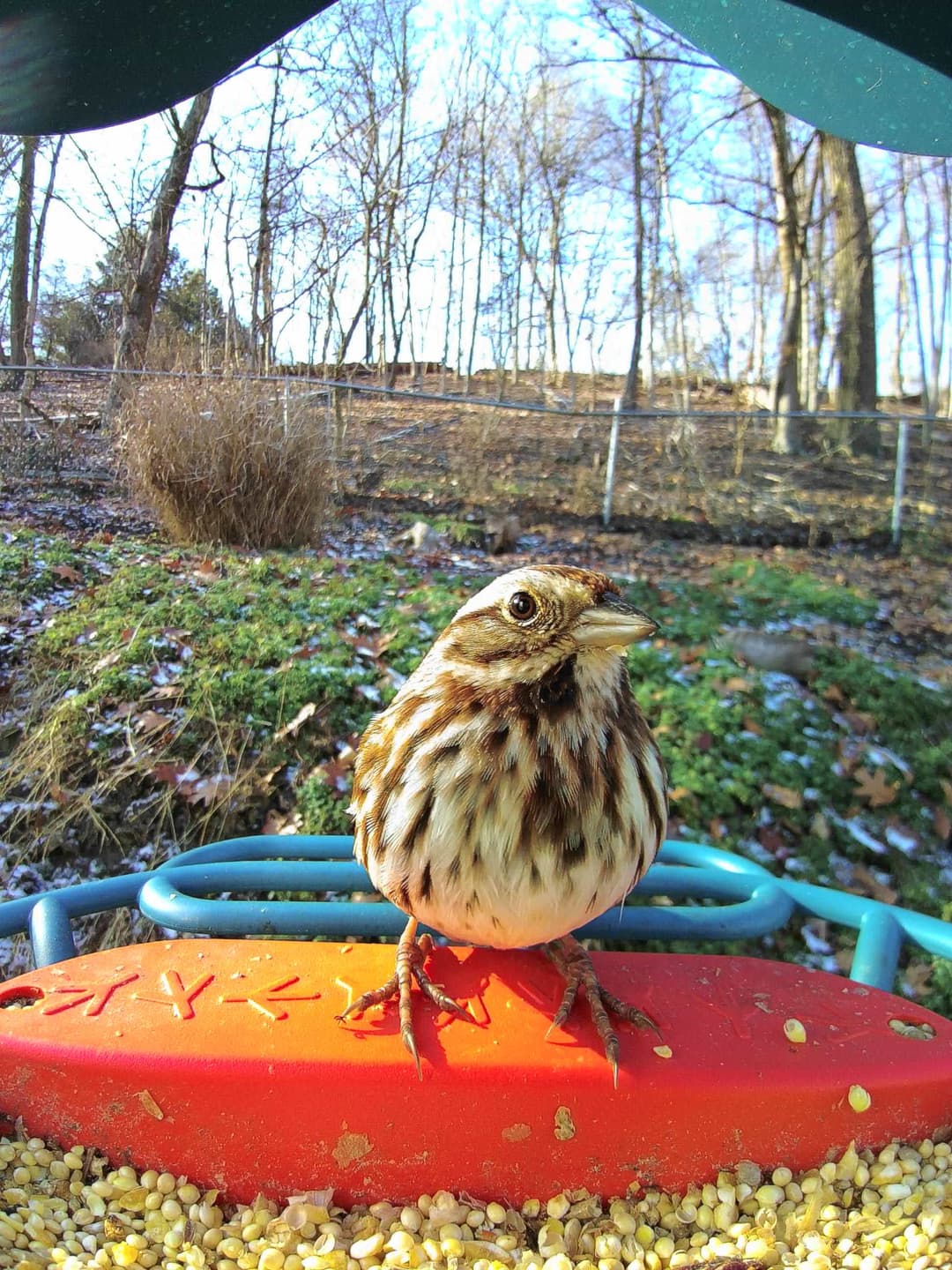
Song Sparrow vs House Sparrow
Song Sparrows typically have a streaked brown and white breast and a rounded tail, while House Sparrows have a plain gray chest and a squarer tail.
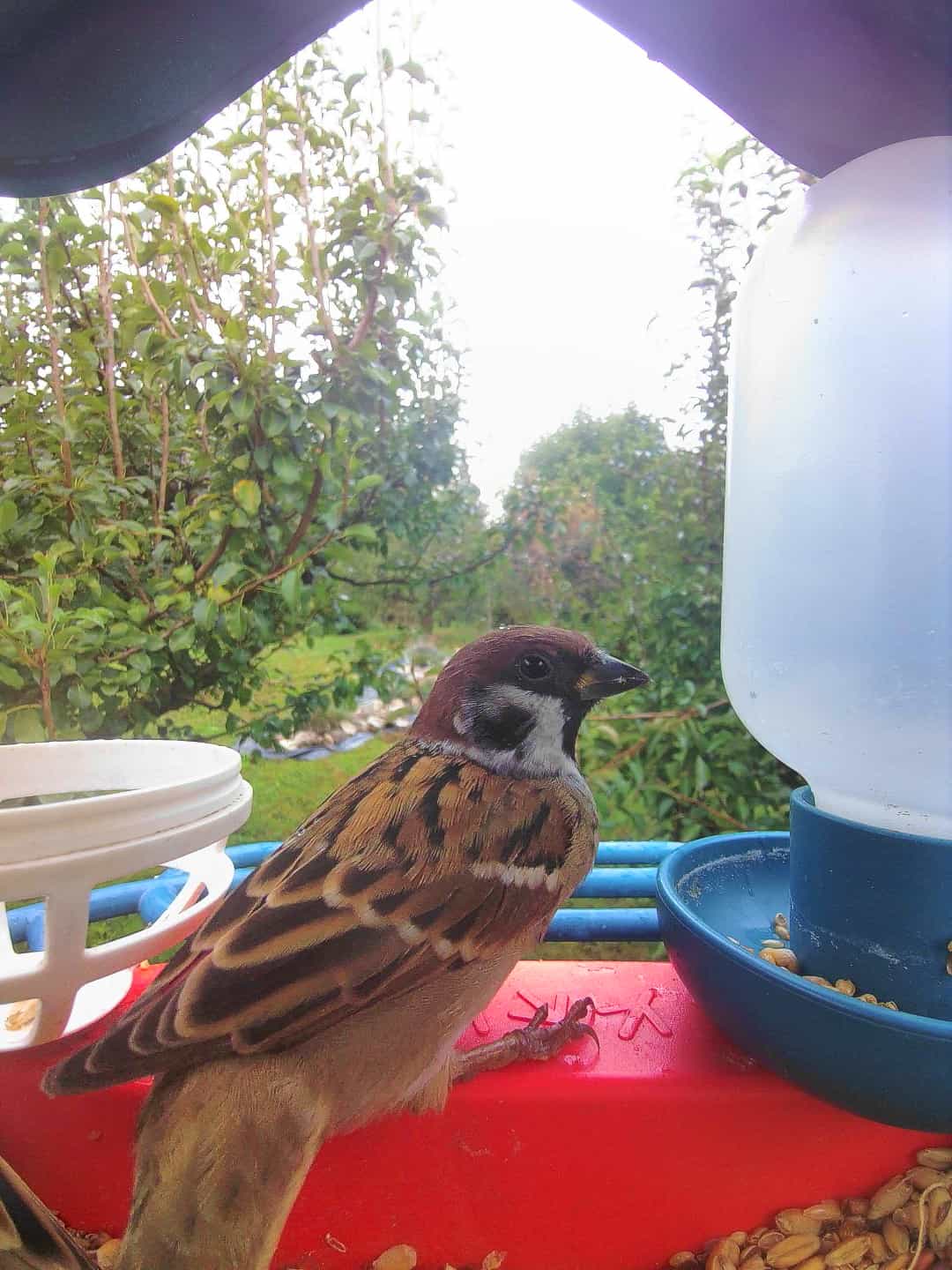
Eurasian Tree Sparrow vs House Sparrow
Eurasian Tree Sparrows have a similar appearance to House Sparrows but can be distinguished by their black cheek spot and a more vibrant chestnut crown.
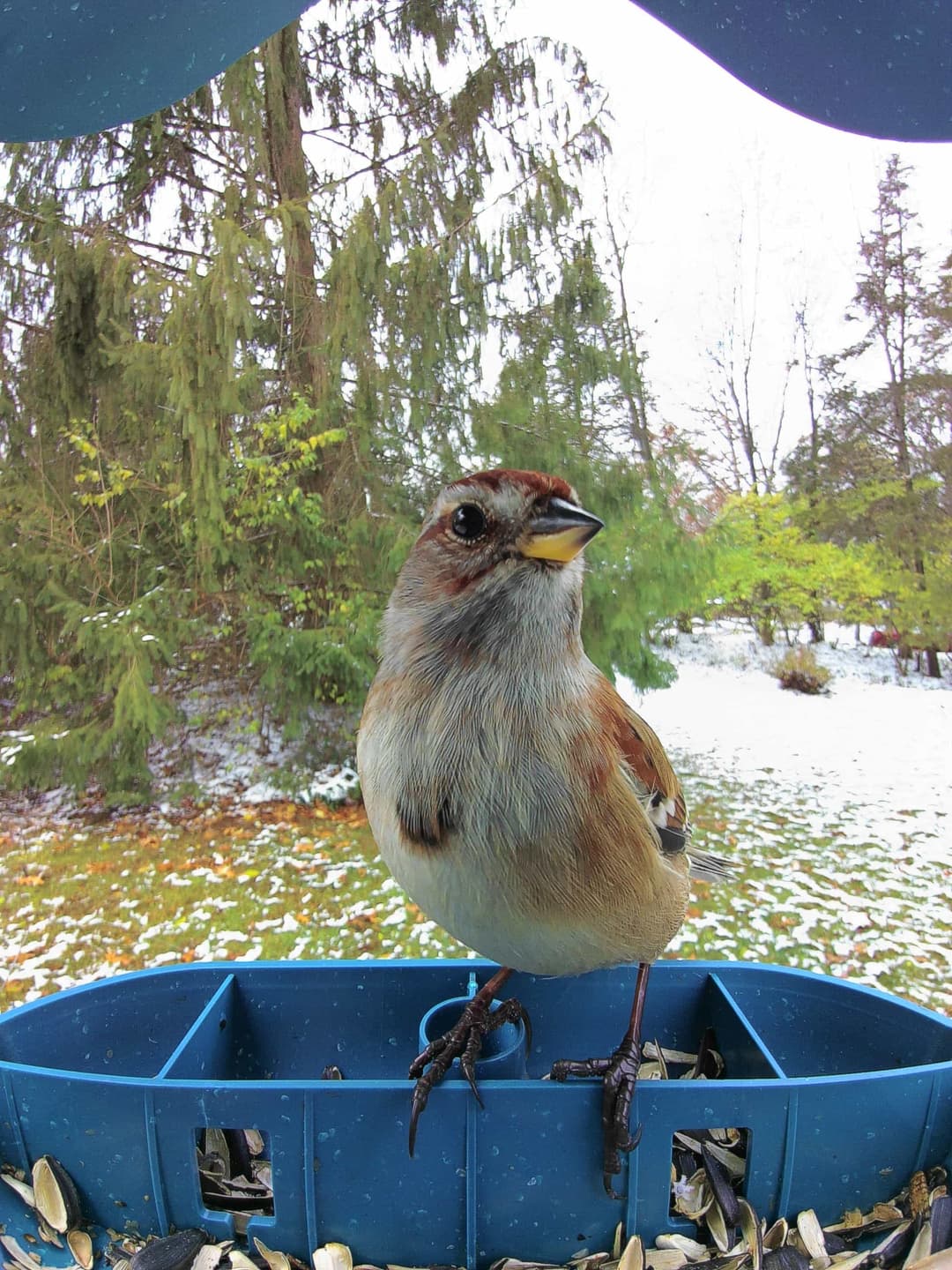
American Tree Sparrow vs House Sparrow
American Tree Sparrows have a bicolored bill and a rufous stripe on their crown, while House Sparrows have a single color bill and a more plain head.
White-Crowned Sparrow vs House Sparrow
White-Crowned Sparrows have striking black and white stripes on their head, contrasting with the more uniform brown and gray of the House Sparrow.

Breeding and nesting habits of the house sparrow
Mating behaviors
House sparrows engage in courtship displays where the male hops near the female with a raised tail, drooped wings, a puffed out chest, and performs bowing and chirping. They often breed in small colonies with pairs defending a small territory around their nest, chasing away intruders.
Nesting details
House sparrows typically nest in enclosed niches, such as cavities in trees, holes in buildings, rain gutters, or birdhouses. In the absence of such sites, they will nest in the open on tree branches. Nests, built by both parents, consist of grass, weeds, twigs, trash, and are often lined with feathers. In enclosed spaces, the materials form a foundation, while in open sites, the nest becomes a globular mass with a side entrance.
Eggs and chick-rearing
House sparrows lay their eggs in the constructed nests. The specific details about egg quantity, incubation, and chick-rearing were not provided but generally involve cooperative care by both parents.
What does a house sparrow like to eat?
Berries
Flowers
Insects
Scraps
Seeds
Snails
Natural diet
House sparrows primarily consume seeds from weeds and grasses. In agricultural areas, they often rely on waste grain. During summer, their diet may include insects, supplementing their nutritional needs.
Bird feeders
At bird feeders, house sparrows typically consume a variety of small seeds, such as millet and cracked corn. They are also known to feed on crumbs or food remnants left by humans in urban areas.
The house sparrow's preferred snacks
To draw house sparrows to your yard or feeder, make sure to offer a diverse range of foods that they enjoy. Dabble in seeds, including many types found in bird feeders, or try tempting them with smashed insects taken from parked cars. Remember, house sparrows also appreciate it if you play the host and introduce different types of snacks on different days. Consider rotating through a menu of seeds, smashed insects, and other treats found in nature.
Bird feeders and enrichment activities
House sparrows are highly adaptable birds, seek about any kind of feeders, be it hanging, tube, tray, or ground. They especially love feeders that can disburse a wide variety of items. Additionally, you may consider perching weed stalks near your feeder, enabling the sparrows to reach seeds in style. Sparks their curiosity, make feeders a fun place to explore enlarging chances they'll stick around for more. If you're lucky, they may even entertain you with a serenade!
Selecting the right seeds
We highly recommend using Bird Buddy seeds because they have consistently yielded the best results for attracting house sparrows. These seeds have been carefully selected by experts for each season to provide optimal nutrition and attract the widest variety of sparrows to your feeder. The fact that sparrows keep returning for more is a testament to these seeds' quality and success.
Where can you find house sparrows?
Based on Birdbuddy sighting data. The heatmap shows where Birdbuddy users have spotted this species.
Embed this map
This map shows the full native range based on scientific range data.
Primary habitat
The house sparrow typically prefers North American manmade structures like city centers, towns, suburbs, and farms.
Additional range
Unexpectedly, they can also be found around isolated houses or businesses in unsuitable terrains like deserts or forests.
Do they migrate?
The house sparrow is primarily a permanent resident across most of its range, particularly throughout North America. This means that house sparrows typically do not migrate and are found in the same general locations year-round. They have adapted well to living in close proximity to human habitats, which provides them with a stable food supply and shelter throughout the year. While certain bird species undertake extensive migrations between breeding and wintering grounds, the house sparrow's staying put is a result of their successful integration into urban and suburban environments, where seasonal changes have minimal impact on their survival. In regions with harsher climates, house sparrows may display limited, localized movements to seek more favorable microclimates, but these do not constitute true migration. Overall, the adaptability of the house sparrow to diverse environments across North America explains its non-migratory behavior, as they efficiently utilize resources provided in their established territories without the need for long-distance travel typical of migratory species.
What is the role of house sparrows in nature and how to protect them?
Conservation status
The house sparrow is currently common, though its eastern population has been gradually declining since peaking around 1900. This decline may be due to competition with native birds for nest sites and food. While not yet considered vulnerable or endangered, continued monitoring and conservation efforts are essential to address these threats. Conservation efforts might focus on habitat management and supporting biodiversity to mitigate competition with native species. Understanding the factors contributing to their decline could help stabilize their population and ensure the species remains common in the future.
Ecological role of house sparrows
Its role in the ecosystem
House sparrows play a significant role in our ecosystem. First, they contribute to pest control by eating insects, especially during summer months. Many of these insects are pests that harm various crops and plants, thus sparrows provide a natural means of reducing their numbers. Second, house sparrows help with seed dispersal as their diet largely consists of weed and grass seeds or waste grain. When they ingest and subsequently disperse these seeds in the environment, sparrows aid in the broader distribution of diverse plant species, including forms of vegetation significant to other animals and the local ecological balance. Lastly, among urban settings, house sparrows help clean up by foraging for crumbs and other food leftovers left by humans. As such, despite their small size, house sparrows contribute vastly to our ecological system through pest control, seed dispersal, and urban cleanup.
How to help protect house sparrows
Preservation tips
Habitat preservation strategies
Protect and maintain existing nesting sites such as tree holes, eaves, and roof spaces. Create more sites by installing birdhouses and nest boxes. Sustain availability of food by planting native plants that harbor insects, sparrow's primary food source, and providing seeds in birdfeeders. Preserve green spaces, parks, gardens, and farmlands in urban areas as they are crucial for their survival.
Community science initiatives
Engage local communities in house sparrow conservation through awareness programs about their declining numbers. Organize citizen science projects where people can contribute by counting sparrows in their locality or by monitoring their nesting habits. Use these data for further research and conservation efforts. Advocate for local and national policies that protect the house sparrow and its habitat.