
Blue Grosbeak
Blue Grosbeak
Passerina caerulea


Quick Identification guide
Quick Identification guide
- •
Features a deep blue body with hints of chestnut or rufous on the wings and shoulders
- •
Exhibits a large, conical beak suited for seed-crushing, characteristic of grosbeaks
- •
Displays a stocky build and relatively short tail, with a robust and strong appearance
What does a blue grosbeak sound like?
The blue grosbeak expresses its vocalizations through a distinctive sweet, jumbled warble, paired with a metallic 'klink' sound. Its complex call pattern undulates, conveying a rhythmic ebb and flow to its songs. Primarily, this bird employs two types of calls: chatter and chirp or chip. Whether in solitary or in a social scenario, these indicate its multiple communication strategies. Altogether, the blue grosbeak's vocal expressions are a blend of melodious and metallic notes.


Description
Blue grosbeaks, northern cardinals' cousins, were named after their large beak and what a sight it is! These birds can be found hopping awkwardly on the ground, foraging for food. They are social and like to gather in flocks, where they also communicate vocally. However, only males sing. When building nests, they will often use snakeskin to scare off predators. And look stylish.
The blue grosbeak can weigh between 26to31grams and be from15to16centimeters tall.
The Blue Grosbeak typically lives for about six years. This lifespan is comparable to the Indigo Bunting, a closely related species known to live up to 13 years in the wild. The Blue Grosbeak's lifespan is relatively short due to various factors including predation, disease, and harsh environmental conditions.
Did you know?
Most popular questions about blue grosbeak
How to recognise a blue grosbeak?
General appearance
The blue grosbeak is a medium-sized songbird renowned for its striking coloration. It exhibits a robust build with a large, conical bill apt for seed-cracking. Typically, the species displays rich blue plumage that stands out due to its vibrant hue. Observed mostly in habitats like thickets and forest edges, they are often recognized by their melodic song composed of rich warbles and trills.
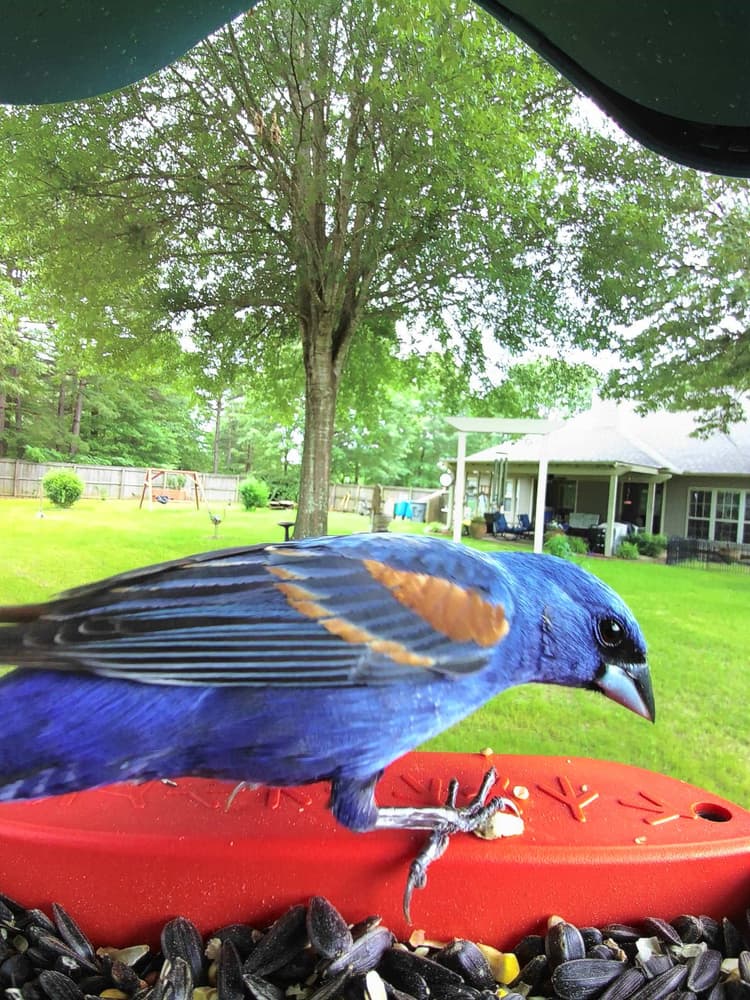
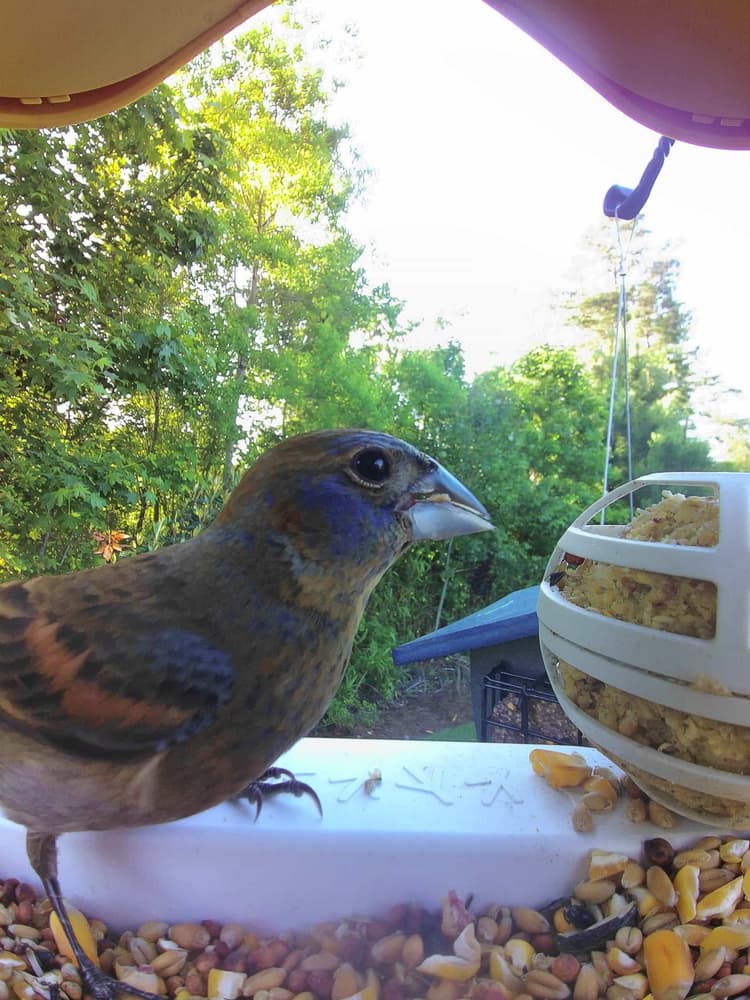
Male vs female
The male blue grosbeak is distinguished by its deep, bright blue plumage with chestnut-brown wing bars, making it more visually striking compared to the female. In contrast, females exhibit a more subdued coloration, primarily rich brown with subtle hints of blue in their wings and tail, aiding in camouflage. Both sexes, however, share the characteristic stout bill and are similarly sized.
Juvenile
Juvenile blue grosbeaks resemble the adult female more closely, with overall brownish plumage. Unlike adults, juveniles lack the pronounced blue tones and wing bars. As they mature, young males gradually acquire their signature blue coloring during their first fall molt. Seasonal variations are mostly evident in males, accentuating their iridescent blue during the breeding season.
Often mistaken for
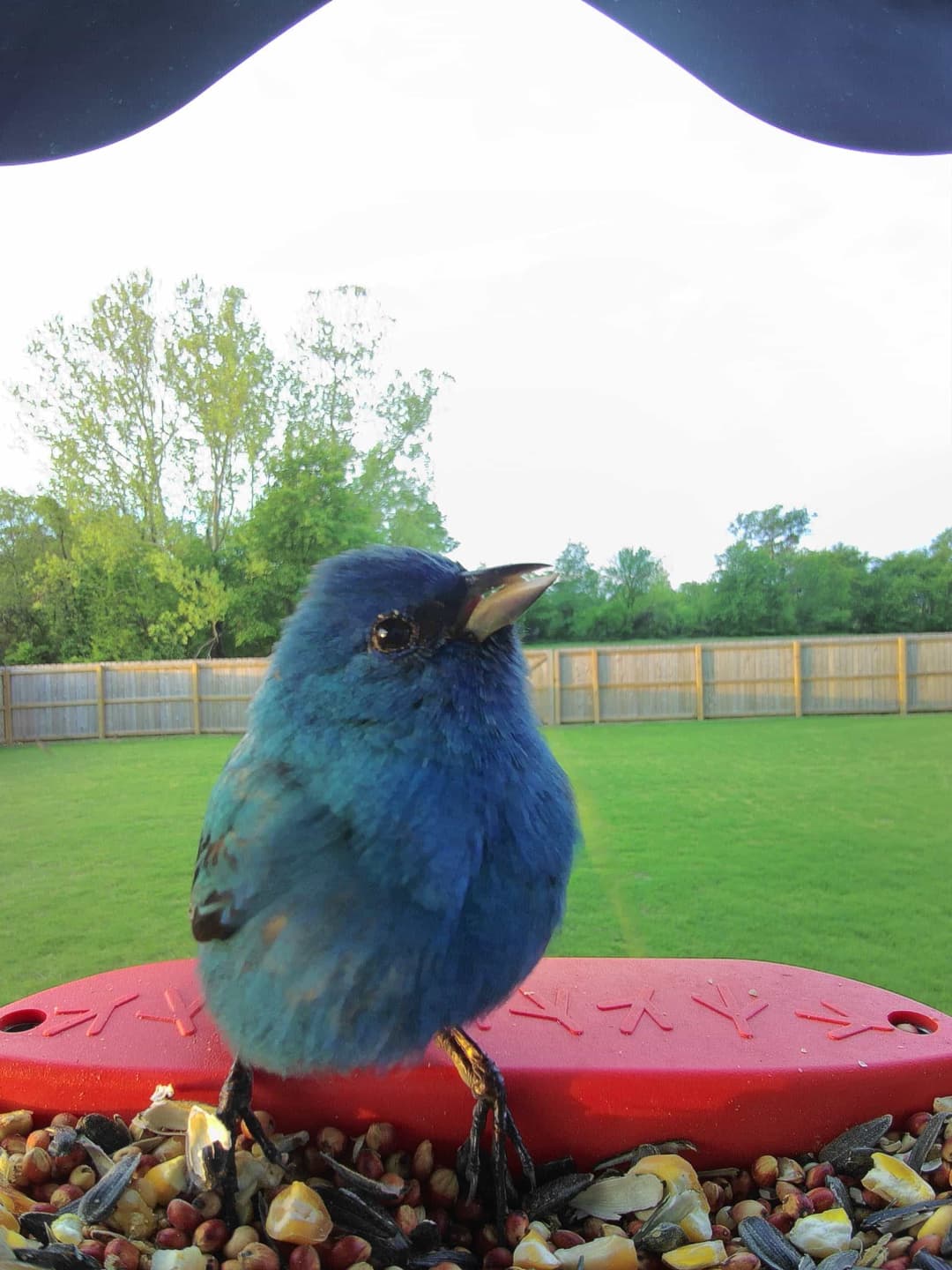
Indigo Bunting vs Blue Grosbeak
Blue Grosbeak is larger with a thicker bill. Males have chestnut wing bars, absent in Indigo Bunting. Blue color is deeper in Grosbeak. Female Grosbeak is more uniformly brown, compared to the streaked brown of female Bunting.
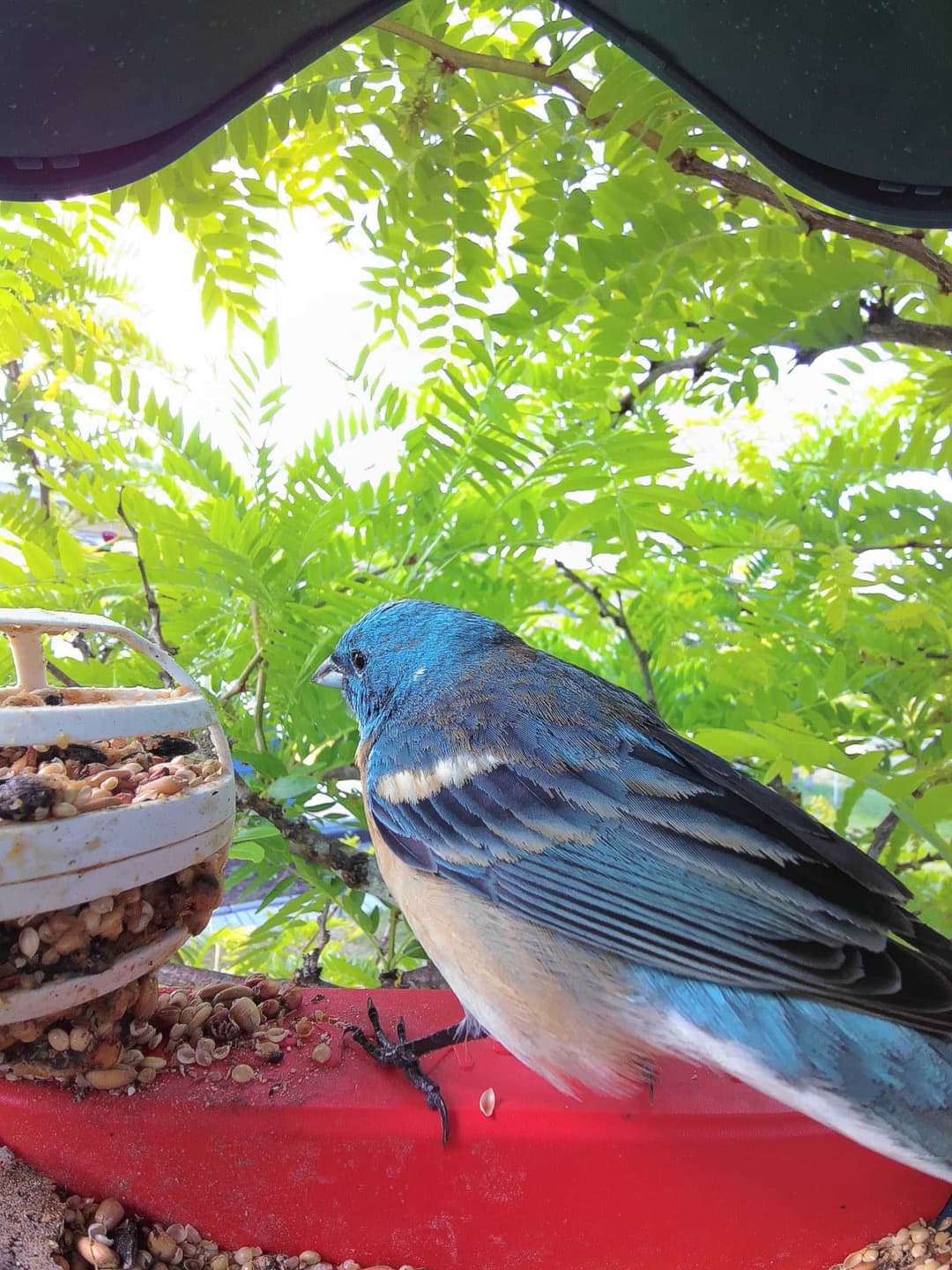
Lazuli Bunting vs Blue Grosbeak
Blue Grosbeak is larger and stockier with a heavier bill. Males boast brown wing bars and a richer, darker blue. Lazuli Bunting males have a white belly and lighter blue. Females differ; Grosbeak females are more uniformly colored.
Brown-Headed Cowbird vs Blue Grosbeak
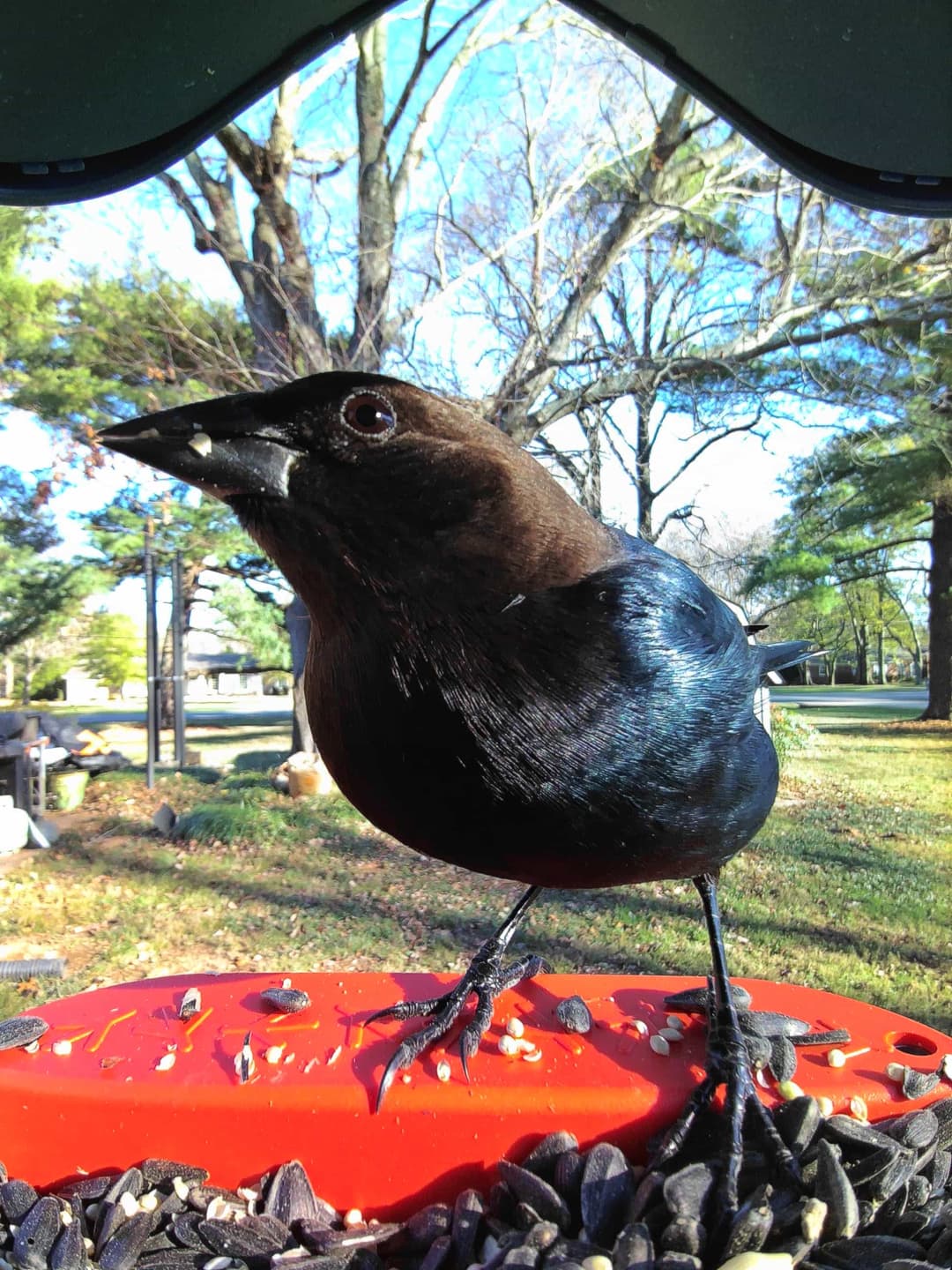
Blue Grosbeak is a richer blue with distinct chestnut wing bars. The Cowbird is smaller, with a glossy brown head in males and lacks vibrant blue. Females of both are brown but Grosbeak females are larger and have a more substantial bill.
Breeding and nesting habits of the blue grosbeak
Mating behaviors
Male blue grosbeaks sing to defend their nesting territory. This vocal display plays a crucial role in attracting mates and deterring rivals.
Nesting details
Nests are placed low in shrubs, trees, or vines, typically 3-10 feet above ground, sometimes up to 25 feet. The female constructs a compact open cup using twigs, weeds, rootlets, leaves, and bark strips. Unusual materials like snakeskin, paper, string, or rags may also be included. The nest is lined with fine grass, rootlets, and animal hair.
Eggs and chick-rearing
Details on eggs and chick-rearing behavior are not specifically provided. However, creating a suitable habitat may assist nesting efforts by planting shrubs or trees and avoiding disruption during the nesting season.
What does a blue grosbeak like to eat?
Insects
Seeds
Snails
Natural diet
The blue grosbeak primarily consumes insects and seeds. Its insect diet includes grasshoppers, beetles, caterpillars, cicadas, praying mantises, spiders, and snails, with a higher insect intake during the summer. Seeds are also a significant part of its diet, particularly during certain seasons. These seeds include those from weeds and grasses, along with waste grain.
Bird feeders
Blue grosbeaks can occasionally be attracted to bird feeders, where they might consume sunflower seeds, millet, and other mixed birdseeds. Their preference for seeds makes them likely visitors if feeders provide their natural dietary options.
Attracting blue grosbeak: feeders and seeds
To attract the Blue Grosbeak to your yard or feeder, start by installing a platform or tray feeder. These birds enjoy wide and open spaces to land. Another option is tube feeders with large holes. Don't forget to select high-quality seeds like the Bird Buddy seeds. These seeds are chosen by experts according to each season, ensuring optimal results.
Tempting blue grosbeak: favorite snacks
Blue Grosbeaks are seed lovers. They particularly relish sunflower seeds and millet. Including these in your feeder can usually ensure a visit from them. Bear in mind that they also feed on insects, so a birdhouse or feeder near a garden or a tree can provide a bonus attraction.
Encouraging blue grosbeaks: tricks and treats
Establish a fresh water source in your yard such as a birdbath or fountain, as all birds love this. The Blue Grosbeak is also attracted to natural materials, which can be useful when they are nesting. Twig piles, brush heaps, or shrubbery near the feeder can lure them into visiting, and maybe even staying for the season. The birds' beautiful songs will definitely add life to your yard!
Where can you find blue grosbeaks?

Primary habitat
The Blue Grosbeak frequents brush, roadsides, streamside thickets, woodland edges, brushy fields, and young second-growth woods. It is most commonplace near water, especially in the South West, inhabiting streamside thickets and mesquite groves.
Additional range
Apart from the breeding season, it often settles in open weedy fields. Its native form in Central America inhabits dry tropical forests and the edges of other woods.
Do they migrate?
The blue grosbeak is a migratory bird. Eastern populations of the blue grosbeak likely migrate across the Gulf of Mexico. In contrast, those located farther west tend to migrate southward overland. Typically, the migration pattern involves moving from northern breeding grounds in the United States to wintering locations in Mexico and Central America. In the spring, blue grosbeaks start their migration northward to their breeding areas, which can encompass a range extending from the southern parts of the United States up into the central and eastern regions, with strays appearing even farther north of the typical breeding range. The timing of spring migration generally occurs from late March to early May. In the fall, the birds migrate back towards their wintering grounds, usually beginning in late August and continuing into October. Key stopover locations during migration include suitable habitats with abundant food resources, such as wetlands, fields, and woodlands, where they can rest and refuel. Overall, the migration patterns of blue grosbeaks show a clear seasonal movement between northern breeding locations and southern wintering habitats, with geographical variations influencing their specific migratory routes.
What is the role of blue grosbeaks in nature and how to protect them?
Conservation status
The blue grosbeak is currently considered common, with its population stable or slightly increasing. It has been expanding its breeding range northward in recent decades, indicating a positive population trend. No significant conservation efforts are currently necessary, as it does not face substantial threats. However, continued monitoring is important to ensure habitats remain secure against potential threats like habitat destruction. The species' adaptability to expanding its range suggests resilience, reducing concerns about vulnerability or endangerment at this time.
Ecological role of blue grosbeaks
Its role in the ecosystem
The Blue Grosbeak, with its robust diet encompassing insects and seeds, performs key roles in the ecosystem. During summer, it primarily eats insects, including grasshoppers, beetles, caterpillars, cicadas, praying mantises, and more, contributing to effective pest control. By controlling insect populations, it helps balance the ecosystem and curb the overpopulation of certain species that may otherwise create an imbalance. Furthermore, the bird consumes a wide variety of seeds, implying it contributes to seed dispersal, which subsequently aids in plant proliferation and diversity. By foraging and feeding on waste grain, the bird assists in limiting potential waste, reducing the impact on the environment. Additionally, Blue Grosbeaks often fall prey to Cowbirds, which frequently lay eggs in their nests. This parasitic behavior, while detrimental to the Grosbeak, helps maintain cowbird populations, indicating the Grosbeak's role in supporting biodiversity in its ecosystem. Thus, the presence of the Blue Grosbeak in its habitat is beneficial to both flora and fauna and contributes to an overall balanced ecosystem.
How to help protect blue grosbeaks
Preservation tips
Habitat preservation for blue grosbeak
Conservation efforts for the blue grosbeak should focus on habitat preservation, including maintaining shrublands and preventing land-use change. Supporting policies aimed at protecting natural spaces is crucial. Planting native bushes and shrubs can also provide necessary cover and nesting sites for these birds. Engage with local conservation groups that work to maintain, protect, and restore habitats in your area.
Community science initiatives for blue grosbeak
Volunteer participation in community science initiatives like bird monitoring and count programs can contribute to blue grosbeak conservation. Data collected through these methods helps scientists understand population trends and potential threats. Such initiatives include the Audubon’s Christmas Bird Count and The Great Backyard Bird Count organized by Cornell Lab. Educating the community about the blue grosbeak and raising awareness about its conservation status can also be beneficial.