Lazuli Bunting or Blue Grosbeak?
Here's how to tell the difference


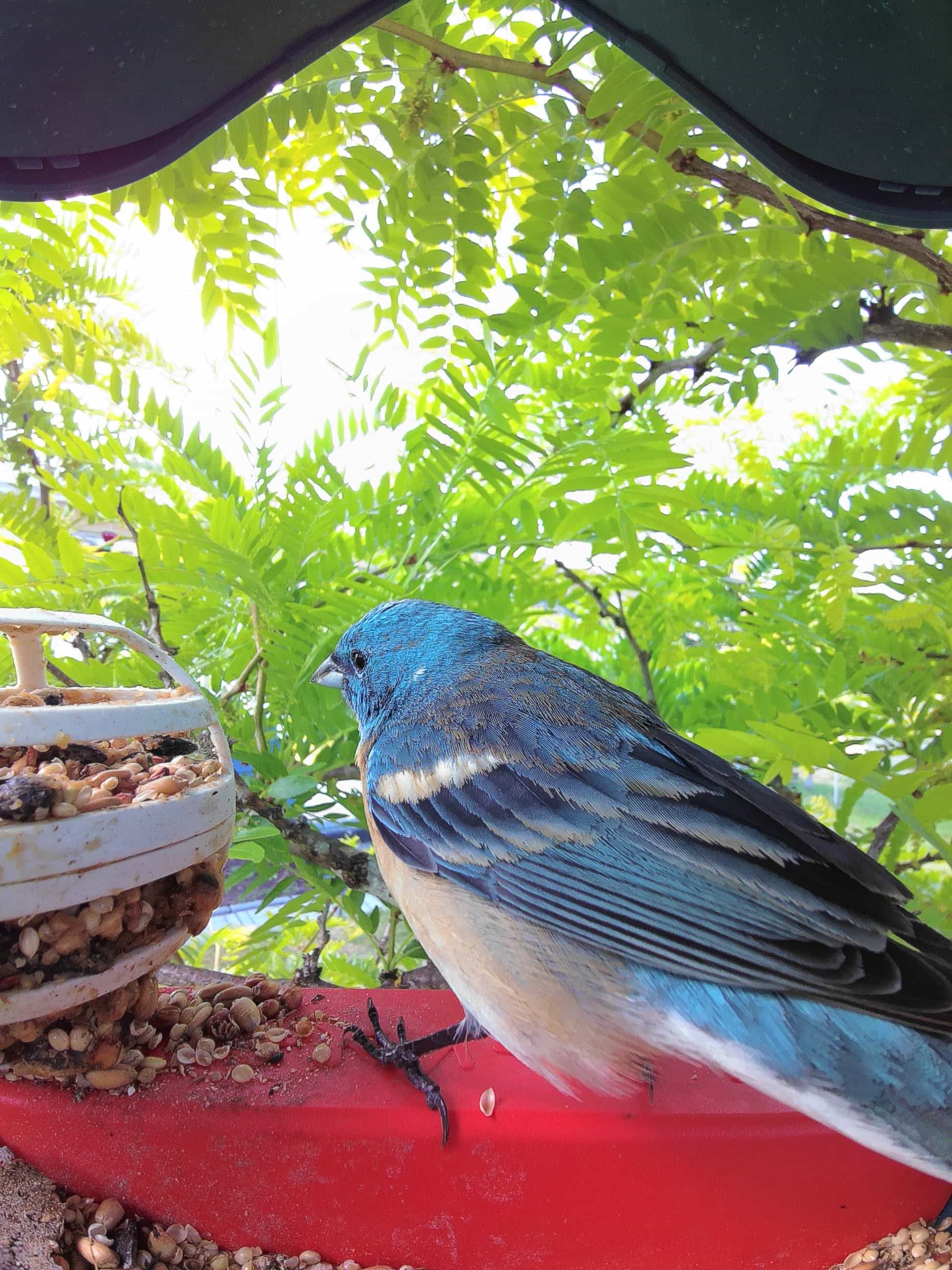


Lazuli Bunting
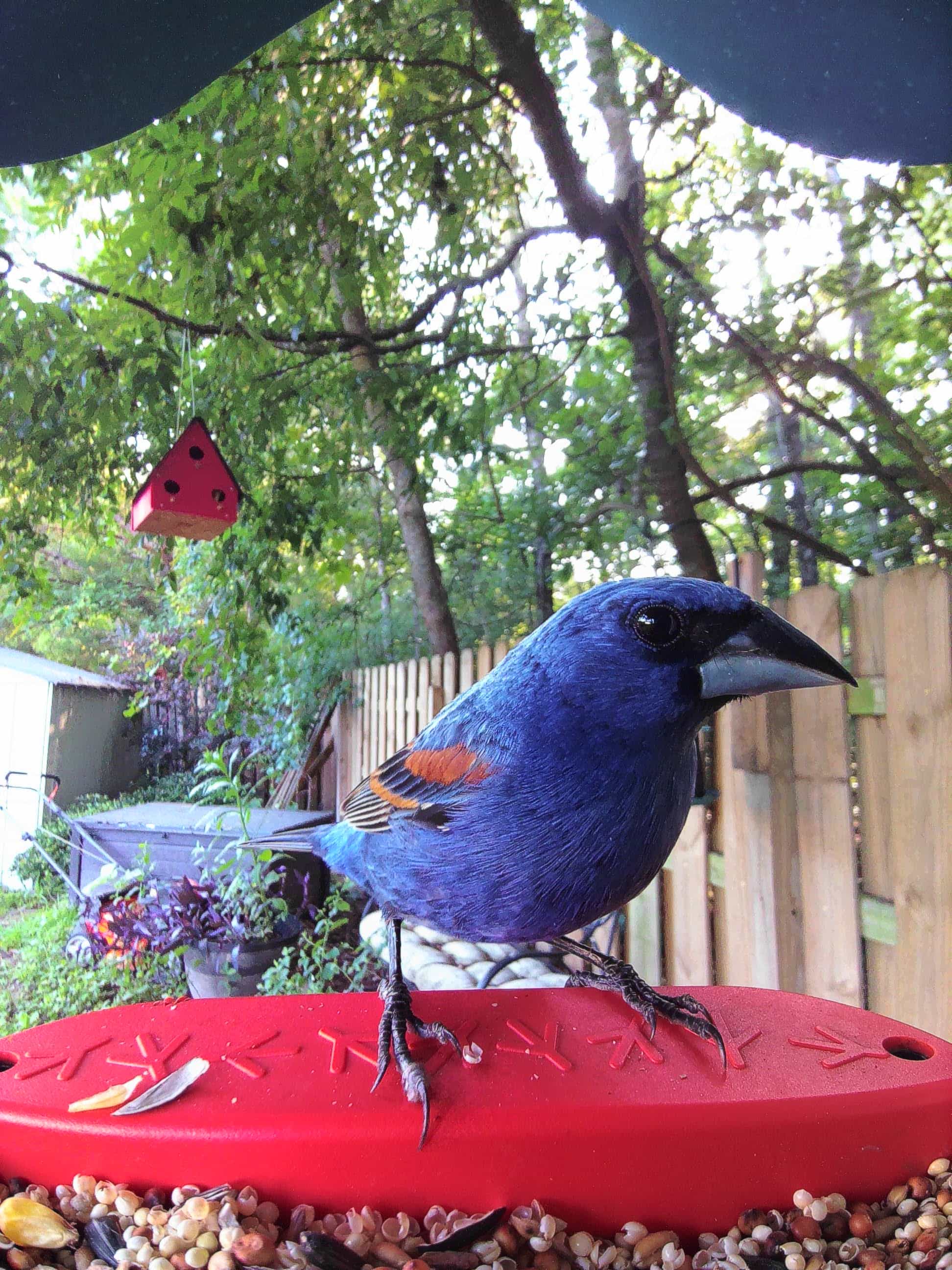


Blue Grosbeak
Lazuli Bunting
Passerina amoena
General appearance
The lazuli bunting is a small passerine bird with a compact body and a distinctive blue and orange coloration. Its short, conical bill is well-suited for seed-eating. The bird's wings and tail feathers are dark with bluish edges, offering a striking contrast to its vibrant body colors.
Male vs female
Males are renowned for their bright blue plumage on the head and back, contrasting with a vivid orange breast and white belly. Females, however, are more subdued with brownish tones overall, tinges of blue on the wings and tail, and paler underparts. This sexual dimorphism helps in easy identification.
Juvenile
Juvenile lazuli buntings resemble females in their coloration with predominantly brown feathers. As they mature, young males gradually develop the characteristic blue and orange plumage seen in adults. During this transition, they may exhibit a patchy mix of brown and emerging blue feathers.
Size
5.1 - 5.9 in/0.5 - 0.6 oz
There's more to learn about Lazuli Bunting
View full detailsBlue Grosbeak
Passerina caerulea
General appearance
The blue grosbeak is a medium-sized songbird renowned for its striking coloration. It exhibits a robust build with a large, conical bill apt for seed-cracking. Typically, the species displays rich blue plumage that stands out due to its vibrant hue. Observed mostly in habitats like thickets and forest edges, they are often recognized by their melodic song composed of rich warbles and trills.
Male vs female
The male blue grosbeak is distinguished by its deep, bright blue plumage with chestnut-brown wing bars, making it more visually striking compared to the female. In contrast, females exhibit a more subdued coloration, primarily rich brown with subtle hints of blue in their wings and tail, aiding in camouflage. Both sexes, however, share the characteristic stout bill and are similarly sized.
Juvenile
Juvenile blue grosbeaks resemble the adult female more closely, with overall brownish plumage. Unlike adults, juveniles lack the pronounced blue tones and wing bars. As they mature, young males gradually acquire their signature blue coloring during their first fall molt. Seasonal variations are mostly evident in males, accentuating their iridescent blue during the breeding season.
Size
5.9 - 6.3 in/0.9 - 1.1 oz
There's more to learn about Blue Grosbeak
View full detailsHow to tell the Lazuli Bunting from the Blue Grosbeak
Visual differences
The Lazuli Bunting is smaller, measuring 5-6 inches and weighing 0.5-0.6 ounces, whereas the Blue Grosbeak is larger at 5.9-6.3 inches and 0.9-1.1 ounces. Lazuli Buntings display bright blue heads and backs with orange breasts. In contrast, Blue Grosbeaks have deep blue plumage with chestnut wing bars. Both have conical bills, but Blue Grosbeaks possess larger, more robust versions. Female Lazulis are brown with blue tints, while female Grosbeaks are richer brown with subtle blue hints. Juvenile coloration is similar to respective females in both species.
Key differences and behavior
Lazuli Buntings and Blue Grosbeaks, while visually similar, differ behaviorally and ecologically. Lazuli Buntings sing unique songs and form 'song neighborhoods', showing hostility to outsiders, whereas Blue Grosbeaks have melodic warbles sung only by males for territory defense. Lazuli Buntings inhabit brushy areas with open grasslands and are region-specific, while Blue Grosbeaks favor thickets near water and are more social, gathering in flocks. Grosbeaks display unique nesting habits by using atypical materials, such as snakeskin. While both consume seeds and insects, Lazuli Buntings lean more on insect diets in summer, whereas Blue Grosbeaks include a wide variety like cicadas and mantises. Lazulis weigh between 0.46-0.63 oz, and Grosbeaks 0.92-1.09 oz, with Grosbeaks being generally larger at 5.9-6.3 inches long compared to Buntings' 5.1-5.9 inches.
Still not sure? Here are more lookalikes!
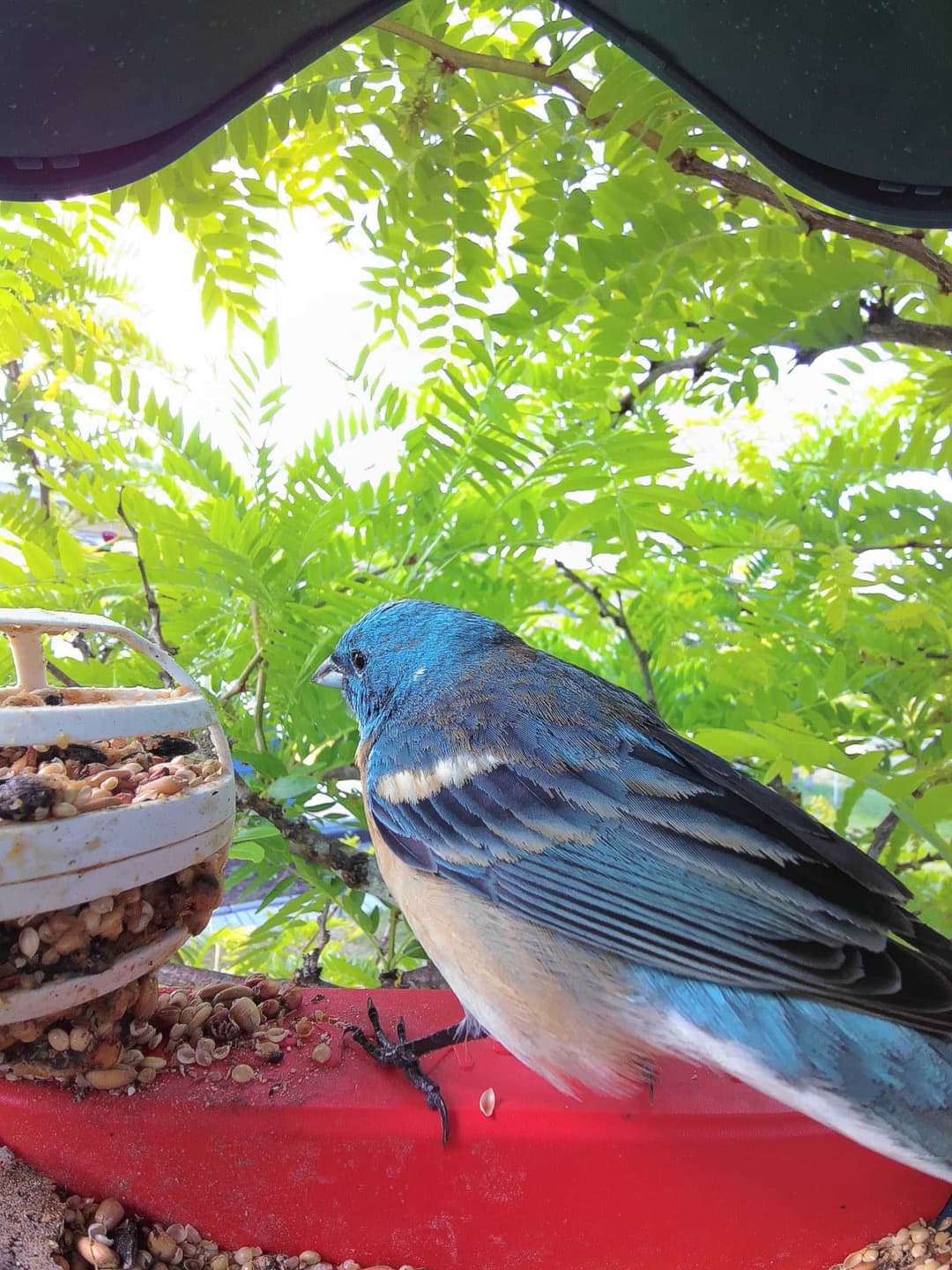
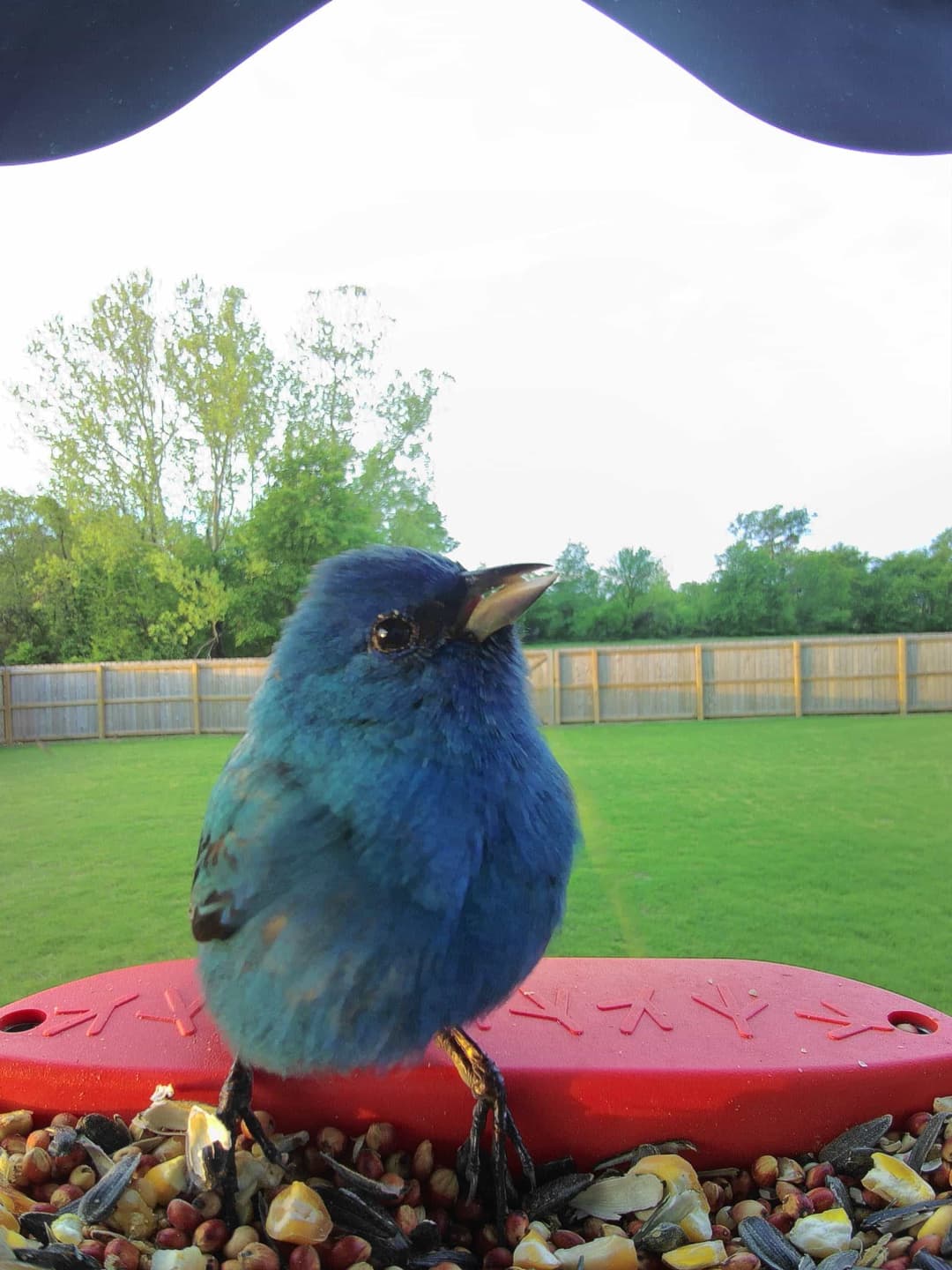
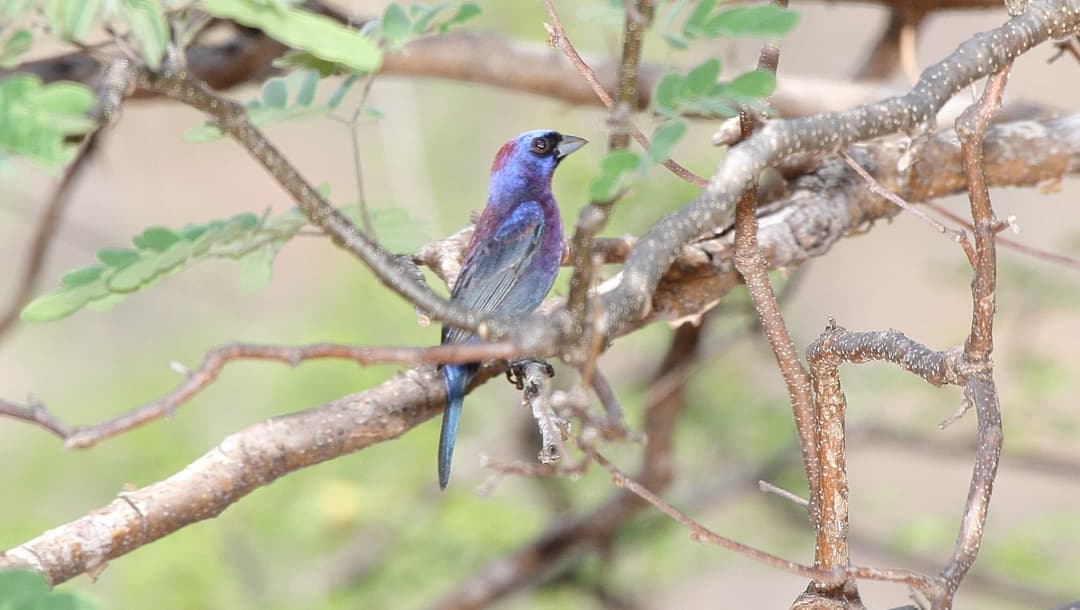
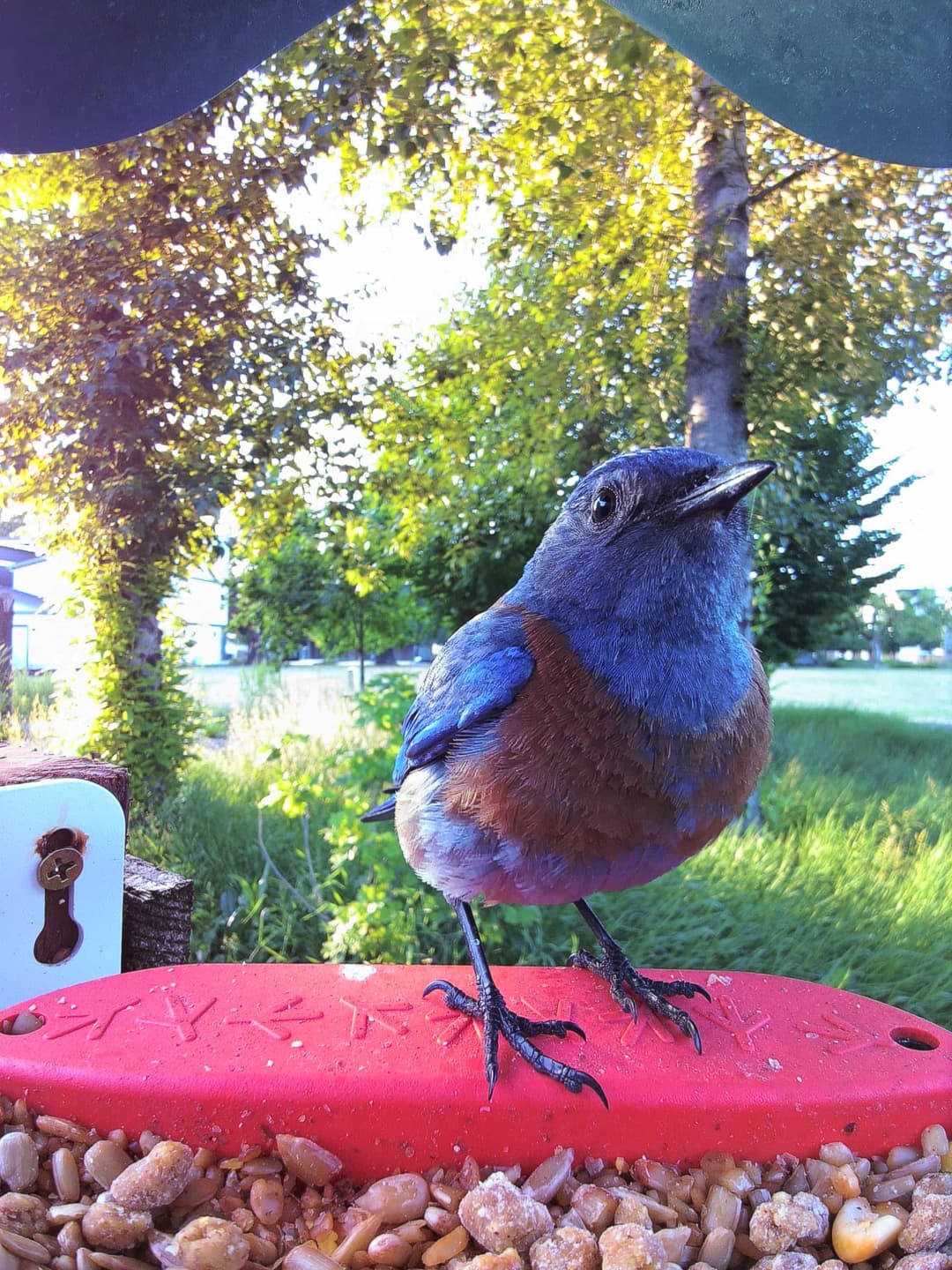
Lazuli Bunting vs Brown-Headed Cowbird
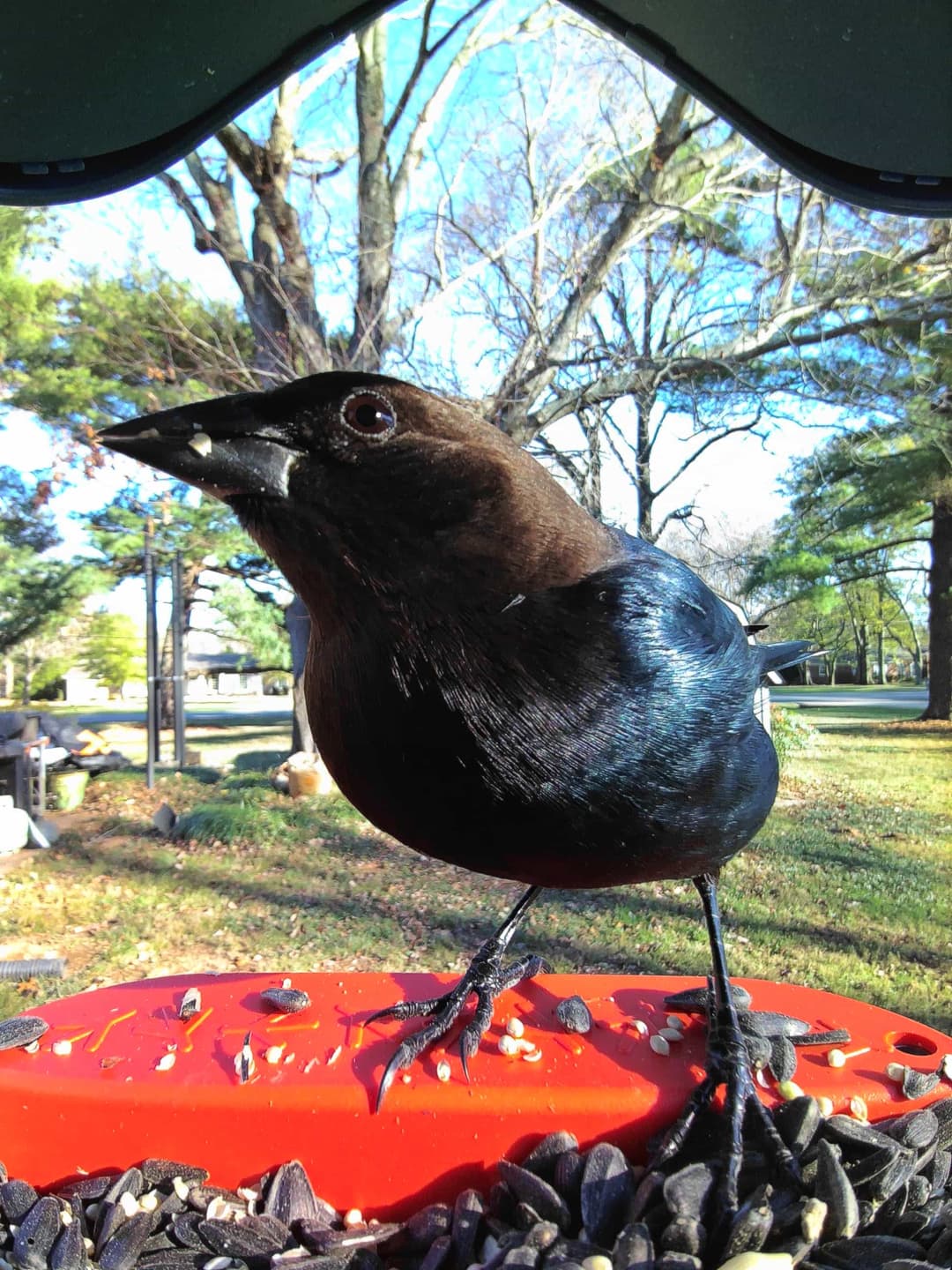
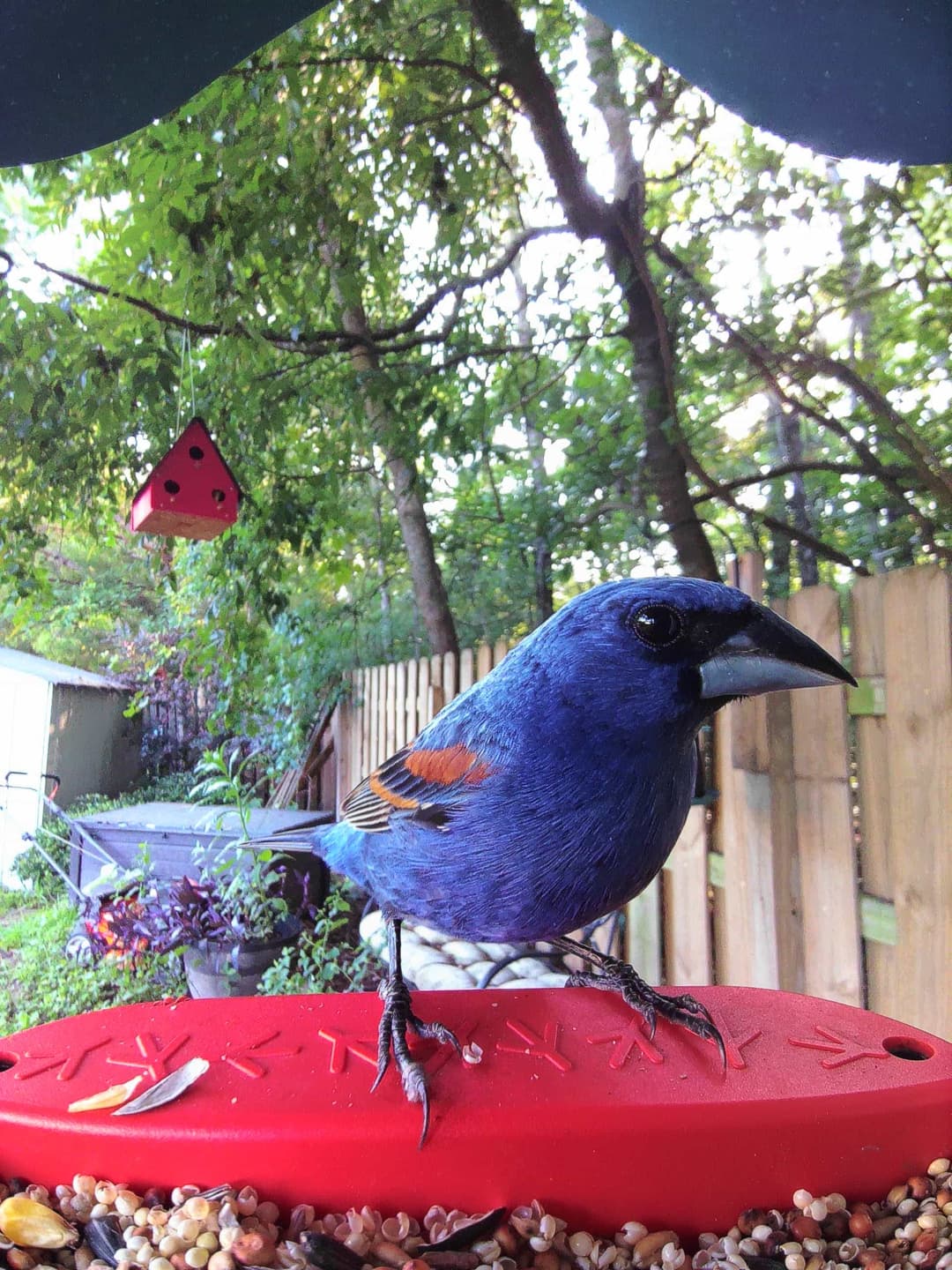
Blue Grosbeak vs Brown-Headed Cowbird
Lazuli Bunting vs [Select a bird]

[Select a bird]
Pick a bird to compare
Blue Grosbeak vs [Select a bird]
[Select a bird]
Pick a bird to compare