
Lazuli Bunting
Lazuli Bunting
Passerina amoena


Quick Identification guide
Quick Identification guide
Male
- •
vivid blue plumage on the head and back
- •
Rust-colored breast and throat that contrasts with blue
- •
white belly and a short conical beak
Female
- •
grayish-brown overall with subtle blue hints on wings
- •
Pale buff throat and undertail coverts
- •
Two indistinct wing bars add subtle detail
What does a lazuli bunting sound like?
The Lazuli Bunting's vocalizations comprise a high-pitched, excited series of warbled phrases, typically starting with repeated first notes. Its song descends the scale and ascends towards the end, echoing the Indigo Bunting's song but with less distinct phrases and only repeating the initial ones. The call patterns are complex and undulating with a buzzing, chirp or chip, and whistle-like type of sound.


Description
Lazuli buntings are incredibly beautiful birds. In fact, Passerina amoena literally means beautiful sparrow. Did you know that each develops its own unique song that it'll sing throughout its life? Not only that, they can recognise each other by voice, forming song neighbourhoods. This means variations of one song are sung by birds living in the same area. They will tolerate birds with the same accent but prove quite hostile to outsiders!
The lazuli bunting can weigh between 13to18grams and be from13to15centimeters tall.
The Lazuli Bunting typically lives for about 7 years, but the oldest ever recorded was 11 years. Compared to other buntings, such as the Indigo Bunting which lives up to 13 years, its lifespan falls in the moderate range. However, the Painted Bunting tends to have a slightly shorter lifespan, usually up to 6 years.
Did you know?
Most popular questions about lazuli bunting
How to recognise a lazuli bunting?
General appearance
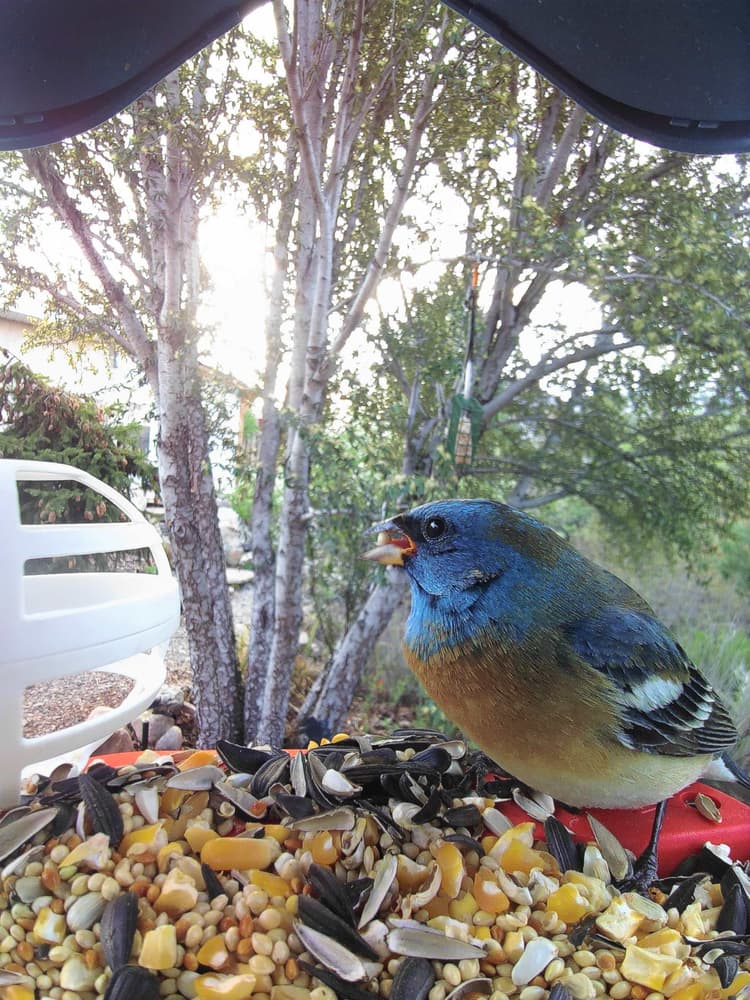
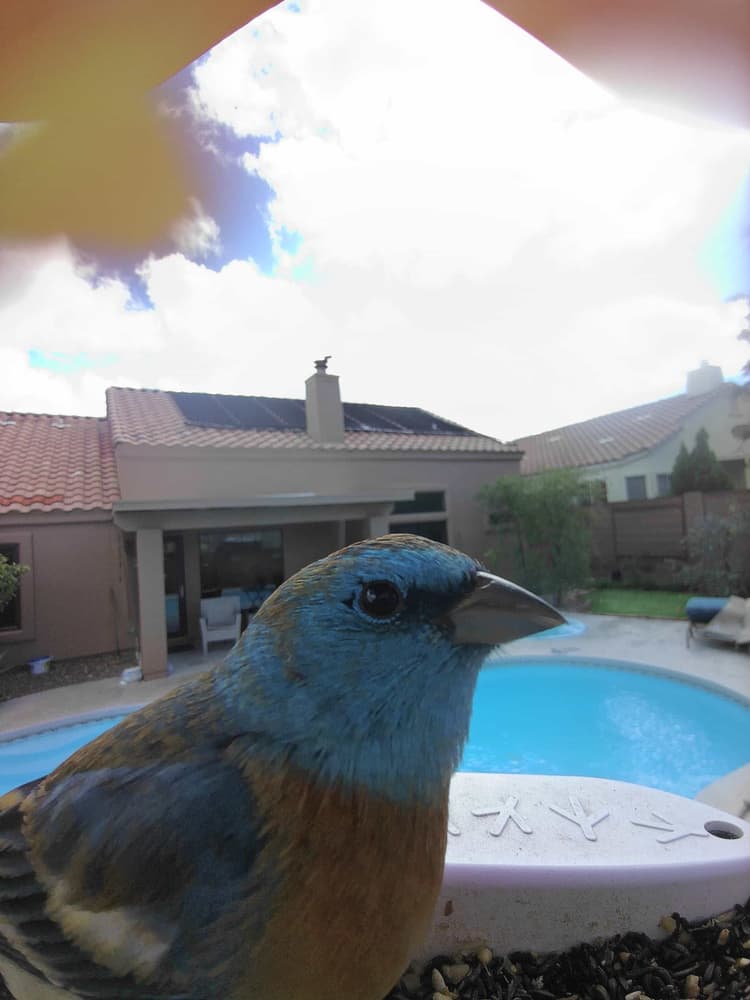
The lazuli bunting is a small passerine bird with a compact body and a distinctive blue and orange coloration. Its short, conical bill is well-suited for seed-eating. The bird's wings and tail feathers are dark with bluish edges, offering a striking contrast to its vibrant body colors.
Male vs female
Males are renowned for their bright blue plumage on the head and back, contrasting with a vivid orange breast and white belly. Females, however, are more subdued with brownish tones overall, tinges of blue on the wings and tail, and paler underparts. This sexual dimorphism helps in easy identification.
Juvenile
Juvenile lazuli buntings resemble females in their coloration with predominantly brown feathers. As they mature, young males gradually develop the characteristic blue and orange plumage seen in adults. During this transition, they may exhibit a patchy mix of brown and emerging blue feathers.
Often mistaken for
Indigo Bunting vs Lazuli Bunting
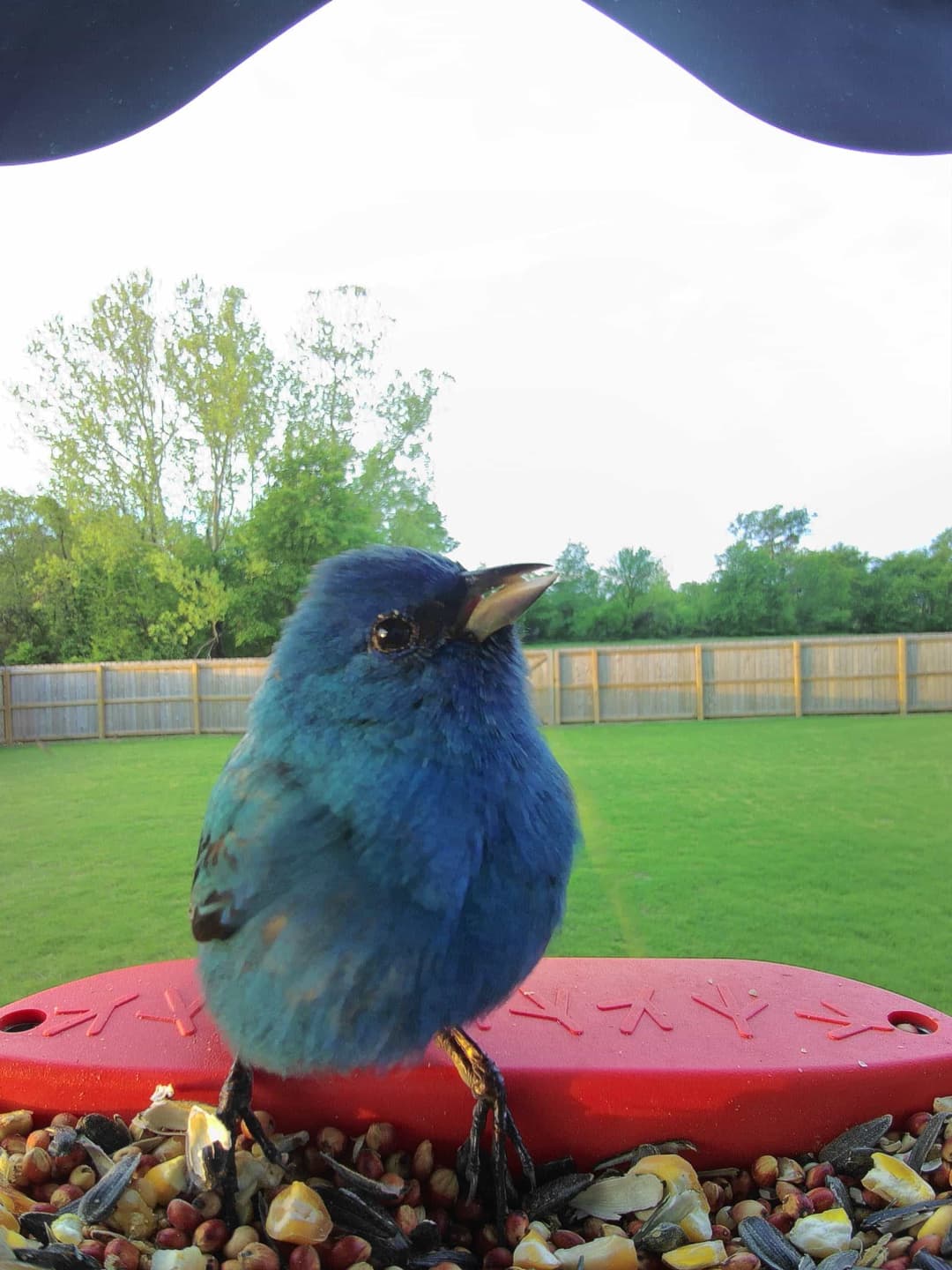
The Lazuli Bunting has a distinctive light blue head and back, rusty orange breast, and white wingbars. In contrast, the Indigo Bunting appears uniformly blue during the breeding season without the orange and white highlights.
Varied Bunting vs Lazuli Bunting
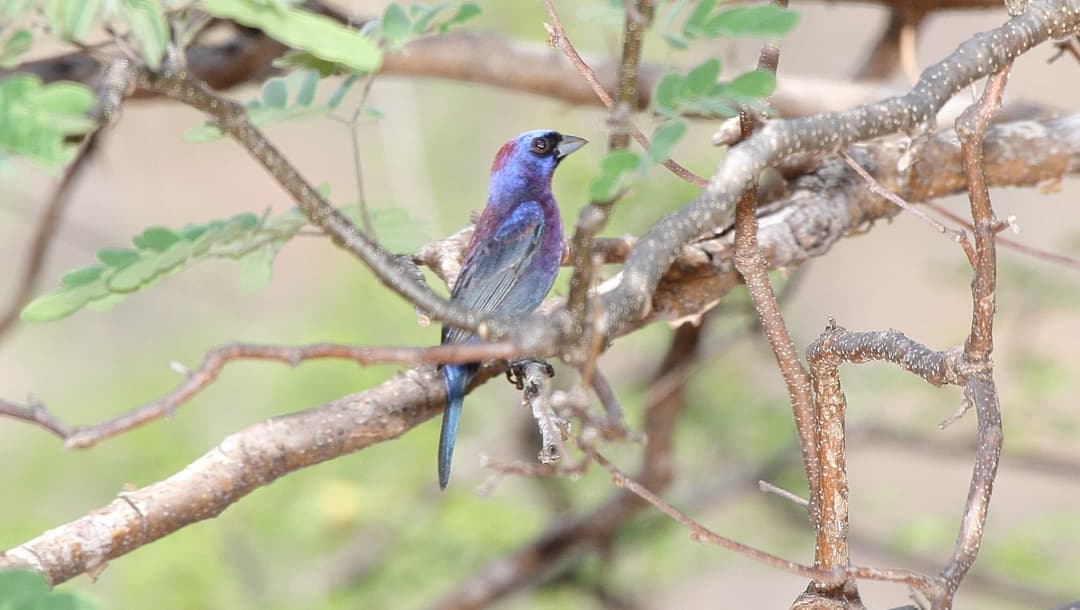
Lazuli Buntings show a lighter blue and orange pattern, while Varied Buntings have a deeper, more purplish hue with less contrasting colors. Look for the stark white wingbars on the Lazuli.
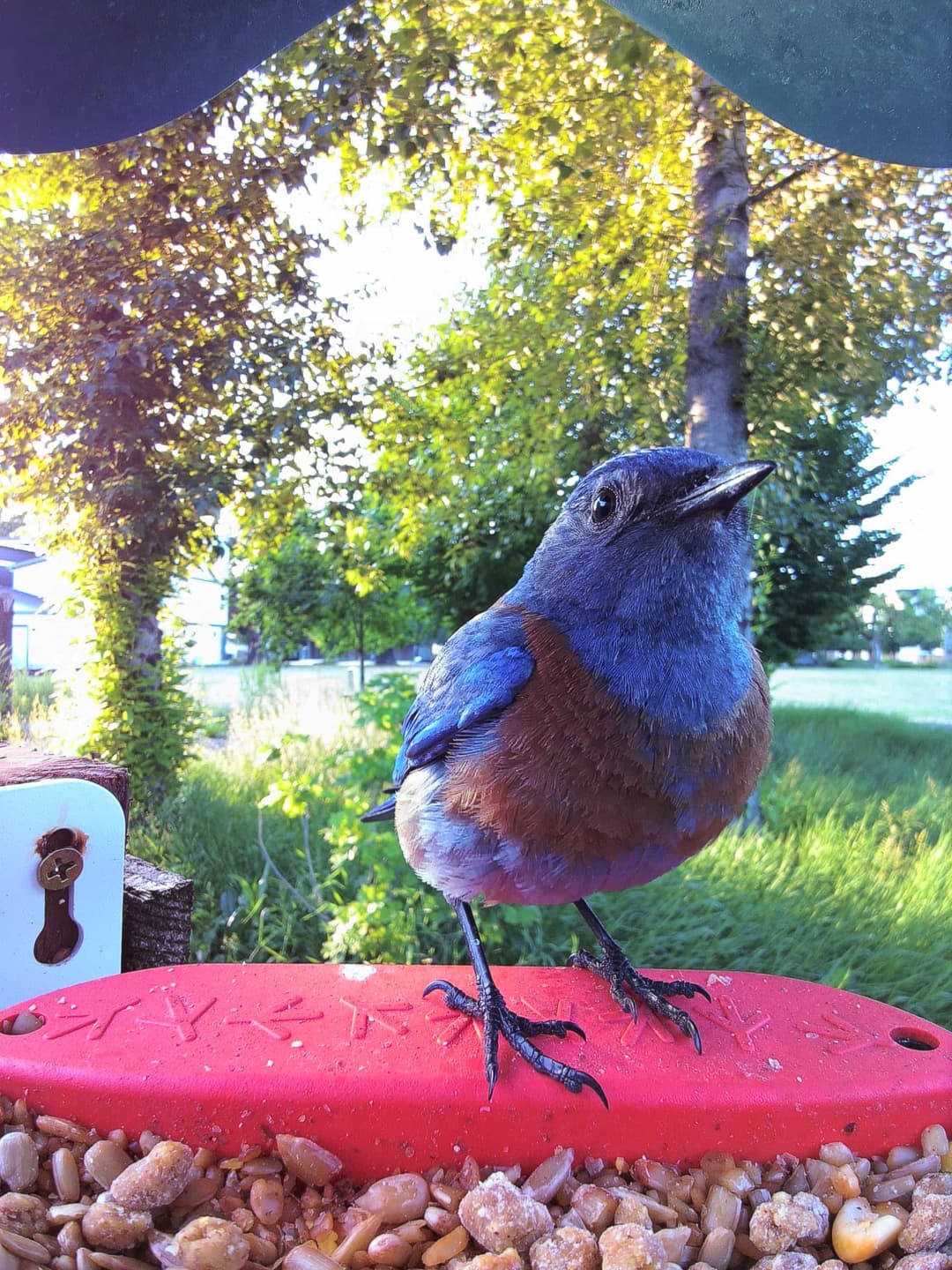
Western Bluebird vs Lazuli Bunting
While both birds have blue and orange colors, the Lazuli Bunting is smaller with a shorter tail and has more defined white wingbars, unlike the Western Bluebird’s longer tail and lack of strong wing patterns.
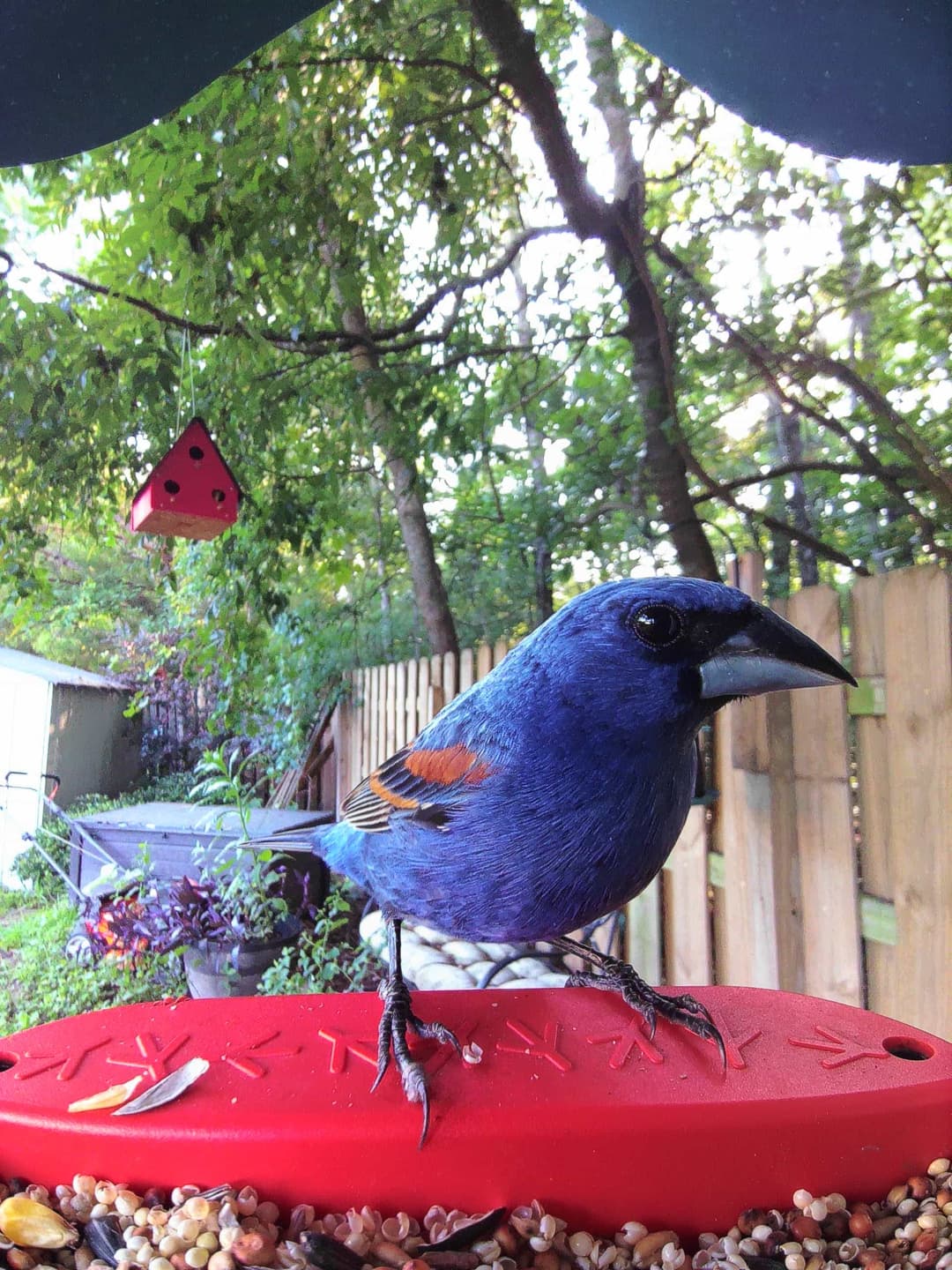
Blue Grosbeak vs Lazuli Bunting
Blue Grosbeaks are larger with a thicker beak and deeper blue shade. Lazuli Buntings have a lighter appearance with distinct orange breasts and white wingbars. Beak size is a key differentiator.
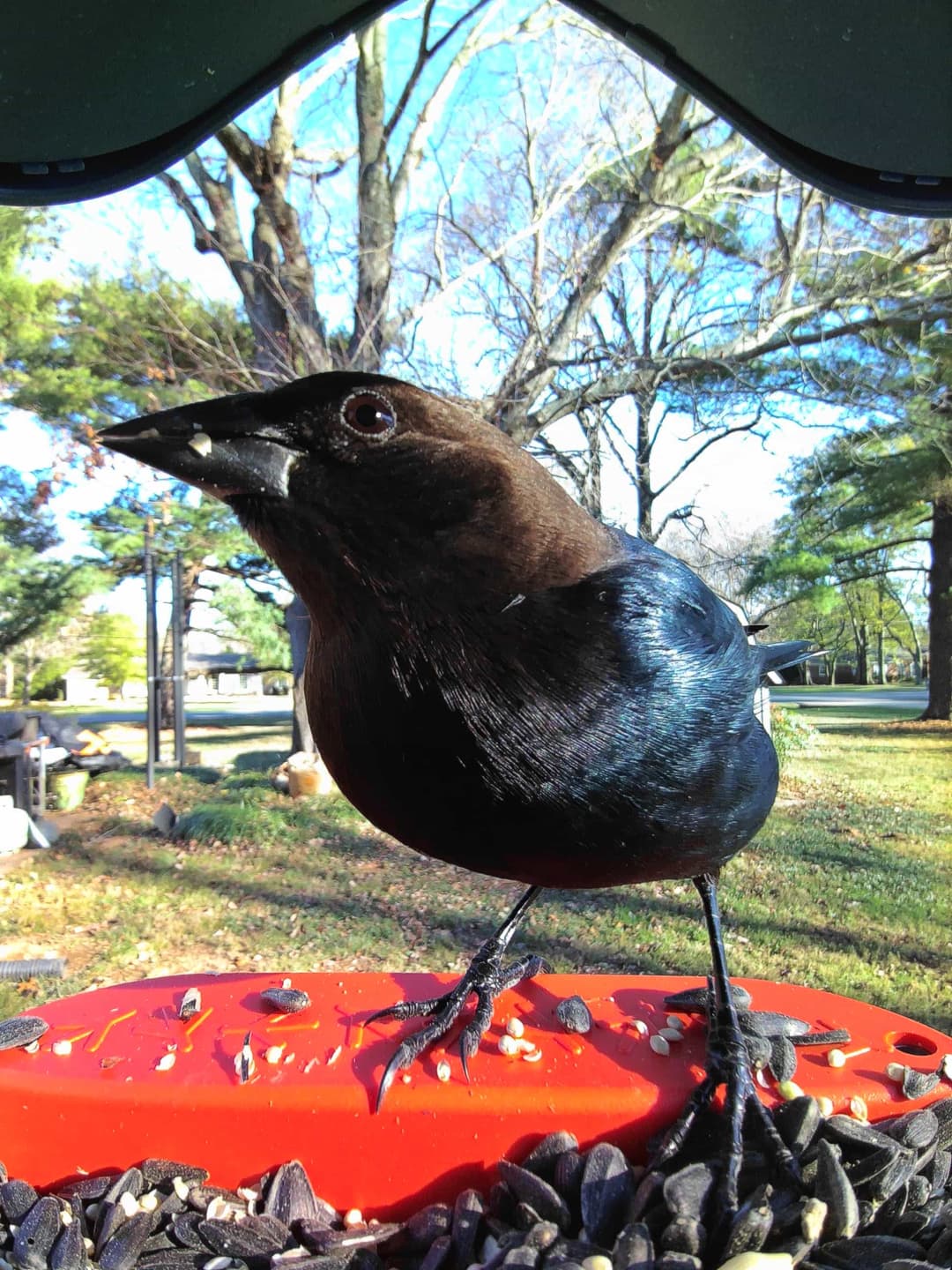
Brown-Headed Cowbird vs Lazuli Bunting
Brown-Headed Cowbirds are mostly dark with a shiny brown head, lacking the blue and orange colors of Lazuli Buntings. The buntings' vibrant patterns and smaller size make identification easier.
Breeding and nesting habits of the lazuli bunting
Mating behaviors
Male Lazuli Buntings sing to defend their nesting territory. In areas where Lazuli and Indigo Buntings' ranges overlap, males will also defend against each other to establish dominance and secure nesting areas.
Nesting details
Nests are crafted by the female in shrubs, vines, or low trees, typically placed 2-4 feet off the ground. They are securely attached to vertical stems or forked branches. The nest is an open cup shape, constructed of grass, weeds, and leaves, with lining made of finer grass and occasionally animal hair.
Eggs and chick-rearing
After nesting, the female lays eggs which she incubates until they hatch. Both parents may be involved in feeding the chicks once they are born, ensuring they receive adequate nutrition until they are ready to fledge.
What does a lazuli bunting like to eat?
Berries
Insects
Seeds
Spiders
Natural diet
The lazuli bunting primarily consumes seeds and insects. During the summer, more than half of its diet consists of insects such as grasshoppers, caterpillars, beetles, true bugs, wild bees, and ants. In the winter, its diet shifts to include a higher proportion of seeds. These seeds mainly come from grasses, along with weed seeds and waste grain. The young lazuli buntings are mostly fed insects.
Bird feeders
Lazuli buntings are occasionally drawn to bird feeders that offer small seeds such as millet or sunflower seeds. Feeders with mixed birdseed blends can also attract them, especially during their migration period when alternative food sources are beneficial.
Favoring foods for lazuli buntings
To tempt a Lazuli Bunting into your yard, start by offering their favorite snacks. They particularly enjoy seed mixtures like those offered by Bird Buddy. These seeds are handpicked by experts to suit the specific nutritional needs of various birds, making them irresistible for the buntings. Offering these delectable seeds in a ground feeder or a low hanging bird feeder will make your yard an attractive dining spot for these pretty birds.
The perfect feeder for lazuli buntings
Lazuli Bunting thrives in open woodland, so consider placing feeders near trees or shrubs to provide a sense of safety. Offer seeds in tube feeders with large perches or hopper feeders, which are more manageable for buntings. Make sure the feeder has a high enough clearance from the ground to keep the birds safe from predators.
Extra tricks to tempt lazuli buntings
Keeping your bird feeders clean will make your yard more attractive to Lazuli Buntings. They also prefer fresh water for drinking and bathing. Adding a bird bath or a water feature could be a great way to attract them to your yard. And don't forget to sow native plants, their favorite is sunflower seeds, for an added attraction. Lastly, creating a quiet, safe environment will encourage them to drop by and stay longer, possibly staying late for an enchanting sing-along!
Where can you find lazuli buntings?

Primary habitat
Lazuli Bunting typically breeds in brushy areas with open grassy ground nearby. These habitats include scrub oak patches, chaparral, and streamside thickets.
Additional range
During migration and in winter, it can be found in weedy fields, open woods and brushy places. It also sometimes inhabits sagebrush or pinyon-juniper woods.
Do they migrate?
The lazuli bunting is a migratory bird. It breeds in the western regions of North America, particularly throughout parts of the Great Plains, the western United States, and southern Canada during the spring and summer months. The fall migration for lazuli buntings typically starts in late July, aligning with the migration patterns of many other bird species. During their migration, these birds move southwards to their wintering grounds. The primary wintering locations for lazuli buntings are in Mexico, particularly in the states of Sinaloa, Durango, and Nayarit. Periods of migration may see lazuli buntings straying east of their usual breeding range, particularly during spring as they return to northern areas for breeding. The migration route generally follows a southwestern direction from their northern breeding territories, crossing various ecological regions such as deserts and grasslands, to reach more temperate and subtropical areas in Mexico. Key stopover sites include riparian corridors and areas with abundant food resources, such as seeds and insects, which are critical for refueling during the long journey. Migration timing can vary slightly depending on environmental conditions, but typically aligns with food availability and weather patterns.
What is the role of lazuli buntings in nature and how to protect them?
Conservation status
The lazuli bunting is a widespread and common bird species with stable population numbers, suggesting it is not currently considered vulnerable or endangered. While there are no significant conservation efforts specifically targeting this species, maintaining healthy habitats is crucial. Key threats could include habitat loss due to urban development and agriculture. However, its stable population indicates it is not facing immediate large-scale threats. Conservation efforts for their environments, such as protecting grasslands and riparian zones, indirectly benefit the lazuli bunting, helping ensure their continued stability and abundance in their natural habitats.
Ecological role of lazuli buntings
Its role in the ecosystem
The Lazuli Bunting plays a pivotal role in the ecosystem. Its feeding behavior contributes to pest control as it eats insects such as grasshoppers, caterpillars, beetles, bugs, wild bees, and ants. Consuming these insects helps keep their numbers in check, preventing infestations that may be harmful to vegetation and other species. Furthermore, its diet comprises mainly seeds during winter, implying a role in seed dispersal. By eating the seeds of grasses and weeds, then excreting them elsewhere, the Lazuli Bunting aids in the spread of these plants across its territory, promoting plant diversity and growth. In regions where they overlap with Indigo Buntings, their territorial behavior may impact and shape vegetation patterns. Additionally, the nesting habit of the Lazuli Bunting, building nests in shrubs, vines, or low trees, might potentially influence the composition and structure of these small ecosystems.
How to help protect lazuli buntings
Preservation tips
Habitat preservation strategies
The Lazuli Bunting predominantly relies on riparian and bushy areas for their habitat. Maintaining and protecting these natural habitats is of prime importance. Avoid substantial development in these regions and prohibit practices leading to deforestation and habitat destruction. Implement controlled burning in wooded areas to rejuvenate plant life which constitutes their food source.
Community science initiatives
Engage community in citizen science programs where they observe and record the presence of Lazuli Bunting, which helps in tracking their population and migration patterns. Encourage participation in bird sanctuary volunteering, community education programs about the importance of varied ecosystems, and the role of Lazuli Bunting in those environments. Promote the creation of backyard habitats providing water, food, and cover for these birds.