
Western Bluebird
Western Bluebird
Sialia mexicana


Quick Identification guide
Quick Identification guide
- •
The male Western Bluebird showcases bright blue upperparts with a contrasting rusty-orange breast and throat
- •
Females are more subdued, displaying grayish-blue wings and tail with a paler orange wash on the chest
- •
Both sexes have a slender build, a short, straight beak, and relatively long legs
What does a western bluebird sound like?
The vocalizations of the western bluebird are diverse with soft calls resembling 'phew' and 'chuck' sounds. Its song typically emits as a subdued 'cheer, cheer-lee, churr'. The bird’s calls exhibit a falling or flat pattern and are typically perceived as a chirp, chip, or whistle. These distinct sounds represent the unique communication language of the western bluebird.


Description
The western bluebird was hailed as a symbol of sunrise and renewal in the Navajo tradition and continues to symbolise happiness and joy in US culture. It has been the subject matter of songs by Shirley Temple, Duke Ellington and, of course, Judy Garland in The Wizard of Oz.
The western bluebird can weigh between 24to31grams and be from16.5to19centimeters tall.
The western bluebird typically lives between 4-7 years. In comparison, the relative species like the eastern bluebird has a lifespan of 6-10 years, and the mountain bluebird lives from 4-9 years. However, the longevity of these birds can vary based on factors such as predation and habitat quality.
Did you know?
Most popular questions about western bluebird
How to recognise a western bluebird?
General appearance
The Western Bluebird measures 6-7 inches or 15-18 cm in size, roughly the same as a Sparrow or a Robin. The bird exhibits a color palette of blue, gray, and orange. Its wing shape is rounded and its tail shape has a notched, square tip. Another specific feature is the thicker bill of the Lazuli Bunting.
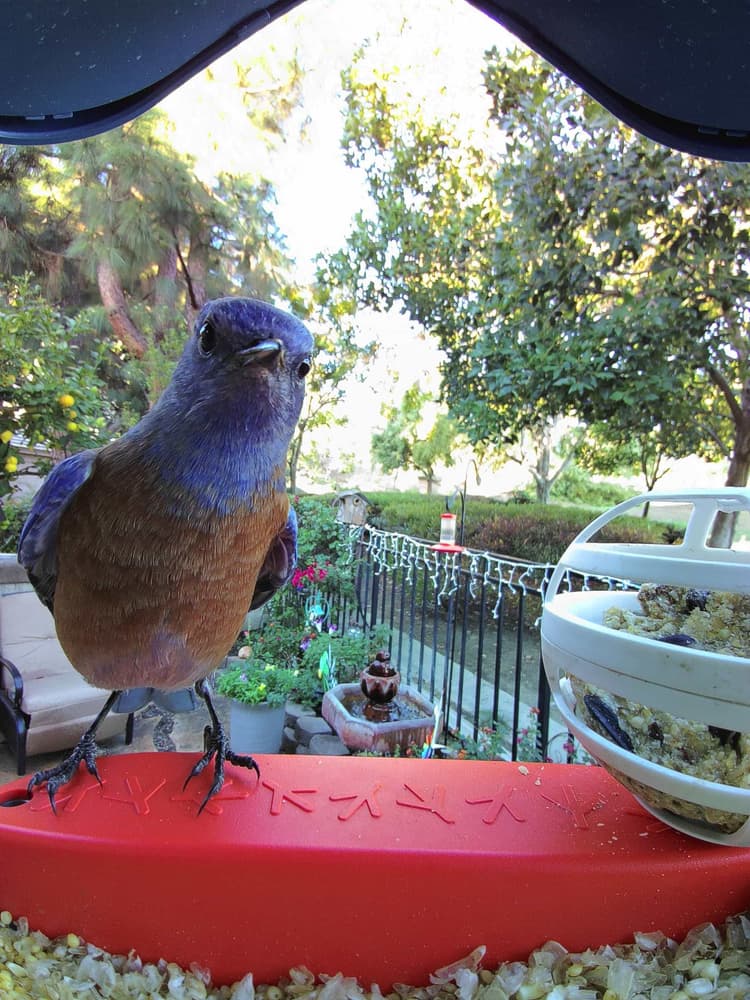
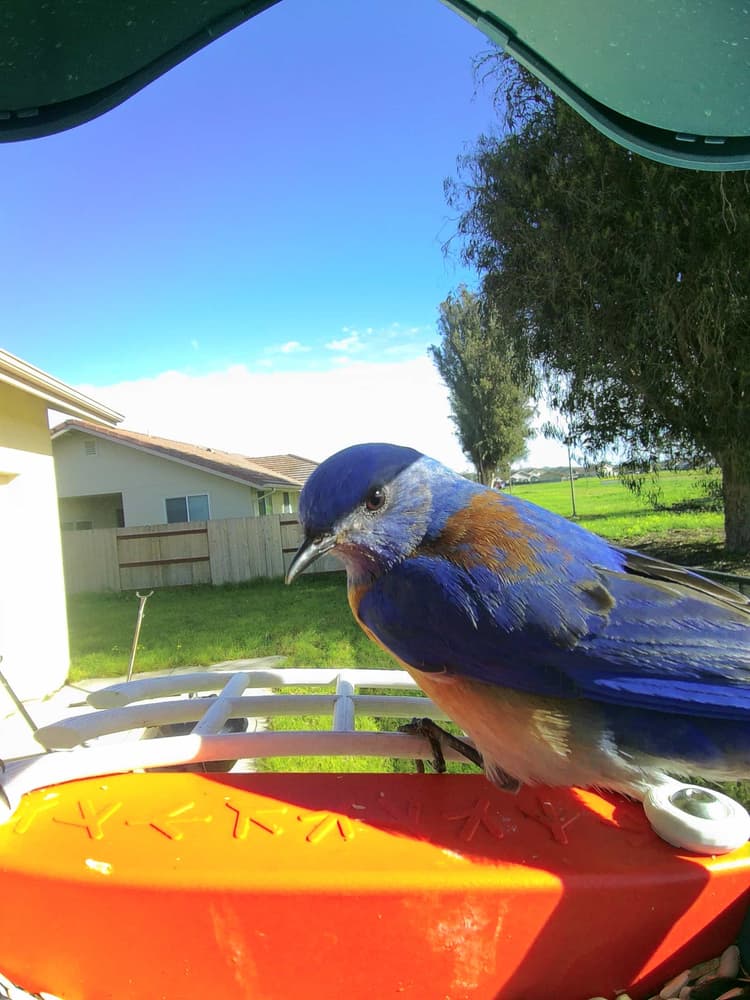
Male vs female
In terms of coloration, males are a deep purplish-blue on their upper parts and throat, with reddish-brown on their chest and sometimes at the center of their back. Their belly is a distinguishing gray color, different from the blue throat of the Eastern Bluebird. In contrast, female Western Bluebirds are much less colorful. They are duller and grayer than males, possessing a solid gray throat.
Juvenile
Juvenile Western Bluebirds have a notably different appearance from adult bluebirds. Most notably, young birds are dotted or spotted, reflecting their immature development. As they grow, they will gain the adult coloration of their respective genders.
Often mistaken for
Mountain Bluebird vs Western Bluebird
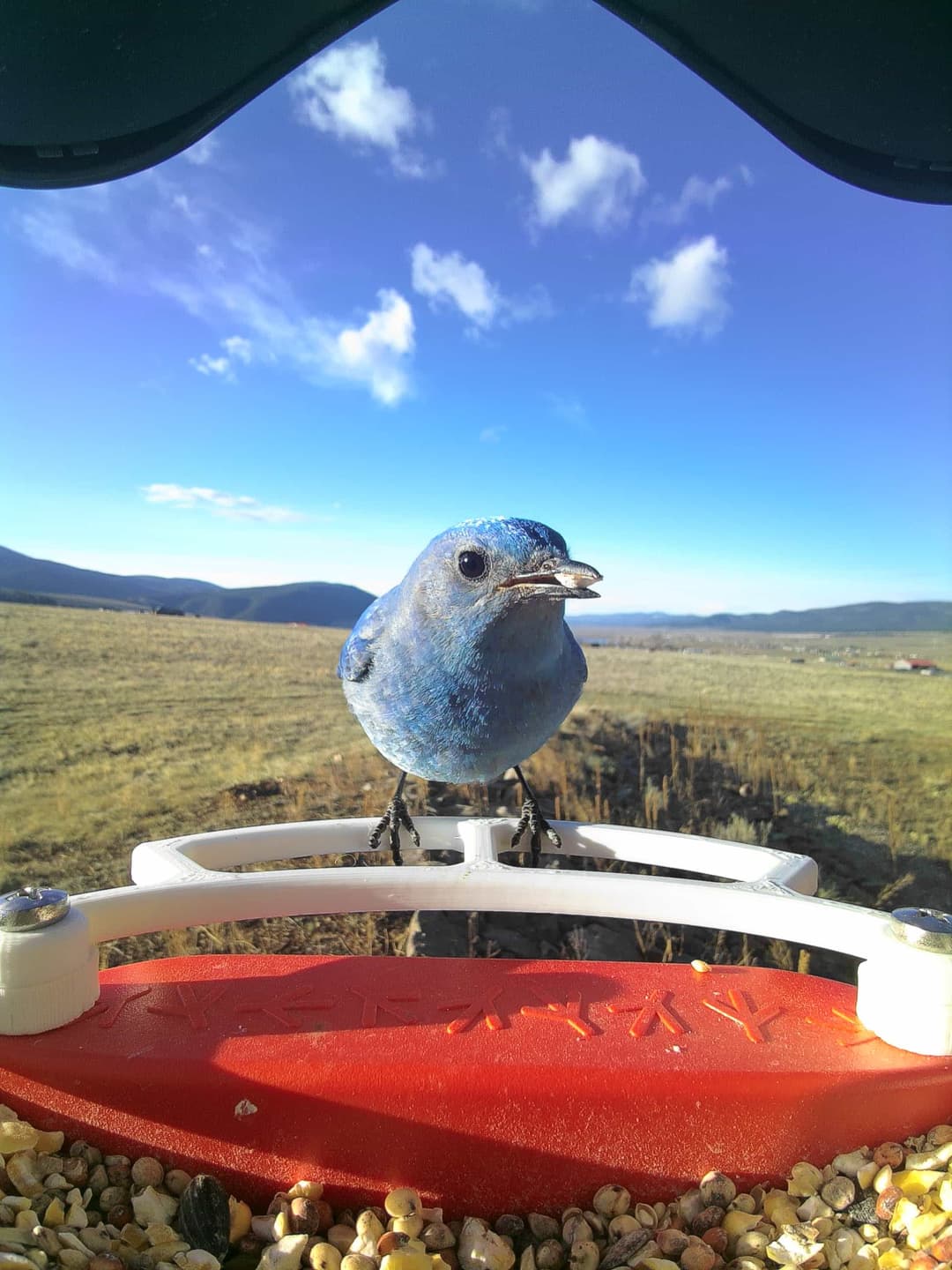
The Western Bluebird has a rusty orange chest and shoulders, whereas the Mountain Bluebird is entirely blue without the orange markings. Western Bluebirds are overall darker with a more pronounced contrast between the blue and orange.
Eastern Bluebird vs Western Bluebird
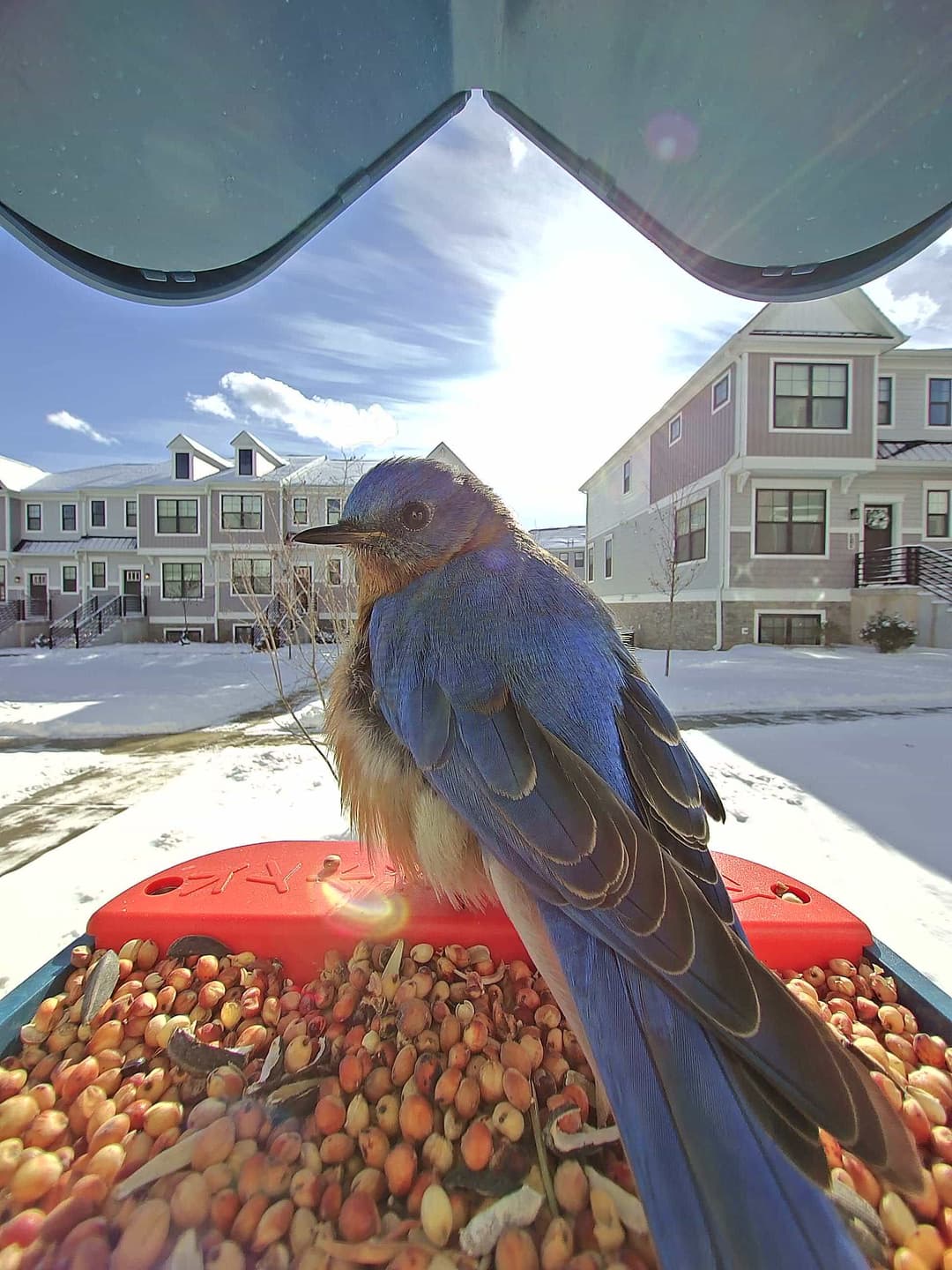
Eastern Bluebirds display brighter and more vibrant orange and blue compared to the more muted tones of the Western Bluebird. The Eastern's throat is blue, while the Western's throat is often orange. Check their habitats as they have limited range overlap.
Lazuli Bunting vs Western Bluebird
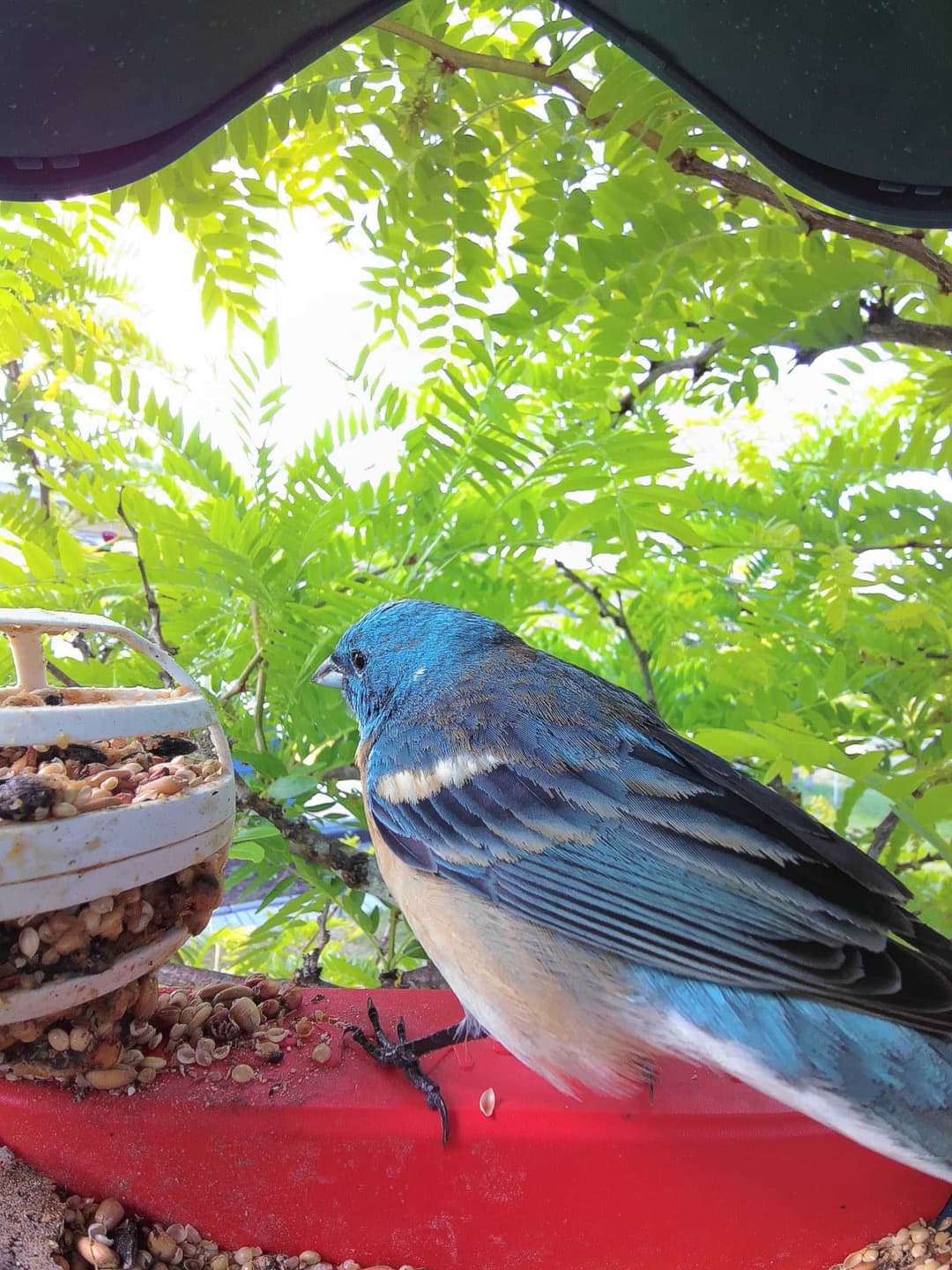
Lazuli Bunting has a vivid blue head and back but a brighter white belly and a shorter bill compared to the Western Bluebird. The bunting’s chest is orange, yet a more distinct line separates the orange from the white belly.
California Scrub-Jay vs Western Bluebird
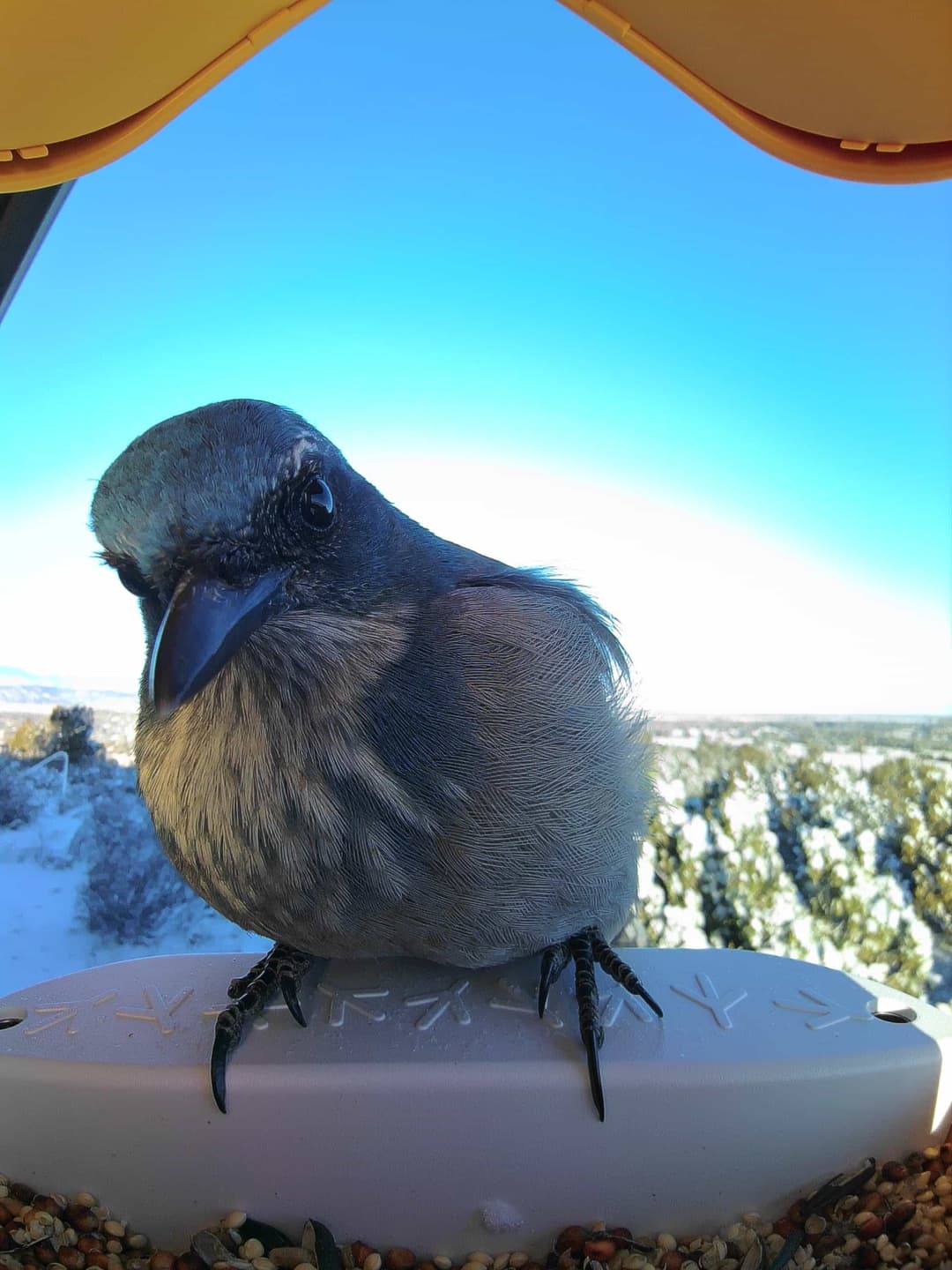
Western Bluebirds are smaller and less robust than the California Scrub-Jay. Scrub-Jays lack the orange coloring and have a crestless head with more grey on their bodies and a white throat.

Woodhouse’s Scrub-Jay vs Western Bluebird
The Western Bluebird is more petite with distinct orange coloring, while Woodhouse’s Scrub-Jay is larger, crestless, and predominantly blue and grey without the orange chest.
Steller’s Jay vs Western Bluebird
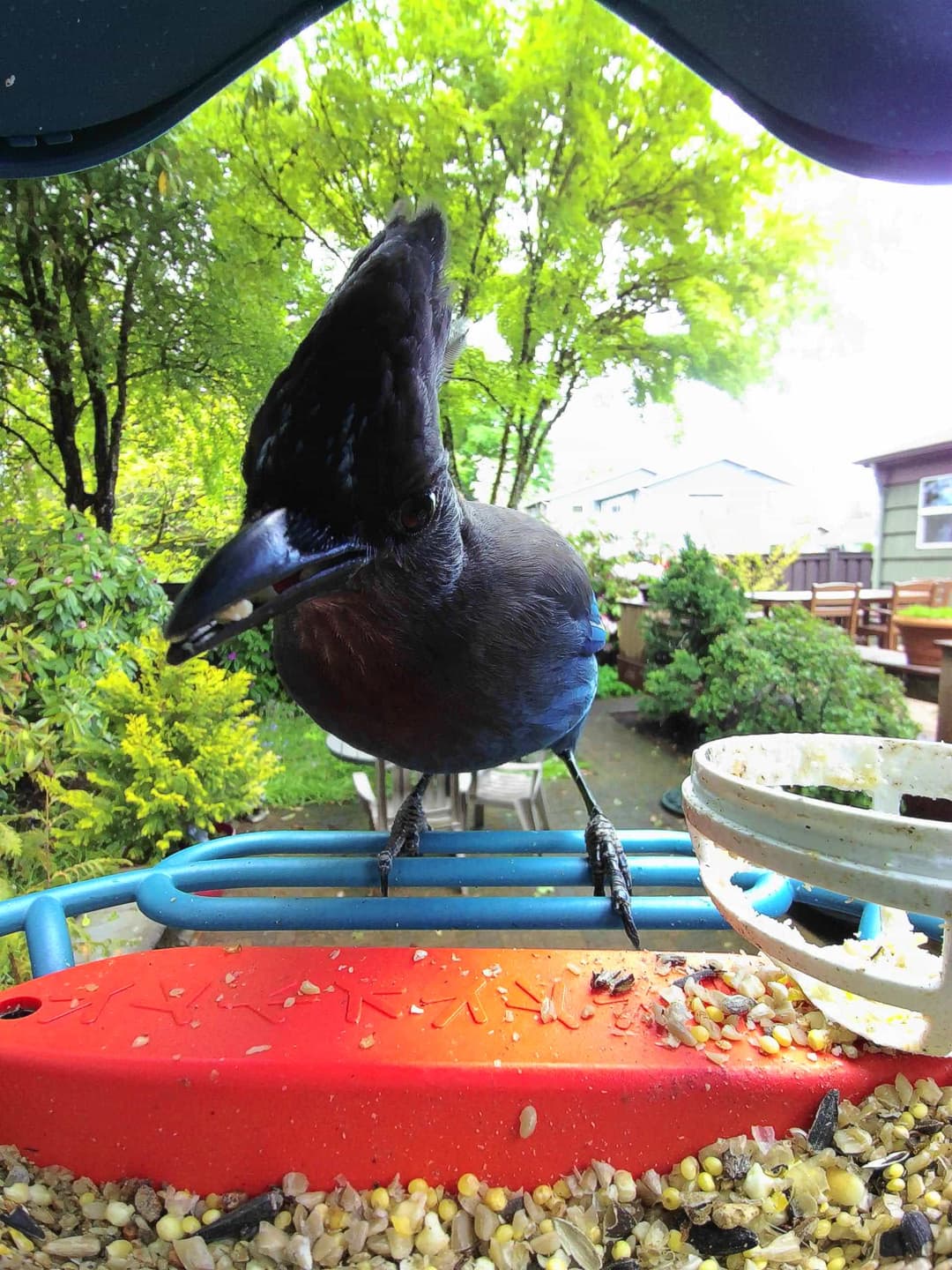
Steller’s Jay is much larger than the Western Bluebird, with a distinctive crest and a darker blue coloring. Steller’s lacks the orange on the chest and has more black on the head.
Breeding and nesting habits of the western bluebird
Mating behaviors
Male western bluebirds typically arrive on breeding grounds before females to establish territory by singing. During courtship, the male may perform a fluttering display in front of the female with wings and tail partly spread while singing. He may also engage in courtship feeding, offering food to the female.
Nesting details
Western bluebirds prefer cavities for nesting, such as natural hollows in oak or pine trees, old woodpecker holes, or birdhouses. They may occasionally use cavities in buildings. Nests are usually placed fairly low but can be found up to 50 feet above the ground. The female primarily constructs the nest, forming a loose cup from twigs and weeds, lined with finer grass.
Eggs and chick-rearing
The female lays and incubates the eggs, while the male may provide food. Once hatched, both parents participate in feeding the chicks. For those interested in attracting western bluebirds to their gardens, installing birdhouses can provide suitable nesting sites, ideally placed in open areas and away from dense foliage to mimic natural preferences.
What does a western bluebird like to eat?
Berries
Fruits
Insects
Snails
Spiders
Natural diet
The diet of the western bluebird primarily consists of insects and berries. During the summer months, insects are predominant in their diet, including grasshoppers, caterpillars, beetles, ants, and various other insects. In the winter, the bluebird's diet shifts to include a significant amount of berries and small fruits. Some of the berries they consume are the fruits of mistletoe, juniper, and elderberry.
Bird feeders
Western bluebirds are not frequent visitors to bird feeders. However, they might occasionally be seen at feeders offering mealworms, which mimic their natural diet of insects. They may also be attracted to feeders with fruit offerings, like diced apples or berries, aligning with their fondness for small fruits and berries.
Preparation of your yard
The first step in attracting western bluebirds is to make your yard hospitable to them. They prefer environments that provide both feeding and nesting locations. Setting up a bluebird house with the entry hole facing towards the east is recommended. This is because they prefer to avoid the strong afternoon sun and winds when entering and exiting their homes.
Recommended food and feeder
Western bluebirds enjoy a variety of foods including insects, berries, and fruits. However, for bird feeders, we recommend Bird Buddy seeds. Expertly chosen for each season, these seeds will provide the nutritional value the birds need and attract them to your yard. In terms of feeder types, the western bluebird prefers a platform or tray feeder that is about 5-7 feet off the ground.
Fun tricks to lure them in
Add a water source such as a birdbath to your garden. Birds are drawn to the sound of water and will dive in for a bath or a sip. Playing recordings of bluebird songs can also be an excellent way to draw them to your yard. But remember to use these recordings judiciously to avoid disturbing or confusing the birds. Another fun way is to put out a mirror. Bluebirds are known to be attracted to their reflection and a mirror can be an innovative way to bring them to your yard.
Where can you find western bluebirds?

Primary habitat
The western bluebird primarily inhabits scattered tree areas, open conifer forests, and farms. It breeds in semi-open locations such as pine and oak woods, streamside groves, and ranch country, but avoids hot, dry regions.
Additional range
In winter, it is found in semi-open terrains, brush, deserts, and pinyon-juniper woods. It also occupies varied open or semi-open habitats like farmland.
Do they migrate?
The western bluebird exhibits both migratory and non-migratory behaviors depending on the geographical region. In the southern areas of its range, the western bluebird tends to be a permanent resident, staying in one place year-round. However, in the northern parts of its range, the species is migratory. These migratory birds typically arrive rather early in the spring and linger until late in the fall. The specific migration route and timing for northern populations are influenced by seasonal variations in food availability, particularly insects and berries. During winter, the range of the western bluebird fluctuates based on the abundance of these food supplies. As a result, the precise migratory paths and key locations are not strictly fixed and may vary from year to year. Typically, migratory western bluebirds from northern areas move southward to avoid harsh winter conditions, though exact routes and stopover sites are less documented compared to larger migratory birds. In summary, western bluebirds in northern regions do migrate, with the timing centered around early spring arrival and late fall departure, but the specific routes and destinations vary due to changes in food supply and environmental conditions.
What is the role of western bluebirds in nature and how to protect them?
Conservation status
The Western Bluebird is experiencing a decline in population across much of its range, suggesting a vulnerability due to loss of natural nesting sites. The provision of birdhouses as a conservation effort has not kept pace, indicating a significant threat to the species. No specific information is provided about whether the species is common or endangered.
Ecological role of western bluebirds
Its role in the ecosystem
The Western Bluebird plays a significant role in the ecology of its habitats. Predominantly feeding on insects, particularly grasshoppers, beetles, ants, caterpillars, and other insects, the bird acts as a natural pest controller, helping to control pest populations in ecosystems. Their feeding pattern often includes foraging by perching and then flying down to the ground for prey capture, contributing to insect population management. In winter, Western Bluebirds switch to a berry-centric diet, consuming fruits of mistletoe, juniper and elderberry among others. Their significance extends to seed dispersal due to this dietary habit. By eating the berries, they help in cross-pollinating plants, ensuring the propagation and continuation of these species. Furthermore, their nesting habit in natural hollows, old woodpecker holes and birdhouses aids in the recycling of existing resources in the eco-system. Males also help in territory defense, and both parents share in feeding the young, exhibiting strong circle of life contributions.
How to help protect western bluebirds
Preservation tips
Habitat preservation strategies
Promote and partake in habitat conservation programs that focus on preserving oak woodland and pine-oak habitats, the western bluebird's primary habitats. Land development and deforestation are major threats; hence, oppose such activities where these habitats exist. Install and maintain nest boxes in appropriate habitats to provide safe nesting spots as natural cavities are often in short supply.
Community science initiatives
Engage in citizen science projects like the Great Backyard Bird Count or eBird. These projects collect valuable data on bird species population trends. Encourage public education programs about the western bluebird, their habitat needs, and threats they face. Advocate for policies protecting native bird species and their habitats. Additionally, partake in local bird banding and monitoring initiatives to aid researchers in understanding more about the species' needs.