
Indigo Bunting
Indigo Bunting
Passerina cyanea


Quick Identification guide
Quick Identification guide
- •
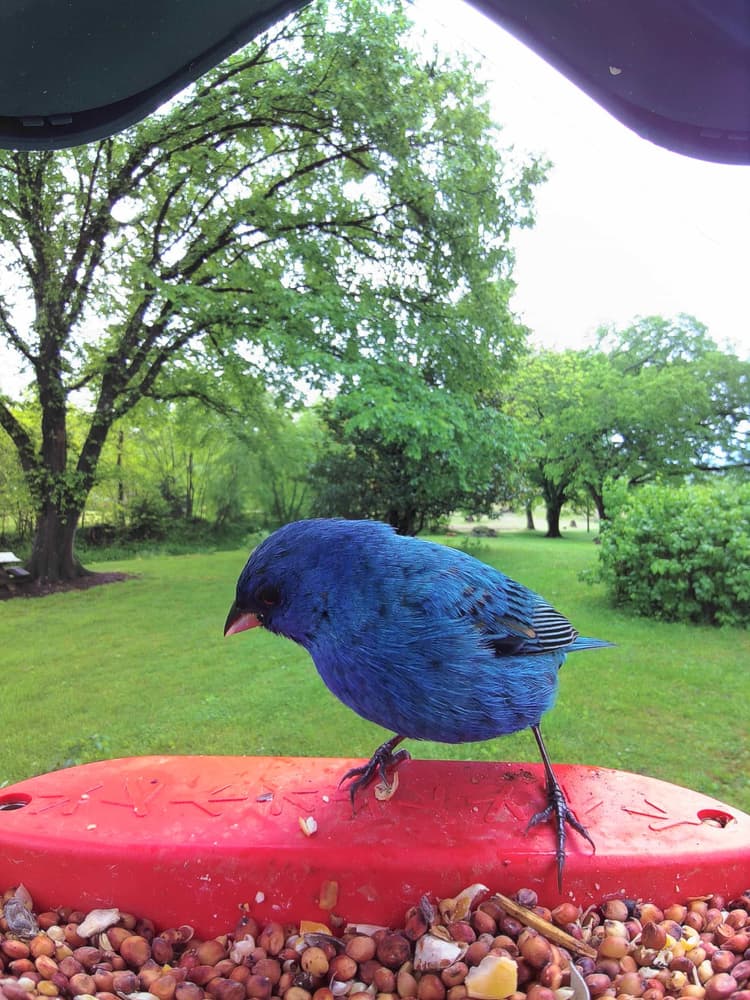
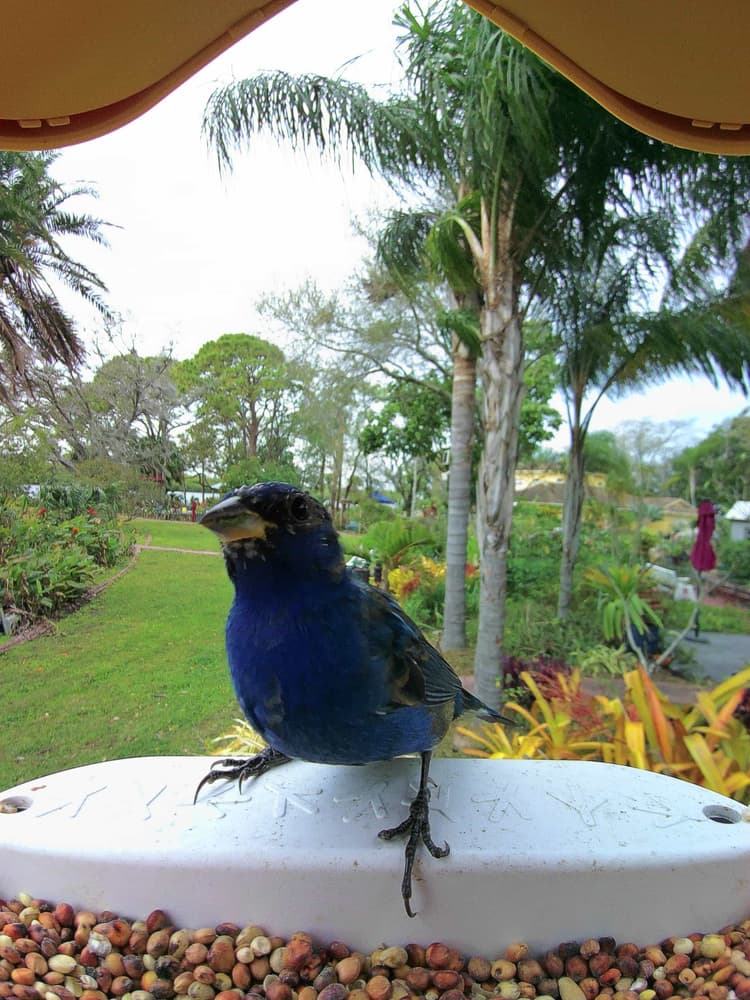
Males flaunt a brilliant blue plumage that glows especially in sunlight, while females and juveniles appear more muted brown with subtle blue hues
- •
Features a small, conical beak, adapted for seed consumption and lending a distinctive profile
- •
Compact, sparrow-sized build with a relatively short tail and no crest
What does an indigo bunting sound like?
The Indigo Bunting is known for its rapid, excited warble, uniquely featuring each note or phrase given twice. This bird's call pattern is complex, characterized by falling and undulating notes for varied expression. Its call types encompass a captivating array of buzzes, chirps or chips, and whistles, contributing to a rich and multifaceted vocal profile.


Description
Did you know that chicks pick up songs from nearby males? All birds that live in the same song neighbourhood sing the same song that gradually changes as bits and pieces get added to it. Indigo buntings have also been nicknamed blue canaries because of their striking feathers that are as blue as the sky or sea. Much like sailors these guys travel at night and use the stars as orientation. Mother Nature has given them a little upgrade – their internal clock allows them to adjust their angle of orientation to a star!
The indigo bunting can weigh between 12to18grams and be from12to13centimeters tall.
The Indigo Bunting typically lives up to 14 years in the wild, though the average lifespan is 2 to 4 years. Comparatively, related species such as the Painted Bunting and Lazuli Bunting also have similar lifespans. Predation, disease, and harsh environments are major factors that limit their longevity.
Did you know?
Most popular questions about indigo bunting
How to recognise an indigo bunting?
General appearance
The Indigo Bunting is characterized by a size comparable to a Sparrow, around 5 1/2 inches or 14 cm. Its main features include a rounded wing shape and a tail which can be notched, squared or rounded. Some seasonal variations can influence its coloration.
Male vs female
Adult males stand out with a dark blue color in spring/summer. However, during autumn, males along with females transition to a brown tone. They normally exhibit fine streaks on their chest and a blue tinge on their tail.
Juvenile
One-year-old males during summer could exhibit a distinctive marking, taking on a blue shade interspersed with a white belly. This can make them unique compared to their adult counterparts.
Often mistaken for
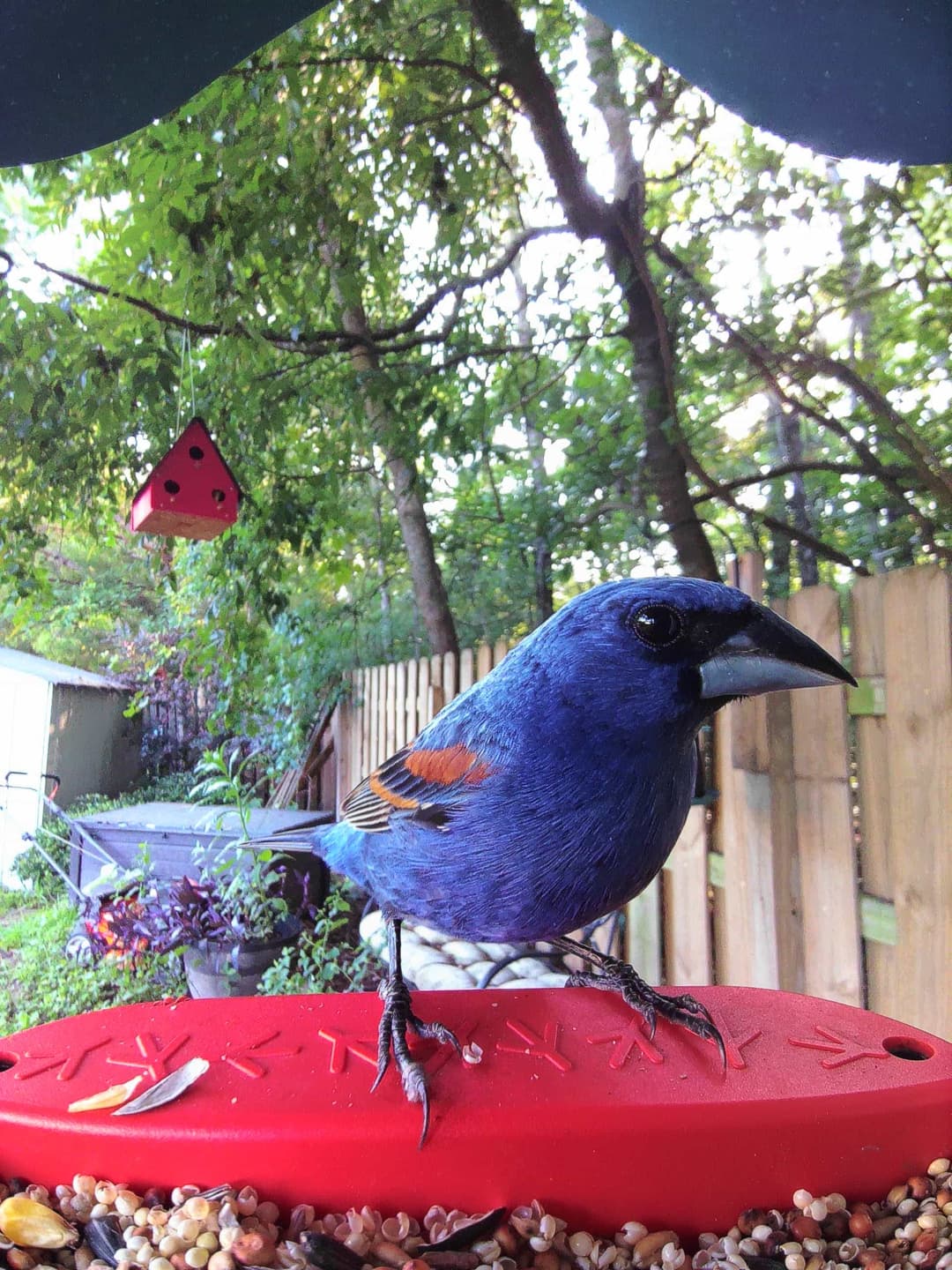
Blue Grosbeak vs Indigo Bunting
Indigo Buntings are smaller and have more uniform blue plumage compared to the Blue Grosbeak's larger size and chestnut wing bars.
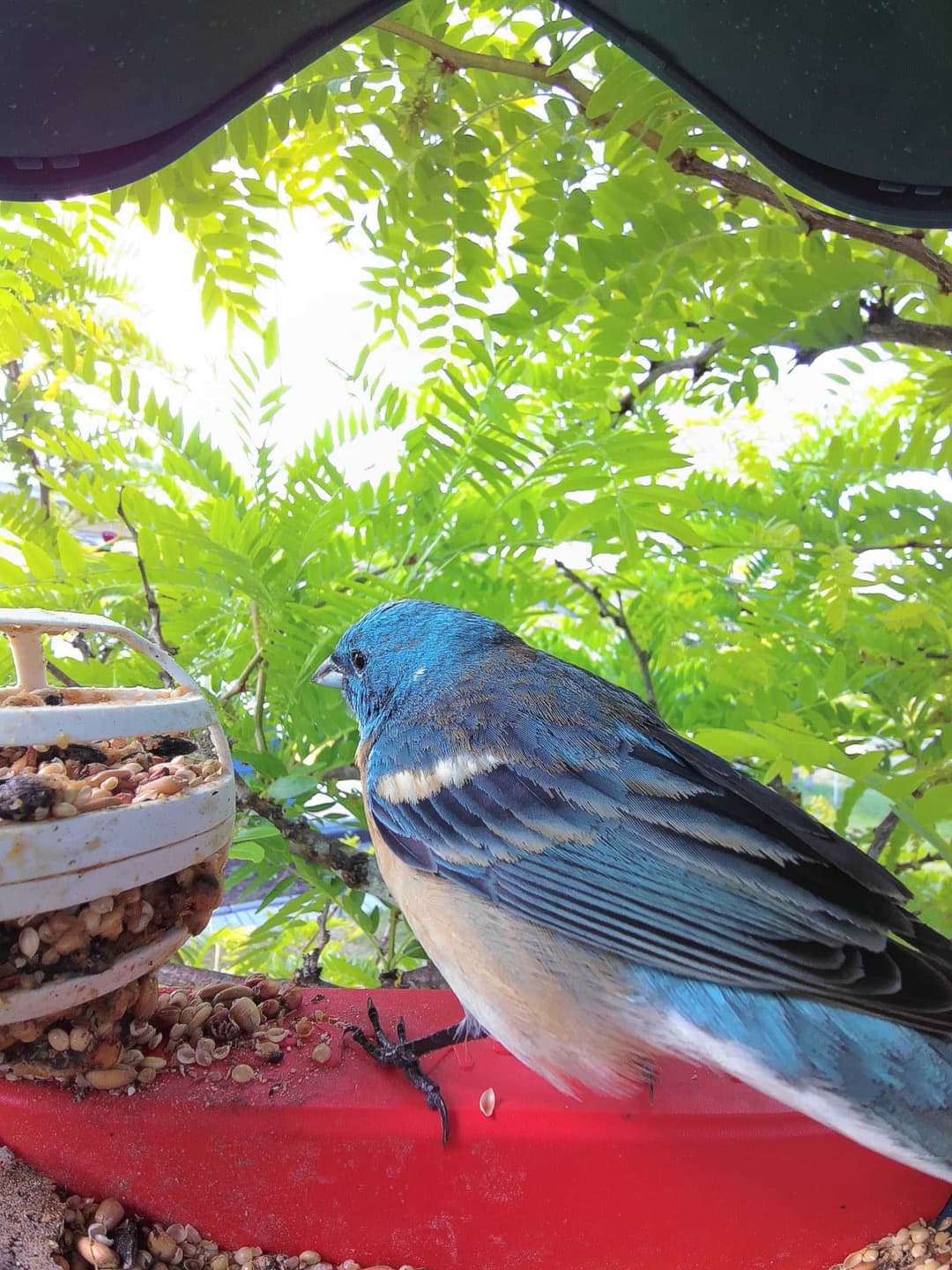
Lazuli Bunting vs Indigo Bunting
Indigo Buntings have a more solid blue color while Lazuli Buntings have a lighter blue head and back with an orange-brown breast.
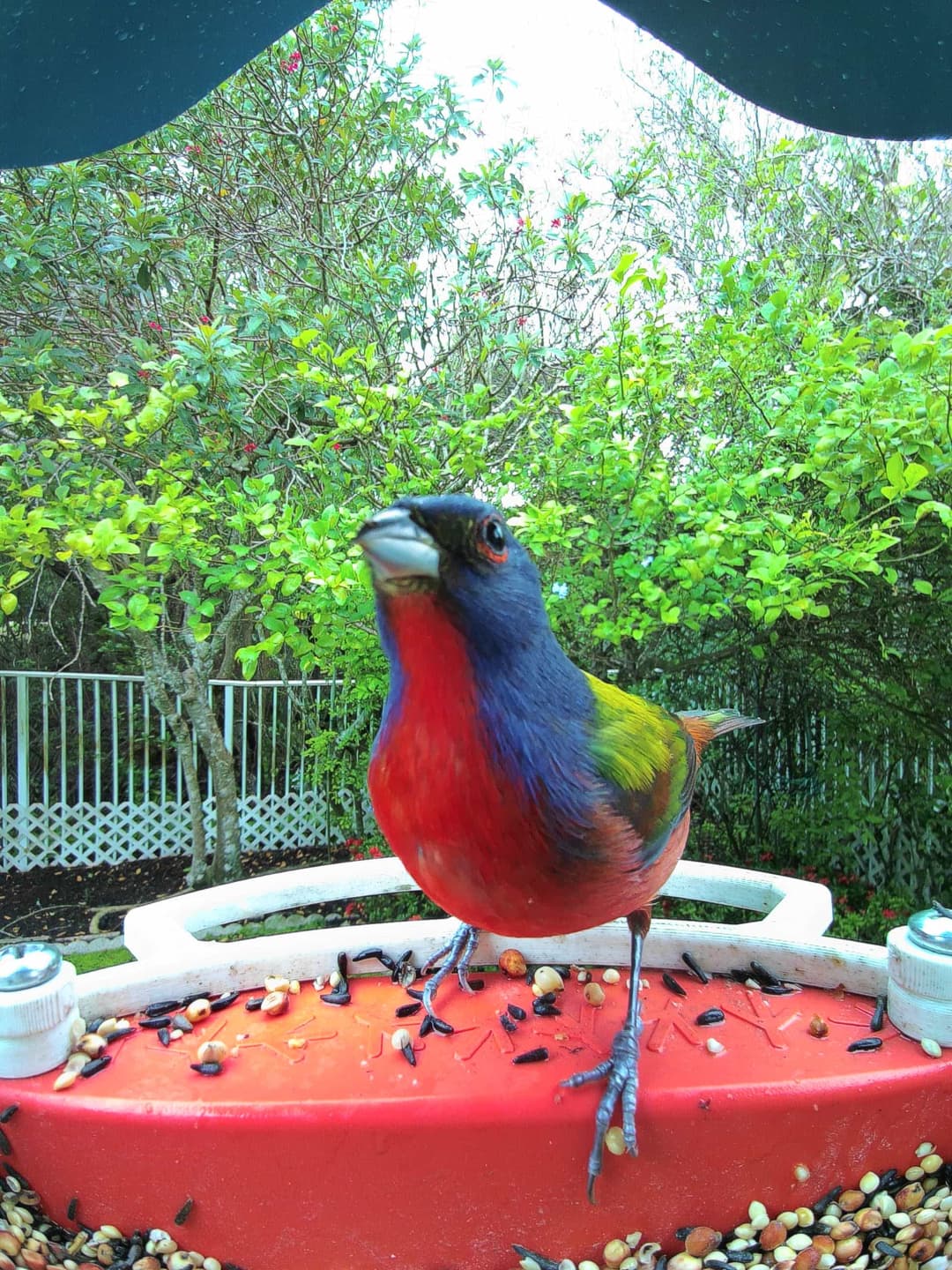
Painted Bunting vs Indigo Bunting
Indigo Buntings are entirely blue, whereas Painted Buntings show vivid red, blue, and green plumage.
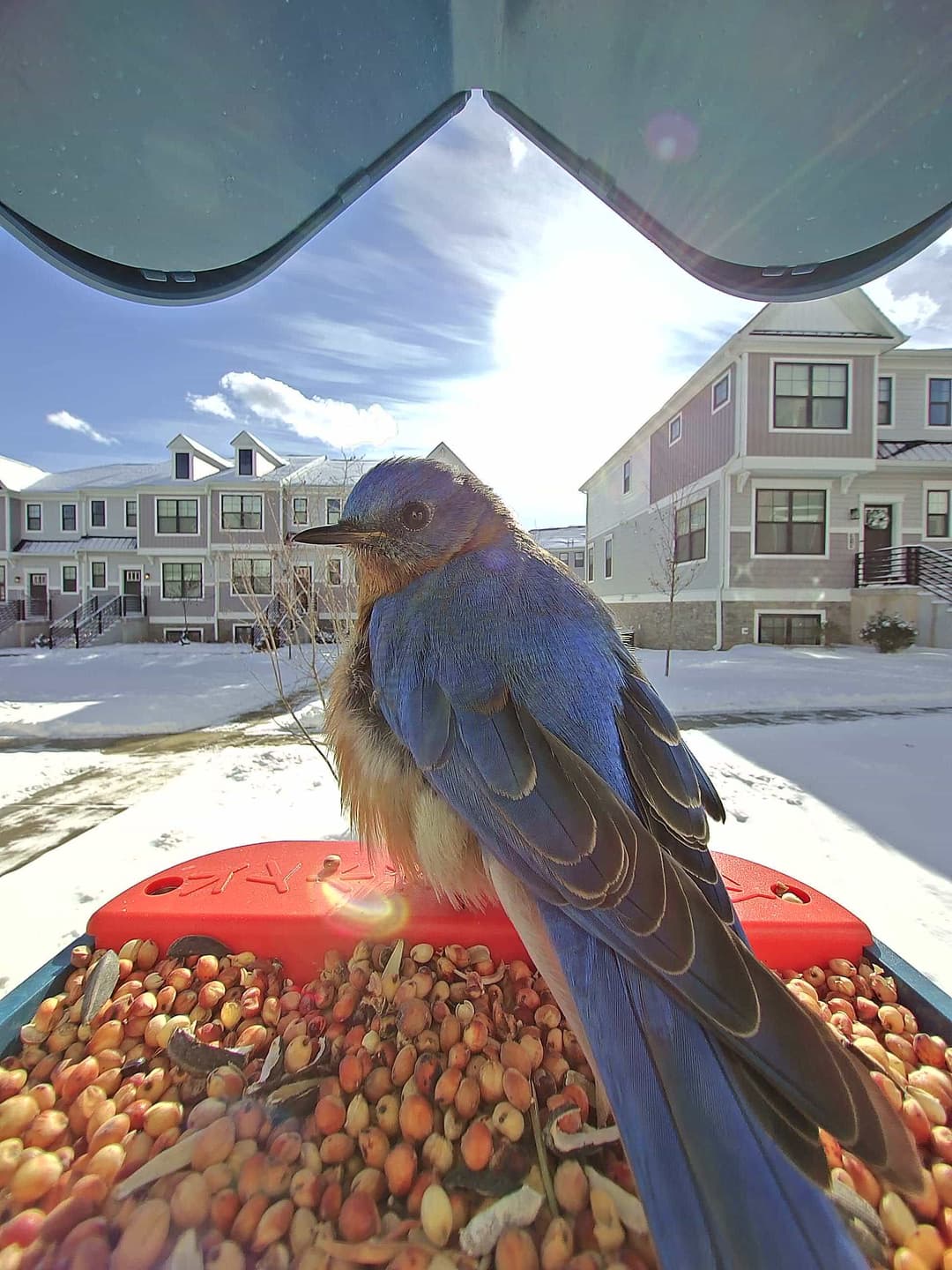
Eastern Bluebird vs Indigo Bunting
Indigo Buntings are smaller and wholly blue, while Eastern Bluebirds have a rusty orange chest and white belly.
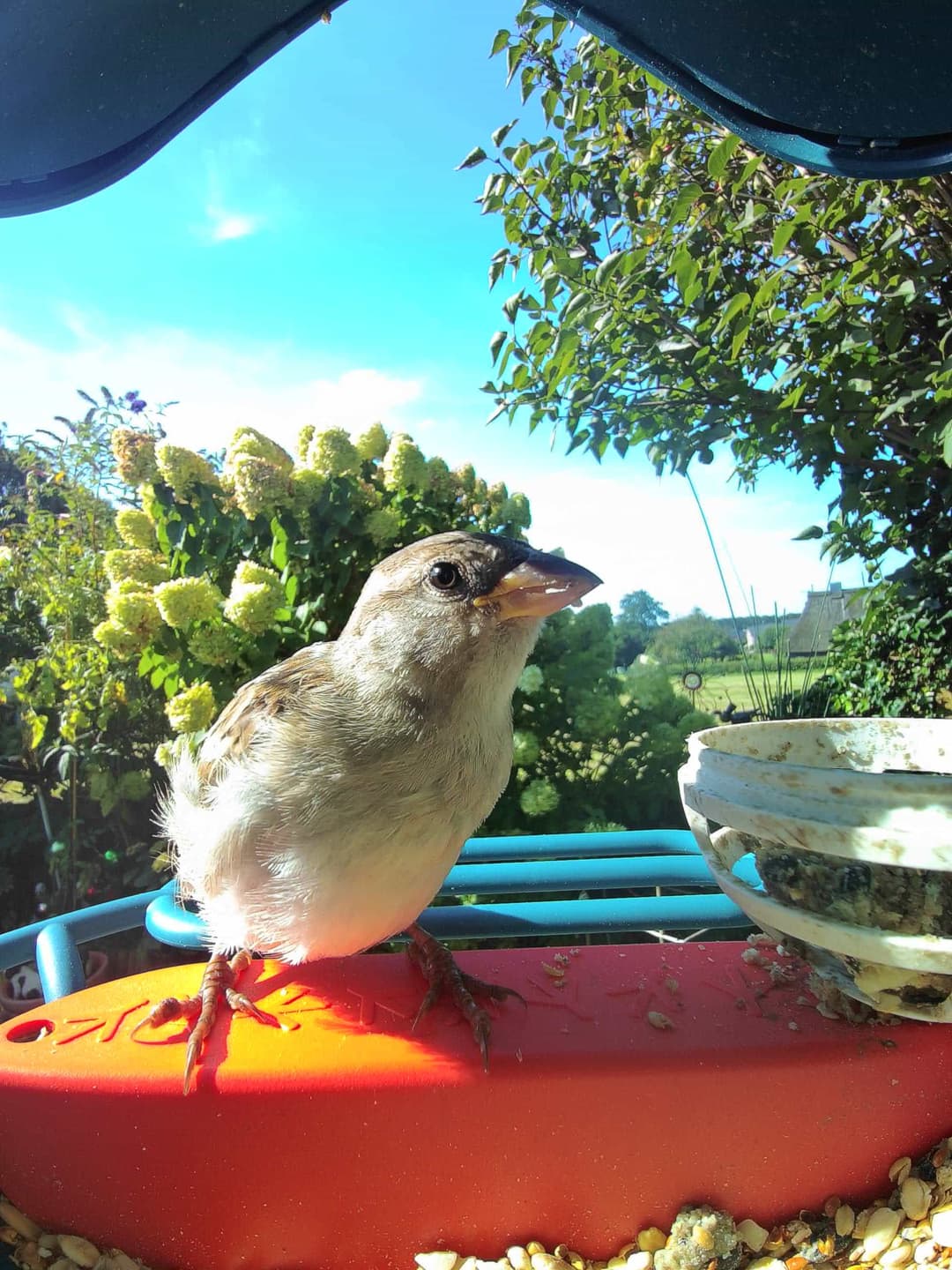
House Sparrow vs Indigo Bunting
Indigo Buntings have striking blue plumage, whereas House Sparrows are mostly brown and gray.
Breeding and nesting habits of the indigo bunting
Mating behaviors
Male indigo buntings establish territories in spring, which they defend with song. Males may have more than one mate occupying their territory simultaneously.
Nesting details
Nests are typically located 1-3 feet above ground in dense shrubs or low trees, with occasional higher placements up to 30 feet. A female builds the nest using grass, leaves, weeds, and bark strips, and lines it with finer materials. Late in the season, nests may also be found in large weeds like goldenrod.
Eggs and chick-rearing
The indigo bunting female lays eggs in the carefully constructed nest where she nurtures and rears the chicks until they are ready to fledge. Gardeners can encourage nesting by maintaining dense shrubbery and planting native plants to provide suitable habitats.
What does an indigo bunting like to eat?
Berries
Insects
Plants
Seeds
Spiders
Natural diet
The indigo bunting primarily consumes seeds and insects. During the breeding season, its diet consists predominantly of insects and spiders, but also includes some seeds and berries. The young indigo buntings are initially fed mostly insects. In the winter months, the diet shifts to consist largely of seeds, though some insects are still consumed.
Bird feeders
Indigo buntings commonly visit bird feeders where they consume items such as small seeds, including millet and thistle. They may also eat sunflower seeds and occasionally visit feeders with suet or mealworms.
Attracting indigo buntings: favorite snacks
Indigo Buntings are particularly fond of seeds, particularly white proso millet, and they even enjoy small fruits and insects occasionally. Bird Buddy seeds have shown the best results when it comes to attracting these delightful birds, as they are expertly chosen for the season.
Ideal feeder types for indigo buntings
When presenting your tempting treats, platform feeders or tube feeders are great options for Indigo Buntings. They prefer feeders with ample space where they can move around.
Encouraging repeated visits
Make your yard a haven for Indigo Buntings by providing a source of fresh water and safe resting places. Native plants and shrubby areas can offer the necessary shelter. Once they find your yard welcoming, they're more likely to return—and perhaps even give you the delight of their sweet songs!
Where can you find indigo buntings?

Primary habitat
The indigo bunting prefers brushy pastures, bushy wood edges, and favors roadsides, old fields grown into bushes, and edges of woodlands for nesting. They can also be found in clearings within deciduous woods and edges of swamps.
Additional range
In the west, they are typically near streams. In the winter, their range extends to the tropics, where they are commonly found around brushy edges of farm fields.
Do they migrate?
The indigo bunting is a migratory bird species. It migrates across the Gulf of Mexico during both the spring and fall seasons. This migration predominantly occurs at night, with the birds demonstrating an ability to navigate using the stars. In the spring, indigo buntings migrate north from their wintering grounds in Central America and the southern United States, heading towards their breeding territories in the eastern and central United States, as well as southern Canada. This northward migration typically takes place from late March to early June. In the fall, starting around September and continuing until November, indigo buntings undertake their return journey southward to their wintering habitats. During this migration, the key navigational process involves celestial cues which have been a focal point of extensive avian navigation studies involving this species. Indigo buntings primarily use stopover habitats that provide food and shelter during these long flights, often including forests, fields, and shrublands along the migratory route. Their migration strategy showcases an incredible natural navigation system that has made them significant in ornithological research on migration and star-based navigation.
What is the role of indigo buntings in nature and how to protect them?
Conservation status
The indigo bunting is considered common and not currently vulnerable or endangered. It thrives in brushy rural areas but struggles in highly urbanized or intensely farmed regions. Since the 1940s, its breeding range has expanded southwest. Key threats include habitat loss due to urban development and intensive agriculture. Conservation efforts focus on maintaining and restoring suitable habitats, such as edge environments with shrubs and young forest. Despite localized declines, its wide range and adaptability in certain regions contribute to its stable population status.
Ecological role of indigo buntings
Its role in the ecosystem
The indigo bunting plays vital ecological roles that significantly contribute to the overall health and balance of the ecosystem. Its diet, primarily consisting of seeds and insects, gives it a crucial role in pest control. In the breeding season, it feeds mostly on insects and spiders, which helps maintain the insect population in balance, indirectly assisting in plant health preservation. When consuming seeds and berries, it aids in the process of seed dispersal, providing a critical service in plant reproduction and the maintenance of plant diversity. The bird's feeding behavior also varies seasonally, foraging alone in the summer and in flocks during the winter, indicating its adaptability and contribution to the seasonal cycles within the ecosystem. Their nesting behavior, utilizing diverse nesting sites, also contributes to biodiversity as they interact with different biotic components of their environment. Therefore, indigo buntings enhance ecological dynamics both through their dietary habits and their reproductive behaviors.
How to help protect indigo buntings
Preservation tips
Habitat preservation strategies
Indigo Buntings thrive in environments with open woodlands and forest edges. Land development projects should aim to protect these habitats to allow for nesting and feeding. Additionally, implementing eco-friendly gardening practices that involve native plants can create suitable habitats in residential areas. Encourage local authorities to adopt planning policies that respect ecosystems, and support reforestation initiatives.
Community science initiatives
Engagement in community science projects such as bird counting and monitoring can greatly contribute to Indigo Bunting conservation. Participation in birdwatching societies can help raise awareness and fund research related to this species' needs and threats. Use mobile birding apps to document and share your sightings with ornithological networks. Encourage local schools and community centers to run educational programs on bird conservation.