Lazuli Bunting or Brown-Headed Cowbird?
Here's how to tell the difference


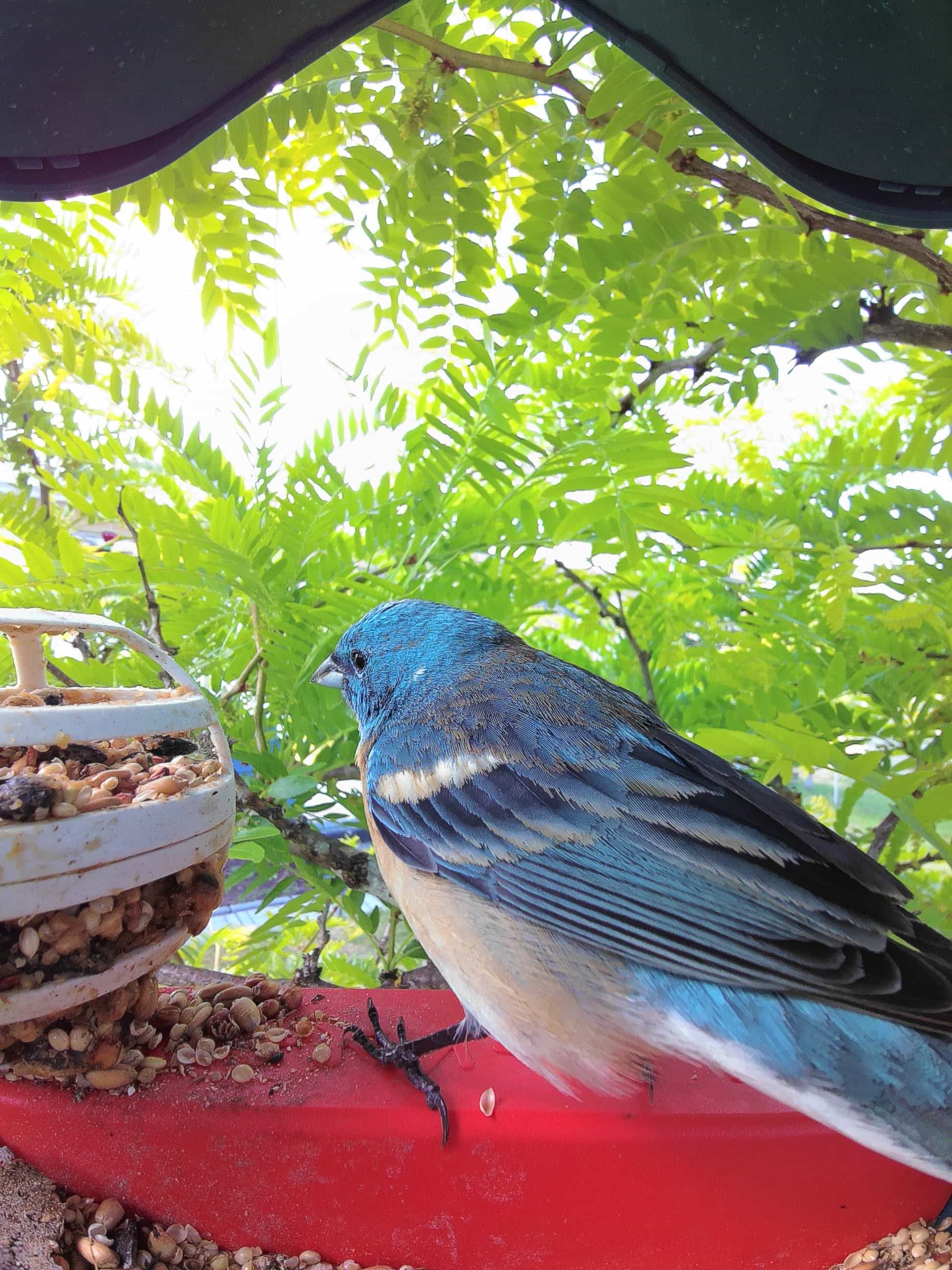


Lazuli Bunting
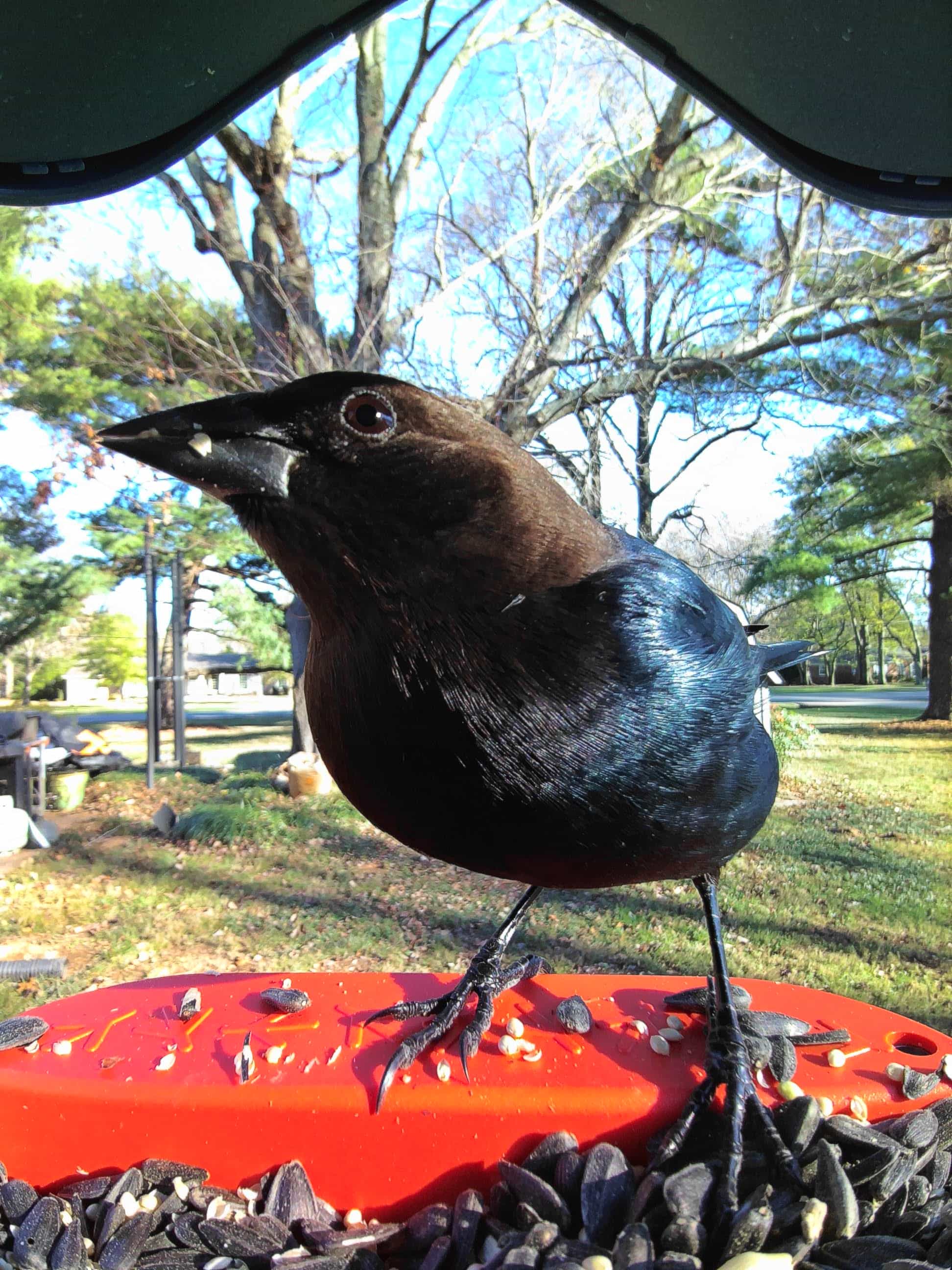


Brown-Headed Cowbird
Lazuli Bunting
Passerina amoena
General appearance
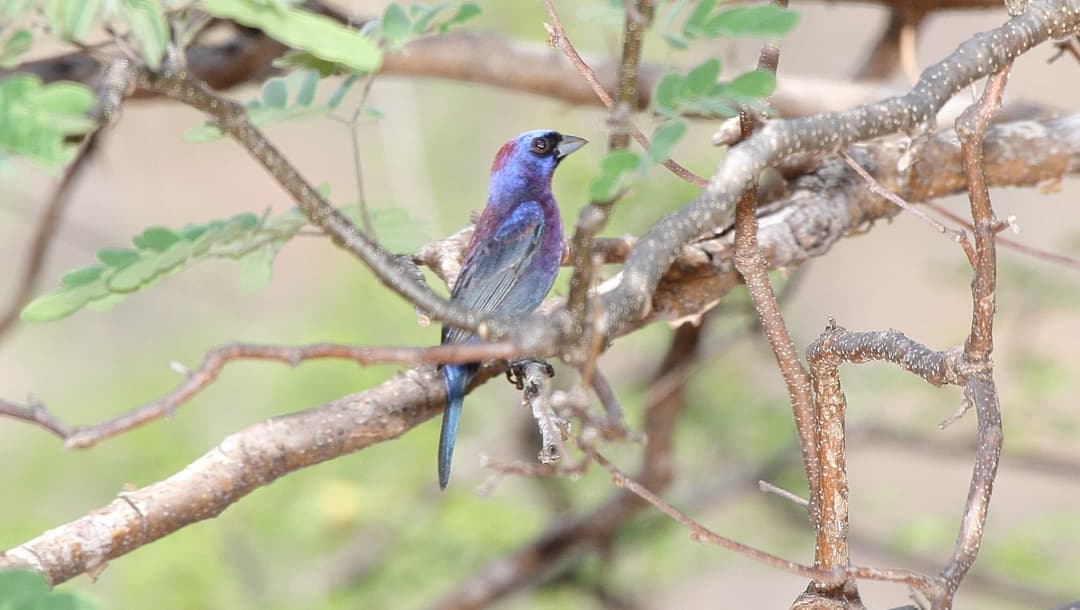
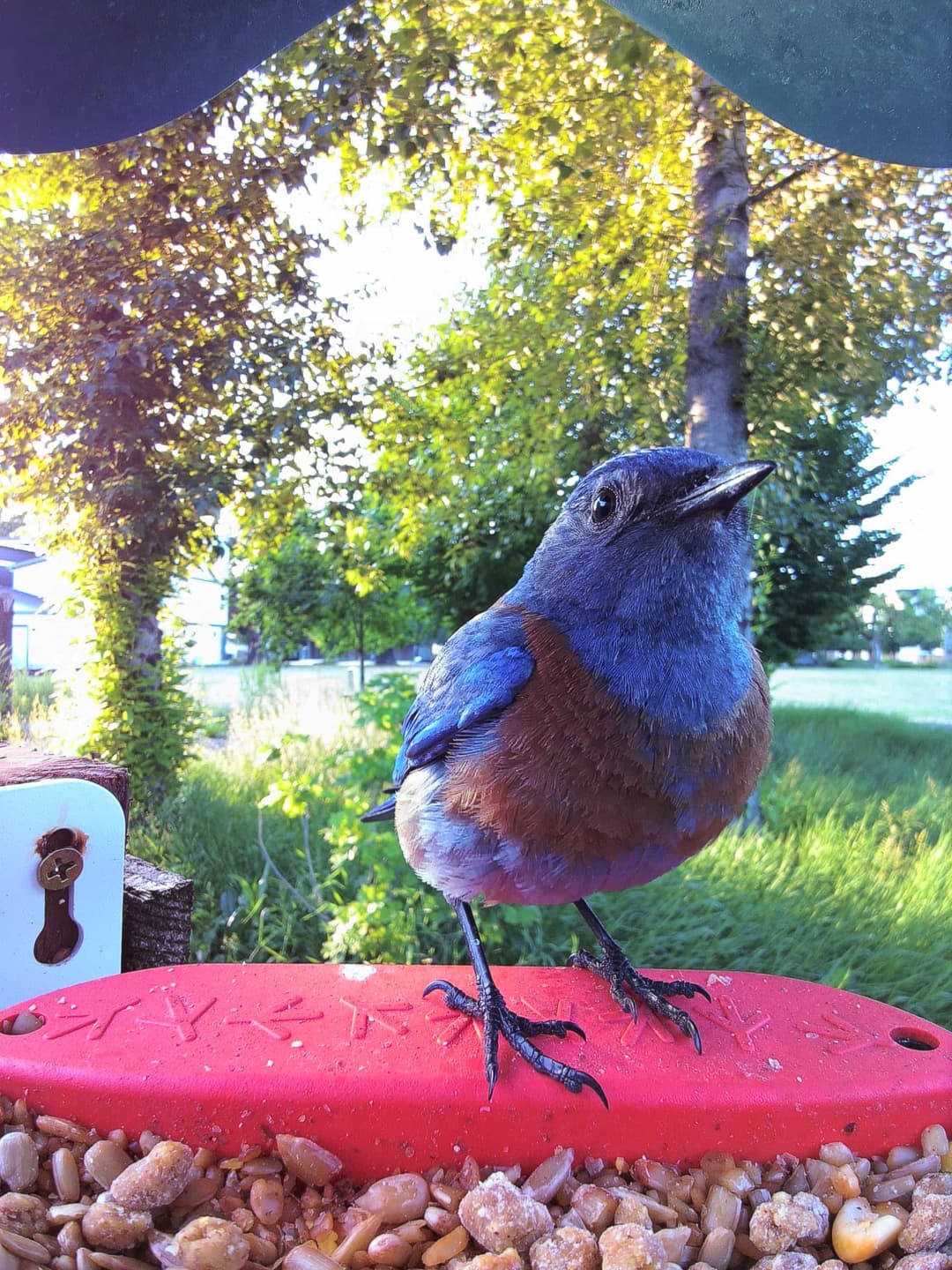
The lazuli bunting is a small passerine bird with a compact body and a distinctive blue and orange coloration. Its short, conical bill is well-suited for seed-eating. The bird's wings and tail feathers are dark with bluish edges, offering a striking contrast to its vibrant body colors.
Male vs female
Males are renowned for their bright blue plumage on the head and back, contrasting with a vivid orange breast and white belly. Females, however, are more subdued with brownish tones overall, tinges of blue on the wings and tail, and paler underparts. This sexual dimorphism helps in easy identification.
Juvenile
Juvenile lazuli buntings resemble females in their coloration with predominantly brown feathers. As they mature, young males gradually develop the characteristic blue and orange plumage seen in adults. During this transition, they may exhibit a patchy mix of brown and emerging blue feathers.
Size
5.1 - 5.9 in/0.5 - 0.6 oz
There's more to learn about Lazuli Bunting
View full detailsBrown-Headed Cowbird
Molothrus ater
General appearance
The brown-headed cowbird is a medium-sized bird, approximately the size of a robin or sparrow, measuring between 6-8 inches or 15-20 cm. Its wing shape is broad and the tail is either rounded or square-tipped. The bird's coloration includes hues of black, brown, green, and tan.
Male vs female
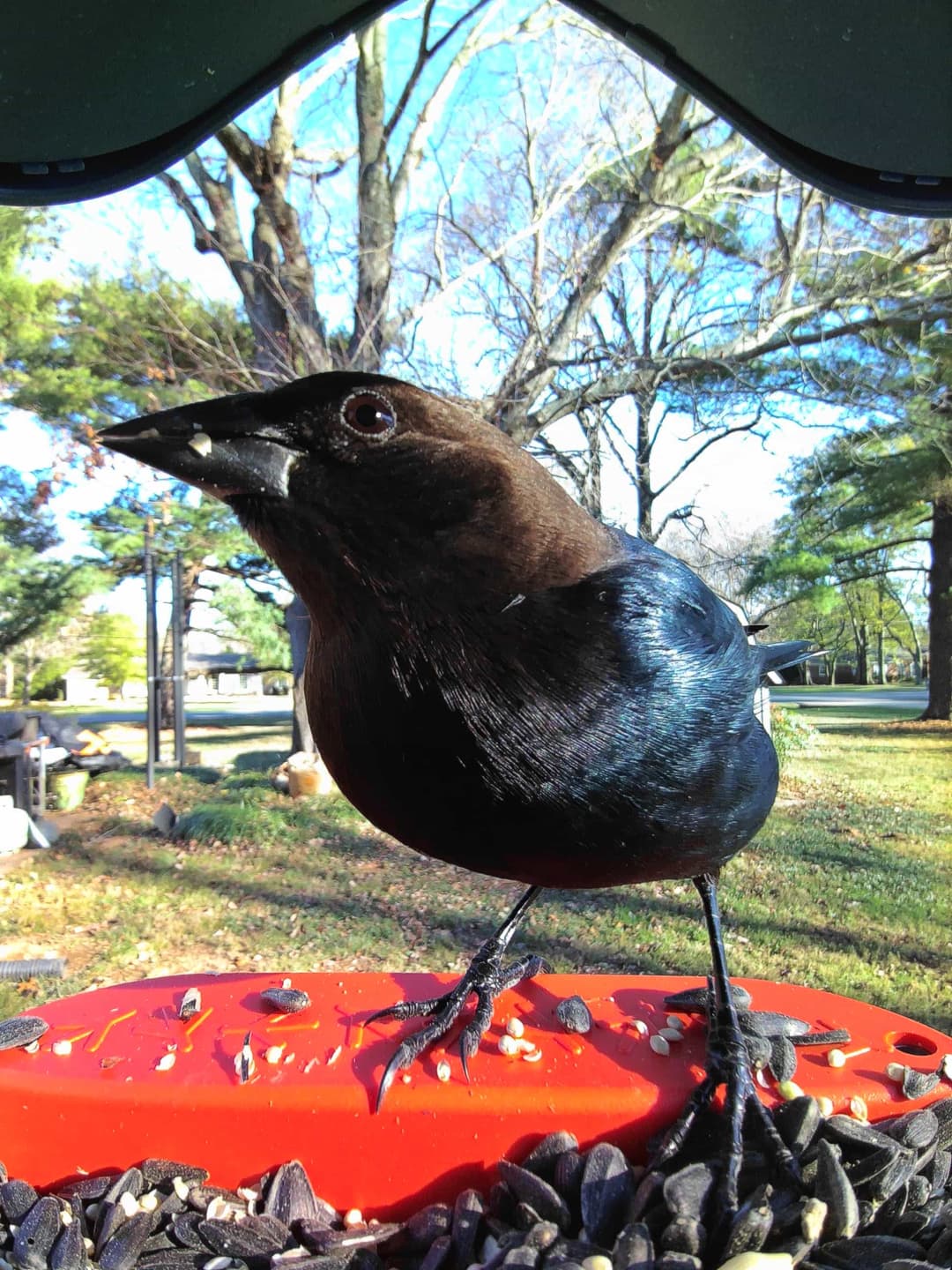
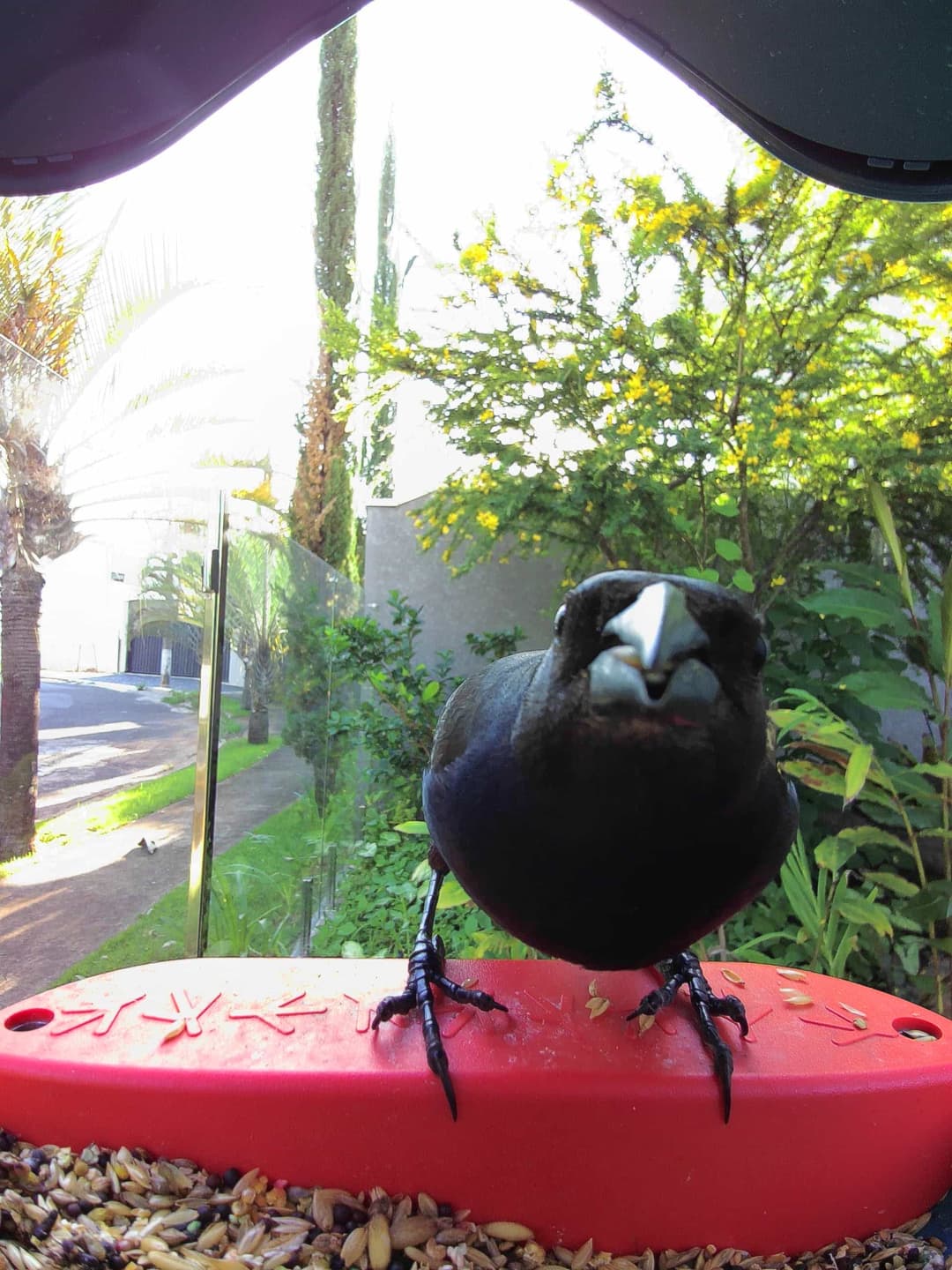
In terms of gender differences, male brown-headed cowbirds are glossy black and sport a contrasting brown head. On the other hand, females have a different appearance, with a plain dusty brown color and a darker sparrowlike bill.
Juvenile
Juvenile brown-headed cowbirds have a unique appearance that changes as they mature. Initially, they are streaked and tend to resemble female adults but their coloration grows darker as they age. Further observation is needed to note if this pattern is consistent across all seasons.
Size
6.3 - 7.9 in/1.1 - 1.8 oz
There's more to learn about Brown-Headed Cowbird
View full detailsHow to tell the Lazuli Bunting from the Brown-Headed Cowbird
Visual differences
Lazuli Buntings are small, weighing 0.5-0.6 oz and measuring 5-6 inches, with vibrant blue and orange plumage (males) and pale brown with bluish tinges (females). They have a compact body and short, conical bill. Brown-Headed Cowbirds, heavier at 1.1-1.8 oz and larger at 6-8 inches, males display glossy black bodies and brown heads, while females are plain dusty brown with darker bills. Cowbirds show a broader wing shape and rounded/square-tipped tail. Thus, both species differ notably in size, color, and shape.
Key differences and behavior
The Lazuli Bunting and Brown-Headed Cowbird exhibit distinct behaviors despite both consuming seeds and insects. Lazuli Buntings create song "neighborhoods" and aggressively protect their breeding territories, crafting nests in low shrubs. In contrast, Brown-Headed Cowbirds engage in brood parasitism, laying their eggs in others' nests and relying on them to rear their young, often ejecting host eggs. Lazuli Buntings prefer brushy areas and open woods during breeding, while Cowbirds favor open fields and edge habitats, avoiding dense forests. While both species visit feeders, Lazuli Buntings are drawn during migration for seeds, while Cowbirds readily forage near livestock year-round, maintaining a diet of seeds and insects.
Still not sure? Here are more lookalikes!
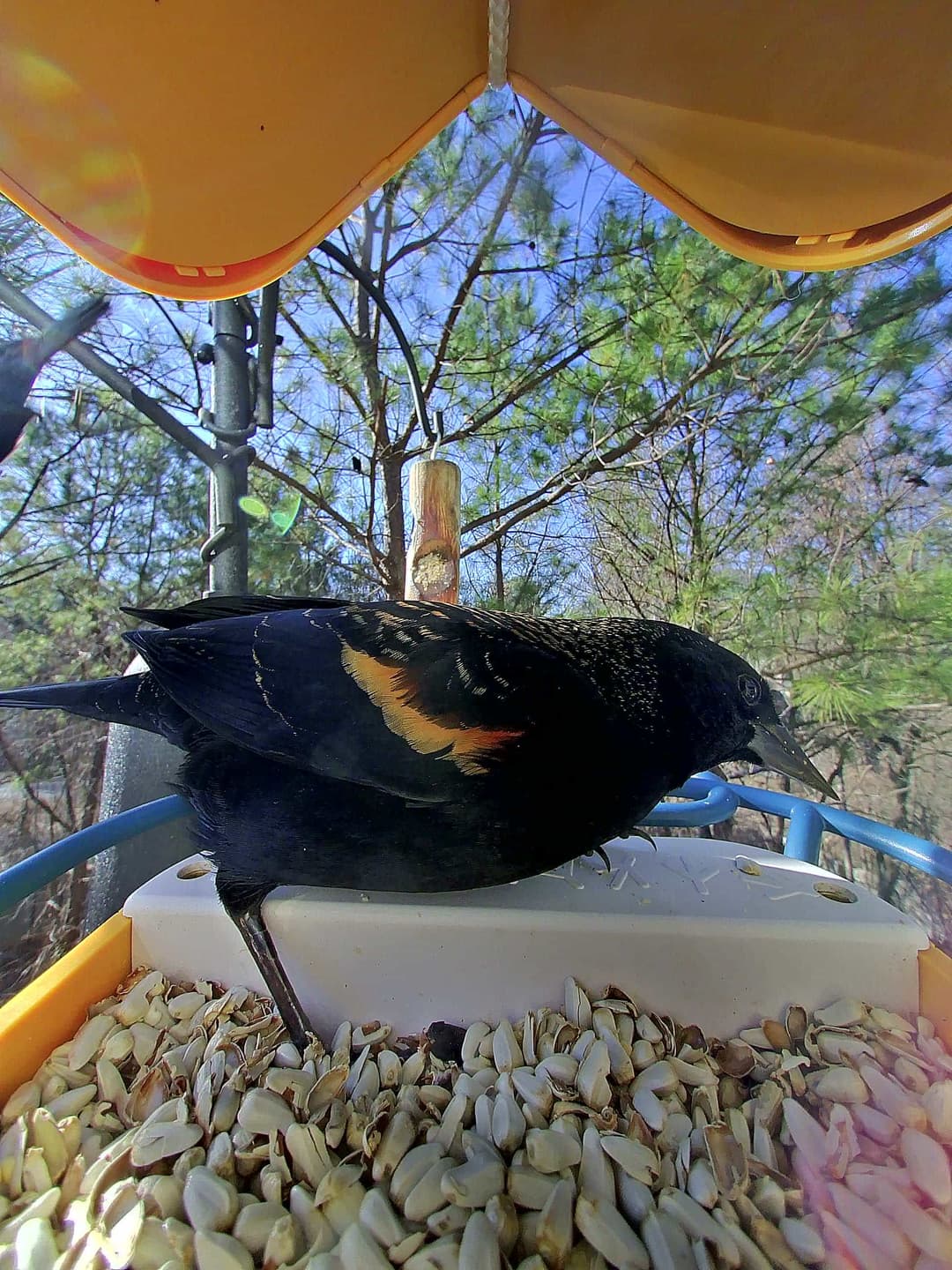
Brown-Headed Cowbird vs Red-Winged Blackbird
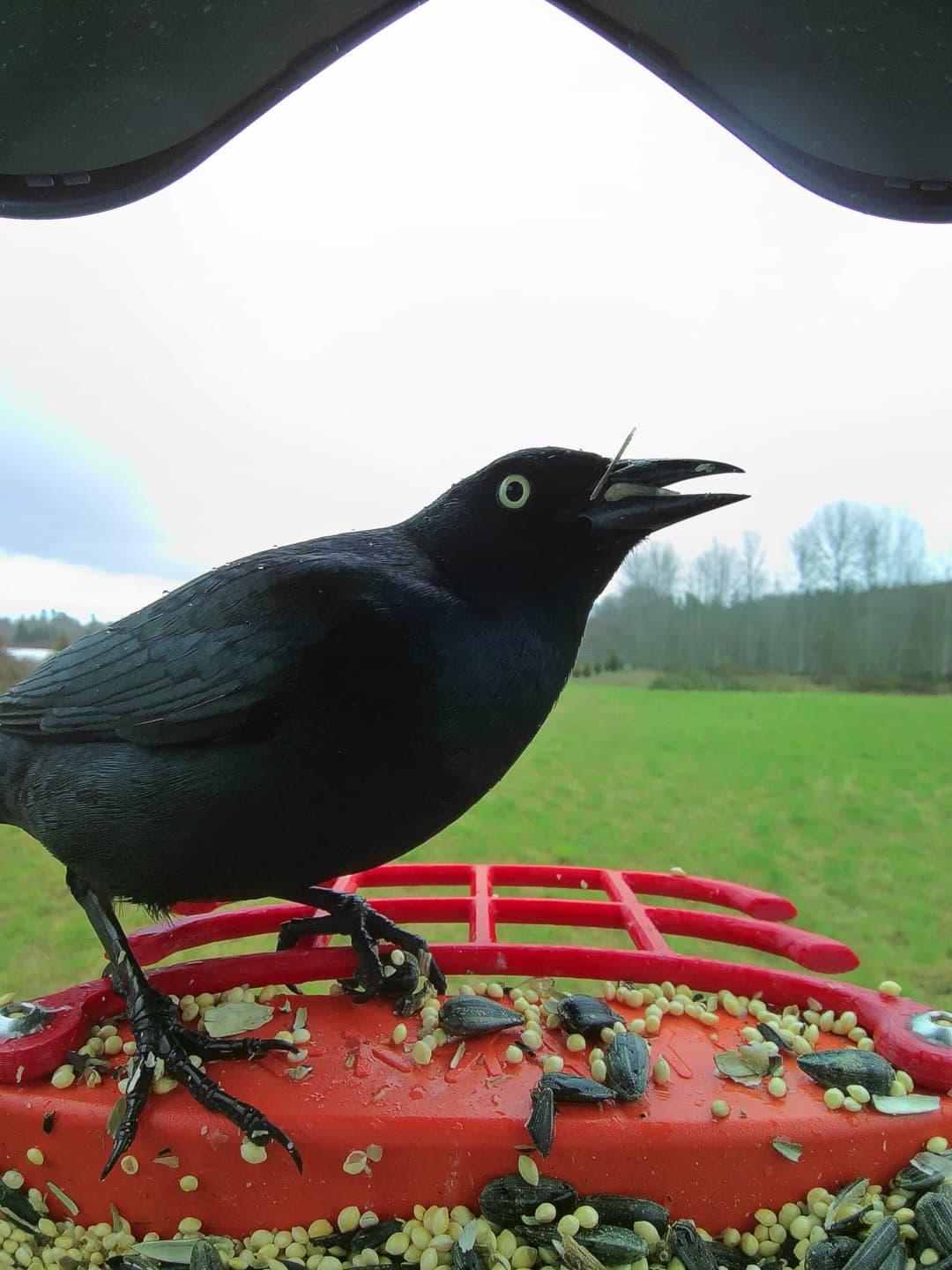
Brown-Headed Cowbird vs Brewer’s Blackbird
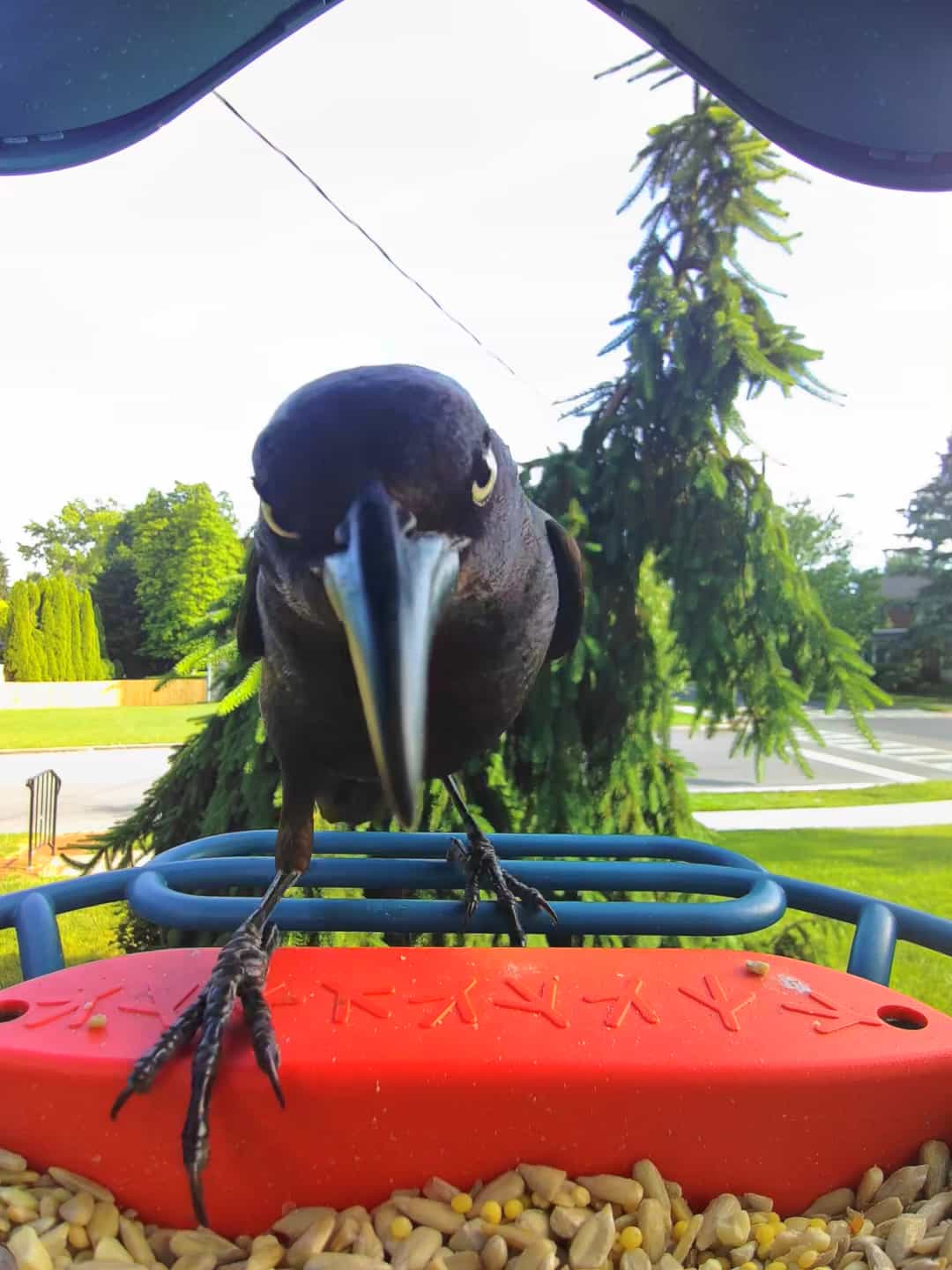
Brown-Headed Cowbird vs Common Grackle
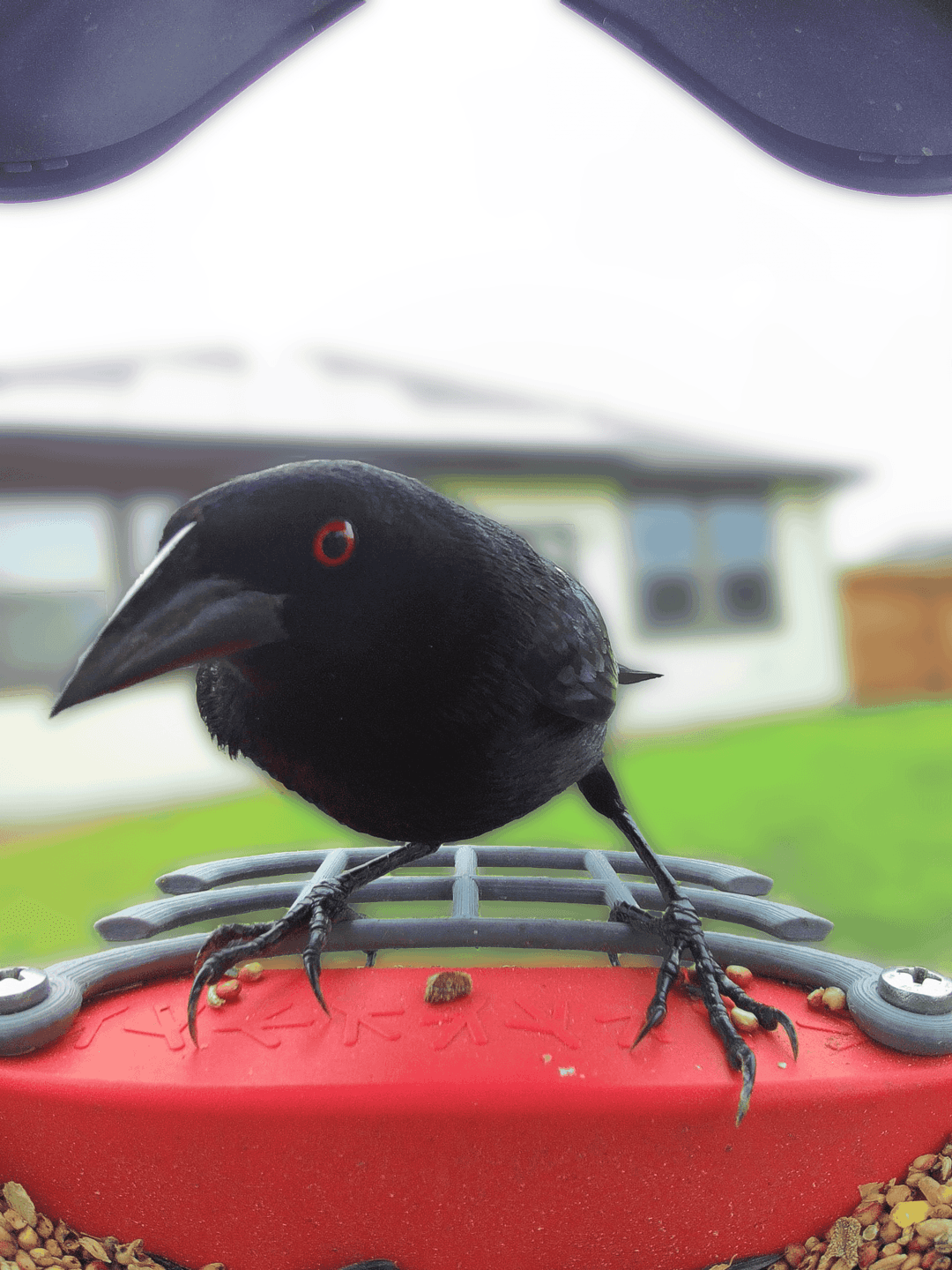
Brown-Headed Cowbird vs Bronzed Cowbird
Brown-Headed Cowbird vs Shiny Cowbird
Lazuli Bunting vs [Select a bird]

[Select a bird]
Pick a bird to compare
Brown-Headed Cowbird vs [Select a bird]
[Select a bird]
Pick a bird to compare