House Finch or House Sparrow?
Here's how to tell the difference
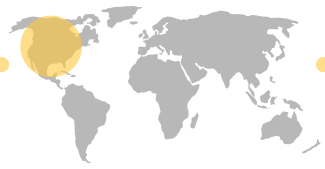


House Finch


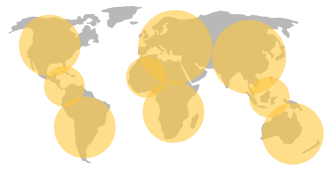
House Sparrow
House Finch
Haemorhous mexicanus
General appearance
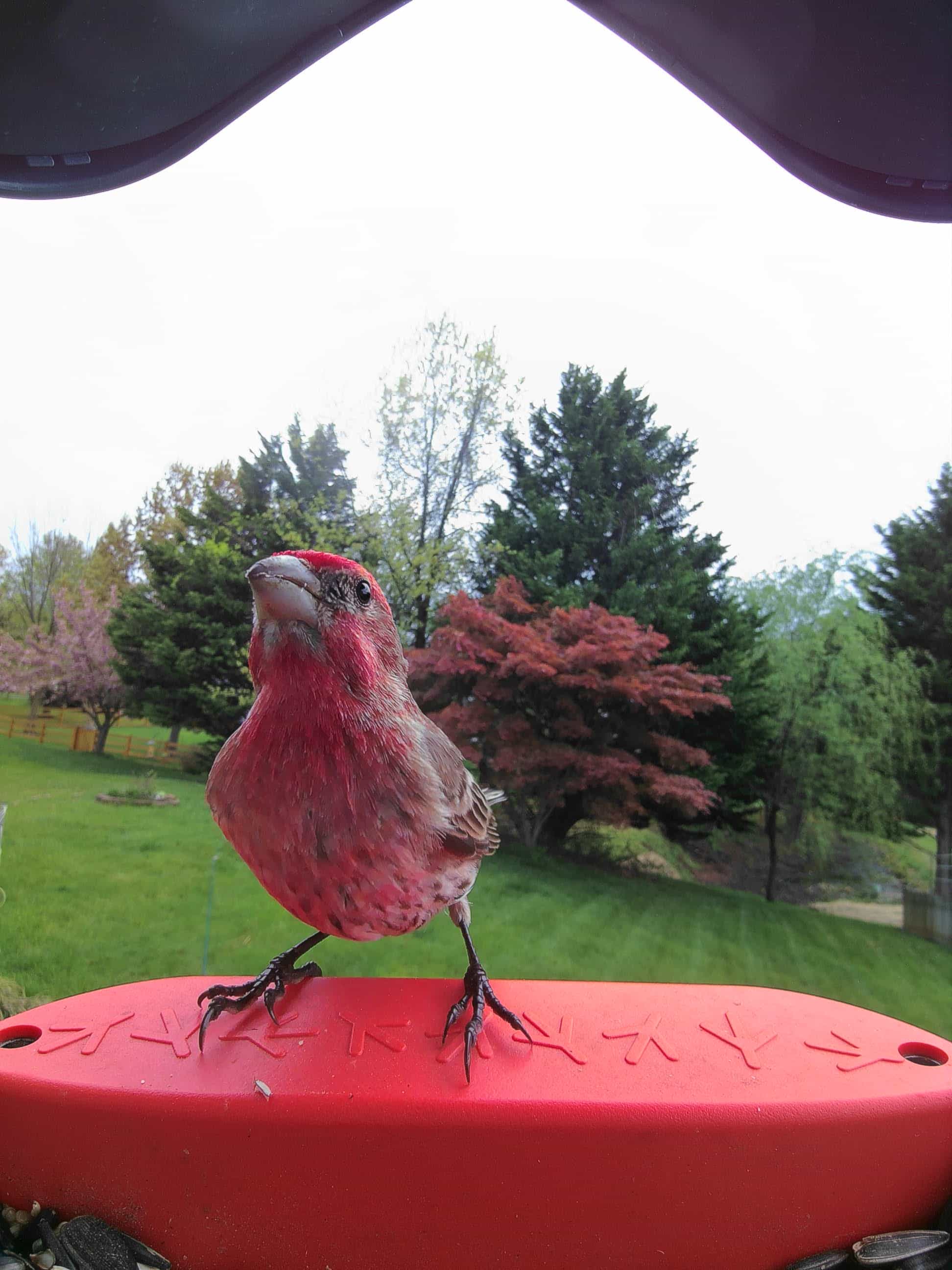
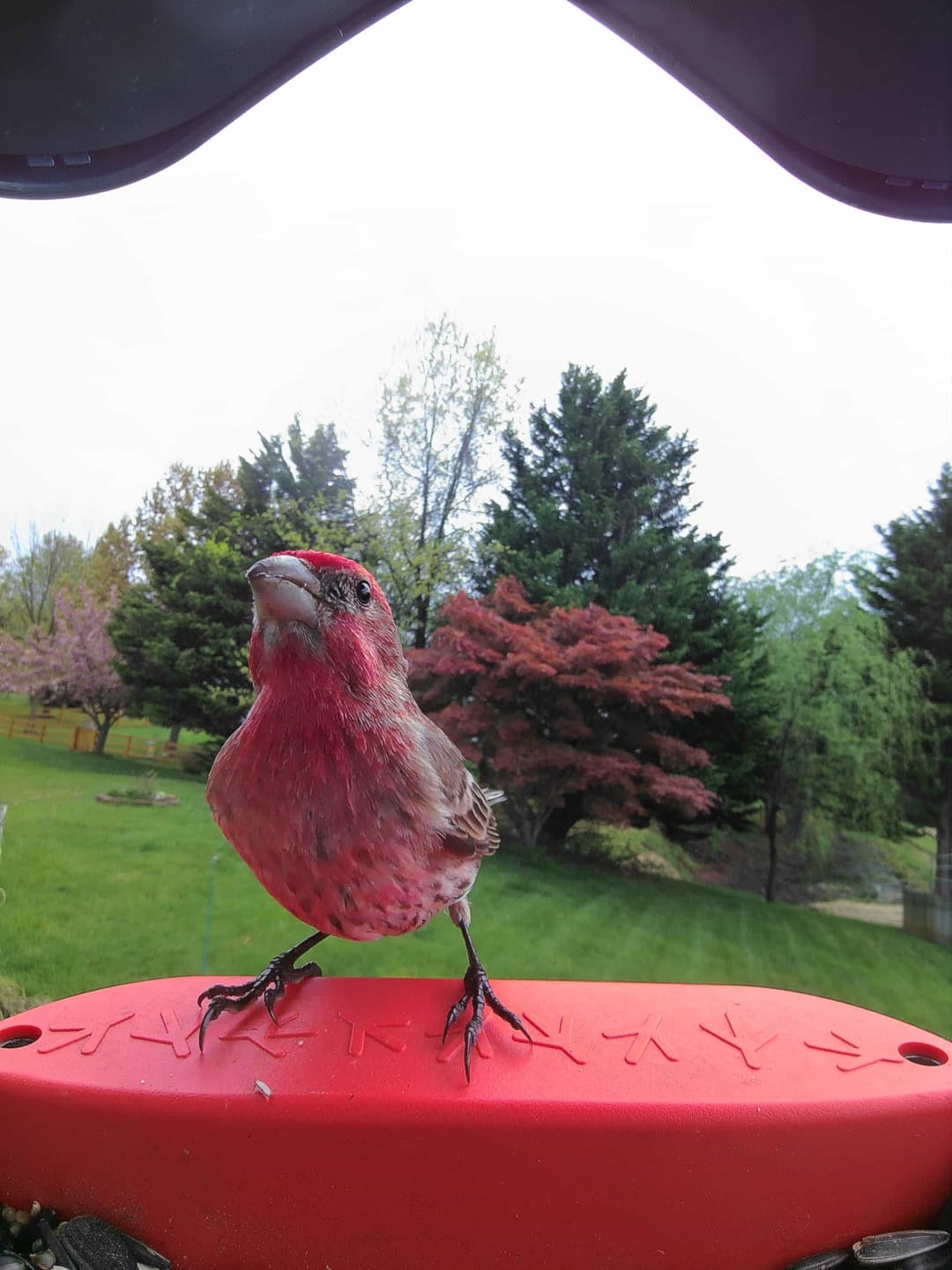
House finches are about the size of a sparrow at 5-6 inches long (13-15 cm). They possess a rounded wing shape and a notched, square-tipped tail. The prominent colorations include brown, orange, red, and white. Their underparts are pale with blurry stripes all over, and sides feature dark stripes.
Male vs female
Female and young house finches flaunt a rather plain brown face, creating a stark contrast with the males who showcase a red eyebrow and forehead that contrasts with a brown cap. The males also have a red throat and chest, with their lower underparts being whitish. The red coloration in some males can be replaced by orange or yellow which adds to their distinctive appearance.
Juvenile
Young house finches, similar to females, display a plain brown face. However, they display sharper stripes all over their pale underparts. This provides a distinctive mark to identify juveniles from adults. These birds also lack the stripes of house sparrows and different patterns of native sparrows.
Size
4.9 - 5.9 in/0.7 - 0.8 oz
There's more to learn about House Finch
View full detailsHouse Sparrow
Passer domesticus
General appearance
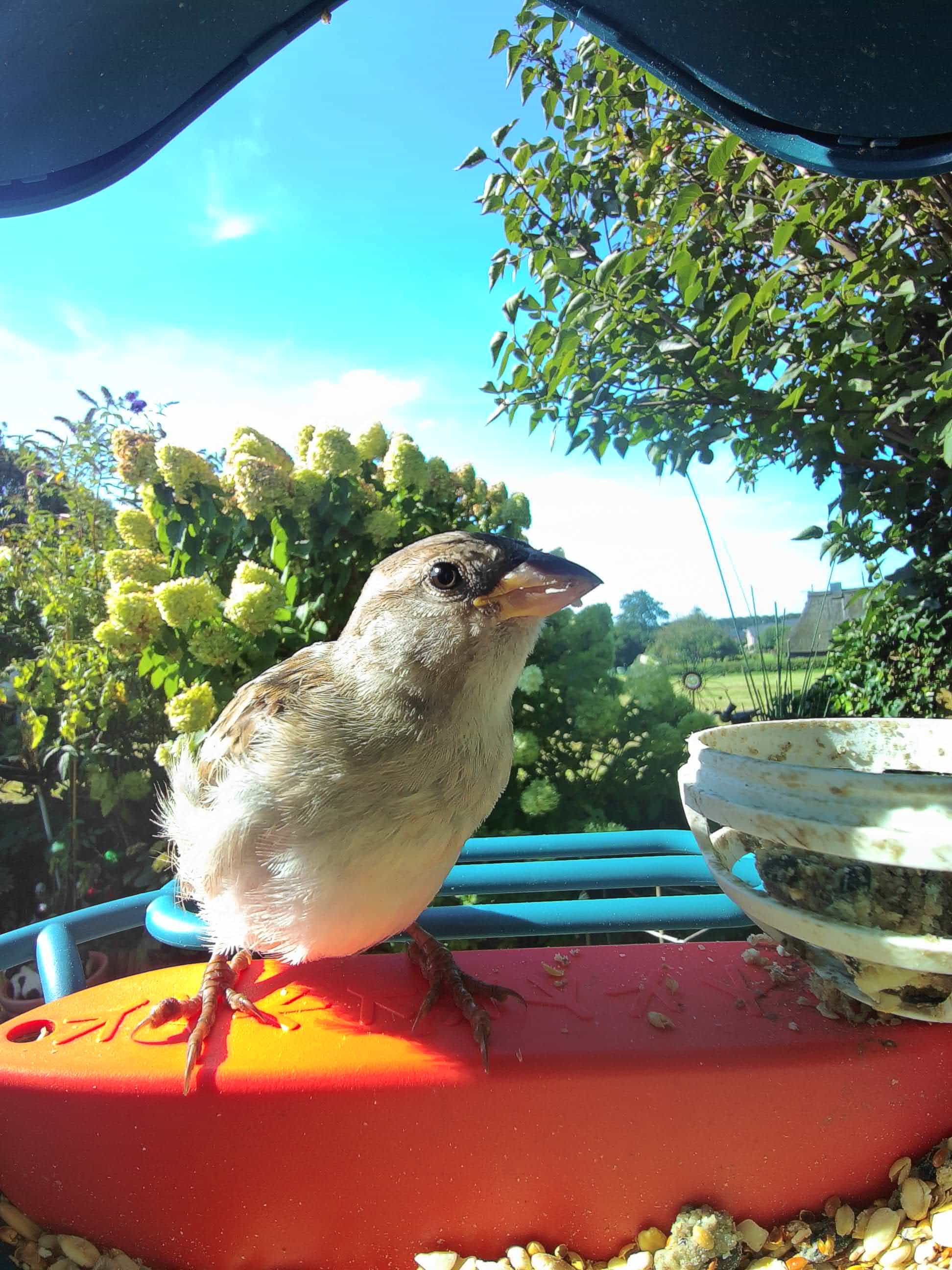
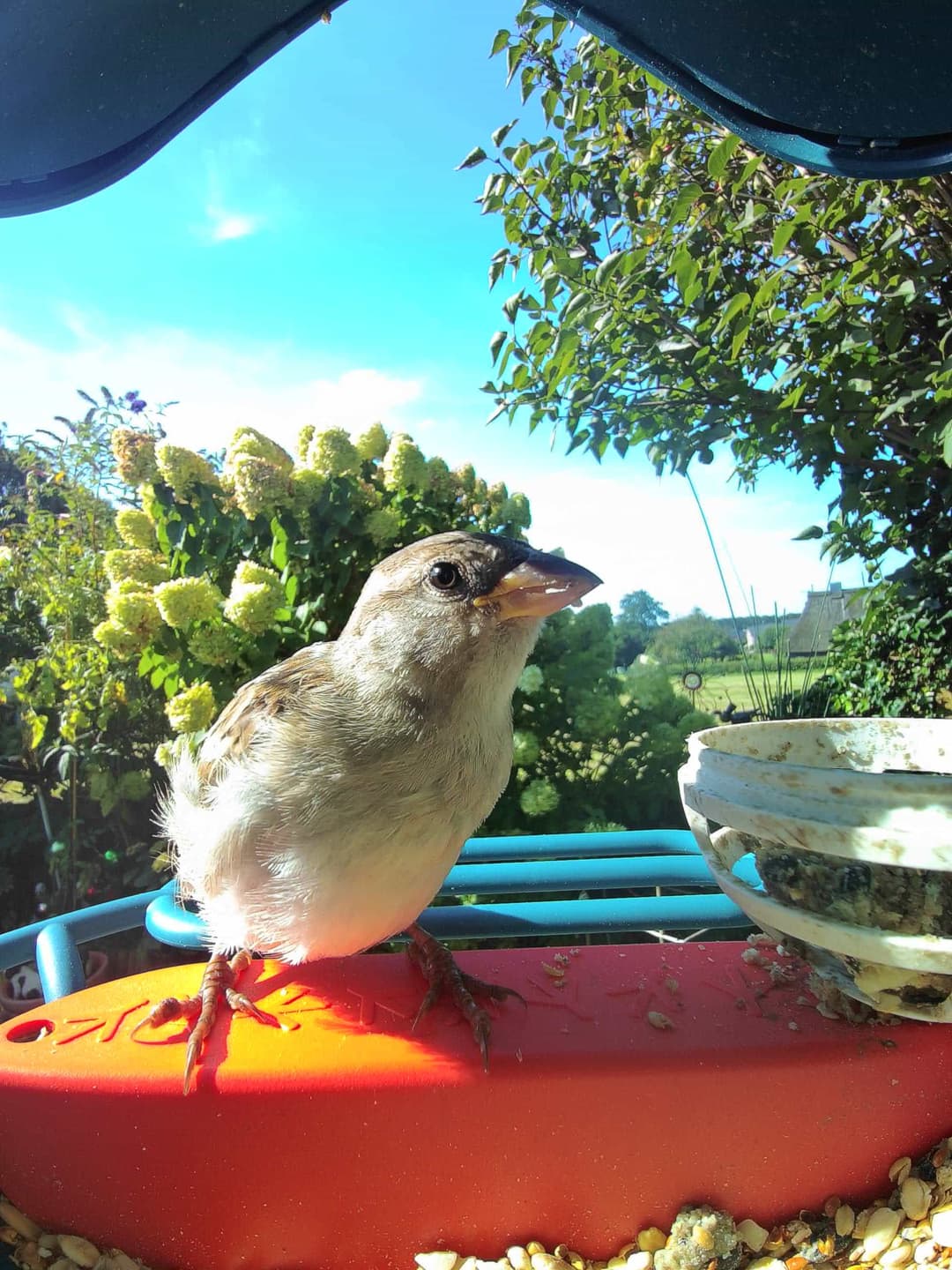
House sparrows are small, stocky birds measuring about 16 cm in length. They have a short tail and a stout bill. Their plumage is predominantly brown, with black streaks on their back and wings. This common bird has a distinctive, somewhat rounded head and a smooth body shape that helps in identifying it in urban and rural areas alike.
Male vs female
Male house sparrows are more vibrant with a gray crown, a chestnut-brown nape, and white cheeks. They have a distinctive black bib on their throat, which can vary in size seasonally. In contrast, females are duller with a more uniform brown coloration, lacking the bold markings of males. Their underparts are a plain grayish-brown, and they have a more pronounced eye stripe behind the eye.
Juvenile
Juvenile house sparrows resemble females but are even paler, with grayish-brown plumage and softer streaks. They lack the developed throat patch and bright head pattern found in adults. Juveniles gradually acquire adult coloration through moulting, becoming distinguishable by their more uniform brown appearance and subtler facial markings.
Size
5.9 - 6.7 in/1.0 - 1.1 oz
There's more to learn about House Sparrow
View full detailsHow to tell the House Finch from the House Sparrow
Visual differences
House Finches are smaller (5-6 inches) than House Sparrows (about 6 inches). Finches have a notched tail, reddish males, and streaked underparts. Sparrows are stockier with a short tail, stout bill, and males have gray crowns, chestnut napes, and black bibs. Female Finches are plain brown; female Sparrows have uniform brown and a pronounced eye stripe. Juvenile Finches lack stripes, while juvenile Sparrows are paler, resembling females.
Key differences and behavior
House Finches and House Sparrows share urban habitats but differ notably in behavior and diet. House Finches often thrive in semi-open areas and are highly adaptable, frequenting bird feeders for seeds. They're mainly vegetarian, feeding on weed seeds, buds, and fruits, and exhibit a strong site faithfulness due to their excellent memory. Breeding involves singing and flight displays by males, with both sexes involved in chick care. In contrast, House Sparrows are social, residing in manmade structures, and often engage in group dust baths. Their diet is more opportunistic, supplemented by waste grain and insects in summer. Sparrows display unique courtship dances and typically nest in colonies, preferring cavities. Both species form pair bonds, but Finches are less colony-oriented than Sparrows. House Sparrows, weighing more, display cooperative breeding and are less selective about food, often consuming human leftovers.
Still not sure? Here are more lookalikes!
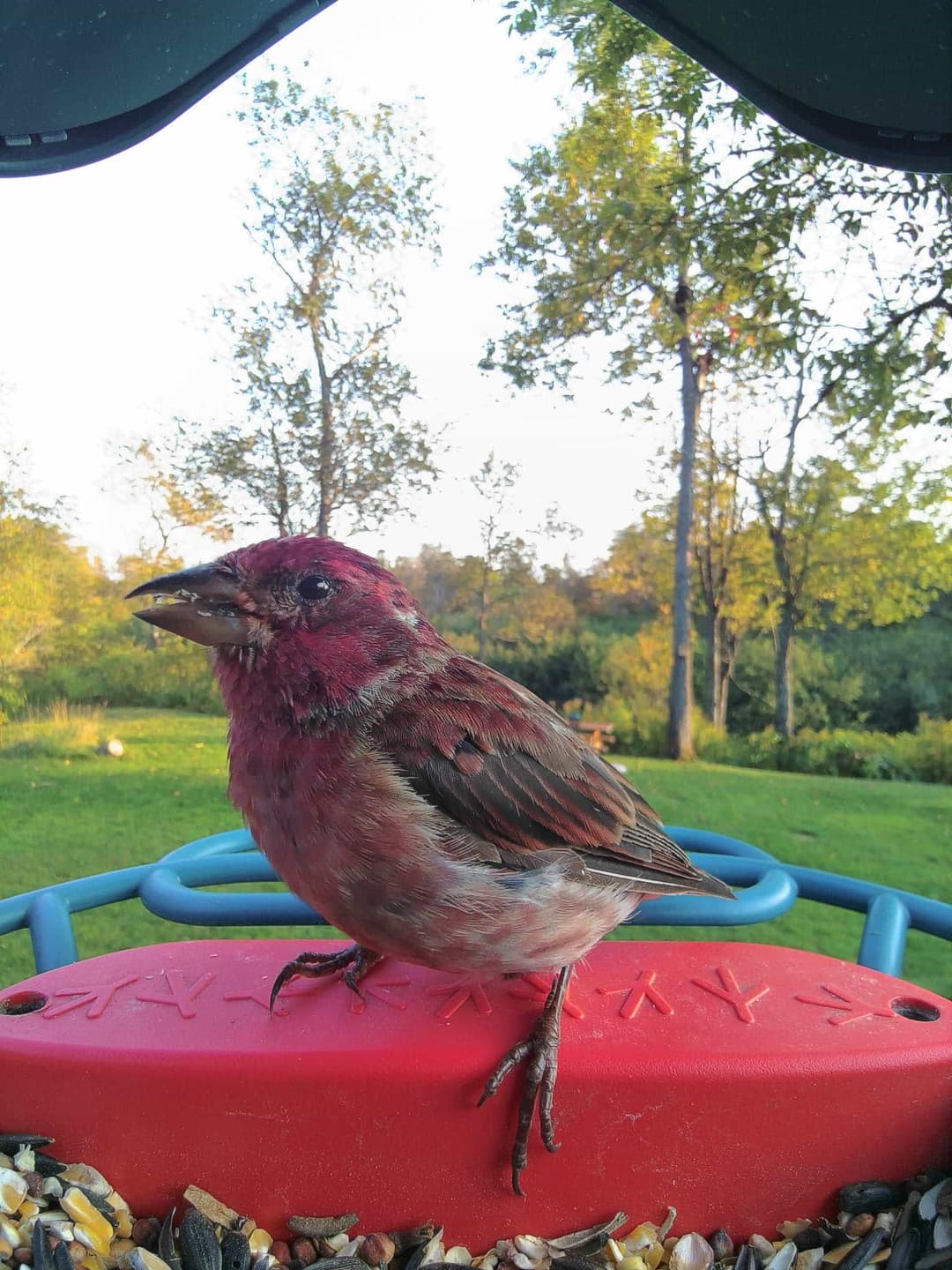
House Finch vs Purple Finch
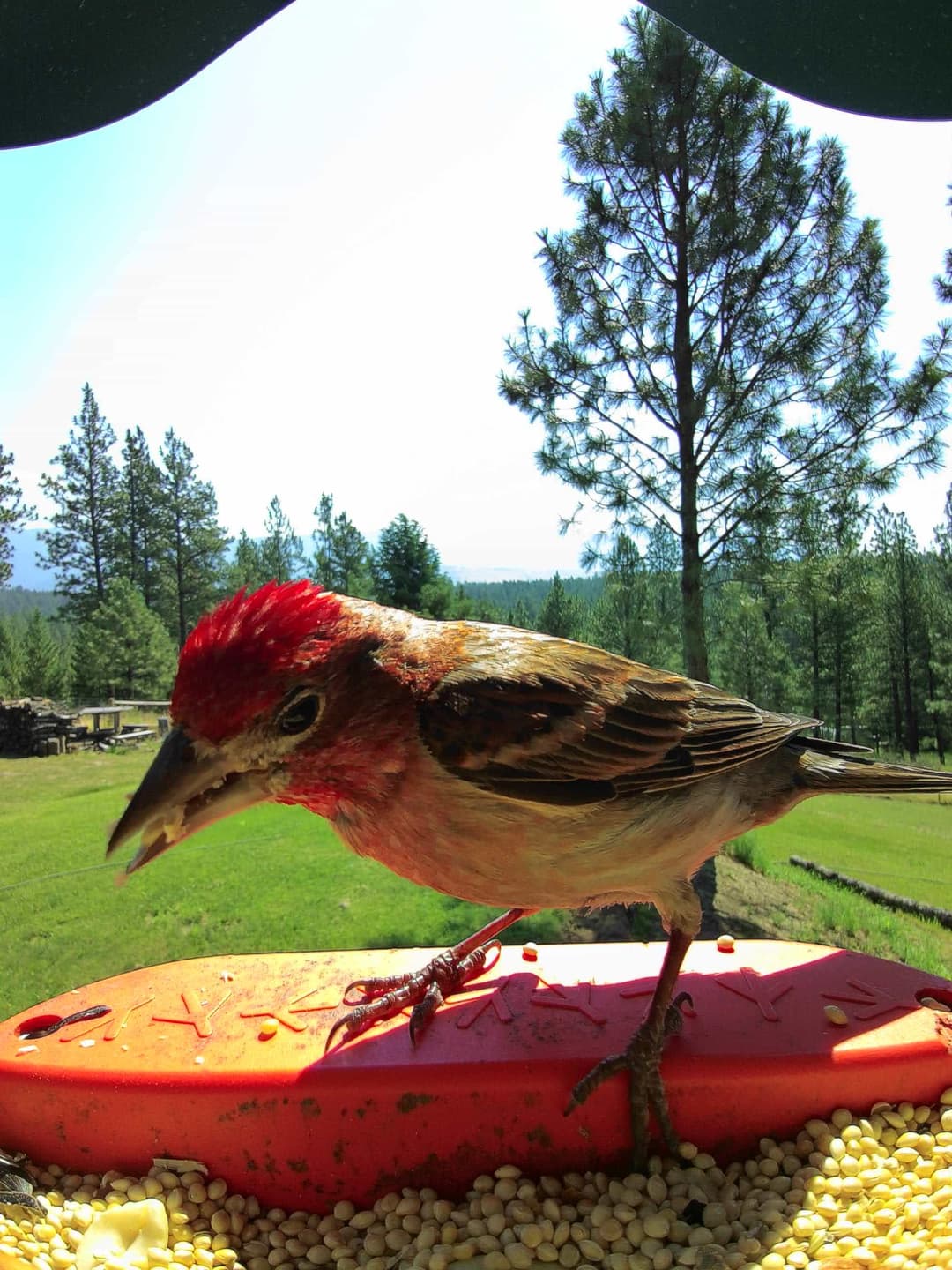
House Finch vs Cassin’s Finch
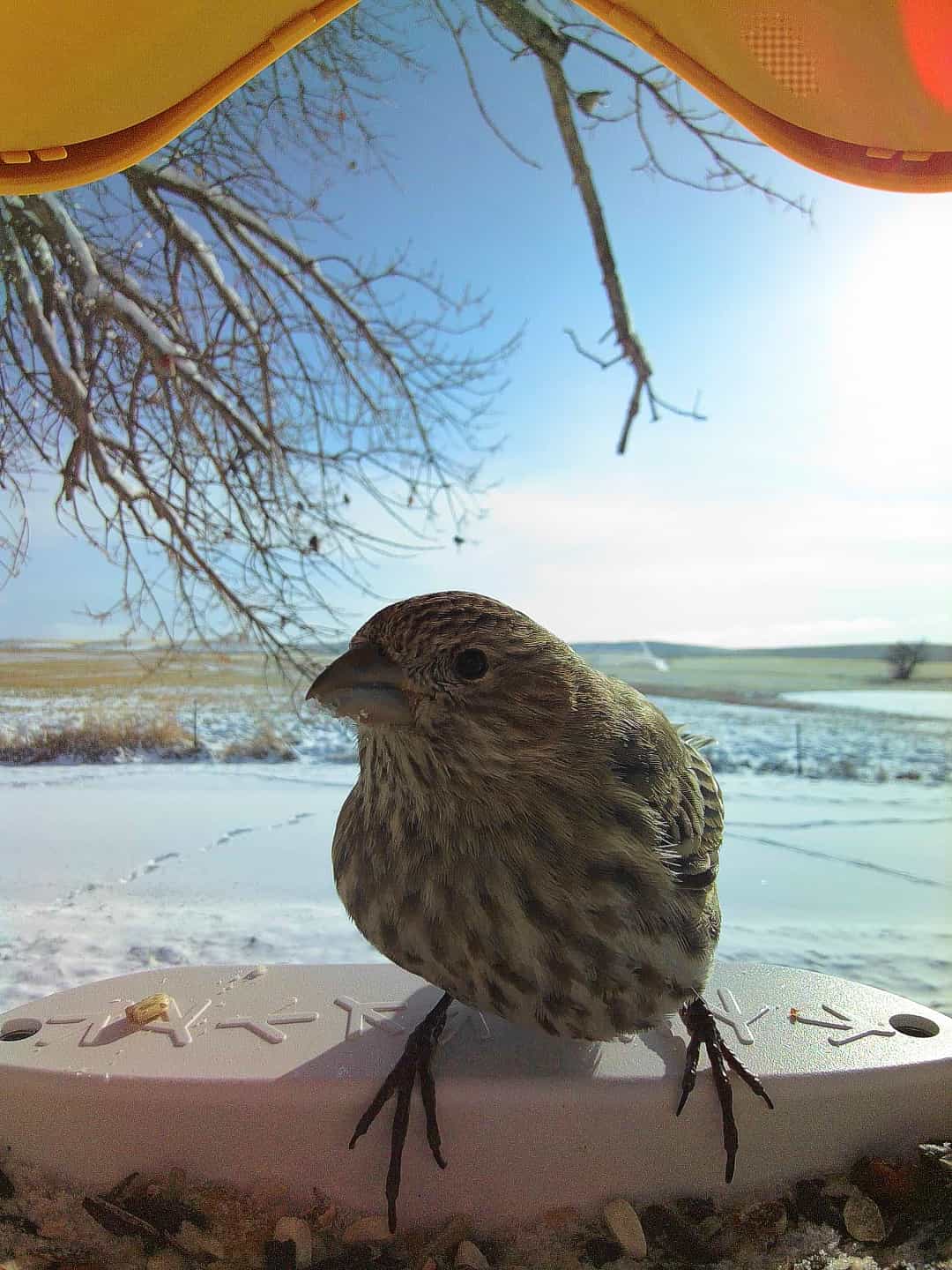
House Finch vs Pine Siskin
House Sparrow vs Chipping Sparrow
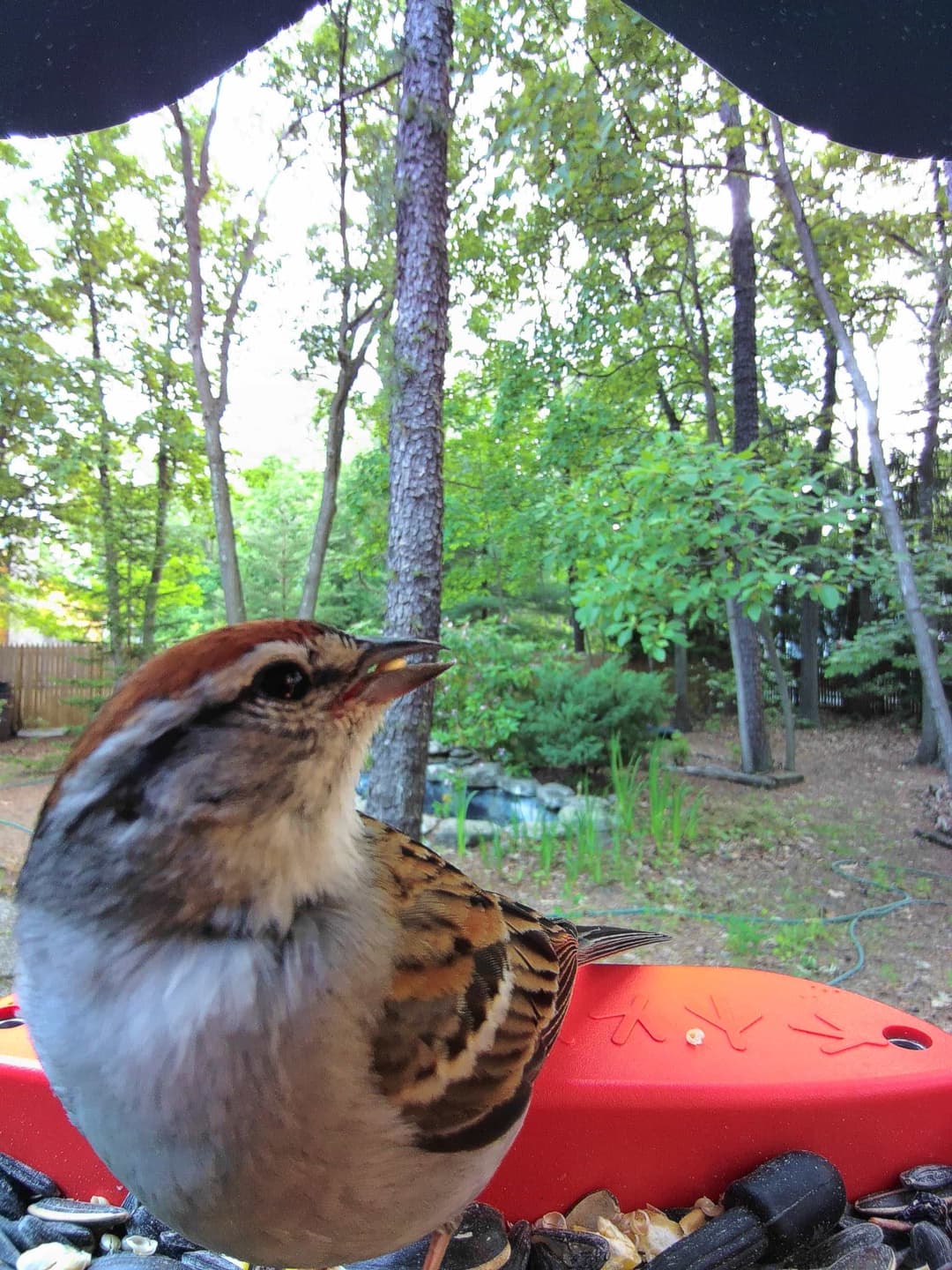
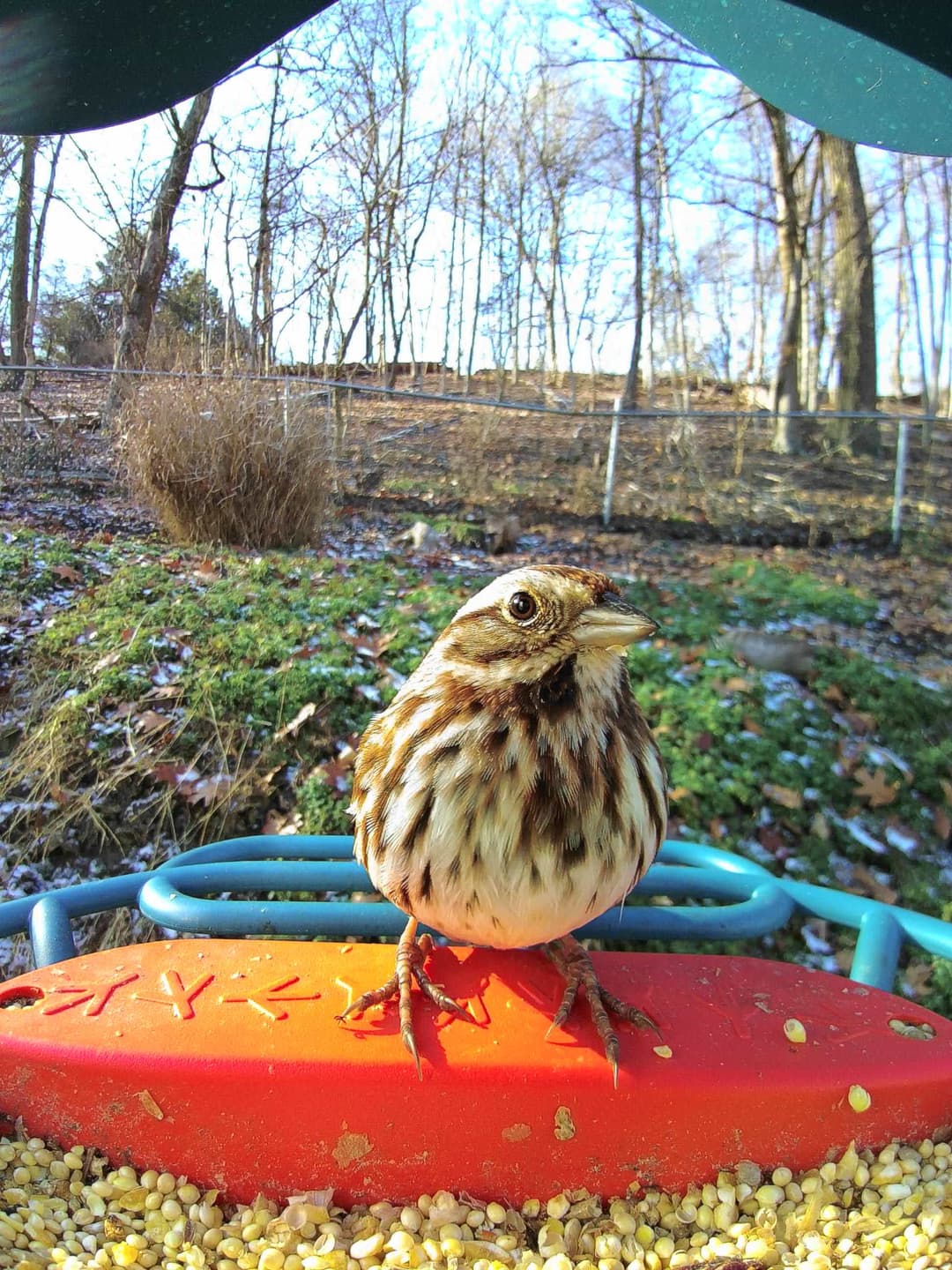
House Sparrow vs Song Sparrow
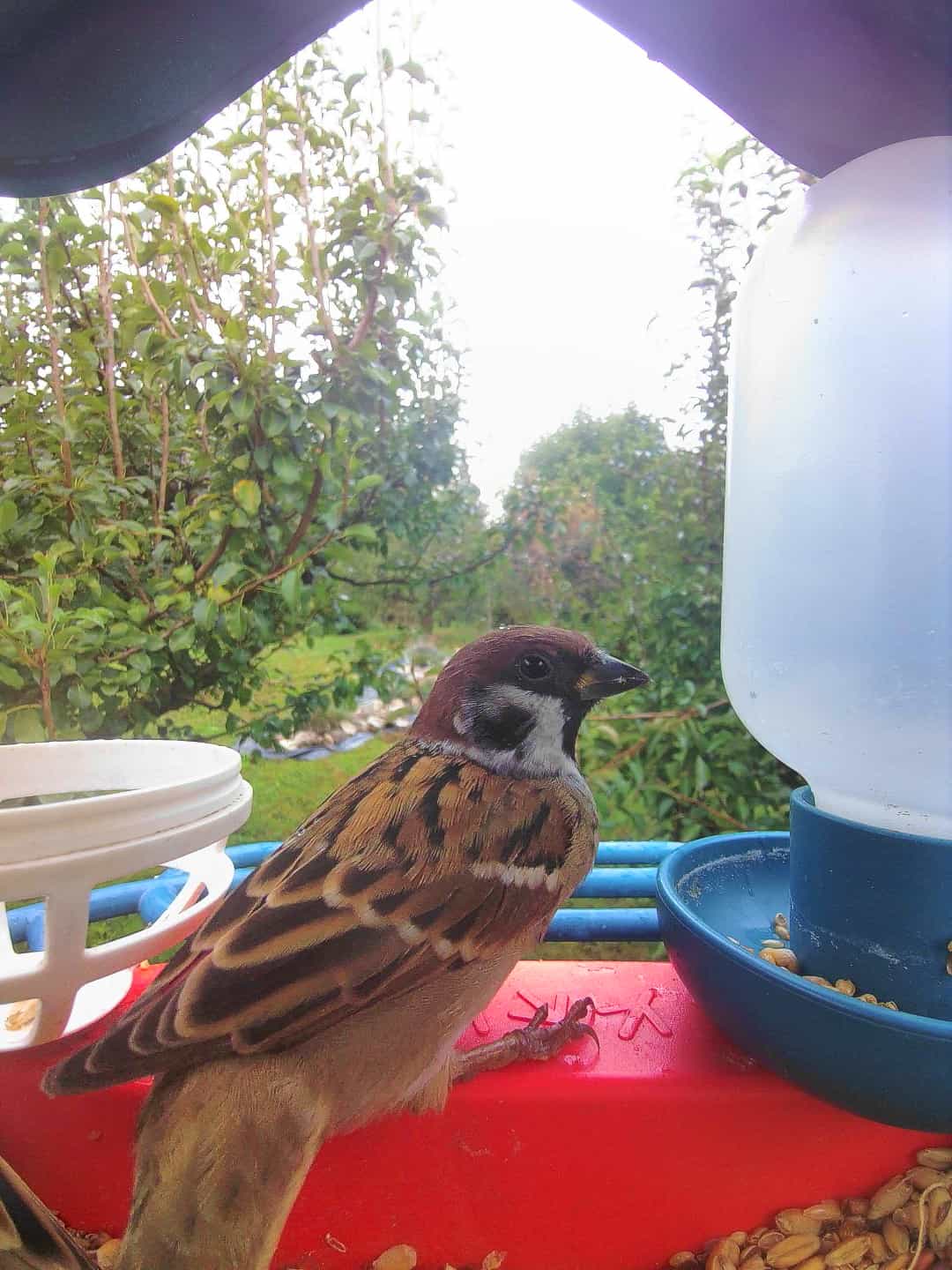
House Sparrow vs Eurasian Tree Sparrow
House Sparrow vs American Tree Sparrow

House Finch vs [Select a bird]

[Select a bird]
Pick a bird to compare
House Sparrow vs [Select a bird]
[Select a bird]
Pick a bird to compare