
Eurasian Tree Sparrow
Eurasian Tree Sparrow
Also known as: German Sparrow, Tree Sparrow
Passer montanus


Quick Identification guide
Quick Identification guide
- •
Distinguished by its chestnut-brown cap and white cheeks, each sporting a characteristic black ear patch
- •
Features a stout, black bill ideal for seed consumption, complementing its small, compact body size
- •
Notable for its black bib on the throat and pale underparts that contrast with the warm brown upperparts
What does a Eurasian tree sparrow sound like?
The vocalizations of the Eurasian tree sparrow are characterized by loud chirping, akin to that of the House Sparrow. Its distinctive call presents a pattern that can be described as falling or flat, signifying the consistency in its tones. The typical call type can be classified as a chirp or chip, reflecting a repetitive and short sound, akin to the swift striking of a small bell.


Description
Did you know that these birds were introduced to the US in 1870? About 20 sparrows were brought over from Germany and released in St Louis, Missouri. This was done to make European immigrants feel more at home! That's why the descendants of these pioneers differ a little from their German ancestors.
The Eurasian tree sparrow can weigh between 18to28grams and be from12.5to14centimeters tall.
The typical lifespan of the Eurasian tree sparrow is about 3 years. This is notably shorter than the lifespan of related species such as the house sparrow, which can live up to 13 years in the wild. It is, however, similar to the lifespan of other small bird species. These comparisons illustrate the variation in longevity among different species within the same family.
Did you know?
Most popular questions about Eurasian tree sparrow
How to recognise a Eurasian tree sparrow?
General appearance
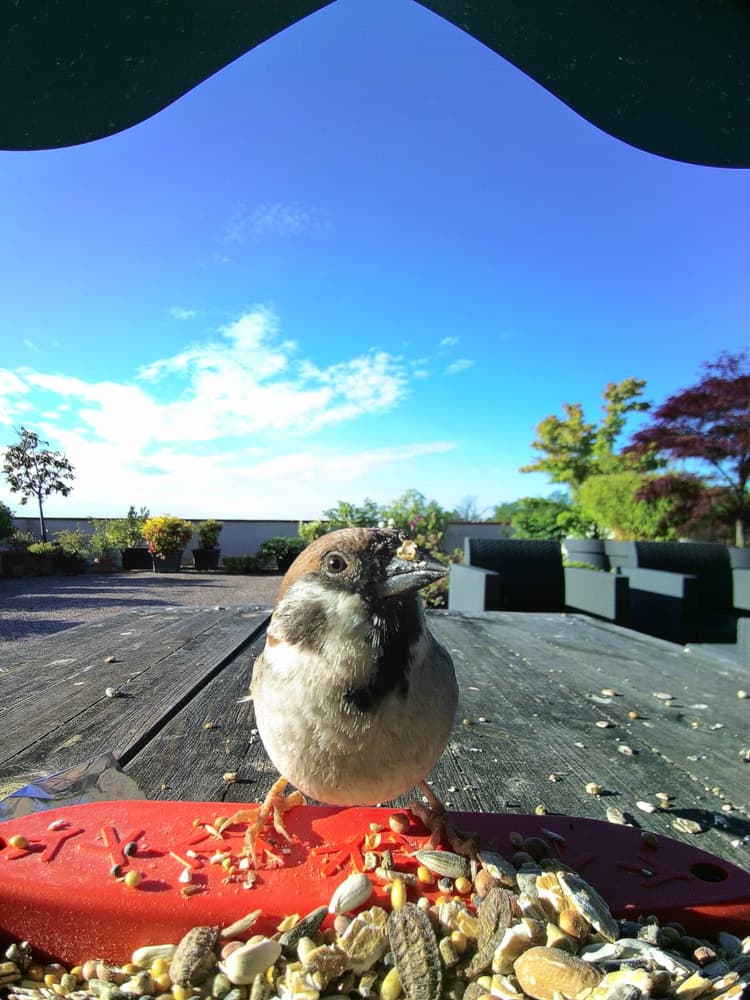
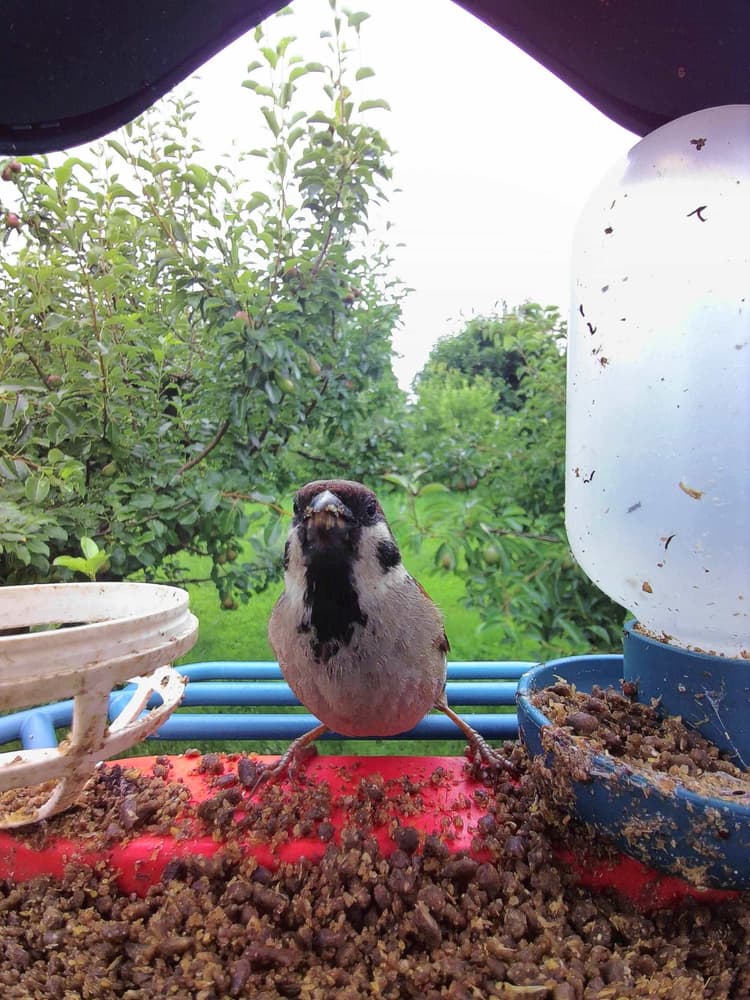
The Eurasian tree sparrow is about the size of a House Sparrow, roughly 15 cm or 6 inches long. Its wing shape is either fingered or rounded and its tail may be notched, rounded, or square-tipped. It has a combination of colors; black, brown, gray, tan, and white. One distinctive feature is the brown crown on its head, differing from the gray crown of the House Sparrow. It also has a black ear spot on a white cheek.
Male vs female
Both male and female Eurasian tree sparrows resemble the male House Sparrow, and there is no notable sexual dimorphism between them. This means that both sexes share similar features such as a brown crown, white cheeks with black ear spot, and usually a smaller black bib. This species does not show significant changes in appearance between seasons.
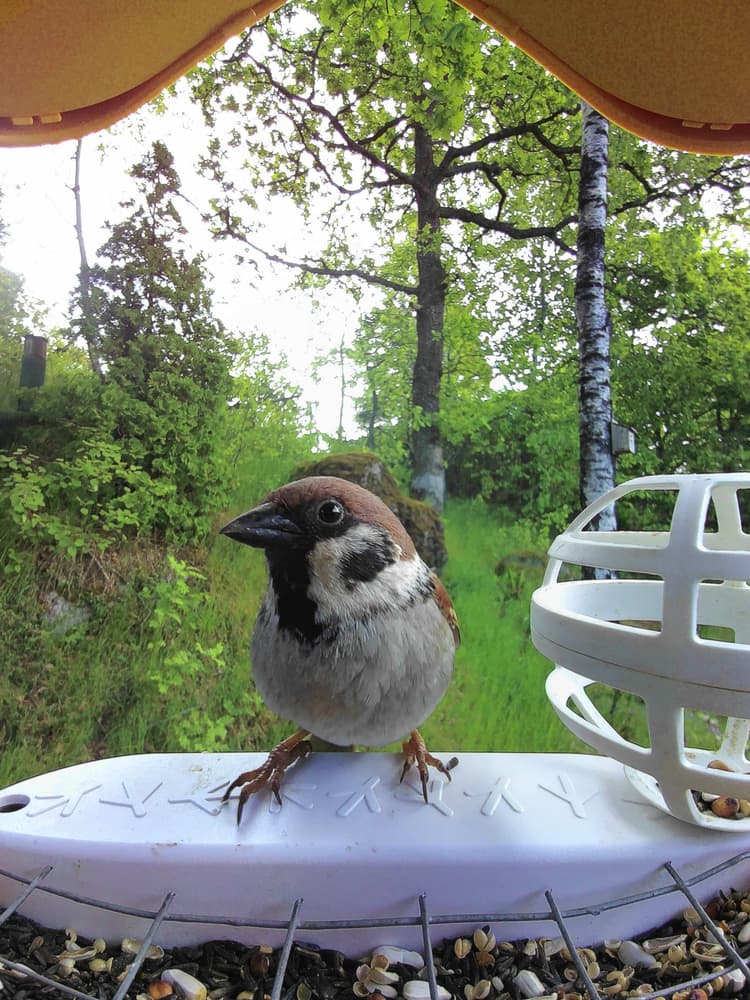
Male Eurasian Tree Sparrow
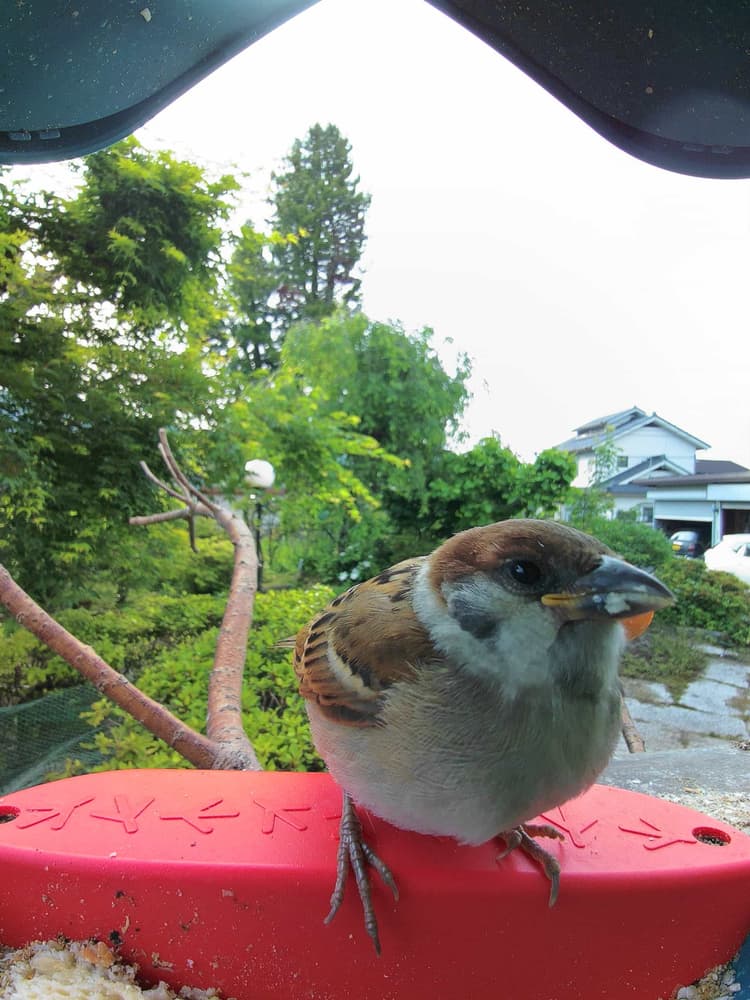
Female Eurasian Tree Sparrow
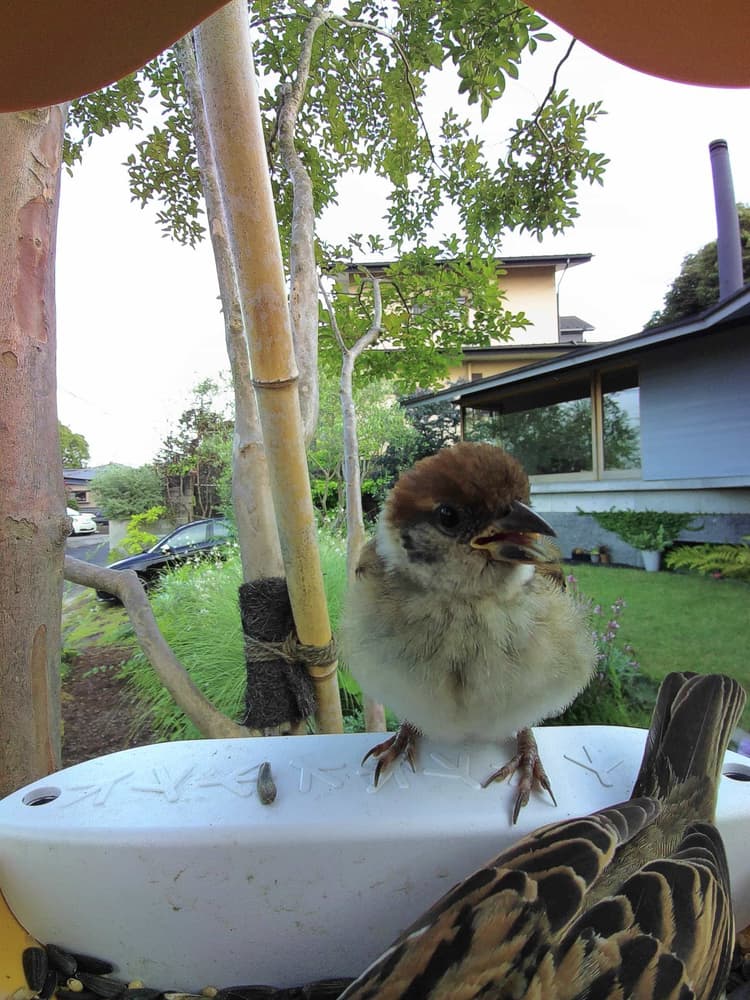
Juvenile
Juvenile Eurasian tree sparrows tend to look like adults but their colors are more muted, making them less conspicuous to predators. As they mature, their colors will become more pronounced. It is noteworthy, however, that size or color variations may occur depending on their diet and habitat condition.
Often mistaken for
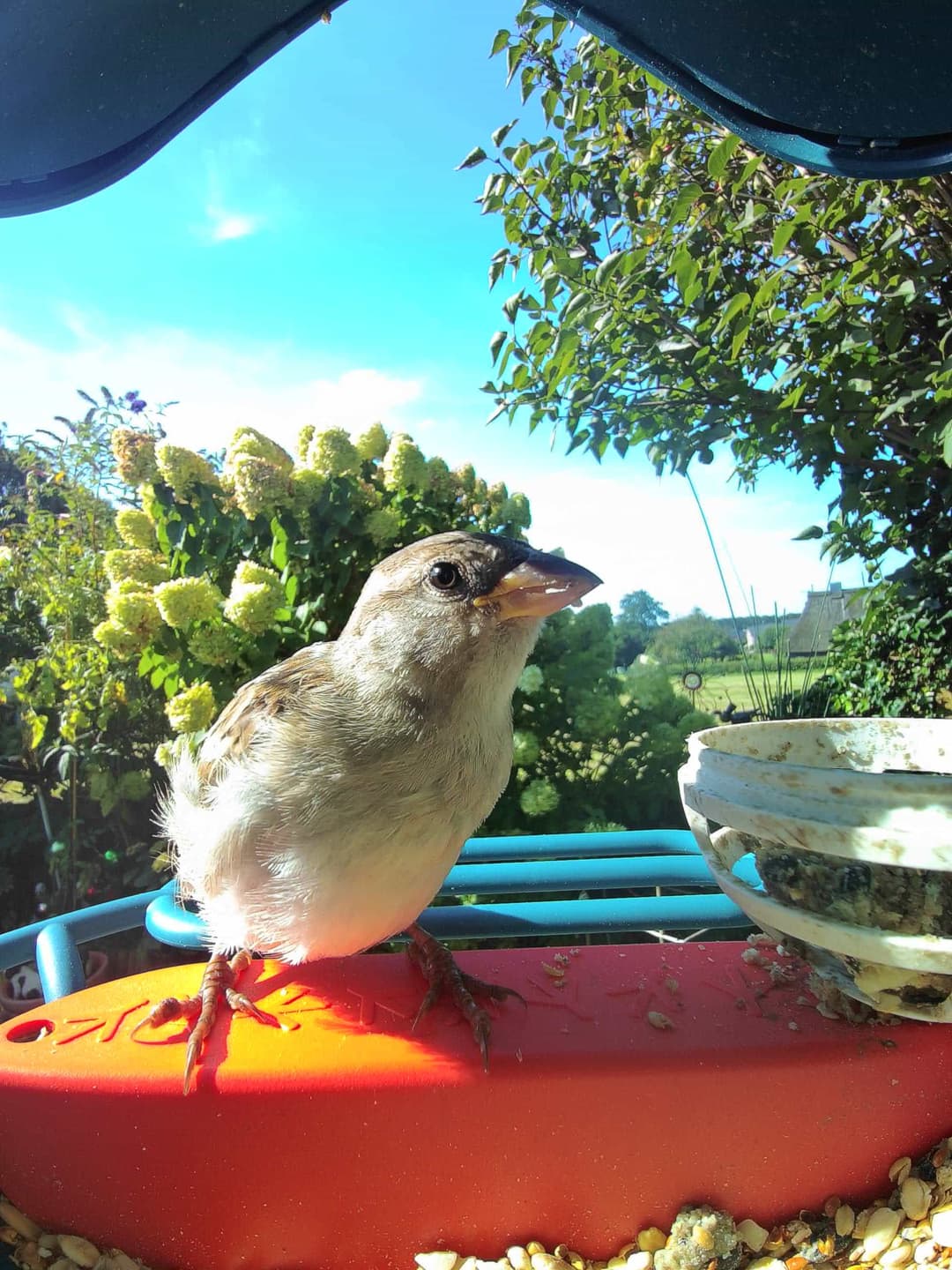
House Sparrow vs Eurasian Tree Sparrow
Eurasian Tree Sparrow has a distinctive chestnut crown and nape, black cheek spots, and white cheeks, while the House Sparrow has a grey cap and lacks the cheek spot. House Sparrows have a more robust body and a thicker bill. Look for the bolder face pattern to identify the Eurasian Tree Sparrow.
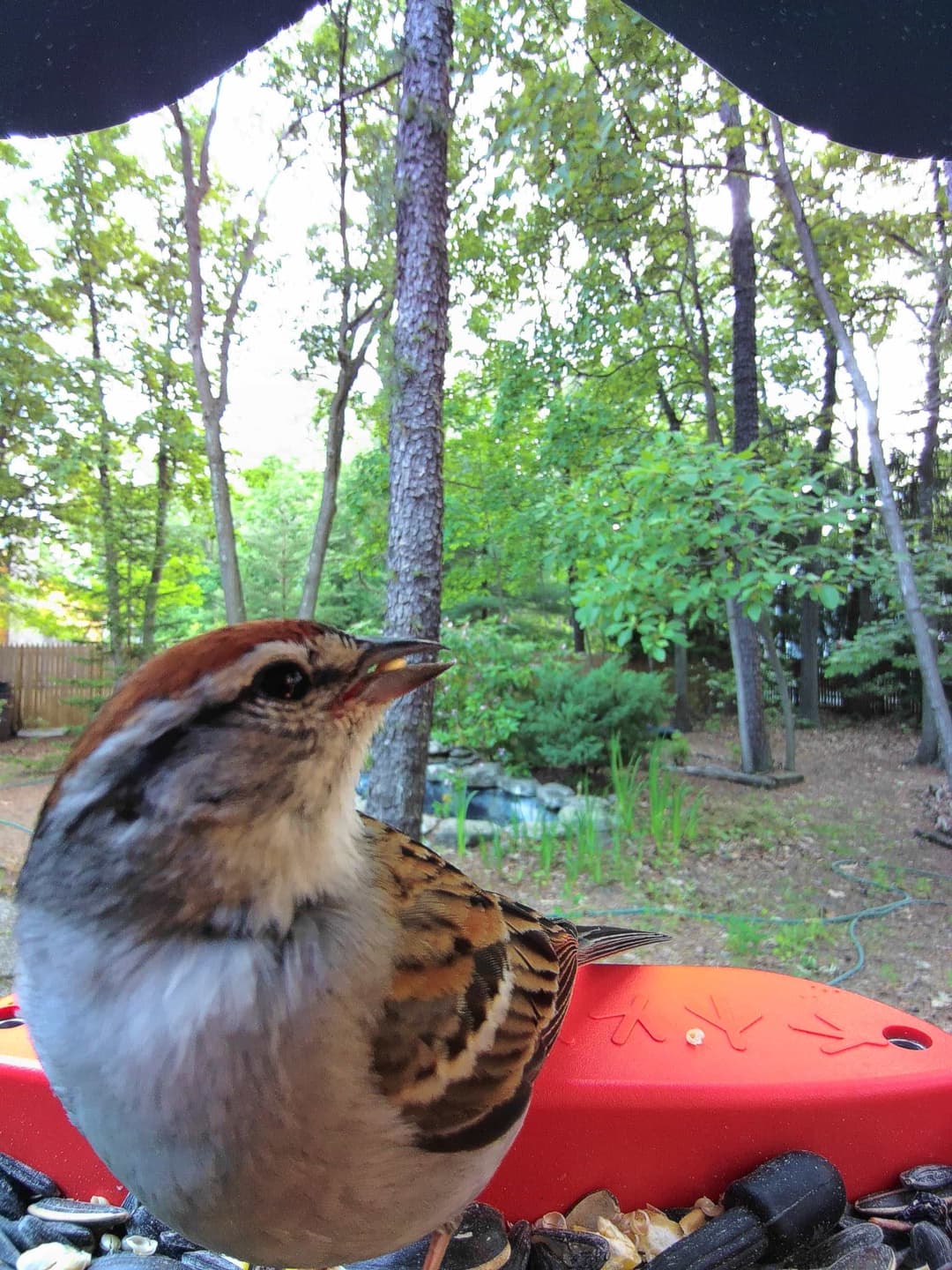
Chipping Sparrow vs Eurasian Tree Sparrow
Eurasian Tree Sparrow features a chestnut crown, black cheek spots, and a white collar. In contrast, Chipping Sparrows have a rusty cap, a black eye line, and a greyish face. The Eurasian Tree Sparrow is slightly larger, and their face pattern is more pronounced than the Chipping Sparrow.
Breeding and nesting habits of the Eurasian tree sparrow
Mating behaviors
Eurasian tree sparrows may form pairs that stay together throughout all seasons, or pair formation might occur well before the nesting season commences.
Nesting details
These sparrows typically choose a cavity for their nests, such as natural tree hollows, abandoned woodpecker holes, birdhouses, or structural crevices in buildings. Their nests are seldom built in open branches and consist of a bulky mass of grass, weeds, straw, trash, and may be lined with feathers. Both parents likely contribute to nest construction.
Eggs and chick-rearing
Details on egg incubation and chick-rearing are not specified, but typically, both parents participate in caring for the young, ensuring their safety and feeding them until they are ready to fledge.
What does a Eurasian tree sparrow like to eat?
Flowers
Fruits
Insects
Plants
Seeds
Spiders
Natural diet
The Eurasian tree sparrow primarily consumes seeds and insects, forming the core of its diet. Although specific dietary details in North America are not extensively documented, it is known to eat seeds from various weeds and grasses. During the summer months, their insect consumption likely increases, as insects are abundant and provide a valuable protein source.
Bird feeders
At bird feeders, the Eurasian tree sparrow typically eats the same types of seeds that are found in its natural habitat. These include seeds from common bird feed mixes such as millet, sunflower seeds, and cracked corn. Their adaptability in seed choice makes them common visitors to bird feeders that offer diverse seed options.
Attracting the eurasian tree sparrow
If you want to tempt the Eurasian Tree Sparrow to visit your yard, you must first create a safe and welcoming environment for them. They are attracted to areas with lots of cover, so having trees or shrubs in your garden is highly recommended. You can also place birdhouses around your yard, ensuring they have a sheltered place to rest and nest.
Essential snacks and feeders
Feeders! Certainly, offer seeds and feeders that are suited to the dietary needs and preferences of the Eurasian Tree Sparrow. A regular bird feeder can work, but a platform feeder would be ideal because they offer the sparrows great visibility and plenty of room to feed. Fill your feeders with Bird Buddy seeds. Experts have chosen these for each season, providing the best results in attracting these lovely spirited birds!
Fun tricks to encourage visits
Try placing some feeders near a window so you can enjoy their chirrups and twittering up close! Bird baths or a water feature can be a great attraction as well. Sparrows love to bathe and drink regularly, so a clean source of water can tempt them to visit and maybe even stay for a sing-along!
Where can you find Eurasian tree sparrows?
Based on Birdbuddy sighting data. The heatmap shows where Birdbuddy users have spotted this species.
Embed this map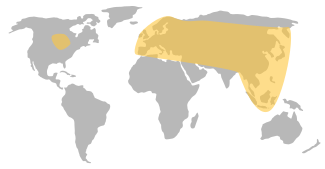
This map shows the full native range based on scientific range data.
Primary habitat
The Eurasian tree sparrow typically occupies semi-open habitats in Europe and Asia, often found in woodland edges, towns, and farms.
Additional range
In North America, it is fairly local, preferring open country with scattered bushes and trees and is also present in suburban and city areas.
Do they migrate?
The Eurasian tree sparrow exhibits varying migratory behaviors depending on its geographical location. Some populations in northern Eurasia are migratory, whereas others, particularly those in more temperate regions, remain in their habitats year-round. In migratory populations, the birds typically move southwards for the winter to escape harsh weather conditions and return north in the spring for breeding. The specific routes and timings can vary, but generally, these sparrows migrate within Europe and parts of Asia. They often travel short to medium distances, favoring routes that provide optimal resources and habitat continuity. Key locations for migratory Eurasian tree sparrows include breeding grounds in northern Europe and Asia, such as parts of Scandinavia, Russia, and Central Asia. During migration, they might be found in southern Europe and more temperate regions of Asia, where the climate remains milder during winter months. In contrast, the populations in North America, where they were introduced, do not exhibit migratory behavior and are permanent residents throughout the year. These populations have adapted to their environments and maintain local dispersal patterns that suit their established habitat.
What is the role of Eurasian tree sparrows in nature and how to protect them?
Conservation status
The Eurasian tree sparrow is common and widespread in Eurasia, indicating a stable population across the region. In North America, its population is small and stable, having minimal impact on native birds. The species is not considered vulnerable or endangered, with no major conservation efforts currently necessary. However, habitat loss and changes in agricultural practices could pose future threats. Conservation focus mainly involves monitoring populations and habitats to ensure the species remains abundant and to mitigate any emerging threats in the future.
Ecological role of Eurasian tree sparrows
Its role in the ecosystem
The Eurasian tree sparrow plays an important role in the ecosystem making it ecologically valuable. With its diet primarily composed of seeds and insects, it aids in controlling the population of numerous insects, potentially detrimental to crops and vegetation, thereby indirectly assisting in pest management. Simultaneously, through the consumption of various seeds, it contributes to seed dispersal which is crucial for plant biodiversity and growth, including waste grain in fields and the seeds of weeds and grasses. Eurasian tree sparrows are also likely to have an effect on the recycling of nutrients in an ecosystem through their foraging behavior, particularly as they often forage whilst hopping on the ground. Undigested seeds in their droppings can also lead to reforestation and plant succession. Hence, being both a seed disperser and insect predator, the Eurasian tree sparrow significantly contributes to maintaining the balance in its ecosystem.
How to help protect Eurasian tree sparrows
Preservation tips
Habitat preservation strategies
To conserve the Eurasian tree sparrow, prioritize the preservation of its natural habitats. This includes woodlands, farmlands, and urban areas. Implement stricter regulations on deforestation and land conversion. Efforts should also be made to plant trees suitable for nesting and provide safe feeding grounds.
Community science initiatives
Engage local communities in the conservation process. Launch community science projects to track sparrow populations and movements. Educate locals on the importance of the Eurasian tree sparrow to the ecosystem. Encourage practices that support the bird's survival, like limiting the use of harmful pesticides which can deplete their food sources.