
White-Crowned Sparrow
White-Crowned Sparrow
Zonotrichia leucophrys


Quick Identification guide
Quick Identification guide
- •
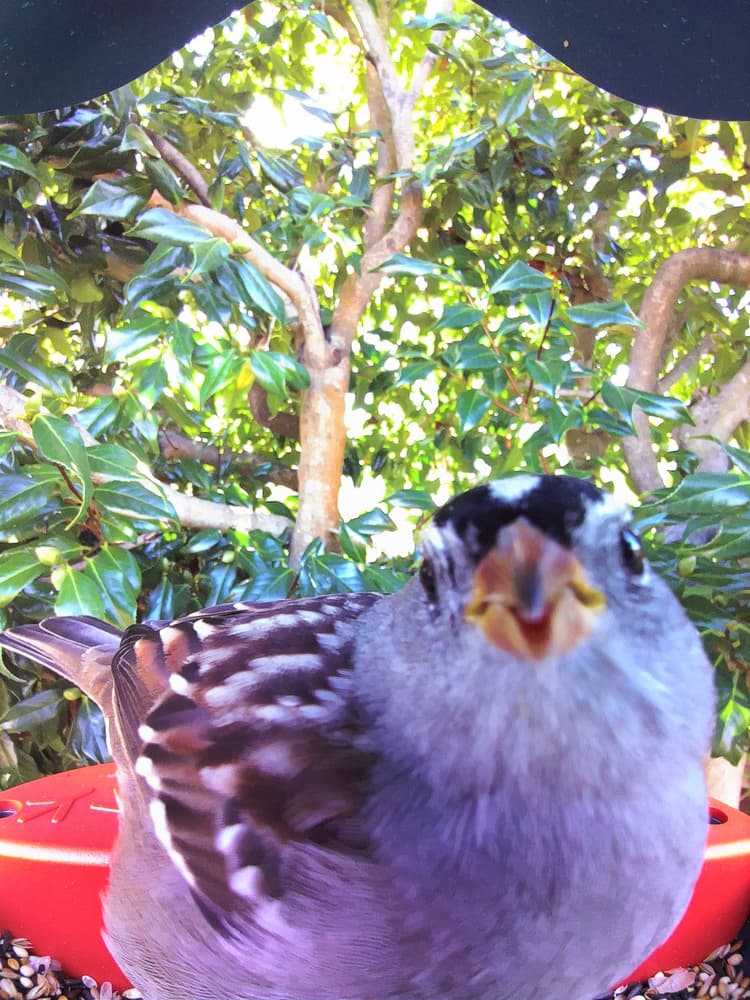
Identifiable by its distinctive white crown stripe flanked by black lateral stripes running from beak to nape
- •
Exhibits grey body with brown upperparts, and pale underparts providing a subtle contrast
- •
Features a small, conical beak that is typically pink or yellowish in color
What does a white-crowned sparrow sound like?
The white-crowned sparrow's vocalization is identifiable by a brief series of lucid whistles that evolve into buzzy notes. Its call pattern showcases a dynamic falling rhythm. Typically, the bird communication exhibits varied call types including chirp or chip, trill, and whistle. These distinguishing auditory signatures render the white-crowned sparrow's calls and songs unique among bird sounds.


Description
Creatures of habit, white-crowned sparrows have been known to return to the same wintering areas each year, so chances are your visitors might be regulars! Males learn their song from other males in their so-called song neighbourhood. If they happen to live at the intersection of two such neighbourhood, some can be bilingual! Did you know that they can run on a treadmill at 1/3 mph without getting tired?
The white-crowned sparrow can weigh between 25to28grams and be from15to16centimeters tall.
White-crowned sparrows typically live up to 13 years. In comparison, related species like the white-throated sparrow have a similar lifespan of around 14 years, and song sparrows live typically for 11.3 years. Longevity among these species largely hinges on survival rates, environmental factors, and predation.
Did you know?
Most popular questions about white-crowned sparrow
How to recognise a white-crowned sparrow?
General appearance
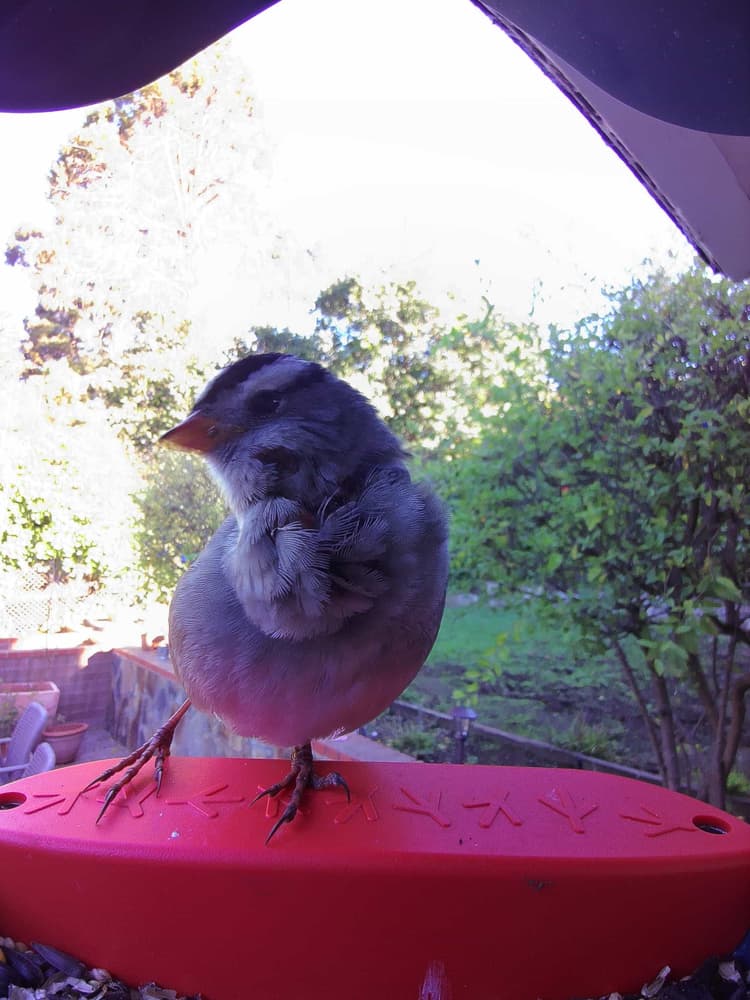
The white-crowned sparrow has a striking black-and-white striped crown, gray face, and a pink bill. Its back is streaked brown, and its underparts are grayish. Its wings have two white bars.
Male vs female
Males and females are similar in appearance, both displaying the distinctive black-and-white crown pattern. However, males may exhibit slightly brighter plumage during the breeding season.
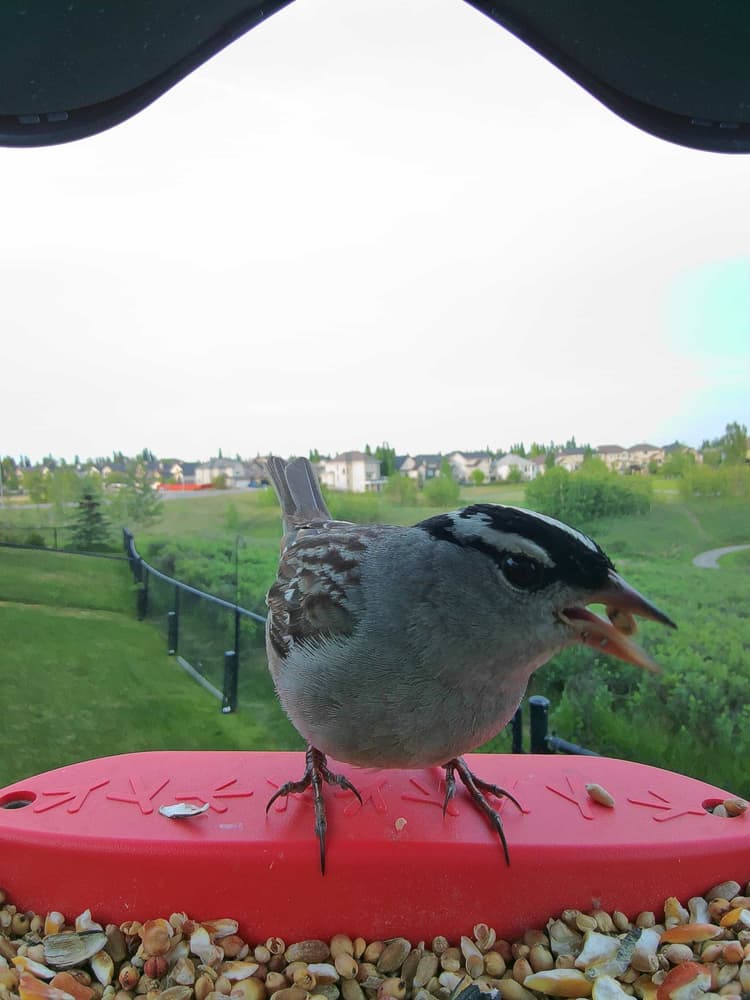
Male White-Crowned Sparrow
Juvenile
Juvenile white-crowned sparrows have a rusty brown crown compared to the black-and-white stripes of adults. Their overall plumage is browner and less distinctly marked, lacking the bright contrast seen in mature birds.
Often mistaken for
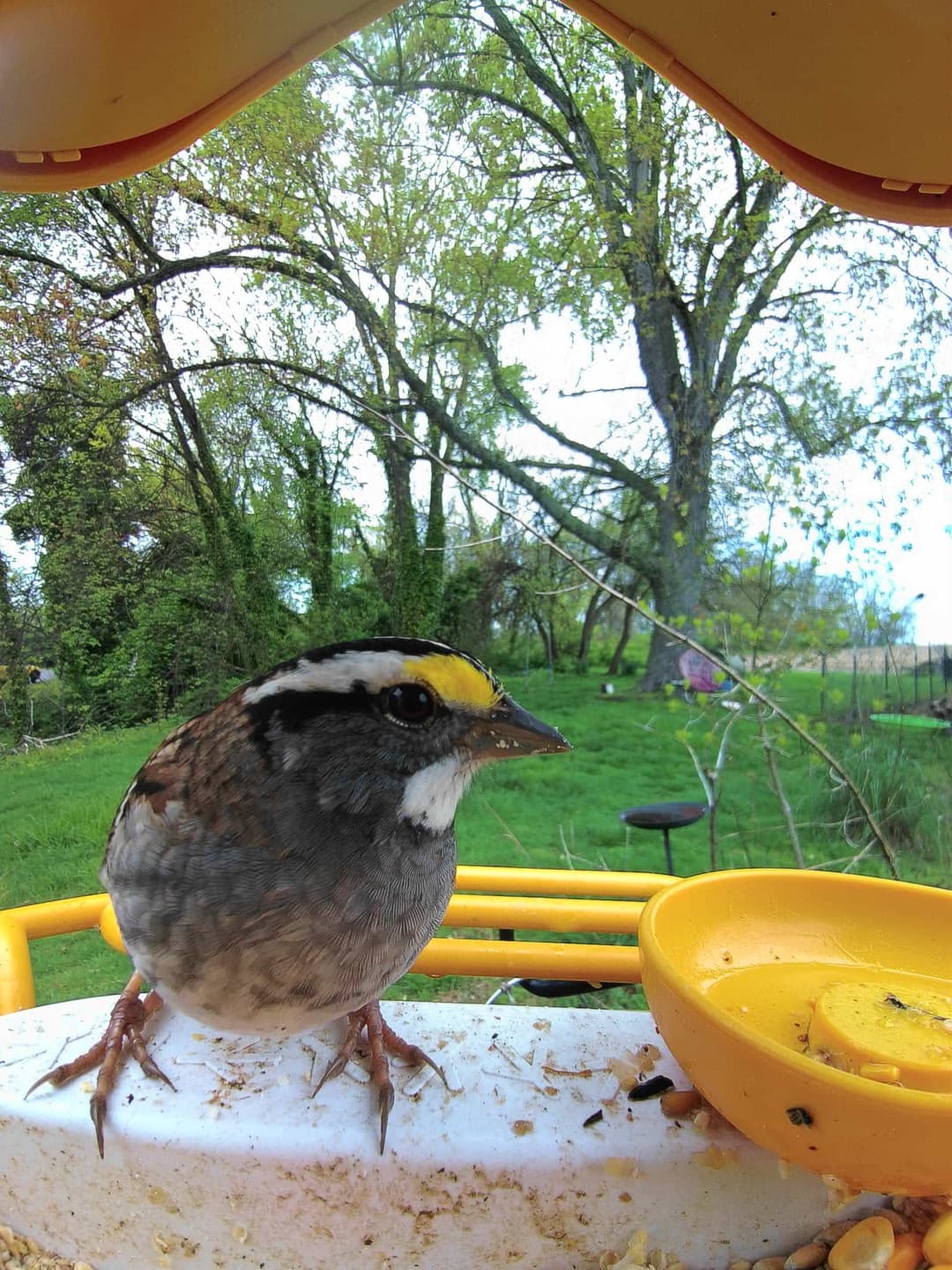
White-Throated Sparrow vs White-Crowned Sparrow
White-Crowned Sparrows have a distinct black and white striped crown, while White-Throated Sparrows sport a yellow spot between their eyes and a white throat patch. The latter has a more slender build and a browner body coloration. Listen for their song differences; White-Crowned's song is a clear, whistled tune.
Golden-Crowned Sparrow vs White-Crowned Sparrow
White-Crowned Sparrows feature a bold black and white striped crown, whereas Golden-Crowned Sparrows have a golden-yellow stripe at the front of their heads surrounded by gray. The body of Golden-Crowned is typically a bit plainer and browner. Compare songs: White-Crowned has a more complex, sweet whistling tune.
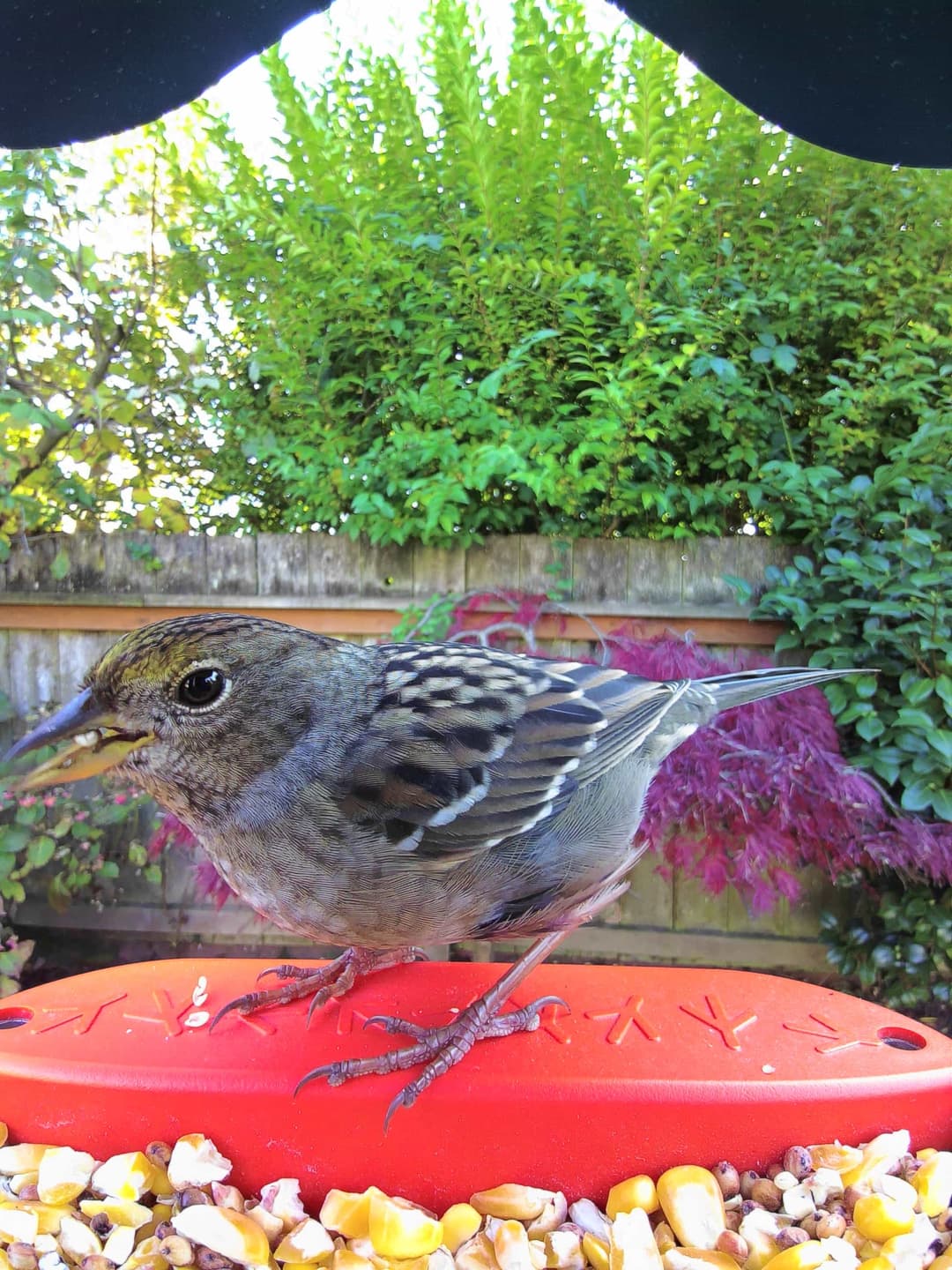
House Sparrow vs White-Crowned Sparrow
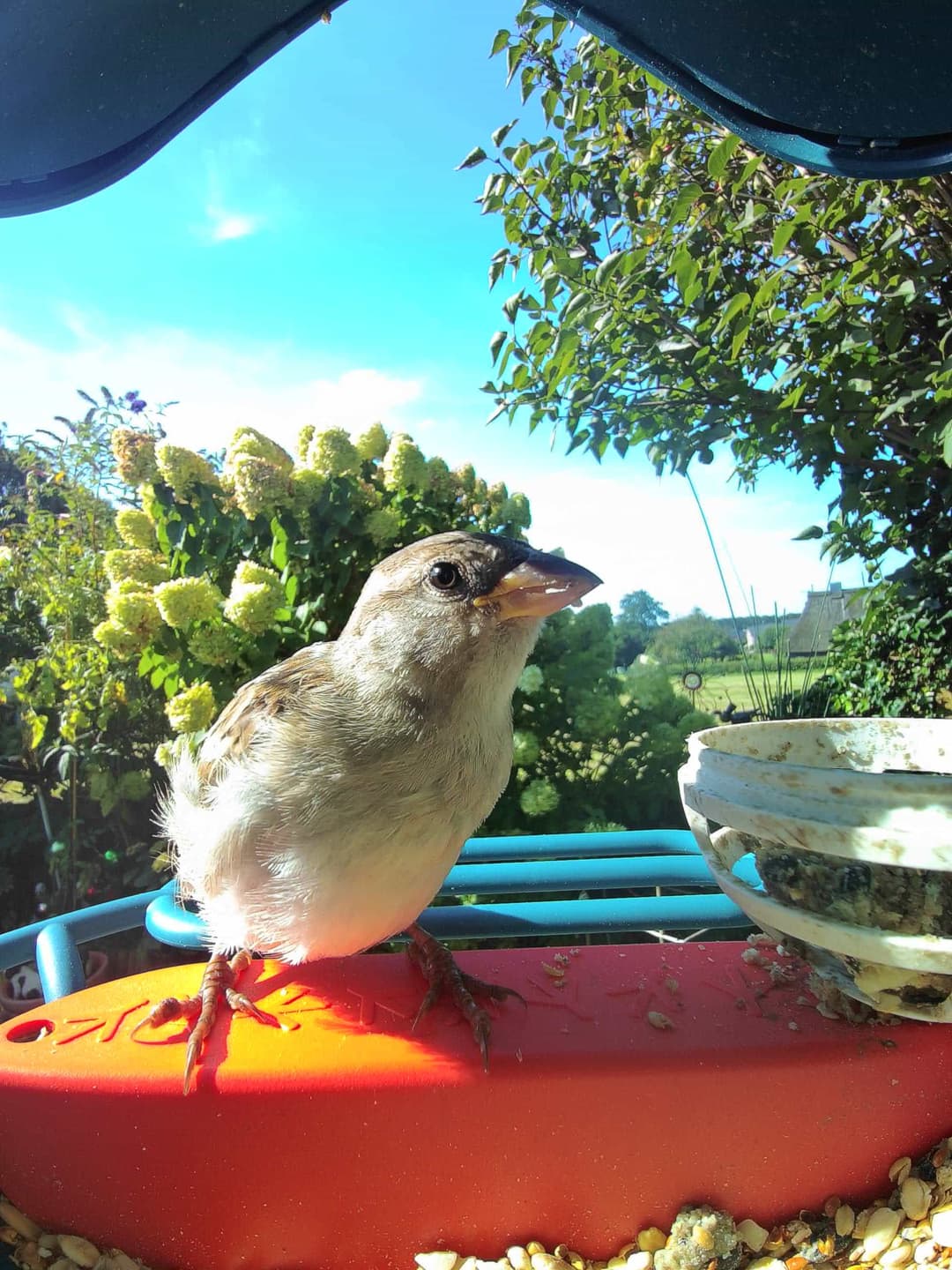
House Sparrows are generally stockier with gray heads and more uniform brown bodies. In contrast, the White-Crowned Sparrow has a distinctive black and white striped crown and a sleeker look. House Sparrows often flock in urban areas, while White-Crowned prefer open spaces and fields.
Breeding and nesting habits of the white-crowned sparrow
Mating behaviors
In southernmost coastal regions, white-crowned sparrows may maintain pair bonds throughout the year on permanent territories. In other regions, males typically arrive at nesting areas before females and establish territories by singing.
Nesting details
Nesting sites in the northern range are usually on the ground at the base of a shrub or grass clump, often in a shallow depression. Along the West Coast, nests may be elevated a few feet in shrubs. Nests are constructed by the female and are open cups made from grass, twigs, weeds, rootlets, and strips of bark, lined with fine grass, feathers, and animal hair.
Eggs and chick-rearing
White-crowned sparrows typically lay clutches of three to five eggs. The female incubates the eggs, while both parents are involved in feeding the chicks once they hatch. Providing a garden habitat with native shrubs and grasses can support nesting and chick-rearing.
What does a white-crowned sparrow like to eat?
Flowers
Fruits
Insects
Plants
Seeds
Natural diet
The white-crowned sparrow's natural diet primarily consists of seeds, especially in winter, mainly from weeds and grasses. Throughout different seasons, it consumes various other vegetable matter, including buds, flowers, moss capsules, willow catkins, berries, and small fruits. Insects and spiders form an essential part of its diet, particularly in summer, and young sparrows are predominantly fed insects.
Bird feeders
White-crowned sparrows may visit bird feeders for seeds such as sunflower seeds, millet, and cracked corn. These common feeder offerings provide a supplemental food source especially during colder months when natural sources are less abundant.
Tempting the white-crowned sparrow with tasty treats
White-Crowned Sparrows are partial to a variety of snacks, with their favorites being mixed seeds and insects. We recommend you opt for Bird Buddy seeds, as they are expertly chosen for the season, providing the birds with the necessary nutrients they need to thrive. Scatter these on a tray or ground feeder for best results.
Selecting the right feeder type
While White-Crowned Sparrows are adaptable when it comes to type of feeder, they feel most comfortable on ground level or platform feeders. If you have such a feeder, simply scatter Bird Buddy seeds on it and watch as these delightful creatures flock to your yard.
Encourage a visit with fun tricks
Creating a bird-friendly environment in your yard is a great way to attract White-Crowned Sparrows. Provide a water source, such as a bird bath, and nesting materials like twigs or grass clippings. Providing a safe and attractive environment encourages these beautiful songbirds to drop by – and maybe even stay for a sing-along!
Where can you find white-crowned sparrows?
Based on Birdbuddy sighting data. The heatmap shows where Birdbuddy users have spotted this species.
Embed this map
This map shows the full native range based on scientific range data.
Primary habitat
The white-crowned sparrow primarily frequents boreal scrub, forest edges, thickets, chaparral, gardens, and parks. Their breeding habitats are consistently brushy, ranging from dwarf willow thickets at the edge of tundra to scrub just below mountain timberlines and along the Pacific Coast.
Additional range
In winter, the sparrow expands its range to include farms and desert washes. Such environments may be unexpected, but they are typically marked by the presence of hedgerows, overgrown fields, and desert washes.
Do they migrate?
The white-crowned sparrow exhibits varied migratory behaviors depending on its geographic population. Populations along the Pacific Coast tend to be permanent residents, staying in one place year-round. In contrast, those from northern regions such as Alaska and Canada, as well as from mountainous areas, are strongly migratory. Migration primarily occurs at night, with the timing varying based on location. Typically, northern populations begin their southward migration in late September to early October. They travel to wintering grounds in the southern United States and parts of Mexico. On average, female white-crowned sparrows winter farther south than males, suggesting a differential migration pattern based on sex. Their migratory route generally follows the Pacific Flyway or the interior western part of North America, avoiding the Rocky Mountains' harsher climates. Key locations during migration and wintering include California, Texas, Arizona, and parts of northern Mexico. During spring, typically starting in March or April, they return north to their breeding territories. Migration routes and timing can vary significantly among different populations, influenced by local environmental conditions and resource availability. As such, the white-crowned sparrow displays a flexible migration strategy, adapting to regional ecological demands.
What is the role of white-crowned sparrows in nature and how to protect them?
Conservation status
The white-crowned sparrow is considered "widespread and common," indicating it is not currently classified as vulnerable or endangered. Its extensive range and stable population suggest a secure conservation status. Despite not facing significant threats like habitat loss or climate change, conservation efforts focus on preserving its natural habitats to maintain population stability. Monitoring migration patterns and maintaining healthy ecosystems are key to ensuring the species continues to thrive.
Ecological role of white-crowned sparrows
Its role in the ecosystem
White-crowned sparrows play significant roles within their ecosystem. For example, they contribute to pest control through their consumption of various insects and spiders, particularly during the summer months. Their feeding habits also support seed dispersal, which encourages plant growth and biodiversity. By consuming significant amounts of seeds during the winter, and other vegetable matter throughout different seasons, they play a part in distributing these materials, likely aiding in the propagation of certain plant species. Additionally, their nests, often made of natural materials like grass, twigs, and bark, potentially help in nutrient recycling within the environment. The variation in their nesting behavior depending on the geographical location could also indicate adaptability to different environmental conditions, contributing to the balance of different ecosystems.
How to help protect white-crowned sparrows
Preservation tips
Habitat preservation strategies
Support the white-crowned sparrow by preserving its natural habitat. Promote land use policies that avoid urban sprawl and minimize disruption to open grasslands and woody vegetation. Support reforestation and invasive species management, which improves food availability and nesting sites. Invest in wetlands preservation, key to maintaining their insect food sources.
Community science initiatives
Get involved in community science initiatives to study and protect the white-crowned sparrow. Participate in bird counts and monitoring programs to help researchers track population trends. Report sightings through apps like eBird. Promote and attend local education and appreciation events to raise public awareness about the sparrow’s conservation needs.