
American Tree Sparrow
American Tree Sparrow
Also known as: Winter Sparrow
Spizelloides arborea


Quick Identification guide
Quick Identification guide
- •
Features a bright chestnut cap on the head and a grayish face with a contrasting rusty eyeline
- •
Possesses a small, neat body with a plump shape, indicative of its sparrow family
- •
Exhibits a bicolored beak with a dark upper mandible and a yellowish lower mandible
What does an American tree sparrow sound like?
The American tree sparrow displays a melodious vocal range. Its typical song pattern starts with 1 or 2 clear notes which transition into a sweet, rapid warble. During winter, its feeding call turns into a silvery 'tsee-ler' sound. Two prominent call types are 'Chirp/Chip' and 'Whistle,' primarily characterized by a falling pattern in pitch.


Description
The American tree sparrow's name is a misnomer! These birds actually build their nests on the ground. There's no dieting for this bird: they need to eat and drink 30% of their bodyweight a day. A single day without food or drink means the end of their tiny lives. The collective noun for a group of sparrows is a grove.
The American tree sparrow can weigh between 13to28grams and be from14to16.5centimeters tall.
The American tree sparrows typically live 2-3 years, but some can survive up to 10 years in the wild. Compared to the related Fox Sparrow that has a lifespan of around 8 years, and the Chipping Sparrow, living approximately up to 11 years, the American tree sparrow's life expectancy is lower.
Did you know?
Most popular questions about American tree sparrow
How to recognise an American tree sparrow?
General appearance
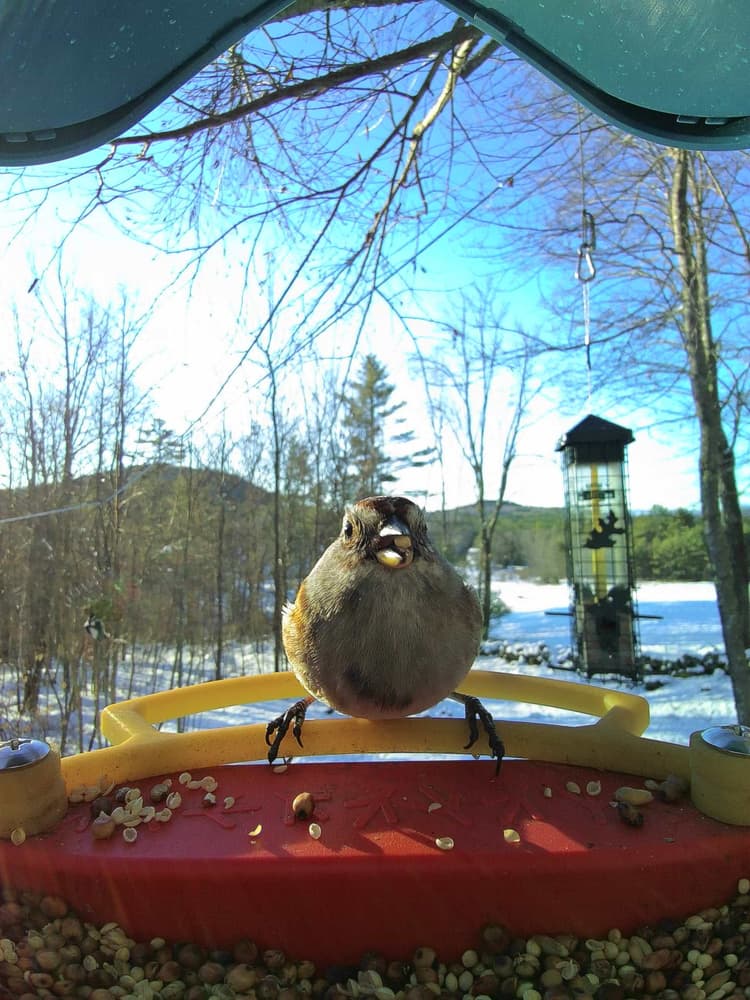
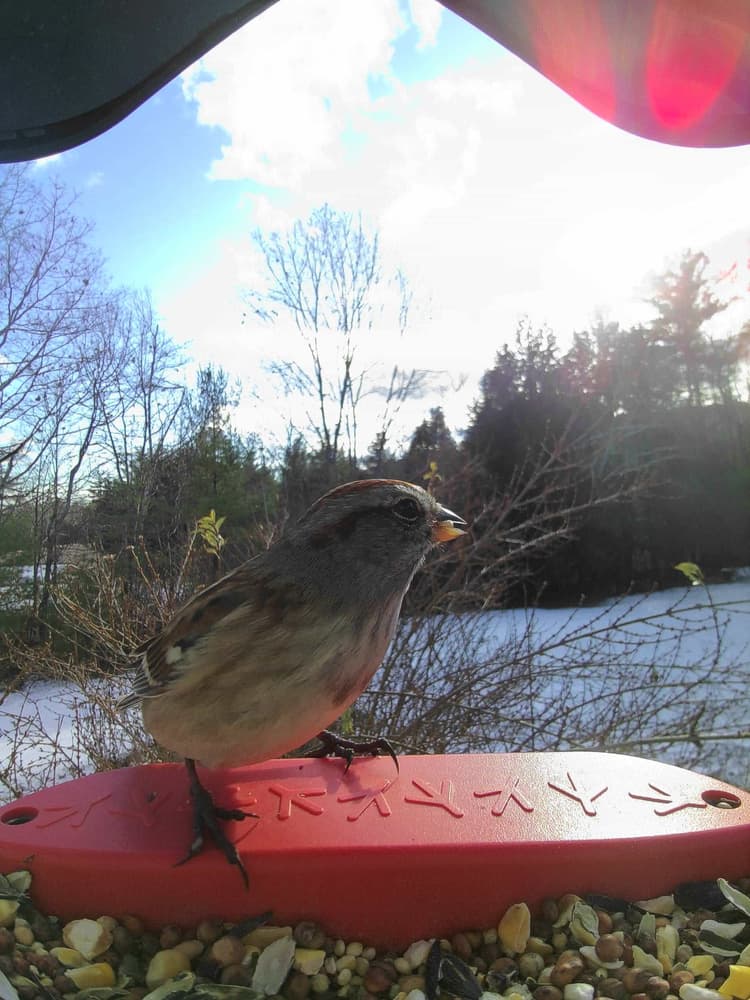
The American tree sparrow is a small, slender bird with a distinct rusty cap and gray face. A notable brown streak extends through the eye, and the bird has a bicolored bill with a dark upper mandible and yellow lower mandible. Its back and wings are brown with dark streaks, while the underparts are pale gray with a central dark spot on the breast. The tail is long and notched with two white wing bars that stand out.
Male vs female
There is minimal sexual dimorphism in American tree sparrows, meaning males and females look alike. Both genders share the same coloration and markings, making them difficult to distinguish based solely on appearance.
Juvenile
Juvenile American tree sparrows resemble adults but with slightly duller and less distinct markings. Young birds may have a more muted crown and face pattern. As they mature, their plumage becomes more defined, resembling the adults in coloration and characteristics.
Often mistaken for
Chipping Sparrow vs American Tree Sparrow
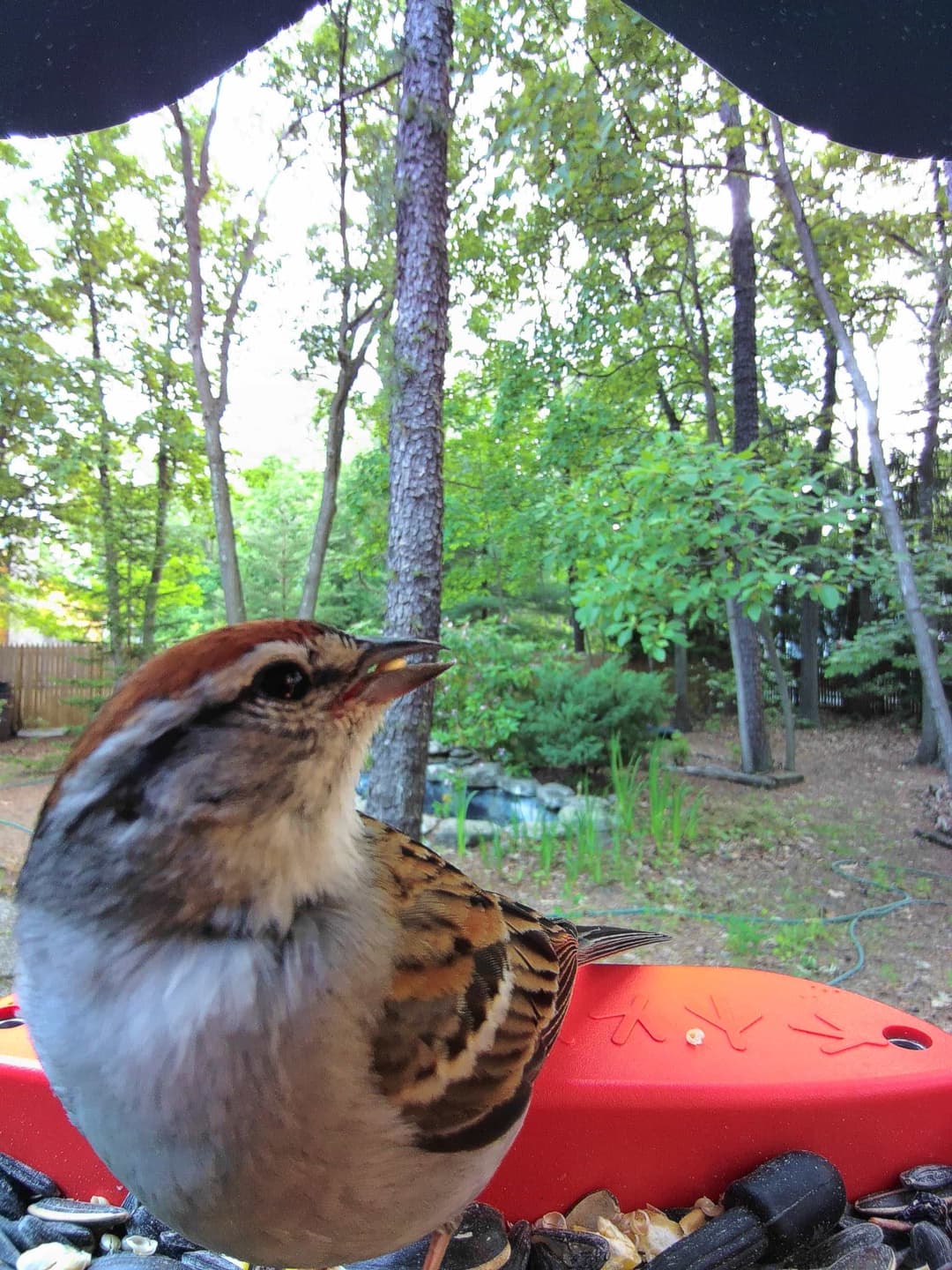
American Tree Sparrow has a distinct bi-colored bill; dark upper mandible and yellow lower mandible, whereas Chipping Sparrow's bill is uniformly dark. Look for the clear, central breast spot on the American Tree Sparrow. Chipping Sparrow lacks this mark and has a more rufous cap.
Song Sparrow vs American Tree Sparrow
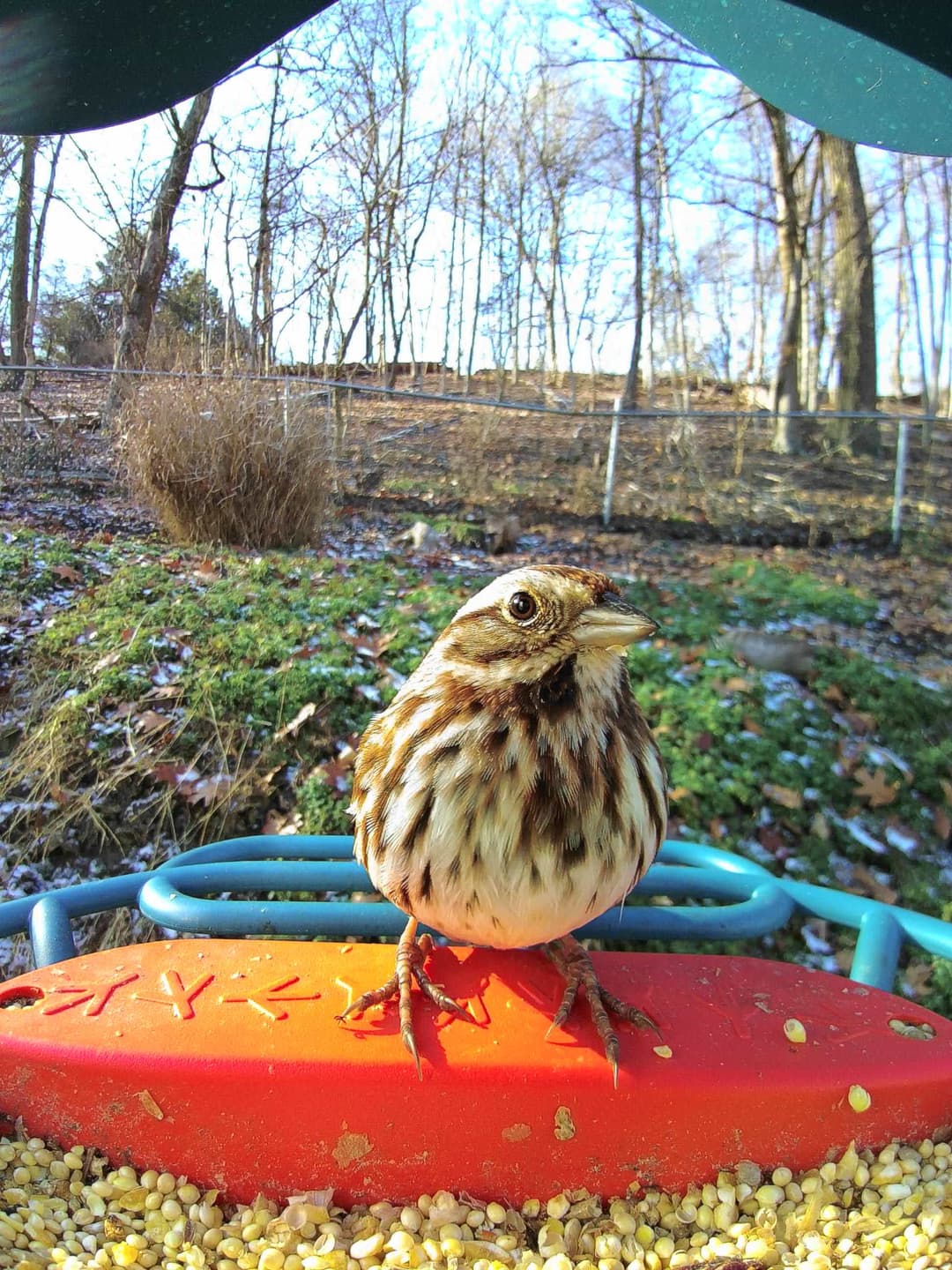
Song Sparrows are chunkier with heavy streaking on the breast that often merges into a central spot, unlike the American Tree Sparrow which features a clear, central spot. Song Sparrows have a rounder head with a more streaked appearance overall.
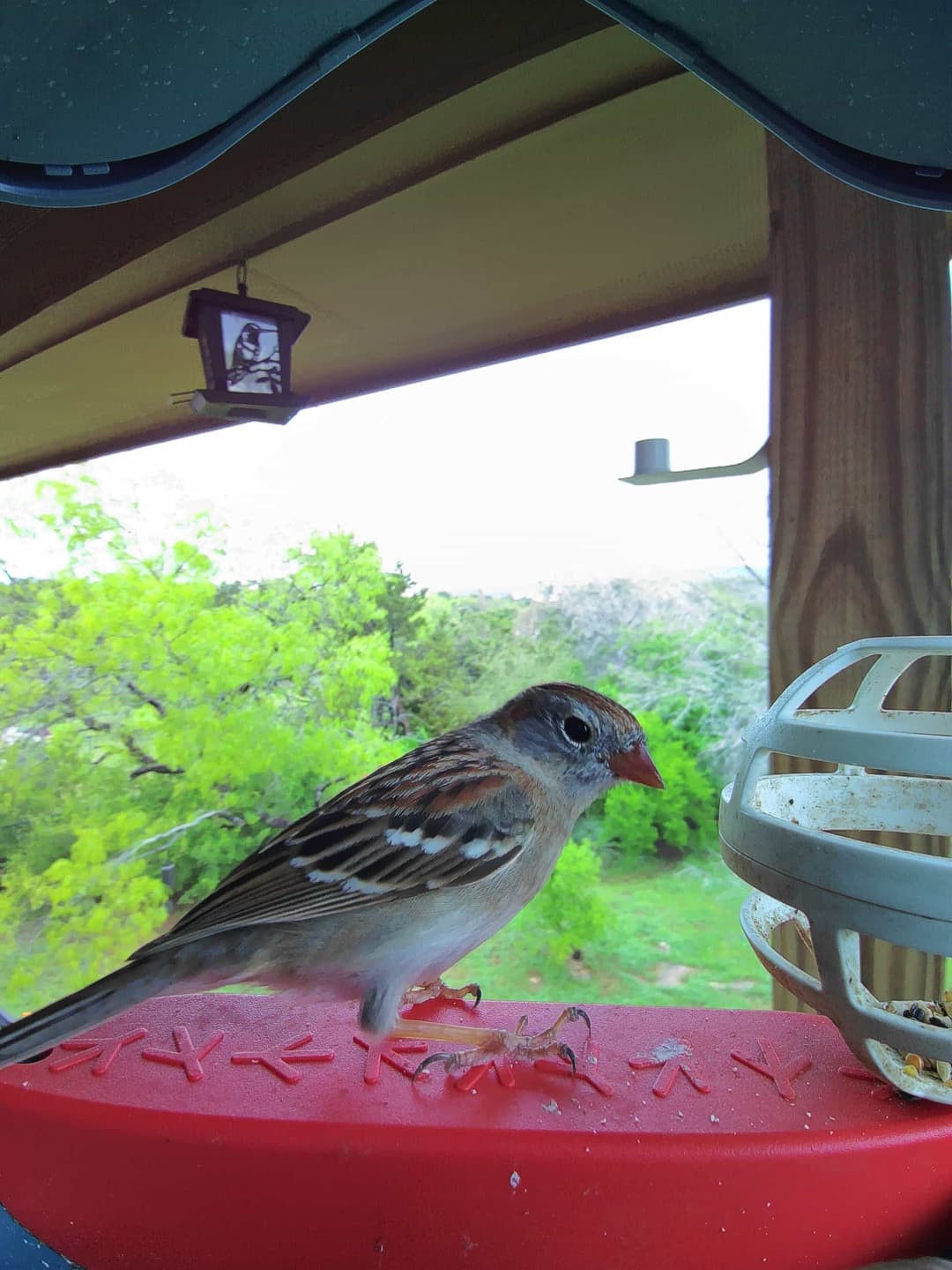
Field Sparrow vs American Tree Sparrow
Field Sparrows have a pink bill compared to the American Tree Sparrow's bicolored bill. The American Tree Sparrow also has a distinctive rufous eyeline and crown, which Field Sparrows lack, instead showcasing a plainer face.
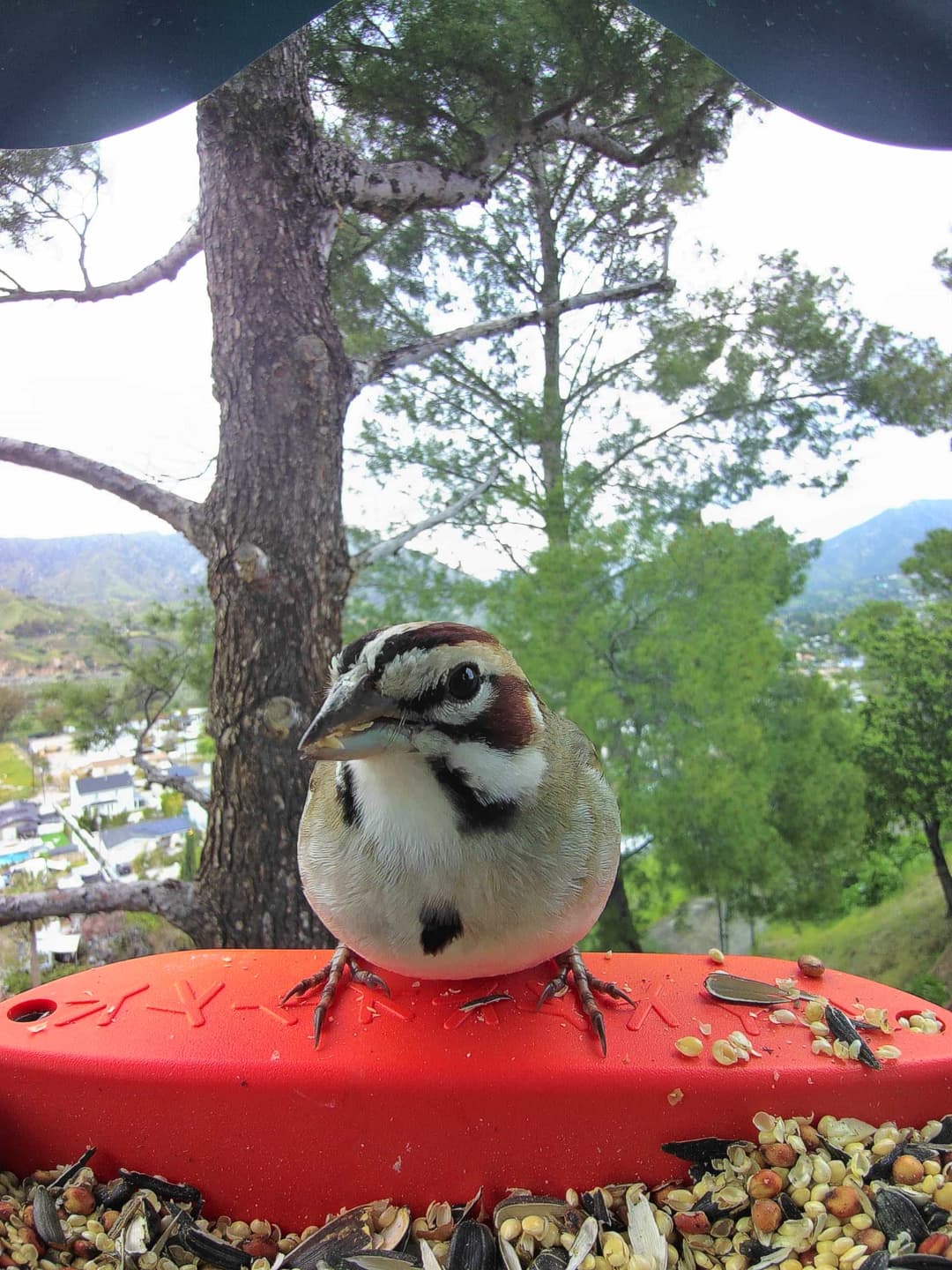
Lark Sparrow vs American Tree Sparrow
Lark Sparrows are larger with chestnut and white striped heads, unlike the American Tree Sparrow's rufous cap. The bold facial pattern and cheek patches of Lark Sparrow are distinctive when compared to the subtler face of the American Tree Sparrow.
Breeding and nesting habits of the American tree sparrow
Mating behaviors
American tree sparrows engage in courtship displays that include singing and flight patterns. Males establish territories through song and visible displays, attracting females to these areas.
Nesting details
These sparrows typically nest near the ground in shrubs, dense brush, or even on open tundra in the far north. Nests are cup-shaped, constructed with grasses, twigs, and lined with finer materials like feathers or animal hair.
Eggs and chick-rearing
Females lay 4-6 eggs, incubated for about 12 days. Both parents feed the chicks a diet of insects and seeds. Chicks fledge approximately 9-12 days after hatching. To support garden nesting, provide dense shrubs and minimize disturbances.
What does an American tree sparrow like to eat?
Berries
Insects
Seeds
Natural diet
The American tree sparrow's diet varies seasonally. In winter, it primarily consumes seeds from grasses, weeds, and other plants, while occasionally eating a few insects and berries. During summer, its diet shifts to mostly insects and other small invertebrates, supplemented by a few seeds. The young sparrows are mostly fed insects, providing the necessary nutrition for growth.
Bird feeders
At bird feeders, the American tree sparrow often eats seeds, particularly favoring sunflower seeds, millet, and other small seeds commonly available in bird seed mixes. These food sources help supplement their natural diet, especially during the winter months when food is scarce.
Feeder types & placement
American tree sparrows are attracted to feeders that are easy for them to perch on. Tube feeders, hopper feeders, and tray feeders would all work well. Additionally, place your feeders near shrubs or trees. It provides them easy access to cover from predators.
Snacks for the sparrows
American tree sparrows enjoy a variety of seeds, berries, and insects. One of their favorites is millet. Attract them to your yard by offering White Proso Millet. They also love black oil sunflower seeds. Use Bird Buddy seeds in your feeders. These seeds are expertly selected for the season and yield the best results in attracting a variety of birds to your yard.
Fun tricks to encourage visits
Give parking a try. This is where you keep a feeder filled with food in the same spot all the time. The birds will learn that this is a reliable source of food and will regularly check it. Another trick is to use bird song recordings. Just ensure that the recordings are of American Tree Sparrow calls to encourage them to your yard.
Where can you find American tree sparrows?

Primary habitat
The American tree sparrow primarily dwells around treelines where the northern forest transitions into tundra, typically within Arctic scrub and willow thickets or in clearings in stunted spruce forests.
Additional range
Unexpectedly, this bird species also inhabits open fields, woodland edges, marshes, and suburban areas during winter. They frequent brushy roadsides and areas with tall shrubs.
Do they migrate?
The American tree sparrow is a migratory bird that travels between distinct breeding and wintering regions. During the breeding season, they inhabit the northern parts of North America, primarily in the tundra and boreal forests of Canada and Alaska. As winter approaches, these sparrows migrate southward relatively late in the fall, typically around late September to November, to reach their wintering grounds in the northern and central United States. Their migration primarily occurs at night, allowing them to avoid predators and navigate using the stars. In spring, they commence their northward journey relatively early, generally from late February through April, to return to their breeding territories. Interestingly, there is a notable difference between the migratory patterns of male and female American tree sparrows. On average, females tend to winter farther south than males, which might be due to their need for slightly different habitats or food availability during the non-breeding season. These birds do not have a rigid migration route but instead follow a broad path aligned with their geographical needs and climatic conditions. Key wintering locations include temperate open fields and weedy areas across the northern and central United States, where they can find food and shelter.
What is the role of American tree sparrows in nature and how to protect them?
Conservation status
The American tree sparrow is abundant and widely distributed, with most nesting areas being remote and free from human disturbance. There is some concern about declining wintering numbers in certain areas, though there is no overall evidence of a population decrease. Consequently, the species is not currently considered vulnerable or endangered. Conservation efforts focus on monitoring population trends and habitat preservation. The primary potential threat is habitat loss in wintering areas, although it hasn't significantly impacted the total population yet.
Ecological role of American tree sparrows
Its role in the ecosystem
The American tree sparrow plays a significant role in controlling insect populations in its environment during the summer, as insects constitute a large part of its summer diet. Because of this, the bird can aid in maintaining a balance in these insect populations, many of which can be damaging to plant life or become nuisances to human habitation. Moreover, the sparrow contributes to seed dispersal throughout the year, particularly in the winter when its diet becomes predominantly seed-based. By consuming and passing the seeds, the American tree sparrow functions as a natural propagation mechanism, aiding in the spread and germination of plant life across its habitat. Lastly, by foraging on the ground or low bushes, the tree sparrow also contributes to the process of decomposition and nutrient cycling in its ecosystem.
How to help protect American tree sparrows
Preservation tips
Habitat preservation strategies
To conserve the American tree sparrow, we should focus on preserving its native habitats, which are primarily scrubby, open areas and tundra. This includes advocating for land management policies that prevent deforestation and unplanned urbanization in these areas. Landowners can contribute by maintaining the vegetation that the sparrows use for nesting and providing feeders during harsh winter months.
Community science initiatives
Engaging local communities is essential in the conservation effort. Raising awareness about the importance of the American tree sparrow and its role in the ecosystem can stimulate interest and encourage participation. Individuals can take part in citizen science projects, such as bird counting and monitoring, to help gather crucial data about the species. This information aids researchers and conservationists in tracking population trends, understanding their behavior, and creating effective protection strategies.