
Cassin’s Finch
Cassin’s Finch
Haemorhous cassinii


Quick Identification guide
Quick Identification guide
- •
Rose-red crown, face, and breast create a distinct contrast with the mostly pale belly and flanks
- •
Displays streaky brown back and wings that blend seamlessly into wooded environments
- •
Features a conical seed-eating beak that's slightly more slender than that of other finches
What does a Cassin's finch sound like?
The Cassin’s finch vocalizes with a series of warbles akin to the Purple Finch, but with a flutier, more varied tone. Its signature call note is a high, distinctive "pwee-de-lip." The finch exhibits a complex call pattern, encompassing falling, rising, and undulating notes. The call types range from chatter, chirp or chip sounds, to a 'hi' note, trills, and whistles.


Description
Cassin's finches haven't got much of a sweet tooth; they really love salt! You can often find them flocking to mineral deposits on the ground. During their first breeding season, males keep their juvenile, female-like plumage and gather in bachelor flocks. This gives the impression that both sexes sing. They were named after John Cassin, curator at the Philadelphia Academy of Natural Sciences.
The Cassin's finch can weigh between 24to34grams and be from16to17centimeters tall.
Cassin's finches typically live for 11-12 years. In comparison to related species, the House finch and Purple finch, Cassin's finches have a slightly longer lifespan, with both House and Purple finches living on average around 11 years.
Did you know?
Most popular questions about Cassin's finch
How to recognise a Cassin's finch?
General appearance
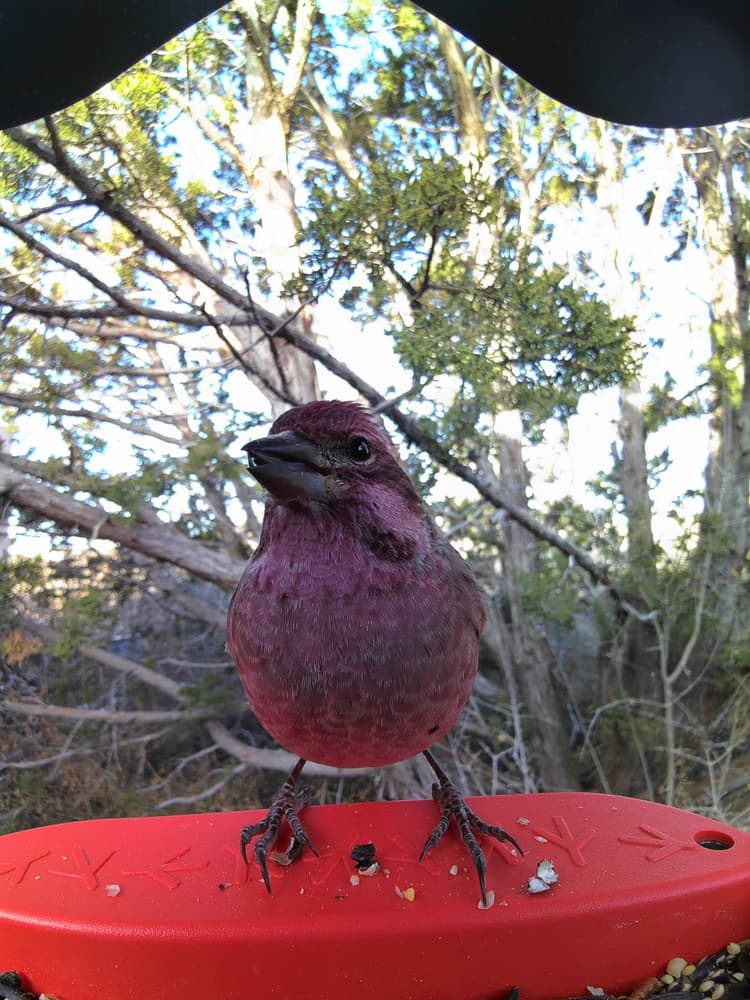
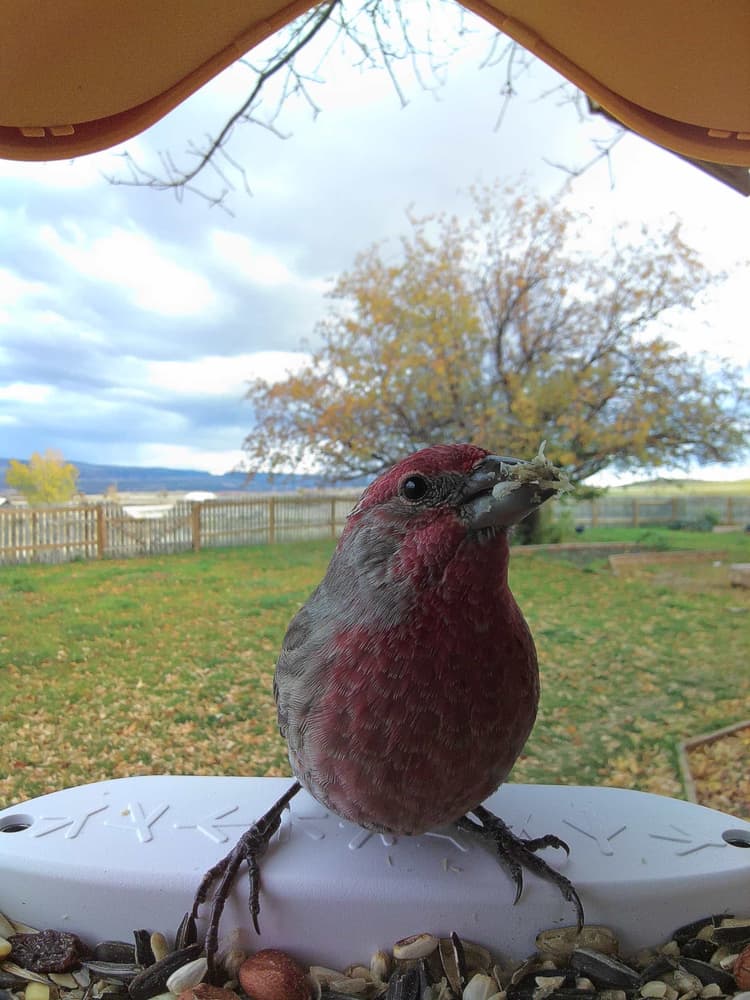
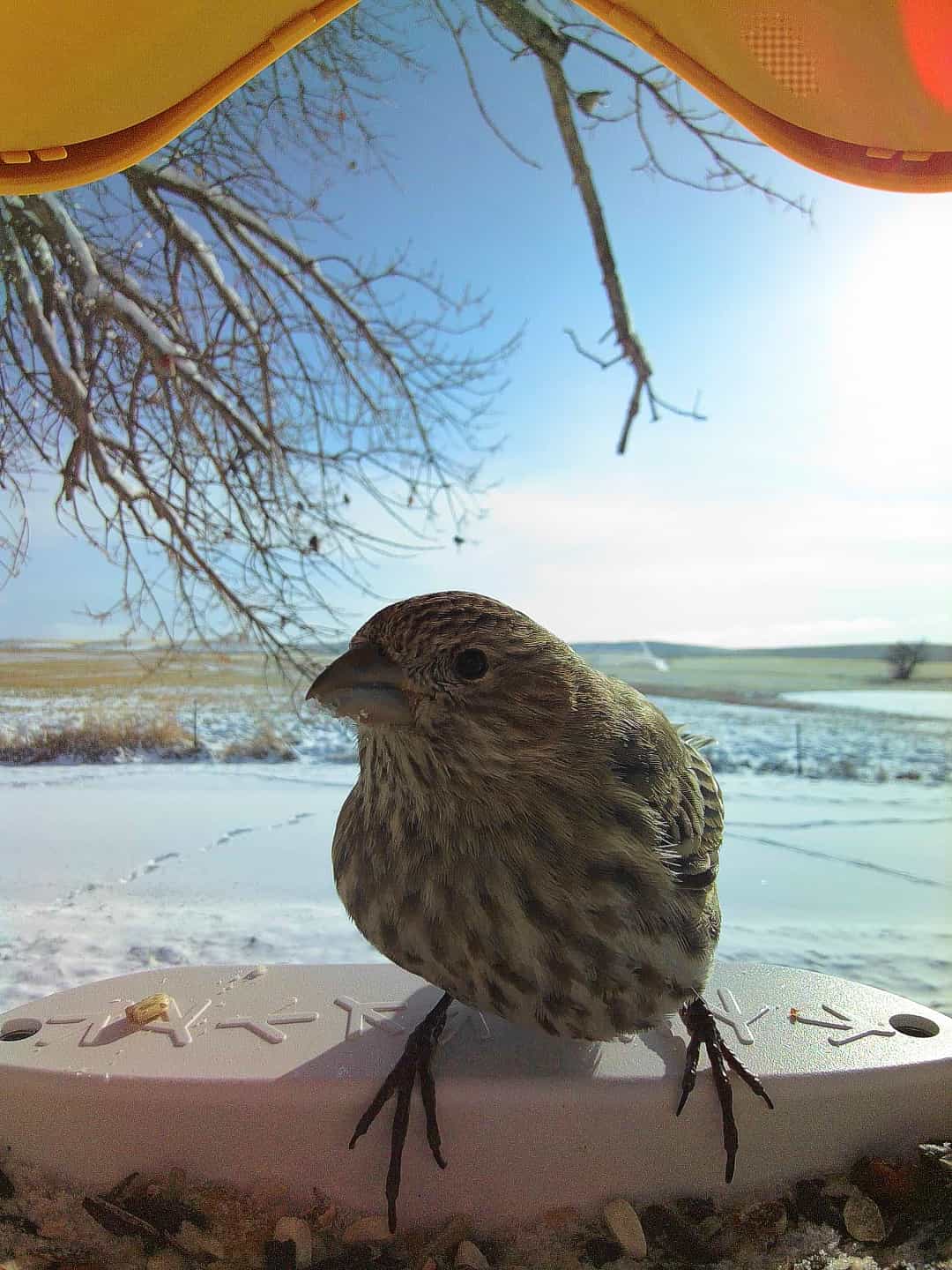
Cassin’s Finch is a medium-sized finch with a distinctive appearance characterized by its sturdy build and conical bill. Its plumage is predominantly brown, with streaked back and wings, and a light belly. Observers can identify it by its split short tail and pointed wings when in flight.
Male vs female
Male Cassin’s Finches are striking with their bright raspberry-red crown which blends into pinkish-red on the throat and breast. This coloration is more vibrant during the breeding season. Females, in contrast, lack the red hues, displaying streaked gray-brown plumage overall with distinctive facial markings, such as a pale eyebrow line and streaked underparts.
Juvenile
Juvenile Cassin’s Finches resemble females but are paler and have a more buffy appearance. They are heavily streaked with brown both above and below. As they mature, juvenile males begin to develop their characteristic red coloration. Seasonal variations include paler tones during the non-breeding season. They can be identified by their habitat in highland coniferous forests and their distinctive, warbling song.
Often mistaken for
House Finch vs Cassin’s Finch
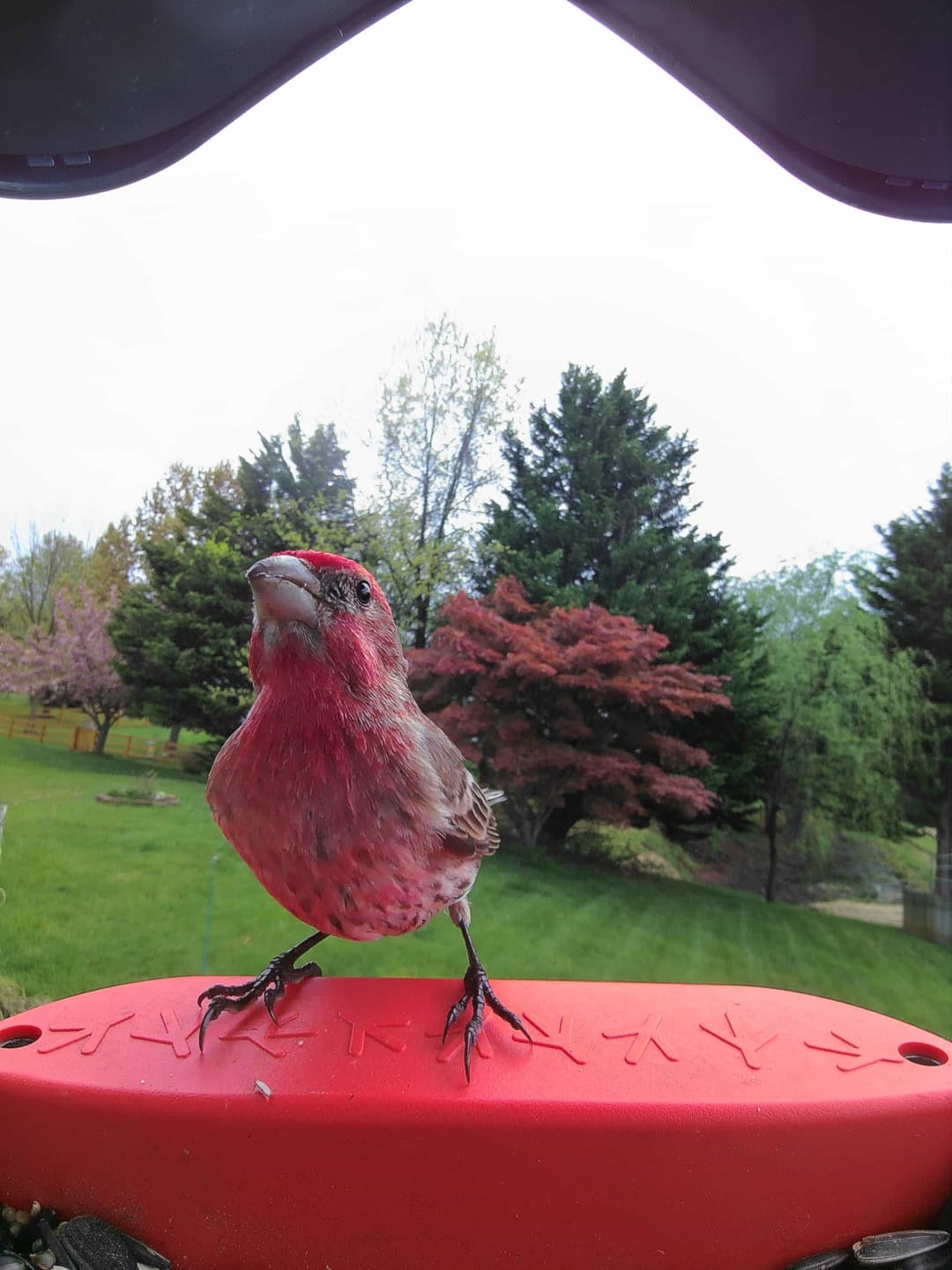
Cassin’s Finch has a slightly peaked head and a paler, rose-pink coloration than the red of the House Finch. Look for the streaked flanks on a House Finch, while Cassin’s tends to have dimmer streaks and a less streaked undertail.
Purple Finch vs Cassin’s Finch
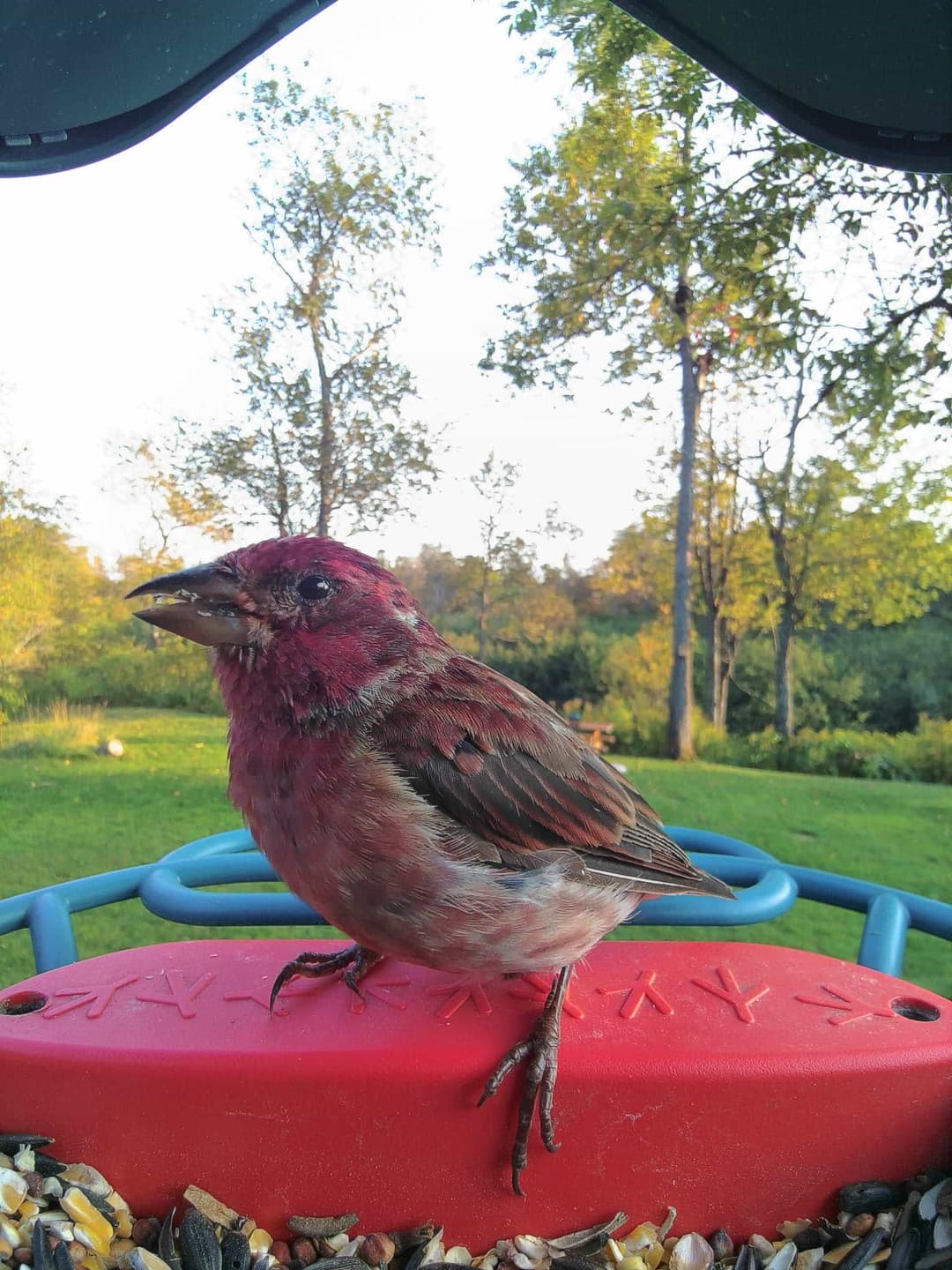
Cassin’s Finch has a straighter bill and a clean white eyebrow compared to the Purple Finch's darker stripe. The overall coloring of Cassin's is paler with a more defined light ring around the eye. Purple Finch is more uniformly colored with a blurred appearance.
Pine Siskin vs Cassin’s Finch
Cassin’s Finch is bulkier and larger than the slender Pine Siskin, which has much more pronounced streaking and yellow wing bars. Cassin’s Finch shows a stronger pink hue on males and a more distinct facial pattern.
Breeding and nesting habits of the Cassin's finch
Mating behaviors
Cassin’s finches exhibit changes in breeding numbers yearly, possibly due to food availability. The male generally stays near the female, not defending much territory but driving away other males.
Nesting details
These finches may nest in small colonies, choosing primarily large conifers for nesting. Nests are typically 30-40 feet high, but can range from 10 to 80 feet up. Occasionally, they nest in aspens or other deciduous trees. The female likely builds an open cup nest with twigs, weeds, rootlets, and strips of bark, lining it with fine grass, plant fibers, animal hair, and sometimes enhancing it with lichens.
Eggs and chick-rearing
While specific details on Cassin’s finch egg-laying and chick-rearing practices are not noted, it is vital to ensure the nesting site is undisturbed to promote successful rearing. Creating a wildlife-friendly garden with native plants and trees can offer more food sources and natural nest placements.
What does a Cassin's finch like to eat?
Flowers
Fruits
Insects
Seeds
Natural diet
Cassin's Finches primarily consume seeds, buds, and berries. Their diet mainly consists of vegetable material. They commonly eat the buds of various trees, which often form a staple part of their diet. Seeds from many trees, particularly conifers, are also significant in their diet, along with seeds from weeds. In addition to seeds and buds, they feed on berries and small fruits when these are available. During the summer months, their diet may be supplemented with insects.
Bird feeders
At bird feeders, Cassin's Finches might consume a variety of seeds commonly offered. These could include sunflower seeds, nyjer (thistle) seeds, or mixed seeds. They might also be attracted to suet or fruit provided at feeders, although these are not primary components of their natural diet.
Snacks cassin’s finch love
Cassin’s Finches are big fans of sunflower seeds, millet, and thistle. A great option to ensure your seeds are finch-friendly is to go for Bird Buddy seeds. Expertly chosen for the seasons, these seeds are known to produce the best results in attracting this beautiful species.
Feeder types for cassin’s finch
Cassin’s Finches prefer tube feeders, hopper feeders, and platform feeders. They particularly like feeders with lots of perch space, as they enjoy eating in a social setting. Opt for feeders with big dispensing ports to allow these larger seeds to dispense easily.
Tricks to attract cassin’s finch
Creating a bird-friendly environment will increase your chances of attracting the finches. This includes having native plants, providing a consistent source of clean water, and maintaining a quiet, safe surrounding. Cassin’s Finches are known for their charm and melodious songs. If you’re lucky, you might just get a sing-along from your new feathered visitors!
Where can you find Cassin’s finches?
Primary habitat
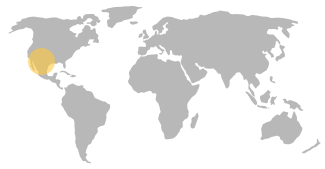
Cassin’s finch primarily inhabits high mountain coniferous forests, often near the treeline. It prefers spruce and fir trees, along with pine and Douglas-fir in some regions.
Additional range
In winter, the bird resides in conifer mountain forests, occasionally migrating to open woods in lower valleys. It is also known to inhabit pinyon-juniper woods.
Do they migrate?
The Cassin’s Finch is somewhat nomadic, with its presence in particular areas varying from year to year. It does not follow a strict migratory pattern like some other bird species. Instead, its movement is irregular, largely dictated by food availability, particularly during the winter months. Cassin’s Finches are known for their unpredictable winter occurrences in lowland areas, sometimes wandering far out onto the plains. During the breeding season, they are generally found in the coniferous forests of the mountainous regions in the western United States, Canada, and into northern Mexico. As the seasons transition to winter, many Cassin’s Finches move to lower elevations and may spread out more widely, appearing in different locations including areas outside of their typical range. Because their movements are primarily influenced by environmental factors and food supply, there is no consistent migratory route or timing for the Cassin’s Finch. This adaptable movement can lead them to appear unexpectedly in various locales. Overall, their movement pattern is more of an altitudinal and opportunistic dispersal rather than traditional long-distance migration.
What is the role of Cassin’s finches in nature and how to protect them?
Conservation status
The Cassin’s finch is common and widespread, but surveys indicate its populations have been declining in recent decades. Although it is not currently classified as vulnerable or endangered, ongoing population decreases raise conservation concerns. Key threats include habitat loss, climate change, and competition with other species. Conservation efforts focus on habitat preservation and monitoring population trends to prevent further decline. Maintaining healthy forest ecosystems is crucial for supporting their populations and mitigating future risks.
Ecological role of Cassin’s finches
Its role in the ecosystem
The Cassin’s finch is an ecologically important bird species that contributes significantly to seed dispersal and pest control. It feeds primarily on vegetable material, including the seeds of various trees such as conifers. Such feeding behaviour aids in the dispersal of these seeds, thereby facilitating the propagation of these trees across different territories. The berry and small fruit consumption similarly helps in the spread of these plants. Additionally, it contributes to pest control by consuming insects, particularly during the summer season. Changes in its breeding numbers from one year to another might reflect the availability of food supplies in the area, potentially indicating the health of the ecosystem. Its nesting behaviour – primarily in large conifers but also in other deciduous trees – may have implications for the health and dispersion of these tree species. Thus, the Cassin’s finch plays a crucial role in maintaining and enhancing biodiversity within its habitat.
How to help protect Cassin’s finches
Preservation tips
Habitat preservation strategies
Protecting the Cassin's Finch's habitat is vital for its conservation. This includes preserving mature coniferous forests where they typically dwell. Large scale deforestation should be reduced, and the planting of new trees should be prioritized. Another strategy is implementing protective laws against habitat disruption in areas where the bird is found.
Community science initiatives
Community involvement is crucial for the conservation of the Cassin's Finch. Citizen science projects where people record their sightings and observations of the bird can be very valuable. Also, public education about the finch, its role in the ecosystem, and the importance of its preservation can help create wider support for conservation efforts. Finally, supporting wildlife organizations that work on conserving the bird and its habitat can make a big difference.