
Purple Finch
Purple Finch
Haemorhous purpureus


Quick Identification guide
Quick Identification guide
Male
- •
rose-red plumage that extends over the head and back, giving a washed look
- •
brown wings and back with red tones blending in
- •
A stout beak, typical of finches, ideal for seed eating
Female
- •
brown-streaked plumage with distinct crisp brown facial markings
- •
Paler underparts with a white eyebrow stripe above the eye
- •
A thick, rounded beak similar in shape to the male's
What does a purple finch sound like?
The purple finch has a rich and complex range of vocalizations. Its song exhibits a distinctive warbling melody, filled with several variable patterns. Typical calls include a unique ticking sound when in flight. Other characteristic vocalizations encompass a series of chatters, chirps or chips, trills, and high-pitched whistles. The purple finch's call pattern is generally undulating, creating a dynamic auditory display.
Song
Audio by G. McGrane


Description
Purple finches are the state bird of New Hampshire, the Granite State. They're not as tough as granite, though; in fact, their populations in the eastern US are declining because it's in competition with the house finch... and losing. When they like a female, they hop to it. Literally. Males can hop up to a foot in the air while puffing out their chest.
The purple finch can weigh between 18to32grams and be from12to16centimeters tall.
The typical lifespan of a Purple Finch is approximately 4 to 5 years. This is shorter compared to its relative, the House Finch, which typically lives for about 11 to 12 years. However, the purple finch has a longer lifespan than the Goldfinch, another related species, which typically lives for 3 to 6 years.
Did you know?
Most popular questions about purple finch
How to recognise a purple finch?
General appearance
The purple finch is about the size of a Robin and has similar resemblance with the House Finch. However, it has a chunkier body and a shorter tail. Its most distinctive feature is its coloring which can be red, brown, tan or white. The finch also exhibits pointed wings and a notched tail shape.
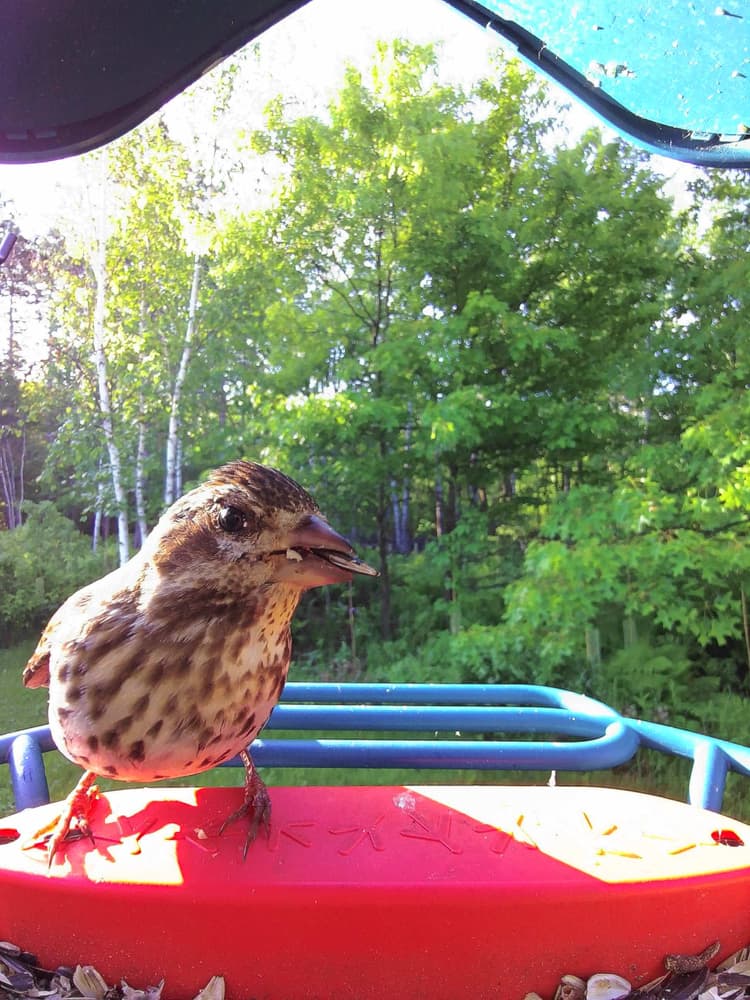
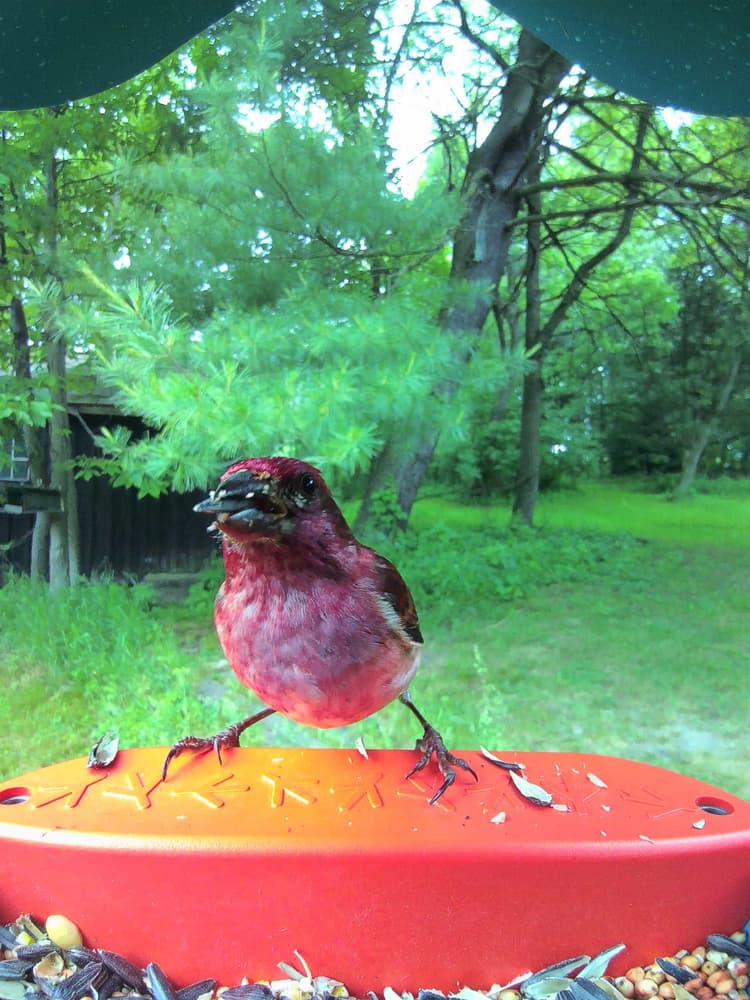
Male vs female
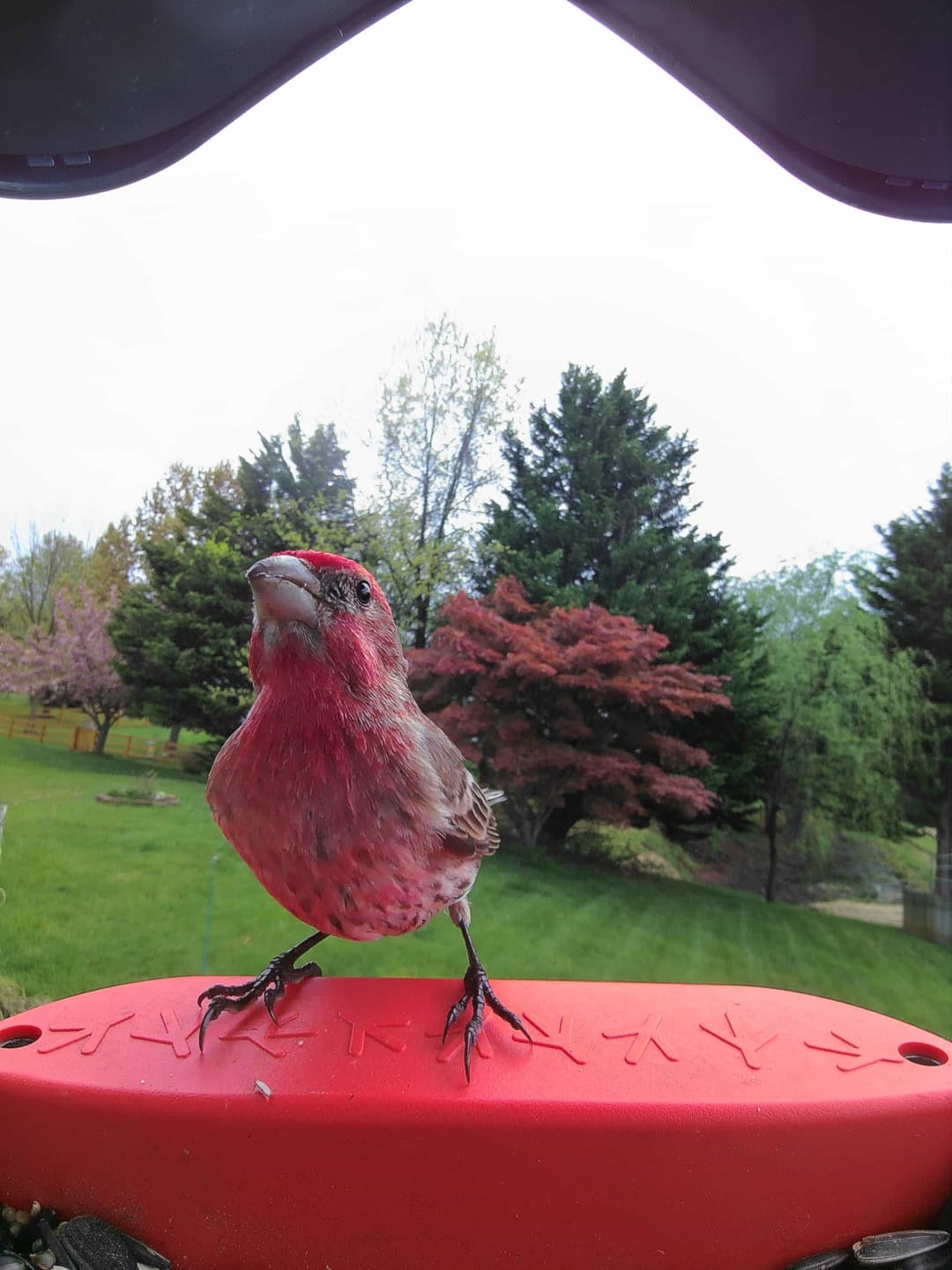
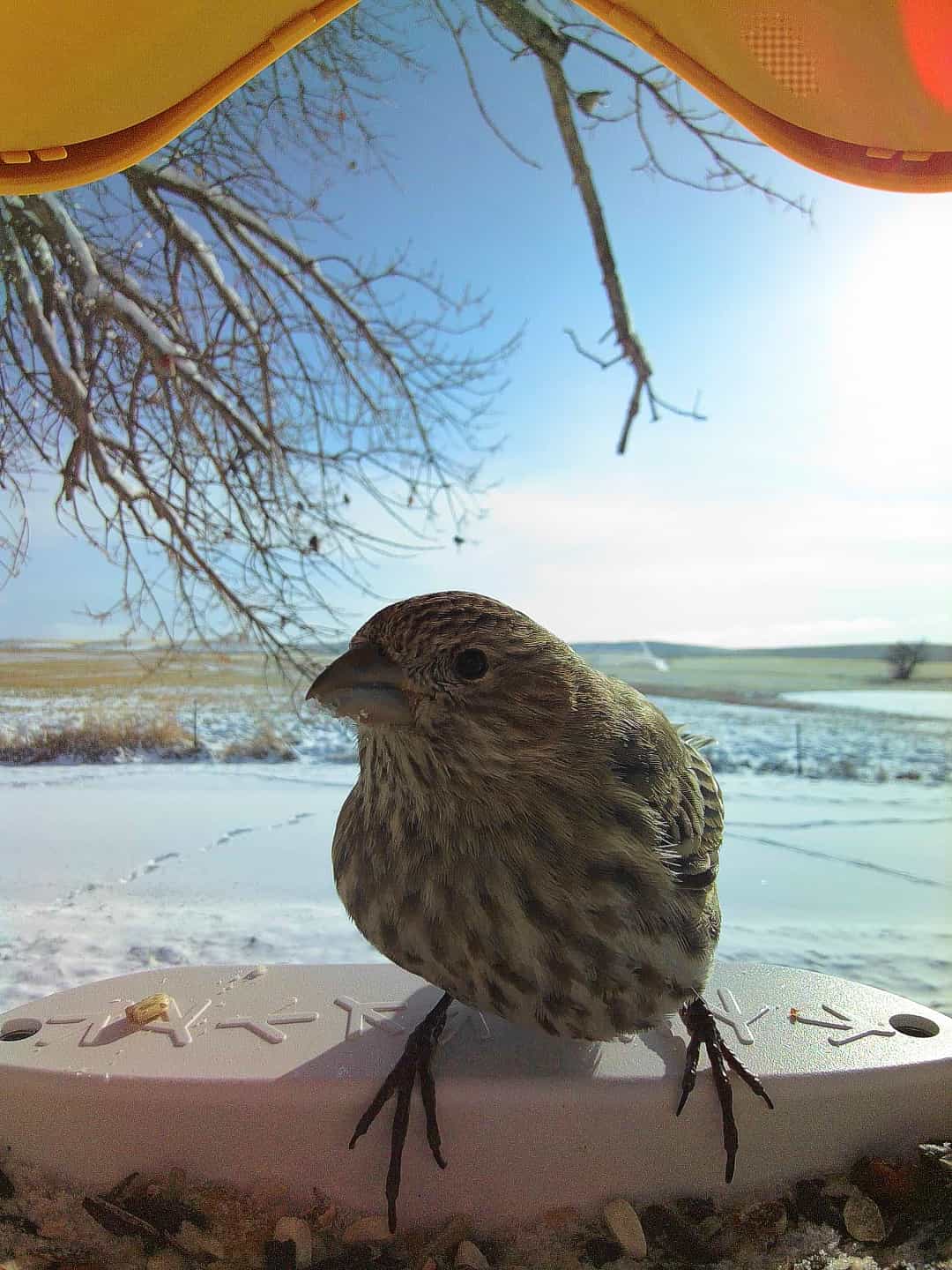
Adult males are washed uniformly with dull red on their head and foreparts with an absence of visible dark stripes on their sides. The females, on the other hand, exhibit much stronger face patterns. This includes a dark whisker and a more distinguished whitish eyebrow. Both genders display the species’ characteristic chunky build.
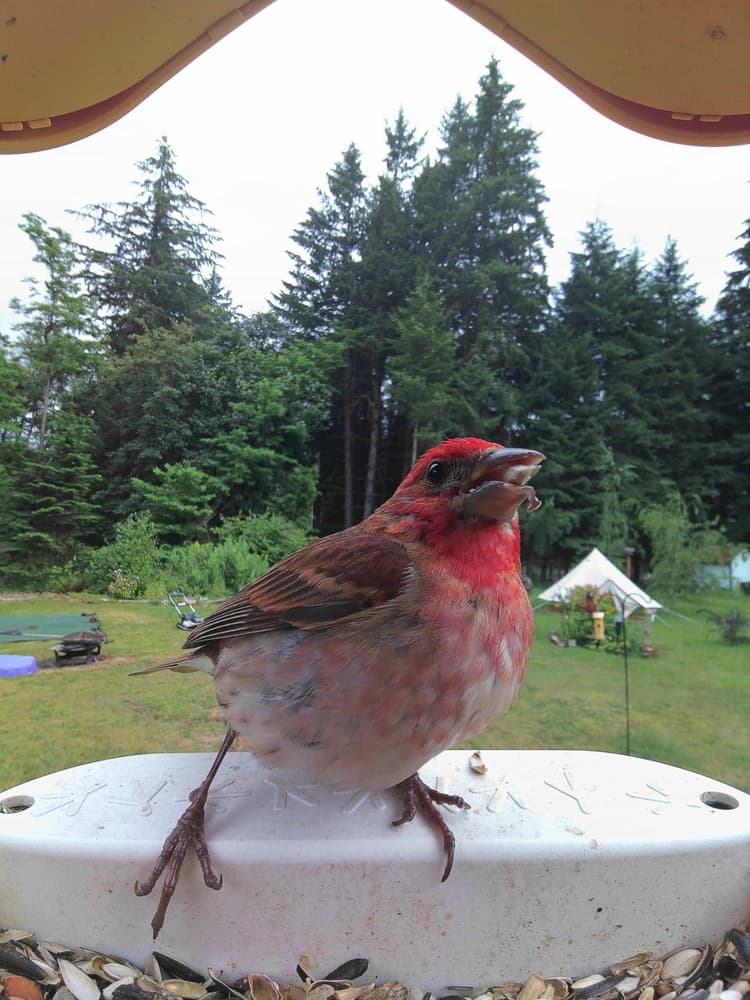
Male Purple Finch
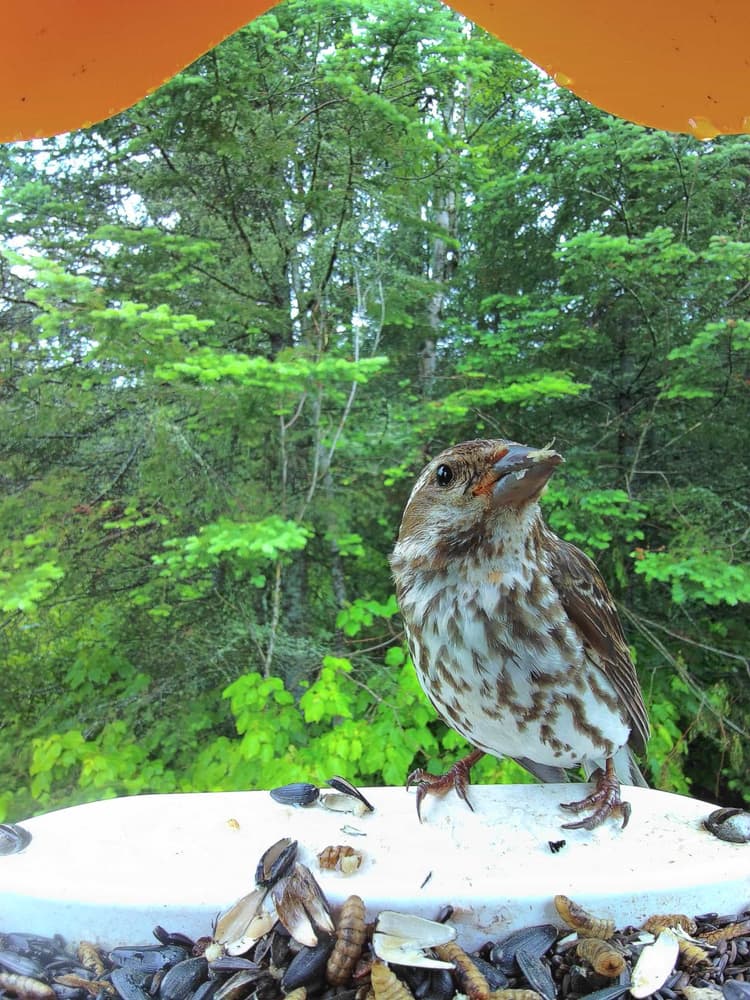
Female Purple Finch
Juvenile
Young purple finches similarly exhibit more prominent face patterns compared to their adult counterparts, which includes a dark whisker and a whitish eyebrow. However, their coloration might not be as defined as in adults. When identifying in the wild, particularly in the mountain west, you may encounter and need to distinguish from the Cassin's Finch.
Often mistaken for
House Finch vs Purple Finch
Purple Finch has a more vibrant raspberry-red color on the head and chest compared to the House Finch, which tends to have a more orange-red coloration. The Purple Finch lacks the brown streaks on the breast and sides present in House Finch. Look for a clearer face pattern and broader white eyebrow stripe on the Purple Finch.
Cassin’s Finch vs Purple Finch
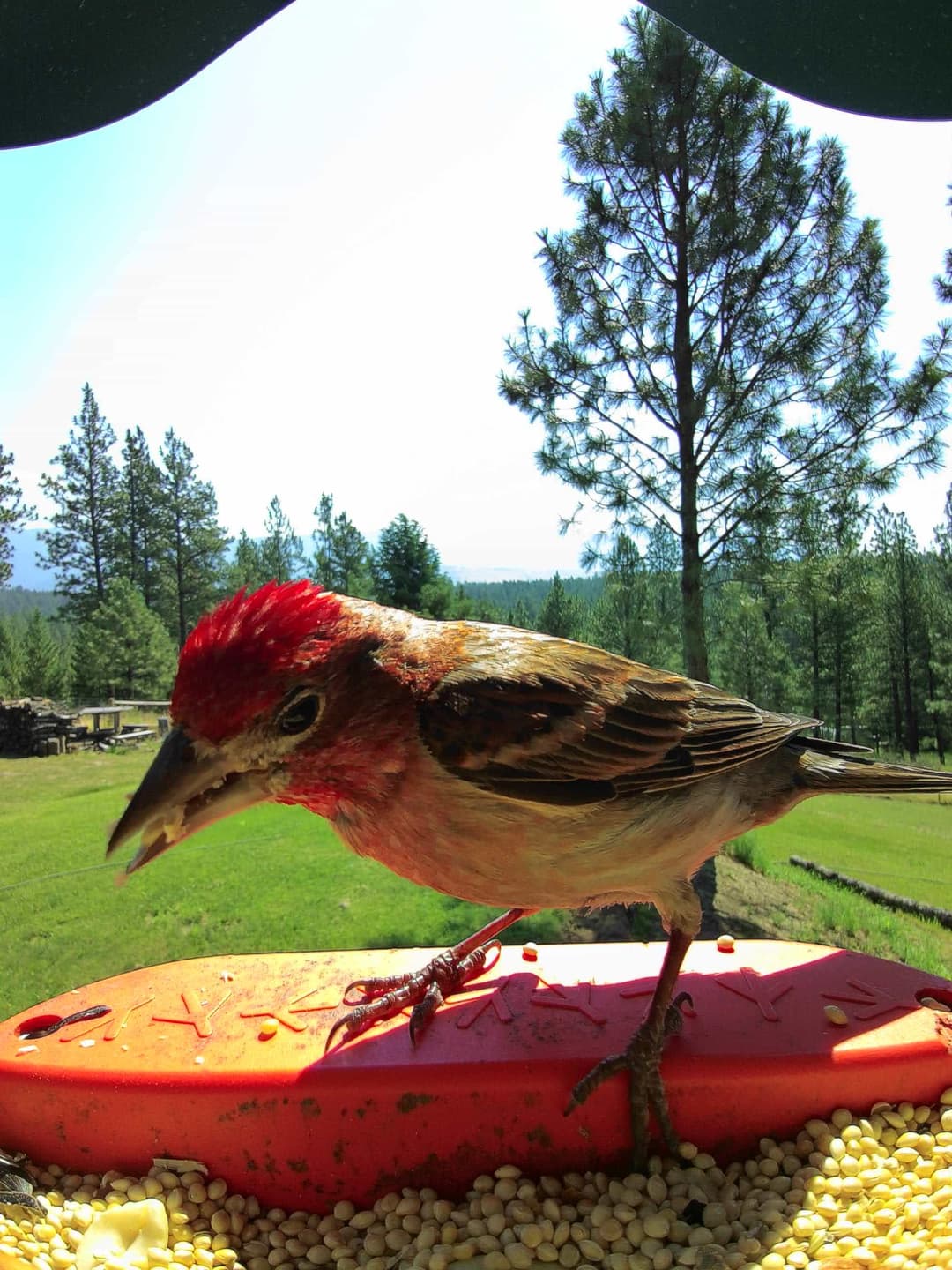
The Purple Finch sports a more uniformly colored body with a deeper, more extensive raspberry wash compared to Cassin's Finch. Cassin’s Finch has a longer, straighter bill and a less pronounced facial pattern. The back of the Purple Finch is less streaked, and its undertail coverts are plain white without streaks.
Pine Siskin vs Purple Finch
Pine Siskins are much smaller and have a more slender, pointed bill than the Purple Finch. They possess heavily streaked brown and white plumage, lacking the Purple Finch's rich reddish tones. Pine Siskins usually have yellow edgings on the wings and tail, which Purple Finches do not.
Breeding and nesting habits of the purple finch
Mating behaviors
During courtship, the male purple finch performs a display by hopping near the female with wings drooping, tail raised, and chest puffed out. The male vibrates his wings until he rises shortly in the air, often holding bits of nest material in his bill and singing softly.
Nesting details
Nests are placed on horizontal branches or forks of trees. In the East, conifers are preferred, while deciduous trees are used in the far West. The nest is a compact open cup of twigs, weeds, rootlets, and bark, lined with fine grass, moss, and animal hair, typically situated 15-20 feet above ground but can range from lower levels to 50 feet high.
Eggs and chick-rearing
The female likely builds most of the nest and is responsible for incubating the eggs, which she does diligently until they hatch. Parents take turns feeding and caring for the chicks, ensuring their survival and growth until they are ready to leave the nest.
What does a purple finch like to eat?
Berries
Flowers
Fruits
Insects
Nectar
Plants
Seeds
Natural diet
The purple finch's natural diet primarily consists of seeds, buds, berries, and insects. In winter, it mainly feeds on seeds from trees like ash and elm, as well as weed and grass seeds. It also consumes buds from various trees and a variety of berries and small fruits. During the summer, its diet includes insects such as caterpillars and beetles. Young finches are mostly fed seeds.
Bird feeders
At bird feeders, purple finches typically eat sunflower seeds, millet, and nyjer or thistle seeds. They are attracted to mixed seed blends and can also be offered fruit and suet.
Friendly foods for feathered friends
Purple Finches are particularly partial to sunflower seeds, but they also enjoy millet and Nyjer seeds. Adding these to your feeders will make your backyard a haven for these delightful birds. For best results, we recommend Bird Buddy seeds, which are expertly chosen for the season, ensuring optimum nutrition for your visiting finches.
Fantastic feeders for finches
The right feeder can make a big difference when trying to attract Purple Finches. They prefer tube feeders with small perches or hopper feeders. Just make sure the feeder is easy for the birds to use and is stable enough not to swing wildly in the wind, which may scare the finches away.
Fun tricks to tempt purple finches
To coax Purple Finches into your backyard, consider planting native trees and shrubs that provide natural food and shelter. Finch-friendly choices include purple coneflowers and sunflowers. Another trick is to play soft bird songs in your yard. Hearing the sounds of their own species may encourage them to drop by for a sing-along!
Where can you find purple finches?
Based on Birdbuddy sighting data. The heatmap shows where Birdbuddy users have spotted this species.
Embed this map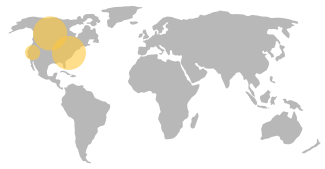
This map shows the full native range based on scientific range data.
Primary habitat
Purple finches predominantly breed in coniferous and mixed woodlands, including forest interiors and edges. They also inhabit oak woodlands and streamside trees in the Pacific states.
Additional range
During migration and wintertime, they inhabit a variety of areas such as forests, suburbs, swamps, and overgrown fields. Their range indicates adaptability to semi-open and wooded environments.
Do they migrate?
The purple finch is a migratory bird, moving in flocks primarily during the daylight hours. Its migration occurs over an extended period both in the spring and fall. In North America, the purple finch breeds in Canada and the northeastern United States, with some populations also in the Pacific Northwest and along parts of the Appalachian Mountains. During the fall migration, purple finches move southward, typically starting from September and continuing through November. Their wintering grounds cover a wide range across the eastern and southern United States, from the Atlantic Coast to the Gulf of Mexico. In some years, flocks may venture further south if food resources are scarce, exhibiting irruptive migration patterns. In the spring, from March to May, purple finches return north to their breeding territories. Their route involves traveling through both interior and coastal paths across the eastern United States into Canada. Key stopover locations for feeding and resting during migration include forests and woodlands, where they primarily seek out seeds and berries to sustain their journey. This migration pattern allows them to exploit a range of ecological niches throughout the year, adapting to seasonal changes in food availability.
What is the role of purple finches in nature and how to protect them?
Conservation status
The purple finch has experienced a decline in its Northeast range, initially after the late 19th century due to the introduction of the house sparrow. In recent decades, it has declined further, potentially due to competition with the house finch. While not classified as vulnerable or endangered, the species faces significant threats from such competition. Conservation efforts are not widely documented, emphasizing the need for monitoring population trends. The purple finch remains common in some areas, but its declining numbers in the Northeast suggest the necessity for targeted conservation strategies to mitigate competition-related challenges.
Ecological role of purple finches
Its role in the ecosystem
The Purple Finch plays an important role in its ecosystem as a seed disperser and pest controller. Its diet primarily consists of seeds from ash and elm trees and various grasses, particularly in winter. By eating and discarding these seeds, it helps in the propagation of these plants, contributing to forest growth. Additionally, berries and small fruits are part of its diet, further aiding in seed dispersal. More importantly, during summer, the finch feeds on insects like caterpillars and beetles. This feeding behavior helps manage pest populations that could potentially harm trees and other plant life. They also contribute to the lifecycle of trees by utilizing them for their nesting activity, thus promoting a healthy tree population. The finch's role, therefore, encompasses both plant and insect life, enhancing the dynamism and balance of the ecosystem.
How to help protect purple finches
Preservation tips
Habitat preservation
Protect the purple finch by preserving their natural habitats. Limiting deforestation and urbanization in areas where they are common can significantly help their population. Advocate for the creation of nature reserves and protected areas. Encourage sustainable farming and forestry practices.
Community science initiatives
Participate or organize community science or citizen science programs. These initiatives could involve population monitoring, habitat assessment, nest monitoring, and more. Report sightings of purple finch to local wildlife groups or use bird watching apps. Educating community members about the importance of purple finch conservation can be a powerful tool for their protection.