
Song Sparrow
Song Sparrow
Melospiza melodia


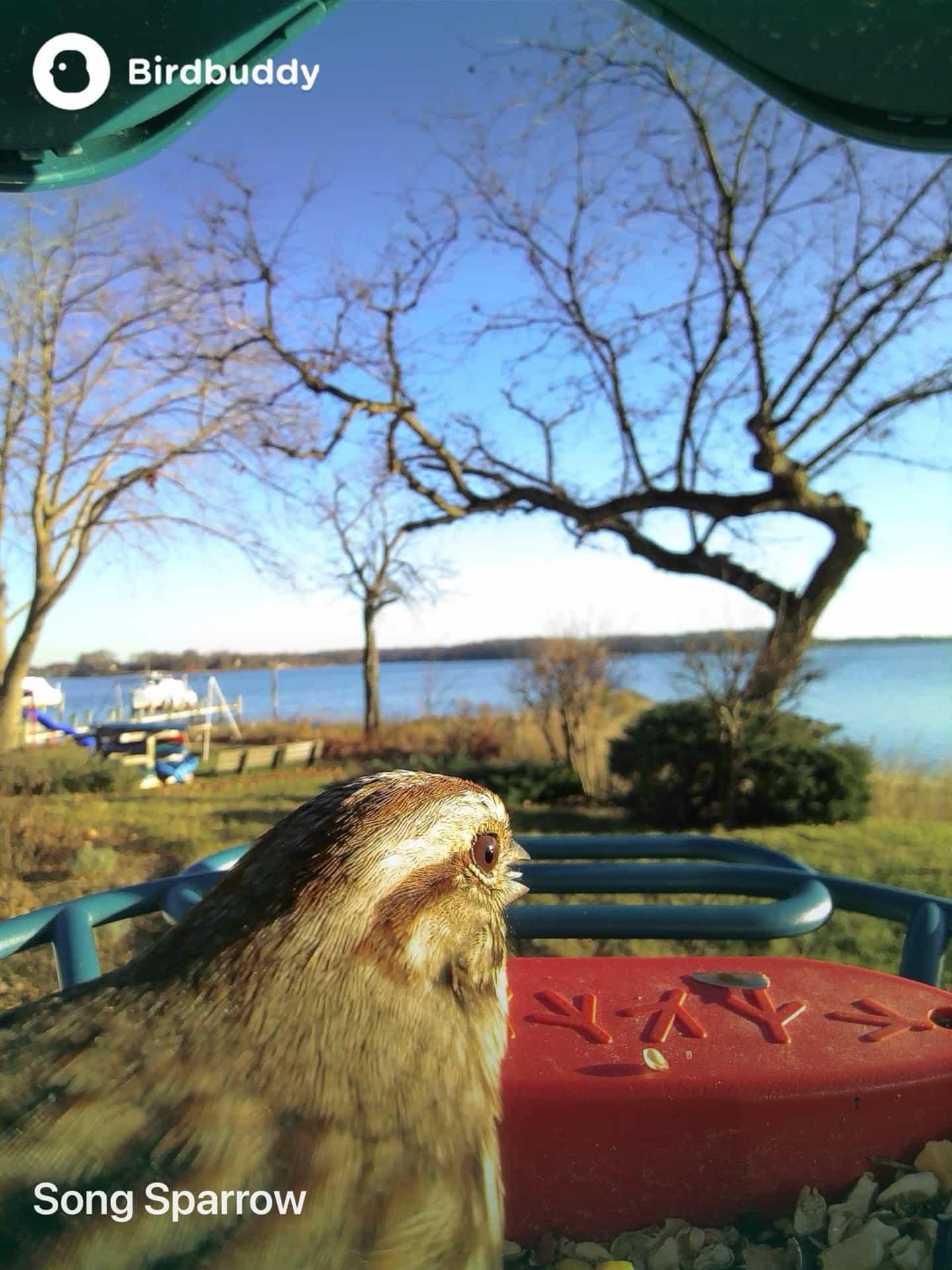

Quick Identification guide
Quick Identification guide
- •
Features a streaked brown and white plumage with a notable dark spot on the chest
- •
Has a short, stout, and conical beak suitable for seed-eating
- •
Exhibits a rounded head and a long, rounded tail often raised while perching
What does a song sparrow sound like?
The song sparrow vocalizes with an array of distinct patterns. Its song typically starts with 3 short notes, interpreted as "Madge-Madge-Madge," followed by a varied trill mimicking "put-on-your-tea-kettle-ettle-ettle.” The call patterns mirror a falling, rising, and undulating rhythm. The types of calls emitted include a buzz, chirp or chip, hi, trill, and a whistle, creating a complex communication repertoire unique to this bird species.



Description
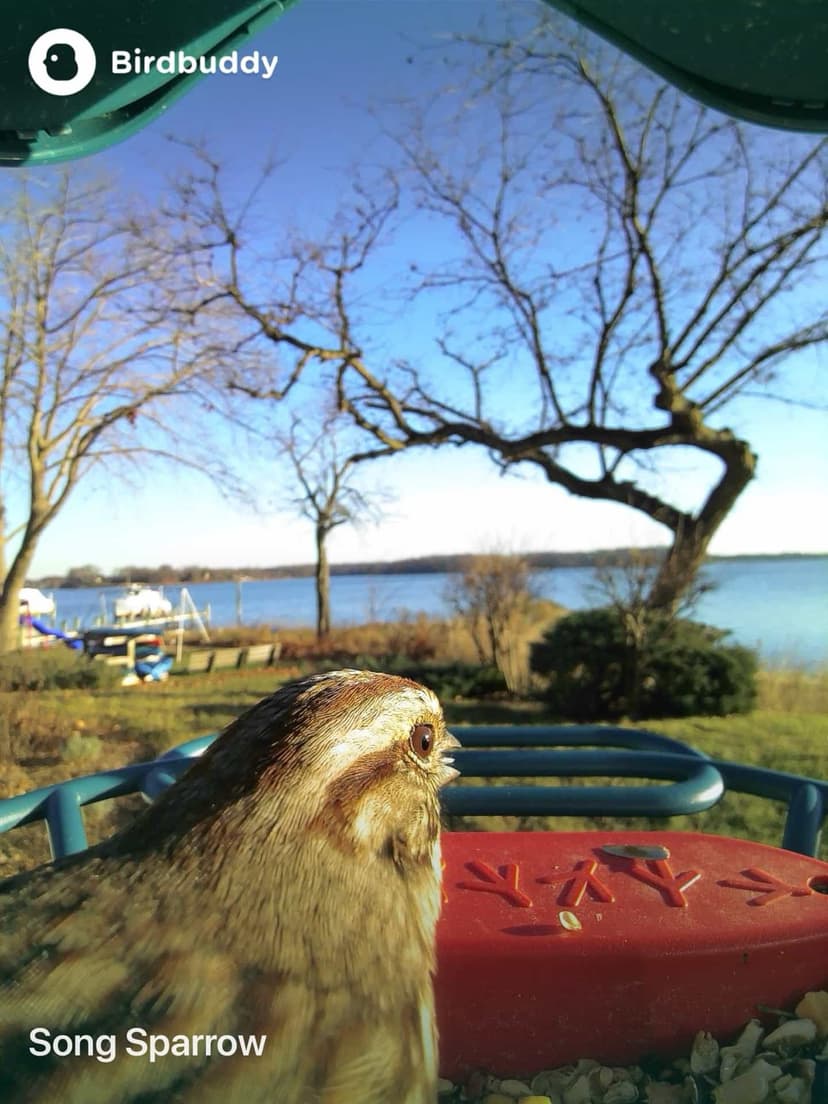
Keep your ears open: on spring mornings, these guys sing every eight seconds on average! They have one song that they can vary, so you can hear between six and 20 different melodies. They are a beautiful sight to see, too. They forage on the ground and do a little dance as they kick away bits of debris with their legs while hopping forwards.
The song sparrow can weigh between 11.9to53grams and be from12to17centimeters tall.
The song sparrow typically lives up to 11 years, but on average survives 2-3 years. This is quite substantial in comparison to related species. For instance, the average lifespan of the house sparrow is around 3 years, illustrating the survival strength of the song sparrow.
Did you know?
Most popular questions about song sparrow
How to recognise a song sparrow?
General appearance
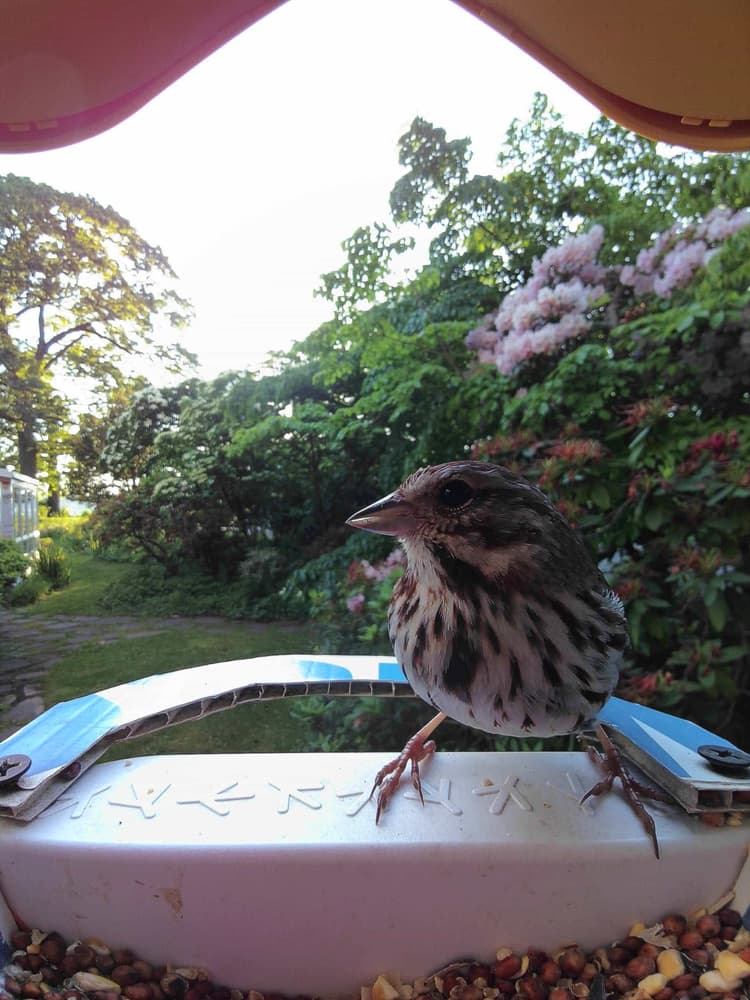
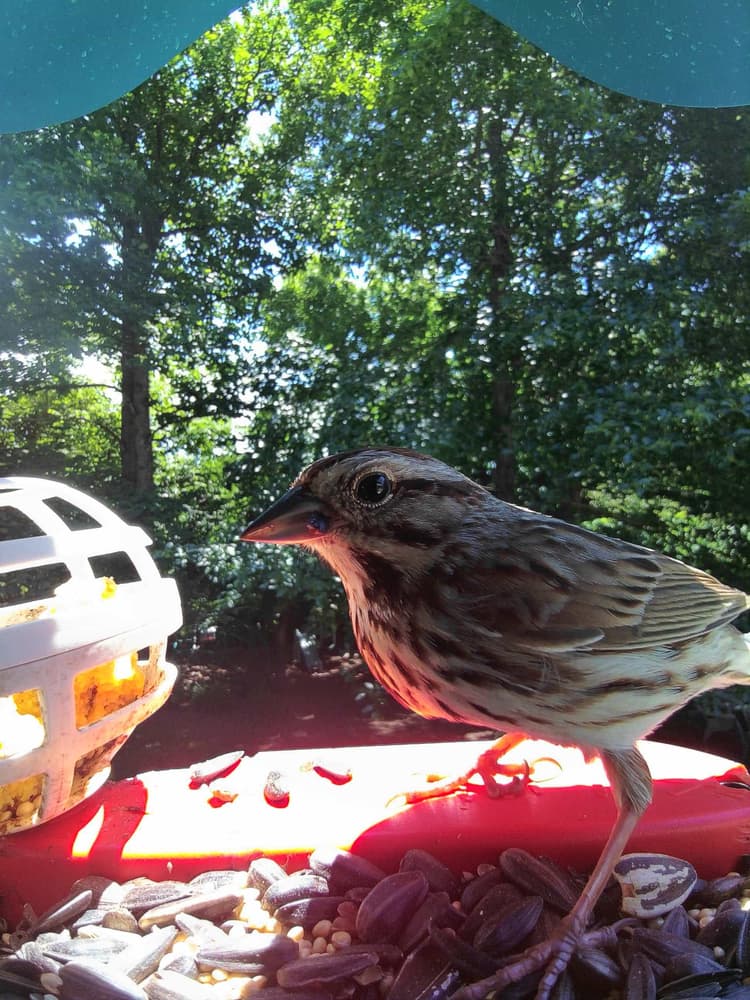
A song sparrow is the size of a robin, with a fairly long tail. Its distinctive markings include a striped face and streaks on its chest, often merging into a central blotch. The bird displays a range of colors, including black, brown, gray, red, and white. Its wings are broad and its tail can be notched, rounded, or square-tipped. It is often seen in open fields.
Male vs female
Both male and female song sparrows have similar appearances, making it difficult to tell them apart by sight alone. Both genders share the same size, coloration, and physical traits, such as their striped faces, long tails, and chest markings.
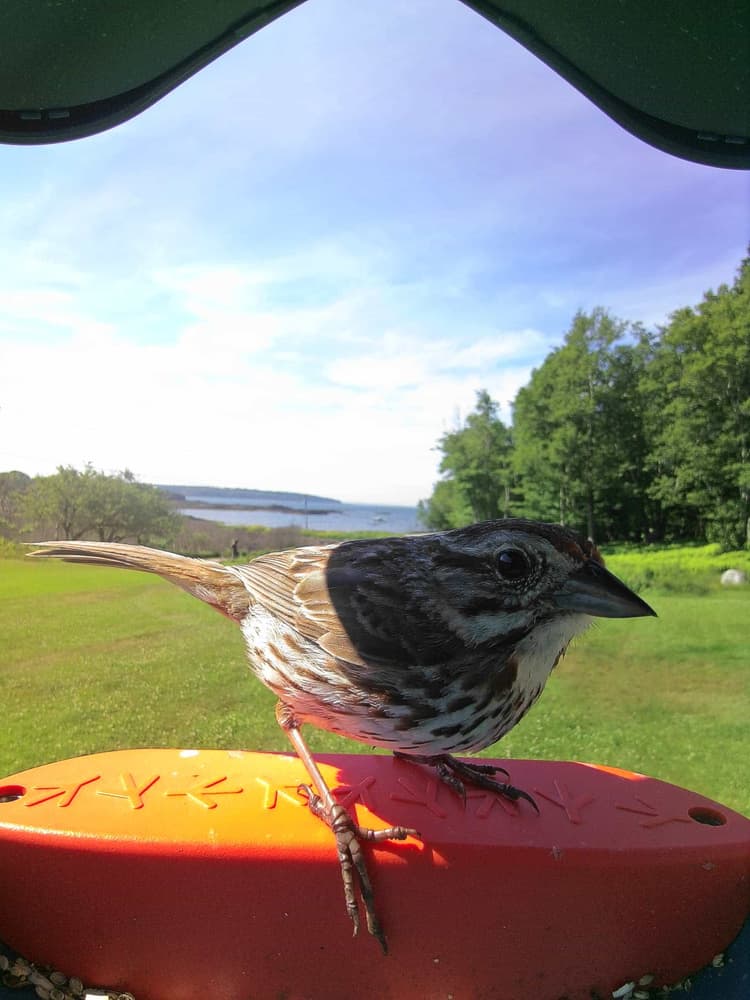
Male Song Sparrow
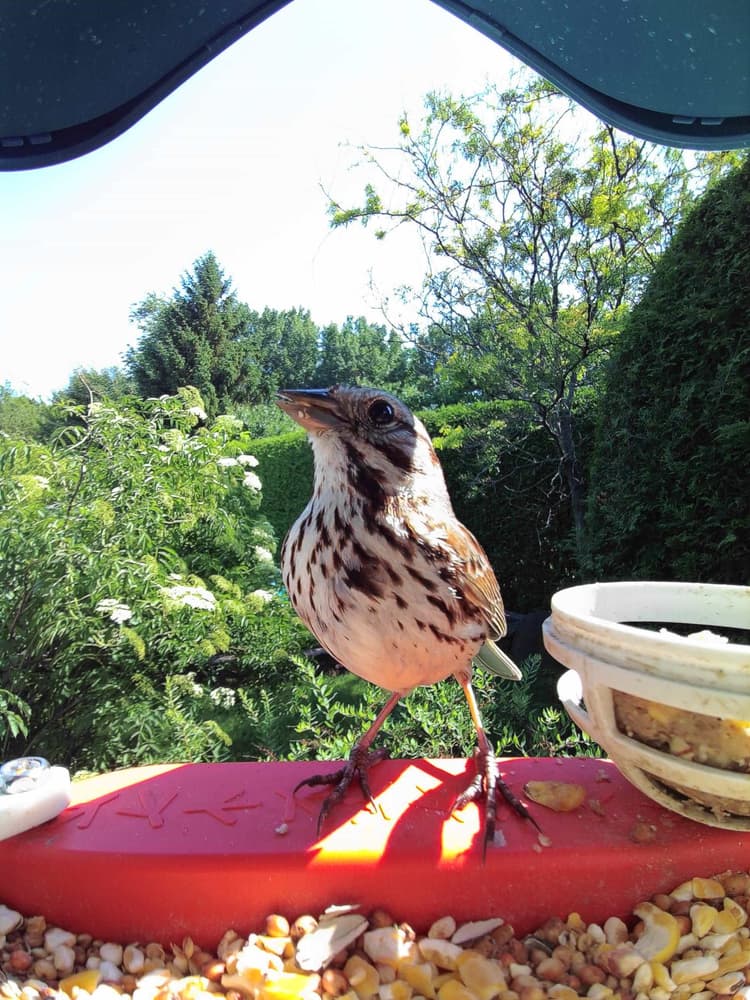
Female Song Sparrow
Juvenile
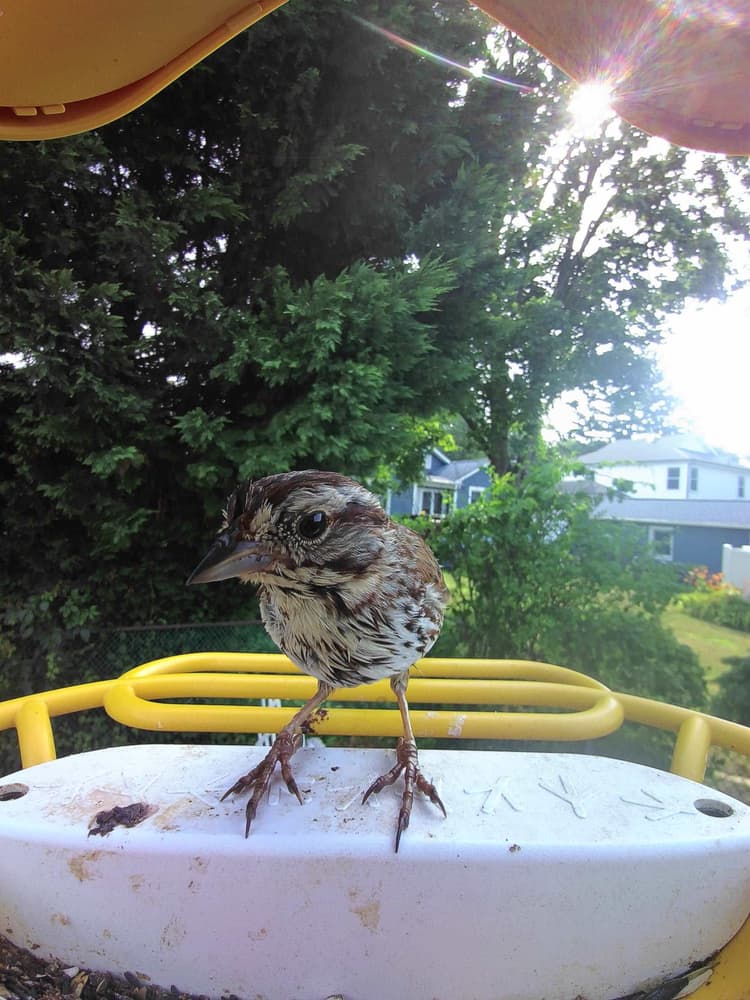
Juvenile song sparrows have similarly colored plumage to adults but typically appear more muted. Their chest streaks may not be as prominent and can take some time to fully develop. As they mature, they grow into their characteristic markings and colorations.
Often mistaken for
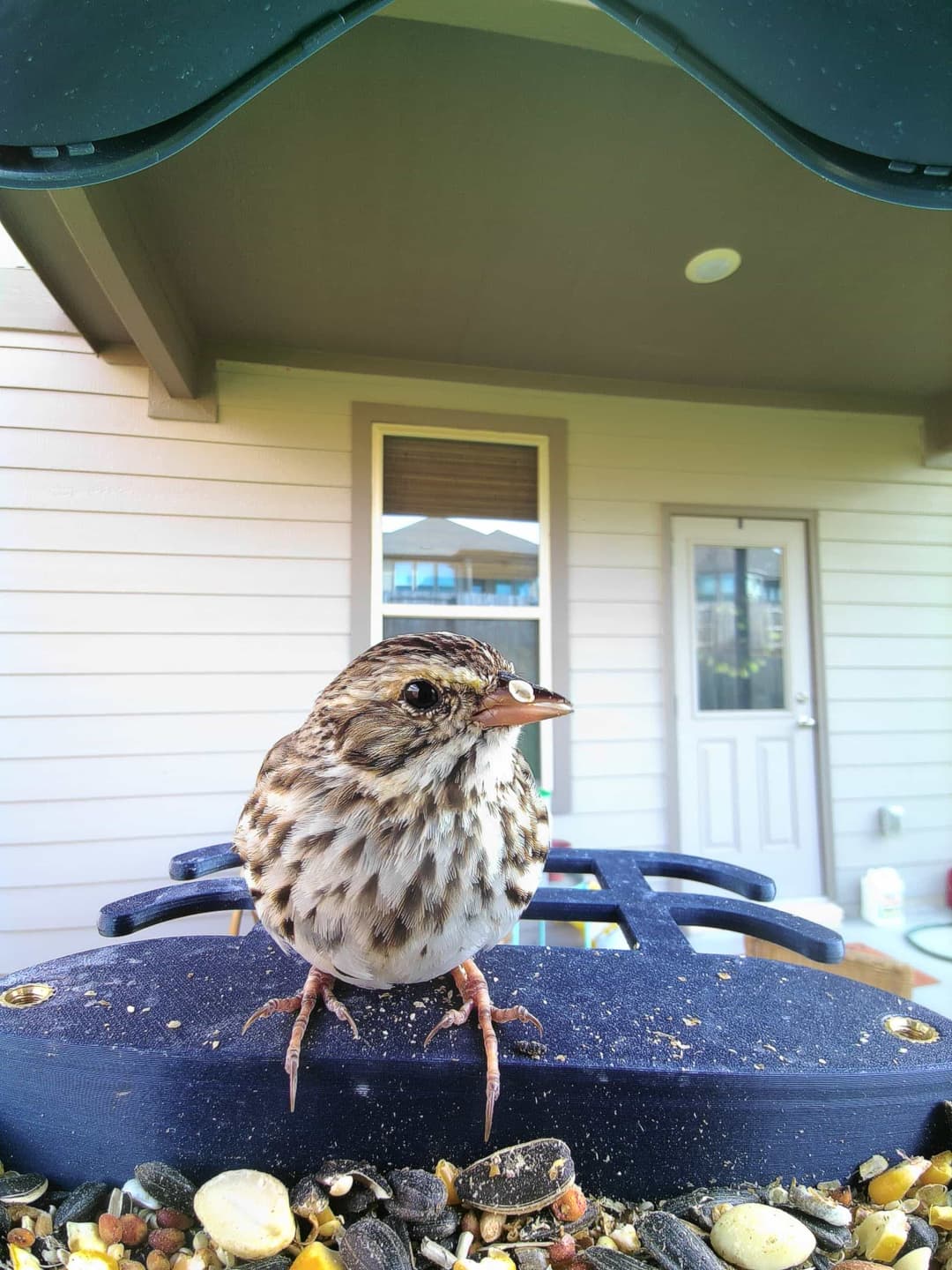
Savannah Sparrow vs Song Sparrow
Song Sparrows have streakier breasts and less defined head patterns compared to Savannah Sparrows, which have crisp streaks and yellow lores. Look for the Song Sparrow's long, rounded tail and broad, diffuse breast streaks.
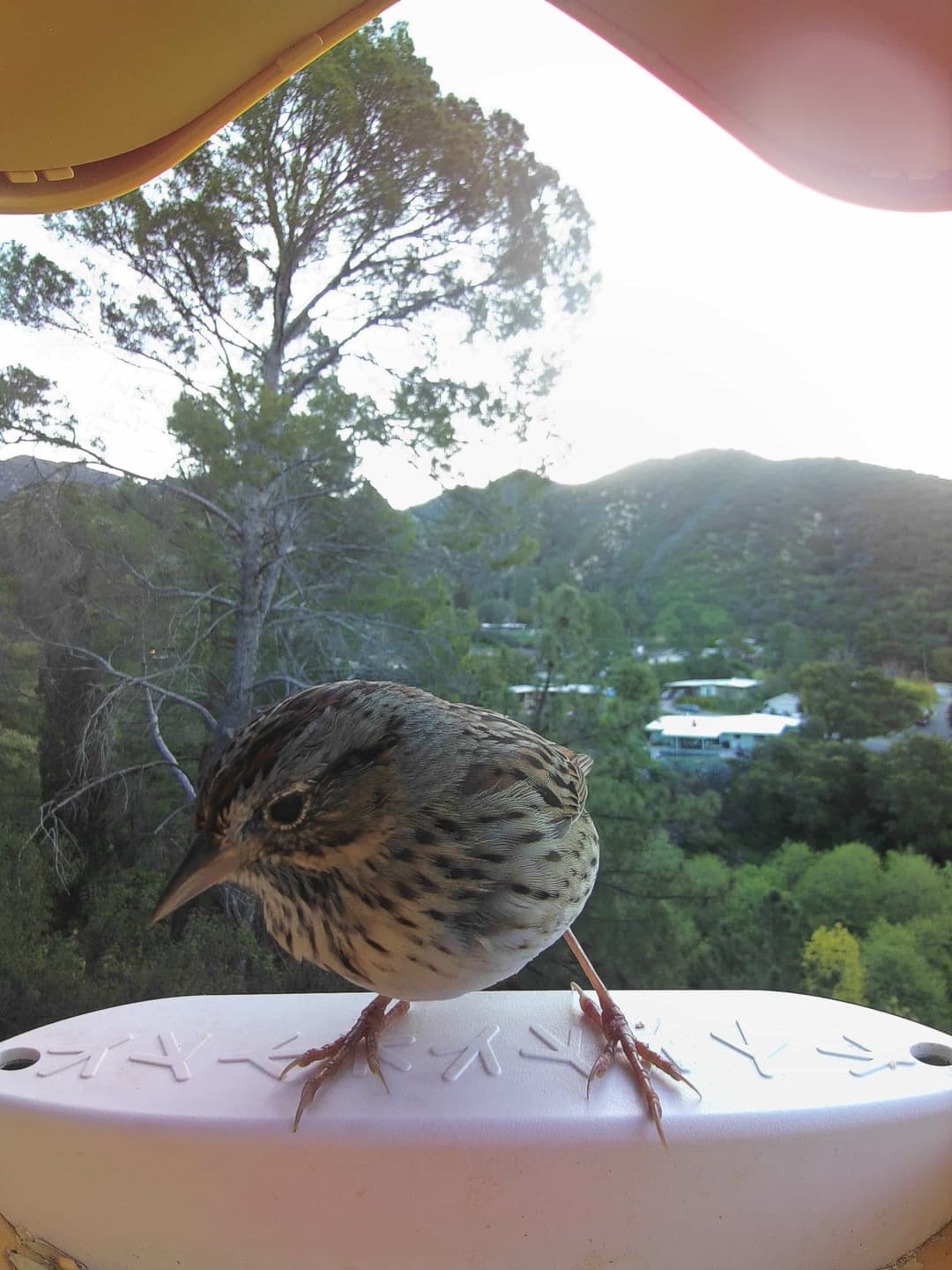
Lincoln’s Sparrow vs Song Sparrow
Lincoln’s Sparrow has finer streaks and a buffy wash on the breast and sides, lacking the Song Sparrow's distinctive central spot. Notice the more delicate build of Lincoln’s Sparrows and their less aggressive streaking.
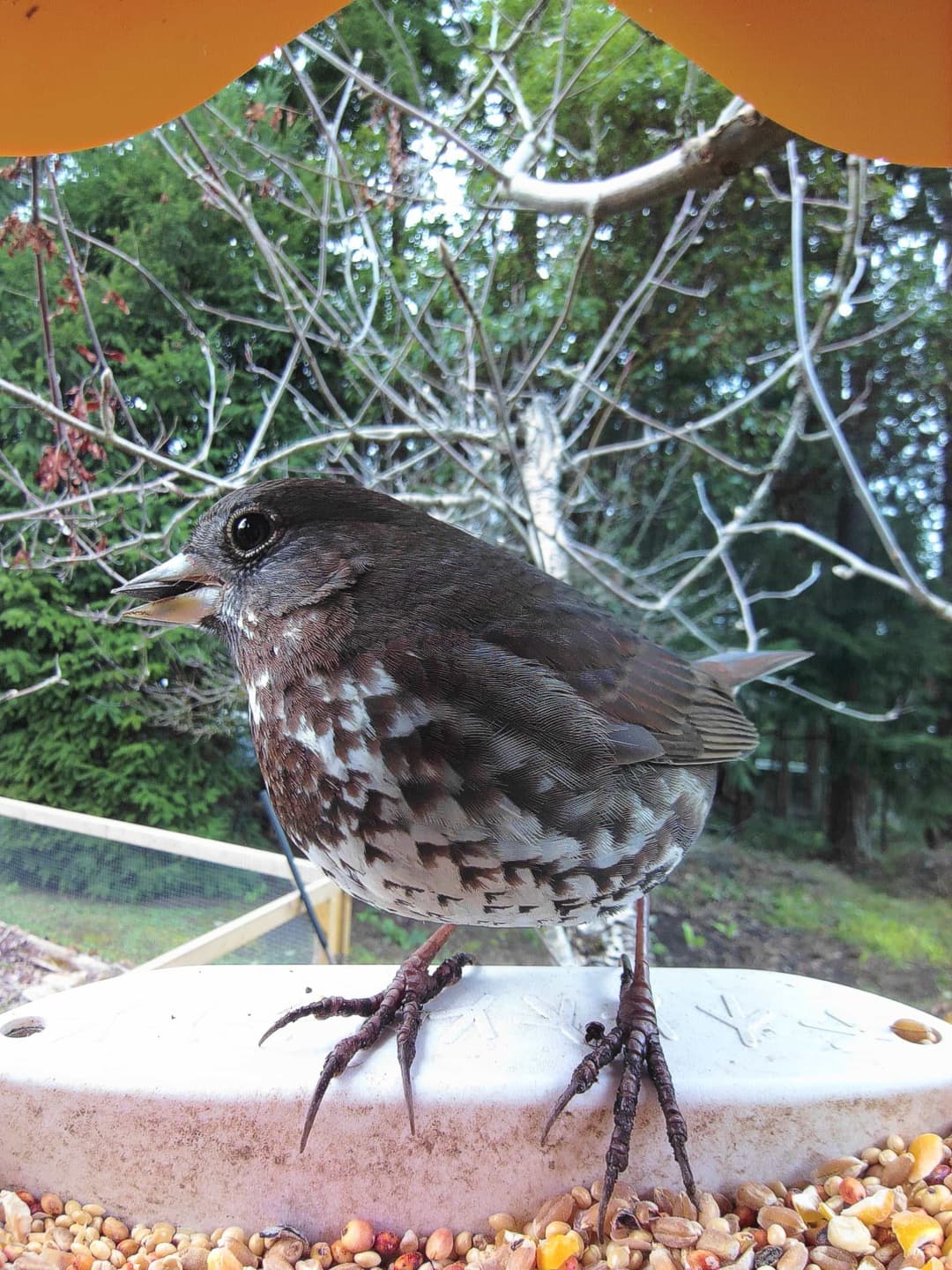
Fox Sparrow vs Song Sparrow
Fox Sparrows are chunkier with heavier, more contrasting streaks and a robust build. Their overall coloration tends to be richer and more rufous compared to Song Sparrows. Also, look for the Song Sparrow's more defined facial stripes.
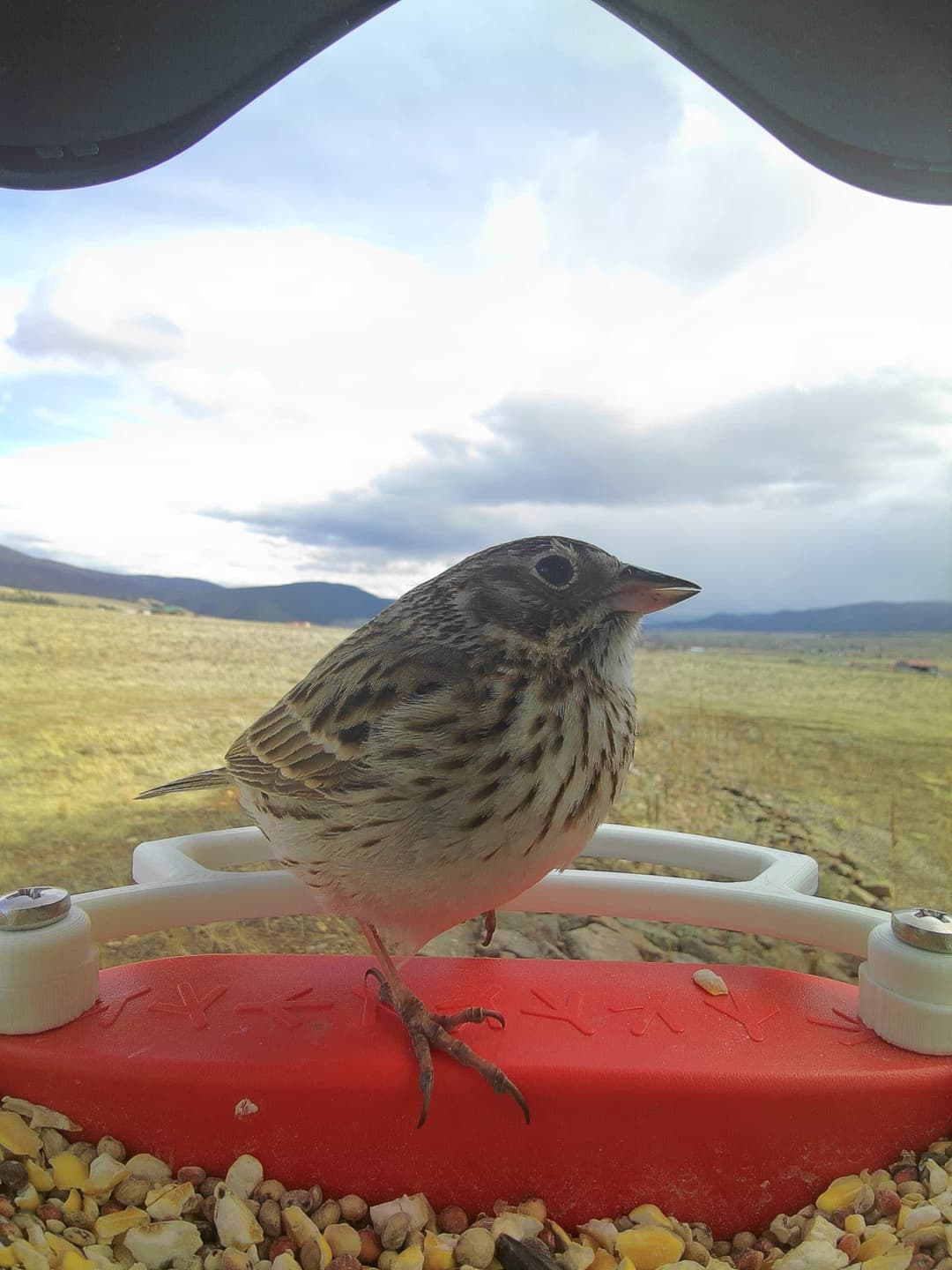
Vesper Sparrow vs Song Sparrow
Vesper Sparrows have a more uniform coloration with less streaking and a clearer breast. They also feature white outer tail feathers, absent in Song Sparrows. Vesper Sparrows often appear plainer and bulkier.
Breeding and nesting habits of the song sparrow
Mating behaviors
Male Song Sparrows defend small nesting territories. During courtship, the male may chase the female and perform a distinctive fluttering flight among bushes with its neck outstretched and head held high.
Nesting details
Song Sparrows typically nest on the ground under a clump of grass or shrub, or within 4' above the ground, occasionally up to 10'. Alternative raised sites include shrubs, low trees, or marsh vegetation above water. Nests, built mostly by females, are open cups of weeds, grass, leaves, bark strips, lined with fine materials like grass, rootlets, and animal hair. Rarely, they nest in tree cavities.
Eggs and chick-rearing
Egg laying occurs shortly after nest construction. The female incubates the eggs, while both parents may participate in feeding the chicks once hatched. Proper garden habitats include dense shrubs and grassy clumps to accommodate nesting preferences and deter predators.
What does a song sparrow like to eat?
Insects
Seeds
Natural diet
The song sparrow's diet consists primarily of insects and seeds. During summer, it consumes a wide variety of insects, including beetles, grasshoppers, caterpillars, ants, and wasps, as well as spiders. In winter, its diet shifts to focus heavily on seeds, particularly those of grasses and weeds. In coastal marshes and island habitats, song sparrows may also feed on small crustaceans and mollusks and occasionally small fish.
Bird feeders
Song sparrows are known to visit bird feeders, where they often consume seeds. Common foods at feeders include millet, cracked corn, and sunflower seeds, which provide a convenient supplement to their natural diet, especially during colder months when insects are less abundant.
Setting the scene for song sparrows
If you’re dreaming of a yard full of beautiful birdsong, attracting Song Sparrows is a fabulous start. These distinguished birds love sheltered and bushy environment. Consider planting dense shrubs or small trees, which provide both the cover and food sources sparrows adore. In addition, ensure to have an open space, as these birds enjoy hopping on the ground to forage.
Choosing the right feed
While these hardy birds aren't overly picky, they do have their favorites and appreciate variety. Bird Buddy seeds have proven to be a top choice for Song Sparrows. Expertly chosen for each season, these seeds are packed with all the nutrition sparrows need to keep them singing all day long.
The perfect feeder
If you're hoping to entice Song Sparrows to your feeder, a tube or hopper-style feeder is ideal. Preferably, choose one with multiple perching spots – sparrows are social birds and enjoy eating in company. Remember to place the feeder near cover, but with a clear line of sight, so these little birds feel safe from predators.
Fun ways to attract song sparrows
Beyond food and shelter, Song Sparrows enjoy bathing. Adding a bird bath or water feature to your yard might just be the finishing touch needed to ensure they feel right at home. And who knows? You might just get to enjoy an enchanting sparrow sing-along right in your own backyard.
Where can you find song sparrows?
Based on Birdbuddy sighting data. The heatmap shows where Birdbuddy users have spotted this species.
Embed this map
This map shows the full native range based on scientific range data.
Primary habitat
The song sparrow typically inhabits thickets, brush, marshes, roadsides, and gardens, particularly in areas with brushy fields, streamsides, shrubby marsh edges, woodland edges, hedgerows and well-vegetated gardens.
Additional range
Its environmental range varies, from coastal populations in salt marshes to sparse habitats such as dense streamside brush in southwestern deserts and any dense low cover on the Aleutian Islands, Alaska.
Do they migrate?
The song sparrow exhibits partial migratory behavior depending on its geographic location. In many parts of its range, particularly in more temperate and coastal areas, the song sparrow is a year-round resident. However, populations residing in the northern interior regions, where winters can be harsh, do migrate southward. During winter, these northern song sparrows move to the southern United States or occasionally to the extreme northern parts of Mexico. The exact timing of this migration depends on local weather conditions, but it typically occurs in late fall as temperatures begin to drop and food sources become scarce, and they return north in early spring. Key locations for overwintering include southern coastal states such as Texas, Florida, and throughout the southeastern U.S. Migration routes are generally southward, following paths that ensure access to food and favorable climates. These migratory movements are usually not long-distance compared to other songbird species, reflecting the adaptable nature of the song sparrow to different environmental conditions.
What is the role of song sparrows in nature and how to protect them?
Conservation status
The song sparrow is widespread and abundant, indicating its conservation status as common. However, certain local populations, particularly in coastal marshes, are vulnerable due to habitat loss. While the species overall does not face significant threats leading to endangerment, key conservation efforts should focus on protecting these habitats to support the vulnerable groups. Conservation measures could include restoring and preserving coastal marshes, monitoring population trends, and mitigating habitat disturbance, ensuring the species remains plentiful across its range.
Ecological role of song sparrows
Its role in the ecosystem
Song Sparrows fulfill a number of crucial roles within the ecosystem. Firstly, they contribute to pest control by feeding mainly insects during the summer, including beetles, grasshoppers, caterpillars, ants and wasps, thus keeping their populations in check. They also consume spiders, preventing an overgrowth of the spider population. In coastal regions, they can help curb the populations of small crustaceans and mollusks. Secondly, Song Sparrows assist in seed dispersal as they feed predominantly on seeds, primarily grass and weed species, during the winter months. Numerous seeds may pass through their digestive tracts unharmed, facilitating seed dispersal in new and potentially far-off places – a key mechanism in the propagation of numerous plant species. Lastly, their nests can provide shelter to other small creatures when abandoned, contributing further to biodiversity.
How to help protect song sparrows
Preservation tips
Habitat preservation strategies
Preserving the song sparrow's habitat is crucial for its conservation. To do this, we must protect areas where these birds thrive like marshes, forests, and fields from urbanization and deforestation. Encouraging the growth of native vegetation can provide food and shelter for them. Avoid using pesticides in your gardens as they can harm these birds directly or reduce their food sources. Public lands should be managed in ways that benefit these creatures, for example by limiting logging and maintaining healthy understories.
Community science initiatives
Community science initiatives can play a significant role in song sparrow conservation. Encourage local communities to participate in bird surveys and monitoring programs. Such initiatives help gather valuable data about the song sparrow’s population, migration patterns, and habitat use. Participating in nest box programs and habitat restoration projects also plays a key role in their protection. Raising awareness about the importance of these birds and educating the public about their role in the ecosystem can foster public support for conservation efforts.