
Chipping Sparrow
Chipping Sparrow
Spizella passerina


Quick Identification guide
Quick Identification guide
- •
Features a rusty cap on its head, which is a distinctive identifying mark
- •
Has a slender body shape with predominantly gray-brown upperparts and a subtle buffy chest
- •
Displays a black eye line running from its beak through the eye, bordered above by a white eyebrow stripe
What does a chipping sparrow sound like?
The Chipping Sparrow's vocalizations are distinctive, characterized predominantly by a thin musical trill, consisting of a single note. This bird’s song closely resembles the rhythmic whir of a sewing machine, presenting a pattern that remains flat and consistent. Its primary call types constitute of a Chirp or Chip, as well as a Trill, providing a unique and instantly recognizable bird song.


Description
During breeding season, chipping sparrow females develop a bare patch of skin on their stomachs to more efficiently transfer heat to their eggs. Talk about a crop top! That's not the only outfit change they go, through, as their head patterns also change in autumn and winter. A collective noun for a group of sparrows is a grove!
The chipping sparrow can weigh between 11to16grams and be from12to15centimeters tall.
Chipping sparrows typically live up to 9 years, which is comparable to related species such as the field sparrow and song sparrow. Chances of survival are highest in the first two years of life, after which it begins to decline. The lifespan of these birds can be influenced by factors such as habitat, climate, and food availability.
Did you know?
Most popular questions about chipping sparrow
How to recognise a chipping sparrow?
General appearance
The Chipping Sparrow is a small 5-5 1/2 inch bird, equivalent to 13-14 cm. Sporting a blend of black, brown, gray, red, and white colors, it has a distinctive chestnut cap, white eyebrow, and black eyeline. Its wings are broad and the tail shape varies from notched, rounded to square-tipped. The bird's rump is gray, distinguishing it from Clay-Colored and Brewer's Sparrows that have brown rumps.
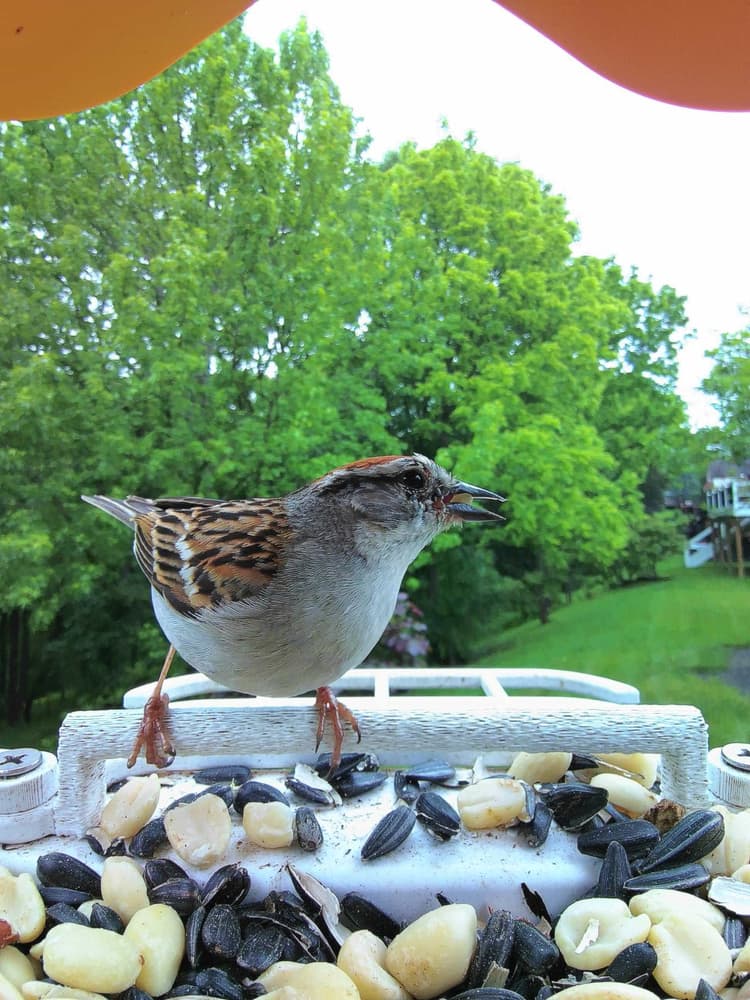
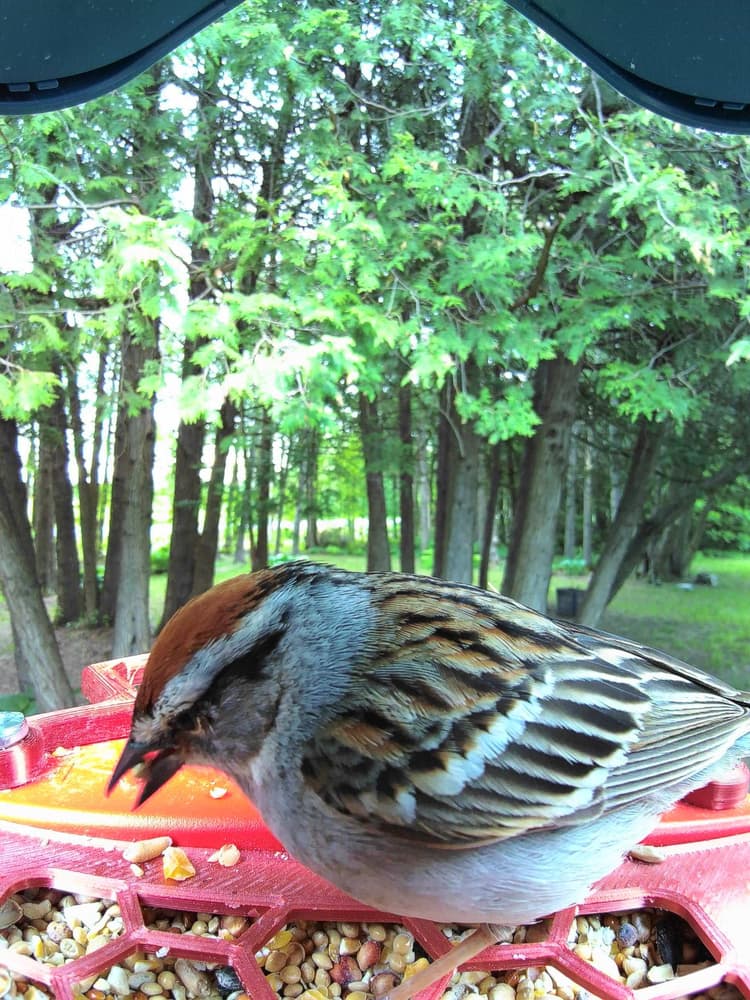
Male vs female
The Chipping Sparrow doesn't exhibit significant sexual dimorphism, meaning males and females have similar appearance. They both have less contrast in winter with their chestnut color partly obscured.
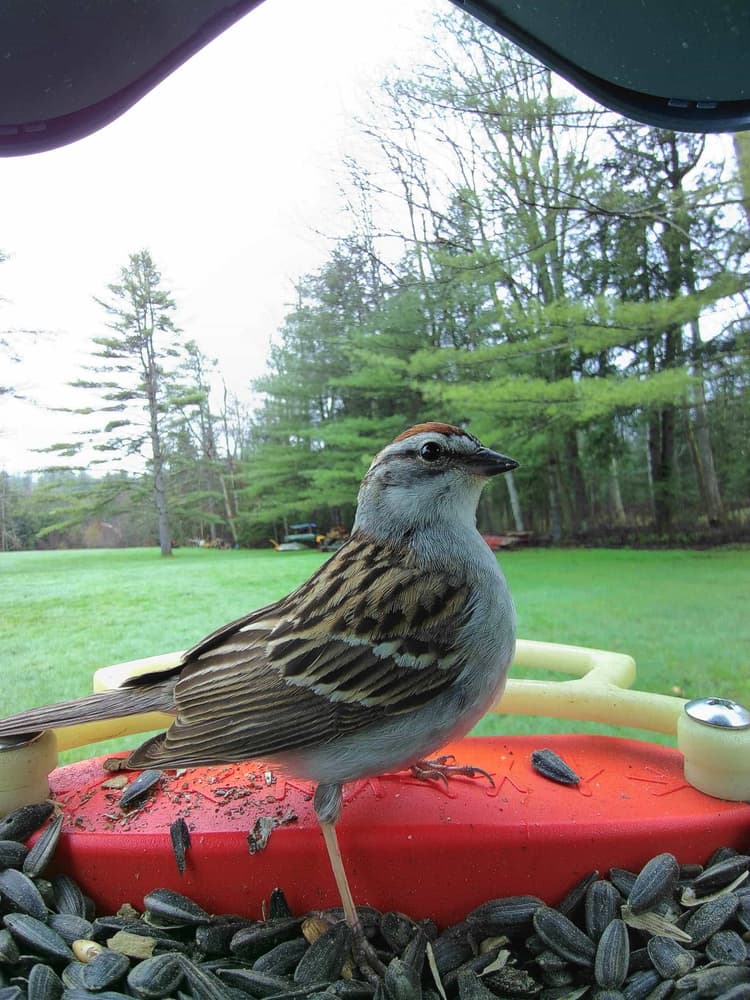
Male Chipping Sparrow
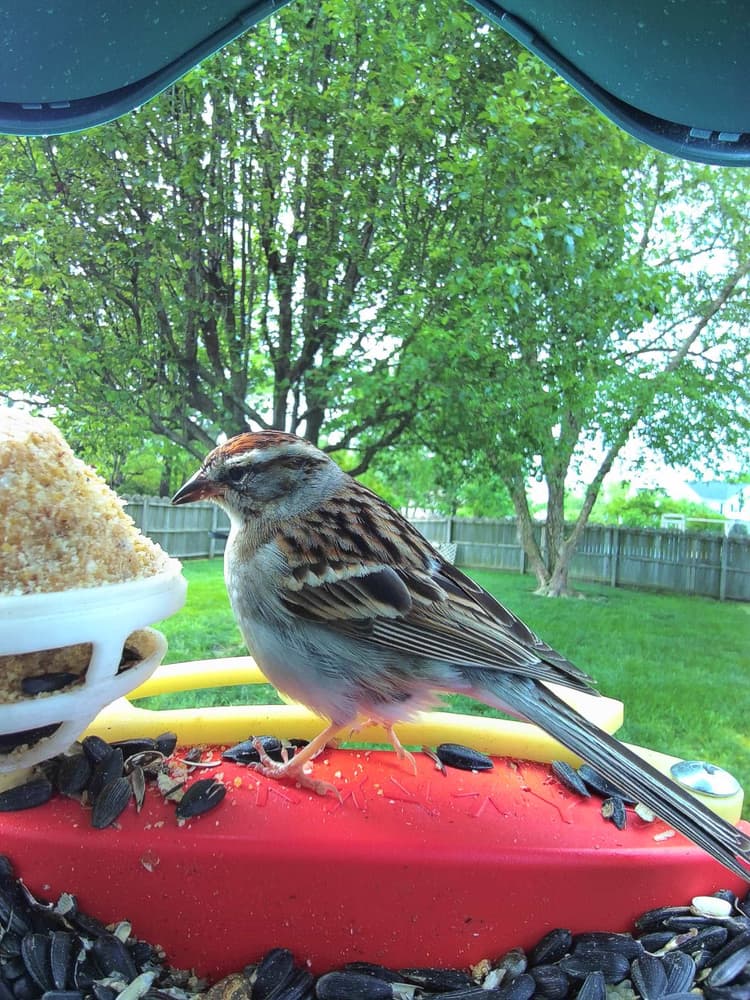
Female Chipping Sparrow
Juvenile
Young Chipping Sparrows are initially streaky and retain some of these streaks into fall. Dull fall juveniles can suggest Clay-Colored Sparrow and Brewer's Sparrow, but the gray rump identifies them as Chipping Sparrows. As they age, they acquire the characteristic colors and patterns of adult Chipping Sparrows.
Often mistaken for
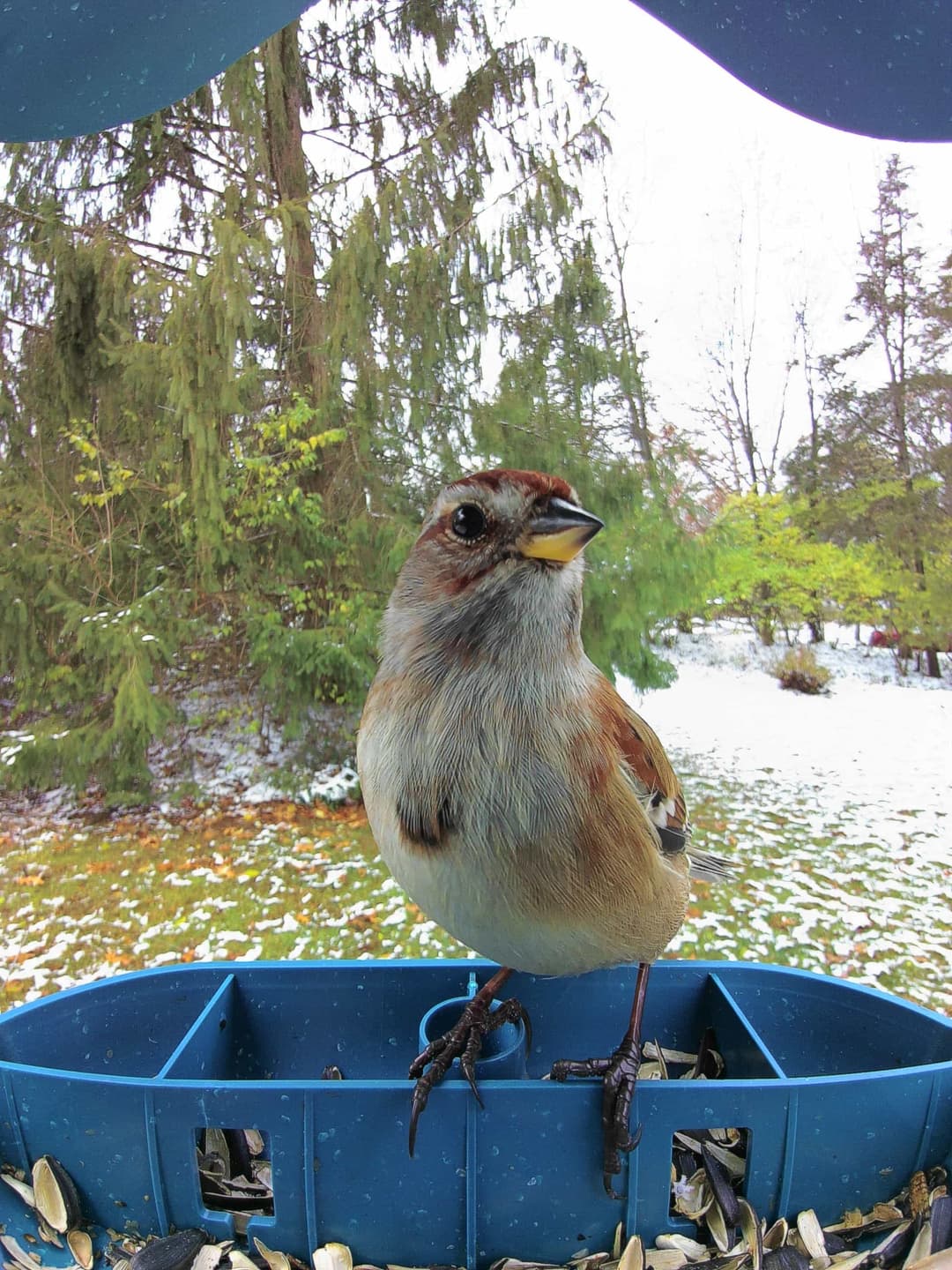
American Tree Sparrow vs Chipping Sparrow
Chipping Sparrows have a brighter rufous cap compared to the American Tree Sparrow's rusty cap. American Tree Sparrows also feature a central dark spot on their chest, absent in Chipping Sparrows. Insider tip: Look for the Chipping Sparrow’s black eye line and white throat, which are more distinct.
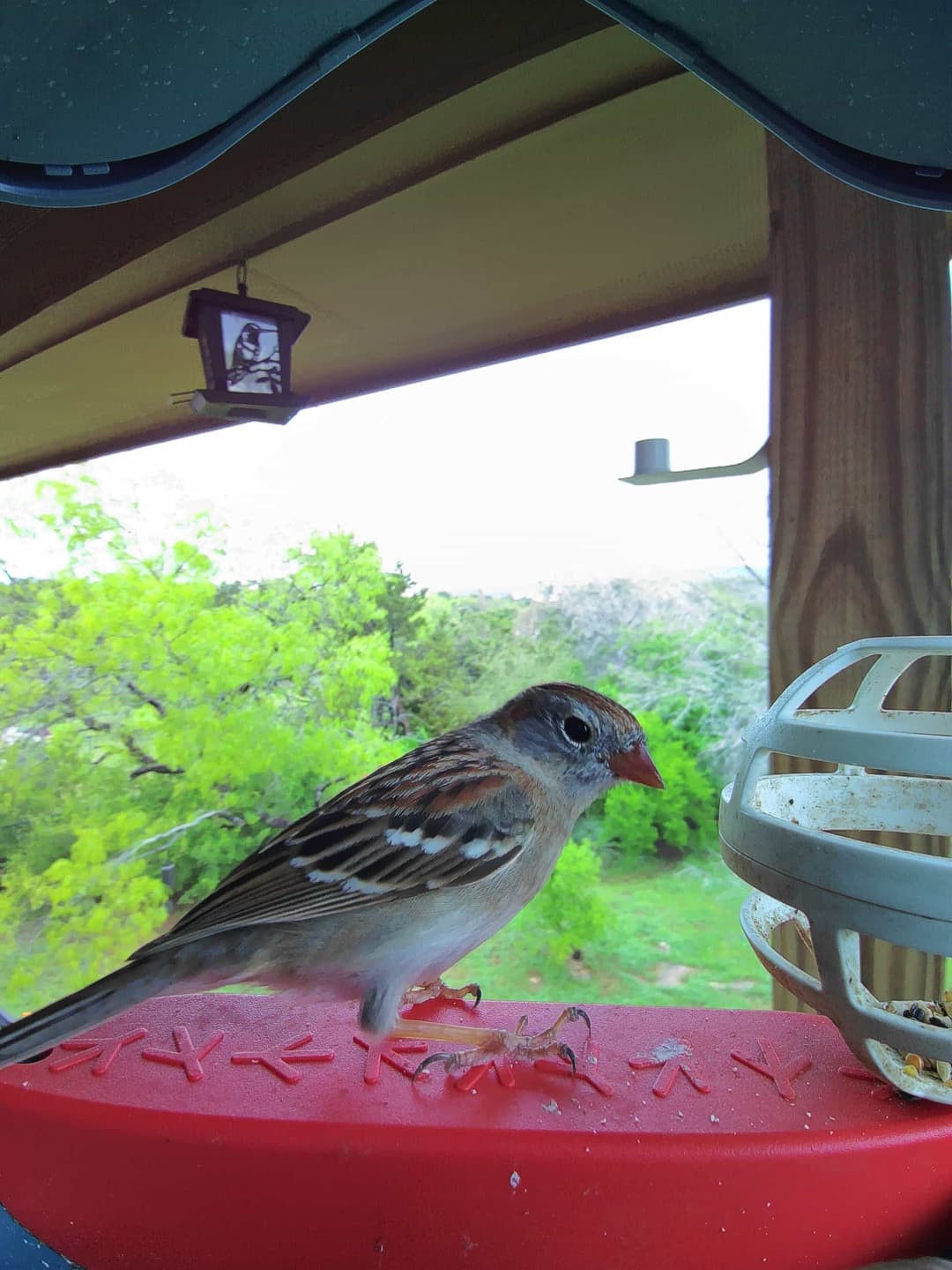
Field Sparrow vs Chipping Sparrow
Chipping Sparrows exhibit a black line through the eye and a reddish cap, while Field Sparrows have a more muted appearance with a plain face. Field Sparrows also display a pinkish bill, contrasting the Chipping Sparrow's dark bill. Insider tip: In spring, listen for Chipping Sparrow’s fast trill, different from Field Sparrow’s softer song.
Breeding and nesting habits of the chipping sparrow
Mating behaviors
Some males have more than one mate, which indicates a level of polygamy in the species. Courtship involves the males showcasing themselves to attract females.
Nesting details
Chipping Sparrows create their nests in various locations. Typically, nests are built in conifer trees, but they can also be found in deciduous trees or on the ground. Nests are generally lower than 15 feet above ground, but can be as high as 60 feet. Constructed by the female, nests are compact open cups made from materials like grass, weeds, and rootlets, lined with fine grass and animal hair, historically including horsehair.
Eggs and chick-rearing
Female Chipping Sparrows lay and incubate the eggs. After the eggs hatch, both parents may be involved in feeding the chicks. Creating a suitable habitat in gardens involves ensuring the presence of trees or shrubs suitable for nesting, and minimizing disturbances from domestic animals.
What does a chipping sparrow like to eat?
Berries
Insects
Seeds
Spiders
Natural diet
The chipping sparrow's natural diet consists mostly of insects and seeds, with variations depending on the season. In the summer, it primarily feeds on insects such as grasshoppers, caterpillars, beetles, leafhoppers, and true bugs, in addition to some spiders. During the fall and winter months, the sparrow's diet shifts more towards seeds, including those from grasses, weeds, and occasionally some waste grain.
Bird feeders
At bird feeders, chipping sparrows are commonly attracted to offerings like sunflower seeds, millet, and cracked corn. These supplements can provide additional nutrients, particularly during colder months when natural food sources are less abundant.
Attracting chipping sparrows to your yard
It's not too difficult to attract these charming little birds to your yard. The key is to make your space as inviting as possible. Provide plenty of shelter in the form of shrubs and small trees, as Chipping sparrows love to take cover in these. Having a birdbath or water source is another great way to entice these birds as they love to drink and bathe.
Favorite snacks and feeder types for chipping sparrows
Chipping sparrows are not picky birds and will eat a variety of seeds, but their preference goes towards smaller seeds like millet and canary seed. As for feeders, they are happy with both tube and platform types. They don’t mind eating from the ground too. To get the best results, we recommend Bird Buddy seeds. These seeds are chosen by bird experts for the season and are known to be a favorite among Chipping sparrows.
Fun tricks to encourage chipping sparrows to visit
A fun way to encourage Chipping sparrows to visit and stay longer is to provide nesting material. They are known to weave intricate nests, and providing them with grass, twigs, and small threads can be a fun way for them to gather what they need. Furthermore, treating them to their favorite Bird Buddy seeds will surely make them stick around for a while, and you might even get treated to a beautiful sing-along.
Where can you find chipping sparrows?
Based on Birdbuddy sighting data. The heatmap shows where Birdbuddy users have spotted this species.
Embed this map
This map shows the full native range based on scientific range data.
Primary habitat
The Chipping Sparrow primarily breeds in open woods, conifers, forest edges, and savannas with scattered conifers.
Additional range
It has adapted to altered habitats like suburbs, city parks, orchards, pastures, farms, and towns. In winter, it occupies open woods, farmland, brush, and thickets.
Do they migrate?
The chipping sparrow is a migratory bird, often observed traveling in flocks. Its migration is characterized by an extended period in both spring and fall, allowing for greater flexibility in timing compared to more rigid migratory patterns. In North America, the chipping sparrow breeds across much of the continent, from Canada to the United States, predominantly in open woodlands, suburban areas, and gardens. As the colder months approach, they migrate southwards to escape the harsh northern winters. The migration route generally takes them from their breeding grounds in the northern regions of the United States and southern Canada to their wintering habitats in the southern United States, Mexico, and Central America. Key stopover locations during their migration include areas with abundant food resources and suitable habitats, such as fields, forest edges, and backyards where they can feed on seeds and insects. The timing of their migration varies across their range. In the fall, migration can span from late August to November, while spring migration typically occurs from March to early May. This extended period allows the chipping sparrow to navigate changing weather conditions and access resource-rich sites en route to their destination.
What is the role of chipping sparrows in nature and how to protect them?
Conservation status
The chipping sparrow is common and widespread, with stable population numbers. It is not considered vulnerable or endangered. A notable threat to this species is nest parasitism by the Brown-headed Cowbird, which can affect its reproductive success. No major conservation efforts are currently necessary, but ongoing monitoring is essential to ensure its populations remain healthy.
Ecological role of chipping sparrows
Its role in the ecosystem
The Chipping Sparrow plays a crucial role in its ecosystem. By feeding on numerous insects such as grasshoppers, caterpillars, beetles, and true bugs, the bird serves as a natural form of pest control, keeping these populations in check and preventing them from causing undue damage to plant life. This diet changes with the seasons. In the fall and winter, these sparrows eat seeds from weeds, grasses, and grain, which helps in seed dispersal. This behavior contributes to the propagation and diversification of plant species. Additionally, the Chipping Sparrow's nesting behavior, involving the use of local materials such as grass, rootlets, and animal hair, displays the species' adaptability to its environment. With males sometimes having more than one mate and females incubating the eggs while being fed by the male, this species also exhibits interesting mating and parental care behaviors. This combination of insect predation, seed dispersal, plant propagation and nest construction provides the Chipping Sparrow with significant ecological importance.
How to help protect chipping sparrows
Preservation tips
Habitat preservation strategies
Preserving habitats is crucial for the conservation of the chipping sparrow. Consider creating a buffer around areas where these birds nest to minimize disturbances from human activity. Maintain and protect open, grassy areas with scattered shrubs and trees, as they are preferred habitats for these sparrows. Planting native grasses and shrubs can also provide food and nesting material.
Community science initiatives
Encourage community participation in science initiatives aimed at monitoring the chipping sparrow population. This can include birdwatching groups, bird counts and maintaining bird feeder stations that can attract and help monitor chipping sparrows. Proliferate information about the importance of bird conservation through local community events, schools and social media to raise awareness and nurture a conservation ethic.