Pine Siskin or House Finch?
Here's how to tell the difference
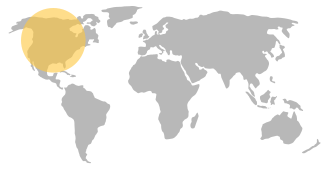
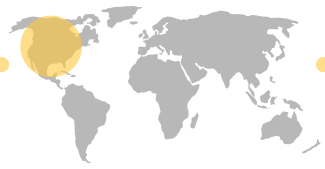
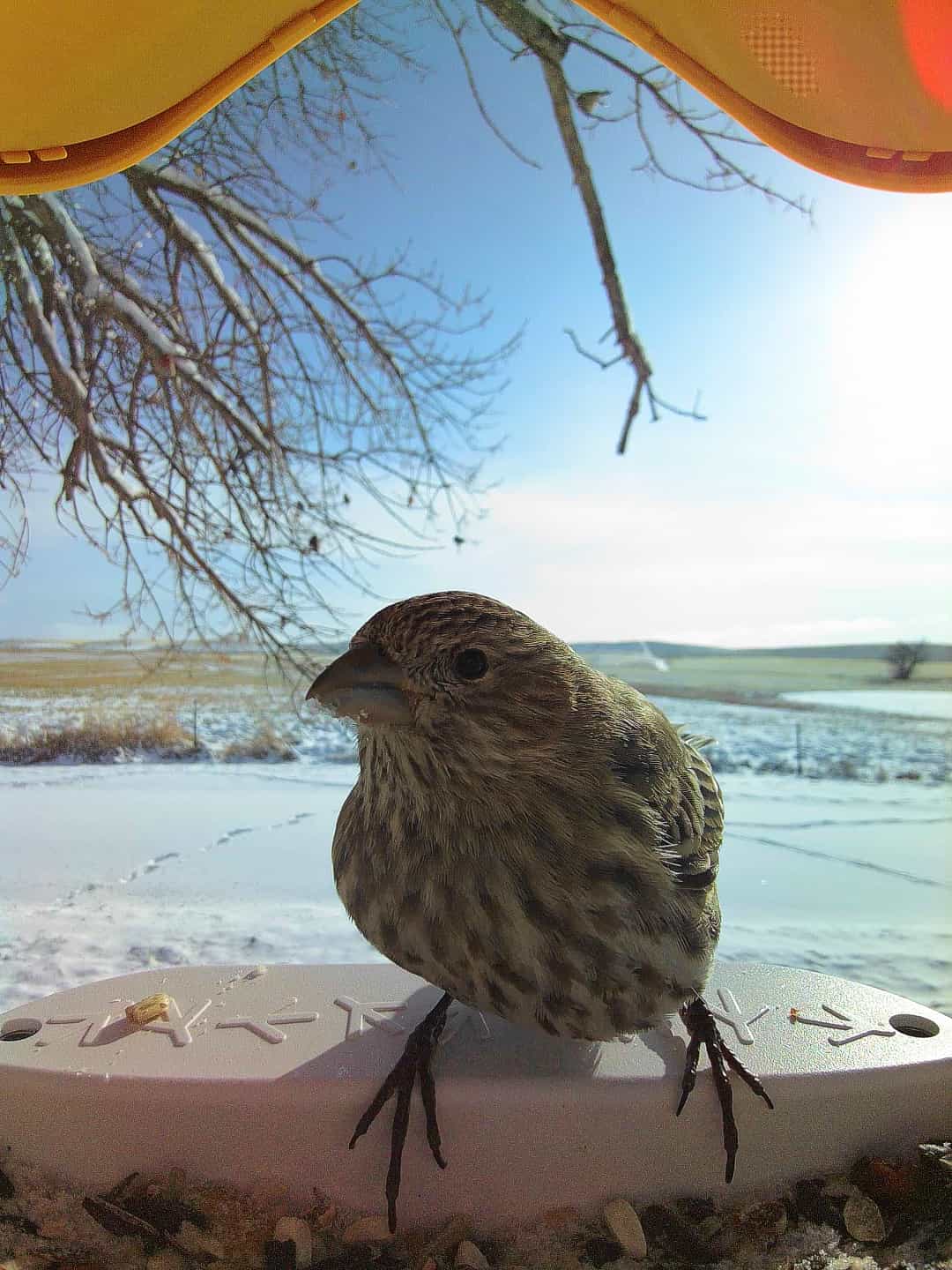


Pine Siskin
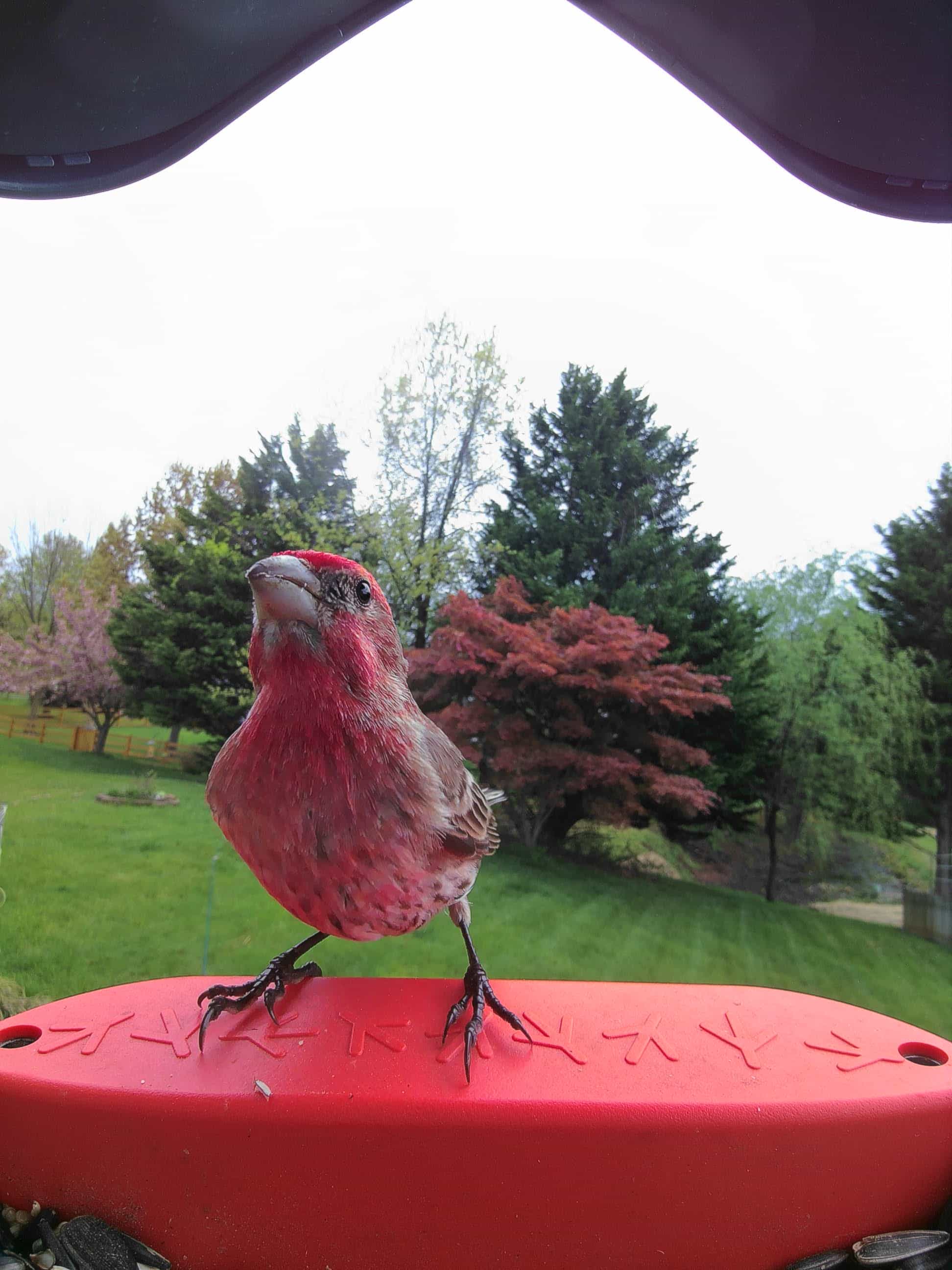


House Finch
Pine Siskin
Spinus pinus
General appearance
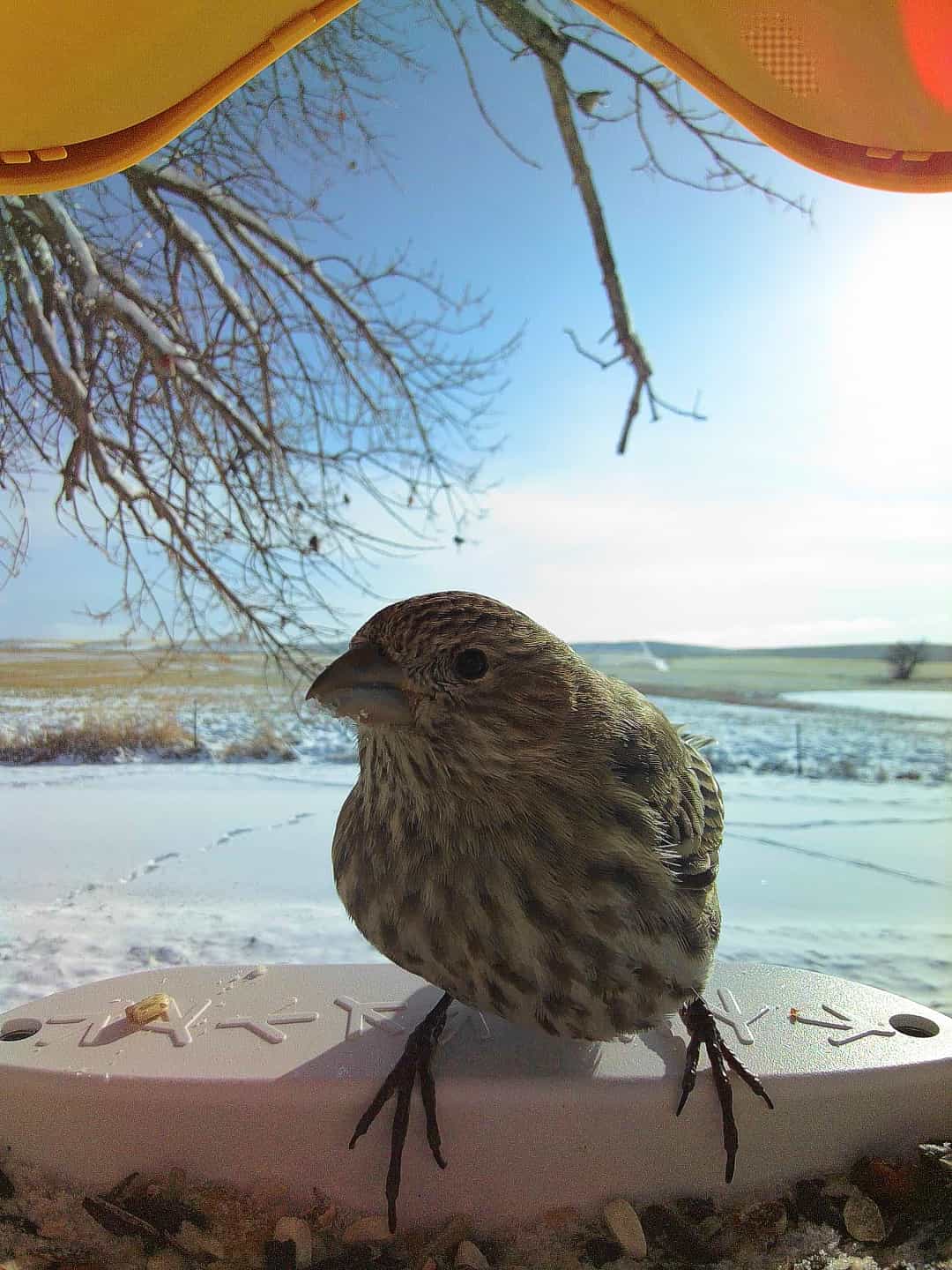
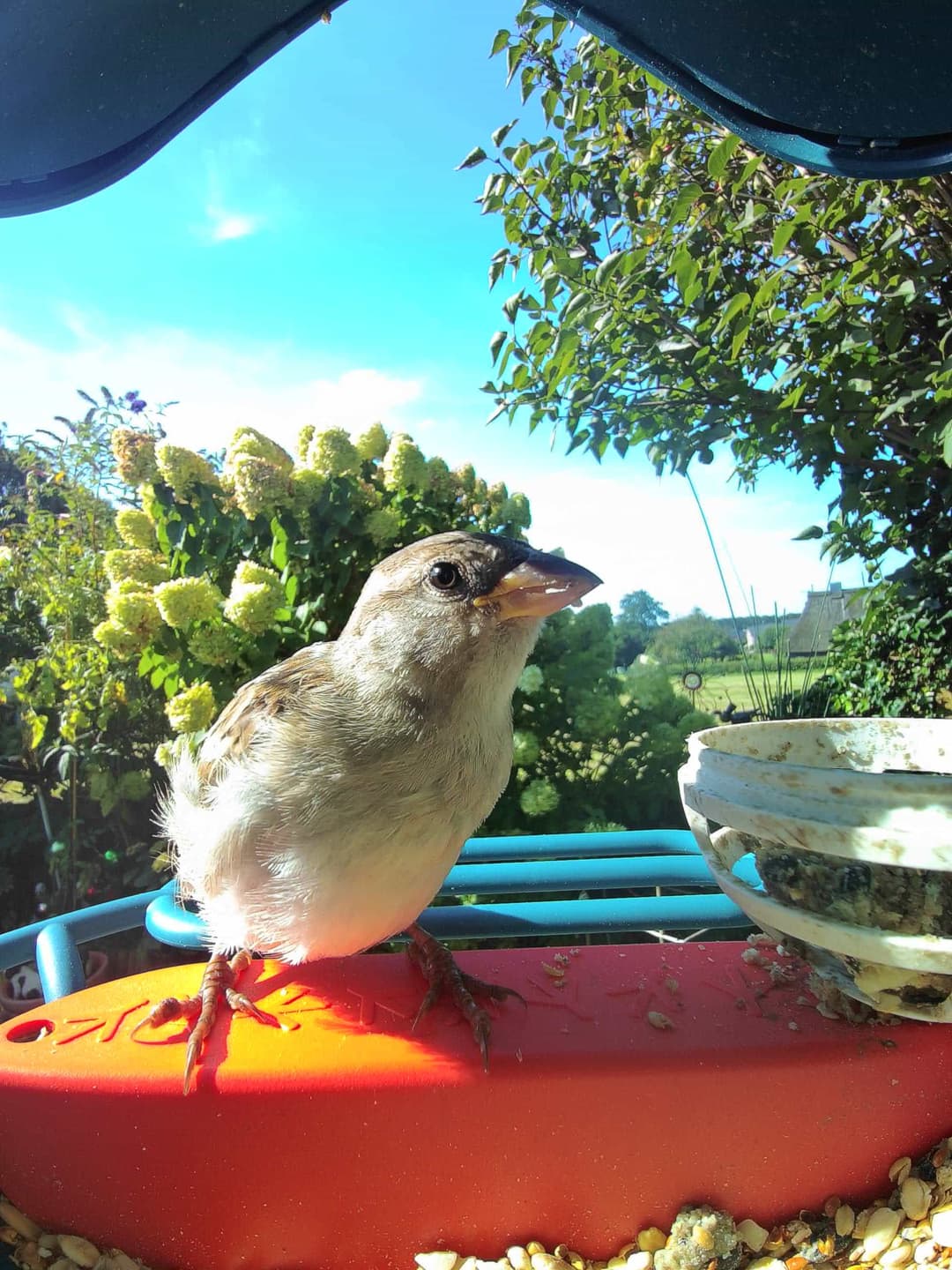
The pine siskin, similar to a goldfinch in size, shape, and behavior, ranges between 4 1/2 to 5 inches in size (11-13 cm). It displays a brown color, usually with heavy streaking. Notable features include a narrower, sharp-pointed bill and a plain face. Yellow edging can be observed in its wings and tail, particularly during flight. The wing shape is pointed, and the tail shape is a mixture of notched and square-tipped.
Male vs female
Differences between male and female pine siskins are not well pronounced. Both sexes share the same general appearance including coloration and physical features. However, during the breeding season, males may exhibit more vibrant coloring in an effort to attract females.
Juvenile
Juvenile pine siskins resemble adults but may have heavier streaking on their underparts. The juvenile plumage is usually replaced by an adult-like plumage after the first molt. The yellow edging on the wings and tail may be less noticeable in juveniles compared to adults.
Size
4.3 - 5.5 in/0.4 - 0.6 oz
There's more to learn about Pine Siskin
View full detailsHouse Finch
Haemorhous mexicanus
General appearance
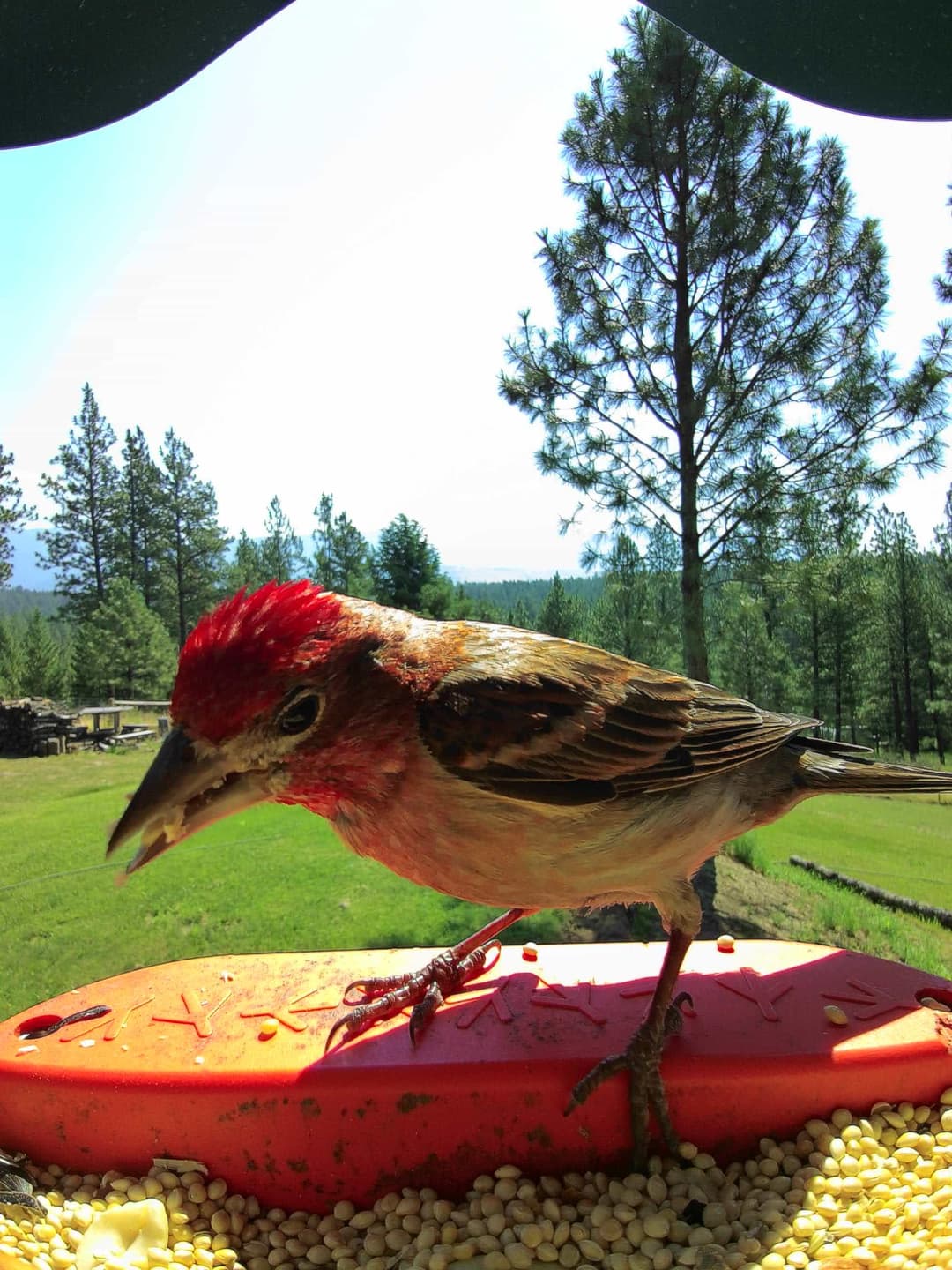
House finches are about the size of a sparrow at 5-6 inches long (13-15 cm). They possess a rounded wing shape and a notched, square-tipped tail. The prominent colorations include brown, orange, red, and white. Their underparts are pale with blurry stripes all over, and sides feature dark stripes.
Male vs female
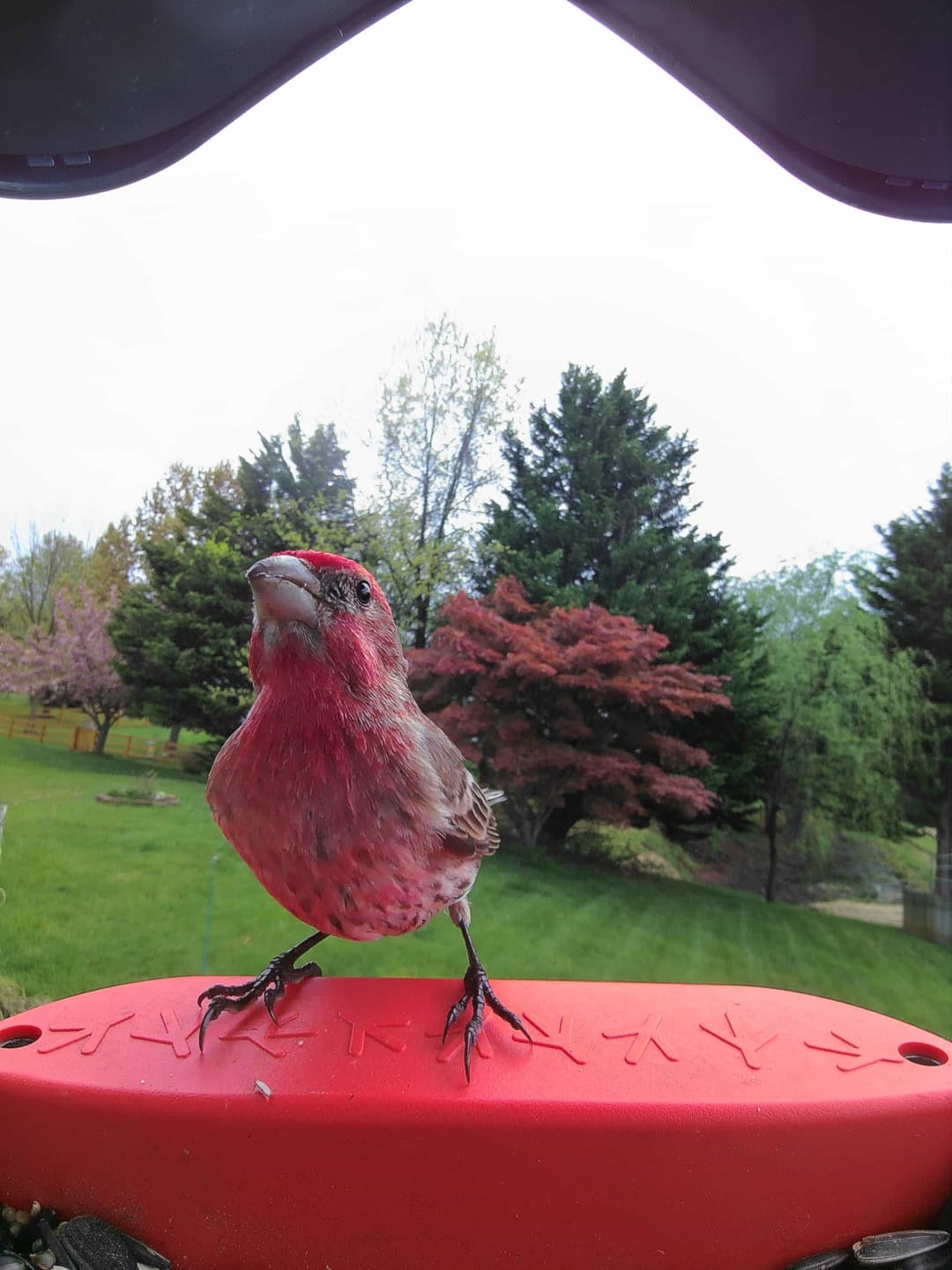
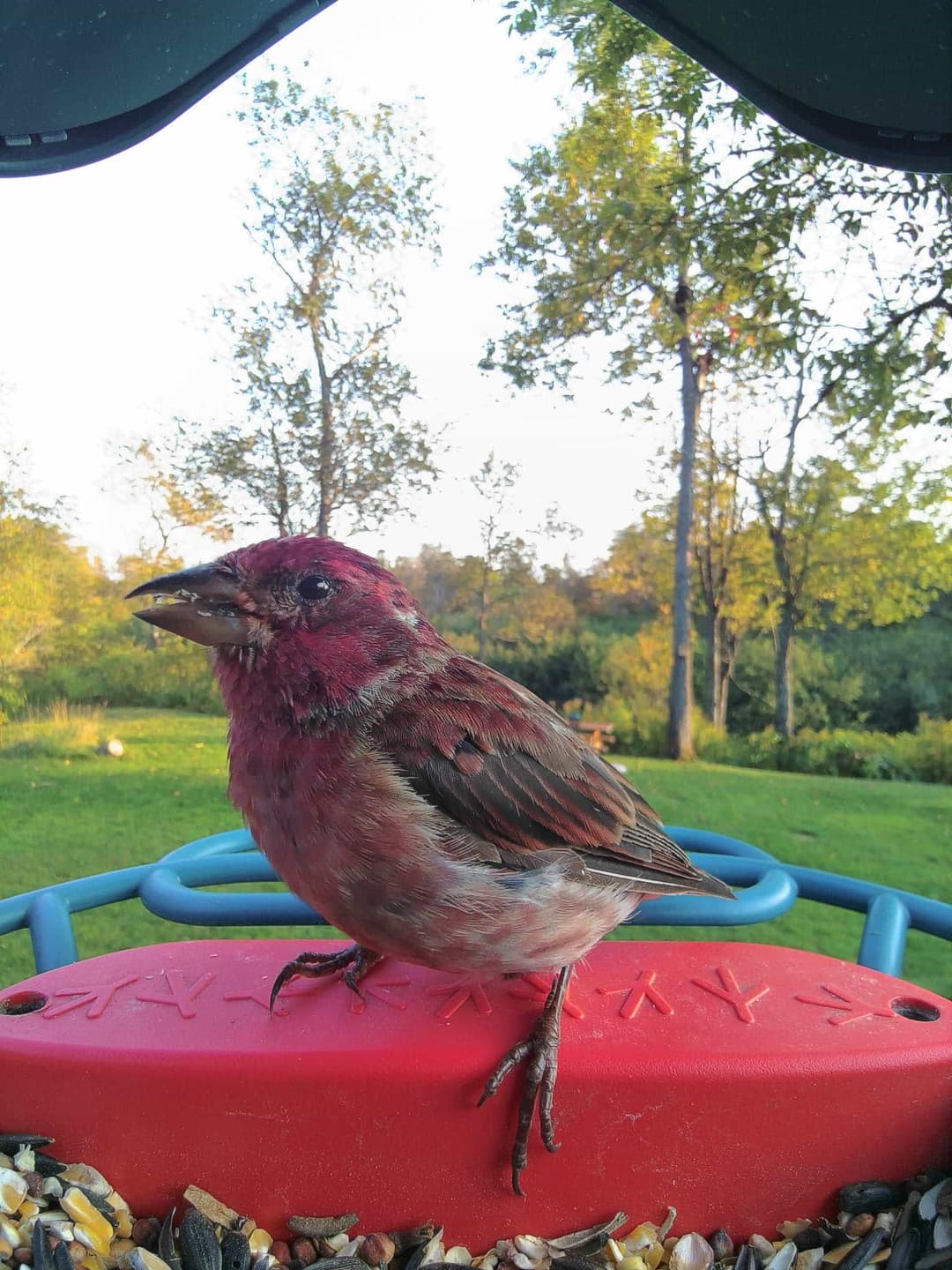
Female and young house finches flaunt a rather plain brown face, creating a stark contrast with the males who showcase a red eyebrow and forehead that contrasts with a brown cap. The males also have a red throat and chest, with their lower underparts being whitish. The red coloration in some males can be replaced by orange or yellow which adds to their distinctive appearance.
Juvenile
Young house finches, similar to females, display a plain brown face. However, they display sharper stripes all over their pale underparts. This provides a distinctive mark to identify juveniles from adults. These birds also lack the stripes of house sparrows and different patterns of native sparrows.
Size
4.9 - 5.9 in/0.7 - 0.8 oz
There's more to learn about House Finch
View full detailsHow to tell the Pine Siskin from the House Finch
Visual differences
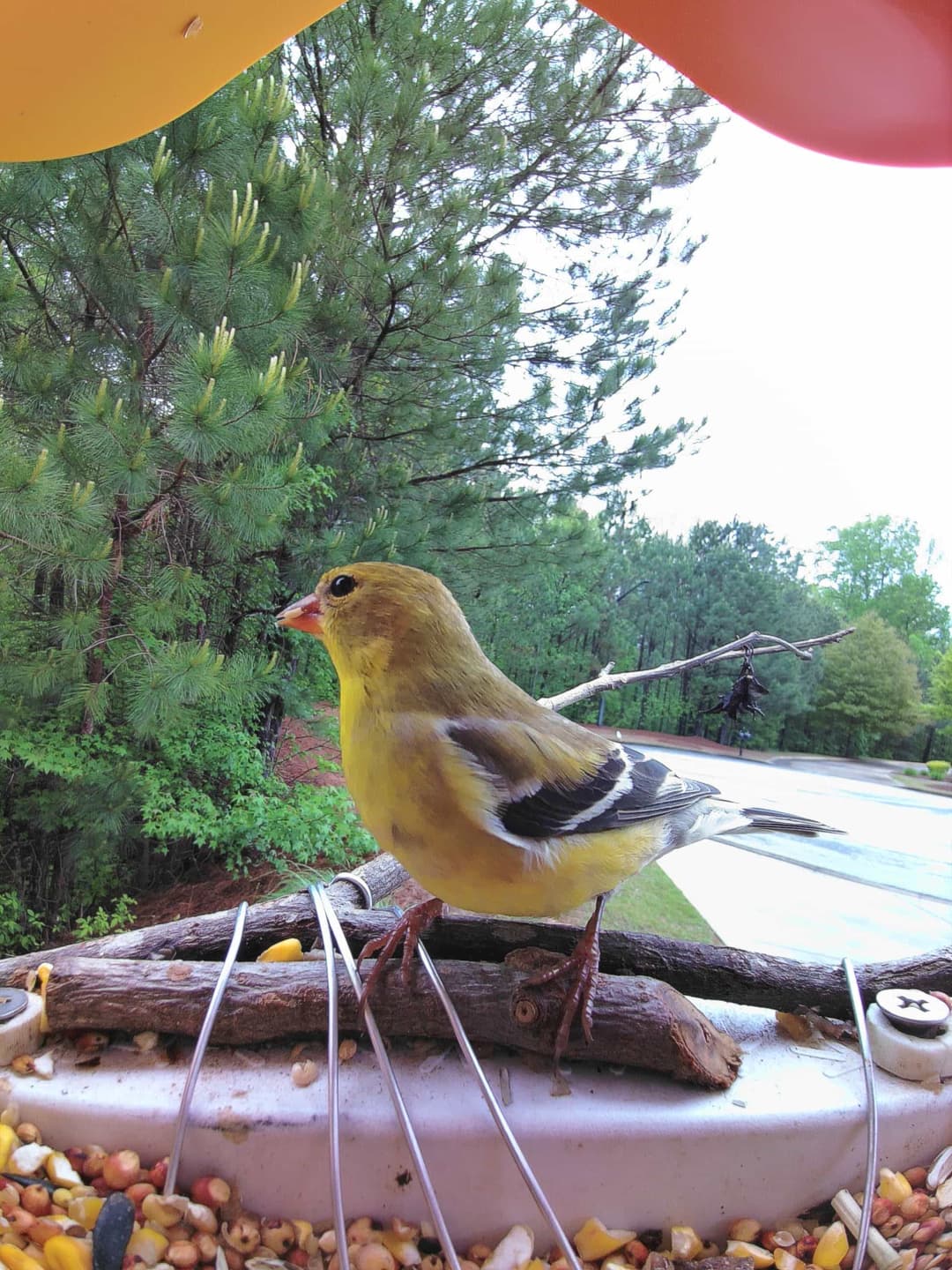
The Pine Siskin (4.5-5 inches) is slightly smaller than the House Finch (5-6 inches). Siskins are streaky brown with yellow-edged wings and a sharp beak, while House Finches are brown with male finches displaying red, orange, or yellow on their head and chest. Siskins have pointed wings and square-tipped tails; House Finches have rounded wings and notched tails. Siskins' faces are plain, whereas male House Finches have distinct red markings.
Key differences and behavior
Pine Siskins and House Finches exhibit distinct behaviors and habitats. Pine Siskins are known for irruption migration, appearing unpredictably in gardens every few years, primarily in winter. They breed in coniferous or mixed woods and have elaborate aerial courtship displays. Their diet is diverse, focusing on seeds from conifers and weed seeds, and they actively forage at feeders for nyjer seeds. They often store food in their throats. Conversely, House Finches thrive in urban and suburban environments, adapting well to human presence. They remain in pairs year-round and exhibit courtship feeding. They prefer building nests in varied locations, including buildings and gardens. Their diet leans heavily on fruits and weed seeds, and they frequent feeders for sunflower seeds. Known for excellent memory, they reliably return to food sources.
Still not sure? Here are more lookalikes!
Pine Siskin vs American Goldfinch
House Finch vs Purple Finch
House Finch vs Cassin’s Finch
Pine Siskin vs [Select a bird]

[Select a bird]
Pick a bird to compare
House Finch vs [Select a bird]
[Select a bird]
Pick a bird to compare