
Pine Siskin
Pine Siskin
Spinus pinus


Quick Identification guide
Quick Identification guide
Male
- •
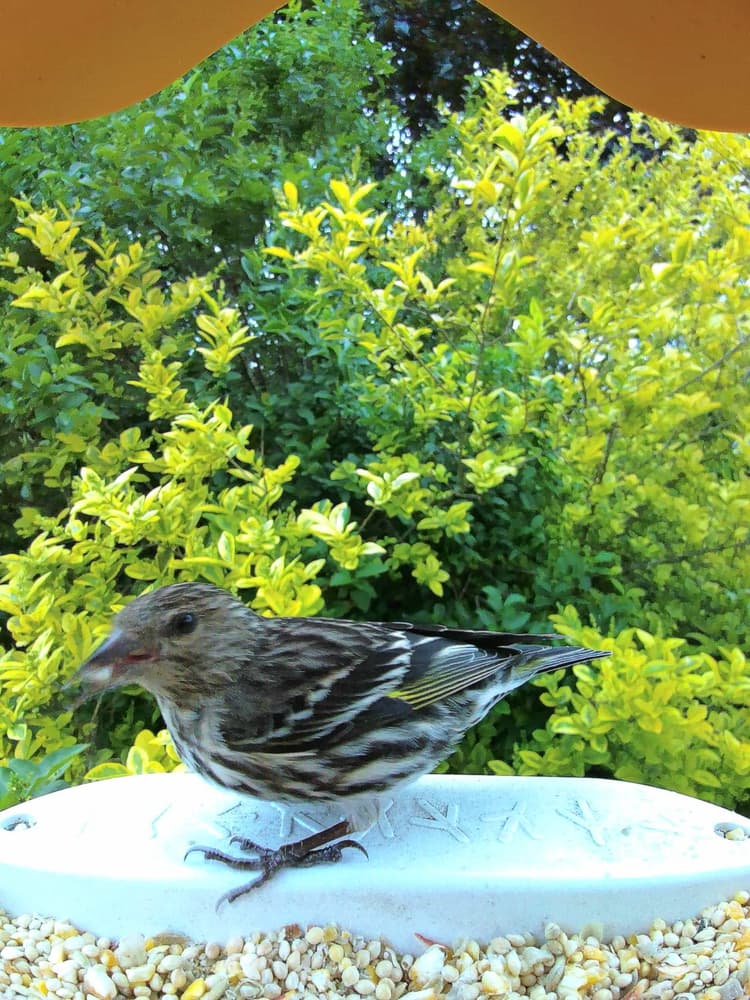
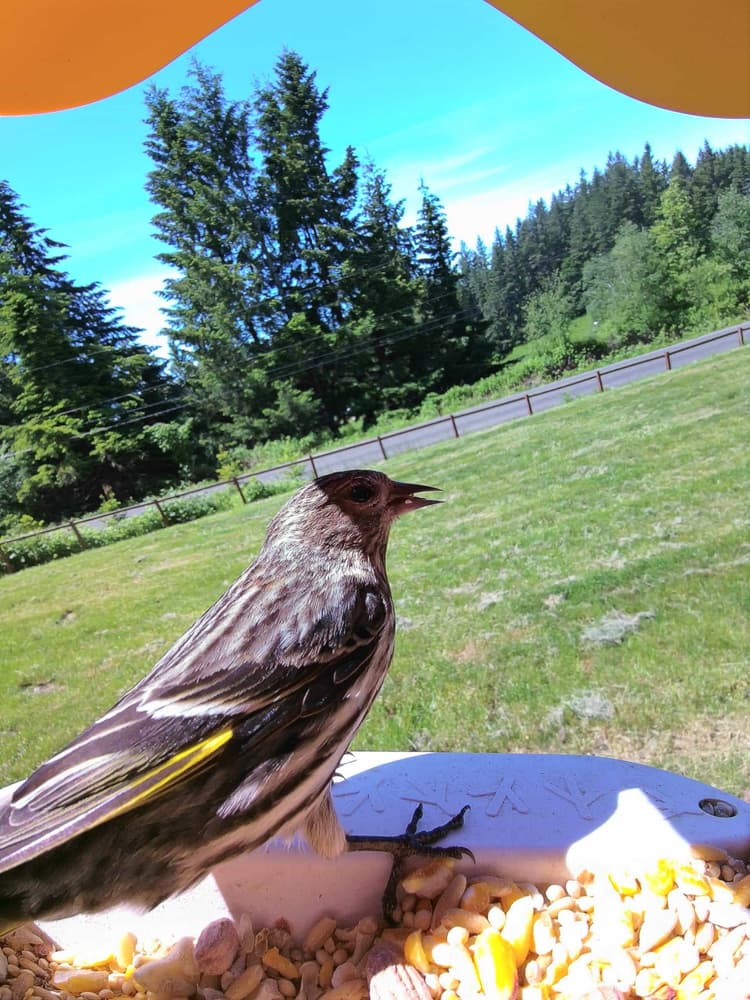
streaked brown upperparts with heavily streaked underside
- •
Small with a pointed, conical beak
- •
Distinctive yellow edging on wing feathers
Female
- •
similar streaked brown plumage to the male
- •
Equipped with a pointed, conical beak
- •
Also displays subtle yellow on wing feathers, less pronounced than males
What does a pine siskin sound like?
The pine siskin vocalizes with a distinctive rising 'bzzzzzt' sound that resembles a hoarse goldfinch's song. Its call pattern is complex, often falling, rising, and undulating to produce various call types. These include a chatter or chirp/chip sound, a high-intensity 'hi' call, as well as trills and whistles. This singing bird's calls are an auditory delight due to its versatile and dynamic songs.


Description
The pine siskin is the most common of the so-called winter finches. They practice what is known as irruption migration. What's that? It means, in practice, every two or three years a bunch might show up in your garden. Hooray! Their throats have a special pouch called a 'crop' that they use for food storage. As winter starts to approach, they become increasingly plumper. We can all relate to that, right?
The pine siskin can weigh between 12to18grams and be from11to14centimeters tall.
The Pine Siskin typically lives up to 8 years in the wild, though the oldest recorded was an exceptional 11.3 years old. This small finch has a shorter lifespan than its close relative, the American Goldfinch, which can usually reach 10-15 years. The Pine Siskin's comparatively reduced longevity could be due to the challenges it faces from diseases, such as Salmonellosis.
Did you know?
Most popular questions about pine siskin
How to recognise a pine siskin?
General appearance
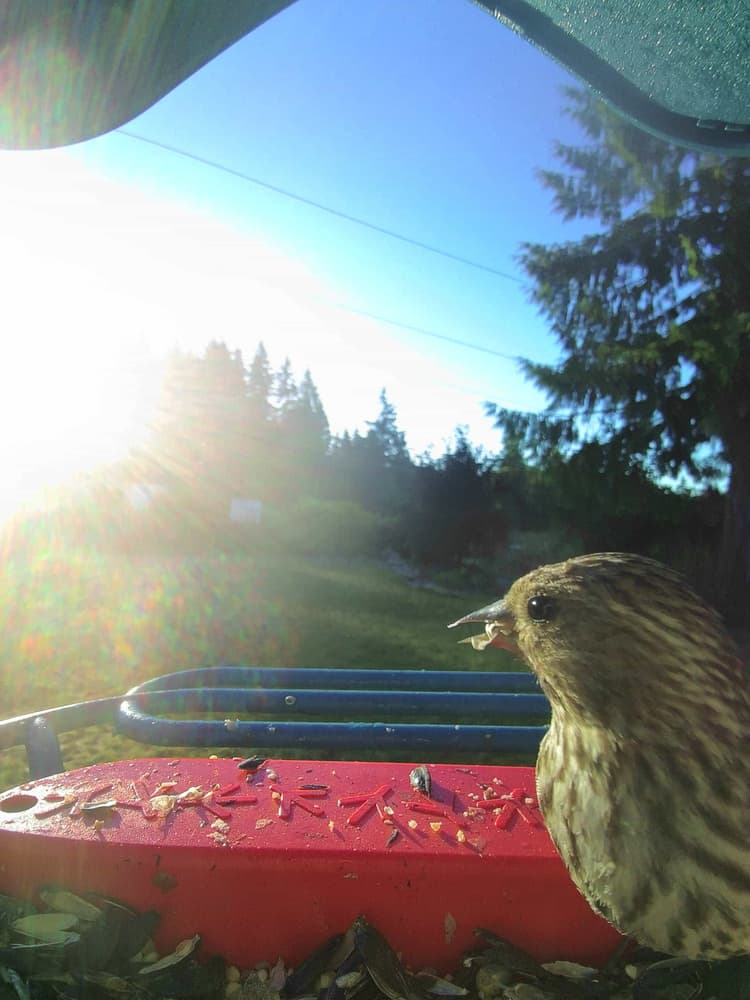
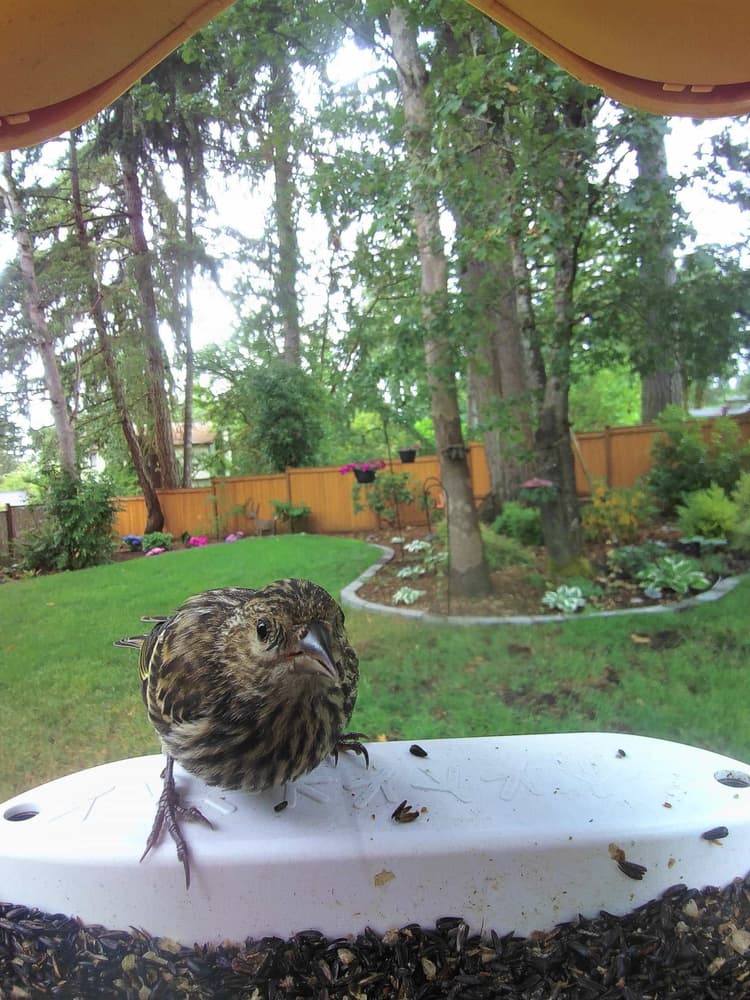
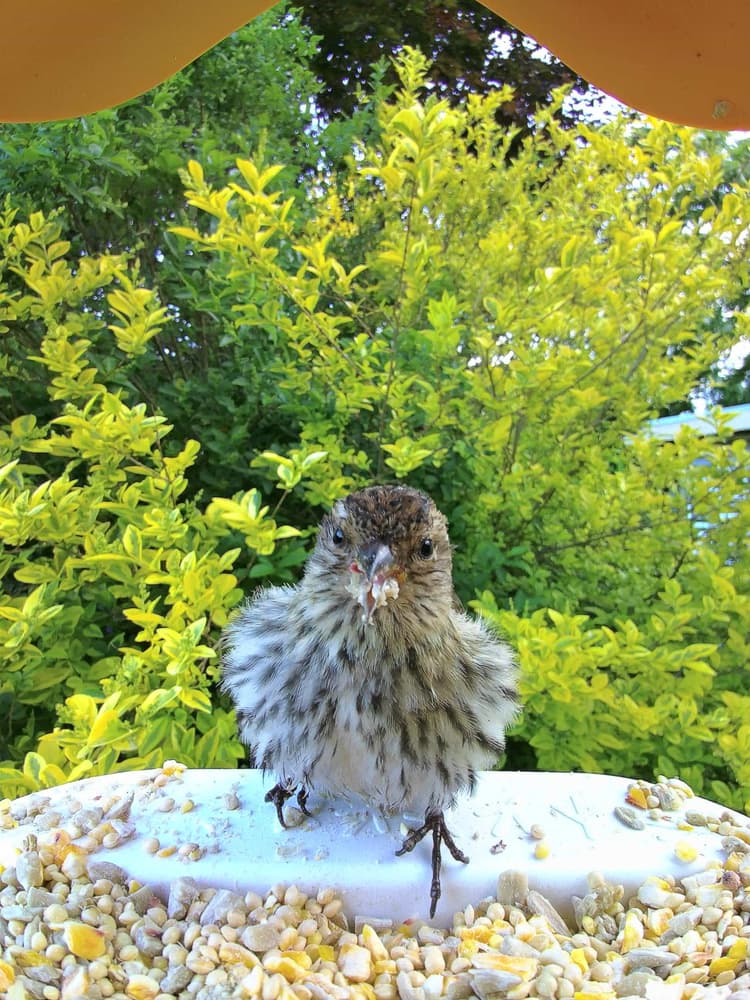
The pine siskin, similar to a goldfinch in size, shape, and behavior, ranges between 4 1/2 to 5 inches in size (11-13 cm). It displays a brown color, usually with heavy streaking. Notable features include a narrower, sharp-pointed bill and a plain face. Yellow edging can be observed in its wings and tail, particularly during flight. The wing shape is pointed, and the tail shape is a mixture of notched and square-tipped.
Male vs female
Differences between male and female pine siskins are not well pronounced. Both sexes share the same general appearance including coloration and physical features. However, during the breeding season, males may exhibit more vibrant coloring in an effort to attract females.
Male Pine Siskin
Male Pine Siskin
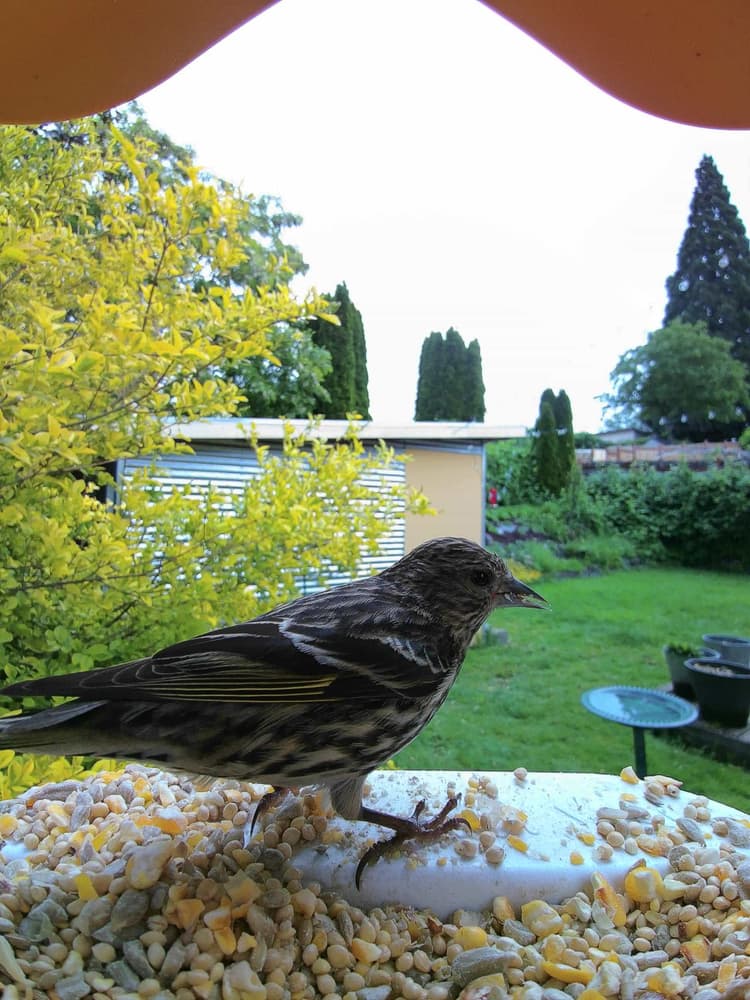
Female Pine Siskin
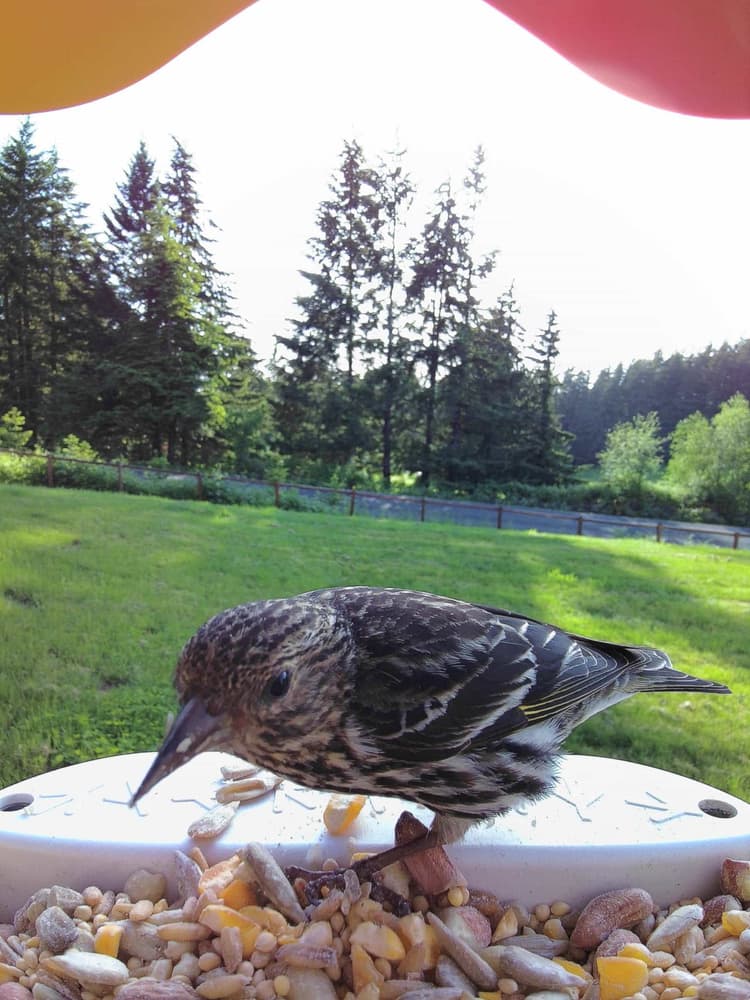
Female Pine Siskin
Juvenile
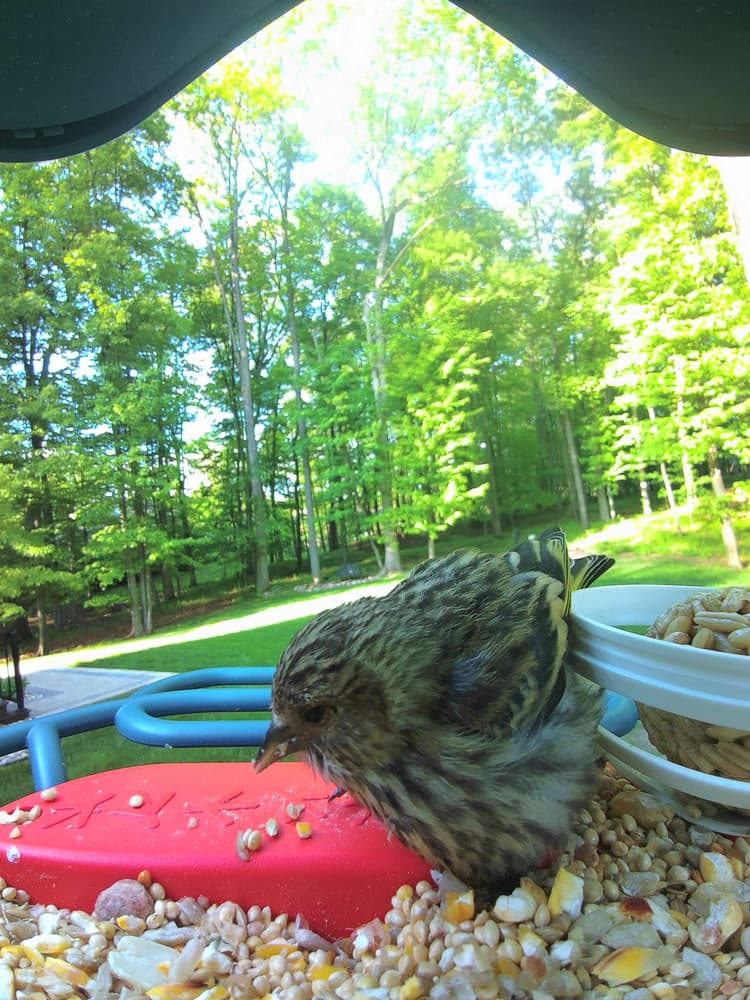
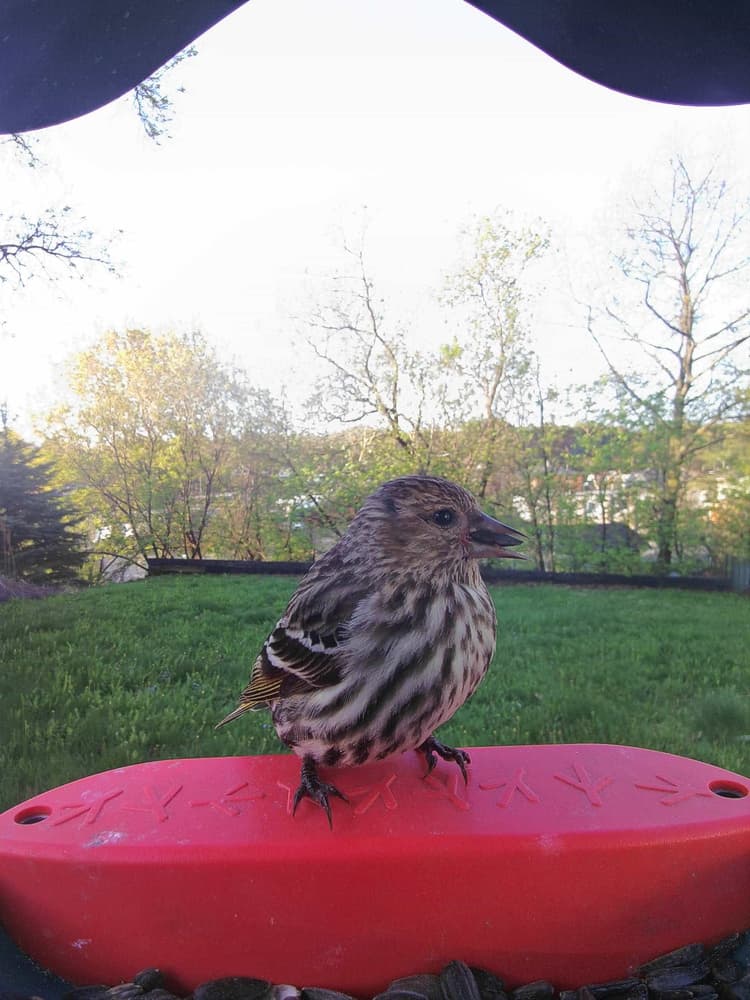
Juvenile pine siskins resemble adults but may have heavier streaking on their underparts. The juvenile plumage is usually replaced by an adult-like plumage after the first molt. The yellow edging on the wings and tail may be less noticeable in juveniles compared to adults.
Often mistaken for
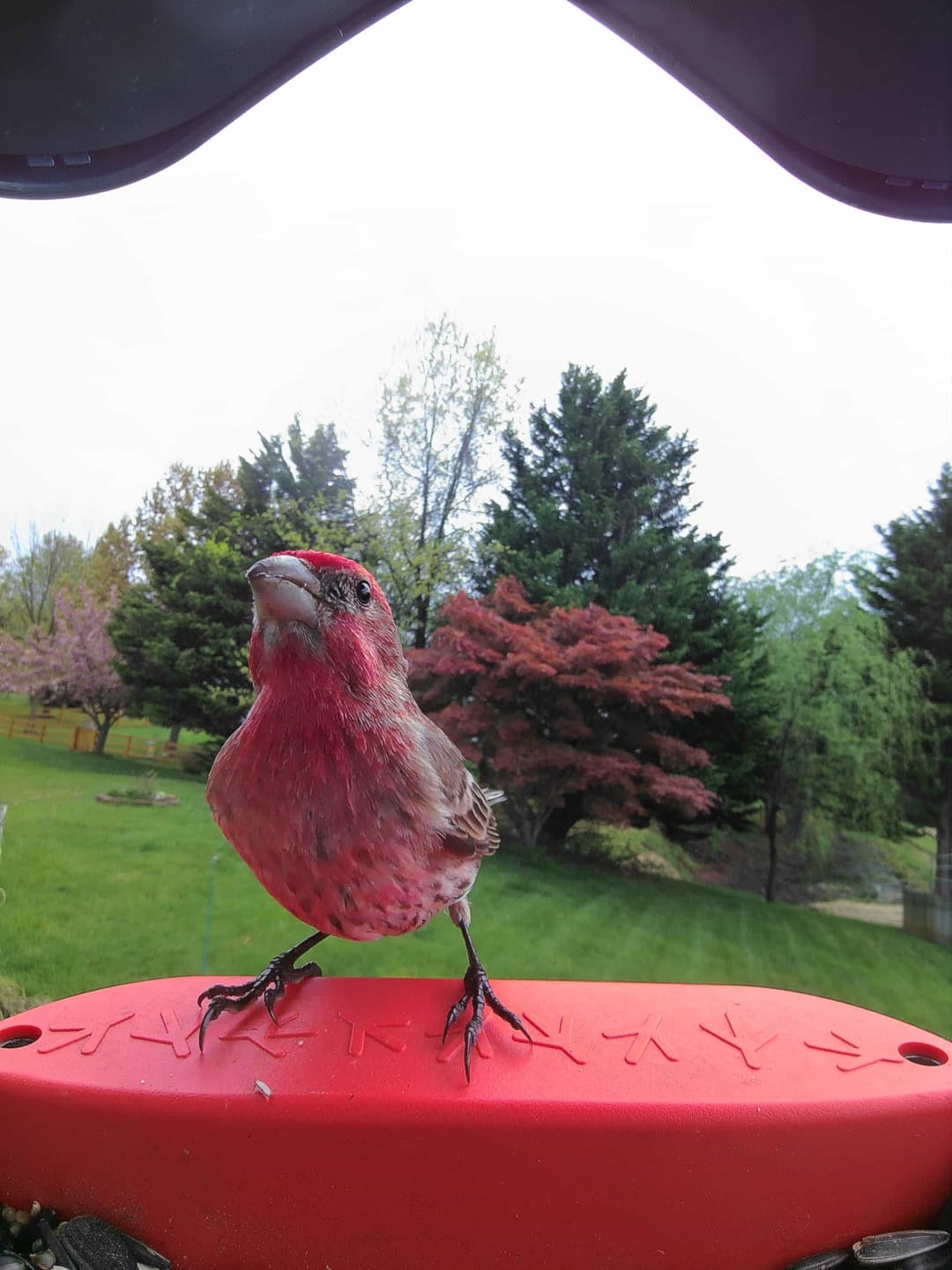
House Finch vs Pine Siskin
Pine Siskins are smaller with pointed bills and have streaky brown plumage with some yellow edges on the wings and tail, whereas House Finches are larger with a more robust, conical bill and a more uniform brown or gray body, often with a rosy-red head and chest in males. Listen for Pine Siskins' distinctive, buzzy calls.
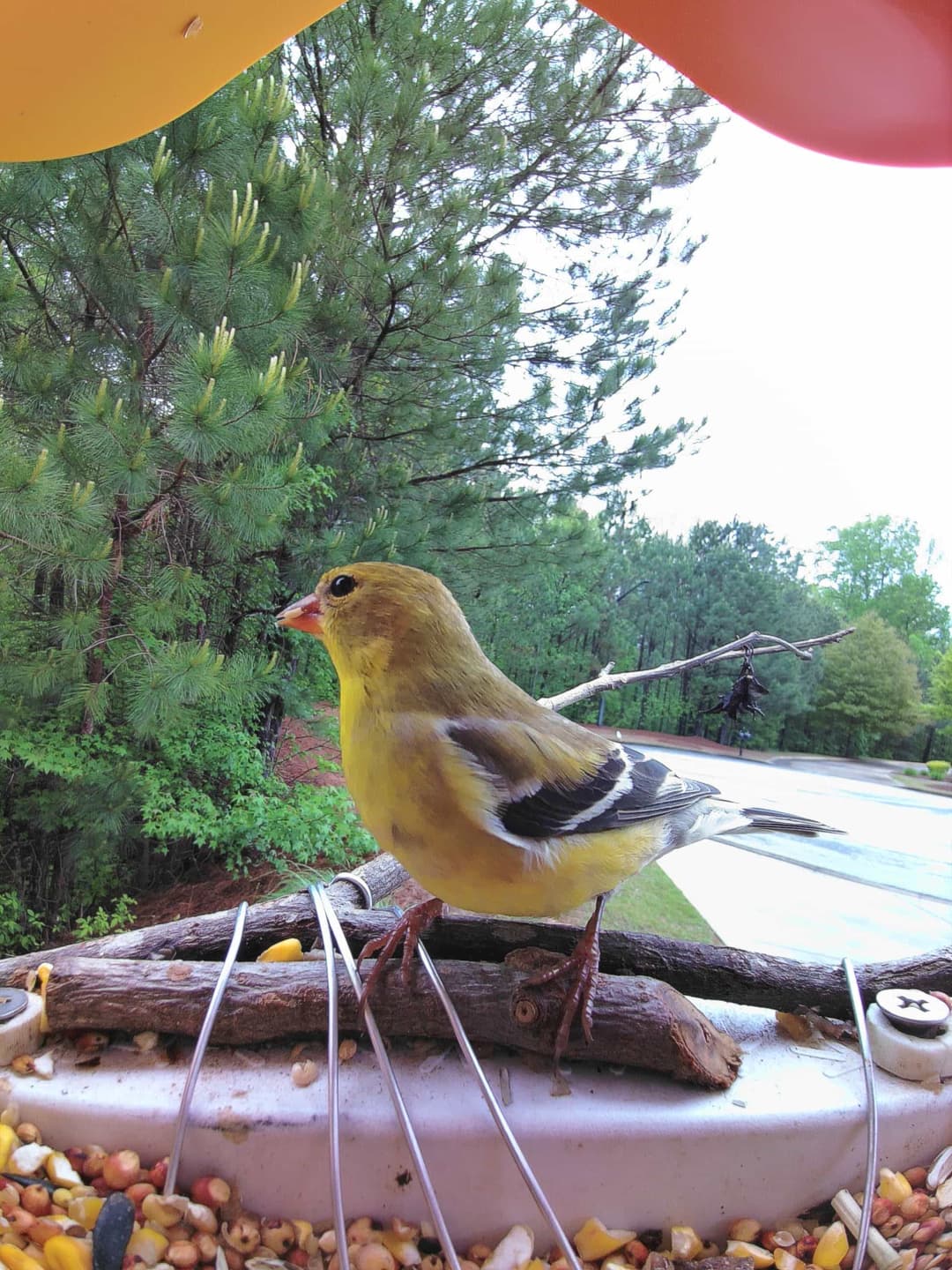
American Goldfinch vs Pine Siskin
While American Goldfinches in breeding plumage are bright yellow with black wings, Pine Siskins are brown with heavy streaks and subtle yellow feathers in their wings and tails. In winter, Goldfinches become duller but still lack the streaking of Siskins. Look for Pine Siskins' thinner, more pointed bill and listen for their distinctive, rising buzz in their calls.
Breeding and nesting habits of the pine siskin
Mating behaviors
Pine siskins engage in aerial displays, including fluttering flight patterns and melodious calls, to attract mates. Male pine siskins often perform a display known as the 'butterfly flight,' where they fly with slow, deep wingbeats. Courtship feeding is also observed, where males offer food to females.
Nesting details
Pine siskins typically nest in coniferous or mixed forests, favoring the upper branches of trees. Nests are small cups made from twigs, grass, moss, and lined with feathers for insulation. They occasionally choose human-modified landscapes like gardens, preferring areas with tall trees and dense foliage.
Eggs and chick-rearing
Females lay 3-5 pale eggs with brown speckles. Incubation lasts about 13 days, solely performed by the female. After hatching, both parents feed the chicks a diet of seeds and insects. Chicks fledge approximately 14-15 days post-hatching. To encourage nesting in gardens, provide conifers and shrubbery for cover and native plants for foraging.
What does a pine siskin like to eat?
Berries
Insects
Nectar
Plants
Seeds
Spiders
Natural diet
The pine siskin primarily feeds on a variety of seeds and other vegetable matter. Its natural diet consists mostly of seeds from trees such as alder, birch, and spruce, as well as seeds from various weeds and grasses. Additionally, the pine siskin consumes buds, flower parts, nectar, and young shoots. Insect consumption includes caterpillars and aphids. Pine siskins might also be attracted to salt in their natural environment.
Bird feeders
At bird feeders, pine siskins are commonly attracted to seeds. They especially enjoy thistle or nyjer seeds, which are often offered in specialized feeders. They may also consume black oil sunflower seeds. Bird watchers can attract pine siskins by providing these specific types of seeds in their feeders.
Creating an inviting space
Ensure your yard or garden has plenty of cover, like shrubs or trees, for the Pine Siskin birds to feel safe. Providing water sources like a bird bath or small fountain can also attract these birds to visit your yard frequently.
Temptations for pine siskins
Birds are die-hard foodies! A great way to tempt Pine Siskins into your yard is by offering their favorite snacks. They are particularly fond of sunflower seeds, thistle seeds, and millet. Also consider setting out peanut butter, fruits like apples and oranges, and suet cakes which can give them a nutrient-rich feast.
Offering comfortable feeders
Not all birds prefer the same types of feeders. Pine Siskins prefer hanging feeders or tube feeders with small perches. You could also scatter seeds directly on the ground or on a platform feeder as these birds don't mind feeding on the ground.
Bird buddy seeds for best results
For the finest dining experience for your feathered friends, try using Bird Buddy seeds. Expertly chosen for the season, these seeds are sure to bring plenty of Pine Siskins to your yard, helping you to develop a lively bird community right at home.
Tricks to keep them coming back
To ensure the Pine Siskins keep visiting your yard, consistency is key. Keep the feeders full and clean, consistently provide fresh water, and be patient. Over time, these birds will learn that your yard is a reliable, safe source of food and relaxation.
Where can you find pine siskins?
Based on Birdbuddy sighting data. The heatmap shows where Birdbuddy users have spotted this species.
Embed this map
This map shows the full native range based on scientific range data.
Primary habitat
The pine siskin primarily breeds in coniferous and mixed woods, particularly around edges or clearings, and occasionally in deciduous woods or isolated conifer groves.
Additional range
During migration and winter, pine siskins can be found in a variety of semi-open areas, such as woodland edges, weedy fields, and areas with conifers, mixed woods, and alders.
Do they migrate?
The pine siskin is known for its erratic migratory patterns, characterized as an irruptive migrant. While some years it remains uncommon and scattered throughout its range during winter, other years see massive southward movements, often extending well beyond its usual habitat. This unpredictability results in large flocks migrating southward during so-called "invasion winters." After these extensive migrations, some pine siskins may even choose to nest in areas south of their traditional range. Their migration generally occurs during the day and is often noticeable by the presence of large, active flocks. Pine siskins primarily nest in the northern coniferous forests of North America but are known to migrate southward into the continental United States and even into northern Mexico. The timing of their migration varies widely, depending on factors such as food availability, especially seeds from coniferous trees. This can mean migrations occur earlier or later in the season. The lack of a consistent migratory route or timing differentiates them from more predictable migratory bird species. The key to understanding their movements is recognizing that they follow food availability, which causes their migration patterns to change significantly from year to year.
What is the role of pine siskins in nature and how to protect them?
Conservation status
The pine siskin is widespread and abundant, suggesting it is relatively common. However, local populations can vary significantly, and surveys indicate slight declines in recent decades. This suggests potential concerns over its long-term stability, but it is not classified as vulnerable or endangered at this time. Key threats include habitat loss, climate change, and disease. Conservation efforts focus on habitat protection and monitoring population trends to ensure future stability. Maintaining healthy forests and addressing climate change impacts are crucial for the pine siskin's continued well-being.
Ecological role of pine siskins
Its role in the ecosystem
The pine siskin plays a significant role in maintaining the ecological balance of its habitat. It is an active forager feeding mainly on seeds of alder, birch, spruce, and many other trees, as well as the seeds of weeds and grasses. This foraging behavior aids in seed dispersal, contributing to the propagation of these plant species. In addition to its predominantly herbivorous diet, the pine siskin also feeds on insects, including caterpillars and aphids, thereby playing a role in pest control. Insect consumption aids in the regulation of these species, preventing their overpopulation and potential negative effect on the ecosystem. Furthermore, the siskin's preference for nesting in trees can provide indicators for the ecological health of an area, as changes in breeding range can signal shifts in local environments. Overall, the pine siskin presents as a key component in the maintenance and promotion of biodiversity within its ecosystem.
How to help protect pine siskins
Preservation tips
Habitat preservation strategies
To preserve the pine siskin's habitat, consider maintaining native plants, especially conifers like spruce or pine, in your surroundings. They use these resources for food and nesting. Avoid excessive trimming of these trees as it might disturb nesting birds. Additionally, lay off on applying pesticides. The insects attracted by these trees are important food sources for the siskins. Finally, preserve woodland areas and keep them from being commercially exploited.
Community science initiatives
Engage in community science initiatives like bird watching groups or citizen science projects. Document and report your sightings of pine siskins. This data collection assists researchers in tracking their populations and planning conservation efforts. Platforms such as eBird are useful for this tracking. Furthermore, educate others about the importance of protecting the pine siskin and their habitat. Conduct workshops and community activities that raise awareness and encourage participation.