
House Finch
House Finch
Haemorhous mexicanus


Quick Identification guide
Quick Identification guide
Male
- •
bright red plumage concentrated on head, chest, and rump
- •
brown-streaked back with darker wings and tail
- •
conical, thick beak suitable for seed-eating
Female
- •
brown overall with noticeably streaked underparts
- •
Lacks red; instead features subtle wash of orange or red around the face
- •
conical, thick beak similar to the male
What does a house finch sound like?
The house finch vocalizes with a chirp similar to a young House Sparrow. Its song, distinct from the call, is a series of warbling notes that end in a 'zeee'. It lacks the musical trills and rolls of a canary. Typically, the house finch will sing these from a high vantage point such as a tree or an antenna for extended periods. The call pattern of this bird is complex, incorporating elements of falling, rising, and undulating, with a chirp/chip, hi, trill, and whistle all involved in its vocal repertoire.


Description
Did you know that the house finch's scientific name Carpodacus comes from the Greek for fruit-eater? You know what they say about an apple a day... No wonder their expected lifespan is around nine to ten years! These birds have a great memory and can remember exactly where they passed a source of food, so if you make a good impression, chances are they'll come back for more!
The house finch can weigh between 19to22grams and be from12.5to15centimeters tall.
House finches typically live up to 10 years. This longevity is similar to related species such as the purple finch, which can live to about 11 years. Despite exceptions of longer liftimes in captivity, most finches in the wild usually live substantially shorter on average due to predators and environmental factors.
Did you know?
Most popular questions about house finch
How to recognise a house finch?
General appearance
House finches are about the size of a sparrow at 5-6 inches long (13-15 cm). They possess a rounded wing shape and a notched, square-tipped tail. The prominent colorations include brown, orange, red, and white. Their underparts are pale with blurry stripes all over, and sides feature dark stripes.
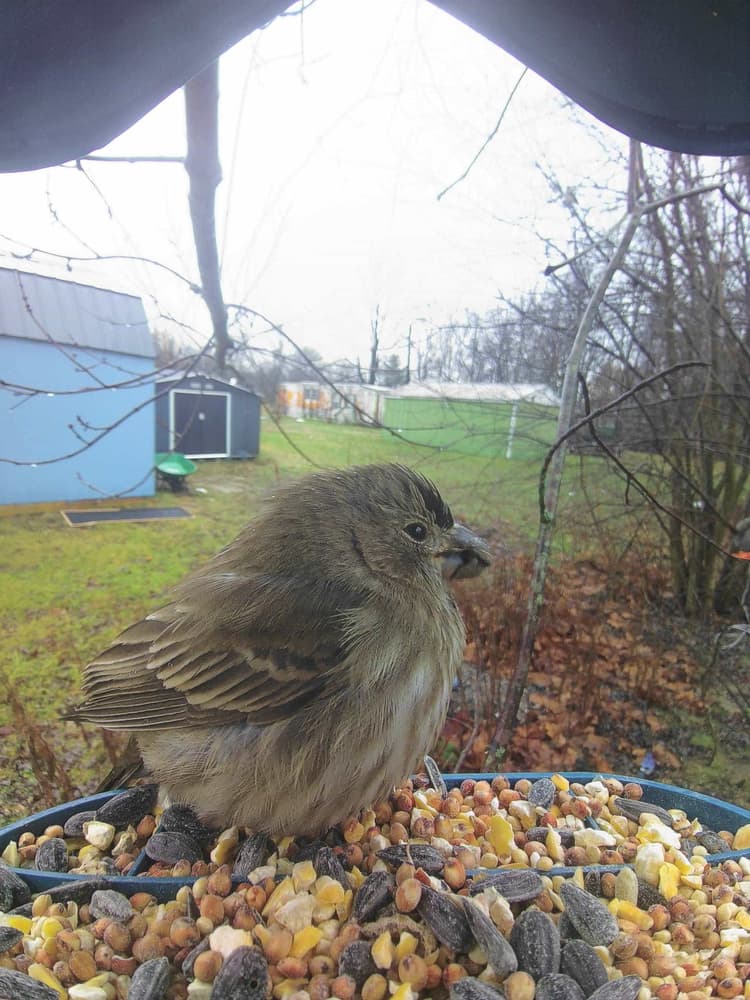
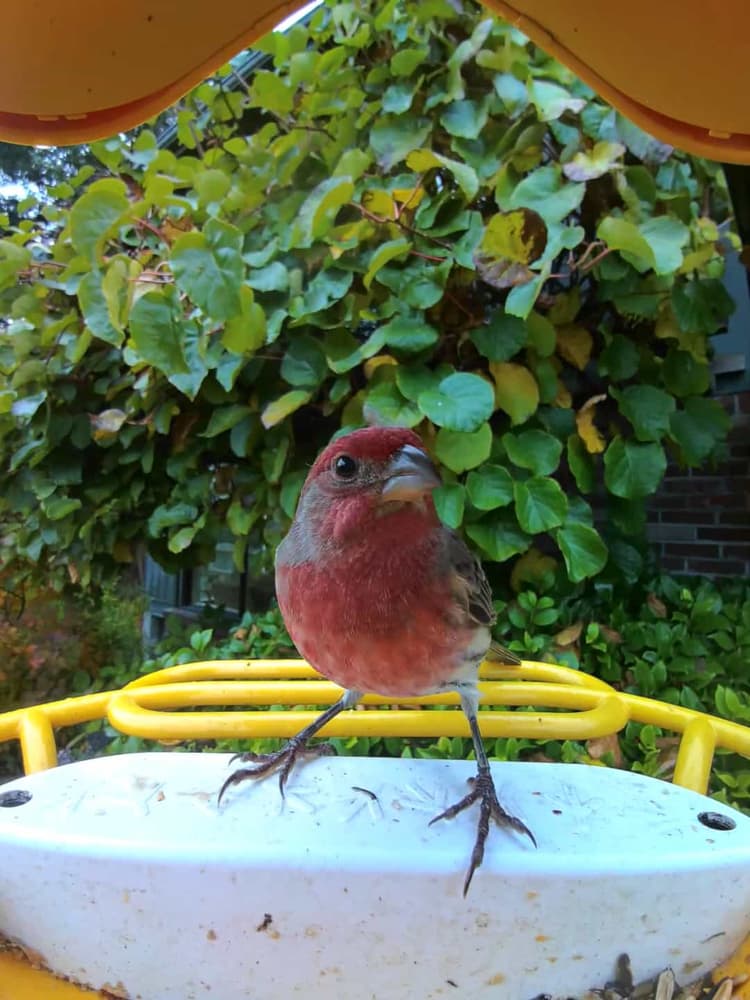
Male vs female
Female and young house finches flaunt a rather plain brown face, creating a stark contrast with the males who showcase a red eyebrow and forehead that contrasts with a brown cap. The males also have a red throat and chest, with their lower underparts being whitish. The red coloration in some males can be replaced by orange or yellow which adds to their distinctive appearance.
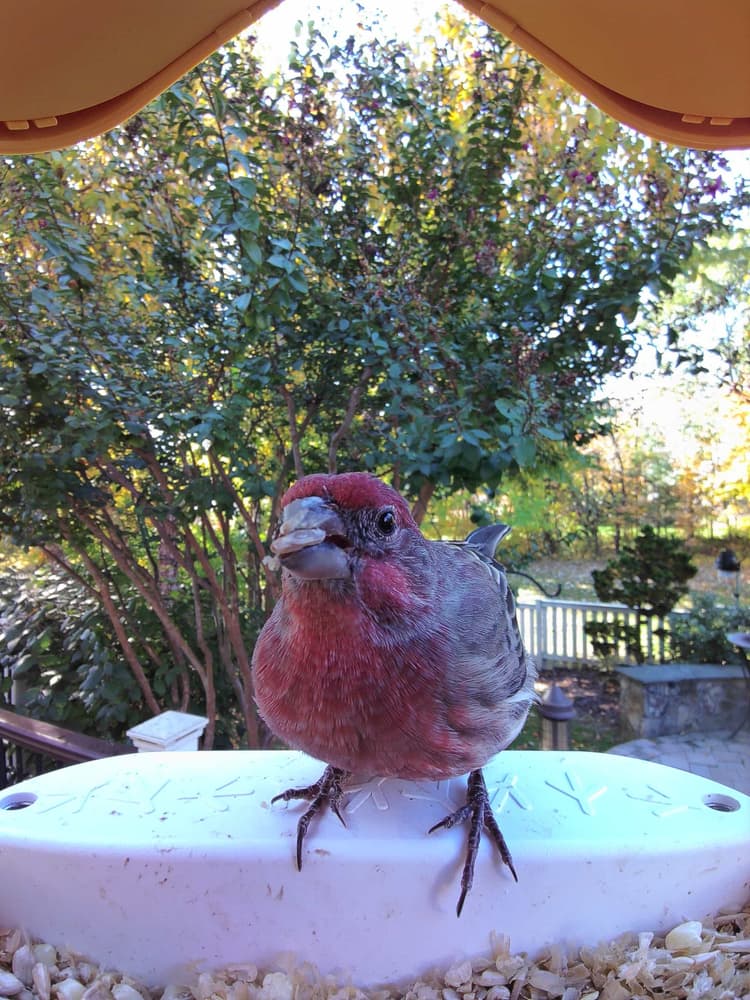
Male House Finch
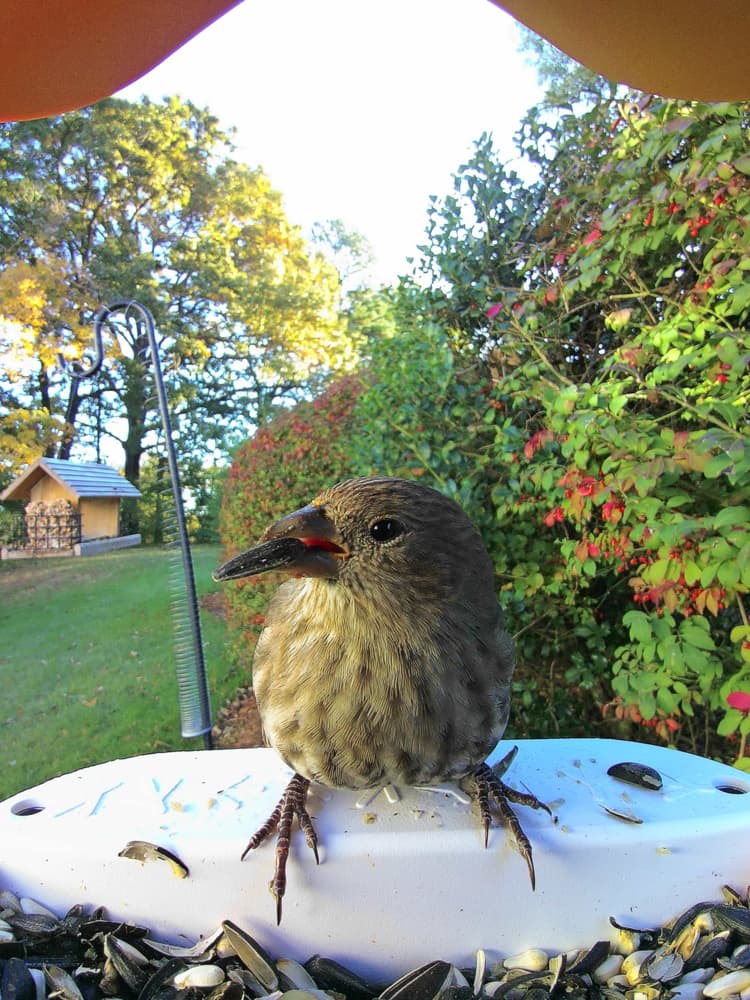
Female House Finch
Juvenile
Young house finches, similar to females, display a plain brown face. However, they display sharper stripes all over their pale underparts. This provides a distinctive mark to identify juveniles from adults. These birds also lack the stripes of house sparrows and different patterns of native sparrows.
Often mistaken for
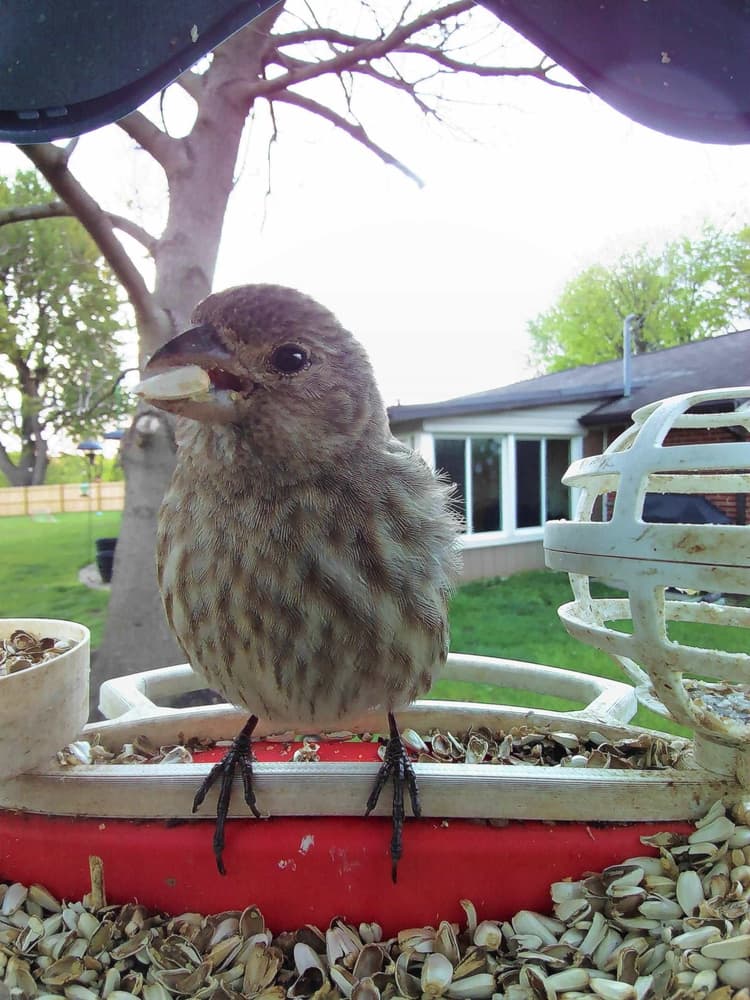
Purple Finch vs House Finch
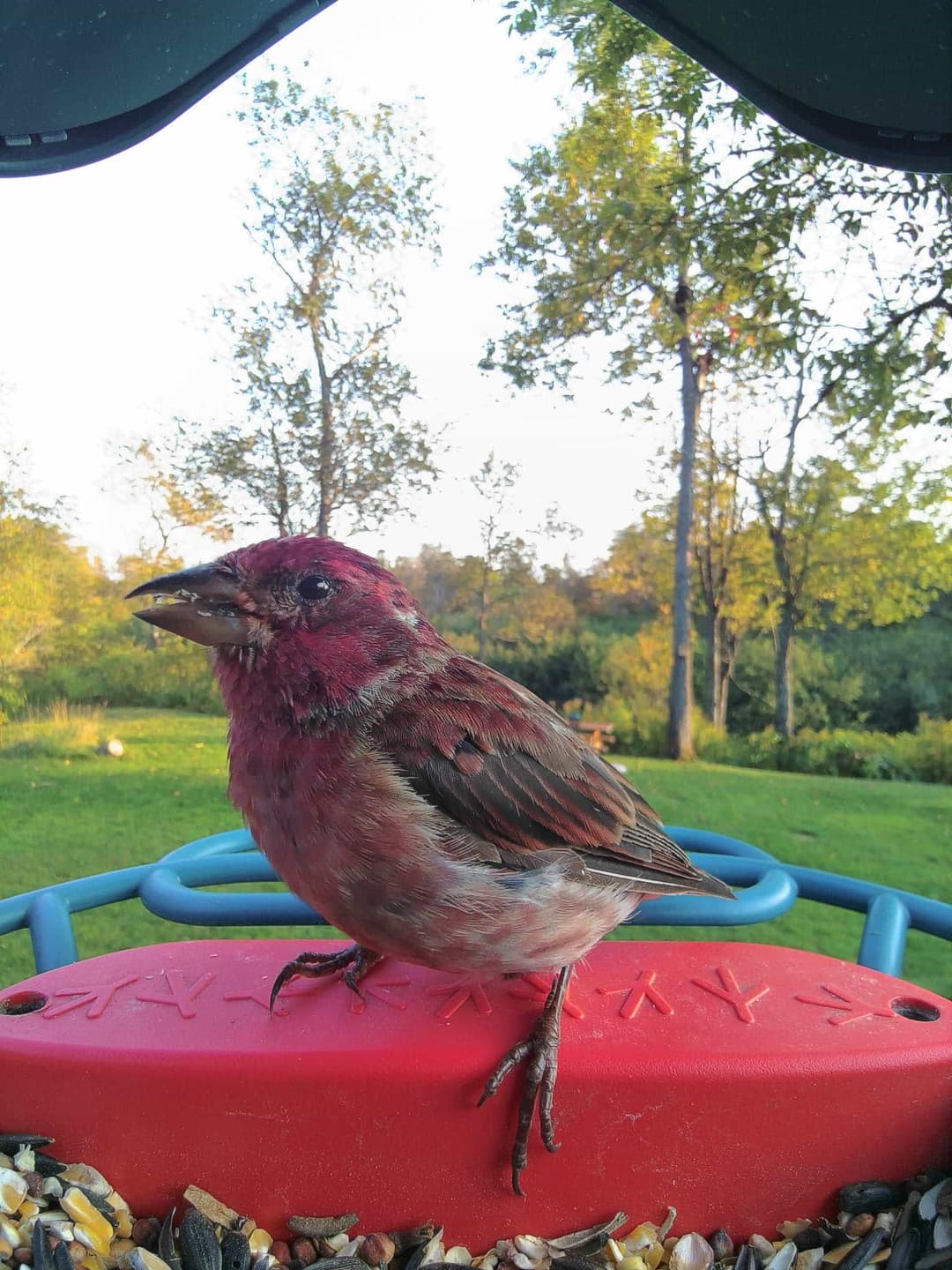
House Finch males have a brown streaked back, while Purple Finch males have a more uniformly rosy-red wash, especially around the head. Females of both species can be tricky, but Purple Finches tend to be more uniformly brown and less streaked than House Finches.
Cassin’s Finch vs House Finch
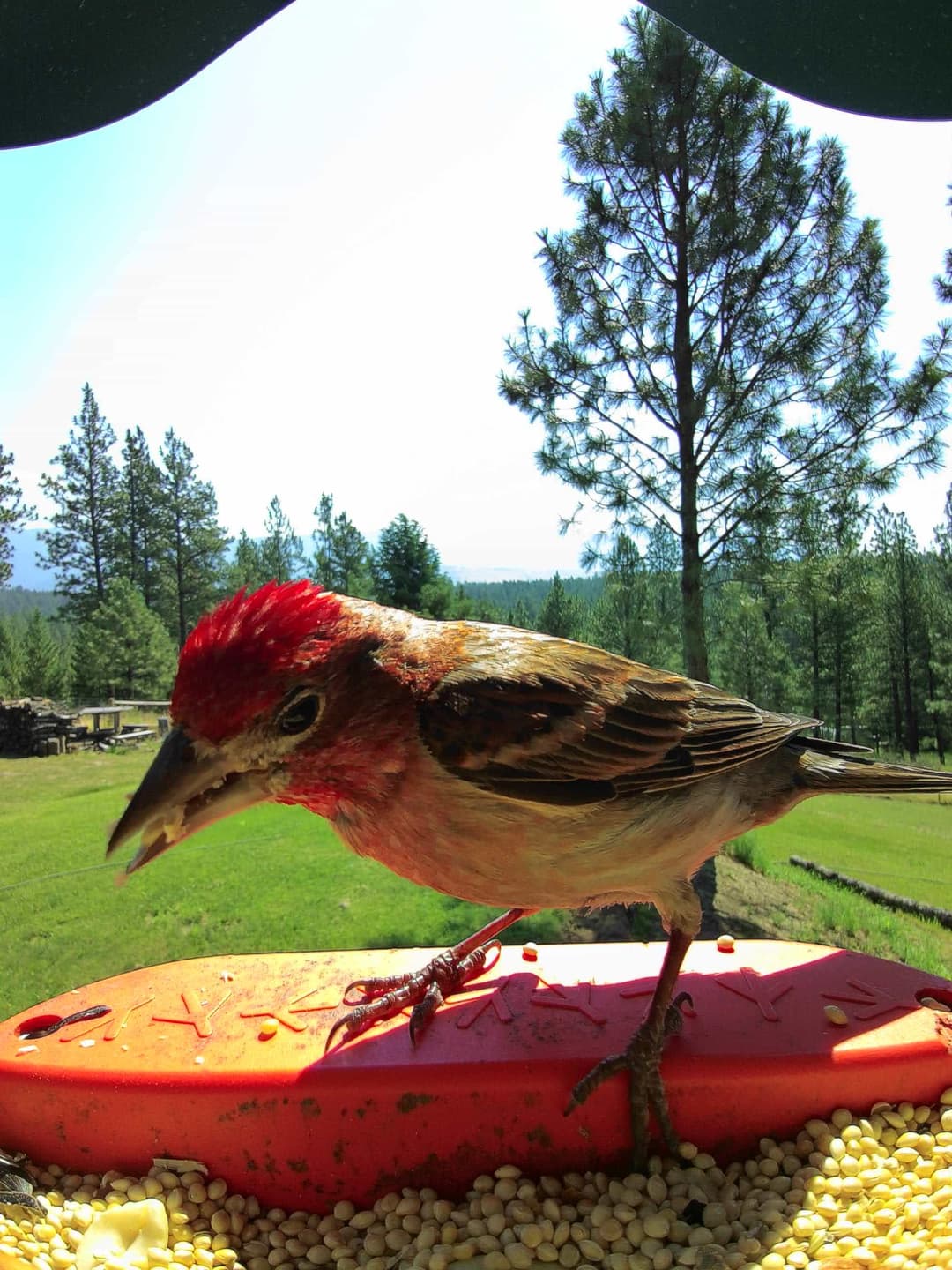
Cassin's Finch males have a brighter red crown compared to the duller red of House Finches, and their bills are more conical. Females of both species are streaked, but Cassin’s has more prominent facial markings.
Pine Siskin vs House Finch
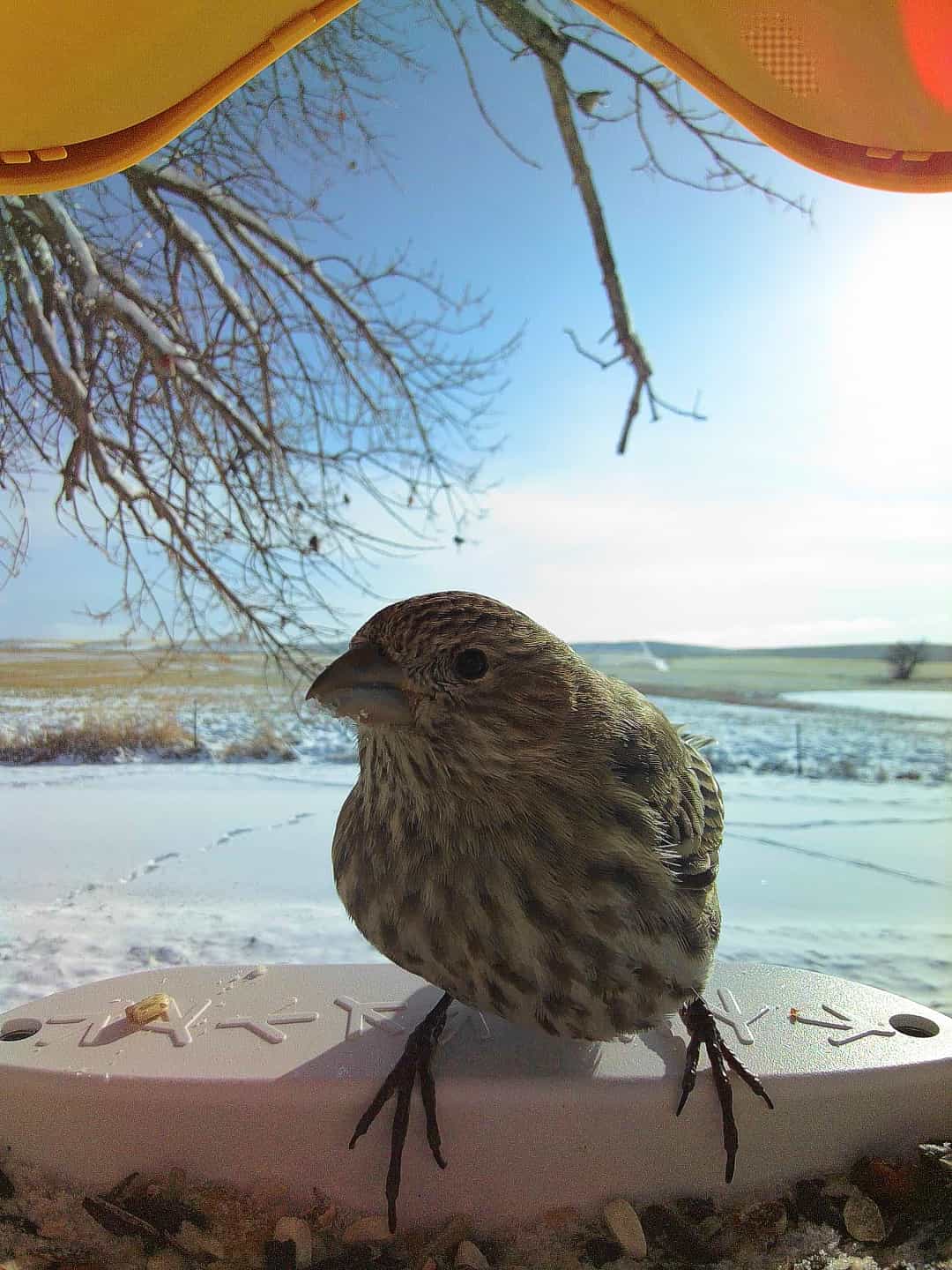
Pine Siskins are smaller and more streaked than House Finches. They lack the reddish color, and they often have yellow edges on wing and tail feathers. A slender bill also sets Pine Siskins apart.
House Sparrow vs House Finch
Male House Sparrows have gray heads and white cheeks compared to the red, streaky appearance of House Finches. Female House Sparrows are plainer with a buffy eyebrow and lack the streaked and red coloration of House Finches.
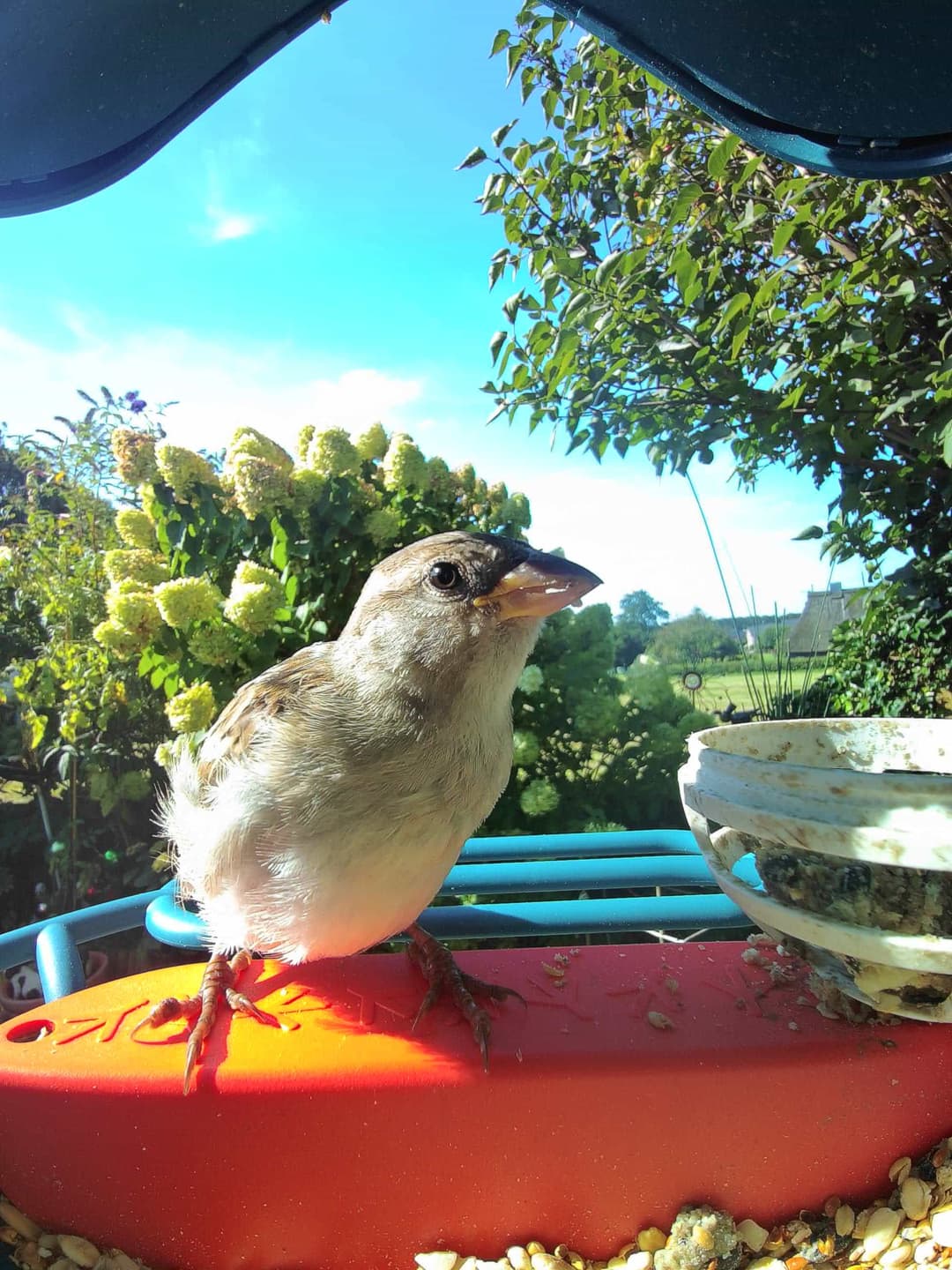
Breeding and nesting habits of the house finch
Mating behaviors
Pairs may form within flocks in winter, remaining together all year. During breeding season, males perform flight-song displays, singing while fluttering upwards and gliding down. Courtship includes males feeding females, a behavior that continues through incubation. Both males and females sing, especially during spring.
Nesting details
Nests are typically built in a variety of locations such as conifers, palms, and ivy on buildings, about 12-15 feet above ground. They may also use cavities and old nests, and are often found in gardens. Nests are open cups made of grass, weeds, twigs, and leaves, sometimes decorated with feathers or string. To attract house finches, provide native plants and avoid pesticide use.
Eggs and chick-rearing
House finch nests often contain several eggs. While the female handles most of the incubation, male finches contribute by feeding the female. Once hatched, both parents participate in feeding the chicks. Providing a safe, undisturbed environment fosters successful rearing.
What does a house finch like to eat?
Berries
Flowers
Fruits
Insects
Plants
Seeds
Natural diet
The house finch primarily consumes vegetable matter. Its diet mainly consists of weed seeds. It also feeds on buds and flower parts during the spring, and shifts to berries and small fruits in the late summer and fall. Additionally, the house finch eats a few small insects like aphids. Young house finches are fed on regurgitated seeds.
Bird feeders
House finches commonly visit bird feeders, where they often consume sunflower seeds, millet, and other commercially available seeds. They are adaptable and are frequently found at feeders, taking advantage of easy food sources.
Attracting house finches to your yard
If you'd love to have house finches visit your yard or feeder, it can be as simple as offering them their favorite meals. They forage on the ground, perch in weeds, and even look for food up in trees and shrubs. However, what they love most are seeds - and Bird Buddy seeds are always an excellent choice. These seeds are chosen by birding experts for the season, meaning they are perfectly tailored to appeal to the palate of the finches.
Ideal feeding methods and tempting treats
Apart from their preferred seeds, house finches are also known to visit hummingbird feeders for sugar-water. Fill your feeders with sunflower seeds or other Bird Buddy products to draw them in. In non-nesting times, these birds typically flock for food, so you may enjoy the colorful, cheerful sight of many finches in your yard all at once.
Fun tips for finch entertainment
To make your yard or feeder even more appealing, try adding features that mimic their natural foraging habits. Scatter seeds on the ground or amongst your garden shrubs. Use varied feeder types at different heights to accommodate their love for both low and high feeding. Soon enough, your yard may just become the favourite local stop for these delightful birds - and perhaps, they might even treat you to a charming sing-along.
Where can you find house finches?
Based on Birdbuddy sighting data. The heatmap shows where Birdbuddy users have spotted this species.
Embed this map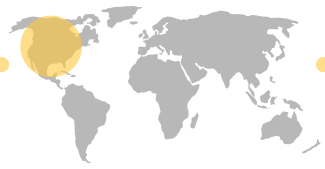
This map shows the full native range based on scientific range data.
Primary habitat
The house finch originally inhabited streamside trees and brush in dry country, woodland edges, and chaparral in semi-open areas.
Additional range
Now adapted to human environments, they are commonly found in cities, suburbs, farms, and buildings, especially where lawns, weedy areas, and trees are present. They avoid unbroken forest or grassland.
Do they migrate?
The house finch displays different migratory behaviors depending on its geographical location. In the western United States, house finches are mostly permanent residents, though some populations may move to lower elevations during the winter months. This movement is relatively localized and does not constitute long-distance migration. In contrast, the eastern populations of house finches exhibit more pronounced migratory behavior. While some individuals remain permanent residents, others migrate long distances to the south during the fall. This migration generally occurs in flocks and predominantly during daylight hours. The exact routes and key locations for eastern house finch migration are less documented in comparison to other migratory birds, but they typically follow a general southward direction, seeking milder climates. Migration timing in the eastern populations usually aligns with the onset of colder weather in the fall, as the birds move towards areas with more favorable temperatures and food availability. Although not as extensively studied as major migratory pathways, these movements allow house finches to adapt to seasonal changes in their environment across different regions of North America.
What is the role of house finches in nature and how to protect them?
Conservation status
The house finch is abundant across much of North America and is not currently considered endangered. However, in some eastern regions, it competes with the Purple Finch, potentially harming the latter. A significant threat to house finches is a bacterial infection called conjunctivitis, which can swell their eyes shut, hindering their ability to feed. While not yet a major conservation focus, monitoring and managing this infection is crucial to maintain stable populations. Overall, the house finch remains common, but local populations may face challenges due to disease and competition.
Ecological role of house finches
Its role in the ecosystem
The House Finch plays an important role in maintaining the health of ecosystems. Its feeding behavior contributes significantly towards pest control. The finch feeds on small insects such as aphids, effectively controlling their population size and potentially preventing the overpopulation of these insects from causing damage to vegetation. Furthermore, being predominantly granivorous, House Finches play a crucial role in seed dispersal. The seeds they consume are later excreted in different locations, assisting in the spread and growth of various plant species. This natural seed distribution can enhance species diversity and promote the overall health of ecosystems. Moreover, the vegetable-based diet of the House Finch contributes to pollination as they transfer pollen grains whilst feeding on flower parts and buds, enhancing the reproduction of flowering plants. Also, their nest-building habits can be beneficial for the refurbishment and repurposing of old and abandoned nests, contributing to the cycles of resources in habitats.
How to help protect house finches
Preservation tips
Habitat preservation strategies
To support house finch conservation, focus on preserving its natural habitats. This includes open spaces with scattered trees and shrubs, as well as agricultural lands and orchards. Avoid the use of pesticides which can harm the species. Plant indigenous trees that can provide nesting spots for the birds and cultivate native plants which can serve as their food source.
Community science initiatives
Engage in community science initiatives for the conservation of house finches. Participate in bird counting initiatives to track their population. Educate the community about the importance of these birds and their role in the ecosystem. Build birdhouses in your yard or at local schools to provide safe spaces for them to flourish. Report any sightings of sick or dead birds to local wildlife authorities.