Carrion Crow or Torresian Crow?
Here's how to tell the difference
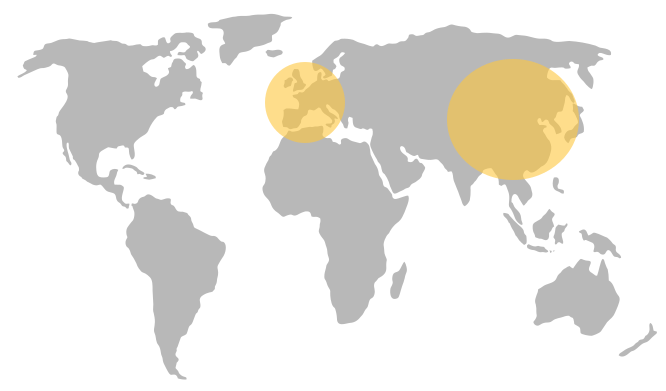


Carrion Crow

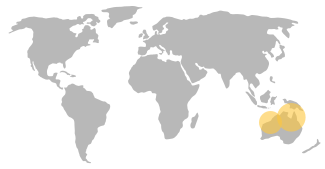
Torresian Crow
Carrion Crow
Corvus corone
General appearance
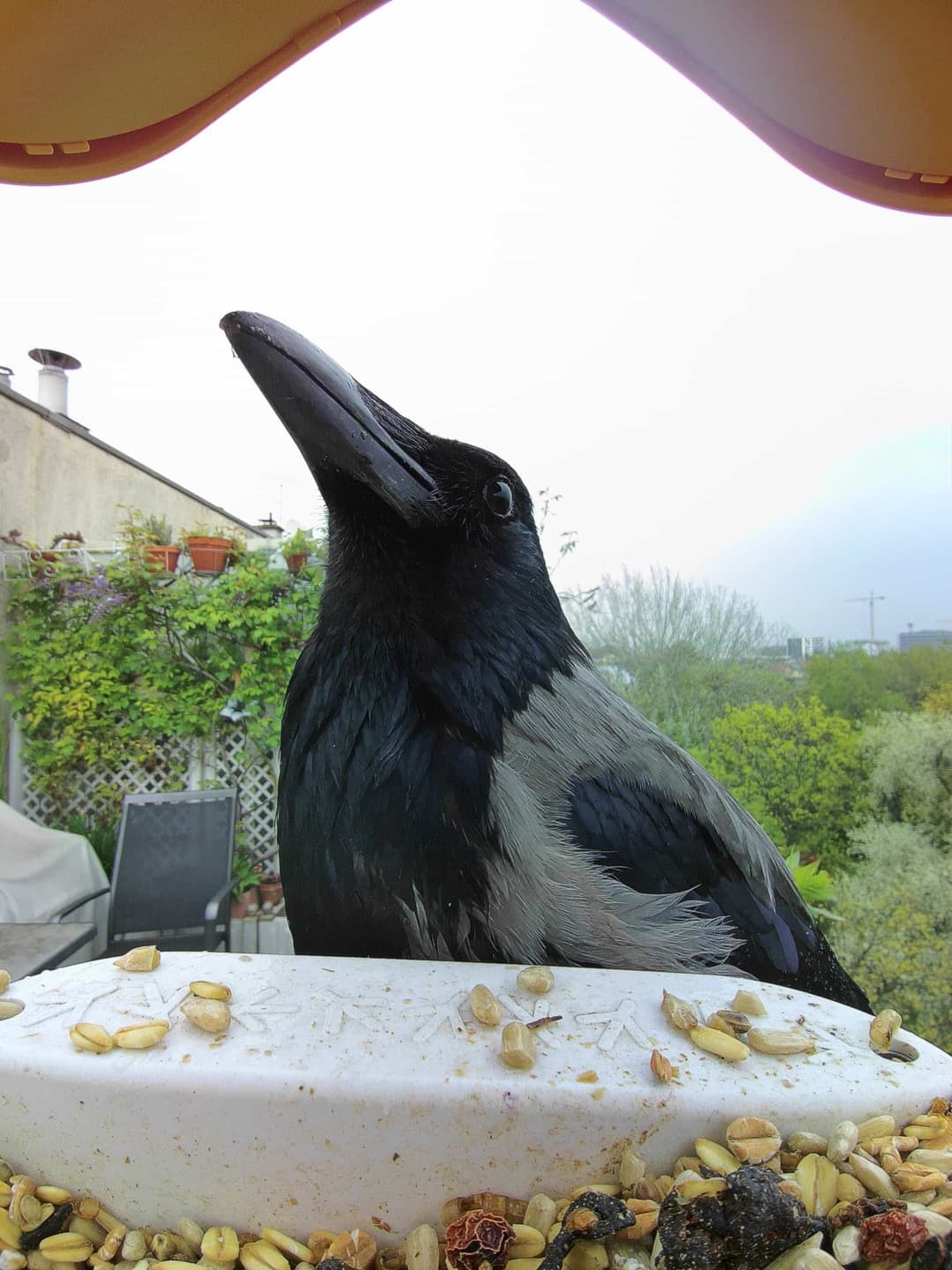
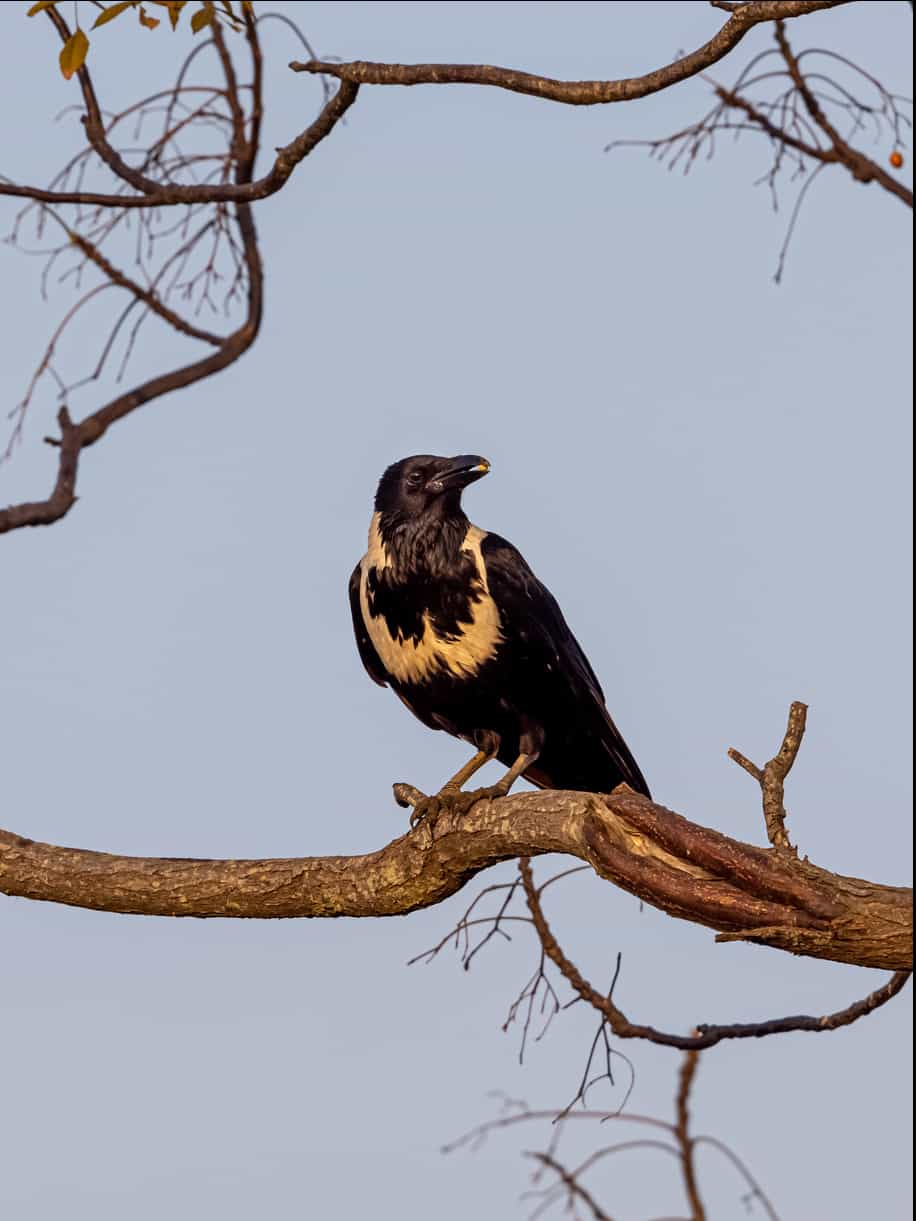
The Carrion Crow is roughly 46-51 cm long with a wingspan of 93–104 cm. It has a pure black plumage, slightly glossy, with a strong, black bill, and black legs. Its eyes are dark brown or grey. It flies with a slow heavy flapping, and has a distinct 'cash' sound.
Male vs female
Males are slightly larger than females, but otherwise, the sexes are very similar in appearance. Generally, females may have a slightly lighter build, but it is challenging to distinguish between the two based solely on physical appearance.
Juvenile
Juvenile Carrion Crows are remarkably similar to adults, still black but slightly less glossy. Their eyes initially are blue, gradually changing to brown in the first year. They lack the ruffled plumage around the neck seen in adults.
Size
18.9 - 20.9 in/14.0 - 21.2 oz
There's more to learn about Carrion Crow
View full detailsTorresian Crow
Corvus orru
Also known as: Australian Crow, Papuan Crow
General appearance
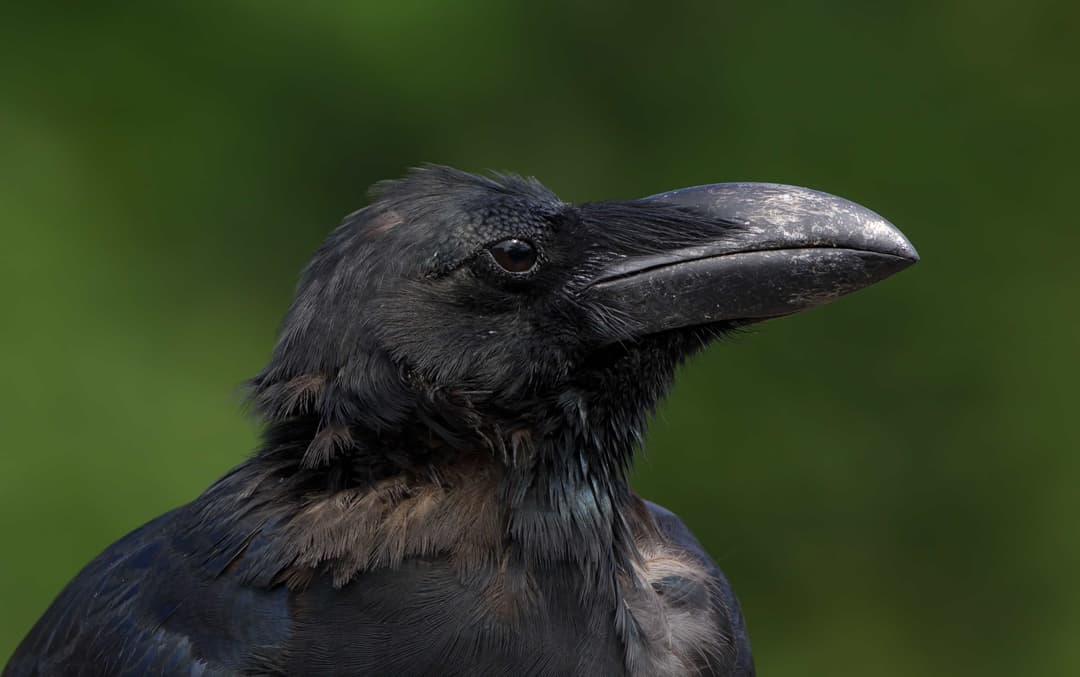
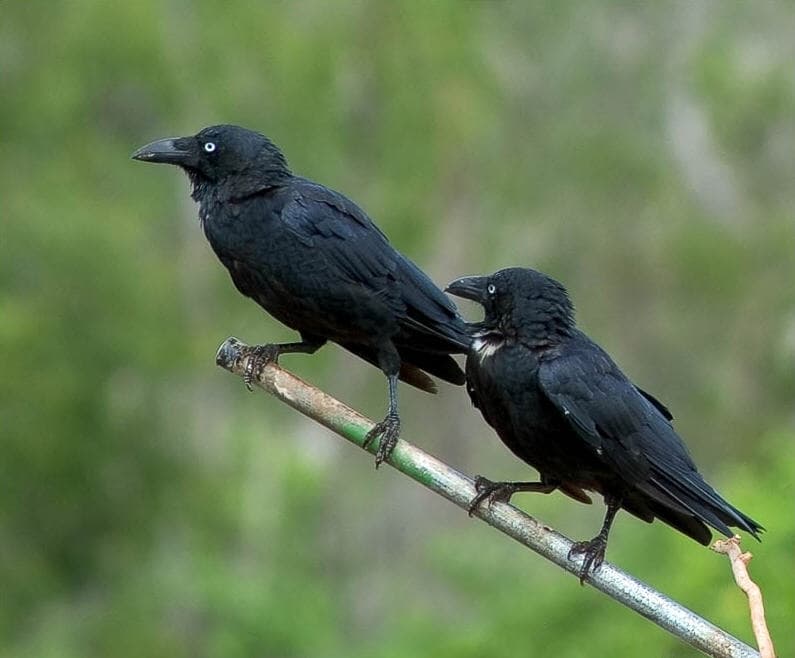
The Torresian Crow (Corvus orru) is a large black bird with a slightly curved bill and black feathers that may display a bluish-purple sheen in direct sunlight. Its eyes are stark white or grey, surrounded by a ring of bare skin, a prominent feature. They are approximately 50-55cm in length, with a wingspan of around 1 metre.
Male vs female
There is little sexual dimorphism within the Torresian Crow species. However, males are typically slightly larger than females, but this difference is subtle and can be difficult to discern in the wild.
Juvenile
Juvenile Torresian Crows resemble adults but their eyes are blue-grey at the initial stage. The plumage is slightly duller and lacks the adult's sheen. The bill of a juvenile crow is typically shorter and the bare skin around their eyes develops as they mature.
Size
18.9 - 20.9 in/15.2 - 24.7 oz
There's more to learn about Torresian Crow
View full detailsHow to tell the Carrion Crow from the Torresian Crow
Visual differences
The Carrion Crow (18-20 inches, wingspan 37-41 inches) is slightly smaller than the Torresian Crow (20-22 inches, wingspan ~39 inches). Both have glossy black plumage, but the Torresian Crow may have a bluish-purple sheen. Their beaks differ; the Carrion Crow's bill is straight and black, whereas the Torresian Crow's has a slight curve. Notably, the Torresian Crow features stark white or grey eyes with a bare skin ring, while the Carrion Crow has dark brown/grey eyes. Juveniles of both species have duller plumage and different eye colors in early stages.
Key differences and behavior
The Carrion Crow and Torresian Crow display distinct behavioral and ecological adaptations. Carrion Crows exhibit high intelligence, using tools and adapting to various European and Asian climates, thriving in urban environments. They are omnivorous, feeding opportunistically on carrion, small animals, and plant matter, and frequent bird feeders. Torresian Crows, also intelligent, excel in teamwork to obtain food and prefer the tropics and temperate zones of Northern and Eastern Australia. They are less common at bird feeders but forage similarly, including scavenging human food debris. Both species engage in complex courtship with lifelong pairing, but while Carrion Crows nest in a variety of environments, Torresian Crows consistently return to familiar territories. Carrion Crows build with twigs and softer materials in urban gardens, while Torresian Crows use branches and grasses, adapting to taller urban vegetation. Both species demonstrate high adaptability but differ distinctly in regional habitats and behavioral patterns.
Still not sure? Here are more lookalikes!




Carrion Crow vs [Select a bird]

[Select a bird]
Pick a bird to compare
Torresian Crow vs [Select a bird]
[Select a bird]
Pick a bird to compare