Torresian Crow or House Crow?
Here's how to tell the difference
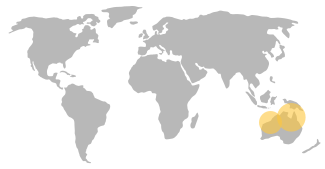

Torresian Crow

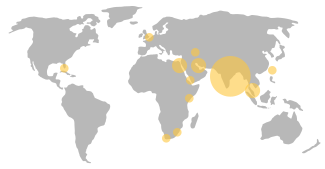
House Crow
Torresian Crow
Corvus orru
Also known as: Australian Crow, Papuan Crow
General appearance
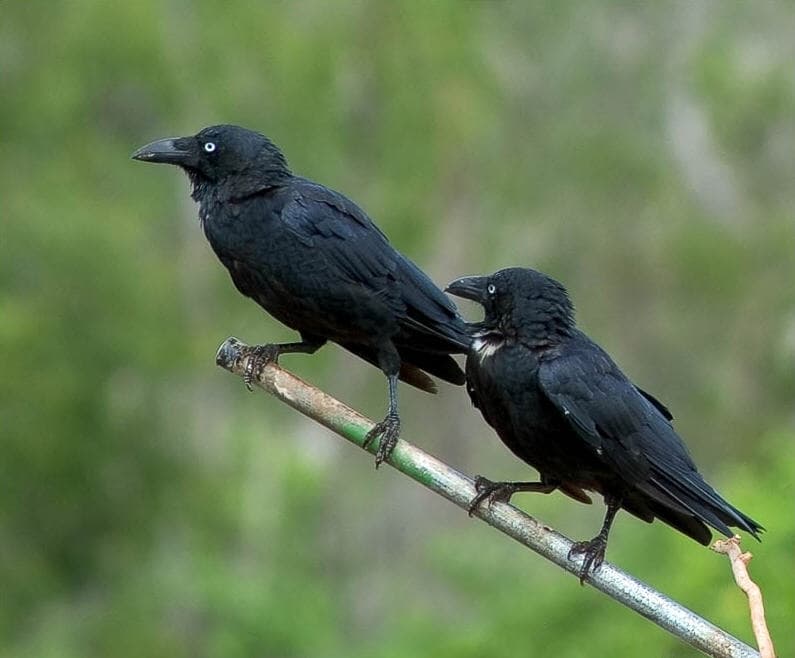
The Torresian Crow (Corvus orru) is a large black bird with a slightly curved bill and black feathers that may display a bluish-purple sheen in direct sunlight. Its eyes are stark white or grey, surrounded by a ring of bare skin, a prominent feature. They are approximately 50-55cm in length, with a wingspan of around 1 metre.
Male vs female
There is little sexual dimorphism within the Torresian Crow species. However, males are typically slightly larger than females, but this difference is subtle and can be difficult to discern in the wild.
Juvenile
Juvenile Torresian Crows resemble adults but their eyes are blue-grey at the initial stage. The plumage is slightly duller and lacks the adult's sheen. The bill of a juvenile crow is typically shorter and the bare skin around their eyes develops as they mature.
Size
18.9 - 20.9 in/15.2 - 24.7 oz
There's more to learn about Torresian Crow
View full detailsHouse Crow
Corvus splendens
Also known as: Indian Crow, Graynecked Crow, Greynecked Crow, Ceylon Crow, Colombo Crow
General appearance
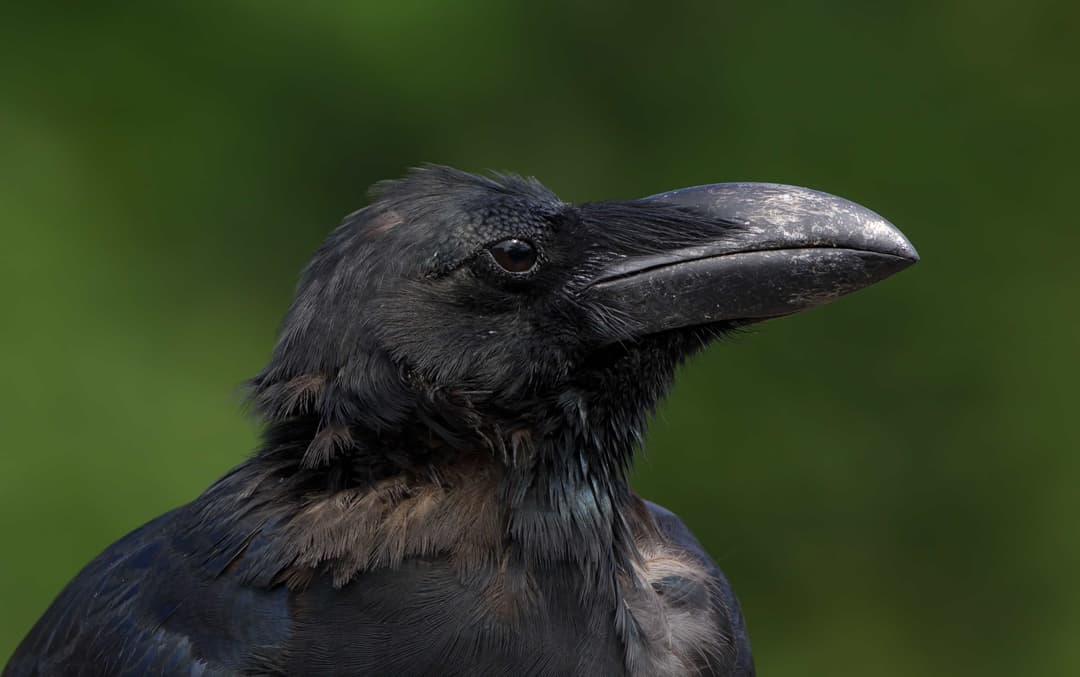
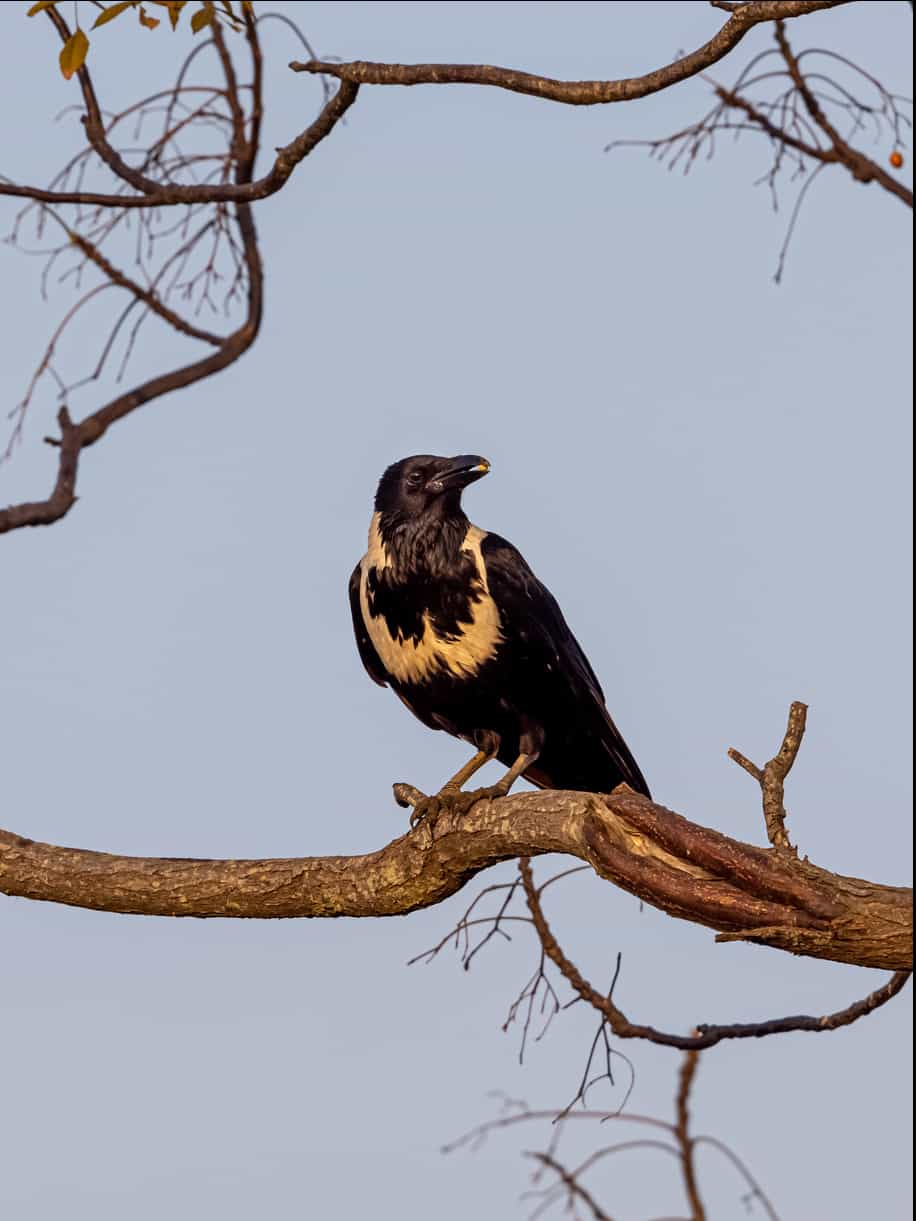
The house crow, also known as the Indian, greynecked, or Ceylon crow, has a glossy black color with a greyish neck and breast. It features a strong, stout bill and a tail longer than other crows. Dominatingly omnivorous, it has a versatile diet. It stands out with its distinctive cawing sound.
Male vs female
Males and females of the house crow species look identical with no significant difference in coloration or size, a trait known as sexual monomorphism. Both sexes have similar black and grey coloration. Still, males may be slightly larger and have a slightly thicker bill, which is not easily noticeable.
Juvenile
Juvenile house crows look much like the adults but have slightly duller coloration. Their feathers lack the glossy sheen seen in adults and they have a lighter-grey neck and breast. Juveniles also have brownish eyes, which darken with age, and their bills and legs are not as strongly black as in adults.
Size
15.7 - 16.9 in/8.6 - 13.1 oz
There's more to learn about House Crow
View full detailsHow to tell the Torresian Crow from the House Crow
Visual differences
The Torresian Crow is larger, measuring 19-21 inches long with a wingspan of about 39 inches, and has a slightly curved bill with stark white or grey eyes. Its black plumage may exhibit a bluish-purple sheen. In contrast, the House Crow is smaller, at 16-17 inches in length, and features a glossy black body with a grey neck and breast, a stout bill, and a longer tail. House Crows lack sheen, having brownish eyes in juveniles that darken with age. Both species have minimal sexual dimorphism.
Key differences and behavior
Torresian Crows and House Crows exhibit distinct behavioral and ecological traits. Torresian Crows, found in diverse habitats in Northern and Eastern Australia, are territorial and often return to the same breeding grounds. They engage in teamwork to forage and can adapt to urban environments. Their diet is varied, including insects, small mammals, and fruits. In contrast, House Crows thrive in highly urbanized areas across their native and introduced ranges. They are bold, social, and form large communal roosts. Preferring human-altered environments, they scavenge a wide array of urban food waste. While Torresian Crows form long-term pair bonds with shared parenting, House Crows engage in complex courtship with males offering food. Both species nest in trees, but House Crows also utilize urban structures. Overall, Torresian Crows are more solitary and versatile in habitat, while House Crows are highly social and urban-centric.
Still not sure? Here are more lookalikes!



Torresian Crow vs [Select a bird]

[Select a bird]
Pick a bird to compare
House Crow vs [Select a bird]

[Select a bird]
Pick a bird to compare