
Common Raven
Common Raven
Also known as: Western Raven, Northern Raven
Corvus corax


Quick Identification guide
Quick Identification guide
- •
Recognizable by its glossy black plumage that may have a slight iridescent sheen in good lighting
- •
Features a thick, stout beak that is slightly curved and well-suited for a varied diet
- •
Exhibits a wedge-shaped tail in flight, distinguishing it from similar species
What does a common raven sound like?
The common raven vocalizes with deep, varied, and guttural croaking sounds. Its calls can mimic a hollow 'wonk-wonk' noise and they tend to follow a simple, flat pattern. Additionally, its calls can sometimes be odd and raucous. Overall, the raven's signature sound can be described as a croak or quack, setting it apart in avian communication.


Description
They may be called common but there is nothing common about them! The largest of the perching birds is often misidentified as its close relative the crow; but keep an eye on its hackles! Those are the elaborate ruffles on their necks. They are acrobatic fliers and incredible mimics. Unsurprisingly, they are super-smart! They've been known to connect cause and effect and work in pairs to steal food from other birds.
The common raven can weigh between 689to1625grams and be from58to69centimeters tall.
The common raven typically lives up to 10-15 years in the wild, though captive ravens have been known to live up to 40 years. This is considerably longer than related species; for instance, the American crow typically lives 7-8 years. However, due to high infant mortality rates, the lifespan can appear shorter when population averages are considered.
Did you know?
Most popular questions about common raven
How to recognise a common raven?
General appearance
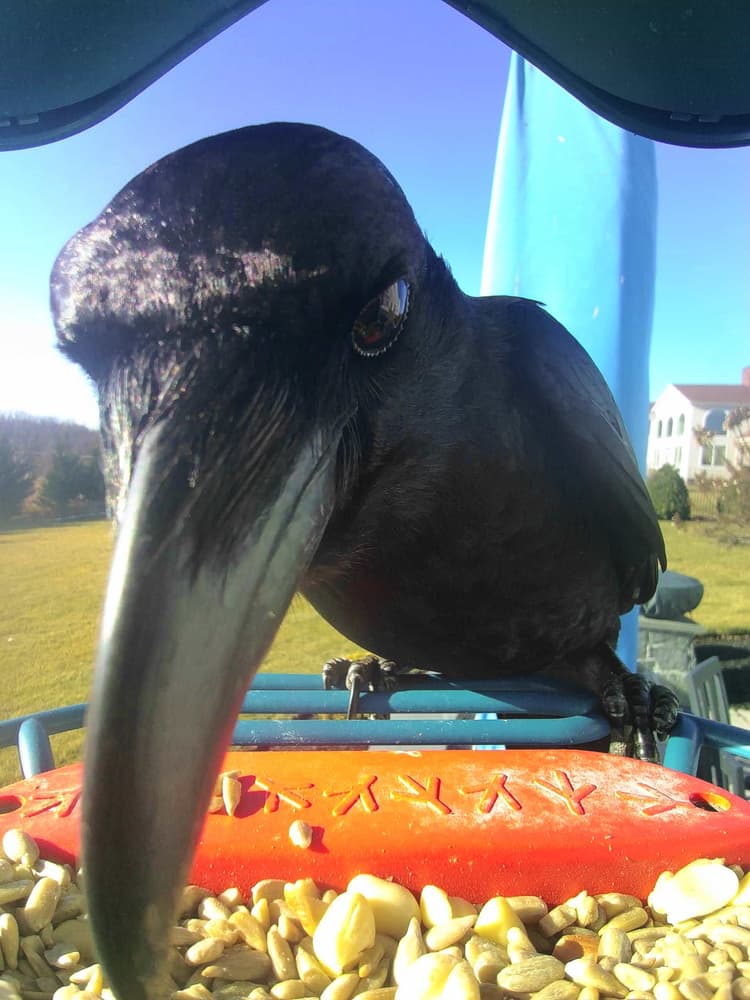
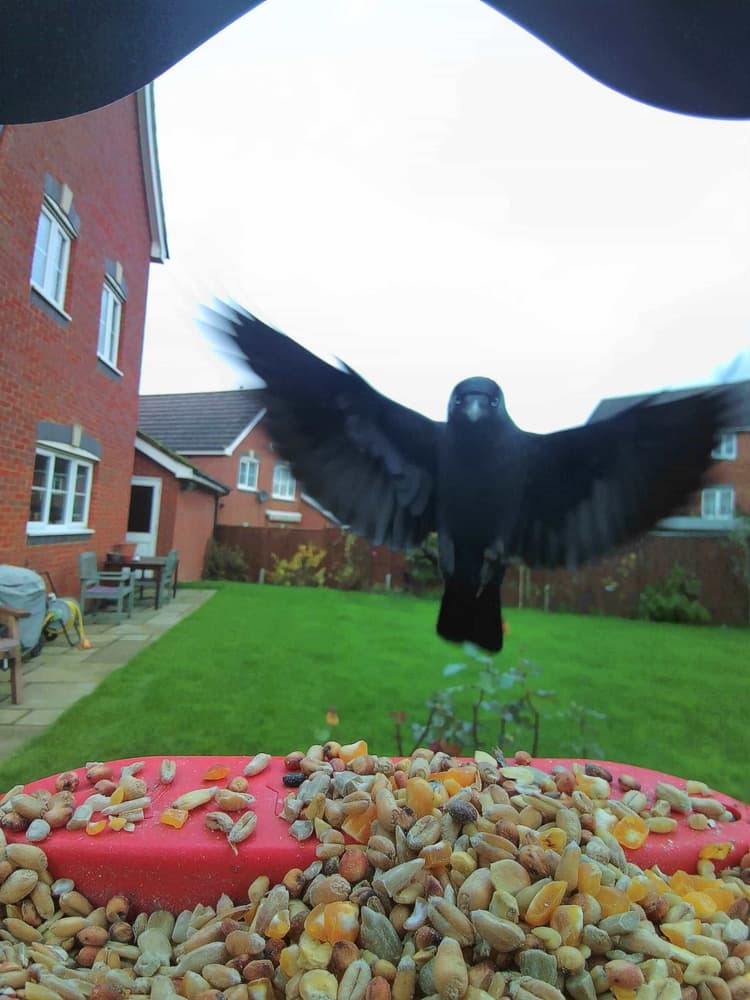
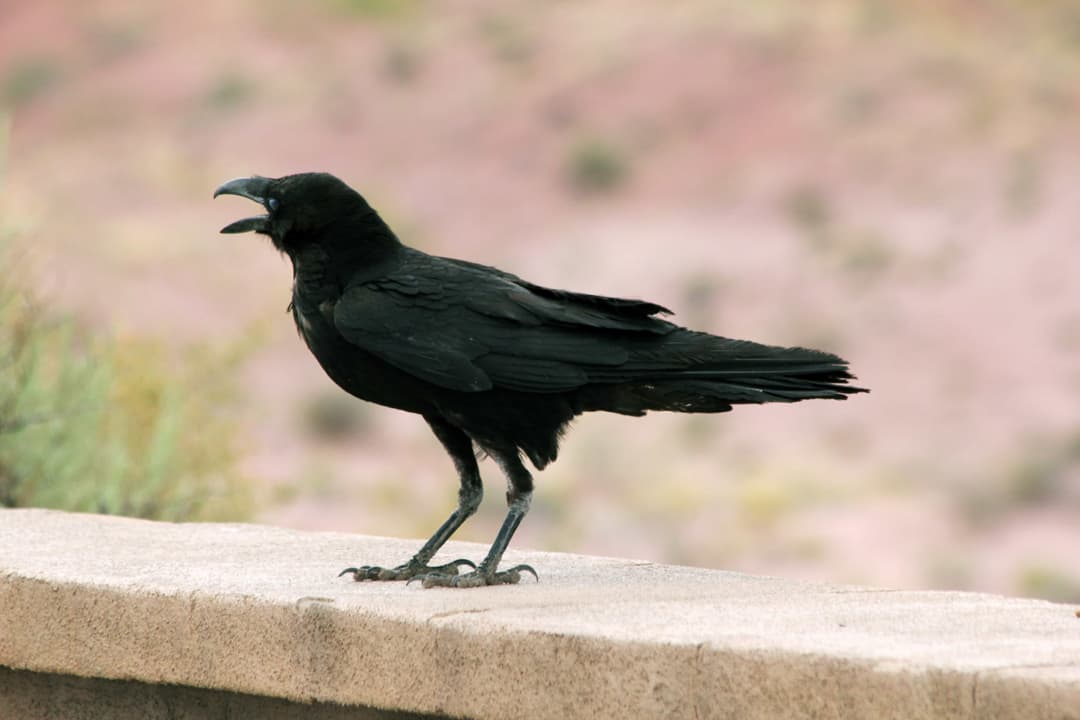
The common raven is a large bird, about the size of a heron or a mallard. Its size ranges between 53-69 cm. It has a black coloration throughout its body. Its wings are fingered, long and narrow. The tail is distinctive, having a wedge shape. The raven's throat feathers are shaggy and it has a very thick bill.
Male vs female
In terms of coloration, size, shape, and overall appearance, male and female common ravens are similar. They exhibit sexual monomorphism, which makes it difficult to distinguish between the sexes.
Juvenile
Juvenile common ravens are similar to adults. However, juveniles might have a slightly more slender appearance and lack the shagginess of the adult neck feathers. As they mature, they will gain this more robust appearance and the distinctive shaggy throat.
Often mistaken for
American Crow vs Common Raven
Common Ravens are larger with thicker bills and shaggier throat feathers than American Crows. Ravens usually have deeper, croak-like vocalizations compared to the cawing call of crows. They also exhibit a wedge-shaped tail, while crows have a more fan-shaped tail. In flight, ravens often soar longer than crows.

Chihuahuan Raven vs Common Raven
Common Ravens are generally larger and have longer, thicker bills compared to Chihuahuan Ravens. The throat hackles are more pronounced in Common Ravens and they have a more robust flying style. Listen for deeper vocalizations; Common Ravens produce lower, croakier sounds than the higher-pitched calls of Chihuahuan Ravens.
Breeding and nesting habits of the common raven
Mating behaviors
In courtship display, the male soars, swoops, and tumbles in mid-air. Pairs may soar high together, or when perched, touch bills and preen each other's feathers.
Nesting details
Common ravens usually nest on ledges of rock cliffs or high in tall trees, especially conifers. They may use the same site yearly, adding new material to old nests. Both sexes contribute to building the nest, which is a bulky basket of sticks and twigs, with a deep depression lined with grass, bark strips, moss, and animal hair.
Eggs and chick-rearing
Ravens' nests contain a clutch of eggs. Both parents participate in rearing the chicks, ensuring their sustenance and protection. Ravens' repeated use of nesting sites suggests effective chick rearing, providing a stable environment for young birds.
What does a common raven like to eat?
Berries
Bird eggs
Birds
Carrion
Flowers
Fruits
Insects
Scraps
Small animals
Natural diet
Common ravens are omnivorous and have a diverse and adaptable diet primarily consisting of animal matter. They feed on a variety of insects such as beetles and caterpillars, small rodents, lizards, frogs, and the eggs and young of other birds. Ravens also consume carrion and can often be seen scavenging. Additionally, they may eat some plant matter and can adapt to a wide range of available food sources.
Bird feeders
While not typically dependent on bird feeders, common ravens may be attracted to them if they contain food items that resemble their natural diet. They may be drawn to seeds, nuts, suet, and occasionally, other high-calorie offerings that are available at bird feeders, especially in areas where food is scarce.
Favorite snacks for ravens
Ravens love a variety of foods, but their favorites tend to include grains, fruits, nuts, meat, and insects. Bird Buddy seeds are particularly loved by them and have shown the best results, as they are expertly chosen for the season. Not only are these foods healthy and tasty for the birds, but they're also likely to be found in a natural raven’s diet. Always ensure that any food you provide for your feathery friends is fresh and healthy.
Feeder types for ravens
Ravens are large birds, so they require sturdy and robust feeders. Platform feeders, hopper feeders, or large tray feeders are generally best. Often, they prefer feeders that are placed in quiet and safe locations, preferably in shady areas to mimic their natural feeding habitats. Be sure to clean your feeders regularly to prevent the spread of diseases.
Fun tricks and tips
While ravens are known for their intelligence, encouraging them to visit can be a fun challenge. Use a varied diet to keep them interested and playing soft bird songs can stimulate their curiosity, enticing them to visit. You might even attempt to mimic raven calls to pique their interest and start a 'sing-along'. They are also attracted to shiny objects, so hanging some reflective garden ornaments might just draw them in. Be patient, though! Building trust with these crafty critters may take time, but it's well worth the effort.
Where can you find common ravens?
Primary habitat
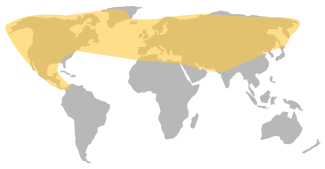
The common raven predominantly resides in boreal and mountain forests, tundra, and on coastal cliffs. It often chooses heavily forested regions as its habitat.
Additional range
In addition to its primary habitats, the common raven can survive in extreme climates, ranging from the tundra above the Arctic Circle to the hot desert areas of the southwest. Surprisingly, it may also inhabit prairies, provided there are suitable nest sites, like cliffs, nearby.
Do they migrate?
The common raven is mostly a permanent resident, meaning it typically stays in one place throughout the year. However, there is some movement in fall and winter when a few individuals wander outside their breeding range. This limited migration involves moving southward from their northernmost habitats. These seasonal wanderers do not follow a specific migratory route like some other bird species, as the common raven is known for its adaptability and widespread distribution. During these migrations, the ravens may appear in regions slightly south of their primary breeding areas, but they generally do not travel extensively across long distances. Instead, the movements are more erratic and localized. Key locations are mainly areas just south of their breeding areas, which include parts of the northern United States and southern Canada, where they might take advantage of food resources and milder climates. Overall, the common raven's migration habits are minimal and not characterized by the long-distance, coordinated migrations seen in other bird species. Their adaptability to various environments allows them to remain in their home ranges for the majority of the year.
What is the role of common ravens in nature and how to protect them?
Conservation status
The common raven is currently a common species, having recovered significantly from its decline in the east and midwest before 1900. In recent decades, their range has expanded, particularly in the northeast and south into previously occupied areas. This resurgence indicates a stable population, suggesting it is neither vulnerable nor endangered. Key conservation successes include habitat protection and adaptation to diverse environments, though ongoing threats such as habitat destruction, poisoning, and human-wildlife conflicts persist. Continued efforts to maintain suitable habitats and mitigate human impacts are essential for the species' ongoing stability.
Ecological role of common ravens
Its role in the ecosystem
The common raven plays a significant role in the ecosystem. As an omnivore, they are often considered to be 'nature's clean-up crew'. They contribute to pest control by feeding on a variety of insects, rodents, and lizards, thereby controlling their populations. Ravens are also opportunistic feeders, routinely scavenging and helping to clean up carrion and garbage. Furthermore, with their behavior of feasting on eggs and young birds, they indirectly manage the population of other bird species. The act of foraging in pairs indicates a strong socially co-operative behavior, benefiting local biodiversity. The raven’s diet contributes significantly to seed dispersal, which plays a key role in the propagation of plant species. Finally, their practice of using the same nest site year after year adds to structural stability in their habitats. Thus, Common ravens are integral components of their ecological communities. Their population and behavior can be indicators of ecological health, as they are adapted to a wide range of habitats.
How to help protect common ravens
Preservation tips
Habitat preservation strategies
Avoiding unnecessary land development and promoting the growth of native flora can contribute to the conservation of the common raven. Additionally, strict laws should be implemented to prevent the destruction of their natural habitats, like forests, and to support biodiversity. As ravens are scavengers, proper waste management, particularly in urban areas, can help maintain the health of the species.
Community science initiatives
Citizens can aid in conserving ravens through participating in community science projects. These might consist of regular local bird-counts, which can help in monitoring raven populations, and reporting any sightings of injured or distressed ravens to wildlife organizations. Also, educational programs about the ecological roles of ravens can enhance public understanding and appreciation of this species, thereby encouraging community-wide conservation efforts.