
American Crow
American Crow
Corvus brachyrhynchos


Quick Identification guide
Quick Identification guide
- •
Entirely black plumage gives it a sleek, uniform appearance that can appear glossy in sunlight
- •
Features a broad, sturdy bill that is straight and black, complementing its overall shape
- •
Displays a moderate to large size body with rounded wings and a slightly rounded tail
What does an American crow sound like?
The American crow is known for its familiar "caw-caw" or "caa-caa" vocalizations. Its call patterns are simple, flat, and falling in nature. Additionally, the crow produces a rattle-like sound that is raucous and immediately recognizable. These vocalizations form the fundamental linguistic component of the American crow's communication.


Description
There's no family like a crow family! A crow family is composed of around 15 crows and up to five different generations of young. Young crows help out with family duties before they start breeding between the ages of two and four. They are also very smart! They know how to make and use tools and know to follow other animals to find and steal their food.
The American crow can weigh between 316to575grams and be from43to53centimeters tall.
An American crow typically lives up to 7-8 years in the wild, with some reaching 14-20 and in rare cases, up to 30 years under optimal conditions. This lifespan compares favorably to similar species, including the common raven living for about 10-15 years. However, many crows do not live past their first year due to disease or predation. In captivity, they may live past 20 years.
Did you know?
Most popular questions about American crow
How to recognise an American crow?
General appearance
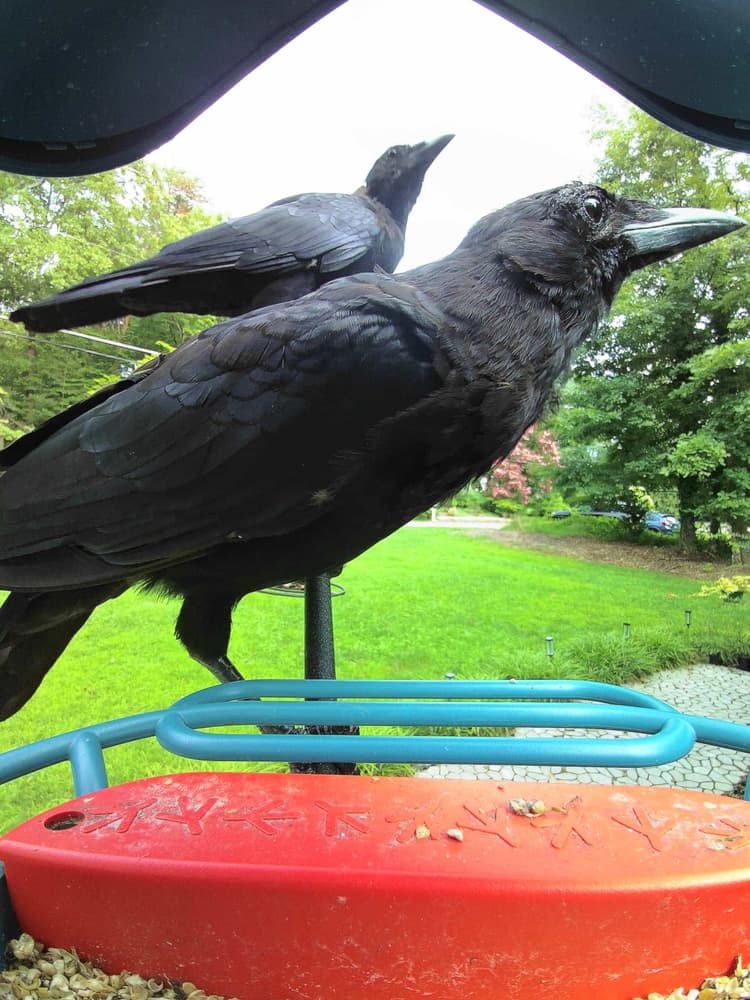
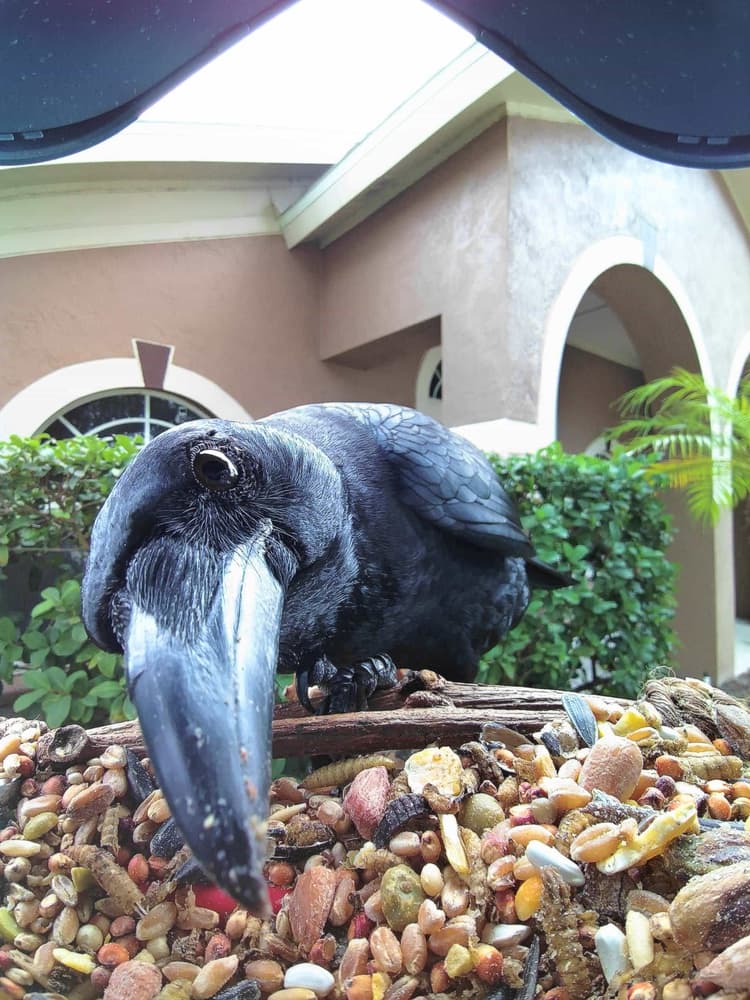
The American Crow is a bird measuring 17-21 inches, or 43-53 centimeters, in length. It is easily identifiable by its complete black pigmentation and robust beak. Characteristic tail is rather short, ending in a shape close to a square when not in flight. In flight, the wings take a broad, fingered yet rounded shape. This species is noticeably larger compared to other members of the blackbird family.
Male vs female
Males and females are monomorphic, meaning they share similar appearances. Both sexes show the same strong all-black coloration from beak to feet and also share the same size, making it difficult to differentiate between them based on visual characteristics alone. They are both larger than other members of the blackbird family.
Juvenile
Juvenile crows bear a resemblance to the adults but can be identified by their slightly different voices and shapes. However, as they mature, these differences become less recognizable, and they assume full characteristics of the adults.
Often mistaken for
Fish Crow vs American Crow
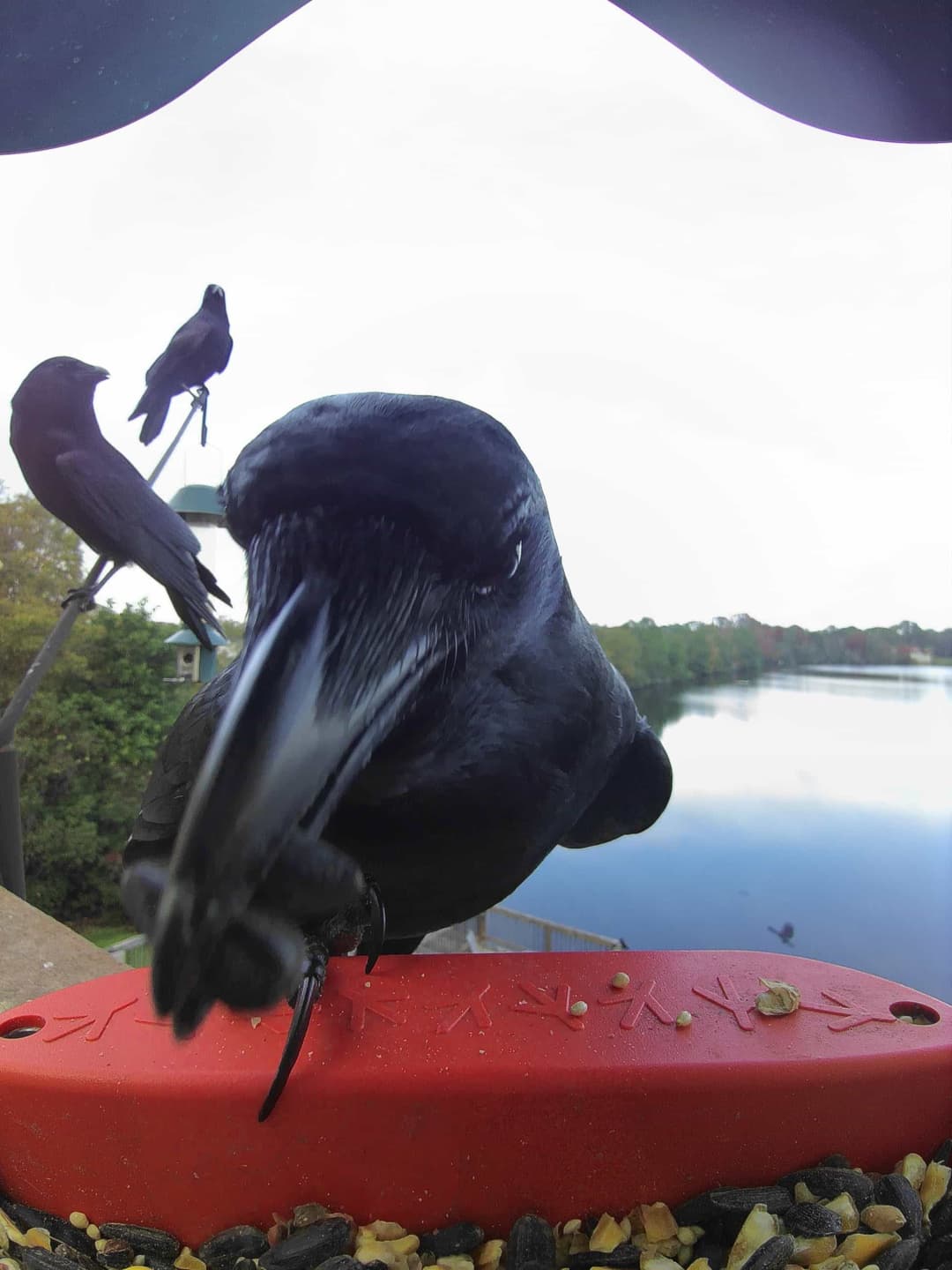
The Fish Crow is smaller with a more nasal call compared to the deeper, more varied calls of the American Crow. Its wings and tail are slightly more slender, and its overall plumage appears more glossy. Often found near water, observing its habitat can also help distinguish between the two.
Common Raven vs American Crow
Common Ravens are larger with heavier bills and a wedge-shaped tail, unlike the fan-shaped tail of an American Crow. Ravens have shaggy throat feathers and make deeper, more croaky calls. Their wingbeats are more deliberate, and they are often seen soaring higher in the sky than crows.

Breeding and nesting habits of the American crow
Mating behaviors
During courtship, the male American crow faces the female, fluffs up its body feathers, partly spreads its wings and tail, and bows repeatedly while giving a short rattling song. Mated pairs often perch close together, touching bills and preening each other's feathers. The breeding pair may have "helpers," which are their offspring from previous seasons.
Nesting details
The American crow typically nests in trees or large shrubs, 10-70 feet above the ground, usually in a vertical fork or at the base of a branch against the trunk. Rarely, they nest on the ground or on a building ledge. The nest is built by both sexes and is a large, bulky basket made of sticks, twigs, bark strips, weeds, and mud, lined with softer materials like grass, moss, plant fibers, and feathers. To encourage nesting in gardens, ensure the presence of tall trees or shrubs for safe nesting sites and provide natural building materials.
Eggs and chick-rearing
American crows lay eggs in the nests constructed in high locations. Nesting is a collaborative effort between the breeding pair and often involves older offspring acting as helpers. These helpers assist in feeding and protecting the chicks, ensuring a higher survival rate.
What does an American crow like to eat?
Aquatic animals
Bird eggs
Birds
Carrion
Fruits
Insects
Nuts
Scraps
Seeds
Small animals
Natural diet
The American crow is omnivorous, feeding on a wide variety of natural food sources. Its diet includes insects, spiders, snails, earthworms, frogs, small snakes, shellfish, and carrion. Additionally, crows consume garbage, eggs, and the young of other birds, as well as plant-based foods like seeds, grains, berries, and fruit.
Bird feeders
At bird feeders, American crows may consume various offerings that include unsalted peanuts, sunflower seeds, and corn. They are also attracted to suet, oats, and any leftover scraps or pieces of fruits and vegetables that are available.
Attracting american crows to your yard: feed them their favorite snacks
American crows are omnivores, and a tasty variety of foods can attract them. They are particularly fond of peanuts (in the shell), cheese, dry cat food, and small pieces of hot dog. Standout Seed Tip: Try Bird Buddy seeds. Expertly chosen for the season, these seeds deliver the best results in attracting a diversity of birds, including crows.
The best bird feeders for american crows and how to use them
Platform feeders or large tray feeders are ideal for crows. These types of feeders allow the crows to see the food and easily access it. Place the feeder high off the ground, preferably in a quiet and open space to make them feel safe. Make sure to keep it clean and stocked with their favorite snacks, especially Bird Buddy seeds!
Fun tricks to make your yard more inviting for crows
Crows are highly intelligent and curious birds. Engage their curiosity by regularly changing the types of food you put out and by adding shiny, rotating elements to your yard, such as old CDs or wind chimes. Bonus: If you can safely and quietly observe them without scaring them off, you may even get to hear them perform their diverse range of vocalizations, which can sound like a lively, if somewhat raucous, chorus!
Where can you find American crows?

Primary habitat
The American crow favors semi-open habitats, including farms, fields, and woodlands. It particularly thrives in the Pacific Northwest shores.
Additional range
While the crow avoids hot deserts, it has adapted to live in an array of environments consisting of towns and even cities, often nesting in city parks.
Do they migrate?
The American Crow demonstrates both migratory and non-migratory behaviors, depending on its geographical location. In many areas, the American Crow is a permanent resident, which means it remains in the same place throughout the year. However, in northern regions where winters are harsh, crows often engage in a short-distance migration. During the fall, they withdraw from these northern areas, moving slightly south to form large winter flocks. The migration is not extensive and is typically limited to moving a short distance south of their breeding range, as opposed to long-distance migrations seen in other bird species. The movement is more about avoiding severe winter conditions rather than covering large geographical distances. Consequently, during winter, American Crows are found in greater numbers and exhibit more social behavior in southern parts of their breeding range. Some key locations where they may overwinter include areas just south of the Great Lakes and the northeastern United States, down to the Ohio River Valley. This short migratory movement ensures they have access to adequate resources and slightly milder weather while maintaining a proximity to their breeding territories.
What is the role of American crows in nature and how to protect them?
Conservation status
The American crow remains common and is not considered vulnerable or endangered. Despite past attempts at extermination, such as dynamiting winter roosts, the species continues to thrive. It is particularly adept at adapting to urban environments, increasingly moving into towns and cities. There are no significant conservation efforts focused on the crow, as their adaptability ensures their continued abundance. The primary threat to the species has historically been human attempts at population control, though these have not significantly impacted their overall numbers.
Ecological role of American crows
Its role in the ecosystem
The American crow plays a significant role in our ecosystem. To start, it helps in pest control as it feeds on a variety of pests including insects, spiders, and small snakes, thereby regulating their population. As an opportunistic feeder, it also acts as an environmental cleaner by scavenging on carrion and garbage, promoting cleanliness and potentially reducing the spread of diseases. Furthermore, the American crow contributes to seed dispersal. When it consumes fruits, seeds, or berries, it eventually excretes them in different locations, aiding in the spread and growth of these plants. This omnivorous bird also exhibits a behavior of carrying hard-shelled mollusks high in the air and dropping them on rocks to break them open, indirectly helping in the breakdown of shells and aiding nutrient recycling. Thus, the American crow is ecologically significant in controlling pests, cleaning environments, dispersing seeds, and recycling nutrients.
How to help protect American crows
Preservation tips
Habitat preservation strategies
Preserve natural habitats and old trees, as crows generally prefer these for nesting. Regulatory frameworks may require development to avoid disruptive habitats or compensate for disruptions. Encourage local authorities to establish green spaces and prevent deforestation. Damaged habitats should be restored, and native plants beneficial to crows should be cultivated.
Community science initiatives
Promote community involvement in American crow conservation through initiatives like bird counting or monitoring behavior and reporting to local wildlife organizations. Educational programs can enhance public understanding of the importance of crows to the ecosystem. Crow-friendly practices such as reducing the use of pesticides, cleaning bird feeders to prevent disease, and proper garbage disposal can be encouraged.