
Carrion Crow
Carrion Crow
Corvus corone


Quick Identification guide
Quick Identification guide
- •
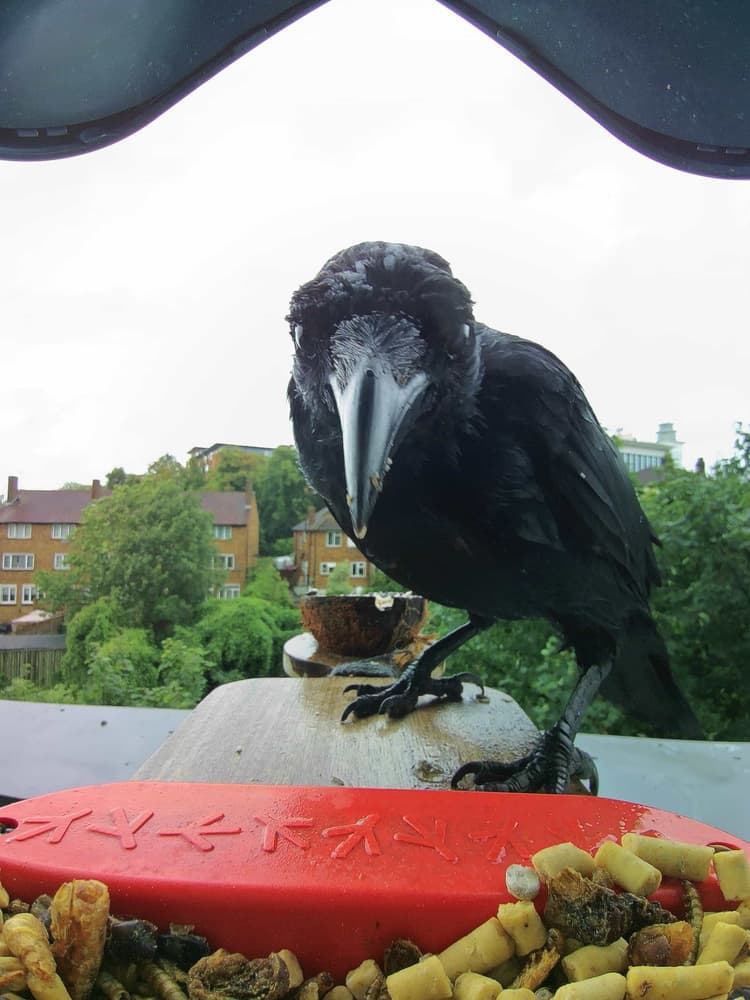
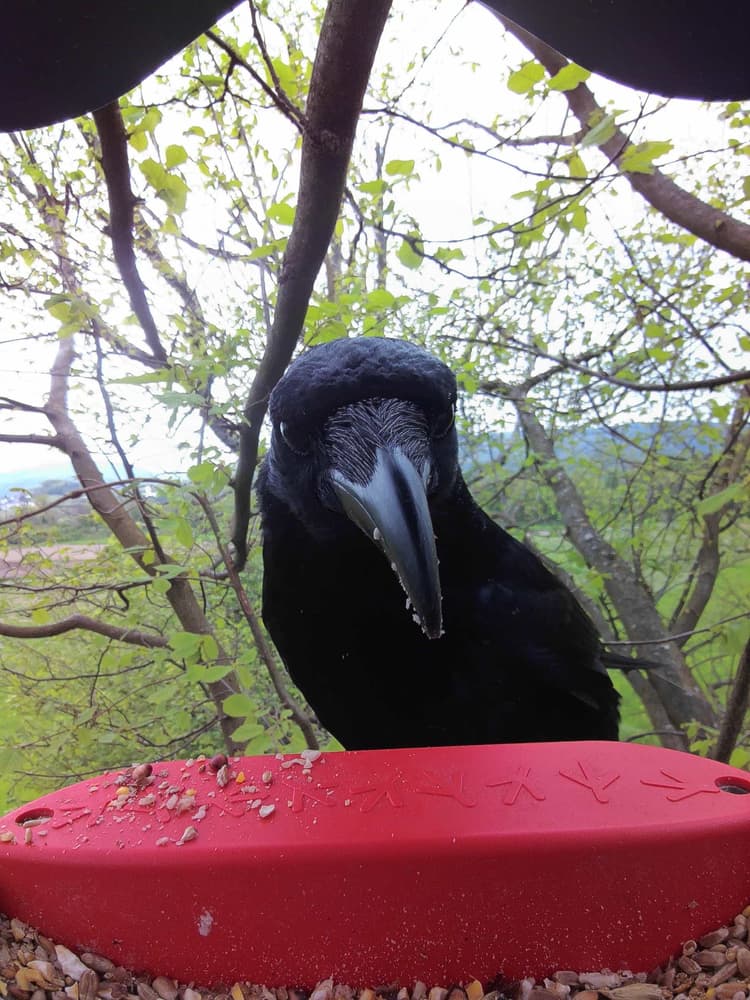
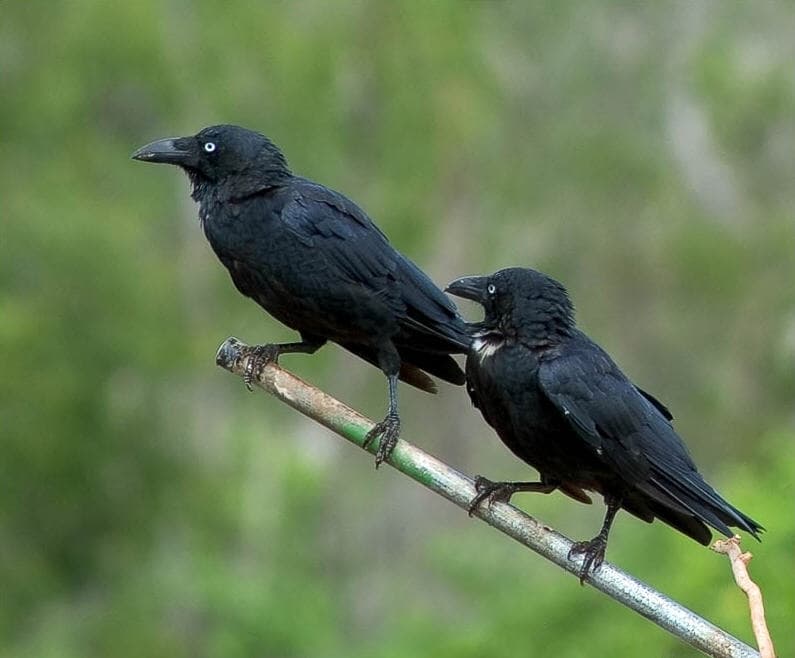
The Carrion Crow is entirely glossy black with a slight purplish sheen visible in good lighting
- •
Features a sturdy, all-black beak that is robust and strong
- •
Exhibits a relatively stocky build with a rounded tail and broad wings, giving it a compact appearance
What does a carrion crow sound like?
The carrion crow's vocalizations are loud and usually high-pitched, often characterized as harsh sounds or caws. Its primary call is a hard, sharp "kraa" or "kraa-kraa" that it repeats several times. Some describe its typical calls as raucous, varied, and repetitive. Though lacking a melodic song, the crow can mimic sounds from its environment including other birds and human-made noises. These behaviors, complemented by its complex communicative system, make its vocal repertoire quite diverse.


Description
Did you know that the collective noun for a group of crows is a murder? Spookily enough, bones are one of the building blocks of their nests! Birdbrains? Not these guys. Their body-to-brain ratio is equal to that of chimpanzees. Their big brains allow them to use tools and be incredibly adaptable. They are generally fearless, except when it comes to humans, of whom they are wary.
The carrion crow can weigh between 396to602grams and be from48to53centimeters tall.
The average lifespan of a carrion crow is around 20 years in the wild, although some have been known to live over 29 years. Compared to the closely related rooks and jackdaws which typically live up to 12 and 16 years respectively, carrion crows have a longer lifespan.
Did you know?
Most popular questions about carrion crow
How to recognise a carrion crow?
General appearance
The Carrion Crow is roughly 46-51 cm long with a wingspan of 93–104 cm. It has a pure black plumage, slightly glossy, with a strong, black bill, and black legs. Its eyes are dark brown or grey. It flies with a slow heavy flapping, and has a distinct 'cash' sound.
Male vs female
Males are slightly larger than females, but otherwise, the sexes are very similar in appearance. Generally, females may have a slightly lighter build, but it is challenging to distinguish between the two based solely on physical appearance.
Juvenile
Juvenile Carrion Crows are remarkably similar to adults, still black but slightly less glossy. Their eyes initially are blue, gradually changing to brown in the first year. They lack the ruffled plumage around the neck seen in adults.
Often mistaken for
Common Raven vs Carrion Crow
Larger than the Carrion Crow, and usually has a more robust beak and wedge-shaped tail.

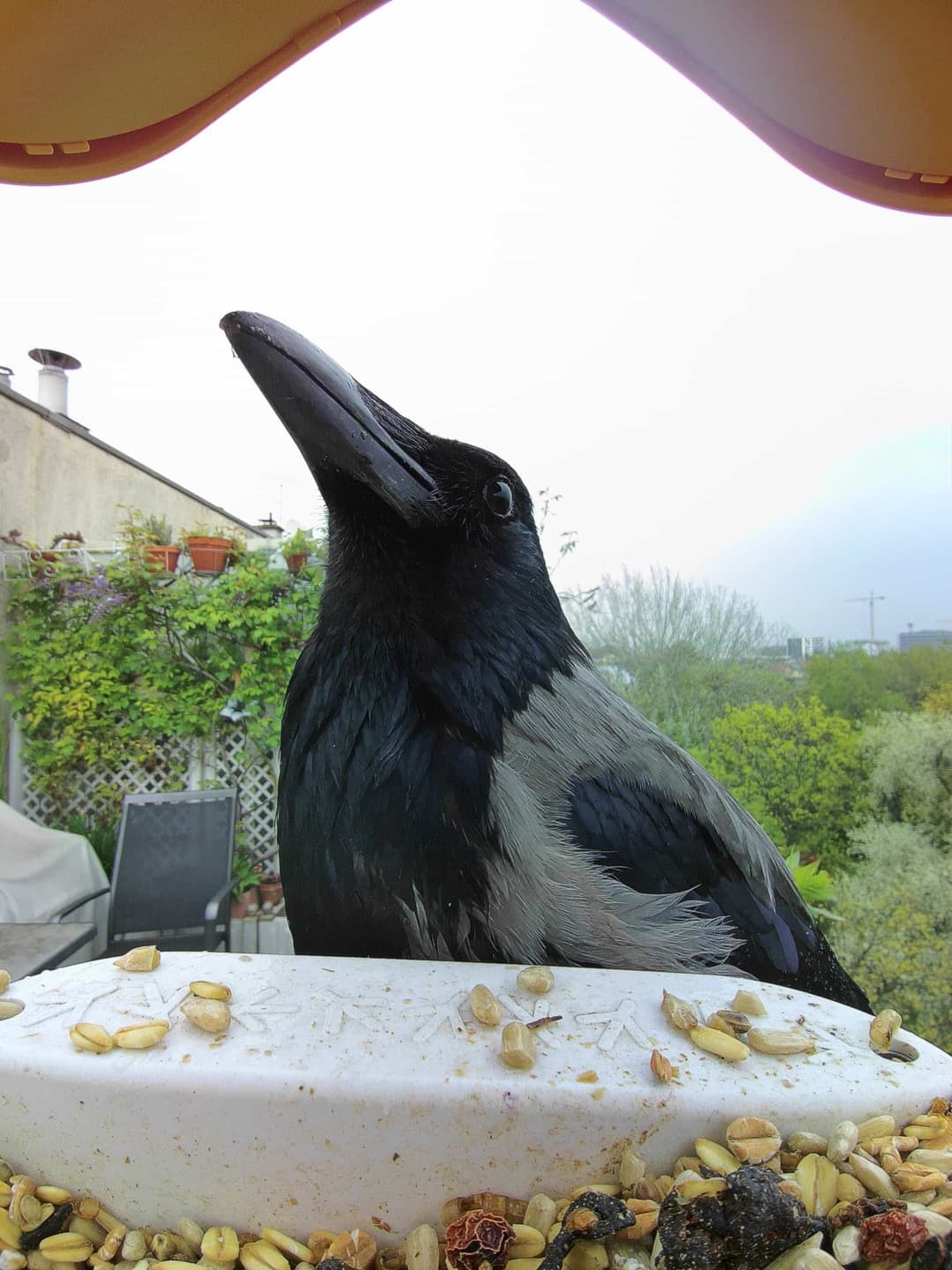
Hooded Crow vs Carrion Crow
Similar to the Carrion Crow but has distinct gray plumage covering parts of its wings, back, and belly.
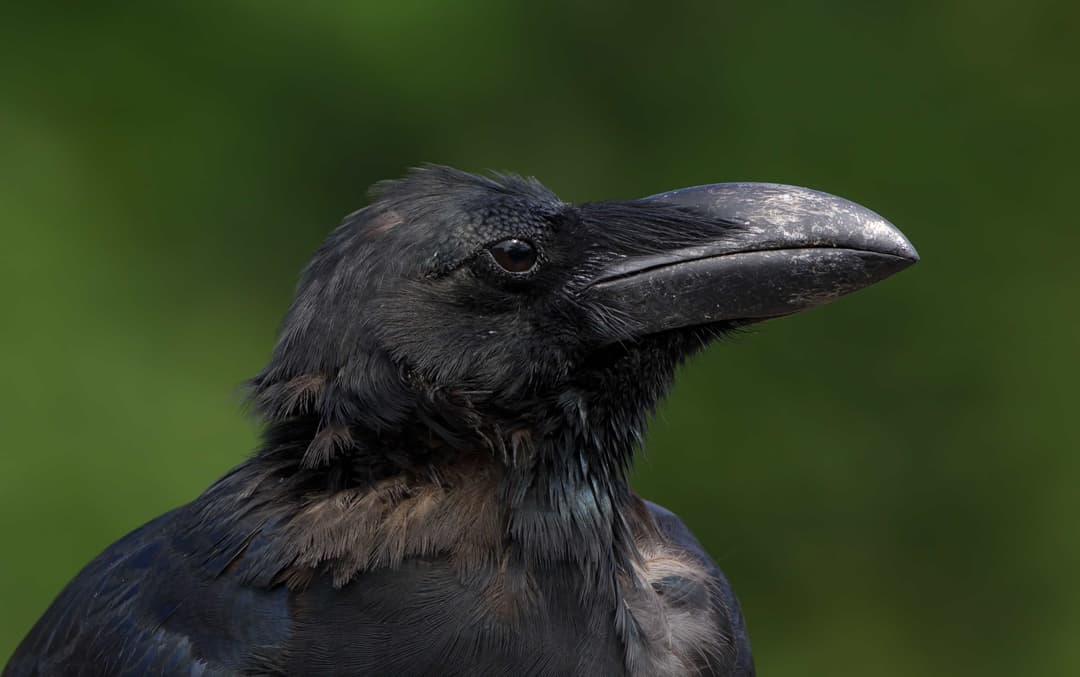
Large-Billed Crow vs Carrion Crow
Similar in appearance but features a notably larger bill compared to the Carrion Crow.
Torresian Crow vs Carrion Crow
Very similar in overall appearance but it has a more slender build and longer tail.
Breeding and nesting habits of the carrion crow
Mating behaviors
Carrion crows engage in complex courtship displays, which include aerial acrobatics, calling, and bonding behaviors such as mutual preening. Mating pairs often form lifelong bonds, emphasizing cooperative rearing of their young.
Nesting details
These crows build nests in tall trees, cliffs, and occasionally urban gardens. The nests are constructed from twigs, lined with softer materials like hair and leaves. Creating garden habitats requires planting native trees and ensuring minimal disturbances.
Eggs and chick-rearing
Females typically lay 3-5 eggs, incubated for about 18 days. Both parents feed the chicks, which fledge after approximately 32-35 days. Parents continue to support fledglings as they learn essential survival skills.
What does a carrion crow like to eat?
Bird eggs
Carrion
Fruits
Insects
Scraps
Seeds
Worms
Natural diet
Carrion crows have an omnivorous diet. They consume carrion, small mammals, birds' eggs, young birds, insects, and other invertebrates. They are also known to eat amphibians, reptiles, and some plant matter like seeds, fruits, and grains. Their opportunistic feeding habits allow them to adapt to various environments.
Bird feeders
At bird feeders, carrion crows are attracted to various types of food typically provided for other birds. They often consume peanuts, sunflower seeds, suet, and occasionally leftover scraps of food. Their adaptable nature makes them common visitors to bird feeders, where they capitalize on the readily available food sources.
Favorite snacks: what do carrion crows like to eat?
Carrion Crows are omnivorous and will eat almost anything. They particularly enjoy insects, worms, grain, fruits, bird eggs, and small mammals. However, they are called 'carrion' crows for a reason -- they also thrive on dead animals or roadkill. A combination of kitchen scraps for variety and Bird Buddy seeds for nutritional balance may prove to be an irresistible feast for these birds.
Best feeder types for carrion crows
While crows might not visit traditional bird feeders, they are ground feeders and enjoy eating from a feeding platform or tray. This could be a simple wooden platform laid on the ground or a hanging platform-style feeder from a tree in your yard or feeder pole. Make sure to put the feeder in an open and quiet spot as crows often avoid busy, noisy areas.
Fun tricks to entice carrion crows
Crows are intelligent birds and enjoy puzzles and new experiences. You can engage them with 'food puzzles' where they need to work a little to get to their food. They enjoy shiny things too, so you might want to put shiny baubles or trinkets around your yard. Additionally, try to balance the need for crow entertainment with a calm and stable environment, as too much change can make them wary.
Why bird buddy seeds are recommended
Bird Buddy seeds are a hit among carrion crows for many reasons. These seeds are expertly chosen based on the season, providing a balanced diet year-round for the birds. They are also conveniently packable in feeders, making it easy for you to maintain a constant food supply for your crow visitors.
Where can you find carrion crows?

Primary habitat
Carrion crows typically inhabit open areas, farmlands, coastlines, woodlands and urban areas across Western Europe and Eastern Asia.
Additional range
They thrive in a range of climates, from chilly European winters to warm, humid Asian summers. Unexpectedly, they can also adapt to highly urbanized areas, including city centres.
Do they migrate?
The carrion crow is primarily a resident bird, meaning it generally stays in the same area throughout the year and does not migrate. Its range is largely in western Europe and parts of Asia, and it tends to remain within its established home territory. Populations in most of its range, including the British Isles, France, and Germany, are generally sedentary. However, in the more northern parts of its range, such as in northern Scandinavia and Russia, some carrion crows may undertake short-distance movements, particularly during harsh winters when food is scarce. These movements are not long-distance migrations but rather local or regional shifts to areas with more favorable conditions, often moving to lower altitudes or more southern regions within their range. Overall, the carrion crow is adapted to a variety of environments and is able to remain in a relatively stable location all year round, unlike many other bird species that rely on seasonal migrations to survive.
What is the role of carrion crows in nature and how to protect them?
Conservation status
The carrion crow is classified as a species of "Least Concern" by the IUCN, indicating it is common and not currently at risk. It thrives in diverse habitats across Europe and Asia, adapting well to urban areas. Key threats include habitat loss due to urbanization and persecution in some regions where it is viewed as a pest. Conservation efforts focus on habitat protection and legal measures to control persecution. The species' adaptability and widespread presence contribute to its stable population, avoiding vulnerability or endangered status.
Ecological role of carrion crows
Its role in the ecosystem
Carrion crows play a vital role in the ecosystem with their diverse ecological functions. As scavengers, they aid in nutrient cycling by feeding on carcasses, thus contributing to pest control. This activity decomposes dead animal matter, inhibiting the spread of diseases and parasites and promoting overall environmental cleanliness. Also, carrion crows contribute to seed dispersal. The seeds from the fruits they consume are often excreted in different locations, facilitating the growth of a variety of plants in various places, boosting biodiversity. Additionally, these crows control pests such as harmful insects, reducing damage to crops and plants. Altogether, the ecological significance of carrion crows includes aiding in nutrient cycling, promoting biodiversity and environmental health, and controlling pests.
How to help protect carrion crows
Preservation tips
Protect carrion crow habitats
Restoring and maintaining habitats is crucial for the survival of the carrion crow. This includes protecting their nesting grounds in trees, hedgerows, and on cliffs. Steps toward this goal can include implementing policies against excessive logging, encouraging responsible territorial planning that reduces habitat fragmentation, and promoting the growth of native plants which support the crows' food sources.
Engage in community science initiatives
Encourage local communities to participate in tracking carrion crow populations. Citizen science programs such as BirdTrack and the Big Garden Birdwatch enable communities to contribute to conservation databases. Promoting public understanding and appreciation of carrion crows will also aid their protection. This can be achieved through awareness campaigns and local citizens' involvement in conservation efforts.