Carrion Crow or Common Raven?
Here's how to tell the difference

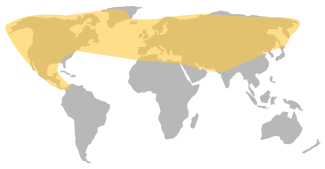


Carrion Crow


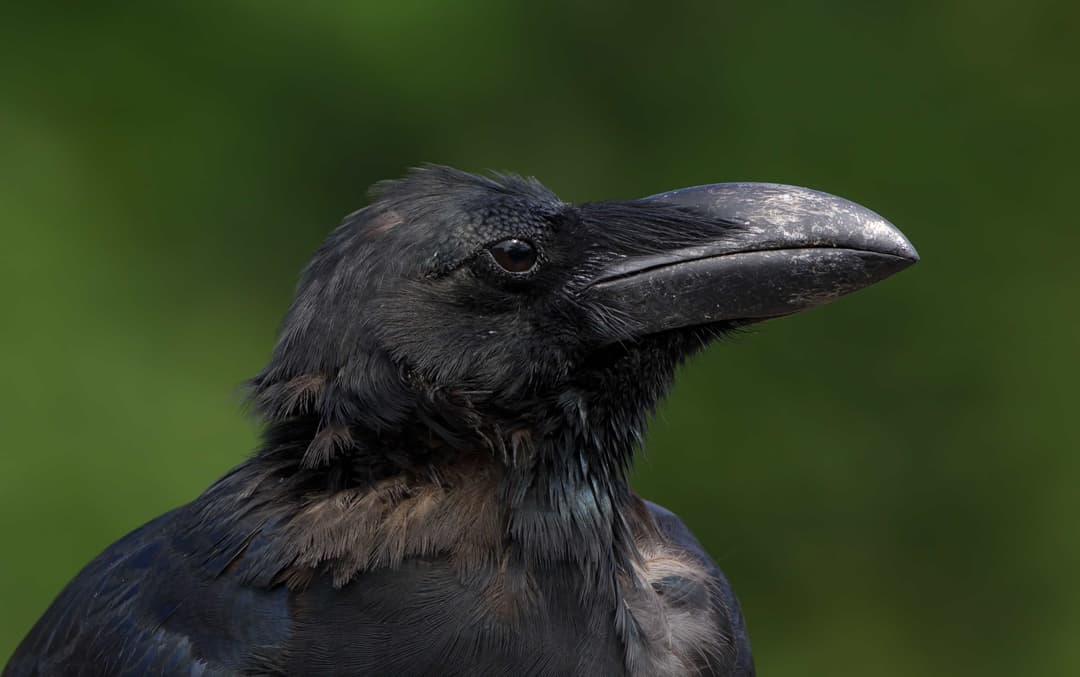
Common Raven
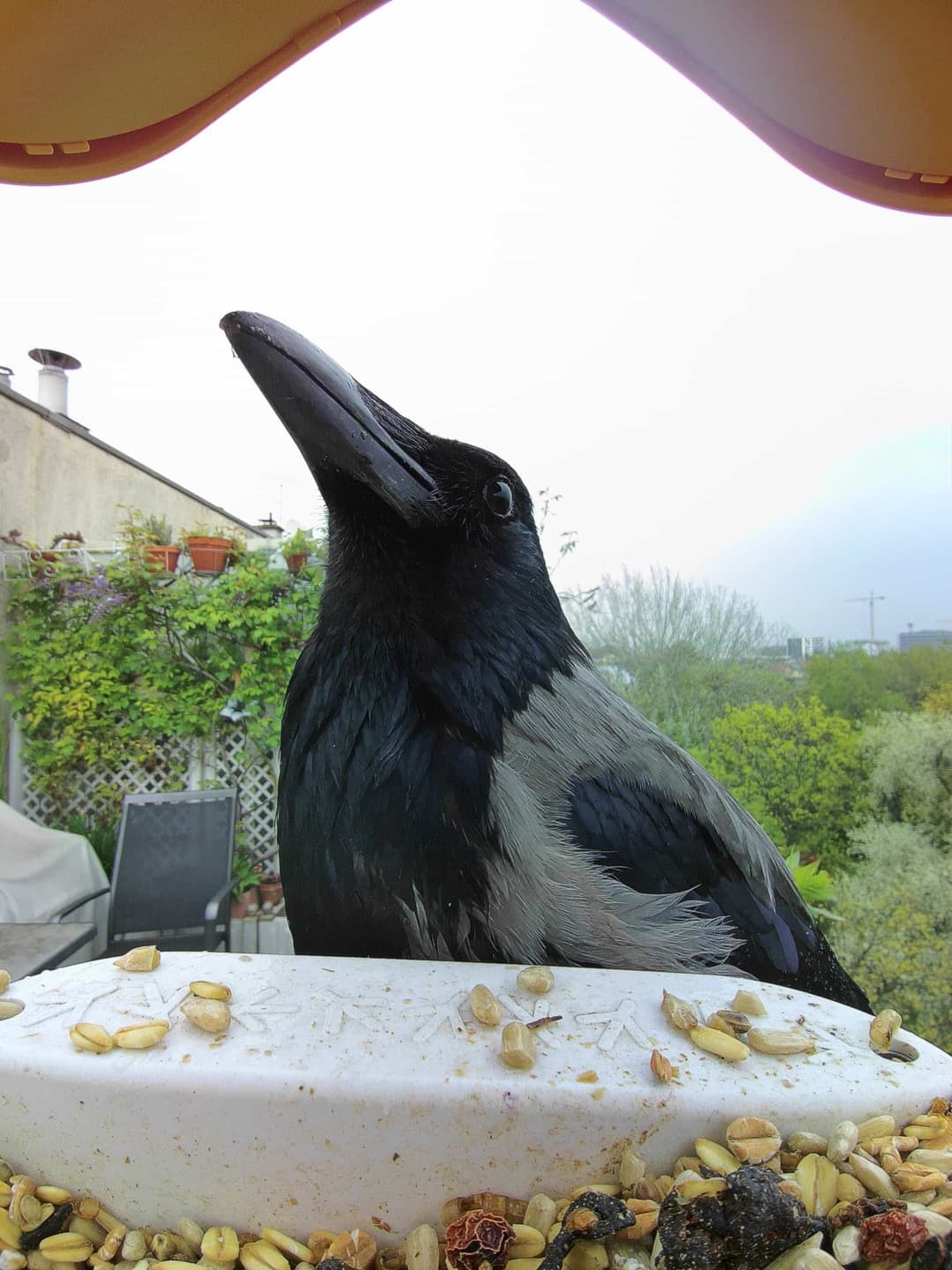
Carrion Crow
Corvus corone
General appearance
The Carrion Crow is roughly 46-51 cm long with a wingspan of 93–104 cm. It has a pure black plumage, slightly glossy, with a strong, black bill, and black legs. Its eyes are dark brown or grey. It flies with a slow heavy flapping, and has a distinct 'cash' sound.
Male vs female
Males are slightly larger than females, but otherwise, the sexes are very similar in appearance. Generally, females may have a slightly lighter build, but it is challenging to distinguish between the two based solely on physical appearance.
Juvenile
Juvenile Carrion Crows are remarkably similar to adults, still black but slightly less glossy. Their eyes initially are blue, gradually changing to brown in the first year. They lack the ruffled plumage around the neck seen in adults.
Size
18.9 - 20.9 in/14.0 - 21.2 oz
There's more to learn about Carrion Crow
View full detailsCommon Raven
Corvus corax
Also known as: Western Raven, Northern Raven
General appearance
The common raven is a large bird, about the size of a heron or a mallard. Its size ranges between 53-69 cm. It has a black coloration throughout its body. Its wings are fingered, long and narrow. The tail is distinctive, having a wedge shape. The raven's throat feathers are shaggy and it has a very thick bill.
Male vs female
In terms of coloration, size, shape, and overall appearance, male and female common ravens are similar. They exhibit sexual monomorphism, which makes it difficult to distinguish between the sexes.
Juvenile
Juvenile common ravens are similar to adults. However, juveniles might have a slightly more slender appearance and lack the shagginess of the adult neck feathers. As they mature, they will gain this more robust appearance and the distinctive shaggy throat.
Size
22.8 - 27.2 in/24.3 - 57.3 oz
There's more to learn about Common Raven
View full detailsHow to tell the Carrion Crow from the Common Raven
Visual differences
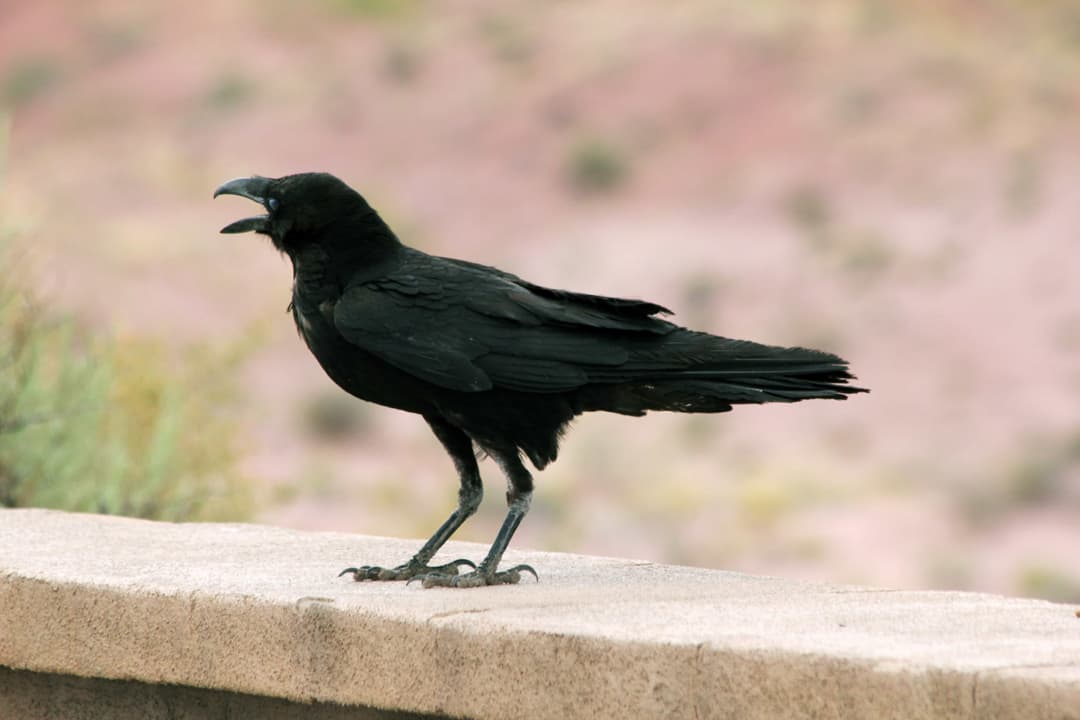
The Carrion Crow (18-21 inches) is smaller than the Common Raven (21-27 inches). Both have black plumage, but the raven's is generally more robust with pronounced shaggy throat feathers. The raven has a thicker bill, a wedge-shaped tail, and long, fingered wings. In contrast, the crow has a rounded tail and shorter wings. The raven typically exhibits a larger, more imposing silhouette compared to the sleeker crow. Both species have glossy black feathers, with the crow's gloss being slightly less prominent.
Key differences and behavior
Carrion crows (Corvus corone) and common ravens (Corvus corax) differ significantly in their behaviors and habitats. Carrion crows thrive in urban and open areas, adapting well to diverse environments, while ravens prefer remote areas like boreal forests, tundra, and coastal cliffs. Both birds exhibit intelligence; however, ravens are renowned for complex problem-solving and acrobatic flying. In courtship, carrion crows perform aerial acrobatics and mutual preening, forming lifelong bonds, whereas ravens engage in soaring and bill-touching. Carrion crows build nests in trees and urban areas, using bones, while ravens prefer cliff ledges and tall conifers for nesting. Their diets overlap, but crows are more opportunistic feeders in urban settings. Ravens often scavenge carrion and hunt in tandem for food. These behavioral differences can help distinguish them in the field.
Still not sure? Here are more lookalikes!

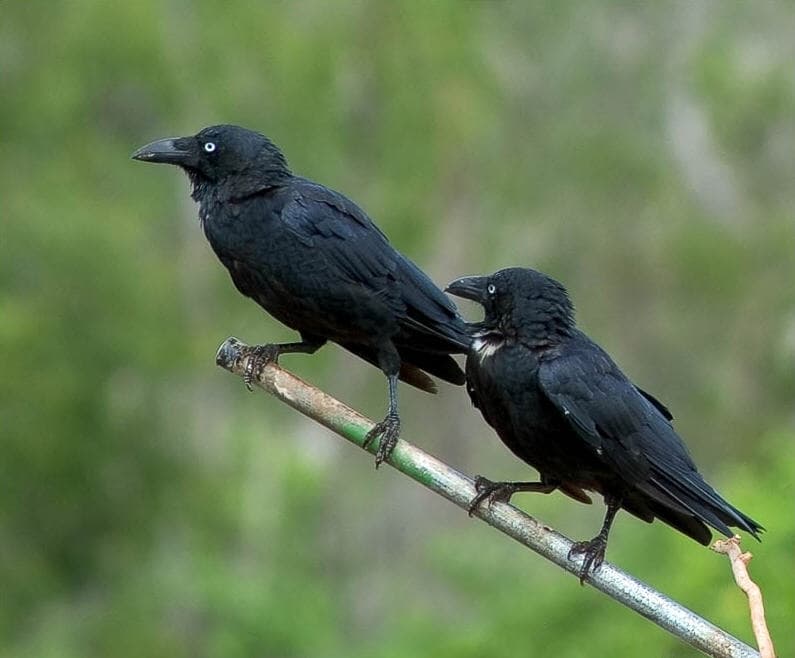


Carrion Crow vs [Select a bird]

[Select a bird]
Pick a bird to compare
Common Raven vs [Select a bird]
[Select a bird]
Pick a bird to compare