Carrion Crow or Hooded Crow?
Here's how to tell the difference
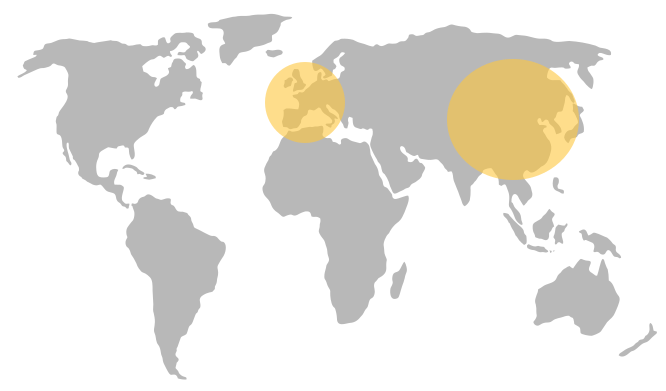


Carrion Crow


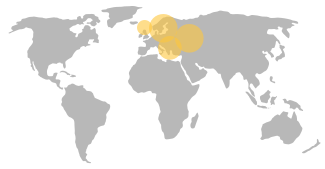
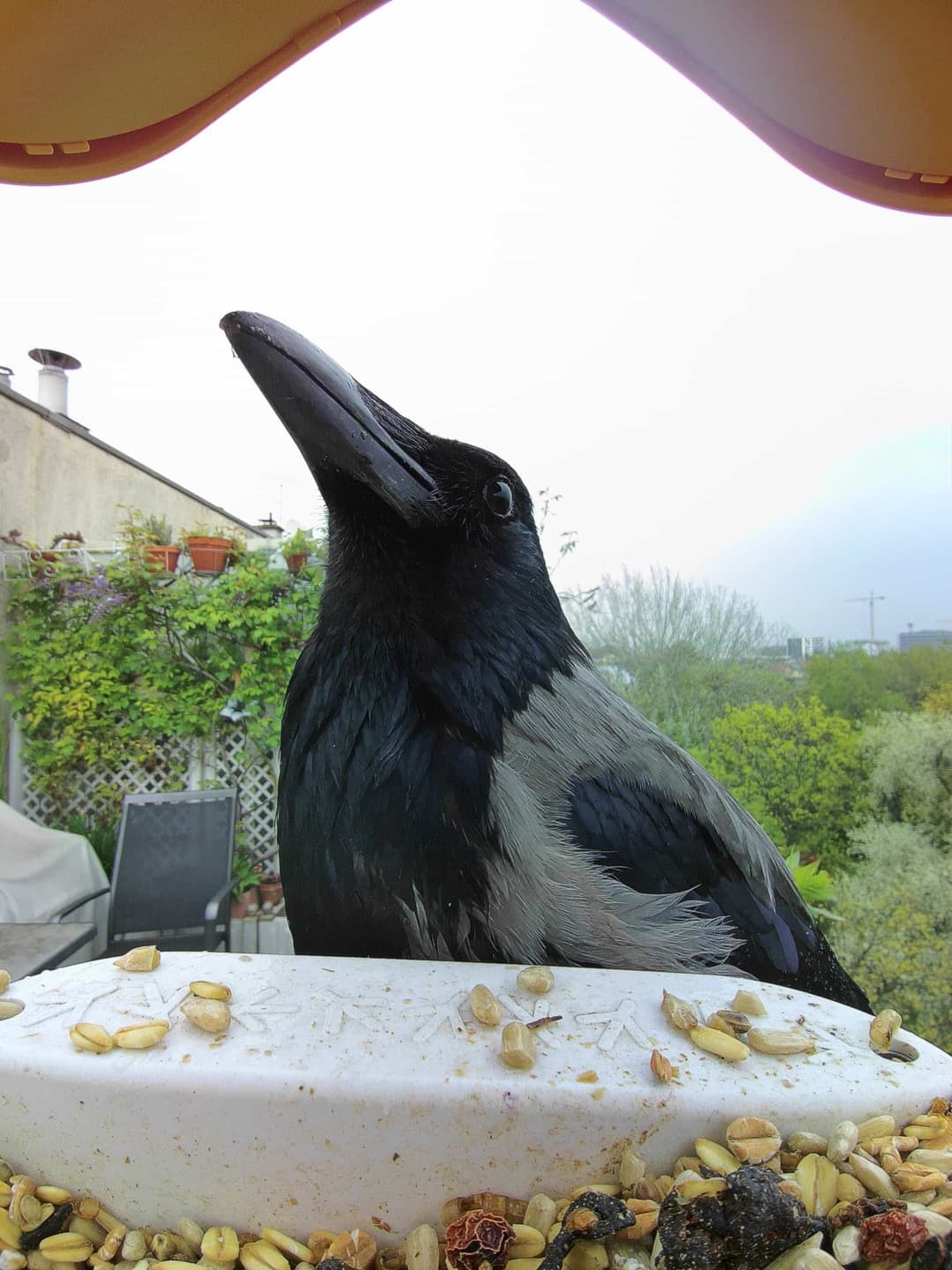
Hooded Crow
Carrion Crow
Corvus corone
General appearance
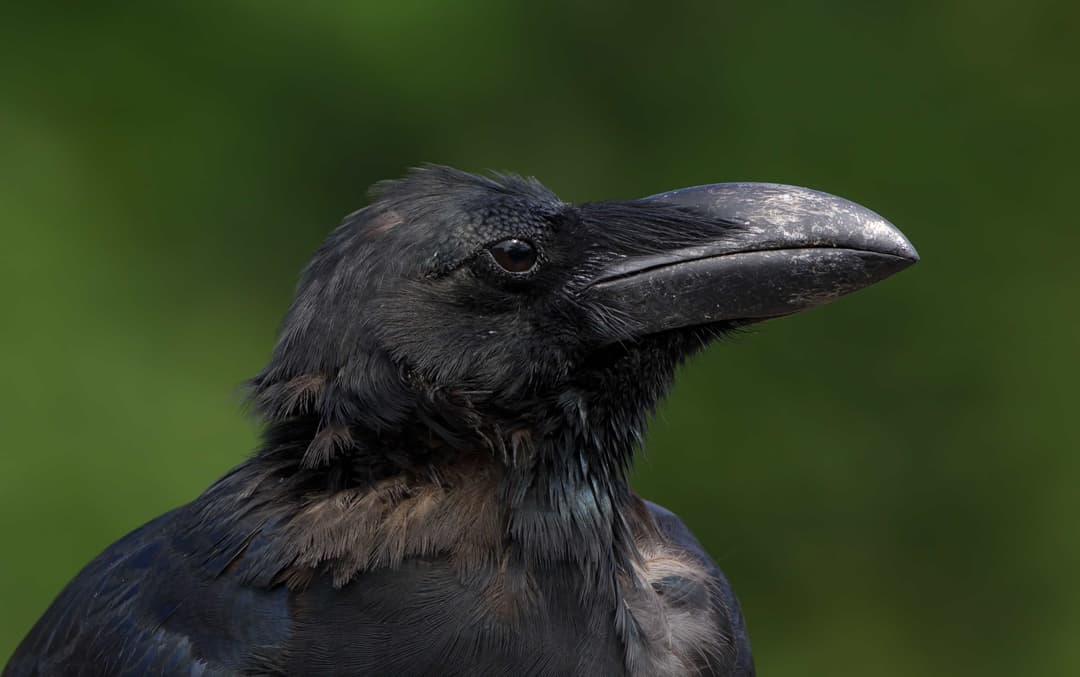
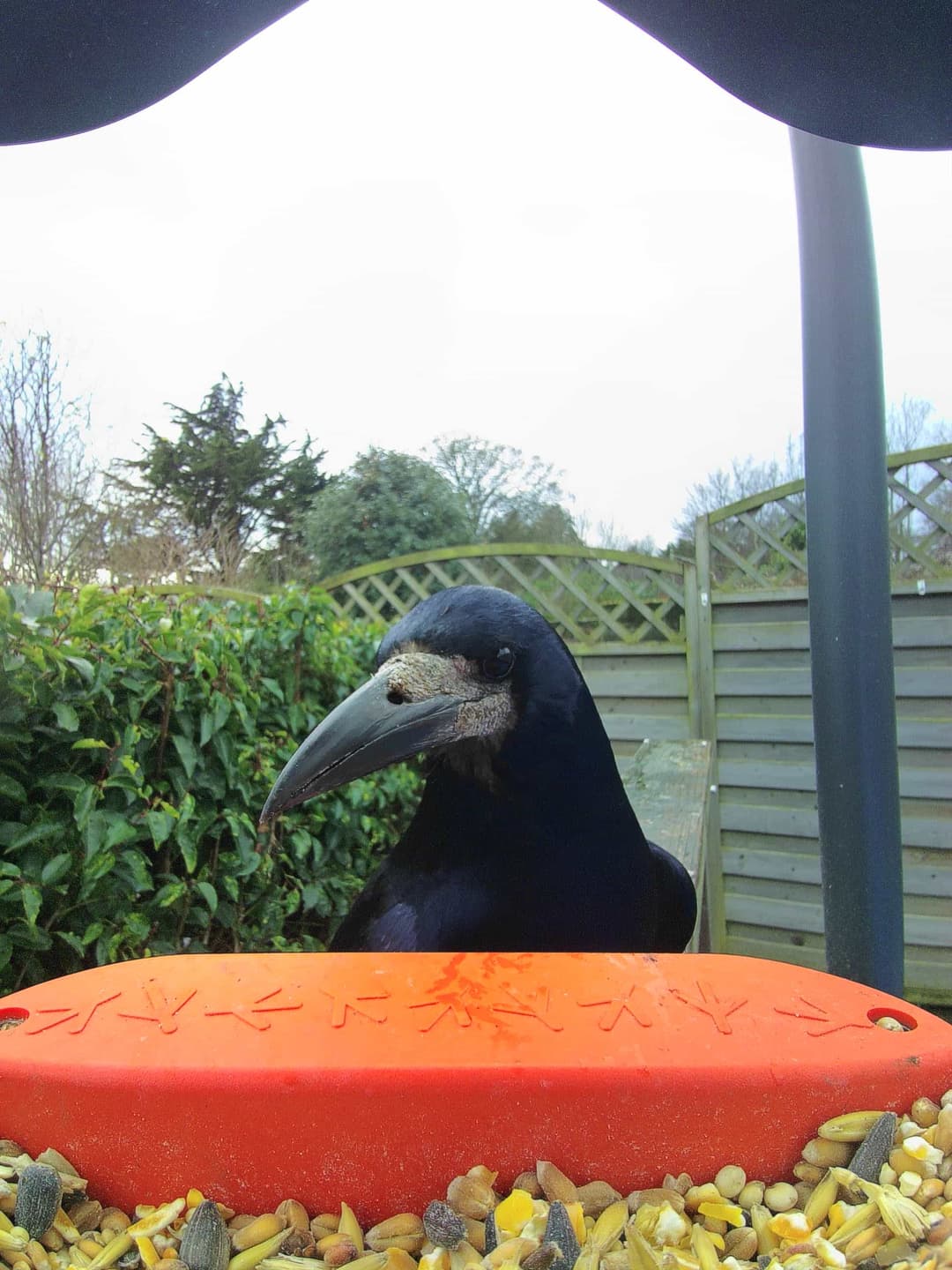
The Carrion Crow is roughly 46-51 cm long with a wingspan of 93–104 cm. It has a pure black plumage, slightly glossy, with a strong, black bill, and black legs. Its eyes are dark brown or grey. It flies with a slow heavy flapping, and has a distinct 'cash' sound.
Male vs female
Males are slightly larger than females, but otherwise, the sexes are very similar in appearance. Generally, females may have a slightly lighter build, but it is challenging to distinguish between the two based solely on physical appearance.
Juvenile
Juvenile Carrion Crows are remarkably similar to adults, still black but slightly less glossy. Their eyes initially are blue, gradually changing to brown in the first year. They lack the ruffled plumage around the neck seen in adults.
Size
18.9 - 20.9 in/14.0 - 21.2 oz
There's more to learn about Carrion Crow
View full detailsHooded Crow
Corvus cornix
Also known as: Hoodie, Scotch Crow, Danish Crow, Gray Crow
General appearance
Meet the hooded crow! A dazzling avian species with an absolutely enchanting appearance. Recognizable by a dark grey body contrasted with a glossy black head, throat, wings, and tail. The hooded crow flaunts a gorgeous plumage that shines in varying hues under the sunlight. They're medium-sized birds, standing tall at around 48cm with a wingspan up to 100cm - impossible to miss in the wild!
Male vs female
Moving on to the tricky task of distinguishing between males and females- it's quite a challenge! You see, there are no visual differences between the sexes! Both male and female hooded crows exhibit the same majestic blend of grey and black plumage. In fact, the only surefire way to tell them apart is during the breeding season when only females will be seen incubating eggs.
Juvenile
Onto the adorable juveniles, which start out with a rather duller color palette. Their plumage lacks the striking glossy finish of the adults, appearing more sooty black than glossy. Juveniles also host blue eyes instead of the brown seen in adults. But don't fret, with time, they grow into their stunning adult colors and truly become a sight to behold!
Size
18.9 - 21.3 in/14.0 - 21.2 oz
There's more to learn about Hooded Crow
View full detailsHow to tell the Carrion Crow from the Hooded Crow
Visual differences
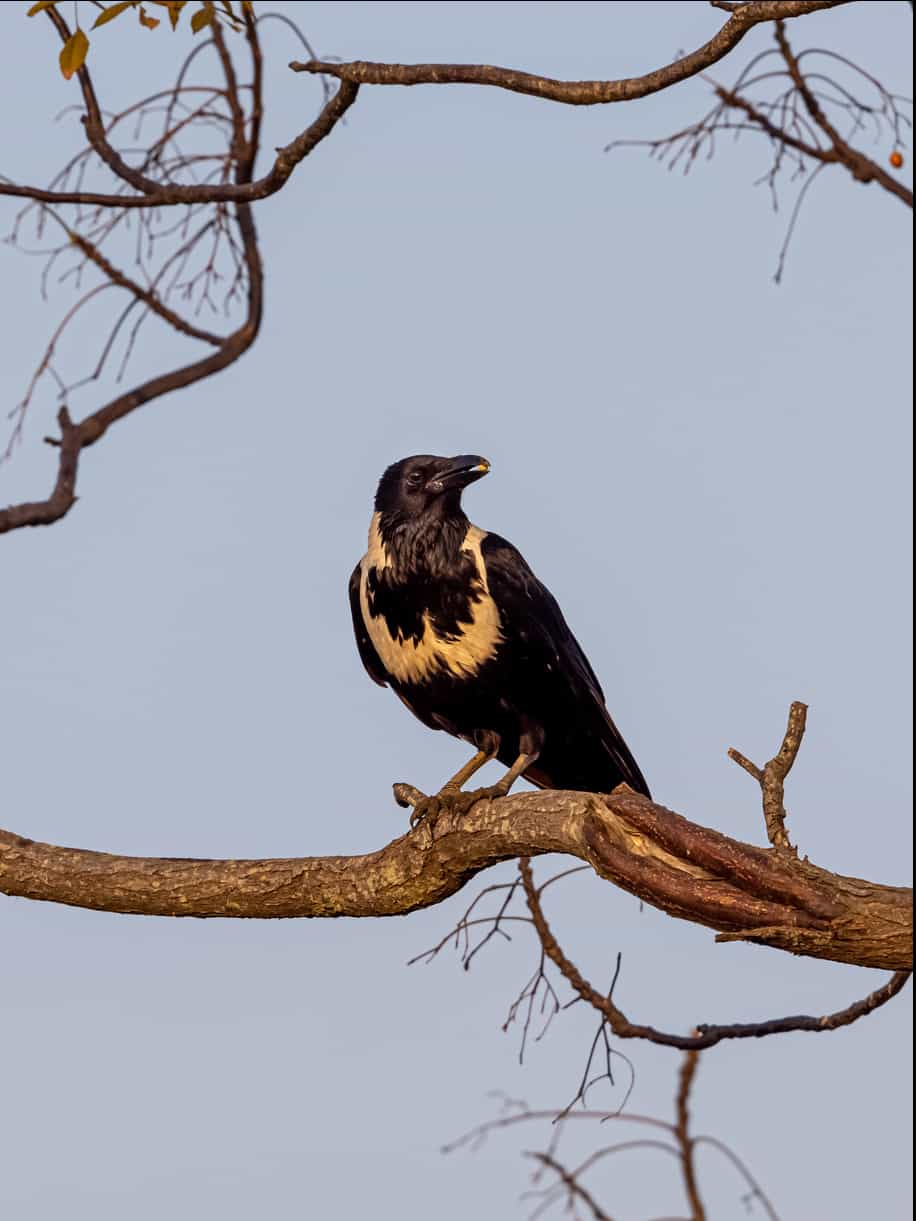
Visual differences between the Carrion Crow and Hooded Crow primarily involve plumage coloration. The Carrion Crow is uniformly glossy black, while the Hooded Crow features a contrasting dark grey body with a glossy black head, throat, wings, and tail. Both are similar in size: Carrion Crow (18-20 inches) and Hooded Crow (19 inches), with similar wingspans (approximately 37-39 inches). Both species have dark bills and legs. Juveniles of both species are less glossy, but differing in that the juvenile Carrion Crow remains black, while the Hooded Crow juvenile holds the same grey and black pattern.
Key differences and behavior
The Carrion Crow (Corvus corone) and the Hooded Crow (Corvus cornix) both demonstrate high intelligence and adaptability. The Carrion Crow, wary of humans, thrives in diverse environments, including urban areas across Western Europe and Eastern Asia, while the Hooded Crow occupies northern and eastern Europe, favoring open and coastal regions. Both species build nests in tall trees or cliffs, but the Hooded Crow also uses large shrubs. In terms of diet, both crows are omnivorous and opportunistic, consuming small animals, fruits, and carrion, yet the Hooded Crow is noted for dropping mollusks to crack them open. While Carrion Crows form lifelong bonds, the Hooded Crows may remain monogamous for several seasons. Their shared intelligence is manifested in their use of tools and food-stashing behaviors. Both species are attracted to bird feeders for seeds, suet, and other human-provided food.
Still not sure? Here are more lookalikes!


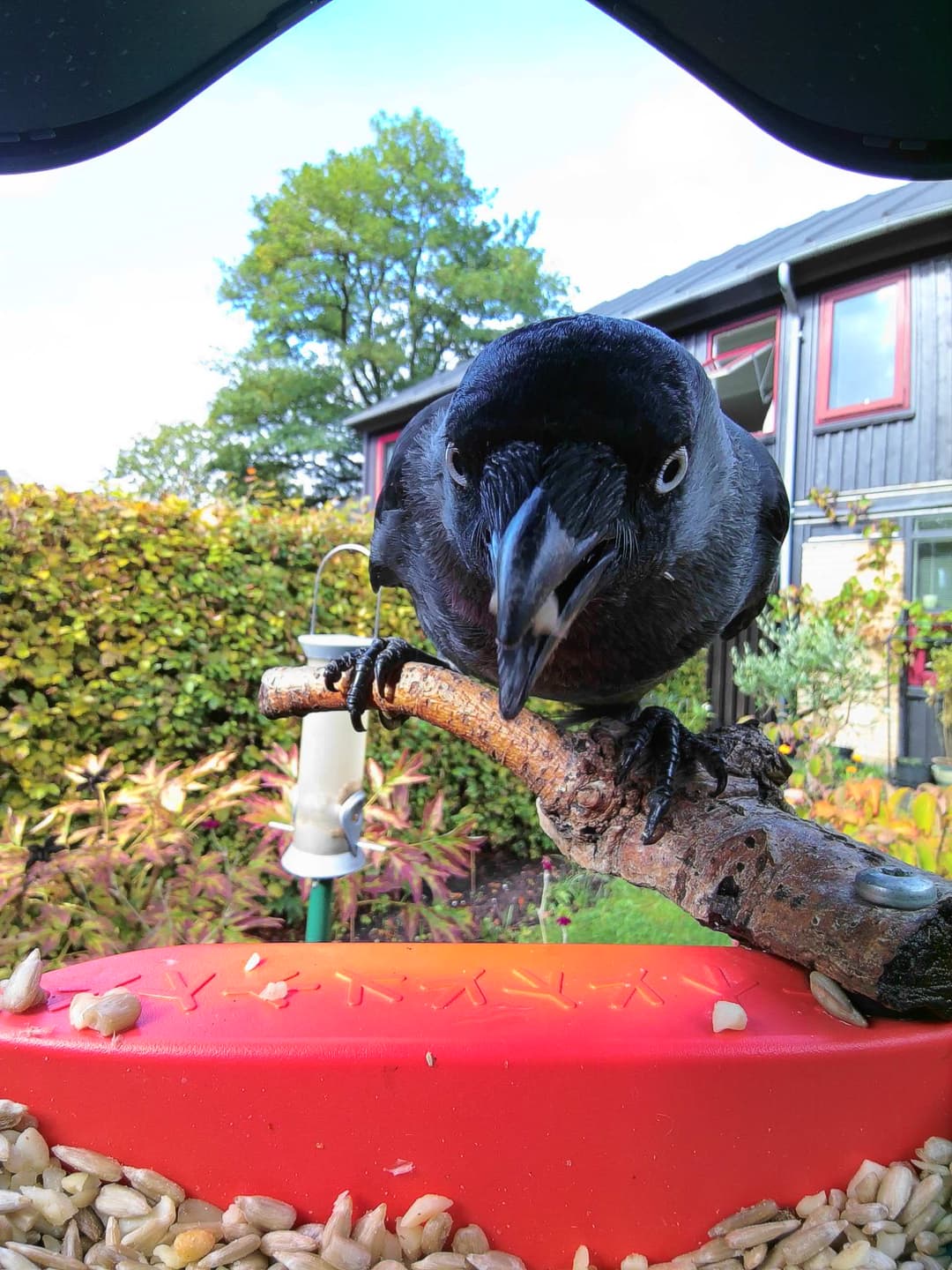
Hooded Crow vs Western Jackdaw


Carrion Crow vs [Select a bird]

[Select a bird]
Pick a bird to compare
Hooded Crow vs [Select a bird]
[Select a bird]
Pick a bird to compare