Large-Billed Crow or Torresian Crow?
Here's how to tell the difference
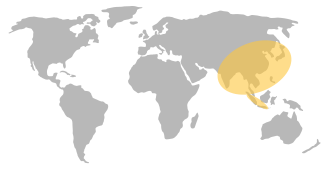

Large-Billed Crow

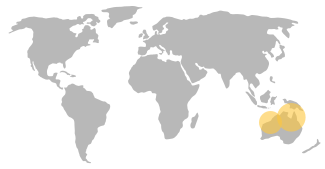
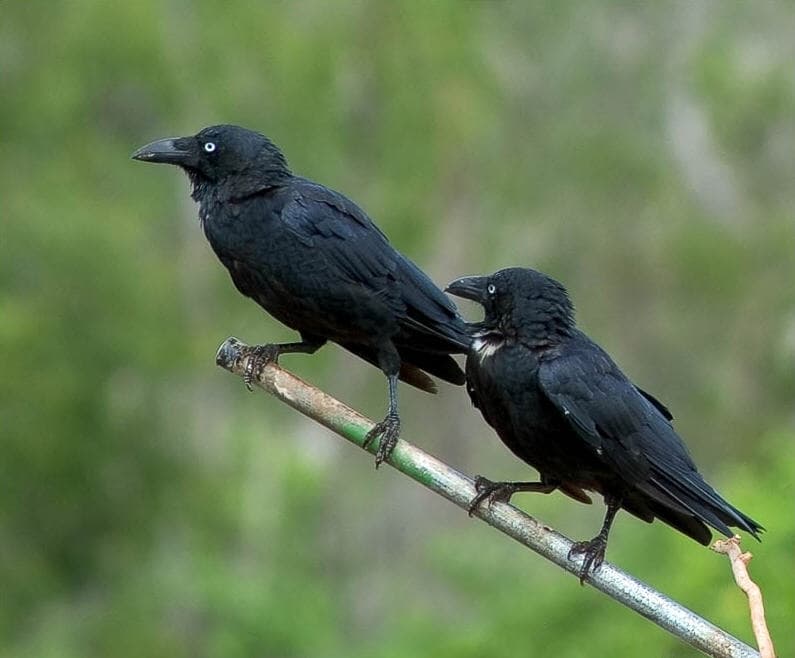
Torresian Crow
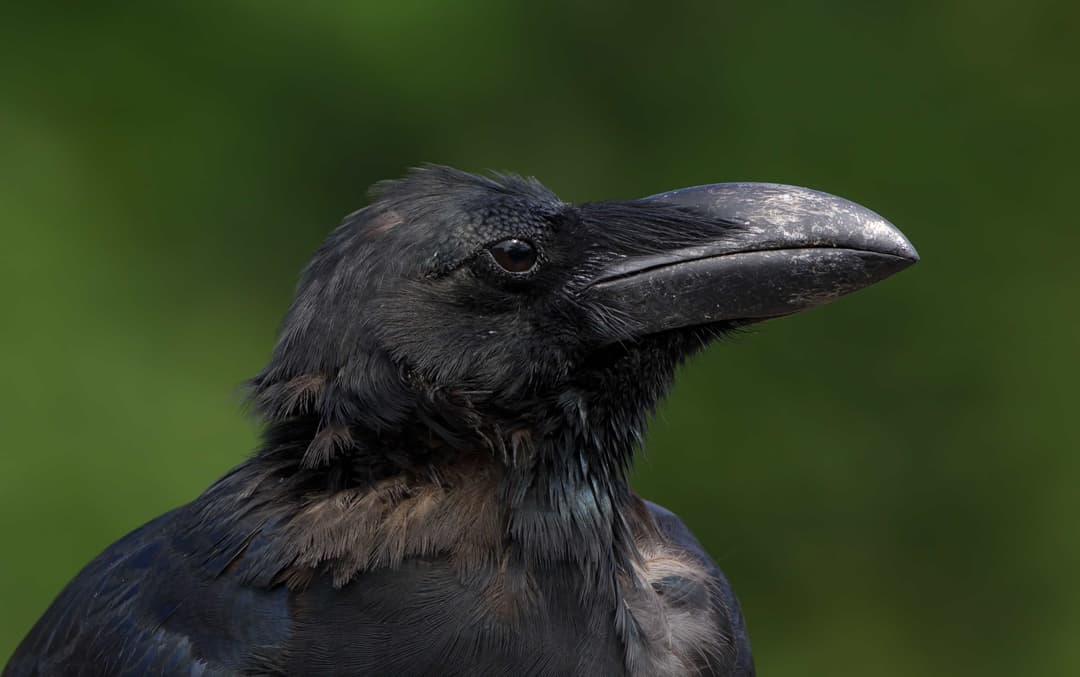
Large-Billed Crow
Corvus macrorhynchos
Also known as: Thick-Billed Crow
General appearance
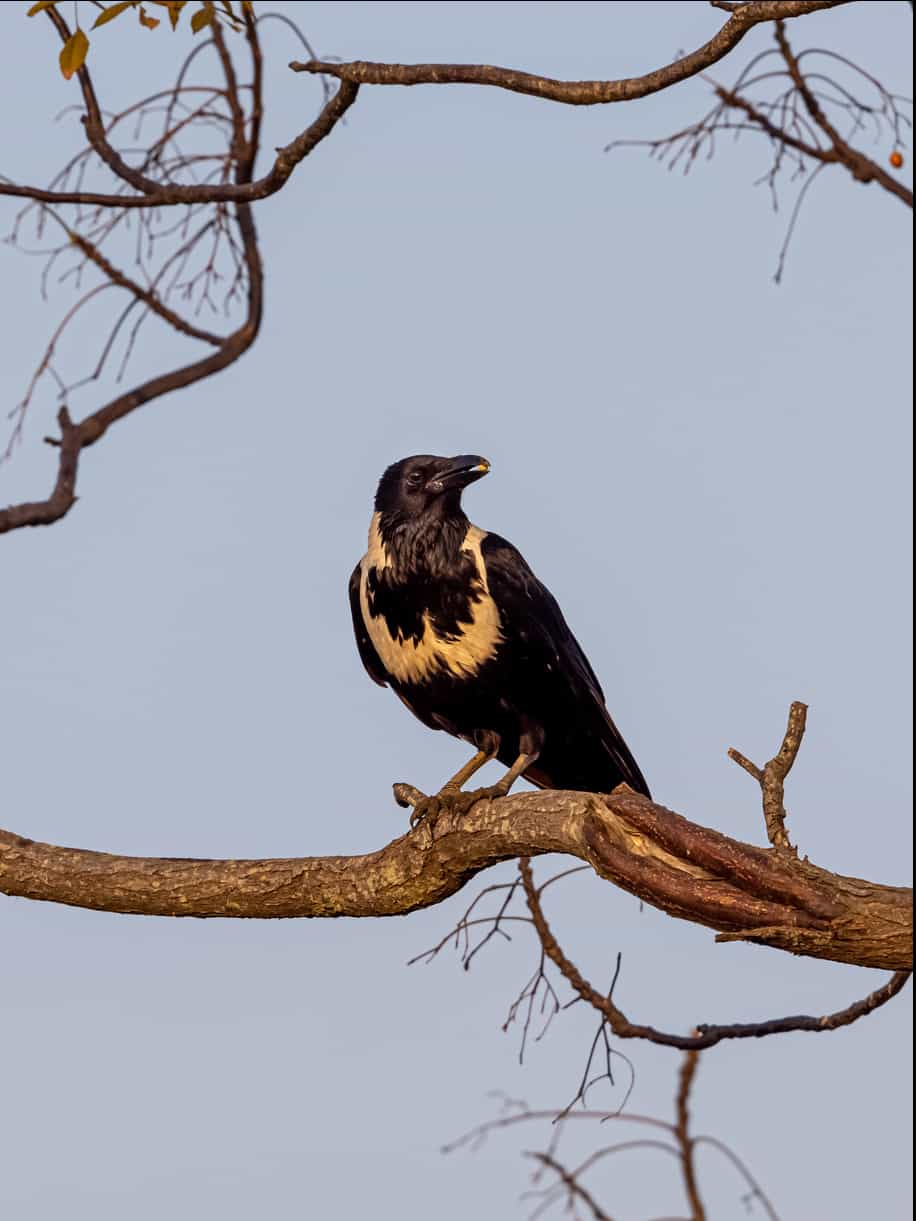
The large-billed crow, as the name suggests, is notable for its relatively large beak. These crows are generally black, even though a gray or silver sheen may appear over the feathers in bright sunlight. Their eyes are often a stark contrast in a striking shade of white or pale blue.
Male vs female
Sexual dimorphism is less prominent in large-billed crows, making it difficult to distinguish males from females based on physical appearance alone. Both genders share similar coloration and size, although males tend to be slightly larger.
Juvenile
Juvenile large-billed crows resemble adults but tend to have lighter-colored eyes, usually a duller blue or gray. Additionally, juveniles may be identified by the comparatively smaller size of their beaks, which gradually increase as they age.
Size
18.1 - 23.2 in/15.9 - 35.3 oz
There's more to learn about Large-Billed Crow
View full detailsTorresian Crow
Corvus orru
Also known as: Australian Crow, Papuan Crow
General appearance
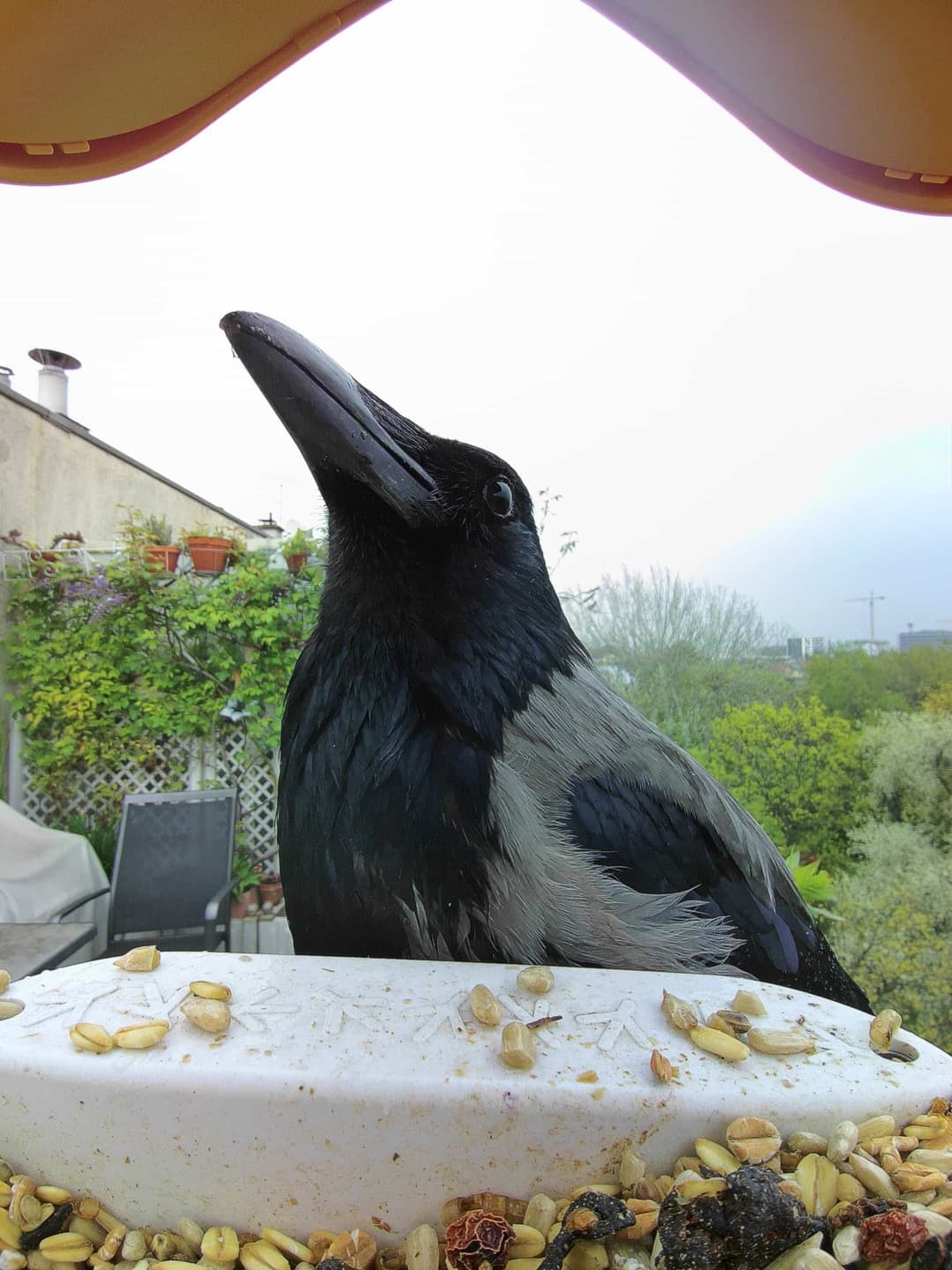
The Torresian Crow (Corvus orru) is a large black bird with a slightly curved bill and black feathers that may display a bluish-purple sheen in direct sunlight. Its eyes are stark white or grey, surrounded by a ring of bare skin, a prominent feature. They are approximately 50-55cm in length, with a wingspan of around 1 metre.
Male vs female
There is little sexual dimorphism within the Torresian Crow species. However, males are typically slightly larger than females, but this difference is subtle and can be difficult to discern in the wild.
Juvenile
Juvenile Torresian Crows resemble adults but their eyes are blue-grey at the initial stage. The plumage is slightly duller and lacks the adult's sheen. The bill of a juvenile crow is typically shorter and the bare skin around their eyes develops as they mature.
Size
18.9 - 20.9 in/15.2 - 24.7 oz
There's more to learn about Torresian Crow
View full detailsHow to tell the Large-Billed Crow from the Torresian Crow
Visual differences
The Large-Billed Crow is larger (18-23 inches) with a notably large beak, while the Torresian Crow is slightly smaller (19-21 inches) with a more curved bill. The Large-Billed Crow has a gray or silver sheen under sunlight, contrasted with the Torresian's bluish-purple sheen. Both crows have stark white or grey eyes, though the Torresian Crow features a distinctive ring of bare skin around its eyes. Additionally, Juvenile Large-Billed Crows have lighter eyes and smaller beaks, whereas Juvenile Torresians have blue-grey eyes and a slightly duller plumage.
Key differences and behavior
The Large-Billed Crow (Corvus macrorhynchos) and the Torresian Crow (Corvus orru) exhibit distinct behaviors and ecological adaptations. The Large-Billed Crow, found in South and Southeast Asia, displays adaptability to varied climates and uses tools due to its high intelligence. Known for scavenging, it consumes diverse foods from carrion to grains. Its breeding involves complex rituals, with nest-building in tall trees or urban areas. In contrast, the Torresian Crow, native to Northern and Eastern Australia, maintains strong territorial fidelity, often returning to familiar spots annually. It forms long-term pair bonds with cooperative behaviors, showing a preference for similar breeding and nesting habitats as the Large-Billed Crow. While both are omnivorous, the Torresian Crow prefers ground foraging and is less inclined to visit bird feeders, often relying on natural grounds for food like insects and small mammals.
Still not sure? Here are more lookalikes!



Large-Billed Crow vs [Select a bird]

[Select a bird]
Pick a bird to compare
Torresian Crow vs [Select a bird]
[Select a bird]
Pick a bird to compare