Australian Crow or Carrion Crow?
Here's how to tell the difference
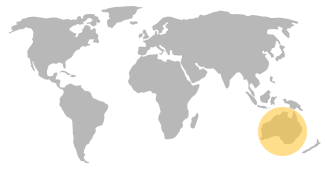

Australian Crow


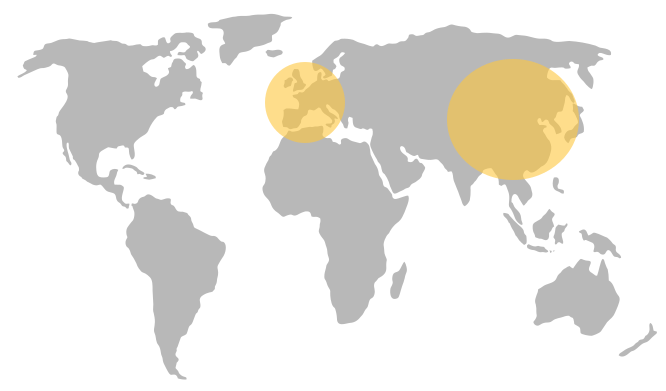
Carrion Crow
Australian Crow
Corvus
General appearance
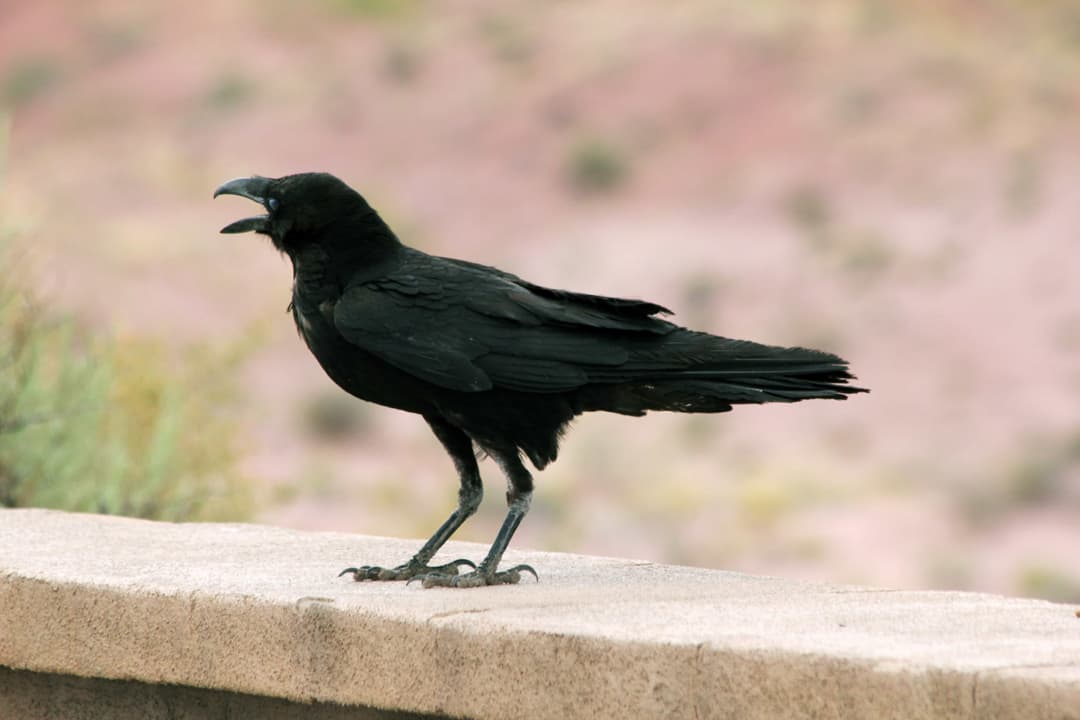
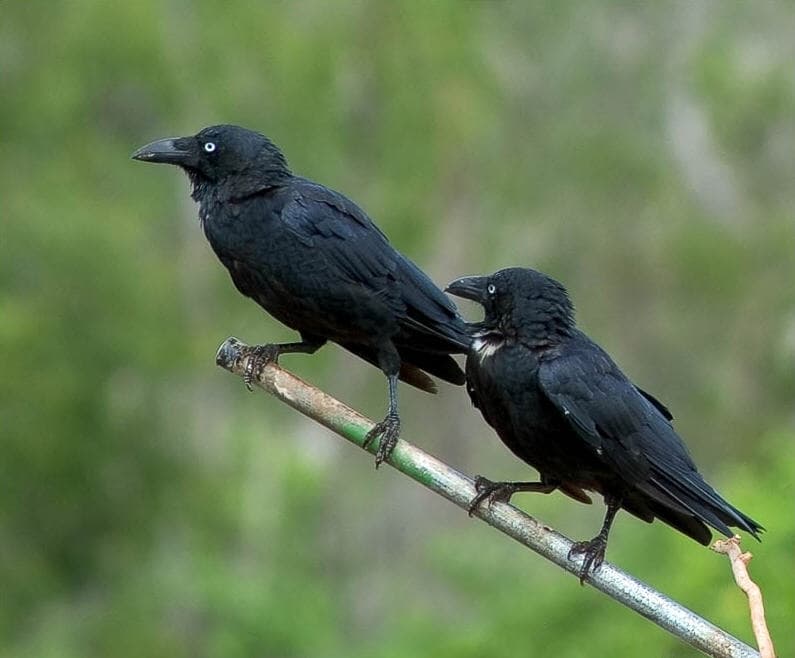
Australian crows are large, robust birds, often mistaken for ravens due to their pitch-black feathers which display a slightly glossy sheen. White patches of feathers are rare but can occur. They have solid muscular legs and stout black beaks.
Male vs female
There is little sexual dimorphism in the Australian crow species making it hard to differentiate between males and females. Size tends not to be a reliable indicator of sex, as both are generally of similar size. However, vocalizations can be a good hint since females generally have higher-pitched calls than males.
Juvenile
Juvenile Australian crows resemble adults in their dark feather coloration yet are slightly smaller in size. Their eyes gradually change color from blue or grey in fledglings to the adult crow's characteristic white as they mature.
Size
16.9 - 21.3 in/9.9 - 28.9 oz
There's more to learn about Australian Crow
View full detailsCarrion Crow
Corvus corone
General appearance
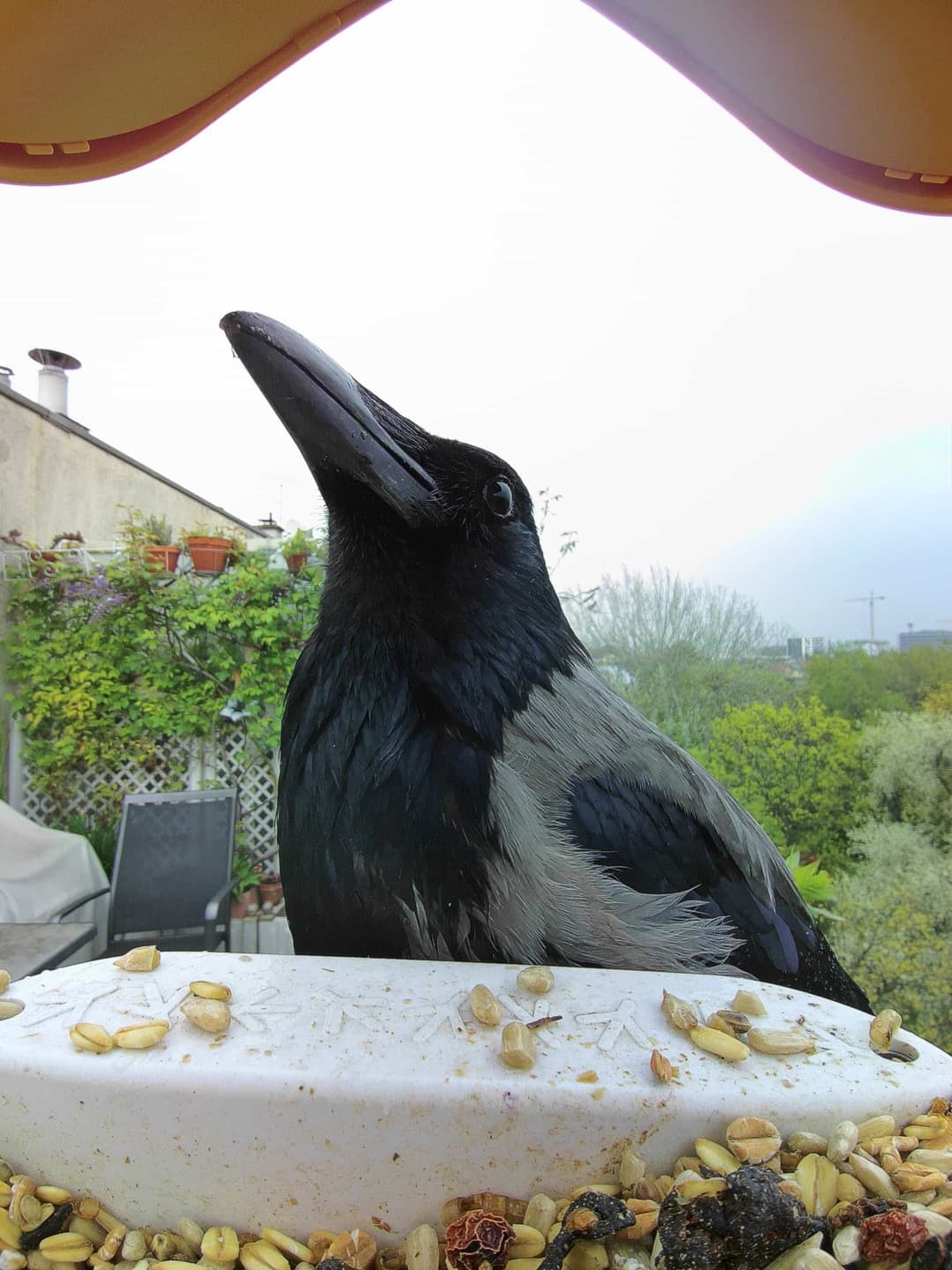
The Carrion Crow is roughly 46-51 cm long with a wingspan of 93–104 cm. It has a pure black plumage, slightly glossy, with a strong, black bill, and black legs. Its eyes are dark brown or grey. It flies with a slow heavy flapping, and has a distinct 'cash' sound.
Male vs female
Males are slightly larger than females, but otherwise, the sexes are very similar in appearance. Generally, females may have a slightly lighter build, but it is challenging to distinguish between the two based solely on physical appearance.
Juvenile
Juvenile Carrion Crows are remarkably similar to adults, still black but slightly less glossy. Their eyes initially are blue, gradually changing to brown in the first year. They lack the ruffled plumage around the neck seen in adults.
Size
18.9 - 20.9 in/14.0 - 21.2 oz
There's more to learn about Carrion Crow
View full detailsHow to tell the Australian Crow from the Carrion Crow
Visual differences
The Australian Crow and the Carrion Crow can be distinguished visually by a few key features. The Australian Crow is slightly heavier, weighing up to 1.81 lbs compared to the Carrion Crow's maximum of 1.33 lbs. Australian Crows have bright eyes, typically white, contrasted by the Carrion Crow's dark brown or grey eyes. Both species have glossy black plumage, but the Carrion Crow often appears less glossy. The Australian Crow's size ranges from 16.9-21.3 inches, while the Carrion Crow is generally 18.9-20.1 inches long. Both have stout black beaks and muscular legs but typically differ in eye color.
Key differences and behavior
Australian Crows and Carrion Crows share intelligence and adaptability, yet display distinctive behaviors. Both species are socially inclined and partake in cooperative breeding, with lifelong bonds and mutual chick-rearing. Australian Crows, found in diverse habitats from arid deserts to suburban areas, are known for their opportunistic diet, rarely visiting bird feeders due to preference for larger, varied foods. Carrion Crows inhabit open areas and urban settings across Western Europe and Eastern Asia. They frequently visit feeders, driven by their opportunistic feeding on grains, carrion, and small animals. Australian Crows fiercely defend offspring against predators, including humans, while Carrion Crows maintain a wariness of humans. Nesting involves twigs, with bones included by Carrion Crows. Australian Crows' courtship involves elaborate vocal and aerial displays; Carrion Crows engage in complex acrobatics and mutual preening. Though similar in length (17-21 inches), Australian Crows weigh more (10-29 oz) compared to Carrion Crows (14-21 oz).
Still not sure? Here are more lookalikes!
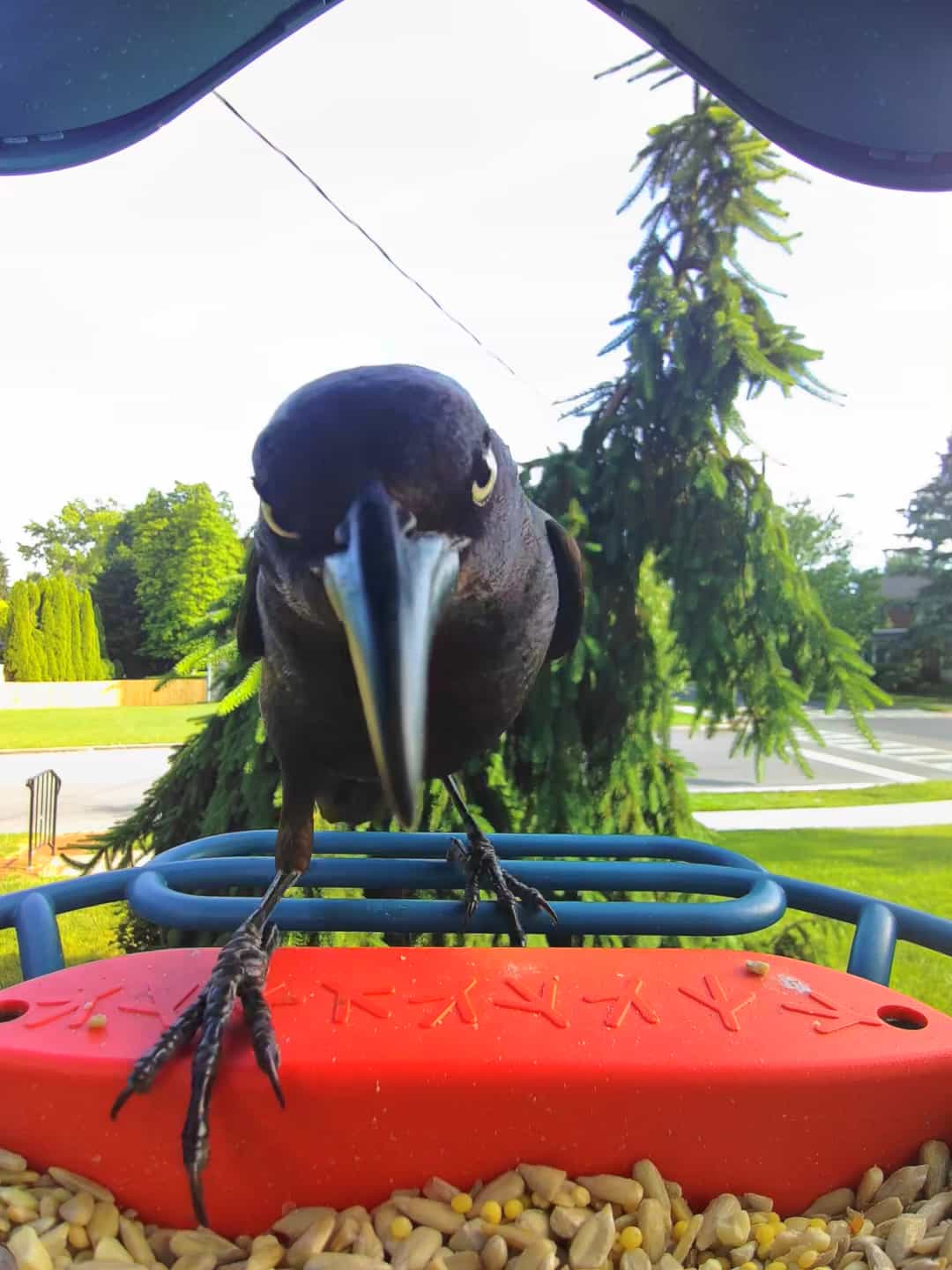
Australian Crow vs Common Grackle

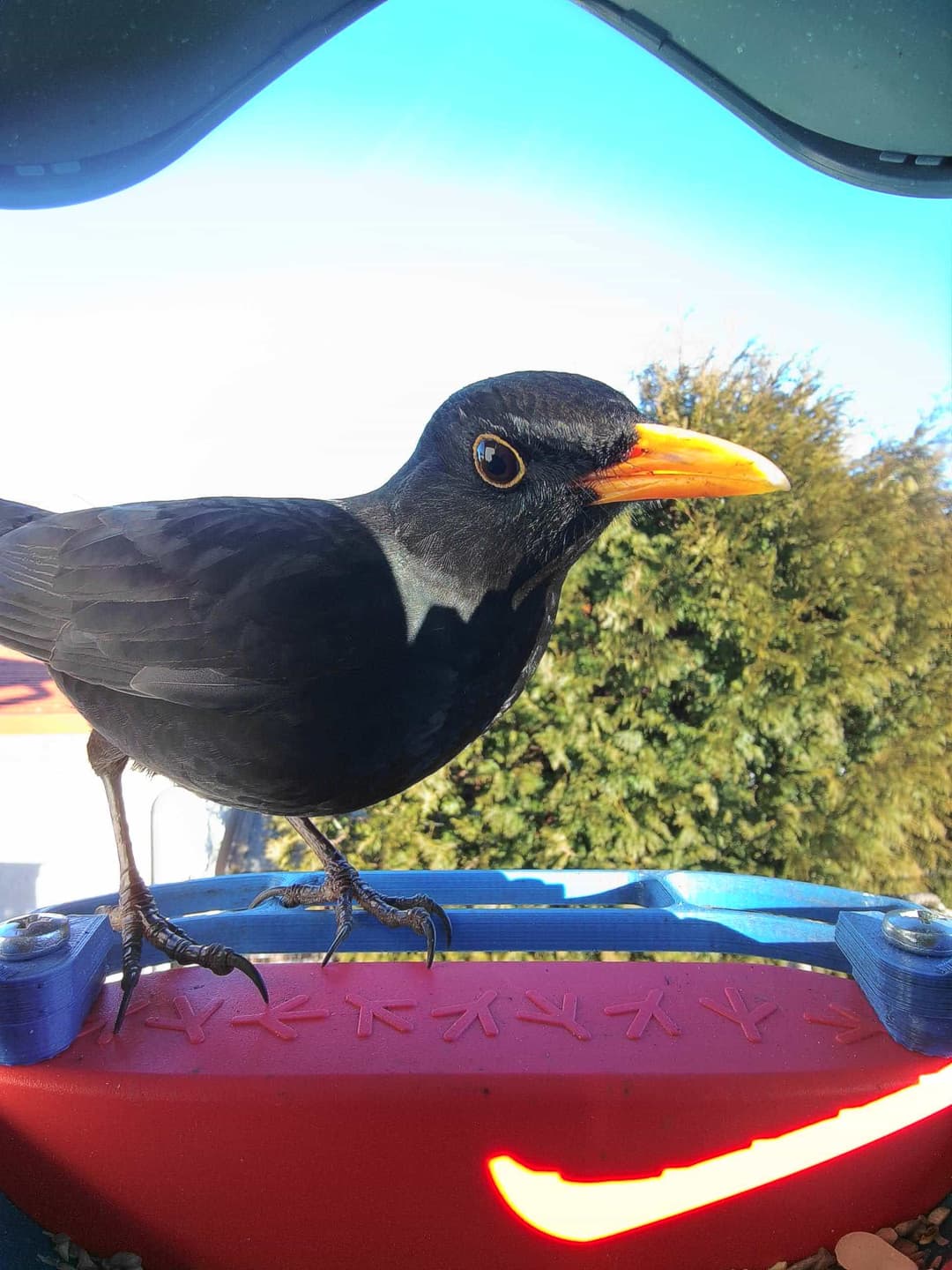
Australian Crow vs Common Blackbird



Australian Crow vs [Select a bird]

[Select a bird]
Pick a bird to compare
Carrion Crow vs [Select a bird]
[Select a bird]
Pick a bird to compare