Australian Crow or House Crow?
Here's how to tell the difference
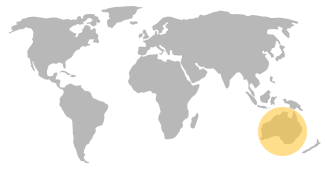

Australian Crow

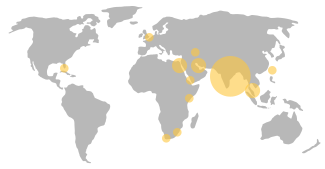
House Crow
Australian Crow
Corvus
General appearance
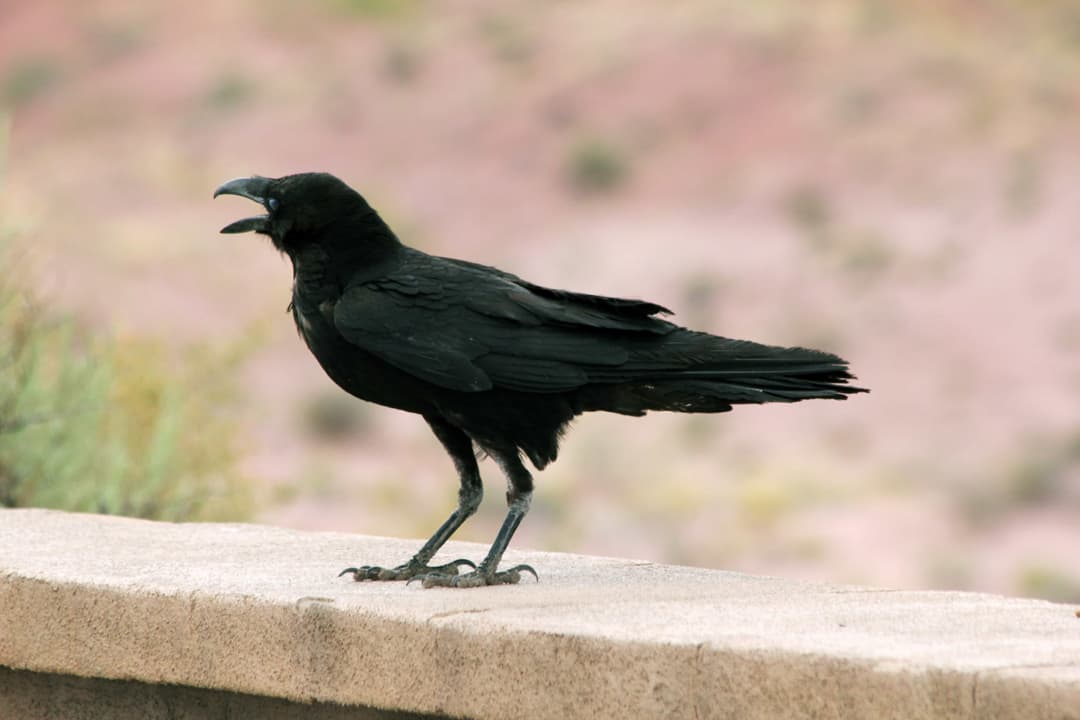
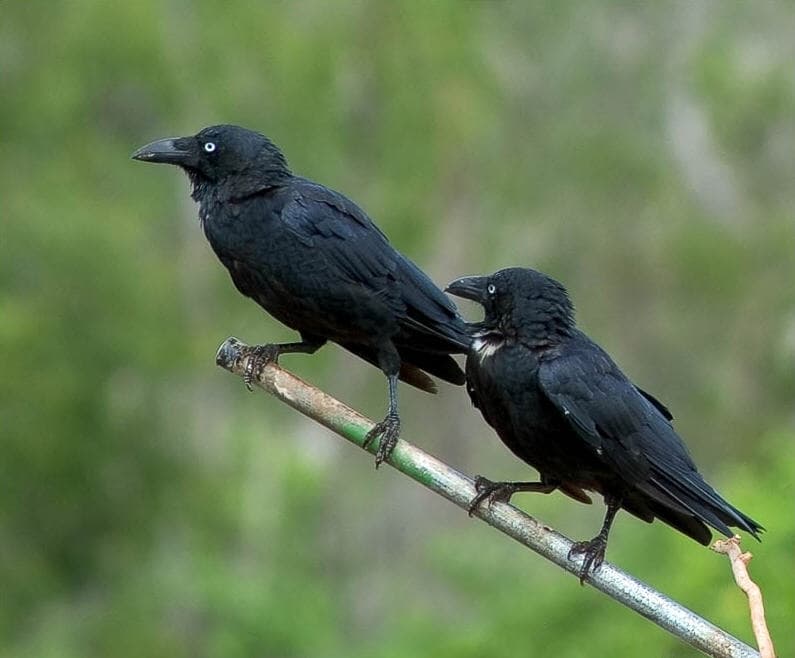
Australian crows are large, robust birds, often mistaken for ravens due to their pitch-black feathers which display a slightly glossy sheen. White patches of feathers are rare but can occur. They have solid muscular legs and stout black beaks.
Male vs female
There is little sexual dimorphism in the Australian crow species making it hard to differentiate between males and females. Size tends not to be a reliable indicator of sex, as both are generally of similar size. However, vocalizations can be a good hint since females generally have higher-pitched calls than males.
Juvenile
Juvenile Australian crows resemble adults in their dark feather coloration yet are slightly smaller in size. Their eyes gradually change color from blue or grey in fledglings to the adult crow's characteristic white as they mature.
Size
16.9 - 21.3 in/9.9 - 28.9 oz
There's more to learn about Australian Crow
View full detailsHouse Crow
Corvus splendens
Also known as: Indian Crow, Graynecked Crow, Greynecked Crow, Ceylon Crow, Colombo Crow
General appearance
The house crow, also known as the Indian, greynecked, or Ceylon crow, has a glossy black color with a greyish neck and breast. It features a strong, stout bill and a tail longer than other crows. Dominatingly omnivorous, it has a versatile diet. It stands out with its distinctive cawing sound.
Male vs female
Males and females of the house crow species look identical with no significant difference in coloration or size, a trait known as sexual monomorphism. Both sexes have similar black and grey coloration. Still, males may be slightly larger and have a slightly thicker bill, which is not easily noticeable.
Juvenile
Juvenile house crows look much like the adults but have slightly duller coloration. Their feathers lack the glossy sheen seen in adults and they have a lighter-grey neck and breast. Juveniles also have brownish eyes, which darken with age, and their bills and legs are not as strongly black as in adults.
Size
15.7 - 16.9 in/8.6 - 13.1 oz
There's more to learn about House Crow
View full detailsHow to tell the Australian Crow from the House Crow
Visual differences
The Australian Crow is larger (17-21 inches, 10-29 ounces) compared to the House Crow (16-17 inches, 9-13 ounces). Both have glossy black plumage, but the House Crow features a distinctive greyish neck and breast, unlike the uniformly black Australian Crow. Australian Crows have bright white eyes, while House Crows have brown eyes. The Australian Crow's black bill is stout, whereas the House Crow's bill and tail are long. Juveniles of both have duller plumage, but the House Crow juveniles have visible lighter grey on the neck and breast.
Key differences and behavior
Australian Crows and House Crows both display intelligence and adaptability; however, they exhibit distinct behavioral characteristics. Australian Crows are often found in woodlands and suburban areas throughout Australia, while House Crows thrive in human-altered environments like cities and agricultural regions, particularly from the Indian Subcontinent to parts of Africa. Both species engage in courtship through vocal and physical displays, yet Australian Crows form lifelong pair bonds, while House Crows might present food during courtship. Australian Crows have a diverse diet, consuming insects, small animals, and carrion, whereas House Crows focus on urban scraps and waste. In parenting, both species are attentive, but Australian Crows' protective nature extends to defending against predators, including humans. Weight and size differ, with Australian Crows being larger (0.6-1.8 lbs, 17-21 in) compared to House Crows (0.5-0.8 lbs, 16-17 in), which reflects in their presence, as House Crows tend to be more social and louder, forming large roosts.
Still not sure? Here are more lookalikes!
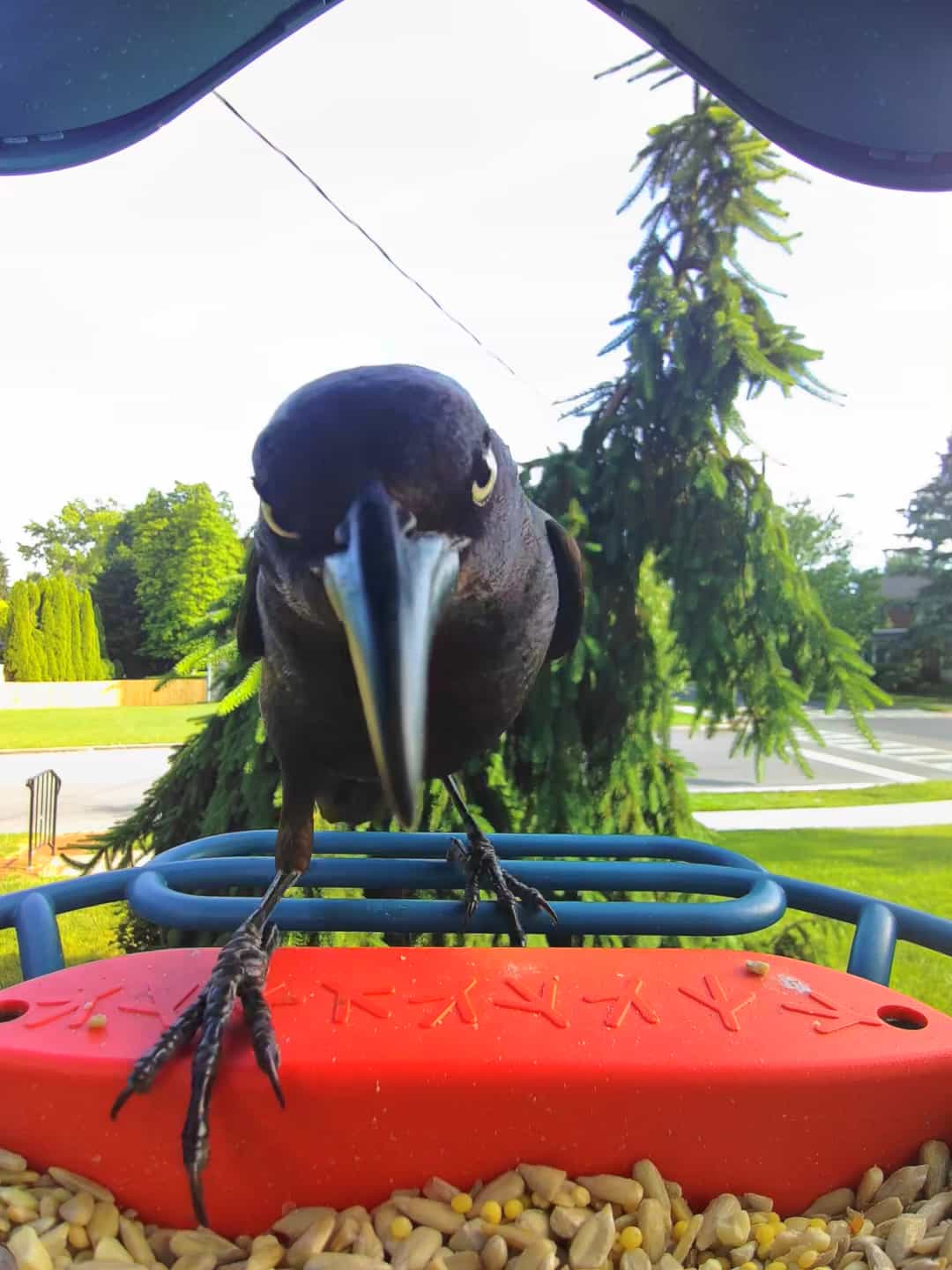
Australian Crow vs Common Grackle

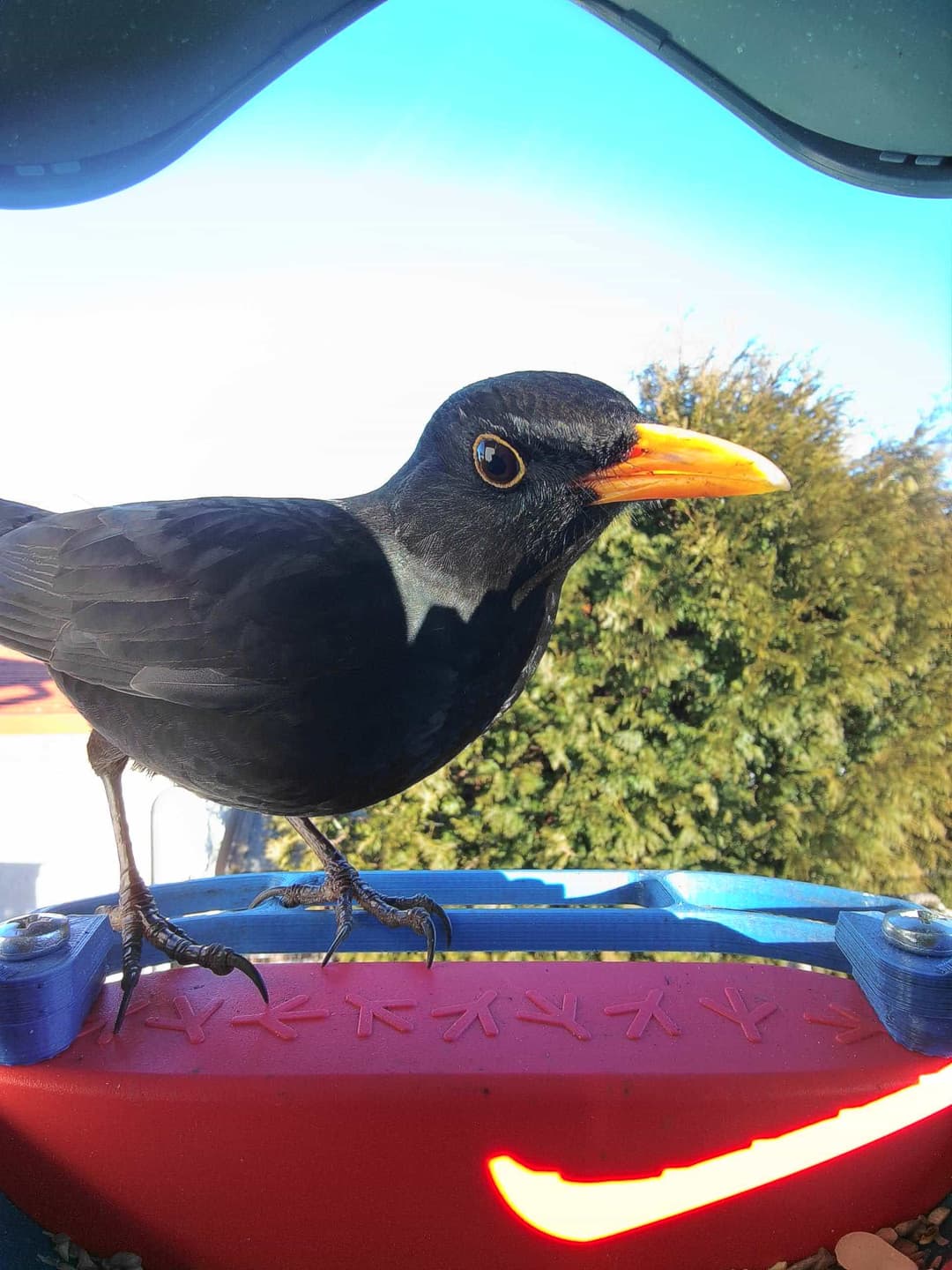
Australian Crow vs Common Blackbird


Australian Crow vs [Select a bird]

[Select a bird]
Pick a bird to compare
House Crow vs [Select a bird]

[Select a bird]
Pick a bird to compare