
Common Grackle
Common Grackle
Also known as: Blackbird
Quiscalus quiscula


Quick Identification guide
Quick Identification guide
Male
- •
iridescent black plumage with hints of purple, blue, or green
- •
long tail that appears keel-shaped
- •
sturdy, slightly curved beak that is dark in color
Female
- •
brownish body with a hint of iridescence, lacking the male's vibrant hues
- •
slightly shorter tail than the male but similar in shape
- •
sleek, dark beak that is less prominently curved
What does a common grackle sound like?
The common grackle frequently produces a clucking sound. Its signature vocalization is a high-pitched rising screech reminiscent of a rusty hinge, a memorable, abrasive sound. The grackle's call varieties also include buzzes and whistles, creating a diverse repertoire of sounds in communication or territorial displays. Their gazes may accompany their unique calls. Despite their unique blend of noises, their vocalizations generally have harsh, grating qualities.


Description
These noisy birds will come to your feeders but usually eat from the ground and sometimes maybe even steal food right from under other birds' beaks! They engage in a practice called anting – this means they allow ants to walk all over their body and secrete formic acid, which is thought to kill parasites. Ants aren't their only means of pest control, though, they also use walnut juice, mothballs, lemons, limes and chokecherries.
The common grackle can weigh between 74to142grams and be from28to34centimeters tall.
The common grackle typically lives up to 22 years, outliving related species like American crows and Northern mockingbirds. In early years, grackles face threats from predation and disease, while in adulthood, factors like habitat loss influence their lifespan. Similar to related species, grackles in captivity tend to live longer.
Did you know?
Most popular questions about common grackle
How to recognise a common grackle?
General appearance
The common grackle is about the size of a crow, bearing a distinctive long tail with a crease down the middle. Coloring varies with two forms presented, namely, the 'Bronzed Grackle' and the 'Purple Grackle.' The former spots a bronzy body offset by a blue-black head while the latter shines with glosses of purple and green, offering less contrast.
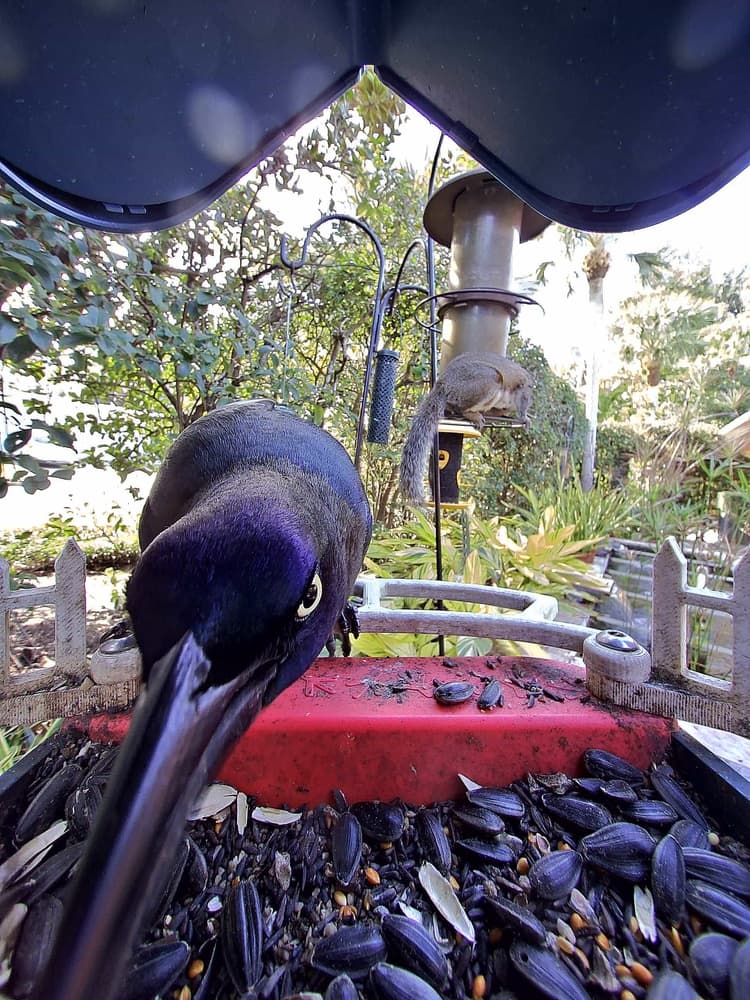
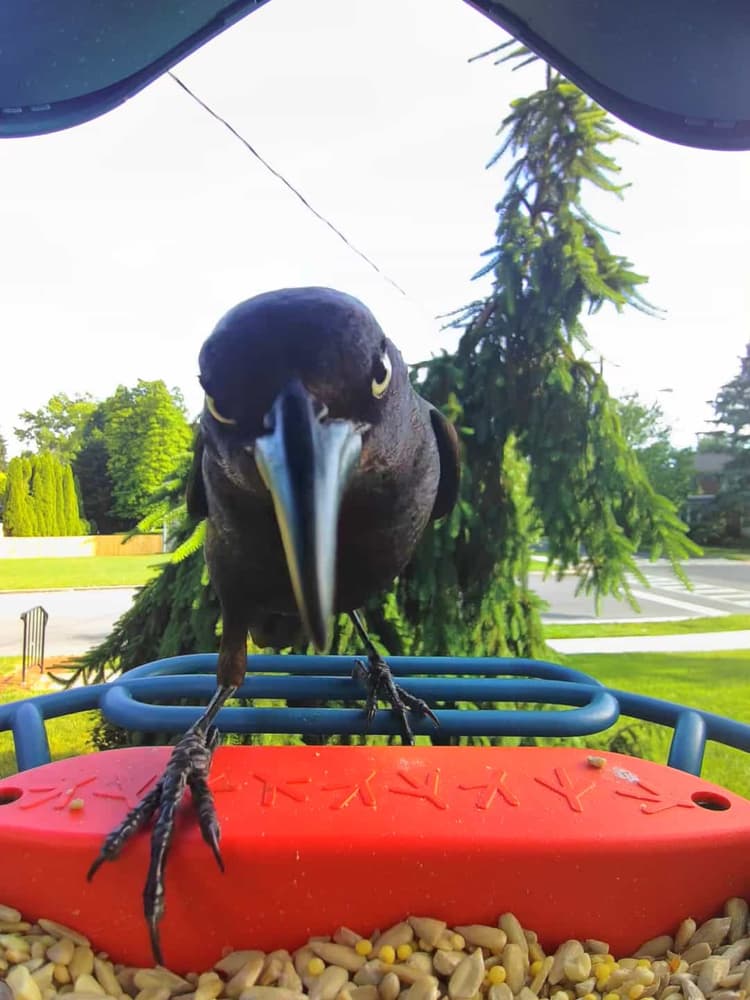
Male vs female
Physical variations between the sexes are not explicitly stated. However, based on the Bronzed and Purple forms noted, it could be inferred that some slight difference in color intensity and gloss may exist.
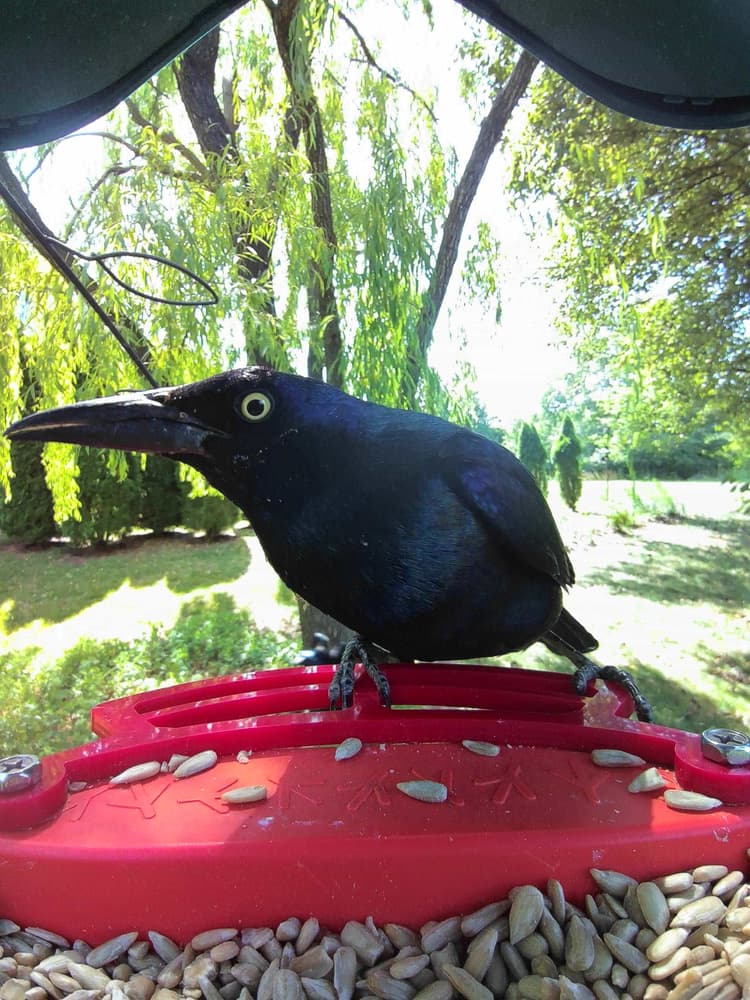
Male Common Grackle
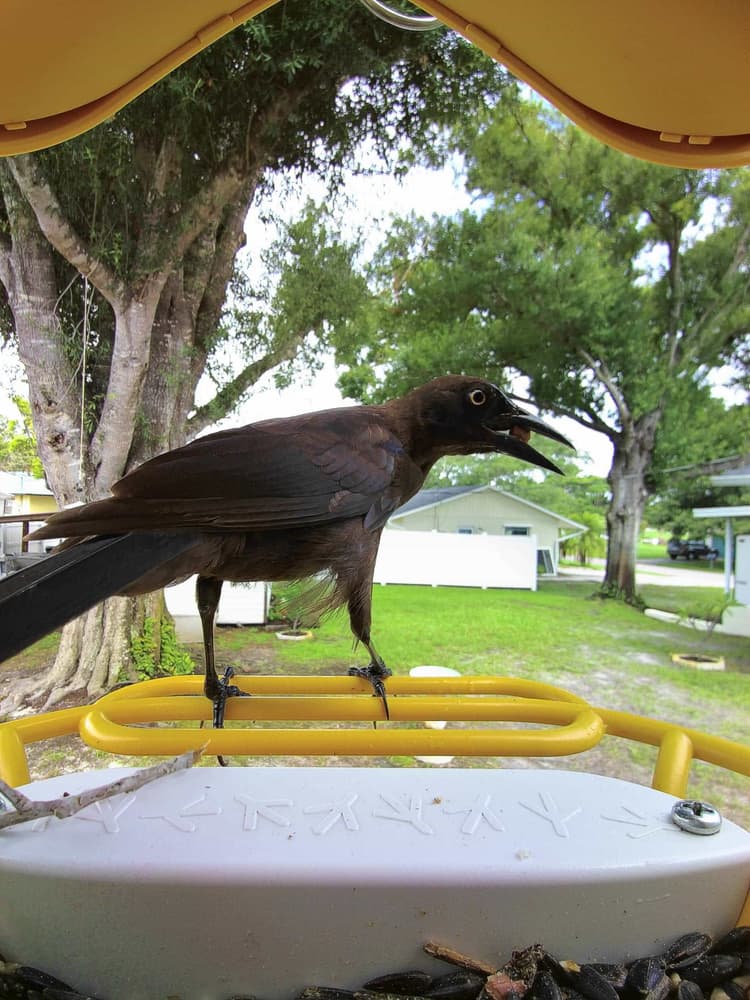
Female Common Grackle
Juvenile
Juvenile grackles present dark eyes in contrast to the whitish-yellow eye color observed in adults. Molting, a period prevalent in late summer, results in these younger birds having short or fragmented tails.
Often mistaken for
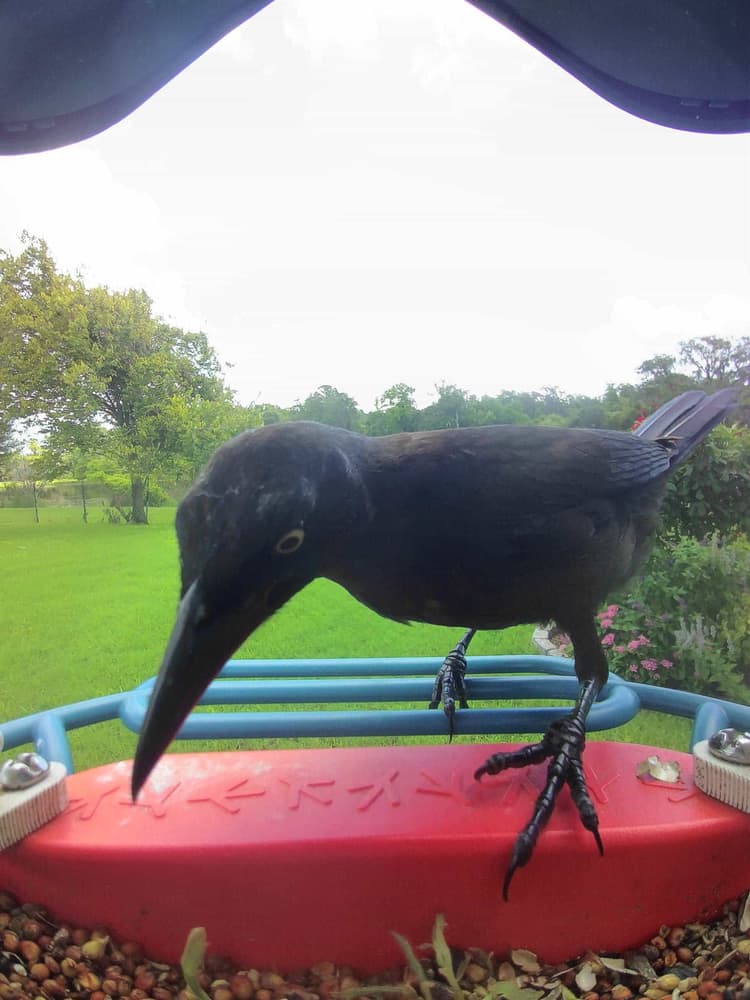
Great-Tailed Grackle vs Common Grackle
The Great-Tailed Grackle is larger and has a longer tail than the Common Grackle. Its call is more musical. Look for the male's iridescent purple hue compared to the bronze sheen of a Common Grackle.
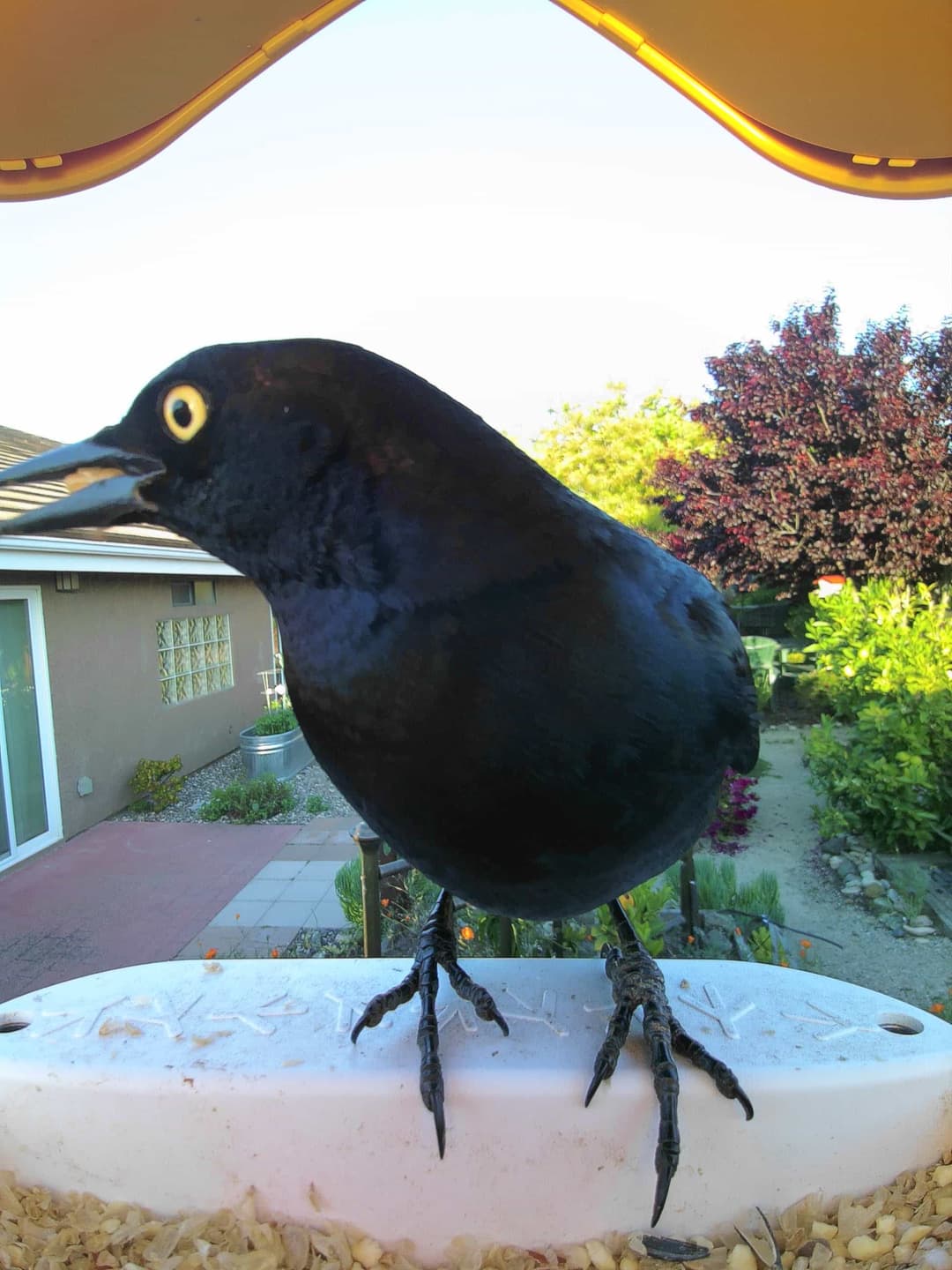
Boat-Tailed Grackle vs Common Grackle
Boat-Tailed Grackles are larger, with longer tails and broader bodies. They reside mainly along coastal areas. Their iridescence leans more towards purple, while Common Grackles sport a bronze tone.
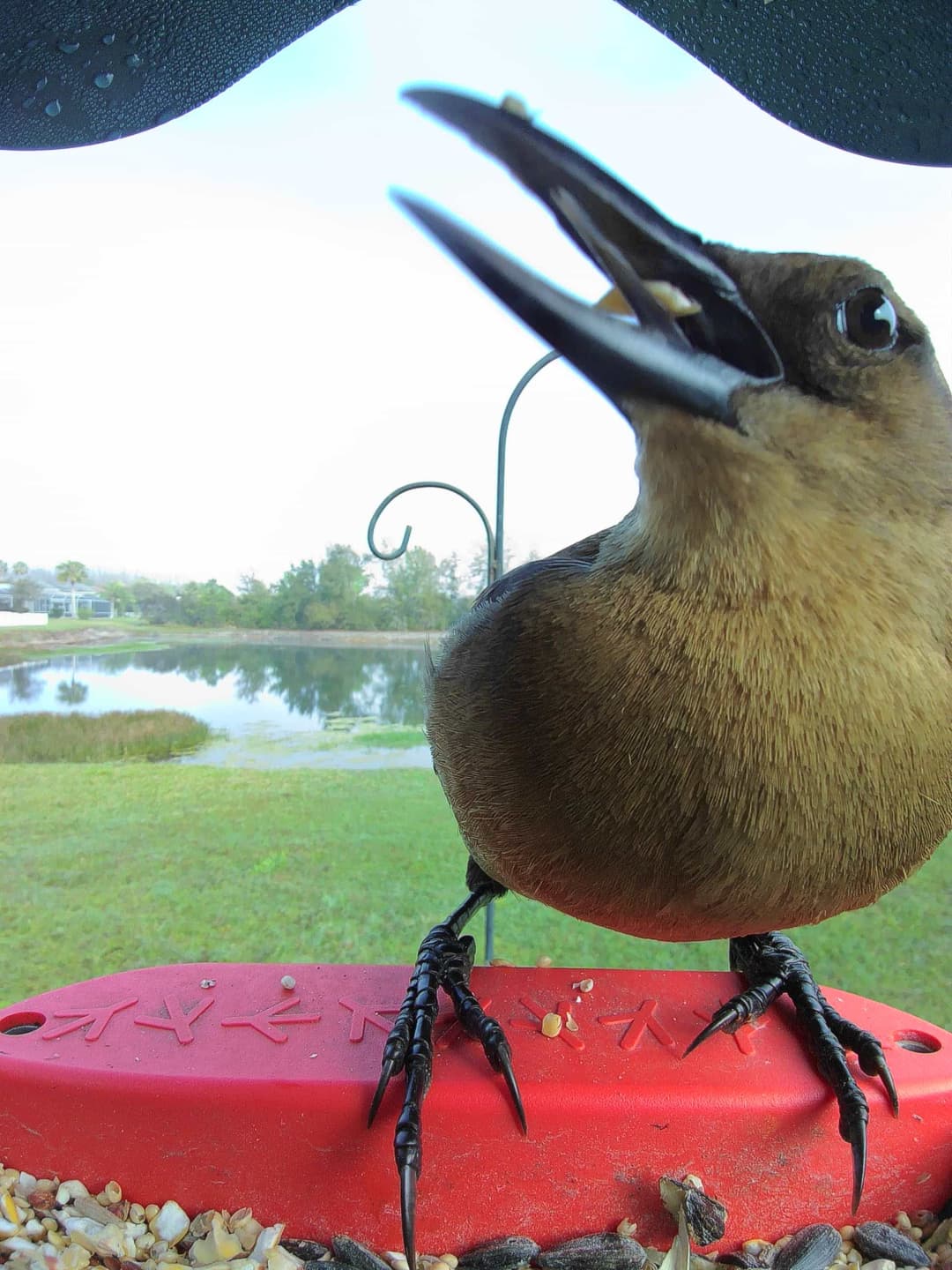
Brewer’s Blackbird vs Common Grackle
Smaller and with a thinner bill than the Common Grackle, the Brewer's Blackbird lacks the bronze sheen. Males are glossy black with pale eyes; females are brownish-grey.
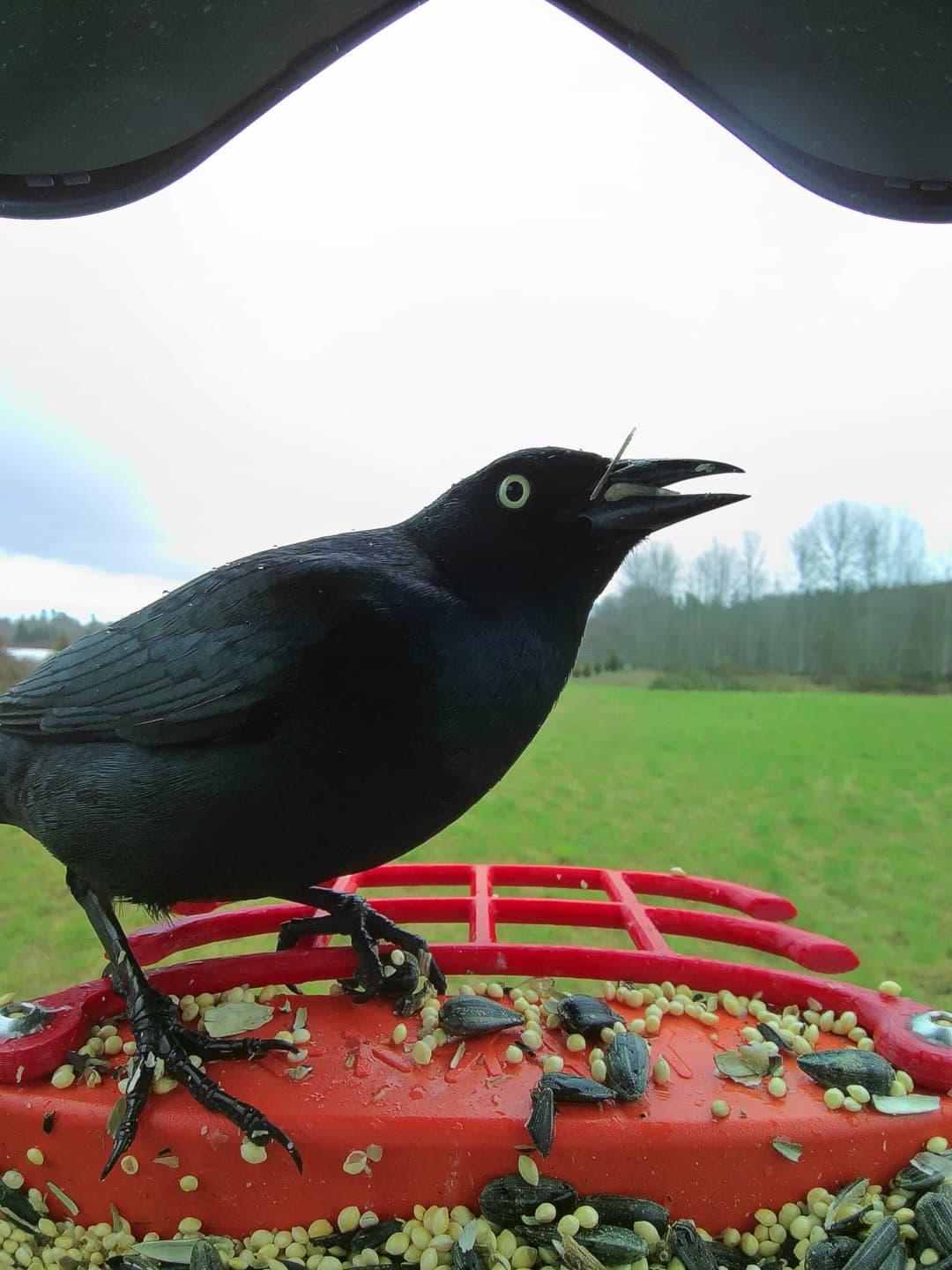
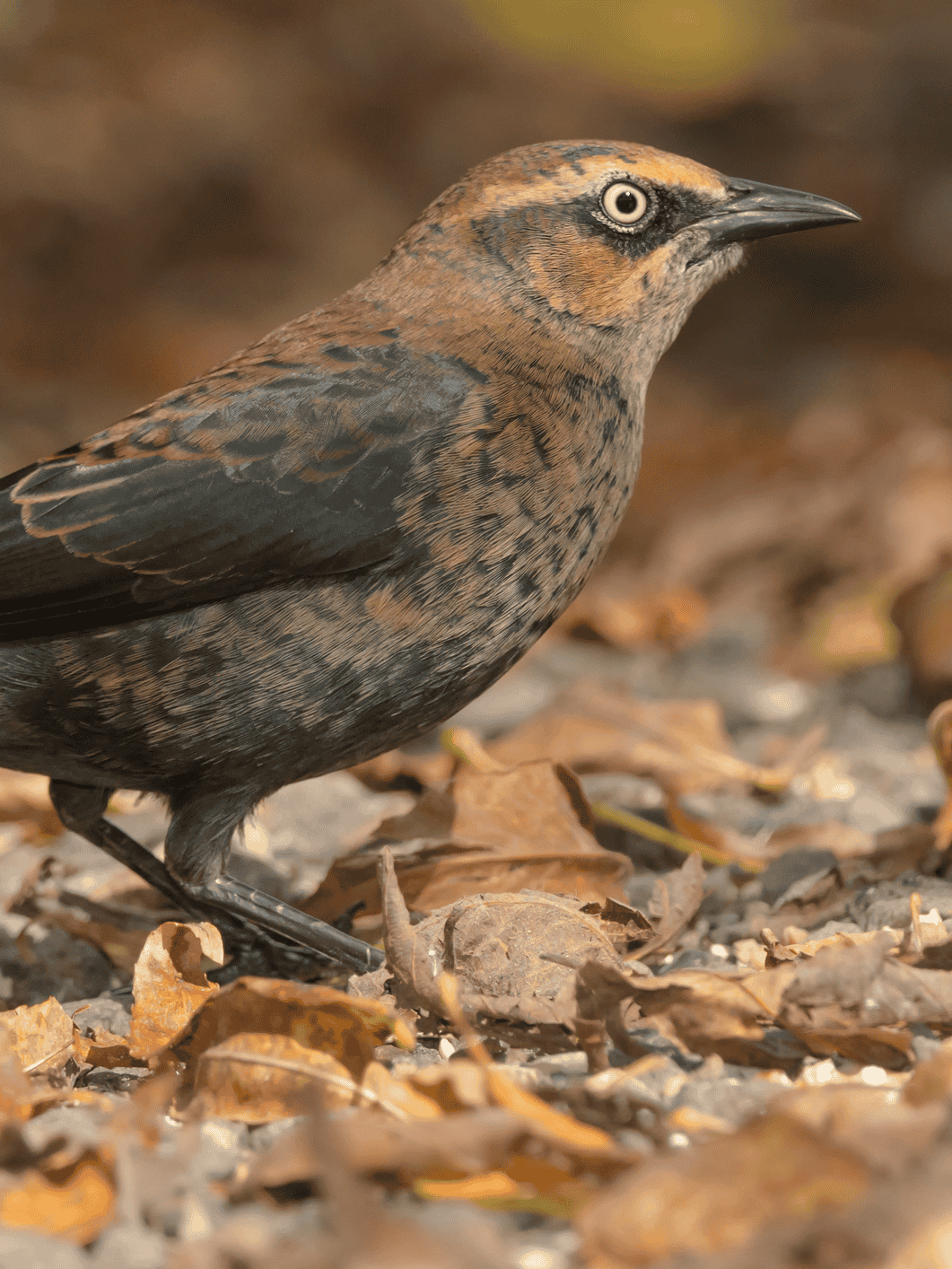
Rusty Blackbird vs Common Grackle
In winter, Rusty Blackbirds display a rusty-edged appearance. They are smaller than Common Grackles, with shorter tails. The females have a distinct rusty color more notable than their male counterparts.
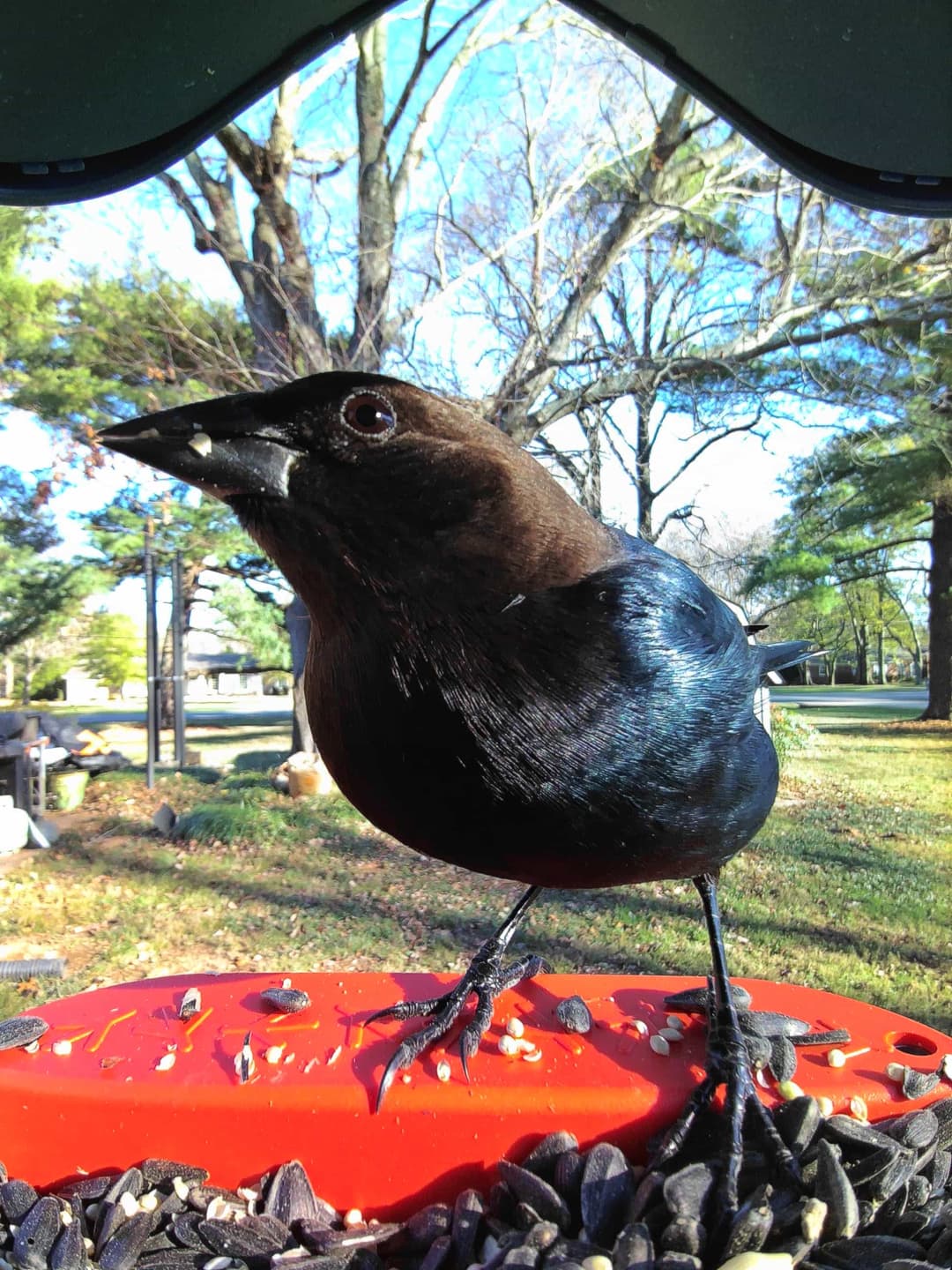
Brown-Headed Cowbird vs Common Grackle
Brown-Headed Cowbirds are shorter with a smaller, stouter body. Males have a brown head contrasting with a black body, unlike the uniform iridescence of Common Grackles.
Breeding and nesting habits of the common grackle
Mating behaviors
During courtship, male grackles display by fluffing out their body feathers and partially spreading their wings and tails. They additionally give short, scraping songs and may posture with their bills pointing straight up to attract a mate.
Nesting details
Grackles typically nest in small colonies. Nests are often well hidden in dense trees or shrubs near water and are usually less than 20' above ground. They can also be located in unusual sites like tree holes, hollow stumps, or inside old buildings. The female constructs a bulky open cup-shaped nest using weeds, grass, twigs, and mud, lining the interior with fine grass.
Eggs and chick-rearing
Grackle eggs are incubated primarily by the female. After hatching, both parents may be involved in feeding and caring for the young. Rearing occurs in the concealed nest, providing protection and a suitable environment for the development of the chicks until they are ready to fledge.
What does a common grackle like to eat?
Aquatic animals
Bird eggs
Birds
Fruits
Insects
Scraps
Small animals
Snails
Spiders
Natural diet
The common grackle is an omnivorous bird, feeding on a wide variety of items. Its natural diet includes insects like beetle grubs, grasshoppers, and caterpillars, as well as spiders, millipedes, and earthworms. It also consumes crayfish, minnows, frogs, lizards, eggs and young of other birds, and small rodents. In addition to animal prey, the grackle eats vegetable matter, which becomes more dominant in its diet during winter. This includes berries, seeds, waste grain, and acorns.
Bird feeders
At bird feeders, common grackles often consume seeds such as sunflower seeds and cracked corn. They are known to be aggressive at feeders and may also eat suet and peanuts, taking advantage of the variety of offerings typically available at these feeding stations.
Selecting the right foods
Common grackles are omnivores and they love a variety of food. However, Bird Buddy seeds are a favorite because they are carefully selected by experts and optimized for the season. You can also tempt them with suet and grains such as corn.
Choosing the right feeder
Grackles prefer tray feeders or large tube feeders. Because they're bigger birds, they appreciate the space. To prevent waste, ensure the feeder has a cover to protect from weather and other animals.
Creating a grackle-friendly environment
Grackles are attracted to water, so including a birdbath or a water feature in your yard can be beneficial. Also, they like to perch and nest in tall trees and dense shrubs, so consider adding those in your landscape.
Fun tricks to attract grackles
Ensure you keep other larger birds away from your feeder as they can sometimes scare off grackles. You could also play recordings of grackle songs to invite them for maybe a sing-along! Remember to keep your yard safe by keeping pets away and maintaining your feeders regularly.
Where can you find common grackles?
Based on Birdbuddy sighting data. The heatmap shows where Birdbuddy users have spotted this species.
Embed this map
This map shows the full native range based on scientific range data.
Primary habitat
Common grackles are often found in open or semi-open landscapes such as farmland, pastures, suburban lawns and towns. They tend to nest and roost in places with dense coniferous trees near open areas.
Additional range
Beyond typical rural and suburban settings, these birds can also be found foraging in cattle feedlots and marshes, and residing on the edges of woodlands and in parks.
Do they migrate?
The common grackle exhibits migratory behavior, although it is present all year in much of its range. In the northern parts of its range, the common grackle undertakes seasonal migrations. During spring, their northward migration is relatively early, typically commencing in late February and March, as they move from southern regions to their breeding areas in the northern United States and southern Canada. This early migration allows them to establish territories for breeding. In the fall, their southward migration begins fairly late, often starting in September and continuing into November. During this period, the grackles travel to warmer regions, including the southeastern United States, where they spend the winter months. They migrate in large, conspicuous flocks, often mixed with other blackbird species. Key staging areas during migration can include wetlands and agricultural fields, where they find abundant food sources. Although they migrate, many common grackles remain in parts of their range year-round, particularly in areas like the central and southeastern United States, where the climate is milder and supports their needs throughout winter. Thus, their migratory behavior varies significantly across their range.
What is the role of common grackles in nature and how to protect them?
Conservation status
The common grackle is widespread and very common, having expanded its range westward in recent decades. It is not considered vulnerable or endangered. While its population remains robust, conservation efforts focus on monitoring habitats and potential threats like pesticide use and habitat loss. Additionally, the common grackle may face challenges from human-wildlife conflicts as it is sometimes seen as a nuisance in agricultural areas. Overall, no significant immediate threats jeopardize its conservation status.
Ecological role of common grackles
Its role in the ecosystem
The Common Grackle plays a significant role in the ecosystem. Being omnivorous, it aids in pest control by feeding on insects such as beetle grubs, grasshoppers, caterpillars, and many others. This may help regulate the populations of these insect species, reducing their potential harm to ecosystems and agriculture. Additionally, the Common Grackle may consume spiders, millipedes, and small rodents, contributing to a broader biological control of pests. Besides its role in pest control, the grackle also contributes to seed dispersal. It consumes various types of berries, seeds, and waste grains. The grackle's omnivorous diet, thus, not only helps in controlling pest population but also assists in the distribution and propagation of various plant species. Moreover, its nesting habits in colonies can potentially influence the structure of local bird populations and their habitats.
How to help protect common grackles
Preservation tips
Habitat preservation strategies
Preserving the natural habitat of the common grackle is vital. This involves protecting open grounds, wetlands, and forest edges. Avoid use of pesticides, which impact their food sources - insects, grains, and seeds. Promote the maintenance of tree cavities across urban and suburban landscapes, which serve as homes for these birds.
Community science initiatives
Promote involvement in community science projects for common grackle conservation. Engage individuals and school groups in monitoring the bird populations and reporting sightings. Encourage local communities to build and maintain birdhouses suitable for grackles. Activities like these will increase awareness and engagement in grackle conservation efforts.