Large-Billed Crow or American Crow?
Here's how to tell the difference
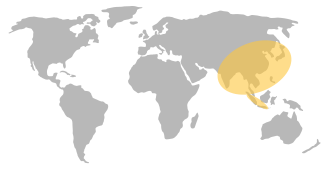

Large-Billed Crow


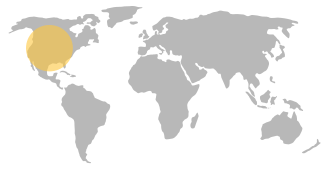
American Crow
Large-Billed Crow
Corvus macrorhynchos
Also known as: Thick-Billed Crow
General appearance
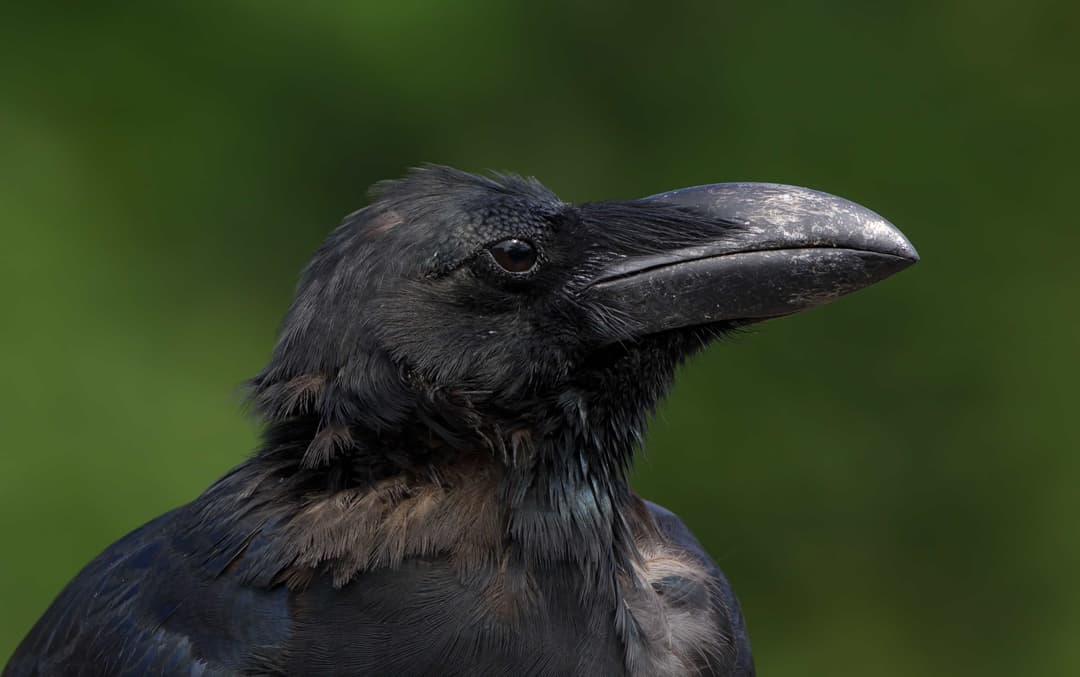
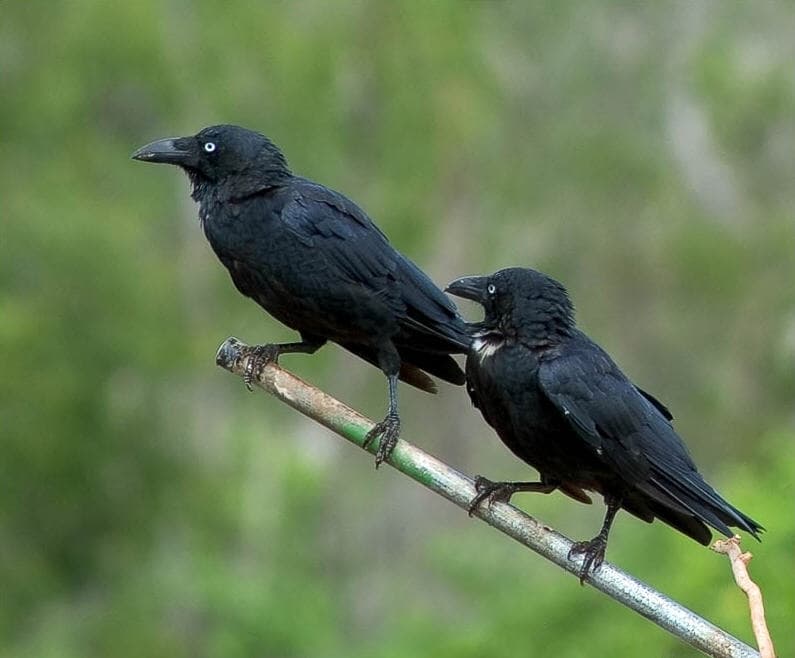
The large-billed crow, as the name suggests, is notable for its relatively large beak. These crows are generally black, even though a gray or silver sheen may appear over the feathers in bright sunlight. Their eyes are often a stark contrast in a striking shade of white or pale blue.
Male vs female
Sexual dimorphism is less prominent in large-billed crows, making it difficult to distinguish males from females based on physical appearance alone. Both genders share similar coloration and size, although males tend to be slightly larger.
Juvenile
Juvenile large-billed crows resemble adults but tend to have lighter-colored eyes, usually a duller blue or gray. Additionally, juveniles may be identified by the comparatively smaller size of their beaks, which gradually increase as they age.
Size
18.1 - 23.2 in/15.9 - 35.3 oz
There's more to learn about Large-Billed Crow
View full detailsAmerican Crow
Corvus brachyrhynchos
General appearance
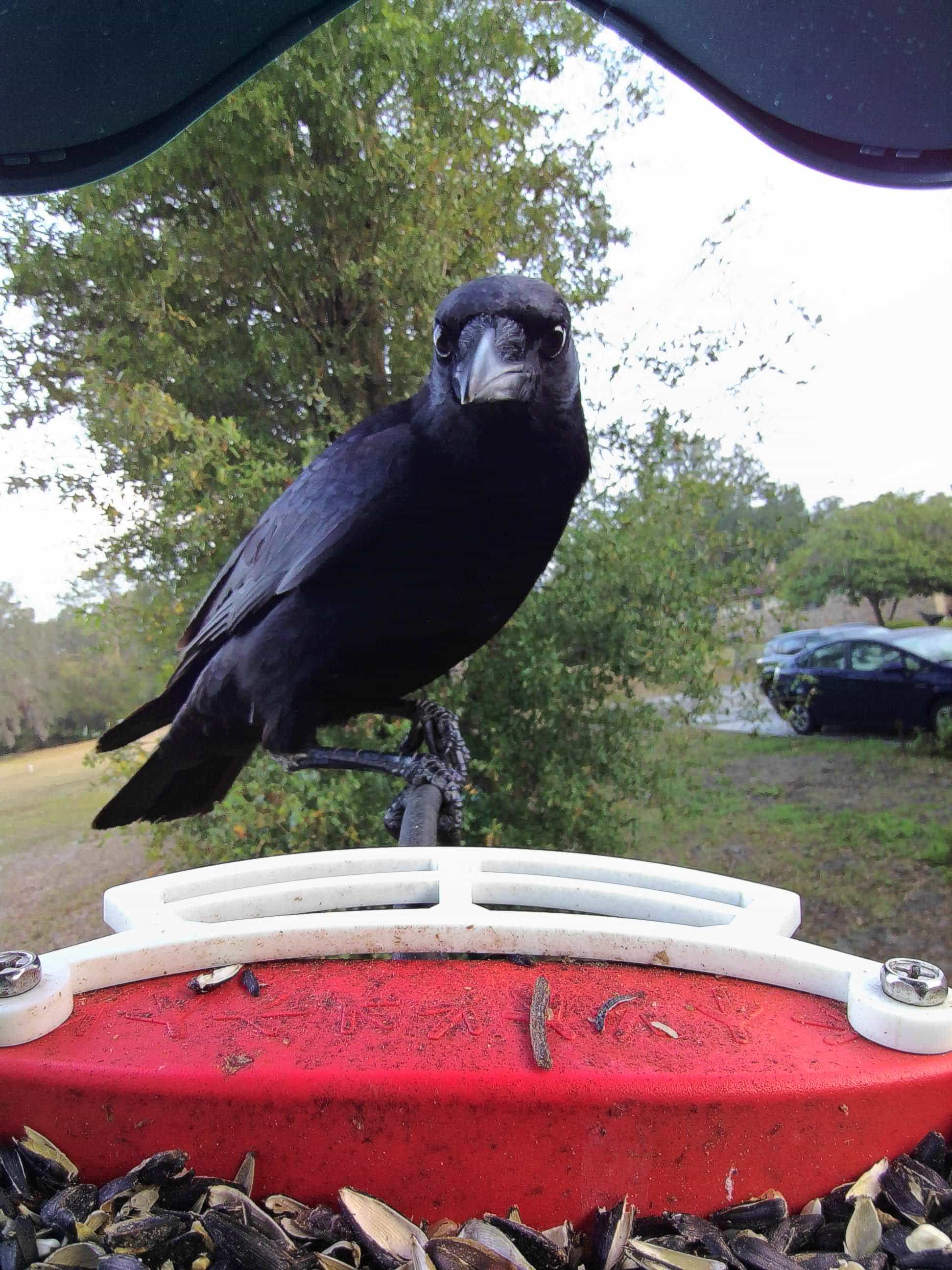
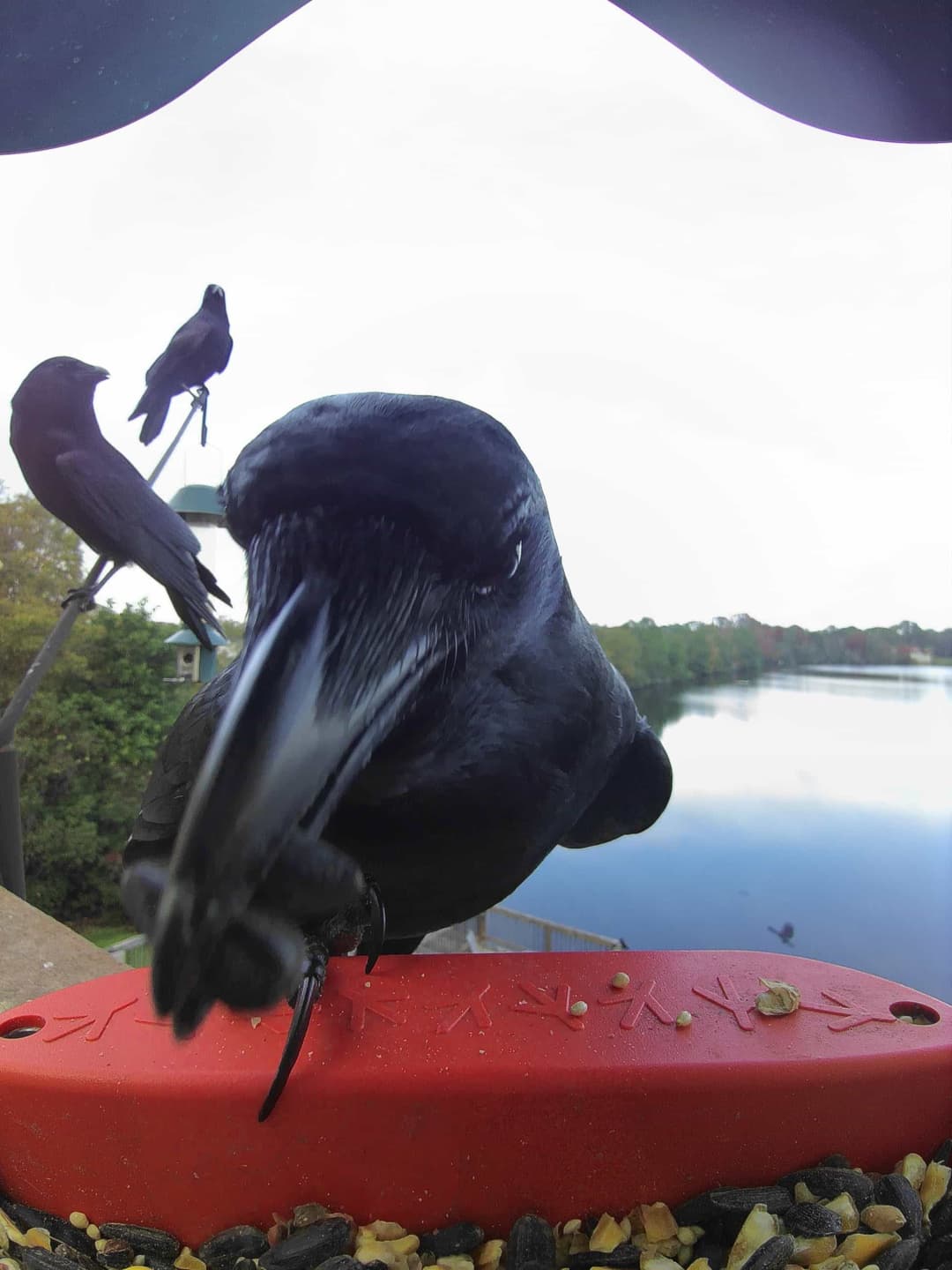
The American Crow is a bird measuring 17-21 inches, or 43-53 centimeters, in length. It is easily identifiable by its complete black pigmentation and robust beak. Characteristic tail is rather short, ending in a shape close to a square when not in flight. In flight, the wings take a broad, fingered yet rounded shape. This species is noticeably larger compared to other members of the blackbird family.
Male vs female
Males and females are monomorphic, meaning they share similar appearances. Both sexes show the same strong all-black coloration from beak to feet and also share the same size, making it difficult to differentiate between them based on visual characteristics alone. They are both larger than other members of the blackbird family.
Juvenile
Juvenile crows bear a resemblance to the adults but can be identified by their slightly different voices and shapes. However, as they mature, these differences become less recognizable, and they assume full characteristics of the adults.
Size
16.9 - 20.9 in/11.1 - 20.3 oz
There's more to learn about American Crow
View full detailsHow to tell the Large-Billed Crow from the American Crow
Visual differences
The Large-Billed Crow, measuring 18-23 inches, has a prominent large beak and can exhibit a gray or silver sheen in sunlight, along with striking pale eyes, often white or pale blue. In contrast, the American Crow is 17-21 inches long, uniformly black with a robust beak, and has a shorter, square-ended tail. Morphological differences like the Large-Billed Crow's size and notably larger beak set it apart visually from the American Crow, which has a consistent black coloration and a fingered wing appearance in flight.
Key differences and behavior
The Large-Billed Crow, native to South and Southeast Asia, adapts to tropical climates and urban areas, while the American Crow thrives in North America's semi-open habitats and urban environments, avoiding deserts. Both exhibit intelligent behaviors and utilize tools. Large-Billed Crows have complex courtship and shared parenting, typically nesting higher in trees, while American Crows involve older young as helpers and nest at varied heights. Both species are omnivorous; however, the Large-Billed Crow often consumes smaller mammals and carrion, while the American Crow's diet leans more towards insects and plant matter. Both species forage in diverse habitats and are drawn to human-provided food. The cooperative breeding and helper system in American Crows is a notable distinction from the simpler pair-focused nesting of Large-Billed Crows.
Still not sure? Here are more lookalikes!




Large-Billed Crow vs [Select a bird]

[Select a bird]
Pick a bird to compare
American Crow vs [Select a bird]
[Select a bird]
Pick a bird to compare