Rock Sparrow or House Sparrow?
Here's how to tell the difference


Rock Sparrow


House Sparrow
Rock Sparrow
Petronia petronia
Also known as: Rock Petronia
General appearance
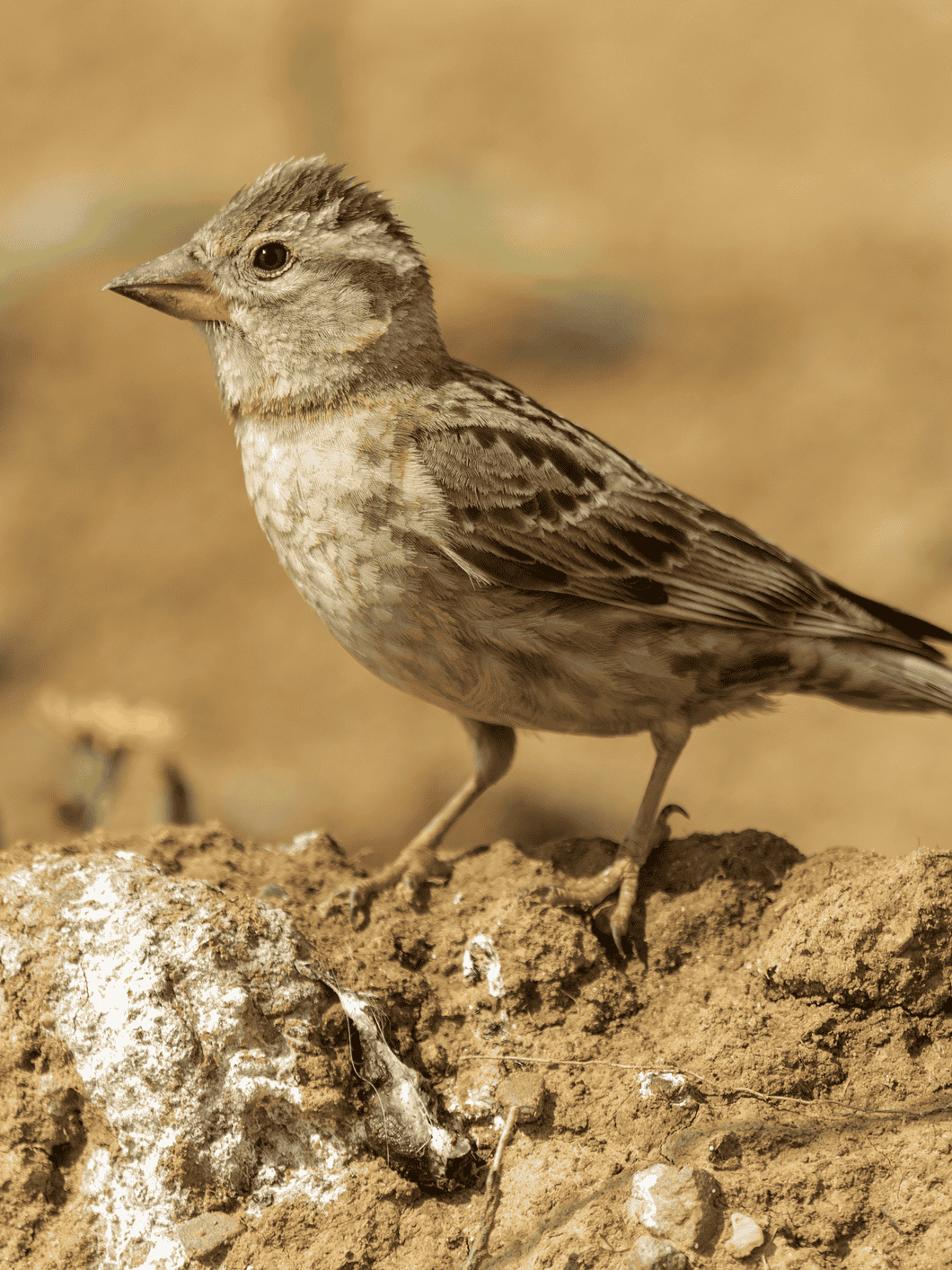
The rock sparrow is a small bird characterized by its size, about 15 centimeters in length. The coloration primarily consists of greyish-brown plumage peppered with black, white, and yellow markings. They also host distinctive yellow and black 'teardrop' features around their eyes.
Male vs female
Sexual dimorphism is subtle in rock sparrows. Males are more colorful with a stronger contrast between their grey and brown feathers. They have a striking black bib underline their beak, not present in females. Females, while physically similar, are duller in terms of coloration.
Juvenile
Juvenile rock sparrows resemble females in duller coloration but lack the yellow eye mark. Their feathers, especially on the wings and back, are more edged than those on adults. The black bib starts to emerge as they mature. They switch to adult plumage after their first molt, typically occurring in late summer.
Size
5.5 - 5.9 in/0.9 - 1.4 oz
There's more to learn about Rock Sparrow
View full detailsHouse Sparrow
Passer domesticus
General appearance
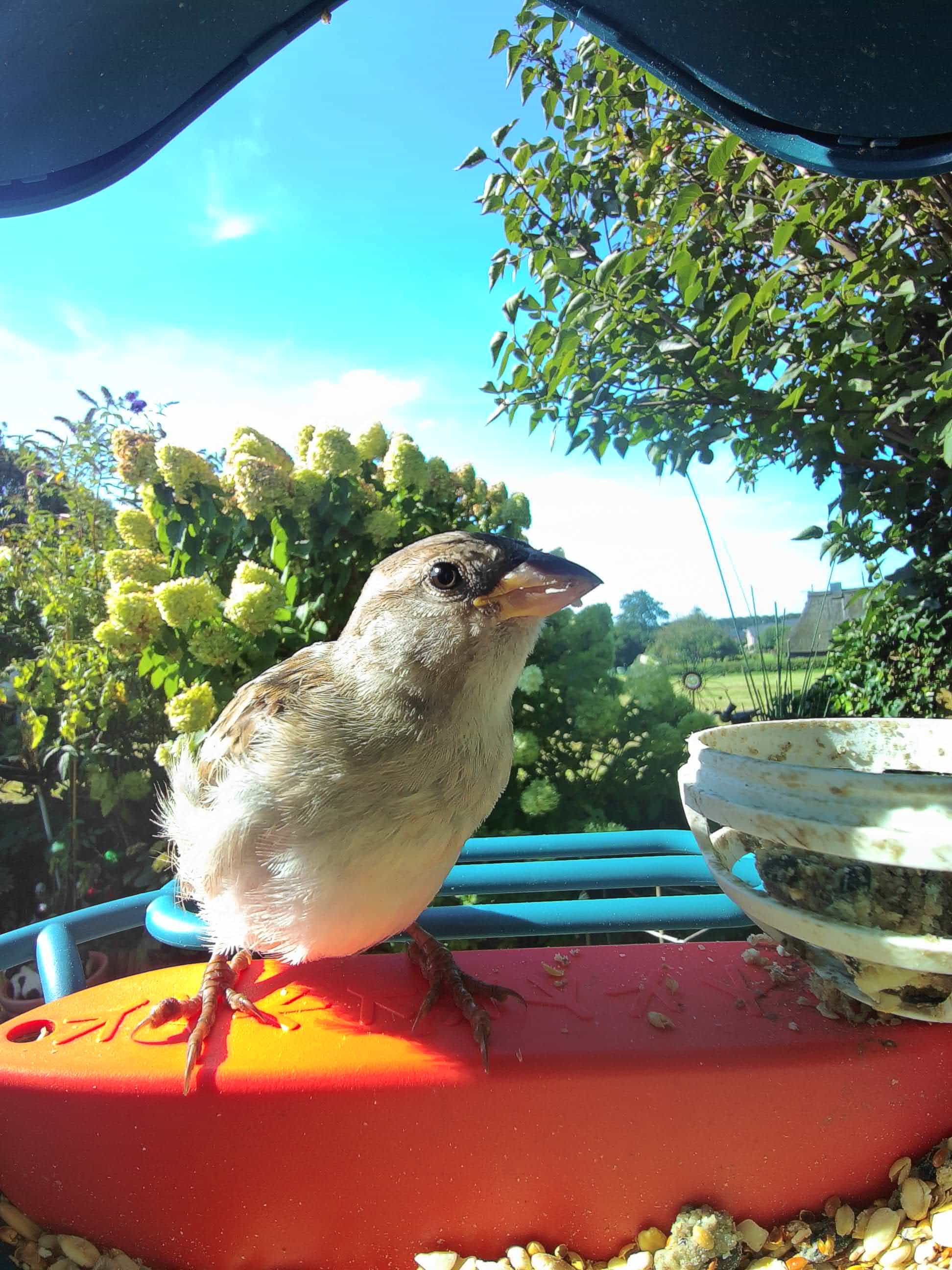
House sparrows are small, stocky birds measuring about 16 cm in length. They have a short tail and a stout bill. Their plumage is predominantly brown, with black streaks on their back and wings. This common bird has a distinctive, somewhat rounded head and a smooth body shape that helps in identifying it in urban and rural areas alike.
Male vs female
Male house sparrows are more vibrant with a gray crown, a chestnut-brown nape, and white cheeks. They have a distinctive black bib on their throat, which can vary in size seasonally. In contrast, females are duller with a more uniform brown coloration, lacking the bold markings of males. Their underparts are a plain grayish-brown, and they have a more pronounced eye stripe behind the eye.
Juvenile
Juvenile house sparrows resemble females but are even paler, with grayish-brown plumage and softer streaks. They lack the developed throat patch and bright head pattern found in adults. Juveniles gradually acquire adult coloration through moulting, becoming distinguishable by their more uniform brown appearance and subtler facial markings.
Size
5.9 - 6.7 in/1.0 - 1.1 oz
There's more to learn about House Sparrow
View full detailsHow to tell the Rock Sparrow from the House Sparrow
Visual differences
The Rock Sparrow, measuring 5.5-5.9 inches, has greyish-brown plumage with distinctive yellow throat patches and subtle eye markings. Males boast a pronounced black bib. The House Sparrow, slightly larger at 6.3-6.7 inches, features a more robust build with a rounded head, gray crown, chestnut nape, and prominent black bib in males. Females are more uniformly brown. Key distinctions include the House Sparrow's rounder head and lack of yellow markings, while the Rock Sparrow is noted for its yellow throat and 'teardrop' eye features.
Key differences and behavior
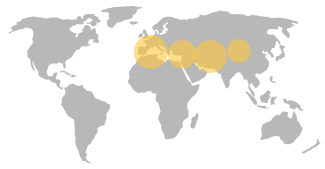
Rock Sparrows and House Sparrows exhibit distinct behavioral and habitat characteristics. Rock Sparrows prefer rocky, mountainous areas but can adapt to lowlands in winter, while House Sparrows are more urban, thriving in human-dominated environments such as towns and cities. Both species display notable courtship behaviors; Rock Sparrows engage in melodious songs and fluttering flights, whereas House Sparrows perform hopping displays with tail raising. In terms of diet, Rock Sparrows primarily consume seeds and insects, foraging on the ground, while House Sparrows eat seeds and waste grains, sometimes relying on human food leftovers. House Sparrows engage in social bathing and roost in groups, unlike Rock Sparrows. Both species share incubation and rearing responsibilities, but House Sparrows are more likely to nest in man-made structures, in contrast to the rock crevices favored by Rock Sparrows. Both species weigh around 1 ounce and are 6-7 inches long.
Still not sure? Here are more lookalikes!
Rock Sparrow vs Chipping Sparrow
Rock Sparrow vs Eurasian Tree Sparrow
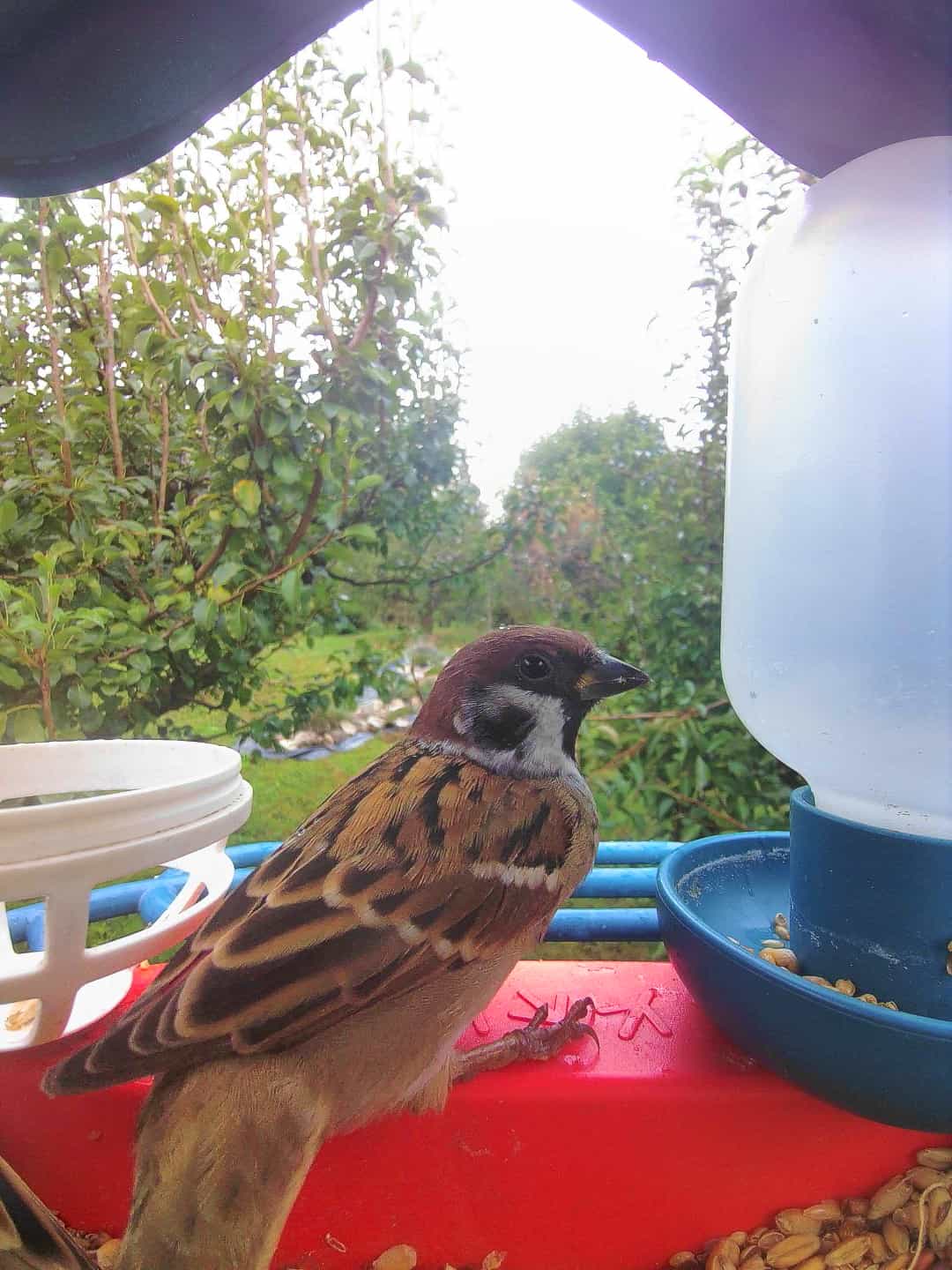
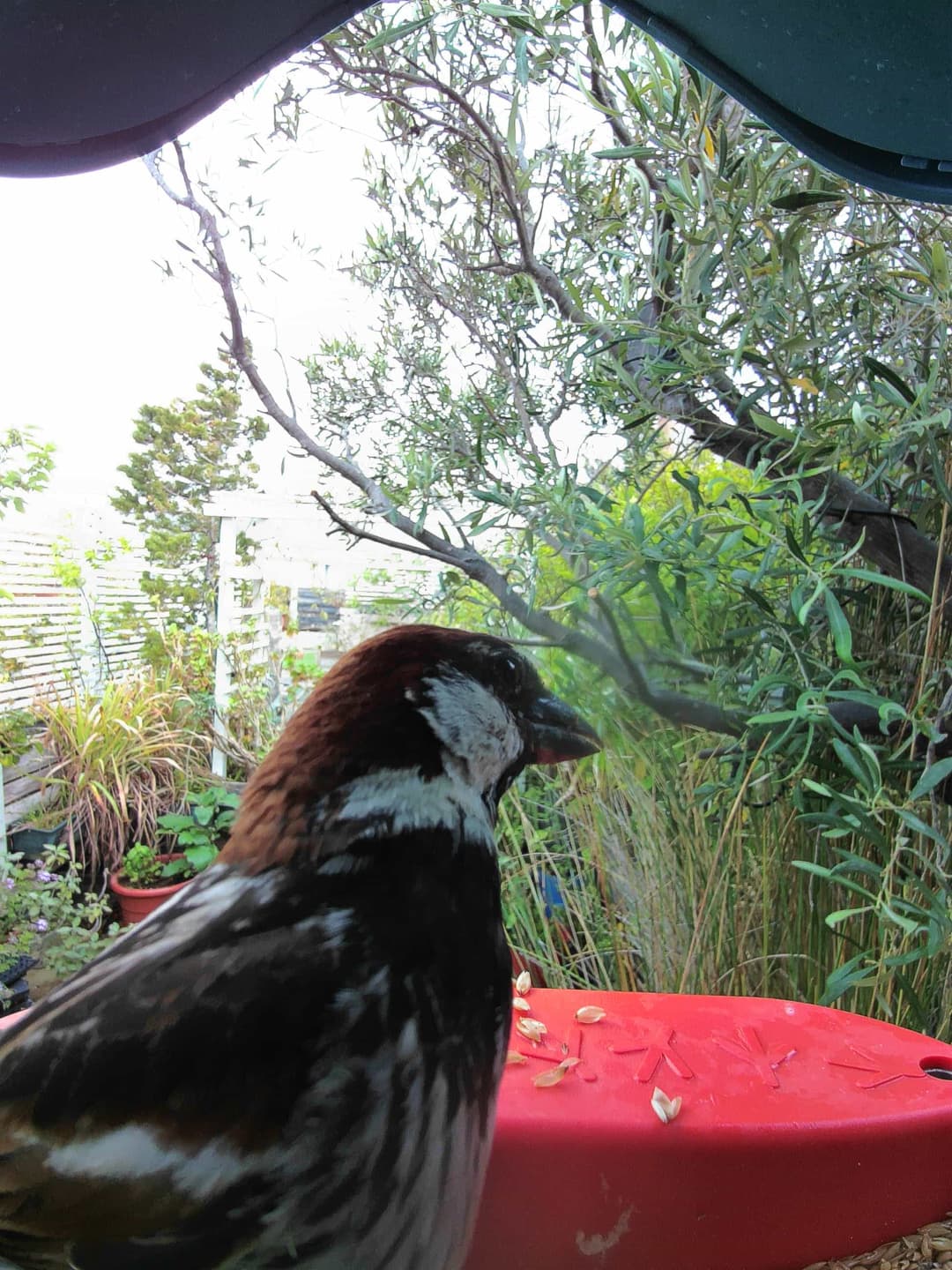
House Sparrow vs Chipping Sparrow
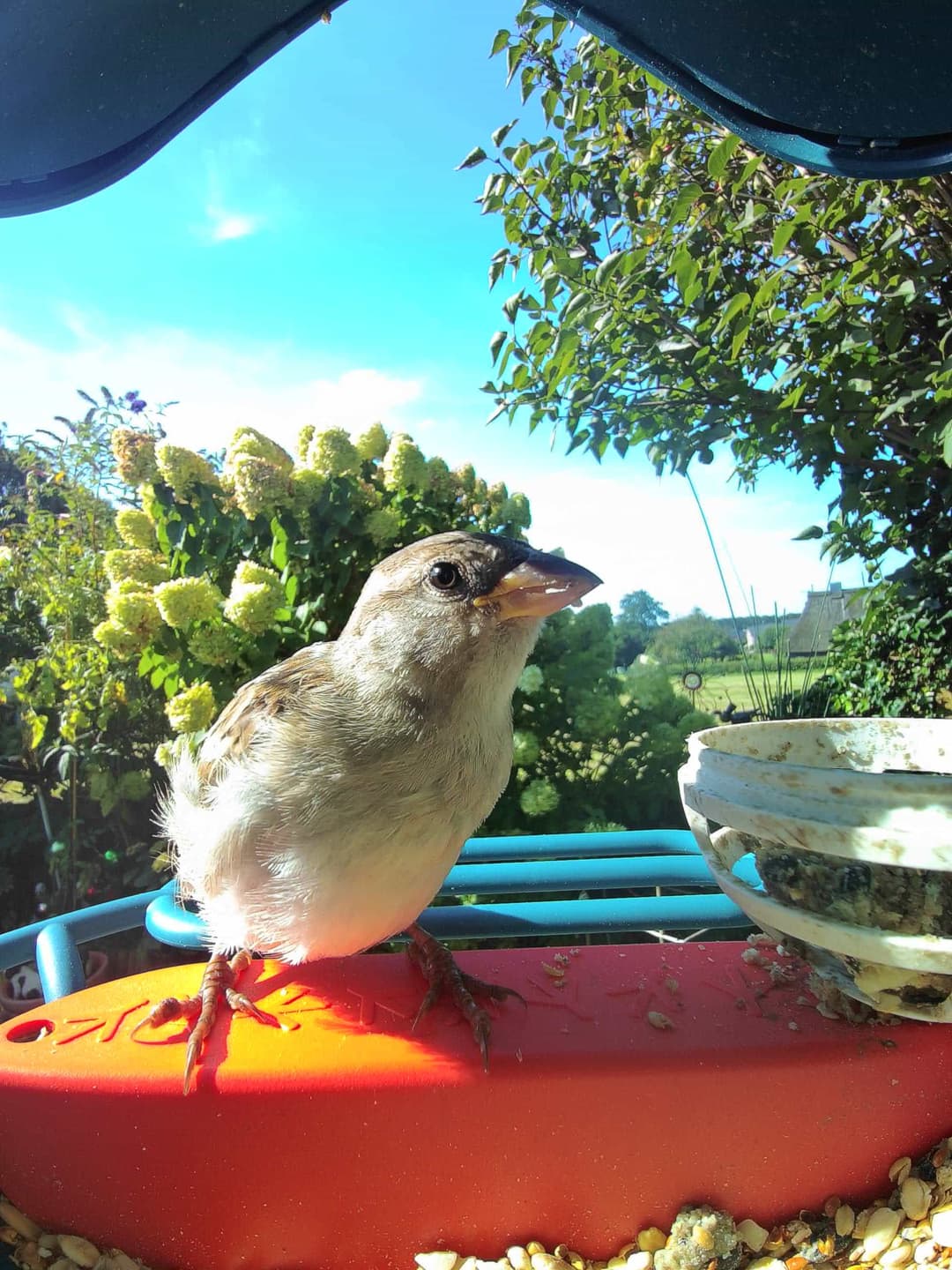
House Sparrow vs Song Sparrow
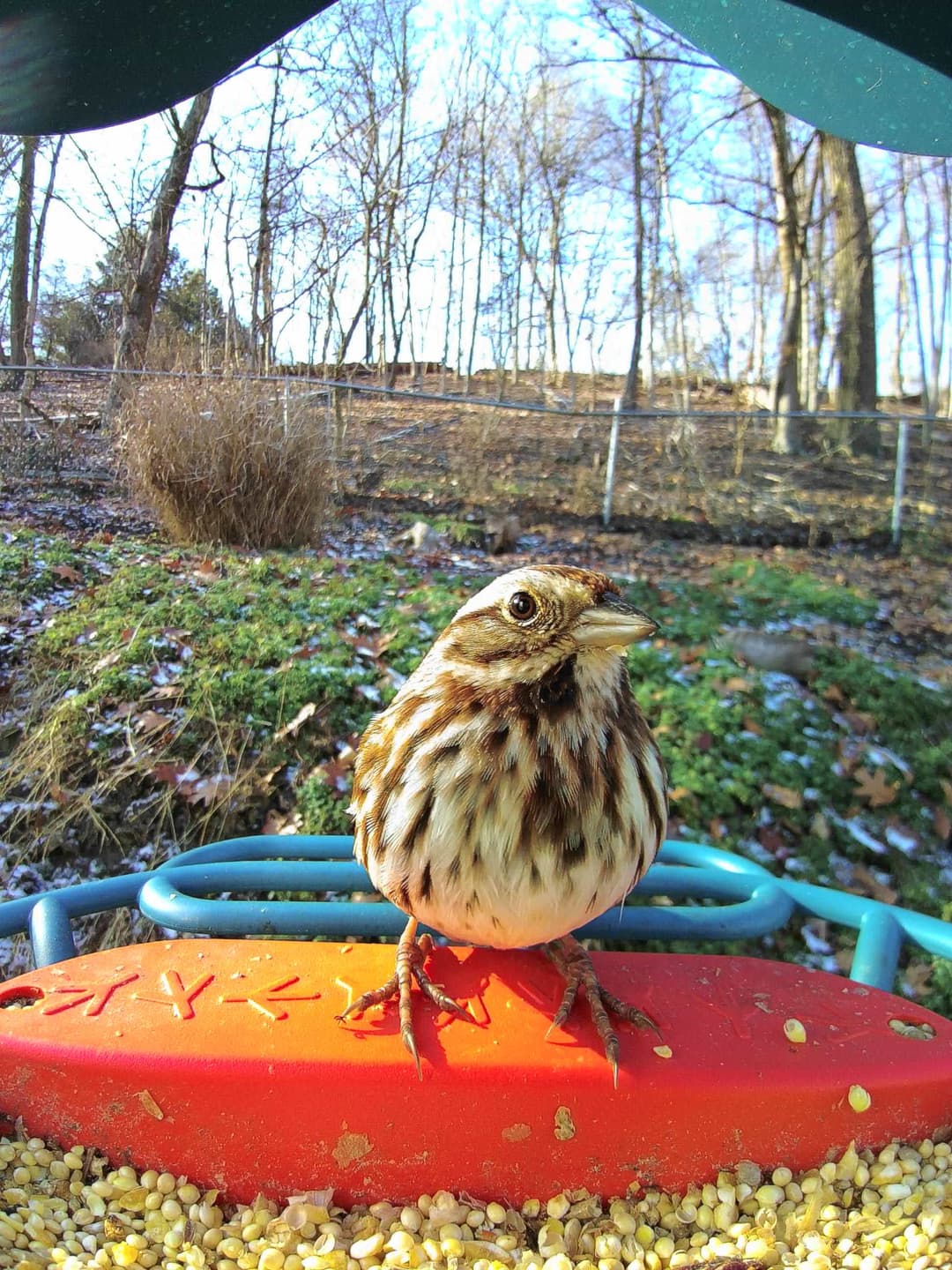
House Sparrow vs Eurasian Tree Sparrow
House Sparrow vs American Tree Sparrow

Rock Sparrow vs [Select a bird]

[Select a bird]
Pick a bird to compare
House Sparrow vs [Select a bird]
[Select a bird]
Pick a bird to compare