Rock Sparrow or Spanish Sparrow?
Here's how to tell the difference

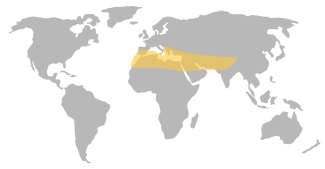

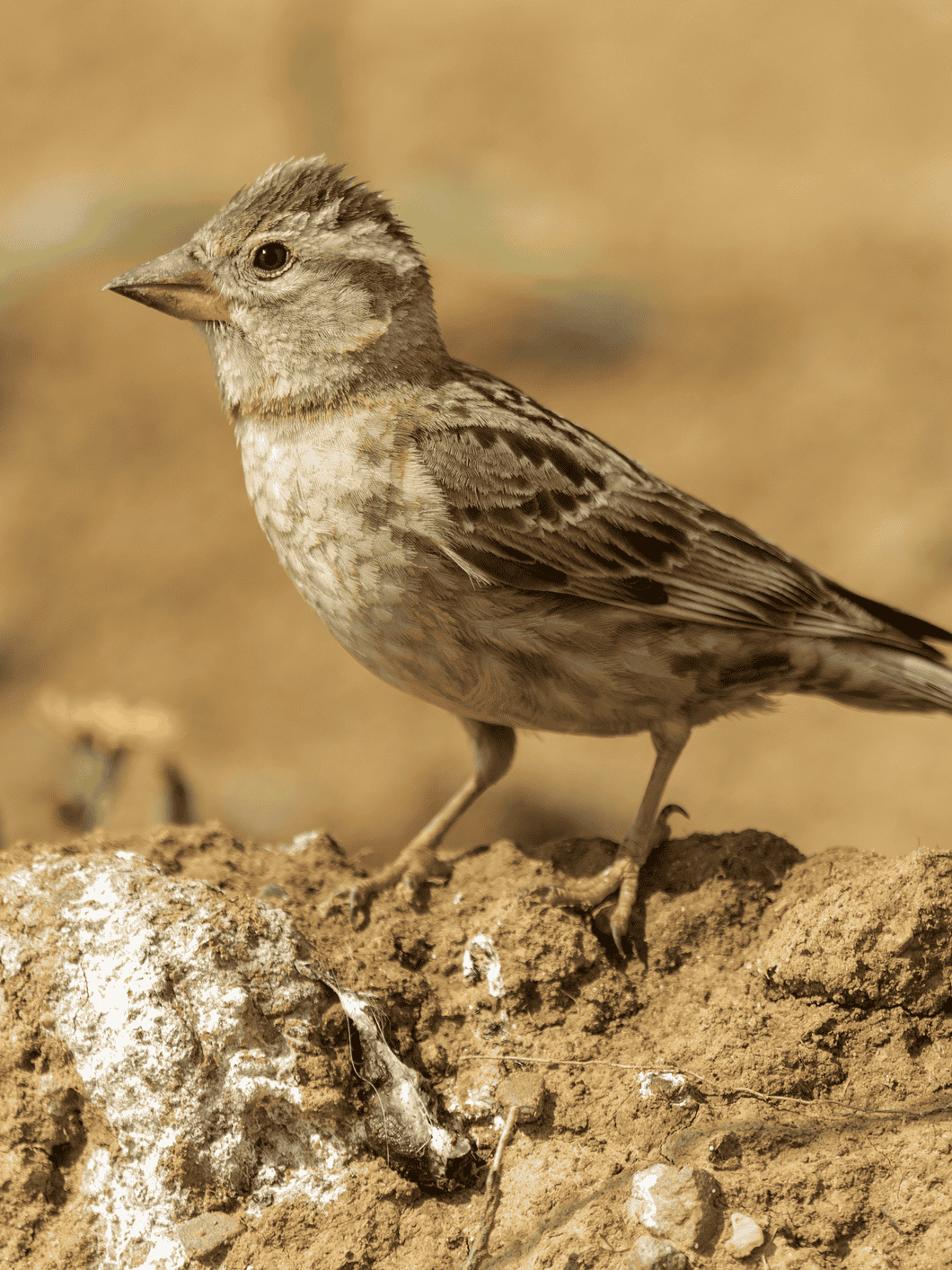
Rock Sparrow


Spanish Sparrow
Rock Sparrow
Petronia petronia
Also known as: Rock Petronia
General appearance
The rock sparrow is a small bird characterized by its size, about 15 centimeters in length. The coloration primarily consists of greyish-brown plumage peppered with black, white, and yellow markings. They also host distinctive yellow and black 'teardrop' features around their eyes.
Male vs female
Sexual dimorphism is subtle in rock sparrows. Males are more colorful with a stronger contrast between their grey and brown feathers. They have a striking black bib underline their beak, not present in females. Females, while physically similar, are duller in terms of coloration.
Juvenile
Juvenile rock sparrows resemble females in duller coloration but lack the yellow eye mark. Their feathers, especially on the wings and back, are more edged than those on adults. The black bib starts to emerge as they mature. They switch to adult plumage after their first molt, typically occurring in late summer.
Size
5.5 - 5.9 in/0.9 - 1.4 oz
There's more to learn about Rock Sparrow
View full detailsSpanish Sparrow
Passer hispaniolensis
Also known as: Willow Sparrow
General appearance
The Spanish Sparrow or 'Passer hispaniolensis' stands out for its robust, chunky fogginess. Generally, it is larger (15-16 cm) than its cousin, the common House Sparrow. They have brown upperparts with black streaks and underparts boast a grayish tone.
Male vs female
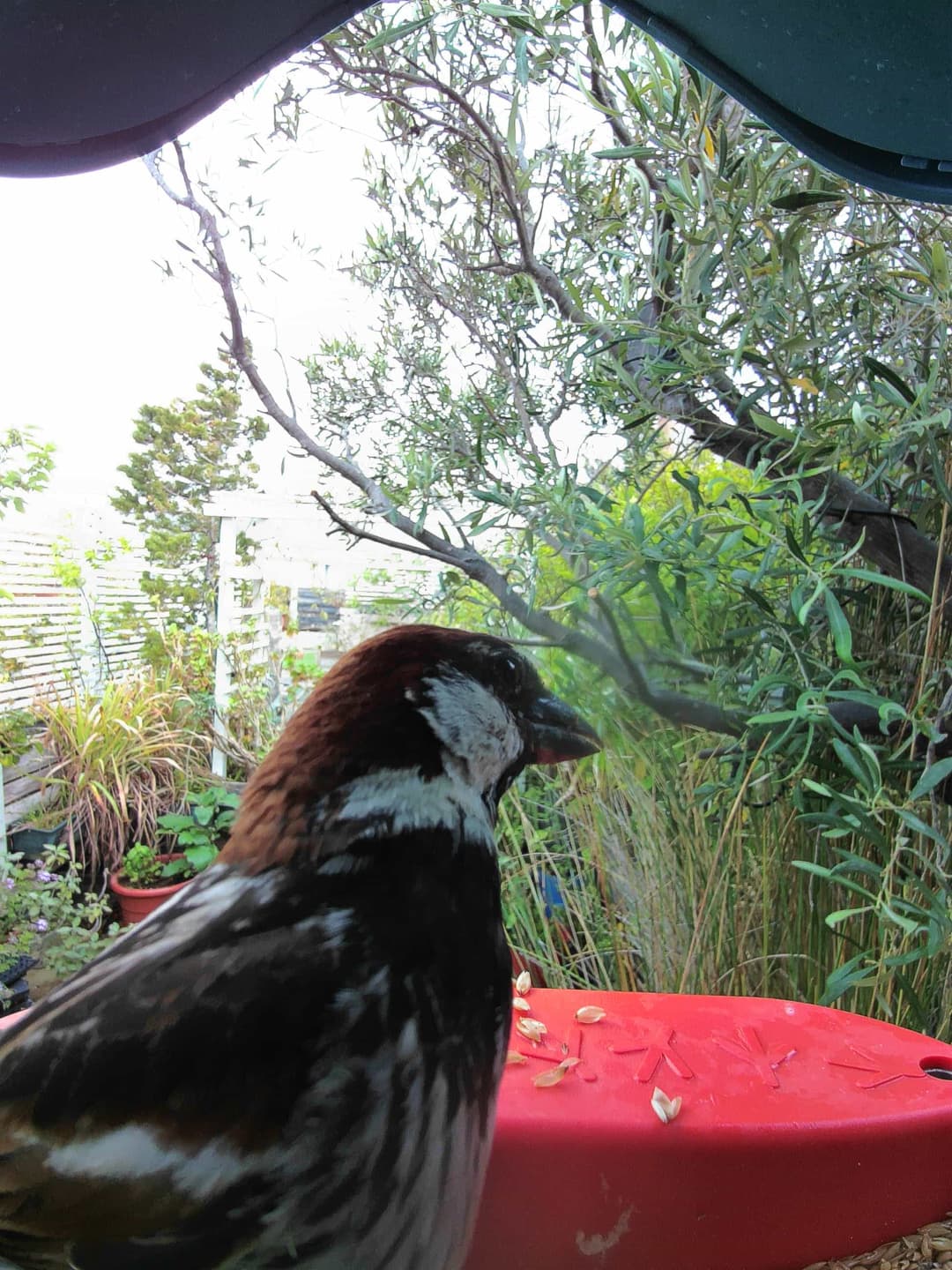
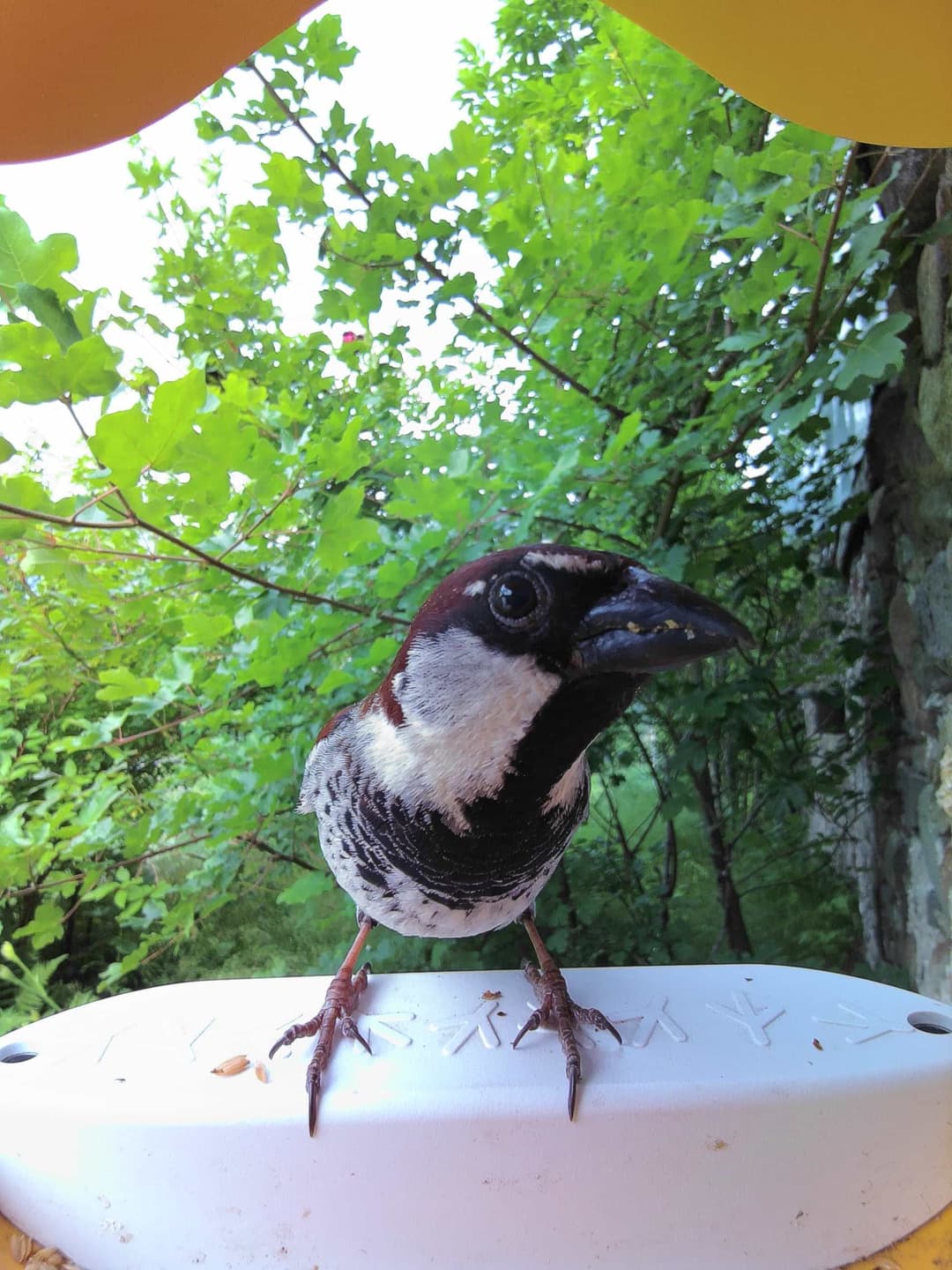
Males and females exhibit sexual dimorphism. Males possess a chestnut crown, a black bib, and white cheeks. In summer, males exhibit blacker back and whiter underparts along with an eye-stripe, characteristic of the species. Females, on the other hand, lack the crisp black and white head markings, looking more closer to the female house sparrow, although are paler and less streaked.
Juvenile
Juvenile Spanish Sparrows resemble female adults but are more finely streaked. They will gradually acquire the mature plumage as they age. Identifying these young ones in the wild might be challenging.
Size
5.9 - 6.3 in/0.8 - 1.3 oz
There's more to learn about Spanish Sparrow
View full detailsHow to tell the Rock Sparrow from the Spanish Sparrow
Visual differences
The Rock Sparrow (5.5-5.9 inches) is slightly smaller than the Spanish Sparrow (5.9-6.3 inches). Rock Sparrows feature grayish-brown plumage with yellow throat patches and distinctive yellow-black 'teardrop' marks near the eyes. Male Spanish Sparrows have a chestnut crown, black bib, white cheeks, and a grayish tone underneath, with black streaks on brown upperparts. Female Spanish Sparrows are paler and less streaked. Rock Sparrows overall have a more muted, earthy palette, whereas the Spanish Sparrows exhibit stronger, contrasting colors and distinctive markings.
Key differences and behavior
The Rock Sparrow (5.5-5.9 inches, 0.92-1.38 oz) and Spanish Sparrow (5.9-6.3 inches, 0.78-1.27 oz) differ notably in behavior and habitat preferences. Rock Sparrows favor rocky terrains and high altitudes, while Spanish Sparrows thrive in warm, human-modified landscapes like farmlands. Rock Sparrows are migratory, often feasting on seeds and insects; Spanish Sparrows, non-migratory, share a similar diet but in groups. Both species exhibit courtship displays; however, Rock Sparrows have fewer eggs per clutch (3-5) and nest primarily in crevices. Spanish Sparrows, breeding in dense colonies, lay larger clutches (4-6) and sometimes nest under larger birds' nests. Their grouping behavior and propensity to share nests distinguish the social Spanish Sparrow from the more secluded Rock Sparrow.
Still not sure? Here are more lookalikes!
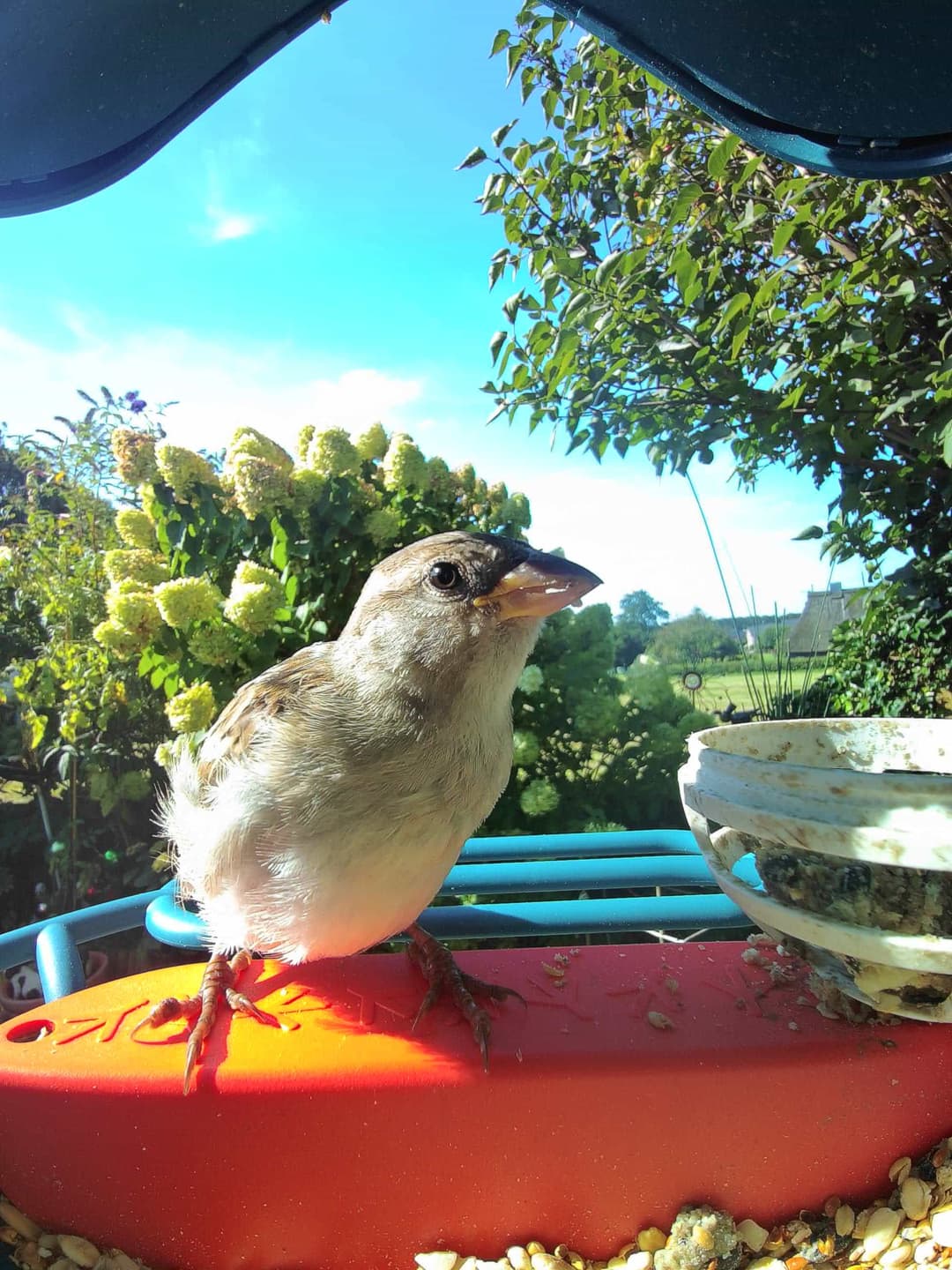
Rock Sparrow vs House Sparrow
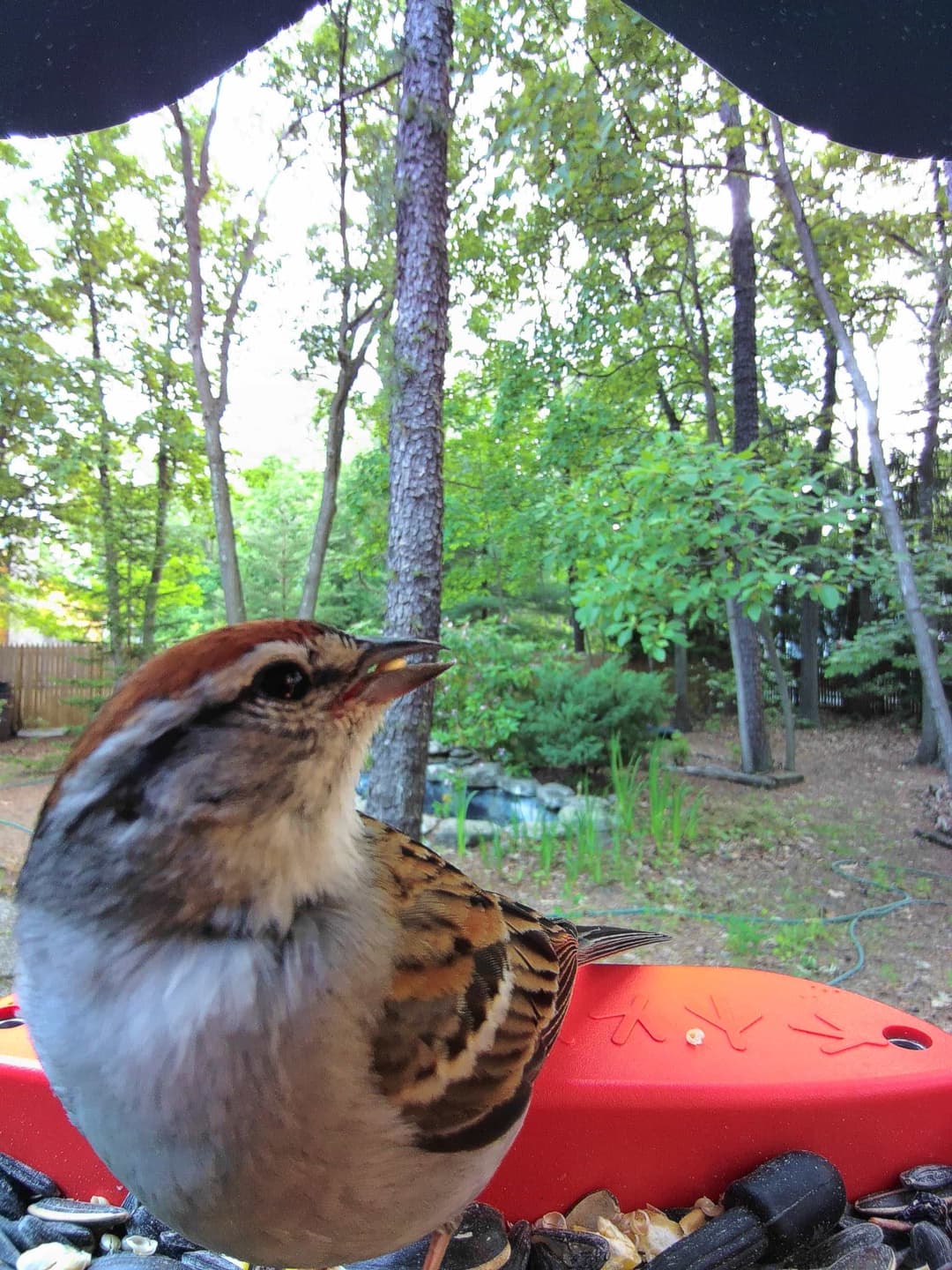
Rock Sparrow vs Chipping Sparrow
Rock Sparrow vs Eurasian Tree Sparrow

Spanish Sparrow vs House Sparrow
Spanish Sparrow vs Eurasian Tree Sparrow
Rock Sparrow vs [Select a bird]

[Select a bird]
Pick a bird to compare
Spanish Sparrow vs [Select a bird]
[Select a bird]
Pick a bird to compare