
Spanish Sparrow
Spanish Sparrow
Also known as: Willow Sparrow
Passer hispaniolensis


Quick Identification guide
Quick Identification guide
- •
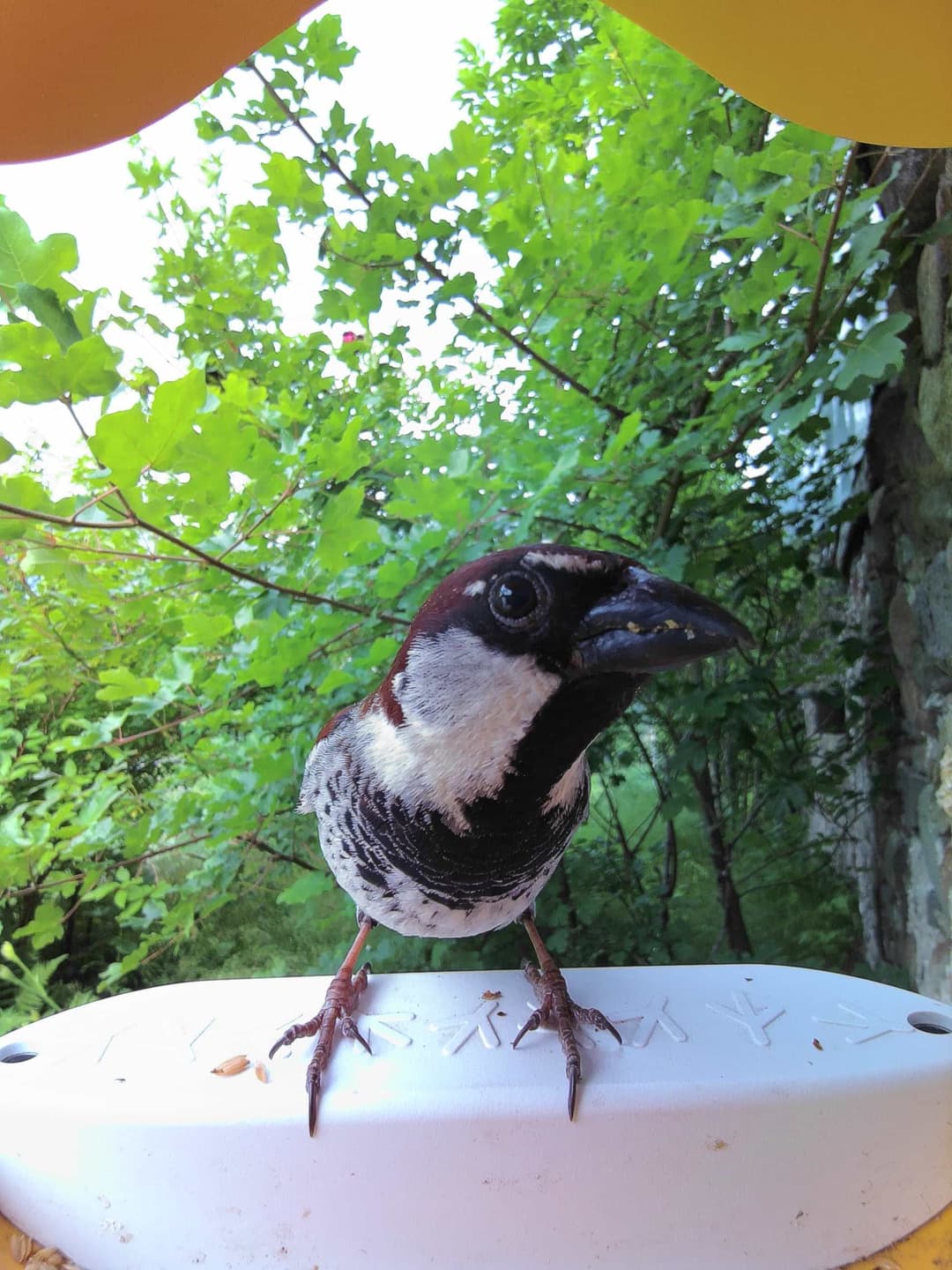
Exhibits chestnut-brown streaked upperparts and a white underbelly contrasted with a black bib on the throat
- •
Features a robust body with a rounded head and short, conical beak perfectly suited for seed consumption
- •
Males display a distinct black head stripe and white cheeks, while females are more subdued with overall browner tones
What does a Spanish sparrow sound like?
The Spanish Sparrow's vocalizations are lively and varied. Its typical call is a shrill "tssch" or "tssip", often uttered in flight. The song, primarily performed by males, is a melodious, sometimes cacophonous mixture of repetitive chirps, trills and warbles, interspersed with mimicry of other birds. While singing, they often imitate the sounds produced by species sharing their habitat. This mix of unique chirps and imitated sounds forms a nonstop chatter that is a characteristic soundscape in their territory.


Description
These large sparrows, vocally similar to house sparrows, like to do everything in a group. They sometimes even share a nest! Speaking of nests, males are more architecturally inclined than females and the nest's location can be in the most interesting of places. Like right under the nest of a larger bird – a white stork, for example. Imagine that!
The Spanish sparrow can weigh between 22to36grams and be from15to16centimeters tall.
The Spanish sparrow typically has a lifespan of 3 years. Compared to related species, this is similar to the lifespan of the House sparrow but less than the Eurasian Tree sparrow, which can live up to 13 years. This moderately short life expectancy is a factor of their environmental challenges and predation risks.
Did you know?
Most popular questions about Spanish sparrow
How to recognise a Spanish sparrow?
General appearance
The Spanish Sparrow or 'Passer hispaniolensis' stands out for its robust, chunky fogginess. Generally, it is larger (15-16 cm) than its cousin, the common House Sparrow. They have brown upperparts with black streaks and underparts boast a grayish tone.
Male vs female
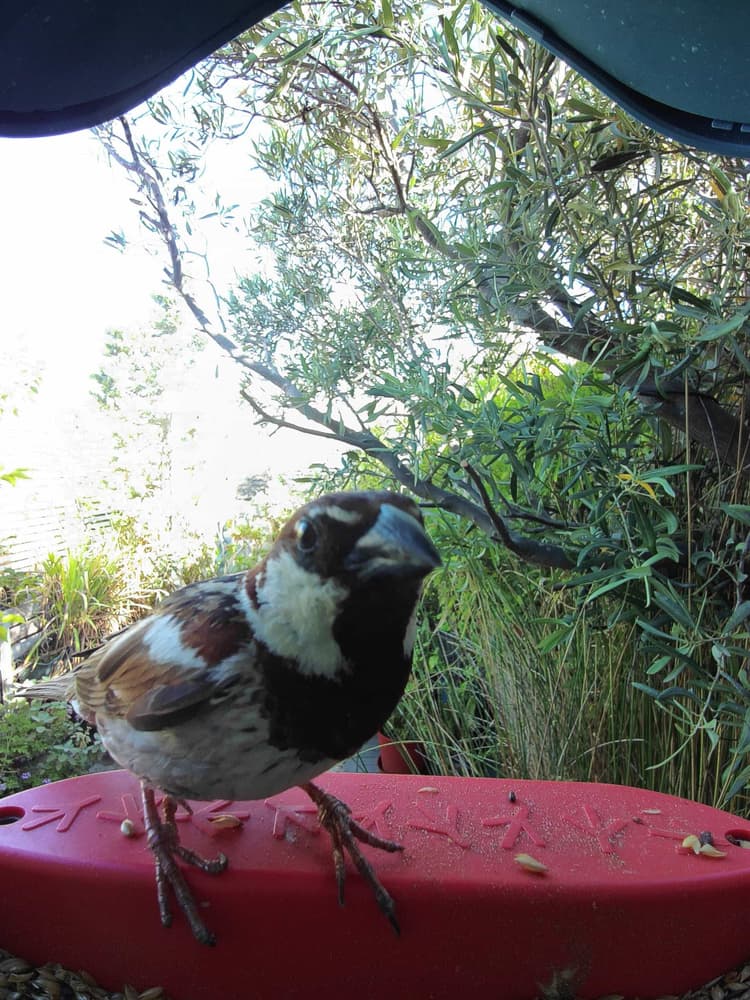
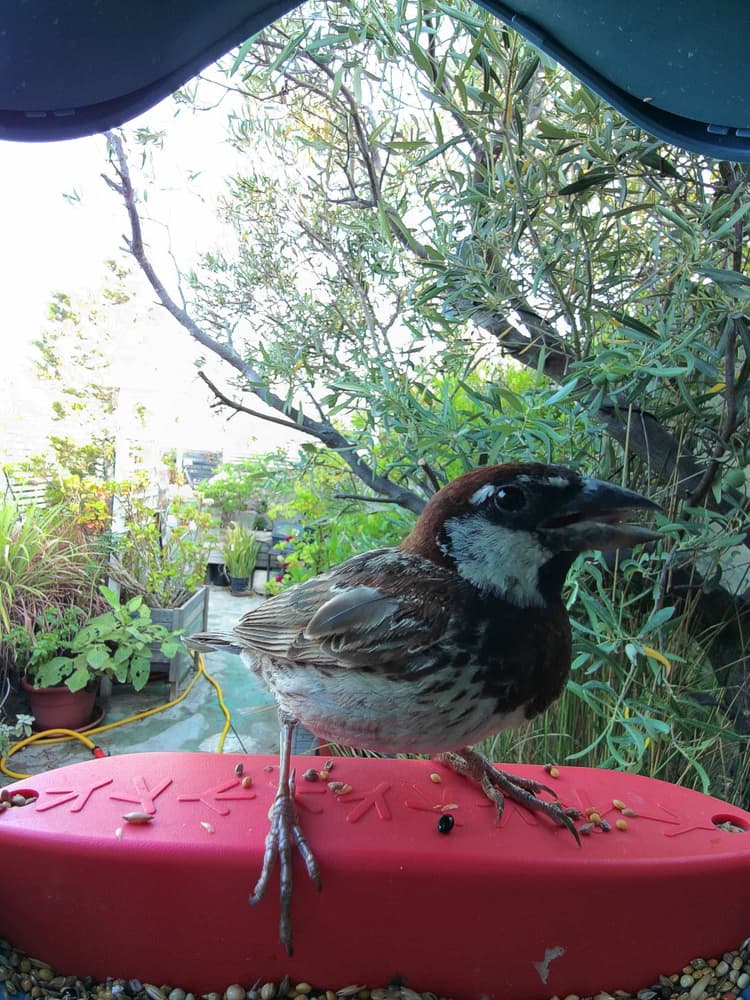
Males and females exhibit sexual dimorphism. Males possess a chestnut crown, a black bib, and white cheeks. In summer, males exhibit blacker back and whiter underparts along with an eye-stripe, characteristic of the species. Females, on the other hand, lack the crisp black and white head markings, looking more closer to the female house sparrow, although are paler and less streaked.
Juvenile
Juvenile Spanish Sparrows resemble female adults but are more finely streaked. They will gradually acquire the mature plumage as they age. Identifying these young ones in the wild might be challenging.
Often mistaken for
House Sparrow vs Spanish Sparrow
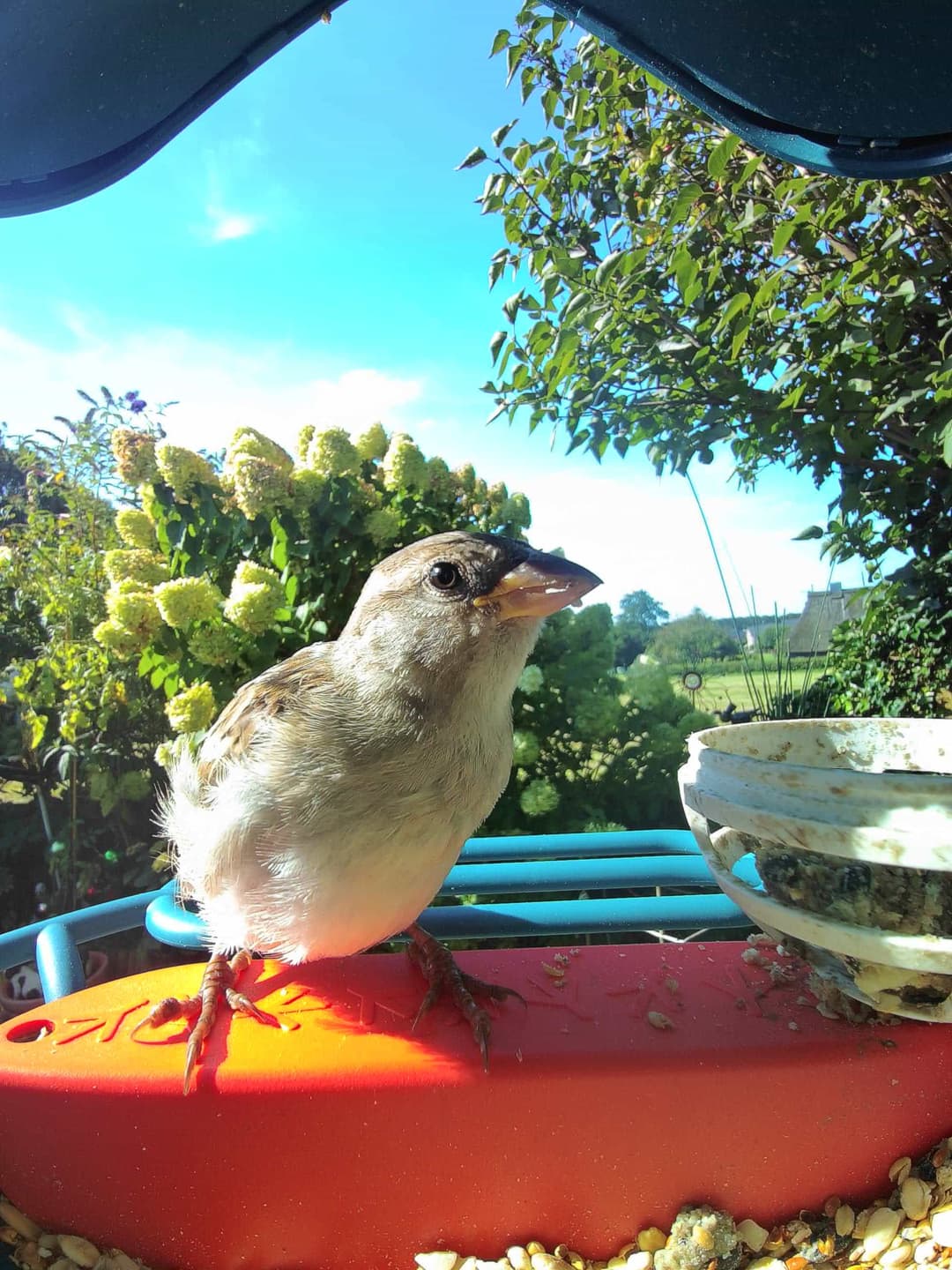
The House Sparrow resembles the Spanish Sparrow but is distinguishable by differences in the facial pattern. The House Sparrow has a gray crown and a black throat in males, unlike the chestnut crown and less prominent bib of the Spanish Sparrow.
Eurasian Tree Sparrow vs Spanish Sparrow
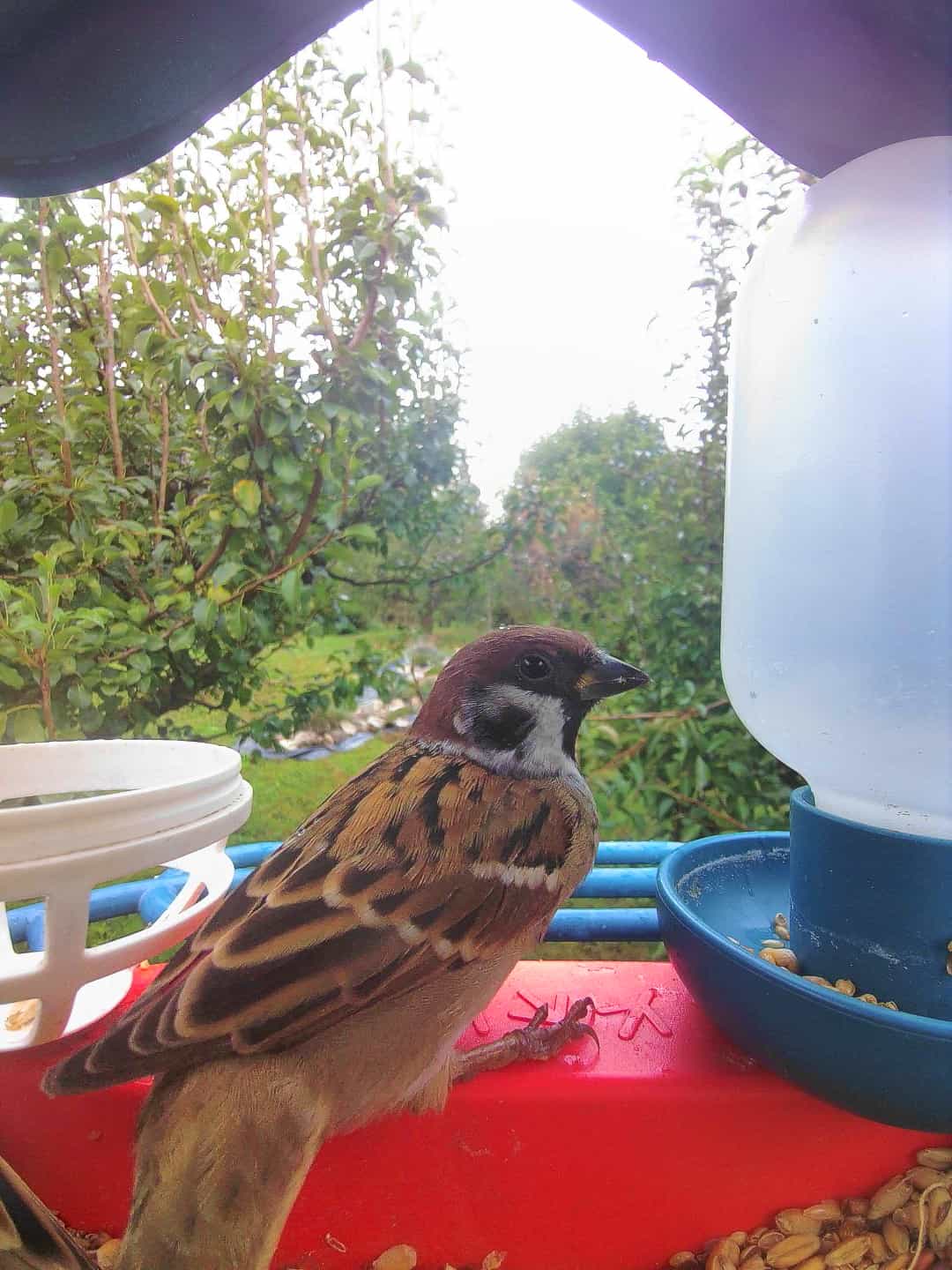
The Eurasian Tree Sparrow looks similar to the Spanish Sparrow but can be distinguished by its smaller size, black cheek patches on the sides of its face, and lack of significant streaking on its underparts.
Italian Sparrow vs Spanish Sparrow
The Italian Sparrow is similar to the Spanish Sparrow but differs by having a warmer brown on the crown and more extensive white on the cheeks and throat, providing a less stark contrast than in the Spanish Sparrow.
Breeding and nesting habits of the Spanish sparrow
Mating behaviors
Spanish sparrows engage in elaborate courtship displays, which include singing and fluttering flights by males to attract females. This behavior occurs early in the breeding season to establish pairs.
Nesting details
They build nests in dense colonies, often using tree cavities, bushy shrubs, or man-made structures. The nests are constructed from grass, twigs, feathers, and soft materials, ensuring a safe environment for eggs.
Eggs and chick-rearing
Spanish sparrows usually lay 4-6 eggs per clutch. Both parents share incubation duties and feeding of the chicks. The young typically fledge within two weeks, remaining dependent on adults for additional feeding and protection.
What does a Spanish sparrow like to eat?
Insects
Seeds
Natural diet
The Spanish sparrow's natural diet mainly consists of seeds and grains from wild grasses and cultivated crops. It also consumes insects, especially during breeding season, which provide essential protein for the nestlings. The sparrow may eat small fruits and berries when seeds and insects are scarce.
Bird feeders
At bird feeders, the Spanish sparrow commonly consumes sunflower seeds, cracked corn, and millet. These birds are attracted to mixed seed offerings and may also eat suet or bread crumbs on occasion. Their adaptability allows them to thrive in varied environments, seeking out available food sources.
Making your yard welcoming for the spanish sparrow
To attract Spanish Sparrows to your yard, provide a safe, friendly environment for them. Make sure they fear no predators and feel a sense of safety and security. Sparrows love a green yard interspersed with trees and shrubs. Create a natural habitat with bugs, seeds, and flowers. Remember that water supply is vital too. Place a bird bath or a small water feature in your yard. The noise of splashing water attracts the attention of these tiny feathered visitors.
Designing the perfect feeder set-up
While the Spanish Sparrow isn't particularly picky about the type of feeder, they do enjoy platform feeders or hopper feeders. They can feed comfortably in large numbers with this setup. Place feeders close to trees and bushes to make them feel safe. They also enjoy ground feeding, so sprinkling some seeds on the ground might attract them further.
The tastiest treats for spanish sparrows
They love to feed on grains, so seeds will be a huge hit with them. Bird Buddy seeds are your best bet for attracting Spanish Sparrows because they are chosen by experts according to the season. Choosing the right seeds can have a significant impact on the number of visits you get from these delightful songbirds. The seeds included their diet with grains, especially during the breeding season.
Playful tips to encourage their stay
Sparrows enjoy socializing and chirping about in groups, so if you spot a few, chances are there will be more. A fun trick is to record the singing of Spanish Sparrows and play it in your yard. Their delightful calls are likely to attract others in the vicinity. Always ensure cleanliness around your feeders to keep them disease-free. This encourages the sparrows to hang around longer and even bring others along.
Where can you find Spanish sparrows?
Primary habitat
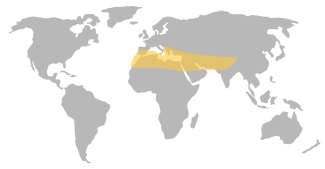
The Spanish Sparrow typically resides in warm, dry climates with frequent access to water. It prefers cereals for breeding and feeding, utilizing human-made landscapes such as farmlands and urban regions.
Additional range
Its geographical range spans southern Europe, North Africa, and as far east as Pakistan. Sometimes, it inhabits unexpected environments such as high altitudes in the mountains of Northern Iran.
Do they migrate?
The Spanish sparrow (Passer hispaniolensis) exhibits both migratory and sedentary behaviors, depending on the population and geographical location. Populations in southern Spain and parts of North Africa tend to be largely sedentary, remaining in their territories all year. In contrast, those residing in more northern areas and certain regions like the Balkans tend to migrate. Migratory Spanish sparrows typically move southward for the winter, heading towards North Africa and parts of the Mediterranean. The migration traditionally takes place between August and November, with birds returning to their breeding grounds from March to May. Key locations during migration include the Iberian Peninsula, southern France, and various islands in the Mediterranean Sea, where they might rest or spend the winter. On their journey, Spanish sparrows might use established migratory routes that align with coastal regions or river valleys, providing ample food and resting habitats. The specific routes can vary significantly among populations, influenced by environmental conditions and resource availability. Understanding these patterns is crucial for conservation efforts, especially as they are impacted by habitat changes along migratory paths.
What is the role of Spanish sparrows in nature and how to protect them?
Conservation status
The Spanish sparrow is classified as "Least Concern" by the IUCN, indicating it is not currently vulnerable or endangered. This bird is quite common across its range, spanning parts of Europe, North Africa, and Asia. Key threats include habitat loss due to agricultural expansion and urban development. However, its adaptable nature allows it to thrive in various environments, from farmlands to urban areas. No specific large-scale conservation efforts are currently in place, but monitoring population trends and ensuring habitat protection are essential to maintaining its stable population.
Ecological role of Spanish sparrows
Its role in the ecosystem
The Spanish sparrow (Passer hispaniolensis) plays a crucial role in various ecological aspects. Its significance goes beyond its role as part of the food chain, it also contributes to pest control and seed dispersal. Spanish sparrows feed on numerous types of insects which could otherwise affect agricultural output, playing a critical part in pest management. These birds also assist in seed dispersal, providing a significant ecological service. Seeds consumed by the sparrows are often excreted at different locations helping in the distribution and germination of various plant species. Furthermore, their nests provide a habitat for a range of animals including insects, mammals, and other bird species, thereby contributing to biodiversity. Overall, the Spanish sparrow plays a crucial role in maintaining a balanced ecosystem.
How to help protect Spanish sparrows
Preservation tips
Habitat preservation strategies
The Spanish sparrow thrives in farmland, reed beds, and urban areas. To preserve these habitats, limit the usage of pesticides that kill their food sources, promote organic farming and avoid unnecessary urban development. Land-use policies should be implemented to ensure the preservation of these habitats, through legislation or nature reserves.
Community science initiatives
Citizen science projects can be instrumental in conserving the Spanish sparrow. Encourage locals and birdwatchers to participate in initiatives like data collection and monitoring sparrow populations. Public-awareness campaigns can also help educate the community about the importance of bird conservation. Involving schools could foster a sense of responsibility and interest in environment protection among the youth.