
Western Jackdaw
Western Jackdaw
Also known as: Eurasian Jackdaw, European Jackdaw, Jackdaw
Coloeus monedula


Quick Identification guide
Quick Identification guide
- •
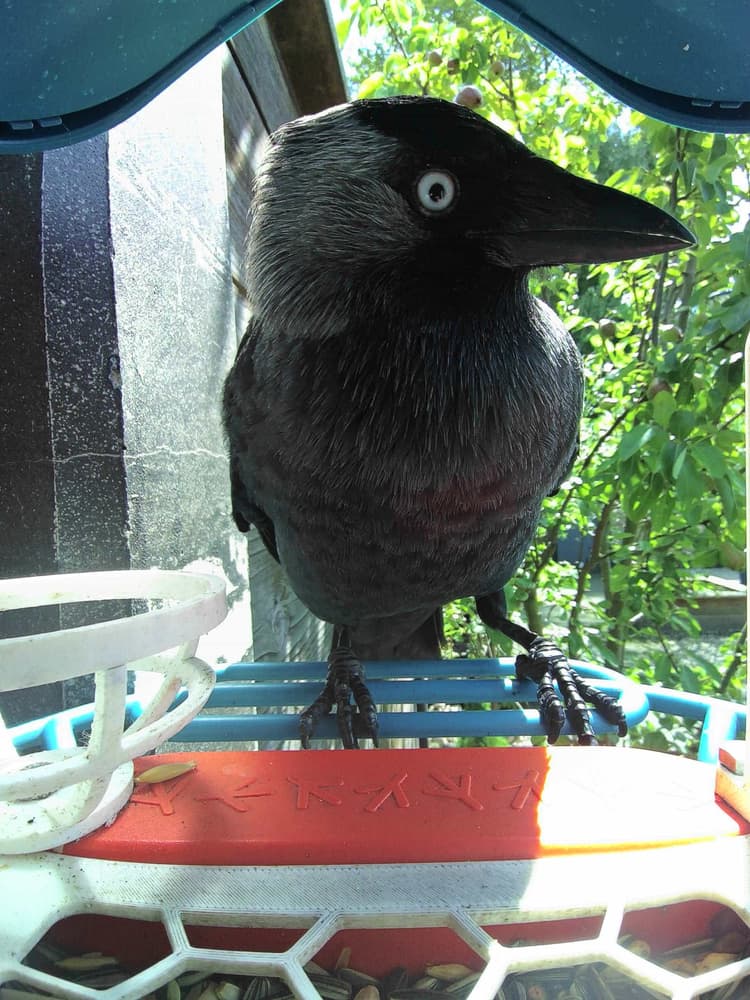
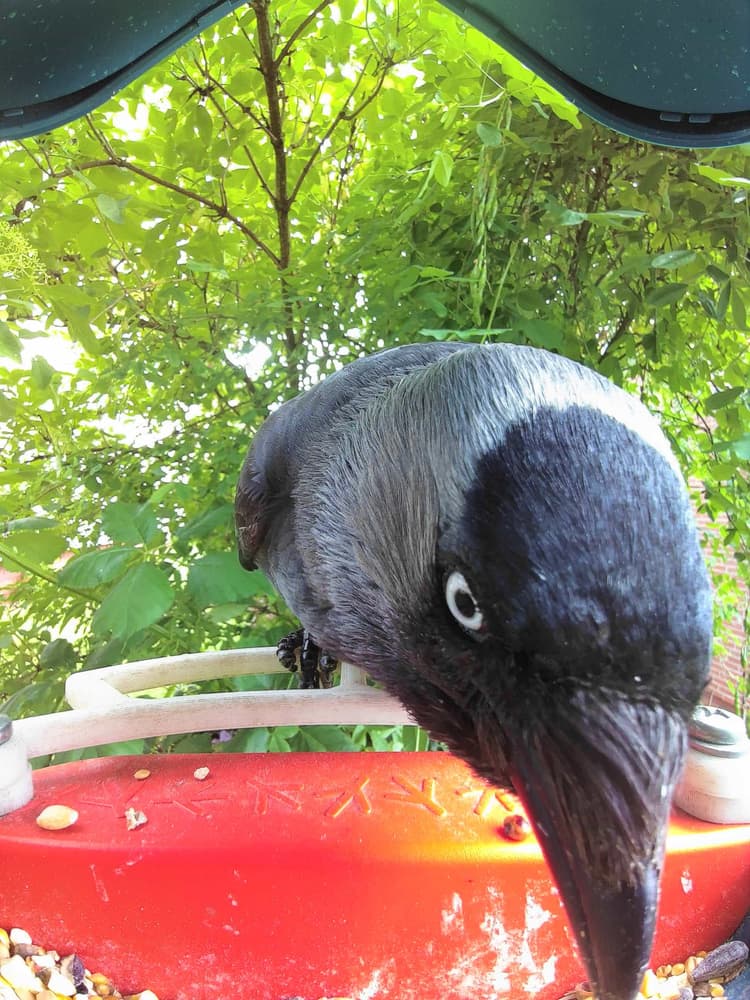
Glossy black crown and nape contrast with its pale gray face and light eyes
- •
Possesses a short, stout black beak and a stocky body giving a compact appearance
- •
Displays black wings and a black tail with a hint of gloss, complementing its grayish black back
What does a western jackdaw sound like?
The western jackdaw (Corvus monedula) has a varied vocal repertoire characterized by short, sharp, and metallic-sounding calls. Its most common call is the distinctive "chak-chak" or "jack-jack," which serves as a social contact call. These birds are known for their ability to mimic sounds, although less prolifically than other corvids. The jackdaw's song is less melodic and more grating, consisting of a series of chattering notes and clicks. Their vocalizations play a critical role in maintaining social bonds within flocks and coordinating group activities.


Description
Jackdaws are the smallest of the corvids. These birds are social and extremely smart! A tame jackdaw was once trained by some Italian thieves to steal money out of people's pockets! But mostly they'll just try and find a way to get into feeders. Much like us, these guys go grey in their old age! They form long-term pair bonds and are known for being devoted partners.
The western jackdaw can weigh between 135to265grams and be from34to39centimeters tall.
The typical lifespan of a Western Jackdaw is about six years, but they can live up to 15 years in the wild. Compared to other corvids like crows and ravens who can live over 20 years, the Western Jackdaw’s lifespan is shorter. However, they outlive smaller bird species. Factors affecting their longevity include predation and disease. They don't reach sexual maturity until they are around 2 years old.
Did you know?
Most popular questions about western jackdaw
How to recognise a western jackdaw?
General appearance
The Western Jackdaw is a stocky bird, somewhat smaller than a crow, measuring approximately 33 cm or 13 inches. It is primarily black, but features a distinctive grey nape. A standout feature is the bird's white or blue-white eyes. It has a large size, with a sharp contrast between the black crown and pale gray nape and typically displays a rounded, square-tipped tail and broad, fingered wings.
Male vs female
Western Jackdaws are sexually monomorphic, meaning males and females are similar to each other in size and colour. Both sexes share the same notable features, including the bold white or pale blue eyes, grey nape and predominantly black plumage.
Juvenile
Juvenile Western Jackdaws closely resemble adults but can be distinguished by their duller, more uniform plumage colouration. They also have dark eyes that turn pale only as they mature, making them easily distinguishable from adult Jackdaws with their distinctive white or pale bluish-white eyes.
Often mistaken for
Hooded Crow vs Western Jackdaw
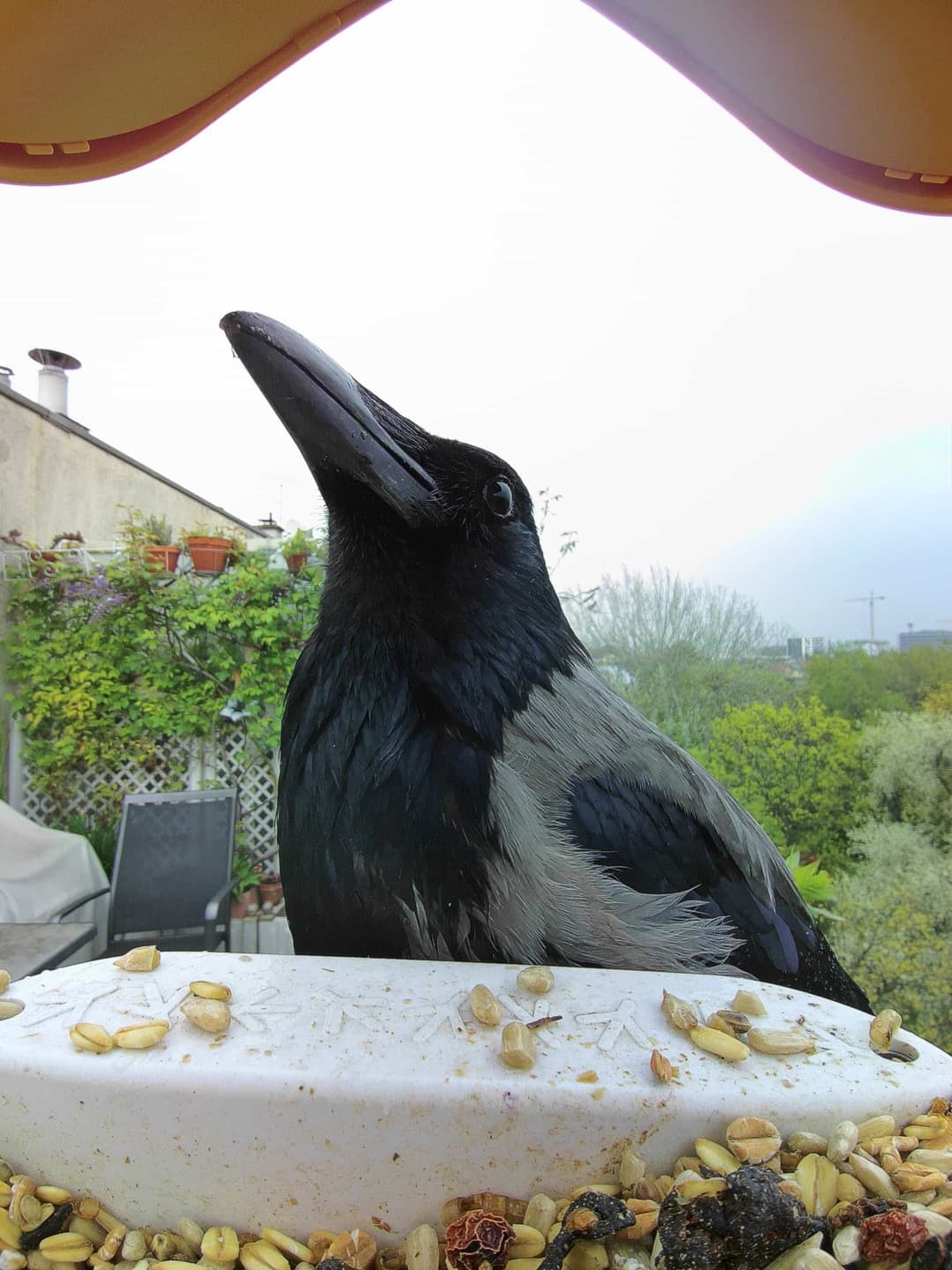
Western Jackdaws are smaller than Hooded Crows and have distinct pale irises. While Jackdaws exhibit a shiny black cap and a grey nape and chest, Hooded Crows are largely grey with a black head, throat, wings, and tail. Look for the Jackdaw's unique silvery sheen on the back of its head.
Carrion Crow vs Western Jackdaw
Western Jackdaws are notably smaller with more compact bodies compared to the robust and uniformly glossy black Carrion Crows. Jackdaws have light grey to white irises and a silvery-grey nape, while Carrion Crows lack these features, appearing more solidly black throughout.

Rook vs Western Jackdaw
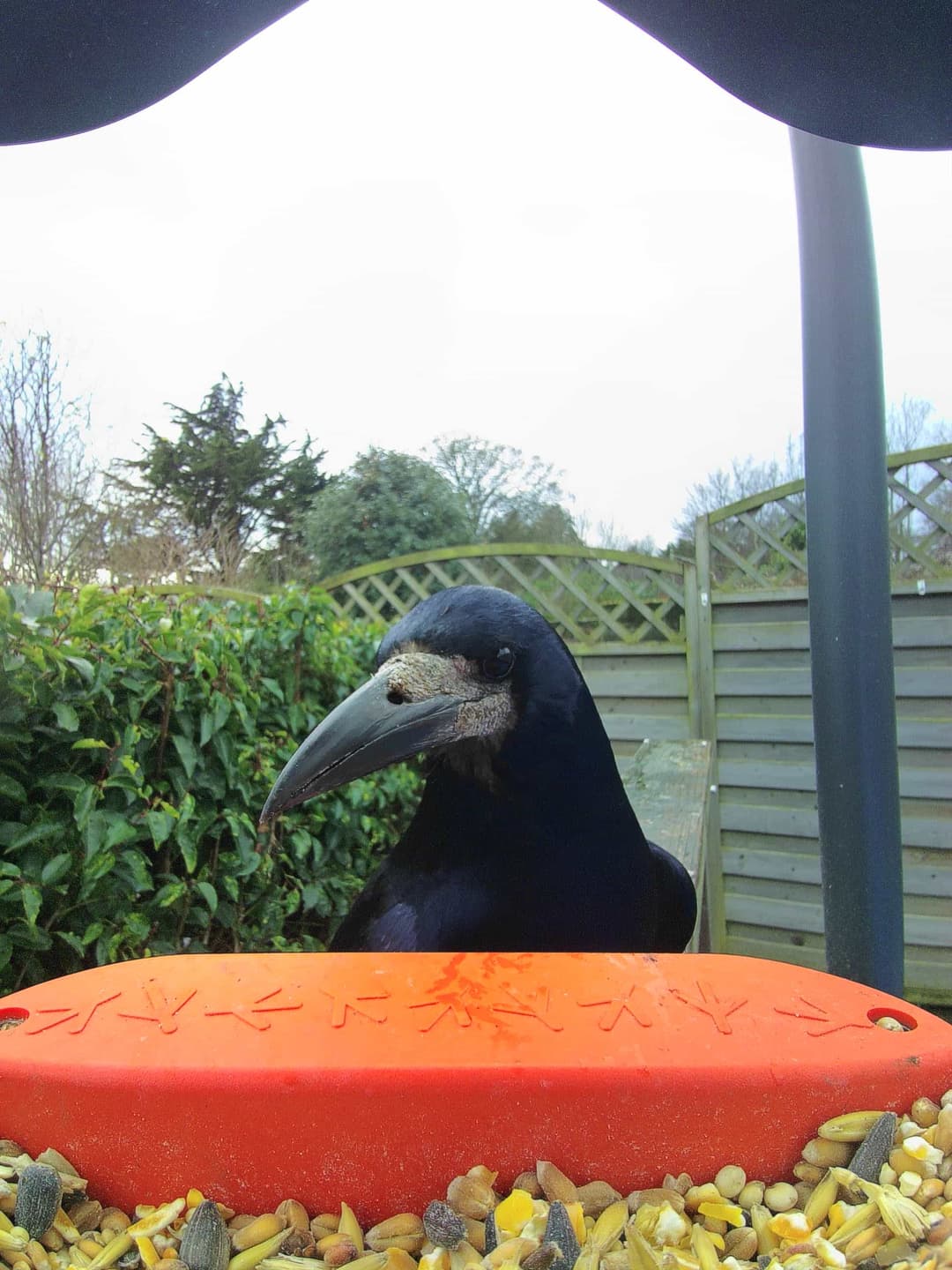
Rooks are similar in size to Western Jackdaws but have more featherless, pale skin around the base of their bill, which is absent in Jackdaws. Jackdaws have a distinctive grey nape and pale eyes, whereas Rooks have a more uniform black appearance.
Breeding and nesting habits of the western jackdaw
Mating behaviors
Western jackdaws form strong pair bonds that often last for life. Courtship involves mutual preening and synchronized flight displays. Pairs are often playful, engaging in chases and aerial acrobatics.
Nesting details
Nests are built in various secure and sheltered locations like tree cavities, rock crevices, and nest boxes. In urban areas, they may use chimneys or bridges. The nest structure includes a base of branches and sticks, layered with mud or dung, and lined with fine roots, moss, hair, and feathers. To attract jackdaws to a garden, provide nest boxes with an appropriately-sized entrance and place them high on a tree or building.
Eggs and chick-rearing
Females lay 3-6 eggs, which are incubated for about 17-18 days. Both parents contribute to feeding the chicks a diet of insects and seeds. Fledging occurs around 28-35 days after hatching, although parents continue to support the young for several weeks after they leave the nest.
What does a western jackdaw like to eat?
Berries
Bird eggs
Carrion
Fruits
Insects
Scraps
Seeds
Small animals
Snails
Spiders
Worms
Natural diet
The Eurasian Jackdaw is an omnivore with a versatile diet that includes insects, other invertebrates, fruits, seeds, carrion, and garbage. Its diet varies based on habitat, food availability, and season. Jackdaws foraging in parks or pastures with short vegetation tend to feed on the ground, often in pairs or small flocks alongside larger Rooks. Some studies indicate a predominantly plant-based diet, while others show a preference for animal matter.
Bird feeders
At bird feeders, Eurasian Jackdaws may consume a range of items typically offered to wild birds. They are known to eat seeds, nuts, suet, and peanuts. Due to their adaptable nature, they may also feed on food scraps or any readily available edible material provided at feeders.
Attracting western jackdaws with favorite snacks
Western Jackdaws fancy a variety of foods, but they especially adore bird seeds, insects, and fruits. To increase their visits, regularly replenish your bird feeder with high-quality seeds like Bird Buddy seeds. Chosen by experts for the season, these seeds deliver the best results.
Ideal feeders for western jackdaws
While Western Jackdaws aren't too picky about feeders, they prefer open platform feeders. This allows them to scout the area while enjoying their meal. However, ensure the space is quiet, and the feeder is away from busy areas to make them feel secure.
Fun tricks to welcome western jackdaws
To encourage these intelligent birds to drop by, a little bit of fun will come in handy. Try hanging a mirror or a shiny object near your feeder, as Western Jackdaws are attracted to shiny things. You can also play soft bird songs in the background to pique their interest and maybe incite a sing-along session!
Where can you find western jackdaws?
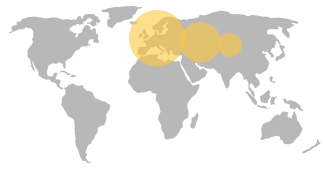
Primary habitat
The western jackdaw prefers woodland, coastal cliffs, old buildings and ruins in temperate regions across western Europe to western Asia.
Additional range
Unexpected environments include urban areas, attics, and steeples, making them flexible in adaptation.
Do they migrate?
The Western Jackdaw generally exhibits partial migration, influenced by geographical location and climate. In most of Western Europe, the jackdaw is largely sedentary, staying in the same area year-round due to milder climates and abundant food sources. However, populations in the northern and eastern parts of their range, including Scandinavia, Russia, and parts of Eastern Europe, are more migratory. In these regions, jackdaws typically migrate southward for the winter, with movements largely influenced by harsh weather conditions. Migration usually begins in October and November, with birds traveling to milder areas in Western and Central Europe, as well as the British Isles. These migrations are relatively short compared to other bird species, often involving flights of just a few hundred kilometers. Key stopover sites and wintering grounds include agricultural fields, woodlands, and urban areas where food resources like grains, seeds, and invertebrates are readily available. By March or April, these birds return northward to their breeding areas as temperatures rise and food becomes more accessible, completing their migratory cycle.
What is the role of western jackdaws in nature and how to protect them?
Conservation status
The western jackdaw is listed as "Least Concern" by the International Union for Conservation of Nature. This classification is due to its extensive range, stable population trend, and large population size, estimated between 39–85 million mature individuals. As a result, it is considered common, facing no immediate vulnerability or endangerment. No specific conservation efforts are highlighted, as its population remains stable. The species does not currently face significant threats that would jeopardize its conservation status.
Ecological role of western jackdaws
Its role in the ecosystem
The Eurasian Jackdaw, also known as the Western Jackdaw, plays a significant role in pest control in its ecosystem due to its diet. This bird is omnivorous, feeding on a range of edibles including invertebrates, which can be damaging to the local ecosystem and agricultural sectors if their population becomes too high. Its social and flocking behavior could mean these birds target large groups of pests, thereby regulating their numbers. The Jackdaw's nesting behavior, namely the reuse of old nests, also contributes to the ecosystem by recycling biological material and reducing waste. Moreover, as these birds frequently move in large numbers and cover vast distances in search for food, they aid in seed dispersal when seeds adhere to their feet or when undigested seeds pass through their digestive system. This ultimately helps plant populations to spread, encouraging biodiversity and contributing to the stability of the ecosystems they inhabit.
How to help protect western jackdaws
Preservation tips
Habitat preservation strategies for western jackdaw
Preserve the Western Jackdaw's natural habitats, which include woodlands, cliffs, and buildings, by limiting urban development in these areas. Engage with local authorities to create sanctuaries or protected zones. Introduce tree-planting programs to replace lost nesting areas. Minimize pesticide use as it can impact their food sources.
Community science initiatives
Establish community science projects to monitor Western Jackdaw populations and their habitat use. Encourage public participation in bird watching and bird count programs. Promote sharing of findings through a dedicated online platform. Create educational campaigns in schools and communities to raise awareness about the species and their conservation needs.