Collared Crow or Carrion Crow?
Here's how to tell the difference
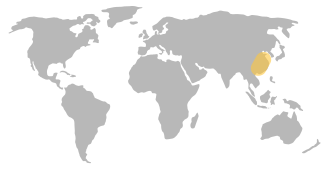

Collared Crow


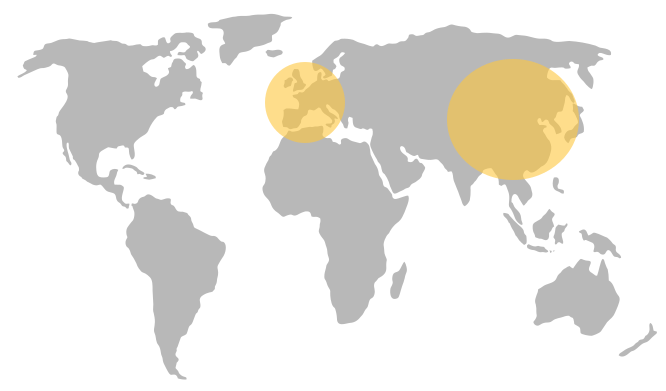
Carrion Crow
Collared Crow
Corvus torquatus
Also known as: Ring-Necked Crow, White-Collared Crow
General appearance
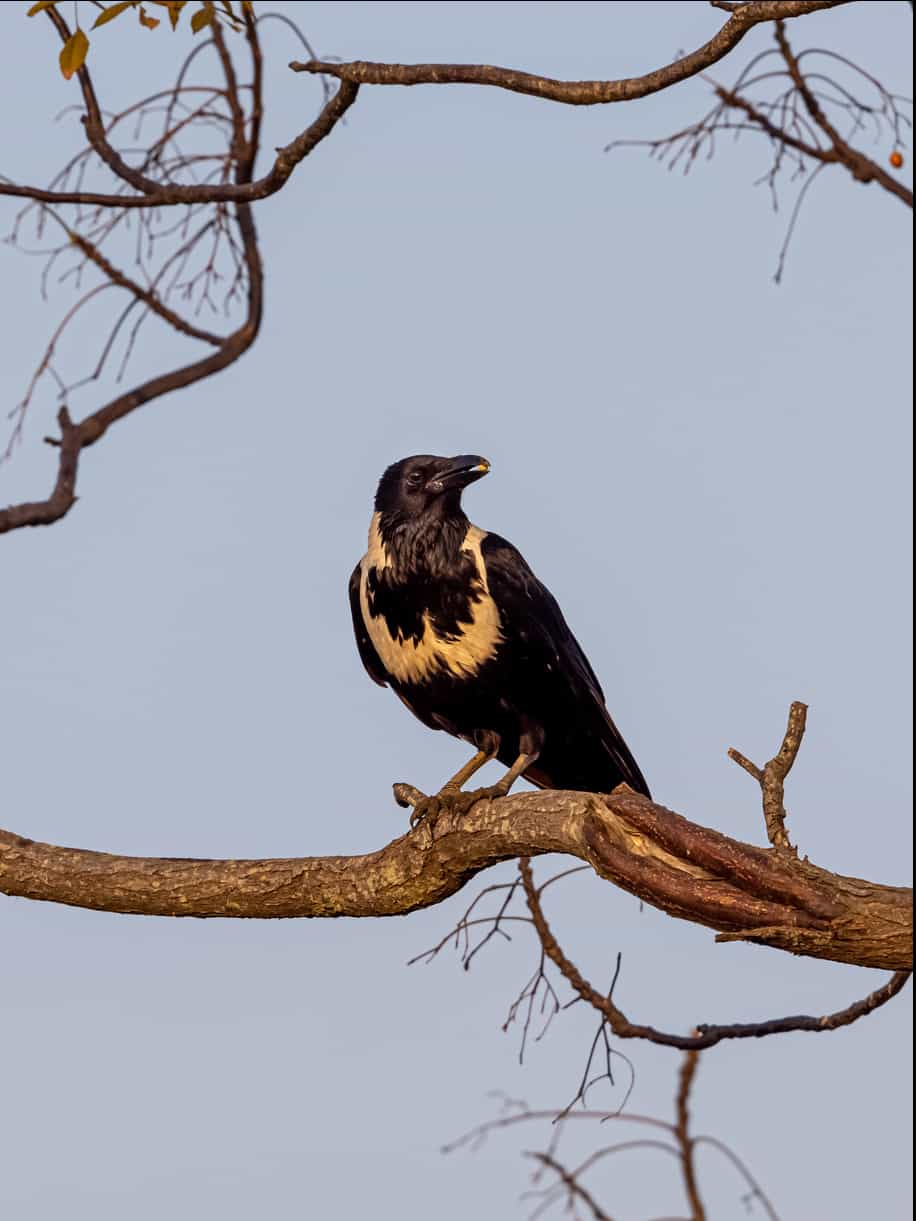
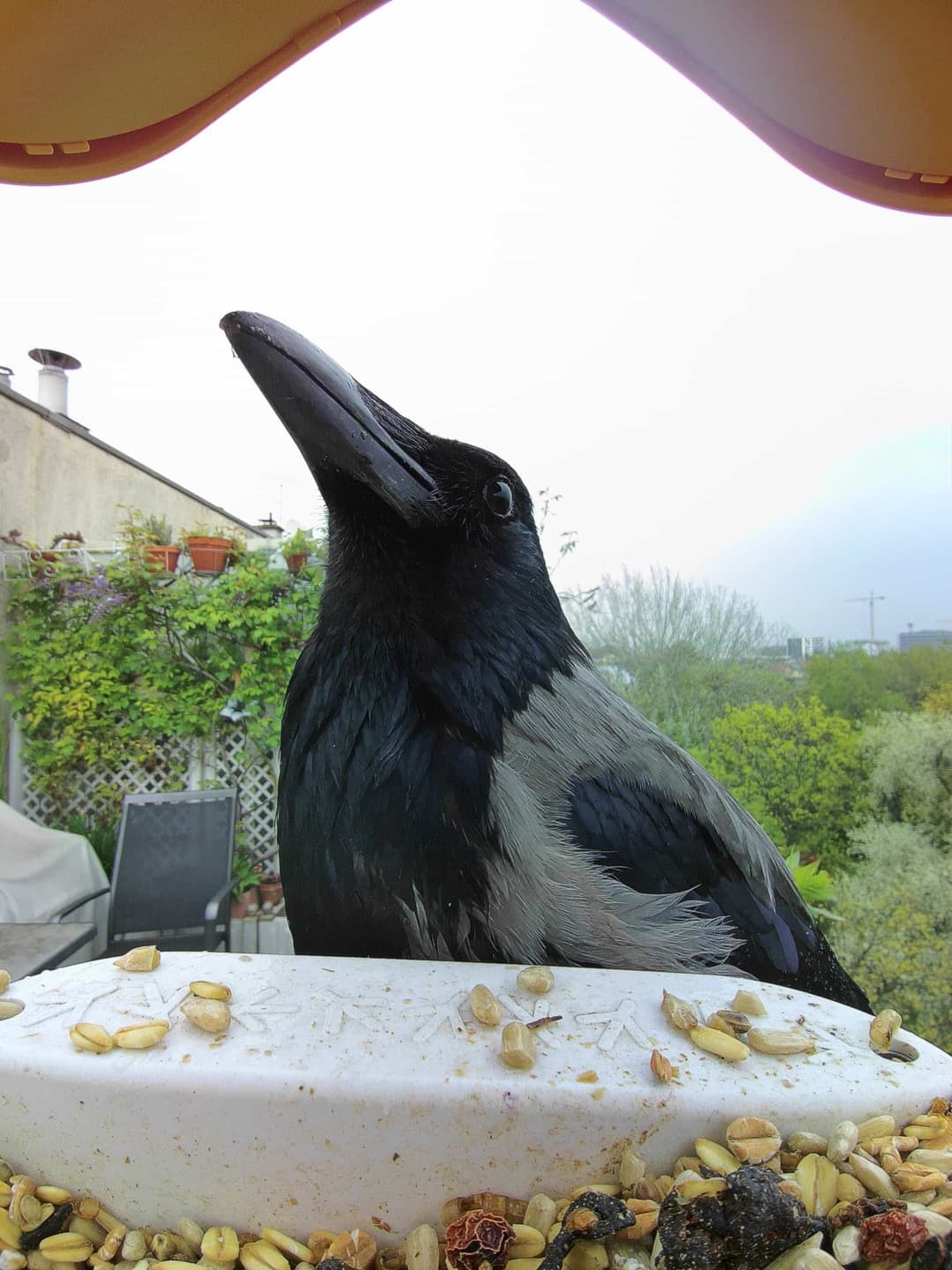
The Collared Crow is a large bird with a body length of about 50cm. Its body is predominantly black with striking white plumage found on its neck (forming a 'collar'), chest, and abdomen regions. It also displays a white wing bar that is visible when the wings are folded. This crow exhibits a sleek black beak, robust legs and a relatively flat head.
Male vs female
Both male and female Collared Crows look alike, exhibiting similar black and white coloration and sizes. They are monomorphic which means there is no visible distinction between males and females. Males might be slightly larger than females, but this difference is barely noticeable.
Juvenile
Juvenile Collared Crows have coloration similar to that of adults, although their colors may be slightly duller, especially the white part. The plumage becomes brighter and sleek as they grow into adults. Another noticeable feature in juveniles is a less defined 'collar' and the beak may be slightly lighter in color.
Size
19.7 - 21.7 in/12.2 - 18.1 oz
There's more to learn about Collared Crow
View full detailsCarrion Crow
Corvus corone
General appearance
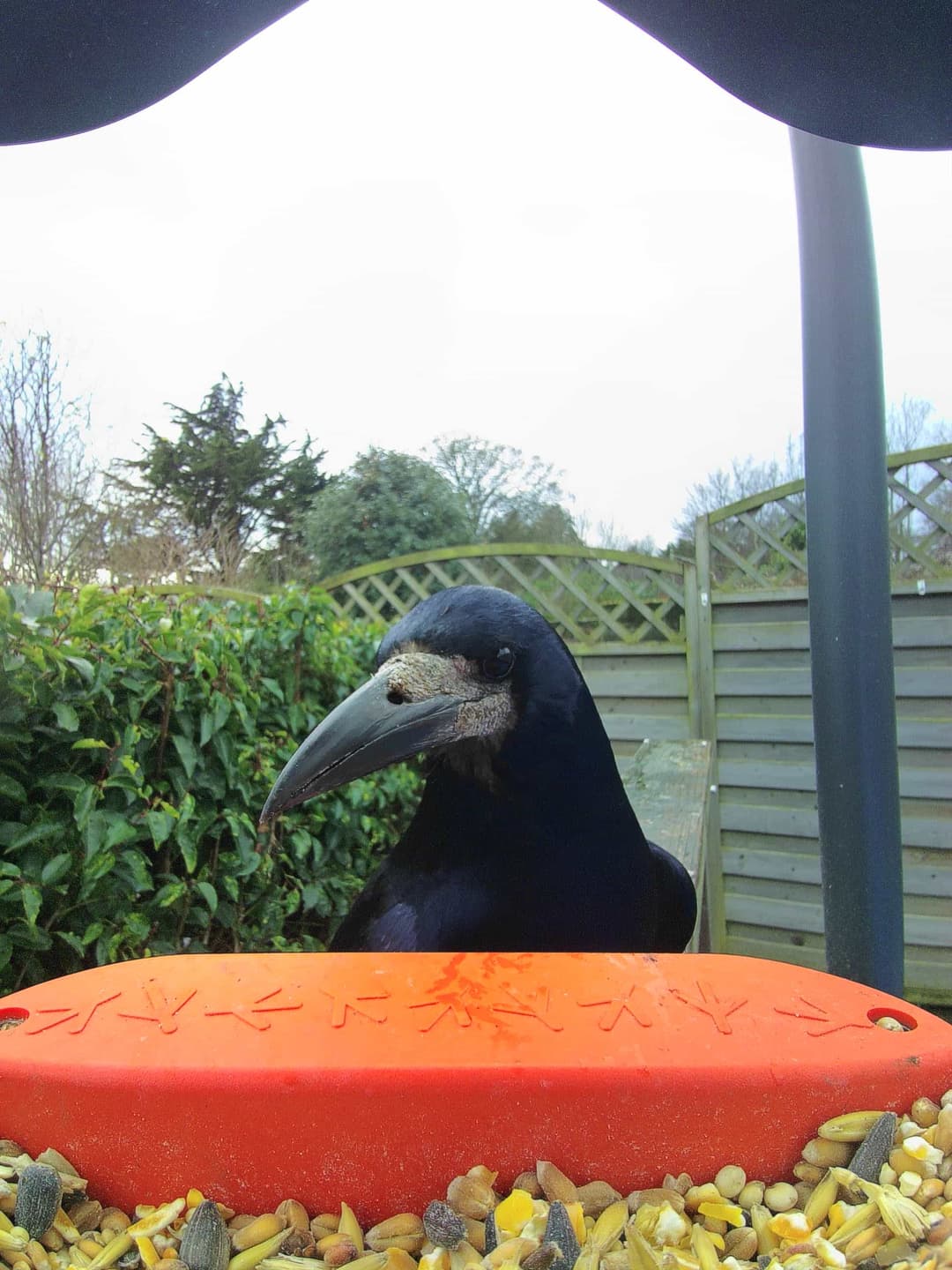
The Carrion Crow is roughly 46-51 cm long with a wingspan of 93–104 cm. It has a pure black plumage, slightly glossy, with a strong, black bill, and black legs. Its eyes are dark brown or grey. It flies with a slow heavy flapping, and has a distinct 'cash' sound.
Male vs female
Males are slightly larger than females, but otherwise, the sexes are very similar in appearance. Generally, females may have a slightly lighter build, but it is challenging to distinguish between the two based solely on physical appearance.
Juvenile
Juvenile Carrion Crows are remarkably similar to adults, still black but slightly less glossy. Their eyes initially are blue, gradually changing to brown in the first year. They lack the ruffled plumage around the neck seen in adults.
Size
18.9 - 20.9 in/14.0 - 21.2 oz
There's more to learn about Carrion Crow
View full detailsHow to tell the Collared Crow from the Carrion Crow
Visual differences
The Collared Crow is larger (20-22 inches) and features distinctive white plumage on its neck, chest, and abdomen, with a white wing bar. It has a sleek, black beak and relatively flat head. In contrast, the Carrion Crow is slightly smaller (18-20 inches), with entirely glossy black plumage, strong black bill, and dark brown or grey eyes. Its wingspan is also broader. Both species exhibit minor sexual dimorphism, with males slightly larger than females, but overall differences rely on distinguishing coloration and size.
Key differences and behavior
The Collared Crow (Corvus torquatus) and Carrion Crow (Corvus corone) display distinct behavioral differences. Collared Crows are monogamous, maintaining year-round territories in East Asia's subtropical climates, whereas Carrion Crows, found across Europe and Asia, adapt to varied climates, including urban settings. Both species engage in elaborate courtship and cooperative breeding, but Collared Crows prefer solitary, comfortable nest sites, while Carrion Crows are more communal, sometimes using bones for nest building. In diet, both are omnivorous and opportunistic, but Collared Crows focus more on insects and small vertebrates, while Carrion Crows extensively scavenge carrion. Despite these distinctions, both thrive near human habitats, showcasing their adaptability across diverse environments.
Still not sure? Here are more lookalikes!
Collared Crow vs Western Jackdaw


Collared Crow vs [Select a bird]

[Select a bird]
Pick a bird to compare
Carrion Crow vs [Select a bird]
[Select a bird]
Pick a bird to compare