Collared Crow or Rook?
Here's how to tell the difference

Collared Crow


Rook
Collared Crow
Corvus torquatus
Also known as: Ring-Necked Crow, White-Collared Crow
General appearance
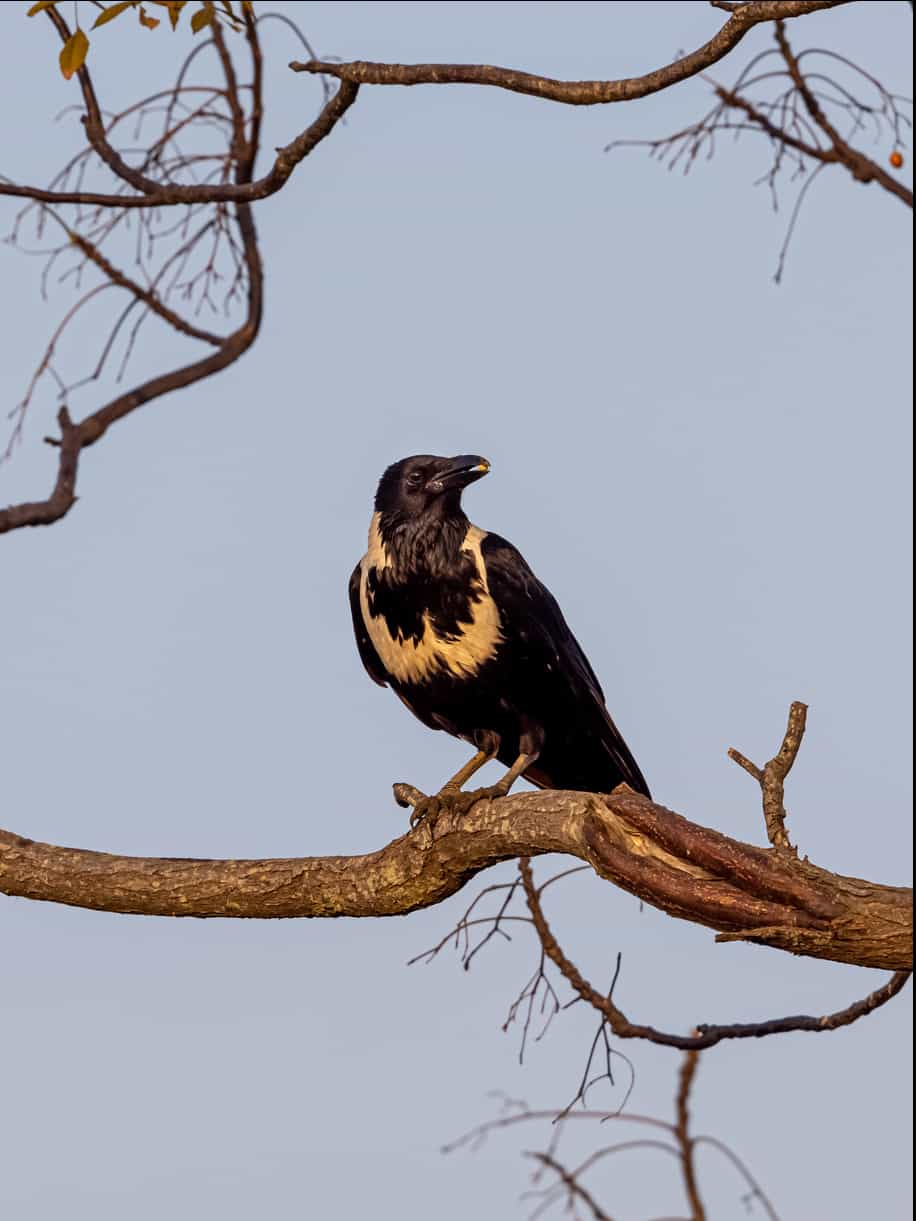
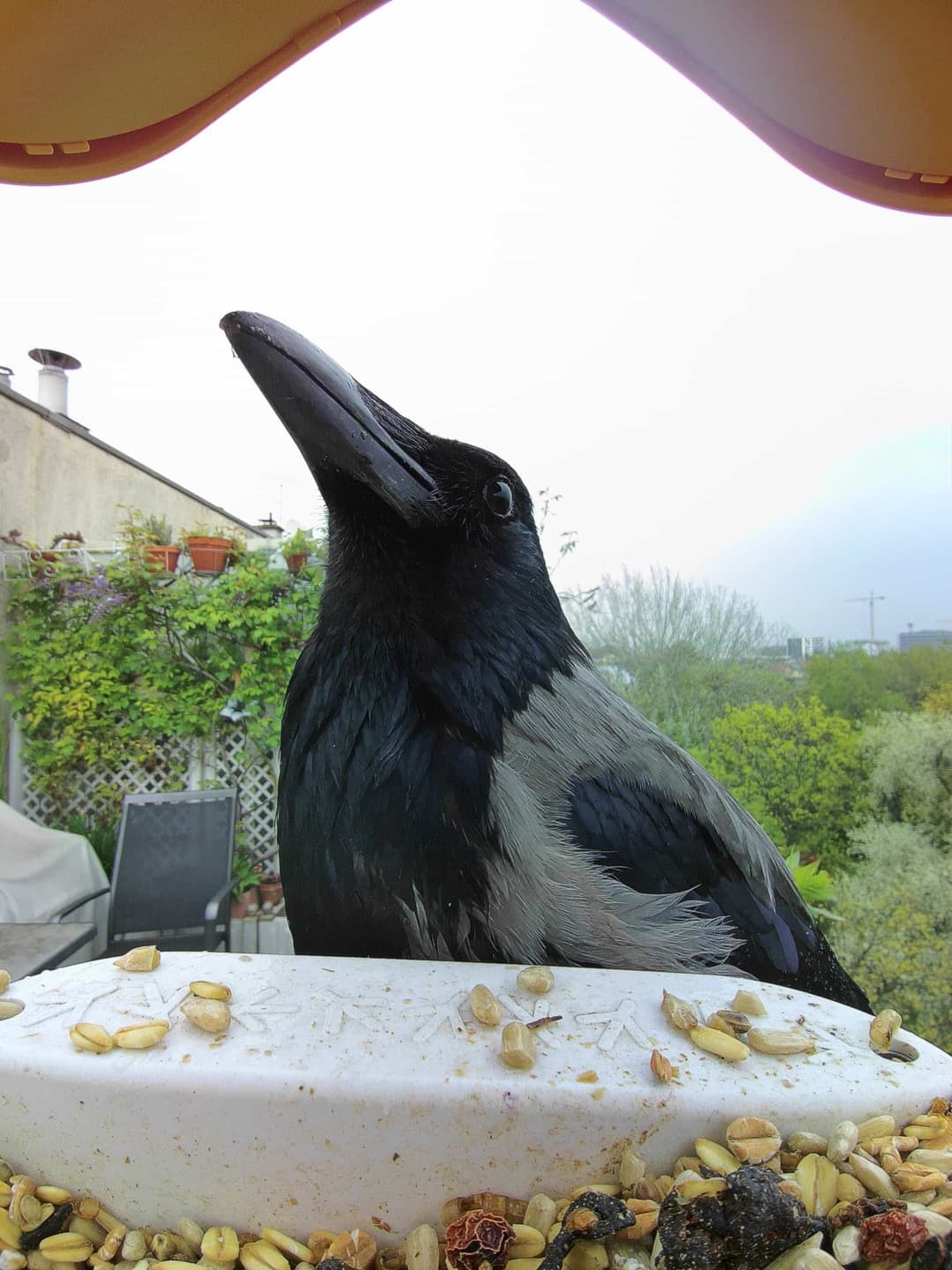
The Collared Crow is a large bird with a body length of about 50cm. Its body is predominantly black with striking white plumage found on its neck (forming a 'collar'), chest, and abdomen regions. It also displays a white wing bar that is visible when the wings are folded. This crow exhibits a sleek black beak, robust legs and a relatively flat head.
Male vs female
Both male and female Collared Crows look alike, exhibiting similar black and white coloration and sizes. They are monomorphic which means there is no visible distinction between males and females. Males might be slightly larger than females, but this difference is barely noticeable.
Juvenile
Juvenile Collared Crows have coloration similar to that of adults, although their colors may be slightly duller, especially the white part. The plumage becomes brighter and sleek as they grow into adults. Another noticeable feature in juveniles is a less defined 'collar' and the beak may be slightly lighter in color.
Size
19.7 - 21.7 in/12.2 - 18.1 oz
There's more to learn about Collared Crow
View full detailsRook
Corvus frugilegus
General appearance
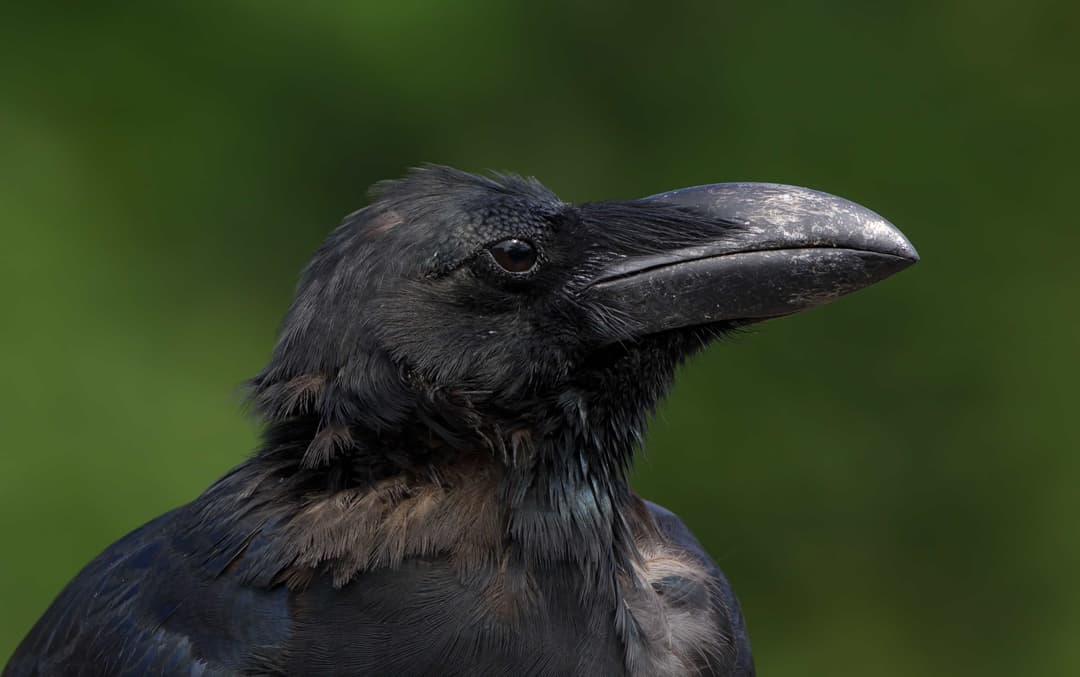
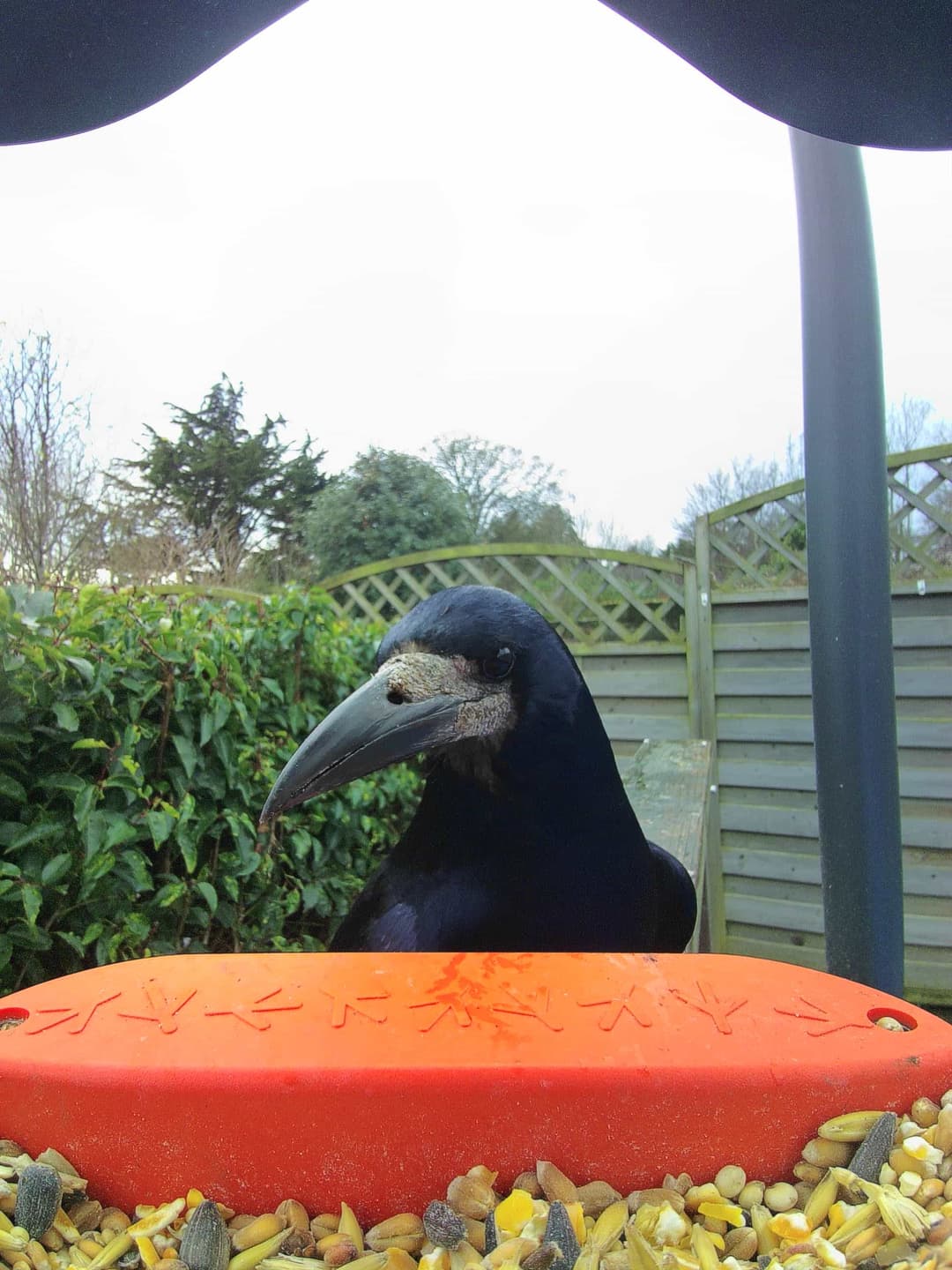
Rooks are generally about 45-47 cm in length, with dark feathery coloration, often appearing black with a purple or blue sheen in sunlight. They exhibit a prominent bare area around the base of their beak and on their face, which is grey-white in color. The bird also has uniquely fringed thigh feathers, long pointed wings, and a wedge-shaped tail.
Male vs female
Sexual dimorphism is not significant in rooks, making it difficult to distinguish males from females by appearance alone. Both genders share the same coloration and size. Behavioral observations during the breeding season may provide clues, as males tend to display more assertive posturing and are known to engage in aerial shows of acrobatics to attract mates.
Juvenile
Juveniles are similar in size to adults, but they can be distinguished by their fully feathered faces. This feature differentiates them from mature rooks, who have developed the distinctive bare patch. Juveniles may also exhibit lighter, more brownish feather coloration, transitioning to the adult's glossier black as they mature.
Size
17.3 - 18.1 in/11.5 - 20.1 oz
There's more to learn about Rook
View full detailsHow to tell the Collared Crow from the Rook
Visual differences
The Collared Crow measures around 20-22 inches in length and is predominantly black with distinctive white on its neck, chest, and abdomen, plus a sleek black beak. In contrast, the Rook is slightly smaller, at 17-18 inches, with a black plumage exhibiting a purple or blue sheen in sunlight, and a noticeable grey-white bare patch at the base of its beak. Unlike the Collared Crow's solid pattern, the Rook displays fringed thigh feathers and a wedge-shaped tail, offering distinct identification points.
Key differences and behavior
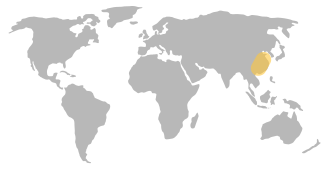
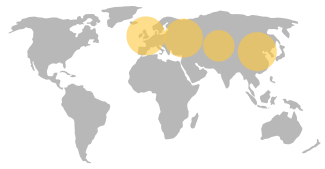
Collared Crows (Corvus torquatus) prefer solitary nesting, building roomy nests in tall trees or shrubs, while Rooks (Corvus frugilegus) nest in large colonies, or rookeries, of up to 20-30 nests, primarily in tall trees. Collared Crows exhibit monogamous, long-term pair bonds with elaborate courtship displays and remain in subtropical farmland and urban areas of East Asia year-round. In contrast, Rooks, found in Europe, western Asia, and northern Africa, are more cold-tolerant, with males engaging in acrobatic displays for courtship. Both species have omnivorous diets, but Collared Crows are more opportunistic feeders, favoring carrion and human waste, while Rooks forage probing the ground for earthworms and insects. At bird feeders, both consume seeds, peanuts, and kitchen scraps, showcasing their adaptability. Collared Crows weigh 12-18 oz (length: 20-22 in), whereas Rooks weigh 11.5-20 oz (length: 17-18 in).
Still not sure? Here are more lookalikes!
Collared Crow vs Western Jackdaw



Collared Crow vs [Select a bird]

[Select a bird]
Pick a bird to compare
Rook vs [Select a bird]
[Select a bird]
Pick a bird to compare