Cape Bulbul or Himalayan Bulbul?
Here's how to tell the difference
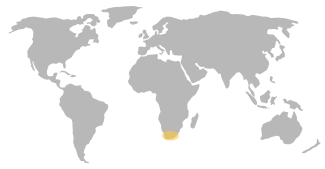



Cape Bulbul


Himalayan Bulbul
Cape Bulbul
Pycnonotus capensis
Also known as: Cape Geelgat
General appearance
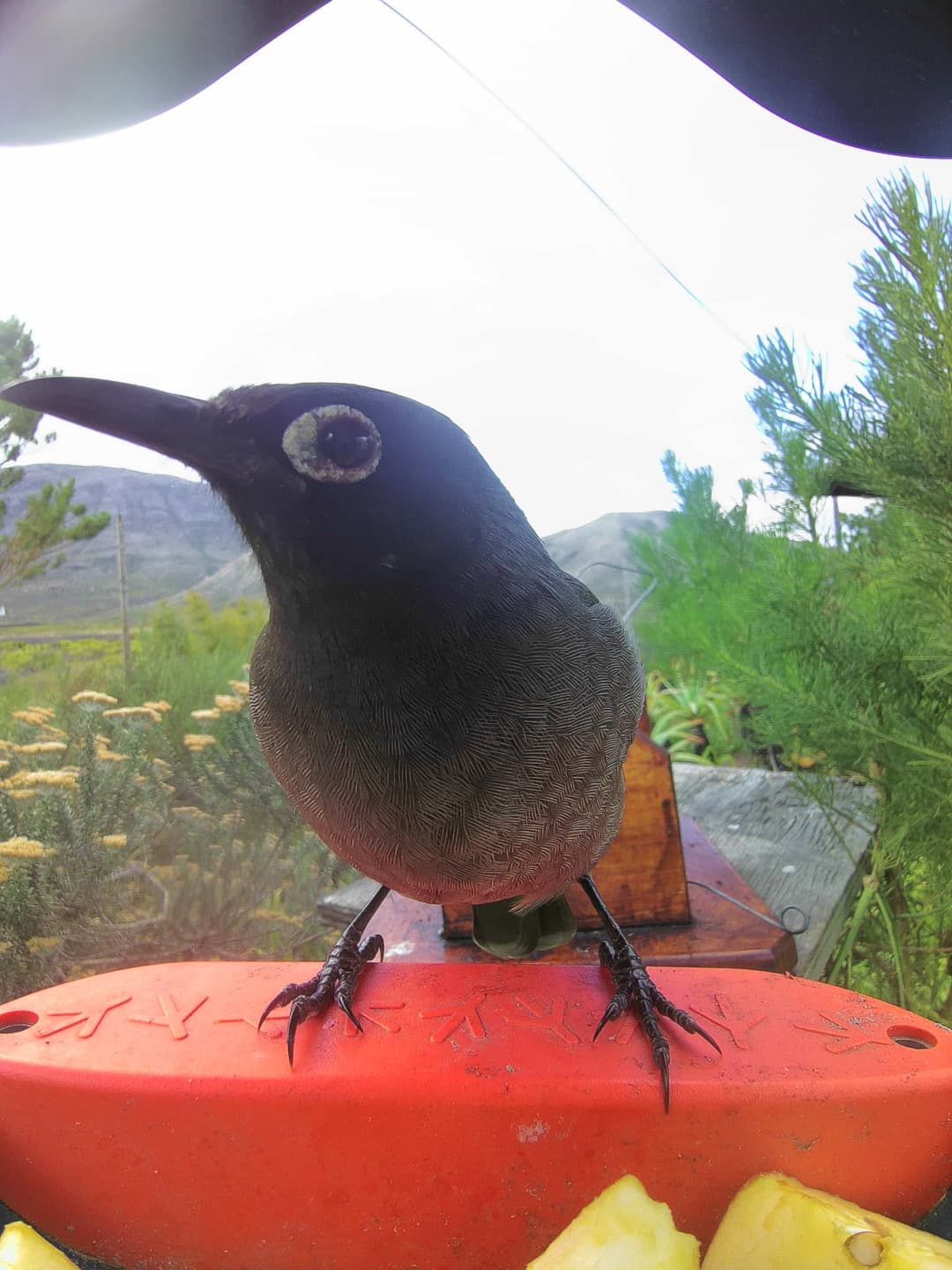
The Cape Bulbul, known scientifically as Pycnonotus capensis, is a bird species endemic to the Fynbos biome in South Africa. It is relatively small-sized about 20 cm long, distinguished by its glossy black plumage with an olive-yellowish underbelly. This small bird has a neat black crest, a dark brown eye surrounded by a narrow white eye-ring, and a long slender bill. It's characteristic tail is bulbous and displays prominent white tips and edges.
Male vs female
Male and female Cape Bulbuls appear identical with no significant sexual dimorphism. Both sexes share the same greenish-yellow underparts and distinctive olive-black upperparts. Differences in size or colour can't be reliably used to distinguish males from females.
Juvenile
Juvenile Cape Bulbuls resemble the adult birds but their plumage is less glossy. Additionally, the white edges on the feathers of their wings and tails are broader than in adults. Over time, as they mature, they acquire the glossy adult plumage and their white feather edges become as thin as those of mature birds.
Size
7.5 - 8.3 in/1.0 - 1.7 oz
There's more to learn about Cape Bulbul
View full detailsHimalayan Bulbul
Pycnonotus leucogenys
Also known as: White-Cheeked Bulbul
General appearance
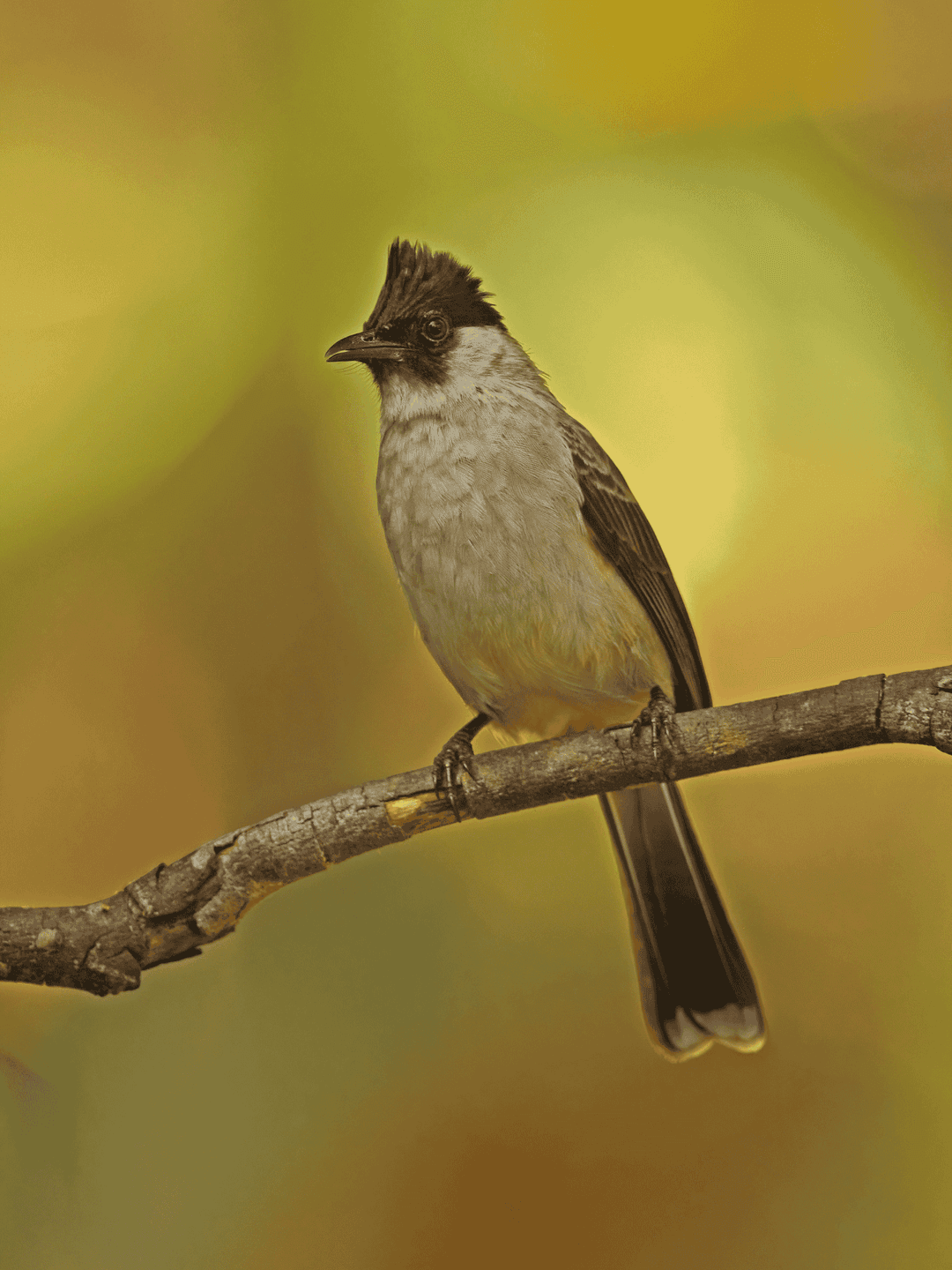
The Himalayan bulbul, or white-cheeked bulbul, is a species of songbird with a distinctive crest on the head. They exhibit a dove grey above with whitish underparts, a black crest, and white patches on the cheek and underside of the tail. They have a medium size, averaging around 20 cm long, and are known for their melodious song.
Male vs female
For the Himalayan bulbul, sexual dimorphism is not significantly pronounced, and both males and females have similar physical appearances. Both genders exhibit the same colorations and physical traits, making it difficult to distinguish between them based on appearance.
Juvenile
Juveniles exhibit similar body shape to adults, though their coloration may be duller. The signature crest is shorter and their cheek patches are not as starkly white. As they grow, they gradually attain the more distinctive adult coloration.
Size
7.5 - 7.9 in/1.2 - 1.3 oz
There's more to learn about Himalayan Bulbul
View full detailsHow to tell the Cape Bulbul from the Himalayan Bulbul
Visual differences
The Cape Bulbul is about 7.5-8.3 inches long, with glossy black plumage, an olive-yellowish underbelly, and a dark brown eye with a narrow white eye-ring. It features a black crest, a slender bill, and a tail with white tips. The Himalayan Bulbul, around 8 inches long, displays dove grey above with whitish underparts, a more pronounced black crest, white cheek patches, and a white underside on its tail. Both species show no significant visual sexual dimorphism and differ mainly in coloration and cheek patch presence.
Key differences and behavior
The Cape Bulbul (Pycnonotus capensis) and the Himalayan Bulbul (Pycnonotus leucogenys) display distinct behavioral and ecological differences. The Cape Bulbul is endemic to South Africa's Fynbos, thriving in shrublands and urban gardens, while the Himalayan Bulbul inhabits subtropical and temperate forests in the Himalayas, often near water sources. Both engage in elaborate courtship with vocal and physical displays, but the Himalayan Bulbul's song is more complex, often involving duets. Cape Bulbuls feed primarily on fruits and insects, visiting feeders for fruits and nectar, whereas Himalayan Bulbuls are more insectivorous, attracted to feeders with seeds, suet, and fruit. Breeding occurs in dense shrubbery and trees for both species, with similar nest construction and parental care. Despite similar sizes (about 8 inches), their ecological niches and dietary preferences set them apart.
Still not sure? Here are more lookalikes!
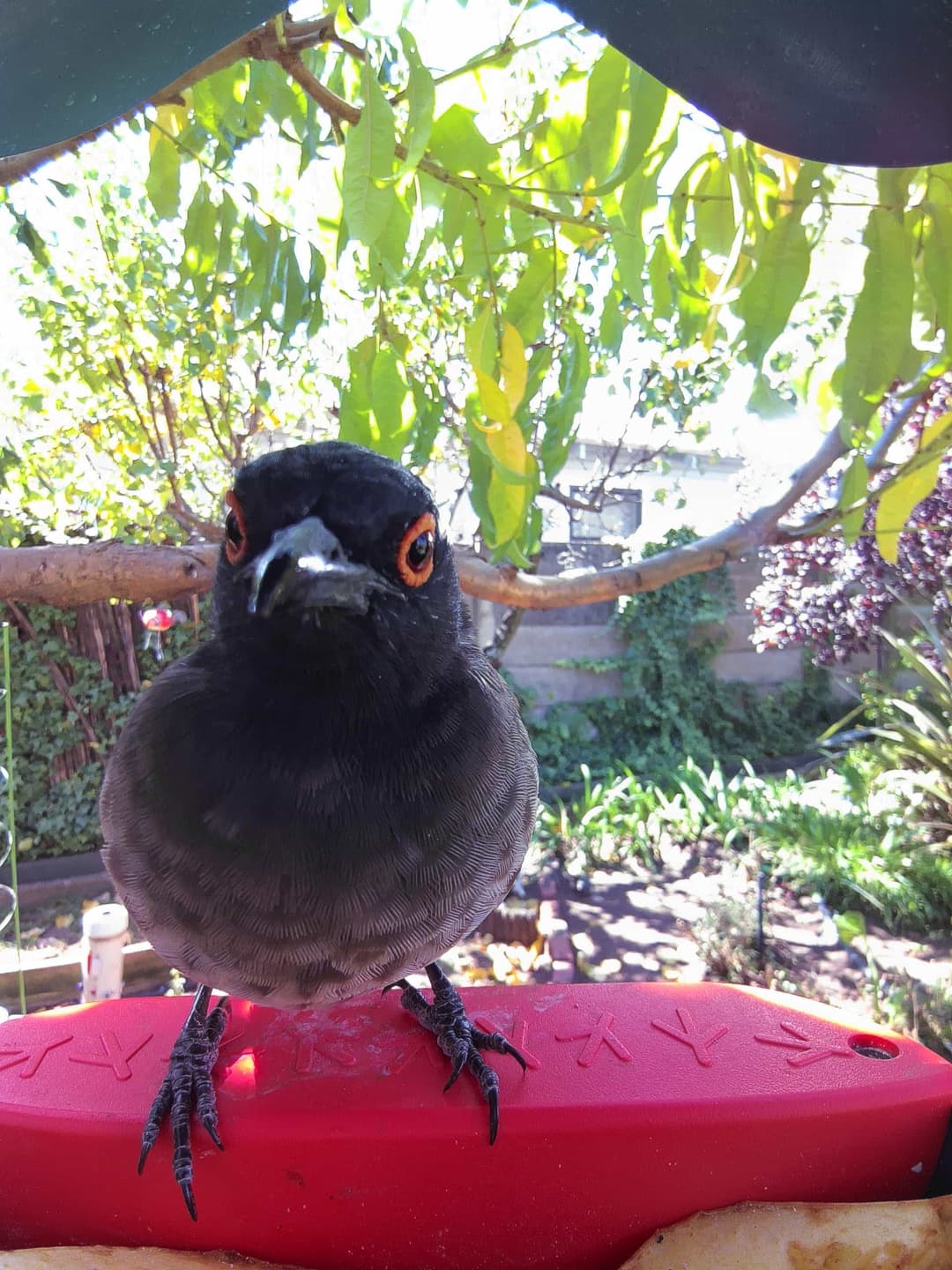
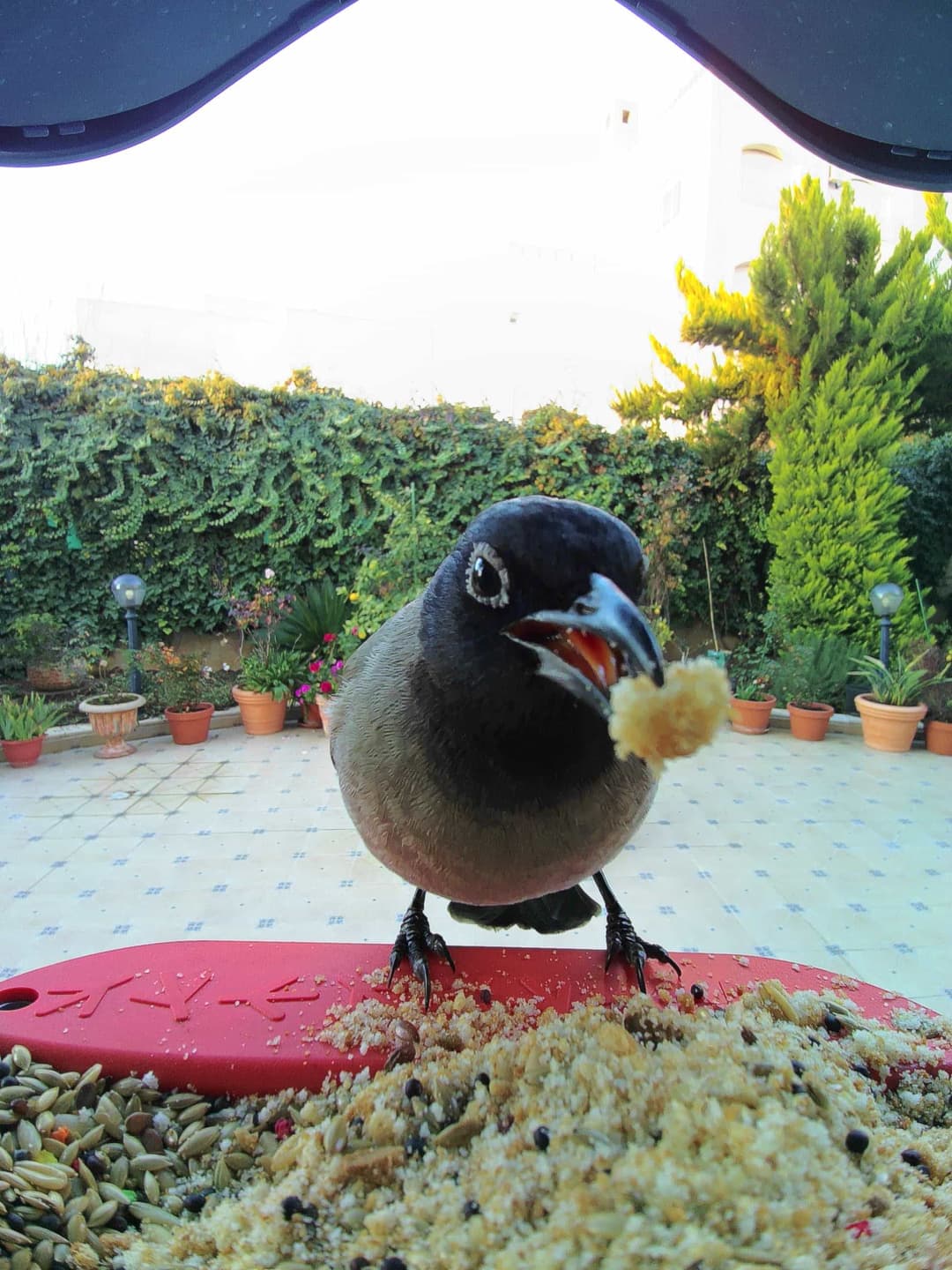
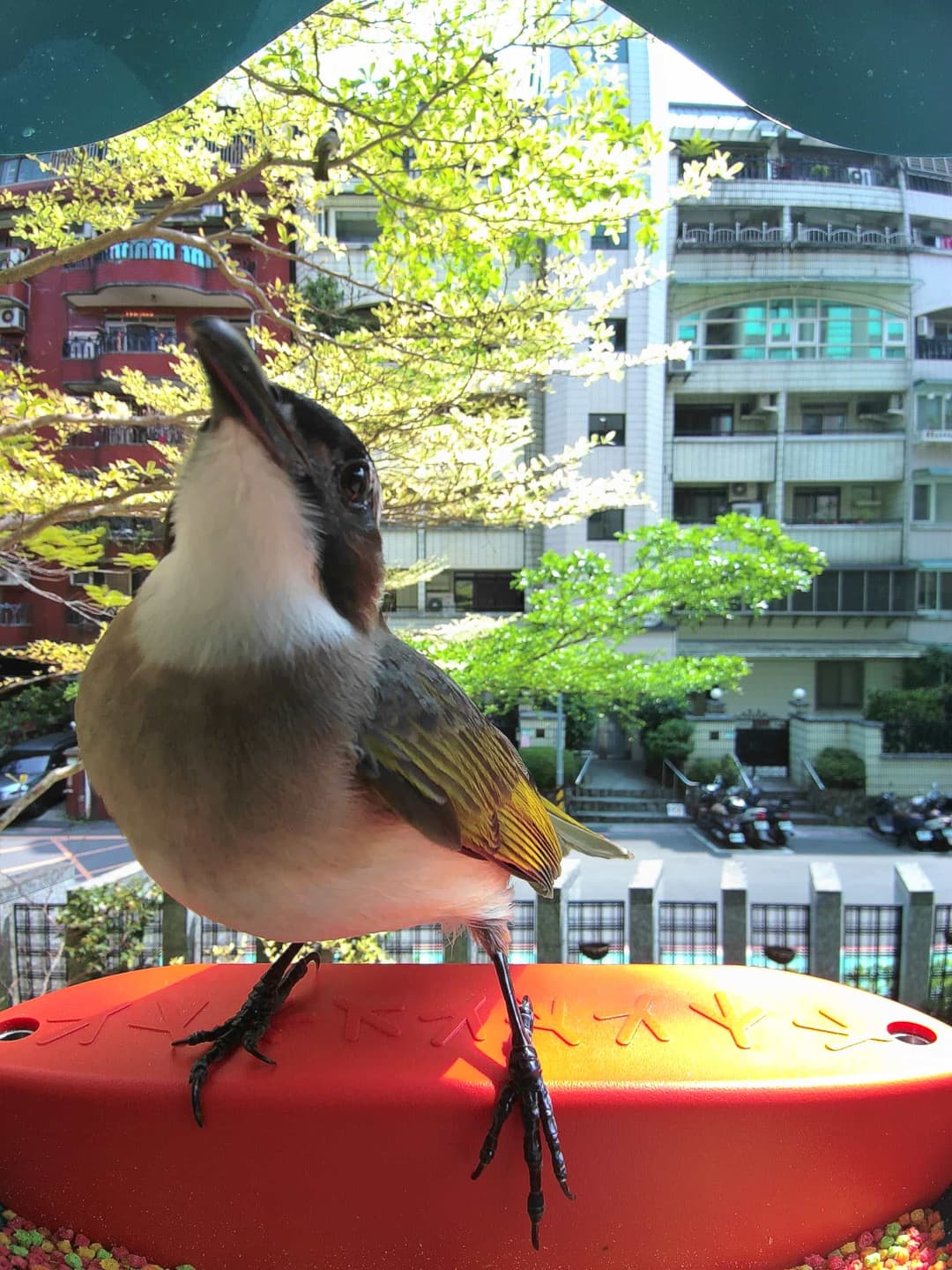
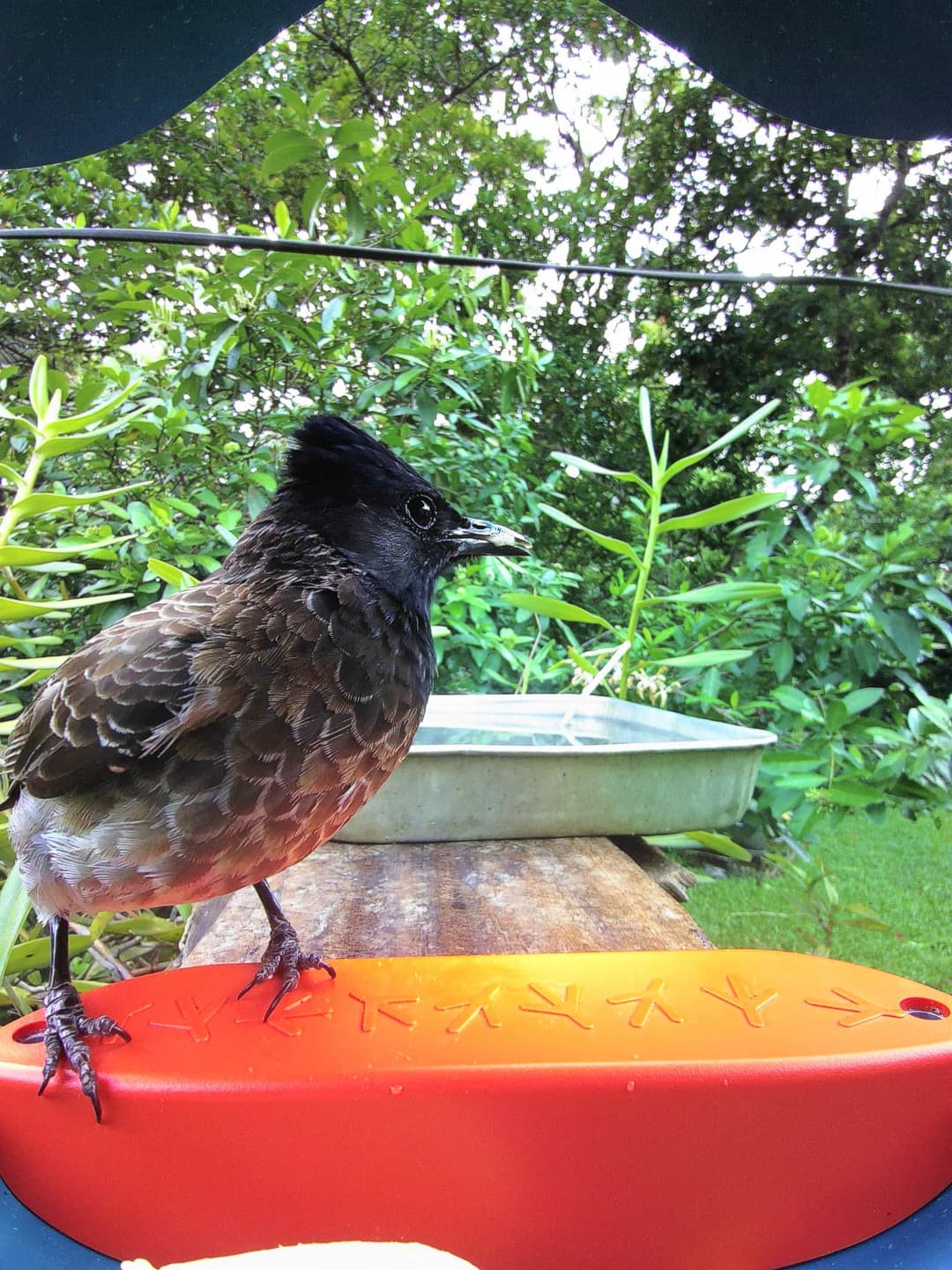
Himalayan Bulbul vs Red-Vented Bulbul
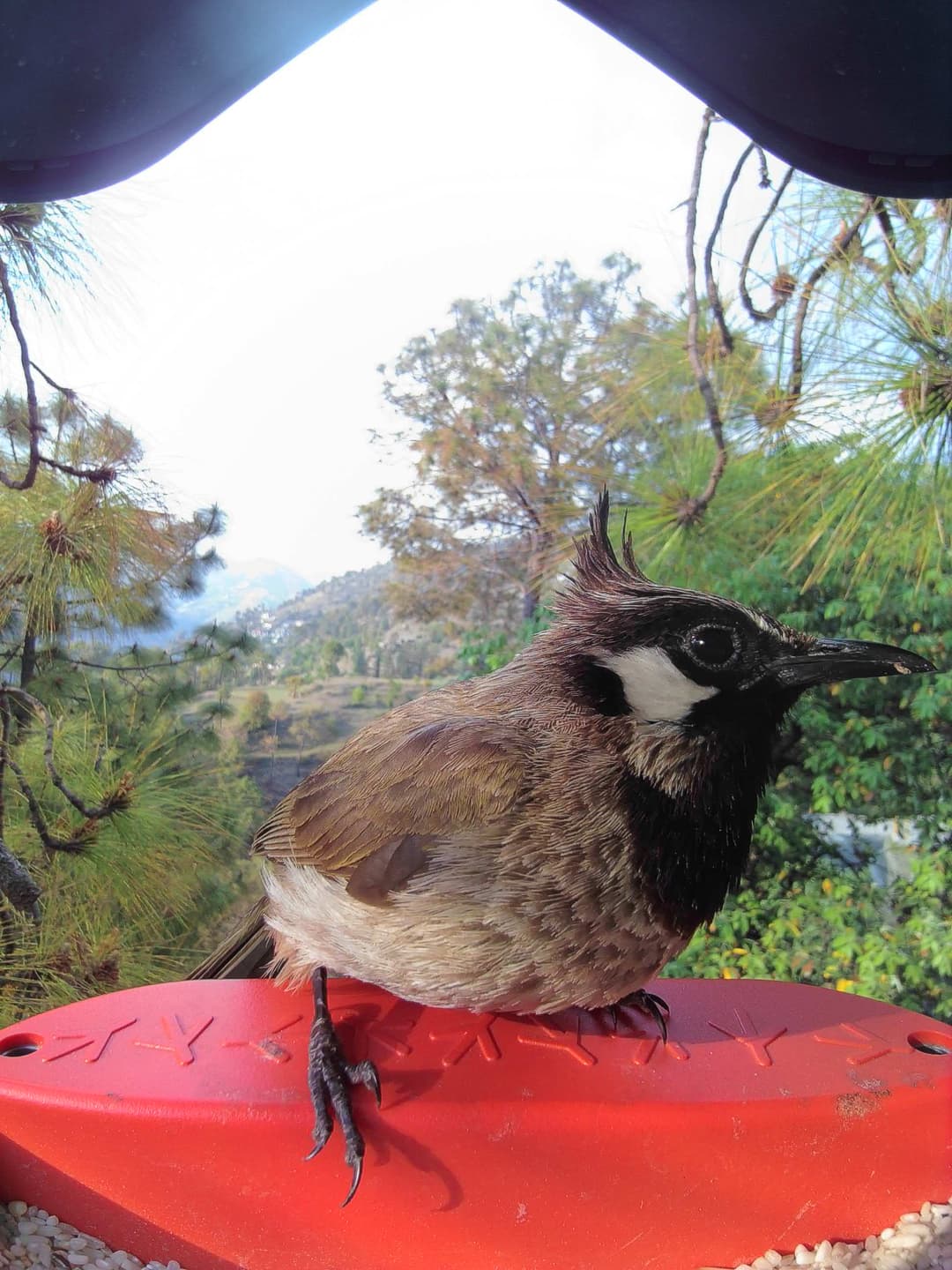
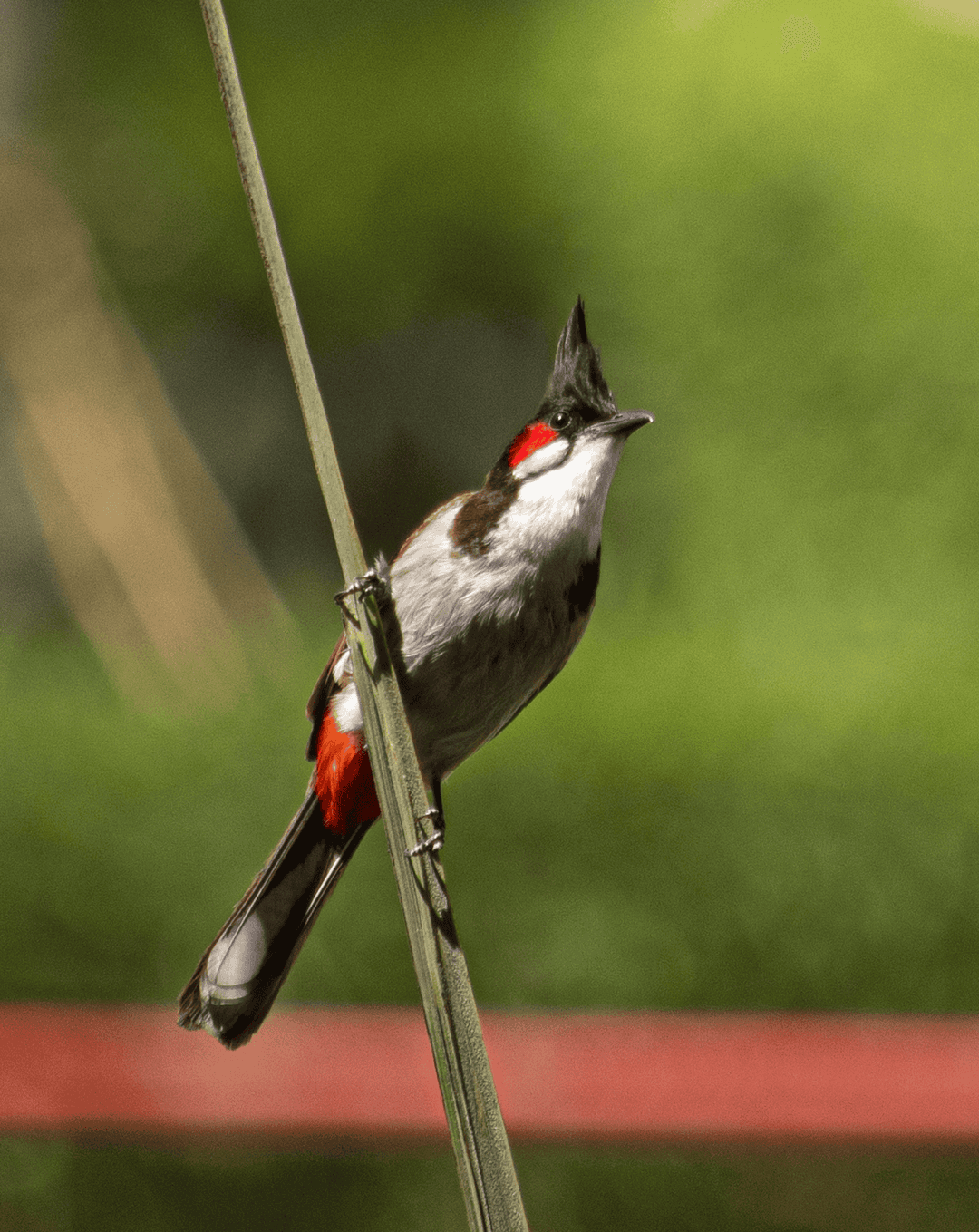
Himalayan Bulbul vs Red-Whiskered Bulbul
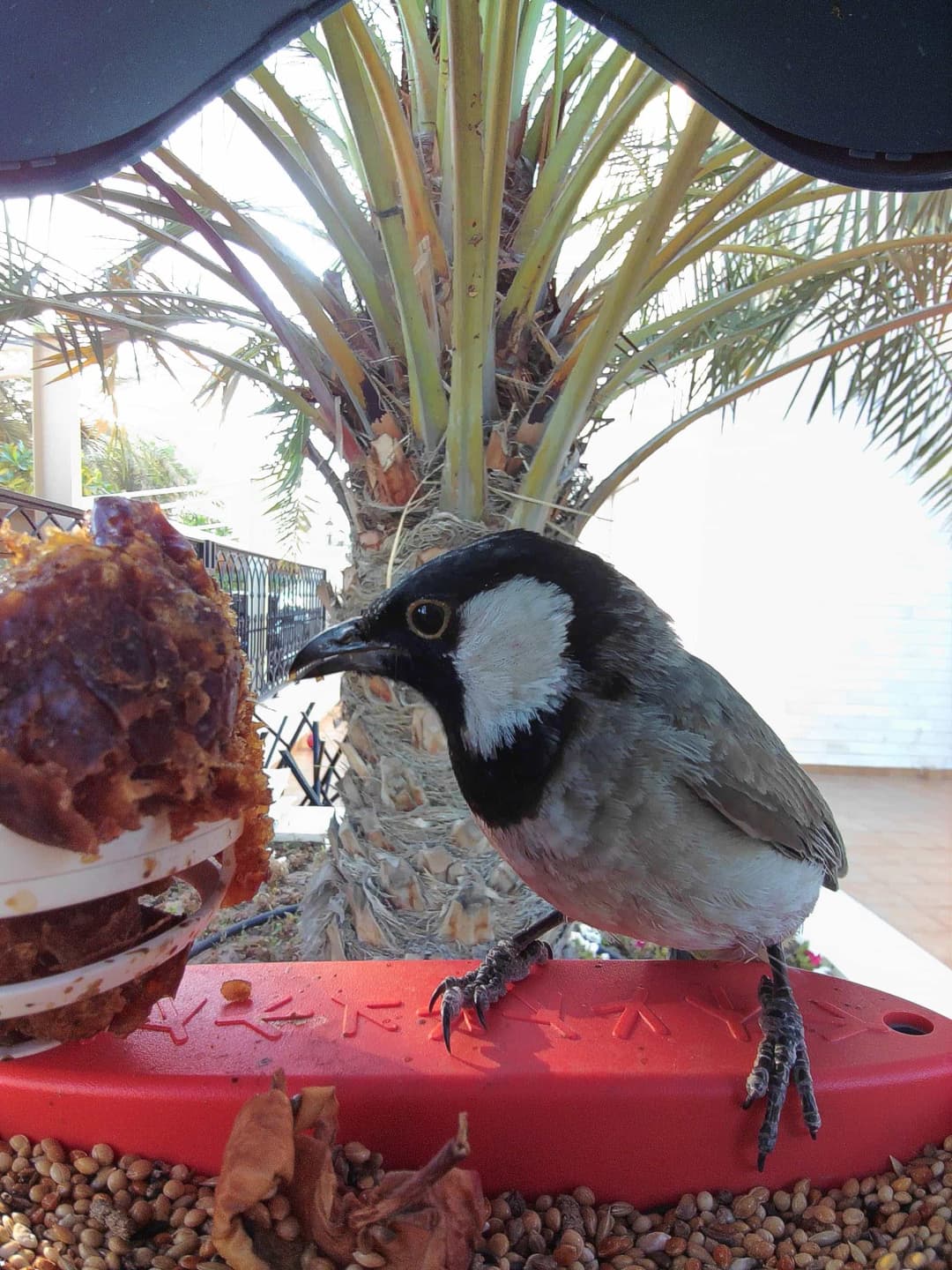
Himalayan Bulbul vs White-Eared Bulbul
Cape Bulbul vs [Select a bird]

[Select a bird]
Pick a bird to compare
Himalayan Bulbul vs [Select a bird]
[Select a bird]
Pick a bird to compare