
Bronzed Cowbird
Bronzed Cowbird
Molothrus aeneus


Quick Identification guide
Quick Identification guide
- •
Displays a glossy bronze-green sheen across its body, providing a metallic luster under sunlight
- •
Features bright red eyes that contrast against its dark head, making it stand out
- •
The short, conical beak is stout and perfectly suited for its foraging needs
What does a bronzed cowbird sound like?
The vocalizations of the bronzed cowbird are a unique array of sounds that include wheezy and guttural whistling notes, and a variety of squeaks and squeals. Their call pattern is rising, creating an almost crescendo effect. Their dominant call type is high-pitched, resembling a whistle. This call pattern and type define their distinctive songs and calls.


Description
Bronzed cowbirds aren't too keen on parenting and prefer to dump their eggs in a host bird's nest and be on their merry way. They use at least 101 different species of foster parents and, one time, one poor, unsuspecting mother-to-be was saddled with an incredible 17 cowbird eggs! Looks like someone got a little carried away.
The bronzed cowbird can weigh between 55to70grams and be from19to21centimeters tall.
The Bronzed Cowbird typically lives up to 8 years. This lifespan appears shorter compared to similar species like the Brown-headed Cowbird, which can live up to 15-16 years. However, survival rates for adult Bronzed Cowbirds are relatively high, suggesting that environmental factors significantly influence their life expectancy.
Did you know?
Most popular questions about bronzed cowbird
How to recognise a bronzed cowbird?
General appearance
Meet the bronzed cowbird, a dynamic marvel in the bird world! Flaunting an innate fashion sense, this bird adorns a full-bodied, glossy black-plumaged coat that varies from dark to shimmering bronzed-brown. It's renowned for the blazing red eyes that contrast attractively with its overall dark exterior. Defined and distinct, their robust bill and large stature separate them from other cowbird types.
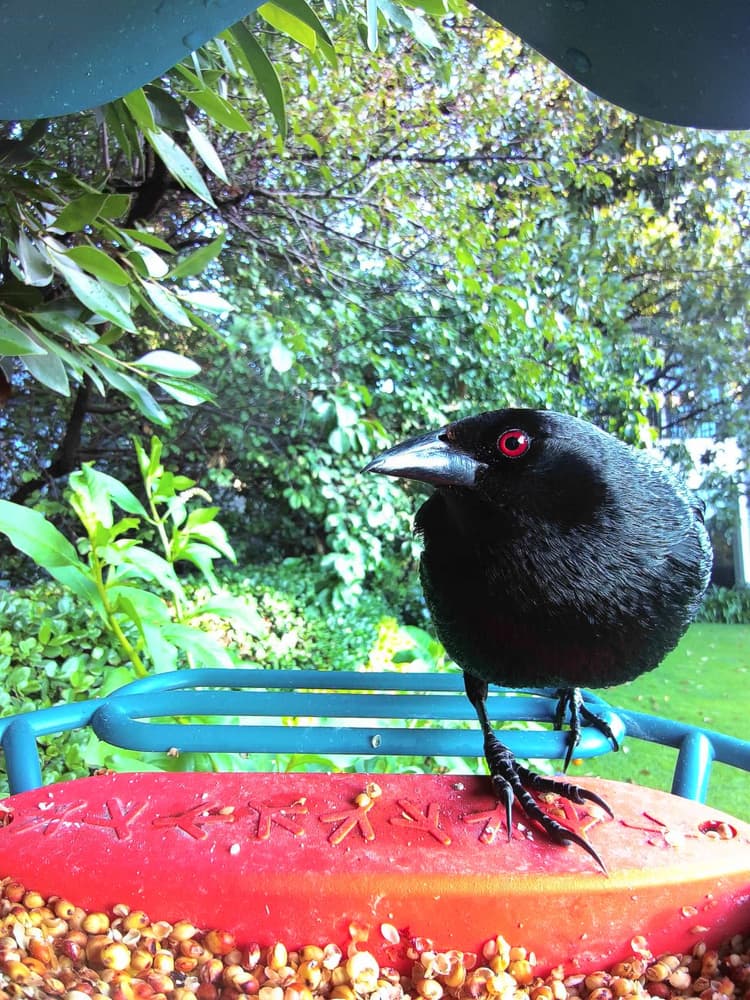
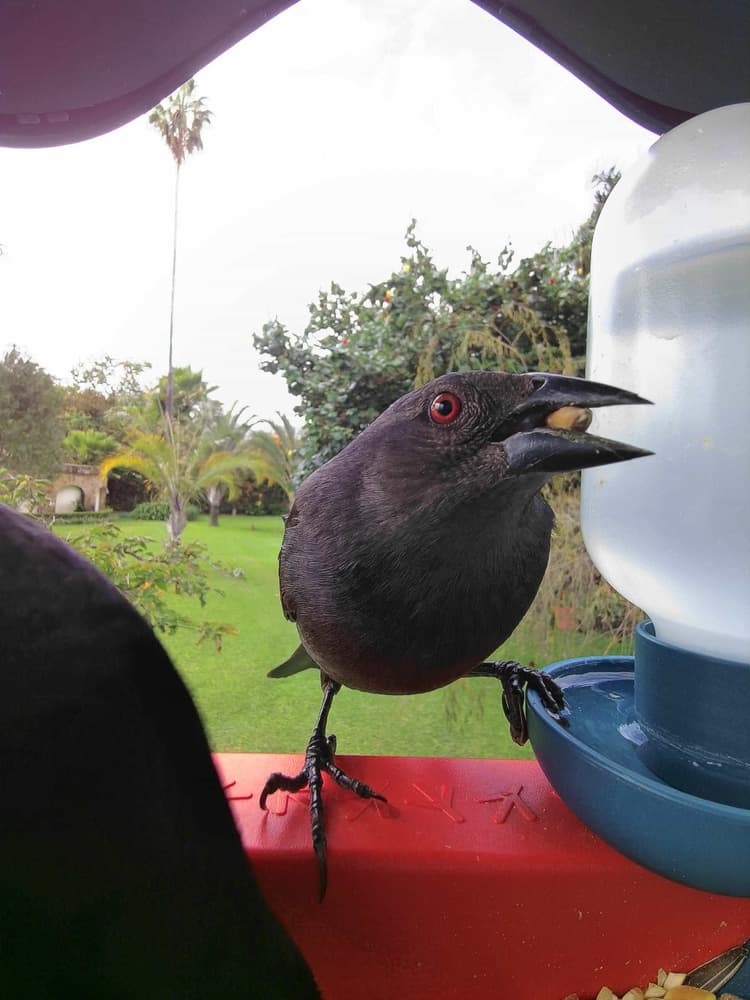
Male vs female
While both sexes of bronzed cowbirds carry an air of mystery with their dashing black feathers and vivacious eyes, males step up their look! They appear larger, more intimidating, with a pronounced gloss of tawny bronze. Still, our ladies are not left behind; they have a subtle charm, being slightly smaller with a less glossy, but still beautiful brownish-black plumage. Each sex carries its distinctive flair to the bird party!
Juvenile
The juveniles tag along, less flashy but insistently noticeable. They are a duller brown than the adult female and do not yet possess the iconic piercing red eyes. Instead, their eyes take a more relaxed gray-brown shade. But hold on tight, though less showy, these young cowbirds evolve into their striking adult colors as they mature. So, spotting a bronzed cowbird chick could mean being an audience to an unforgettable transformation!
Often mistaken for
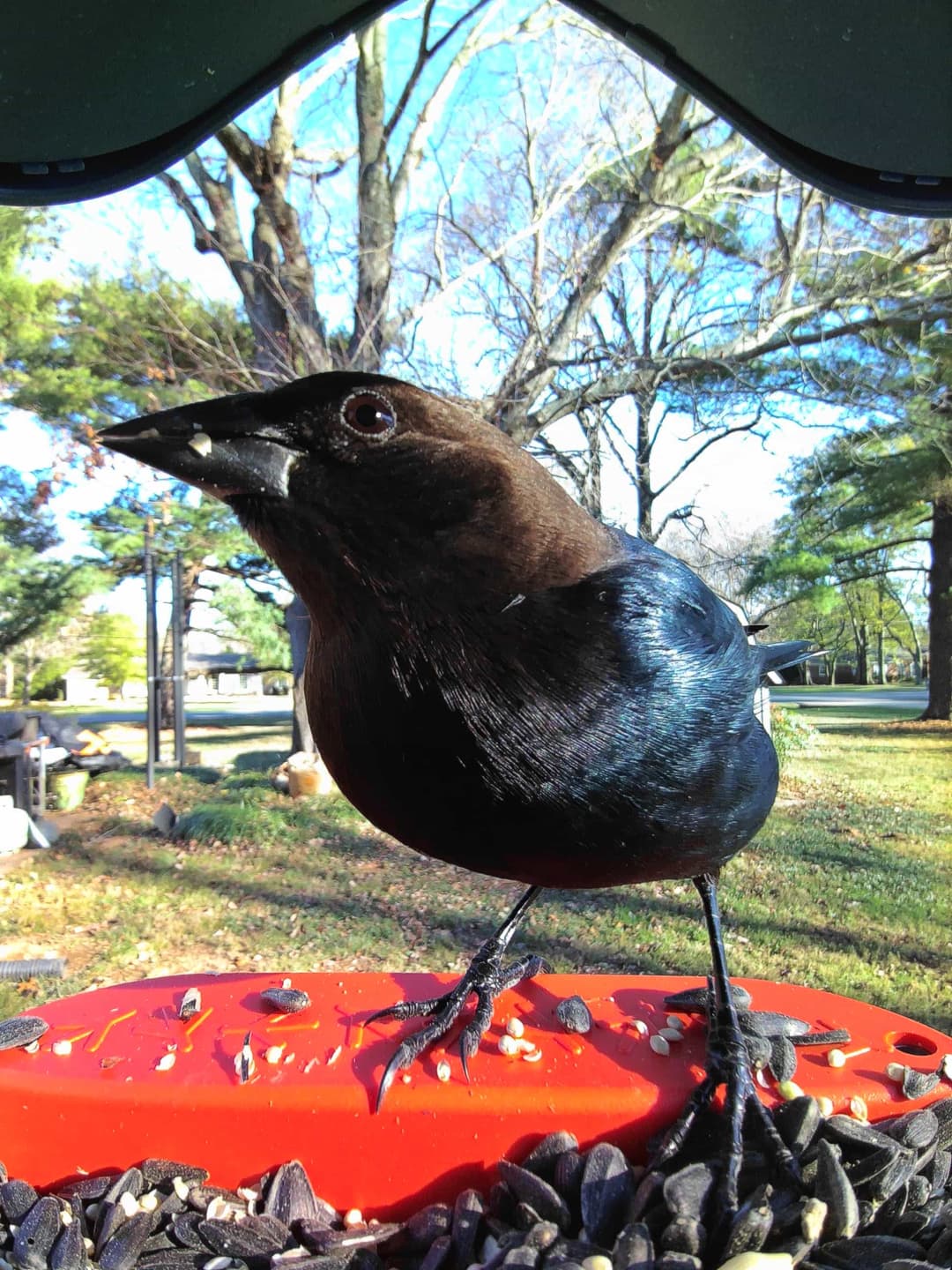
Brown-Headed Cowbird vs Bronzed Cowbird
Bronzed Cowbirds have a red eye and a slightly iridescent bronze sheen, while Brown-Headed Cowbirds have a glossy black body with a distinct brown head. Notice the Bronzed's larger size and thicker neck.
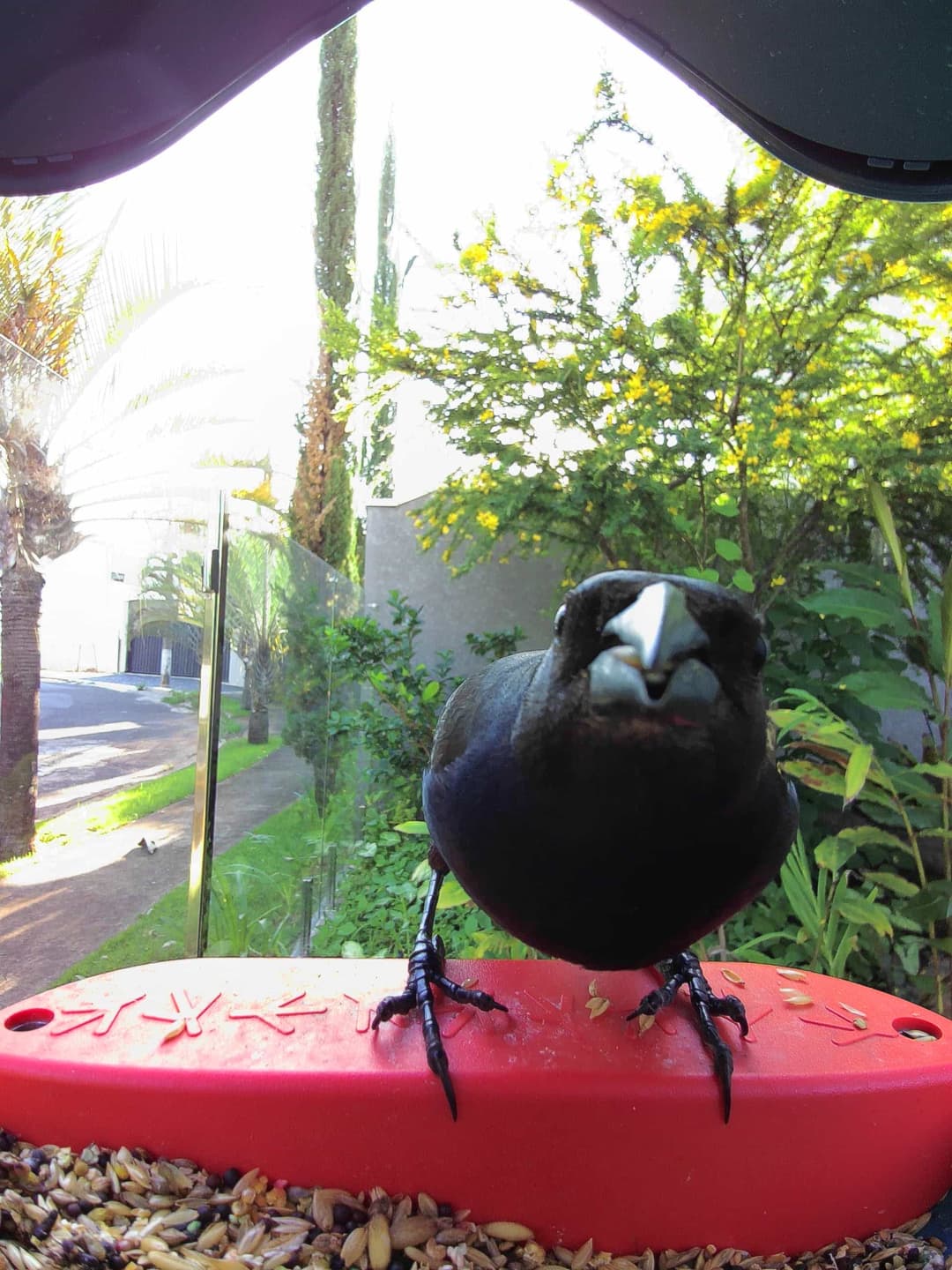
Shiny Cowbird vs Bronzed Cowbird
Bronzed Cowbirds feature a red eye and bronzed tint, unlike the uniformly glossy appearance of Shiny Cowbirds. Look for the Bronzed's slightly heavier build and less intense purple sheen compared to the shiny appearance of the Shiny Cowbird.
Brewer’s Blackbird vs Bronzed Cowbird
Brewer’s Blackbirds have yellow eyes and a slender body, contrasting with the Bronzed Cowbird's red eyes and stockier build. The Bronzed Cowbird possesses a distinct bronzed glow absent in Brewer's Blackbird.
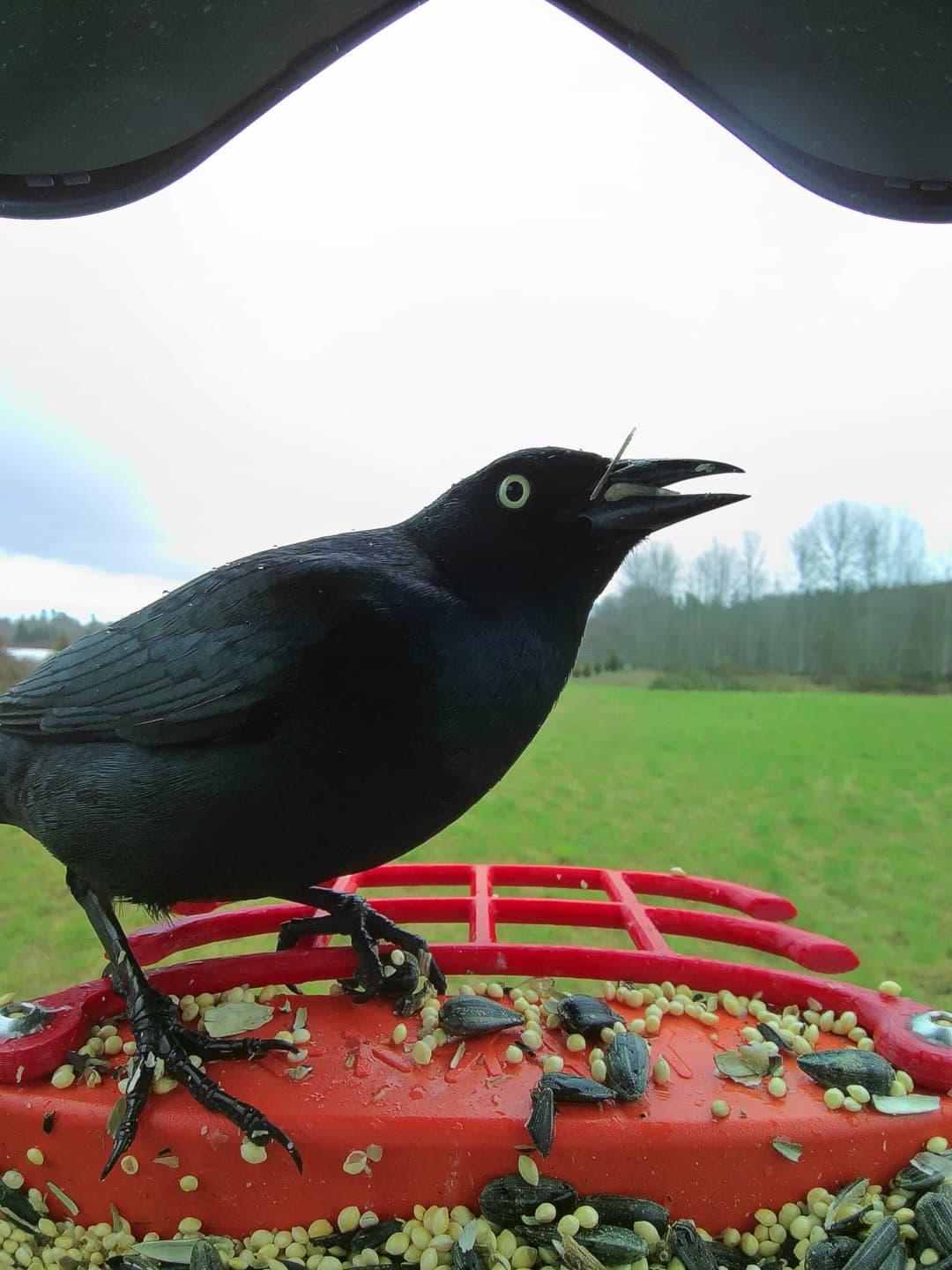
Common Grackle vs Bronzed Cowbird
Common Grackles are larger with a longer tail and yellow eyes. The Bronzed Cowbird is smaller with red eyes and a bronzed sheen. Notice the distinctive iridescent blue head of the Common Grackle.
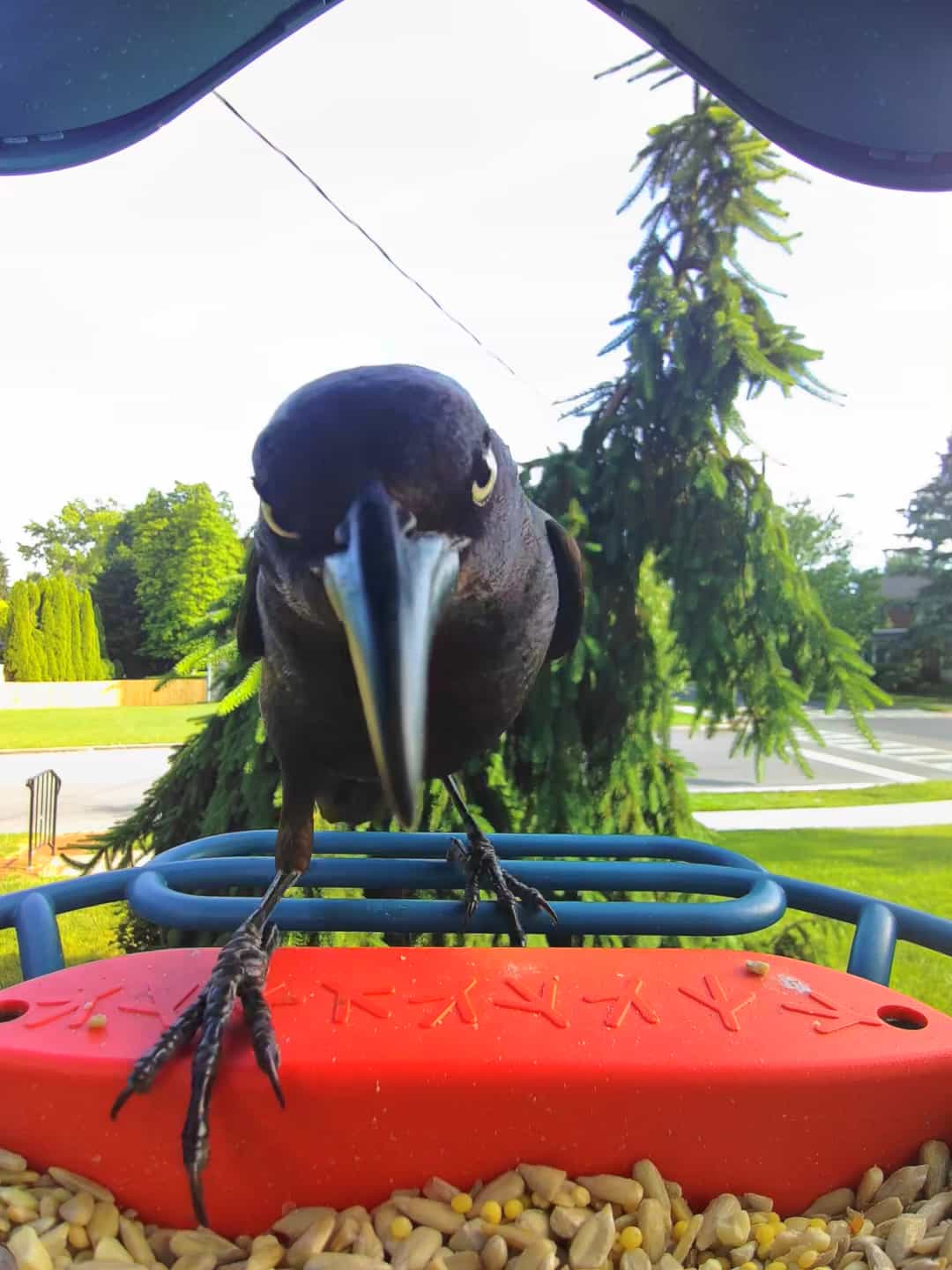
Breeding and nesting habits of the bronzed cowbird
Mating behaviors
Bronzed cowbirds are brood parasites, engaging in elaborate courtship displays where males puff out their feathers to appear round, spread their tails, and point their bills down as they sing. In more intense displays, males vibrate their wings and rise a few feet in the air before slowly descending. Both sexes are promiscuous and do not form pairs.
Nesting details
Bronzed cowbirds do not build their own nests. Instead, they lay their eggs in the nests of other bird species. There is no established nest type or location, as the responsibility of nesting falls on the host species whose nests they parasitize.
Eggs and chick-rearing
Bronzed cowbirds lay their eggs in the nests of other birds, leaving the responsibility of incubating the eggs and raising the chicks to the host species. They invest no effort into chick-rearing as the host bird unknowingly takes on the task of raising cowbird chicks alongside or instead of their own.
What does a bronzed cowbird like to eat?
Fruits
Insects
Seeds
Natural diet
The bronzed cowbird primarily consumes seeds, focusing on those from grasses and weeds, as well as waste grain. Occasionally, it includes berries in its diet. It is also known to eat various insects such as caterpillars, beetles, flies, and others. Snails and spiders are part of their diet as well. Notably, female bronzed cowbirds may rely on snails for calcium, especially when laying eggs.
Bird feeders
At bird feeders, bronzed cowbirds might consume seeds typically offered, such as sunflower seeds or millet, which are popular choices in many feeders. However, their specific preference at feeders is not as documented as their natural diet.
Attracting the bronzed cowbird: setting up your environment
Start by choosing a quiet and safe place for your feeder, preferably where predators cannot reach. Opt for feeders designed for small to medium-sized birds, such as tube feeders or platform feeders. The presence of native plants and bird baths for their cleanliness and hydration also helps in attracting these birds.
Snacks to attract bronzed cowbird
Bronzed Cowbirds have a vast diet, including insects and seeds. Opt for Bird Buddy seeds, specifically chosen by experts depending on the season. Bird Buddy seeds are high quality and nutritious, loved by Bronzed Cowbirds and other bird species alike.
Interesting tricks to encourage their visit
Playing bird songs on a minimal volume can sometimes attract these birds as it gives them the impression of the presence of other birds. If you spot a Bronzed Cowbird in the area, try imitating its call to catch its attention. Remember, patience and consistency are key; it might take a while for these birds to become regular visitors, but the wait will be absolutely worth it.
Where can you find bronzed cowbirds?

Primary habitat
The bronzed cowbird generally prefers very open habitats in lowlands such as farmland, semi-open country, and areas around cattle feedlots. It also roosts in brushy woods.
Additional range
During the breeding season, this bird wanders widely, adopting a larger range of habitats including forest edges, deserts, and open woods in mountains.
Do they migrate?
The bronzed cowbird is a partial migrant, engaging in limited migration rather than remaining in one place year-round. During winter, it becomes less common in its southwestern range in the United States, indicating a shift from its typical breeding areas. While some bronzed cowbirds move short distances within their range, others stray eastward along the Gulf Coast during winter months. This movement can occasionally bring them as far as Florida, where they are encountered almost regularly during this season. The migration strategy reflects a tendency to seek out warmer climates during colder months and is likely influenced by regional climate conditions and food availability. The southwest, where they become uncommon in winter, suggests they may move towards areas where resources are more abundant or where temperatures are milder, such as the Gulf Coast and Florida. Key locations for bronzed cowbird migration, particularly in winter, include the southern and eastern parts of the United States near the Gulf Coast. Their short-distance migratory behavior contrasts with long-distance migratory birds, and their presence in areas like Florida during winter highlights their adaptation to varying regional climates.
What is the role of bronzed cowbirds in nature and how to protect them?
Conservation status
The bronzed cowbird has significantly expanded its range and population north of Mexico throughout the 20th century. It is a common species and not currently considered vulnerable or endangered. However, its presence has negatively impacted certain "host" species due to its parasitic breeding behavior. While specific conservation efforts targeting the bronzed cowbird are not widespread, efforts to protect affected host species indirectly address their influence. The main threat posed by the bronzed cowbird is its ability to disrupt the nesting success of other birds, leading to potential ecological imbalances.
Ecological role of bronzed cowbirds
Its role in the ecosystem
The Bronzed Cowbird plays a crucial role in ecosystems primarily for pest control and seed dispersal. It contributes to pest control by consuming a variety of insects, including caterpillars, beetles and flies, and reportedly also removes ticks from the backs of cattle. More so, the bird can even use grazing animals to flush out the insects from the grass, further managing pest populations. Their feeding behavior also aids in seed dispersal. By consuming seeds, including grass, weeds, and waste grain, and excreting them in different locations, they facilitate the spread and growth of these plants across their habitats. Additionally, their parasitic reproductive strategy, where they lay their eggs in the nests of other bird species, could potentially influence the population dynamics and behaviors of these host species, contributing to the ecosystem's biodiversity and complexity.
How to help protect bronzed cowbirds
Preservation tips
Habitat preservation for bronzed cowbird
Support laws that protect the habitats of the Bronzed Cowbird, a species found mainly in vegetations near water sources or agricultural fields. Prioritize the conservation of these areas from deforestation and urbanization. Encourage sustainable farming practices that do not harm their habitats, and consider setting up protected reserves.
Community science initiatives
Participate in community science initiatives like birdwatching groups and reported sightings, documenting the presence and population trends of the Bronzed Cowbird. Such data can be essential in tracking their wellbeing. Promote education about the importance of biodiversity and the specific roles species like Bronzed Cowbird play in their ecosystems to increase local community involvement in their protection.