
Shiny Cowbird
Shiny Cowbird
Molothrus bonariensis

Quick Identification guide
Quick Identification guide
- •
Displays an iridescent black plumage that shines with purple and blue hues in sunlight
- •
Has a stout, conical beak that is well-suited for seed-eating
- •
Exhibits a slightly hunched posture and medium-sized, compact body
What does a shiny cowbird sound like?
The shiny cowbird exhibits a diverse vocal repertoire. It's known for its melodious warble, a pleasant and musical song that stands out. Additionally, it generates a variety of harsh metallic call notes that create a distinctive and identifiable sound. The call patterns of shiny cowbirds are usually flat or rising in nature. The species demonstrates multiple call types that include a buzzing sound, a chatter-like noise, sharp chirp or chip noises, a high-pitched call, a striking rattle, and a clear whistle.

Description
Did you know shiny cowbirds often approach other birds and put their head down while raising their crown in an invitation for the other bird to preen them? This is called a preening invitation, and scientists are unsure why they do it! Other than the fact that everybody loves a bit of a massage, of course!
The shiny cowbird can weigh between 31to65grams and be from17to22centimeters tall.
The shiny cowbird typically lives up to 12 years. This lifespan is comparable to its close relative, the brown-headed cowbird, which averages a lifespan of about 8 years in the wild. Like most songbirds, shiny cowbirds face many threats including predation and habitat loss, which can affect their overall lifespan.
Did you know?
Most popular questions about shiny cowbird
How to recognise a shiny cowbird?
General appearance
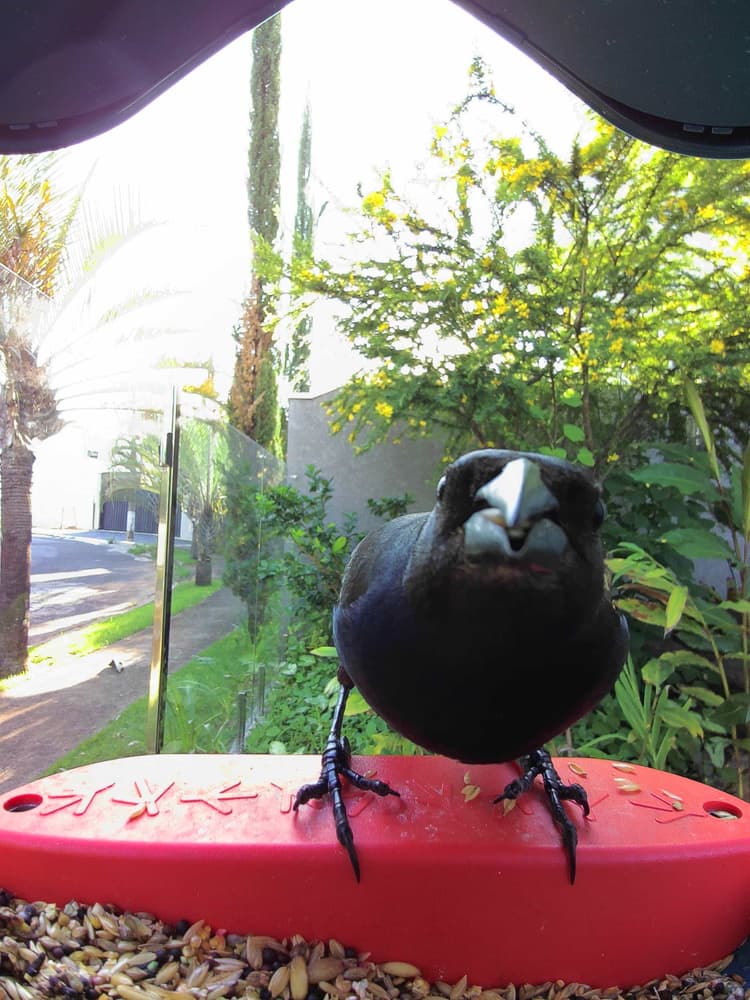
The shiny cowbird is a small, compact bird with a slender build and short tail. It typically measures about 18-20 cm in length. The species is characterized by a sharp, conical bill and relatively long legs, making it well-adapted for its perching lifestyle. The bird's plumage is typically glossy and has an iridescent quality, especially in good lighting.
Male vs female
Male shiny cowbirds are strikingly glossy with a deep purple to black sheen that catches the light and appears shiny. In contrast, females are less visually stunning, with duller brownish plumage that can occasionally have faint streaks; this more subdued coloration helps them blend into their surroundings. Both genders have similar body shapes, but these coloration differences are the most distinctive feature between them.
Juvenile
Juvenile shiny cowbirds resemble females but are even less glossy, with more muted brown feathers and often with streaks or speckles. Their plumage lacks the iridescent sheen seen in adults, making them harder to identify from afar. Juveniles can sometimes appear somewhat scruffy as they transition to adult plumage over successive molts.
Often mistaken for
Brown-Headed Cowbird vs Shiny Cowbird
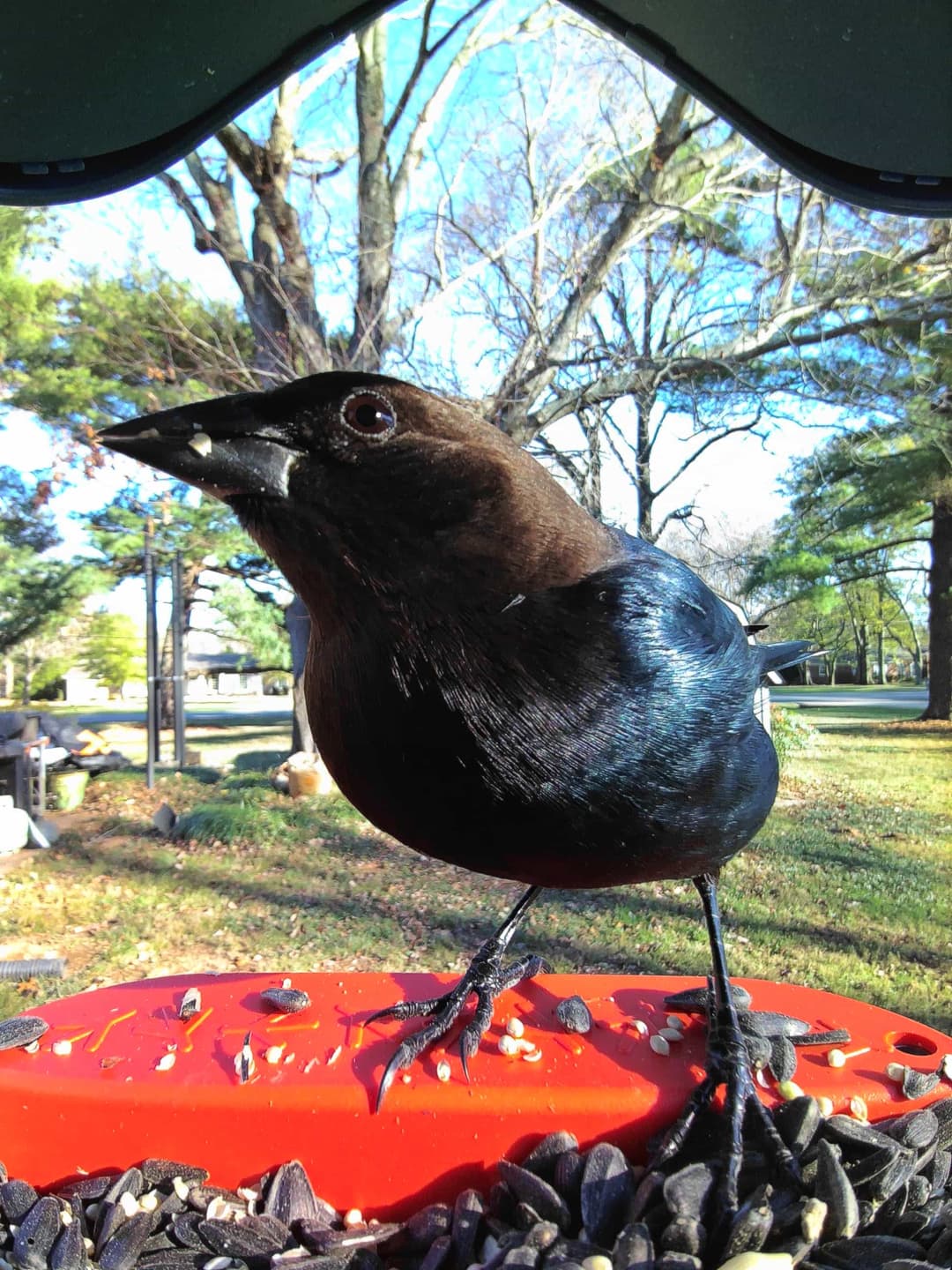
Shiny Cowbird males have a glossy purple sheen, whereas Brown-Headed Cowbird males have a distinctive brown head with a glossy black body. Females of both species are dull brown, but the Shiny Cowbird female is usually slightly darker with a more uniform coloration.
Rusty Blackbird vs Shiny Cowbird
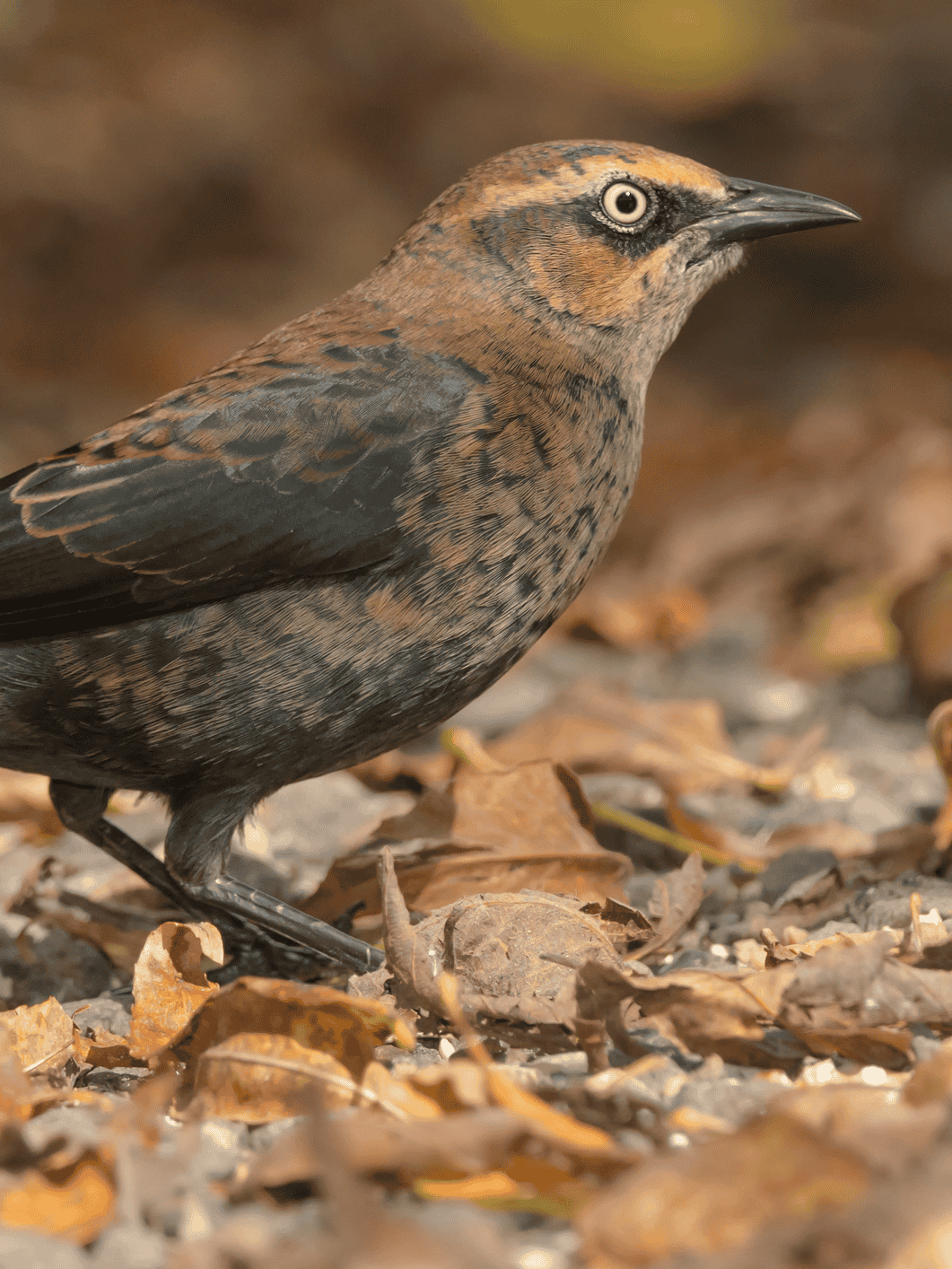
Shiny Cowbird males are smaller with a purplish gloss, while Rusty Blackbird males are larger and more uniformly black with rusty edges during fall. Female Shiny Cowbirds are brownish and can be mistaken for female Rusty Blackbirds, but the latter tends to have a more patterned look.
Bronzed Cowbird vs Shiny Cowbird
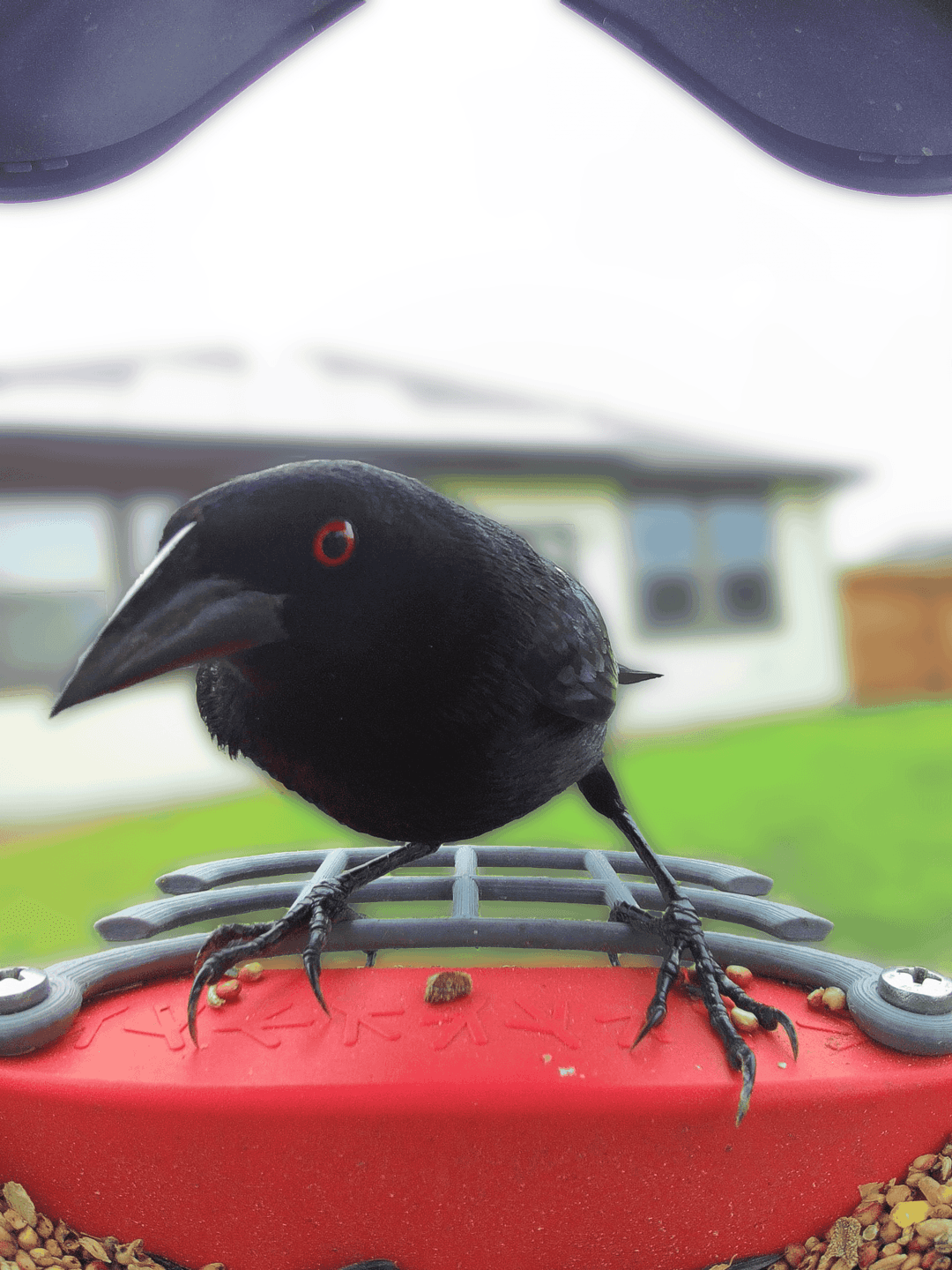
Shiny Cowbird males exhibit a purple sheen overall, while Bronzed Cowbird males have a red eye and a bronze gloss on their plumage. Both species' females appear similar, but the Shiny Cowbird female has a slightly paler throat.
Breeding and nesting habits of the shiny cowbird
Mating behaviors
During the early breeding season, male shiny cowbirds engage in singing to attract females. The courtship display involves a male singing to a female positioned on the ground, followed by taking off into a wide circular flight around her with noticeable fluttering wingbeats.
Nesting details
Shiny cowbirds do not build nests of their own. As brood parasites, they lay their eggs in the nests of other bird species. This unique behavior allows them to rely on the host birds for incubating their eggs and raising their young.
Eggs and chick-rearing
The shiny cowbird lays its eggs in the nests of other birds, leaving the responsibility of incubation and chick rearing to the host species. Consequently, the shiny cowbird does not partake in chick-rearing, allowing its young to be raised entirely by the host.
What does a shiny cowbird like to eat?
Insects
Seeds
Spiders
Natural diet
In North America, the diet of the shiny cowbird is not well-documented. However, in tropical regions, it feeds primarily on insects, other arthropods, and various seeds. Its diet mainly consists of these elements, suggesting a flexible omnivorous feeding habit adapted to local food availability.
Bird feeders
Specific behavior of shiny cowbirds at bird feeders is not well-documented. Generally, birds of similar diets may be attracted to feeders offering seeds, such as sunflower seeds or millet, and occasionally protein sources like suet or mealworms. However, more research would be needed to confirm their feeder habits.
Choosing the right seeds
When it comes to tempting the shiny cowbird, the choice of food is crucial. These birds love seeds and insects. We recommend Bird Buddy seeds as these are chosen by experts to be the most suitable for the season, ensuring the best results.
Setting up the ideal feeder
Shiny cowbirds enjoy feeders that provide a perch for comfort and easy access to their food. A tube or hopper style feeder is suitable for them. These feeders are easy to clean and fill, ensuring the birds have a good supply of their favorite snacks, promoting frequent visits.
Encourage frequent visits
Placing the feeder in a quiet and safe location will encourage the cowbird to drop by more frequently. Allow a clear line of sight for them to spot any approaching predators. Remember, these birds are social creatures and enjoy sing-alongs, so having a bird call or bird song player nearby can also add a fun, welcoming touch.
Where can you find shiny cowbirds?

Primary habitat
The shiny cowbird primarily thrives in semi-open country. It is notably spotted near coastlines in North America, where it often forages on expansive lawns.
Additional range
In tropical regions, its range expands to any open or semi-open terrain, predominantly located in the lowlands.
Do they migrate?
The shiny cowbird exhibits migratory behavior within North America, although the precise patterns and routes are not fully understood. Evidence indicates that shiny cowbirds have been observed moving through southern Florida during the spring. This suggests potential arrival from the Caribbean, indicating a northward migration path at this time of year. While specific details about all key stopover locations and precise timing are lacking, the presence of these birds in Florida during the spring points to this region being a significant location along their migration route. Furthermore, stray individuals have been recorded as far afield as Texas, Oklahoma, and Maine, indicating a dispersive pattern post-migration, where individuals travel beyond their typical range. This suggests that while southern Florida seems to function as a primary migration waypoint, shiny cowbirds can extend their range considerably on the North American continent after arrival, albeit less predictably. Limited data means their entire migratory route and the extent of regularity of their presence in these locations remain subjects requiring further study and documentation.
What is the role of shiny cowbirds in nature and how to protect them?
Conservation status
The shiny cowbird is common in many parts of its range but poses a threat to other bird species due to its parasitic breeding behavior. In Puerto Rico, its presence has significantly impacted local bird populations, driving the Yellow-shouldered Blackbird to endangered status. The current impact on North American birds is still unclear. Conservation efforts often focus on managing its spread and protecting affected species rather than directly targeting the cowbird. Habitat destruction and climate change could potentially alter its distribution, posing indirect threats to its population in the long term.
Ecological role of shiny cowbirds
Its role in the ecosystem
The Shiny Cowbird plays a unique role in the ecosystem primarily as a seed disperser and insect predator, contributing to both plant proliferation and pest control. By foraging for seeds and insects on the ground, the Shiny Cowbird aids in controlling insect populations, hence playing an essential role in the natural pest control within their ecosystem. In the process of feeding, the seeds ingested are dispersed over wide areas in their droppings, aiding in the spread and growth of plant species. Moreover, this species has developed a brood parasitic lifestyle, laying eggs in the nests of other bird species. While altering the host bird's reproductive success, it allows cowbirds to distribute their offspring over a broader geographic range. However, this particular behavior may negatively impact host bird populations. In South America, they parasitize a variety of nests; in Puerto Rico, their preference is the Yellow-shouldered Blackbird. Their interaction with livestock also suggests they may contribute to tick and parasite control by feeding on these small pests present in pastures.
How to help protect shiny cowbirds
Preservation tips
Preservation of shiny cowbird's habitat
Habitat conservation is vital for protecting the shiny cowbird. This involves preserving and restoring their natural environments – marshlands and open green spaces. Support should be given to legislation limiting deforestation and land conversion. Participating in reforestation initiatives can also significantly aid in creating suitable habitats.
Community science initiatives for conservation
Community involvement in birdwatching and data gathering, either individually or via organizations, can help monitor the shiny cowbird populations. Use platforms like eBird to document your observations. Public education about their ecological role and threats to their survival facilitates public participation in their preservation. Further, engage in or donate to research programs studying the shiny cowbird's biology and ecology to inform effective conservation strategies.