
Red-Winged Blackbird
Red-Winged Blackbird
Agelaius phoeniceus


Quick Identification guide
Quick Identification guide
Male
- •
jet black plumage with striking red and yellow shoulder patches
- •
sleek, conical beak designed for seed eating
- •
medium-sized body with a distinctive pointed tail
Female
- •
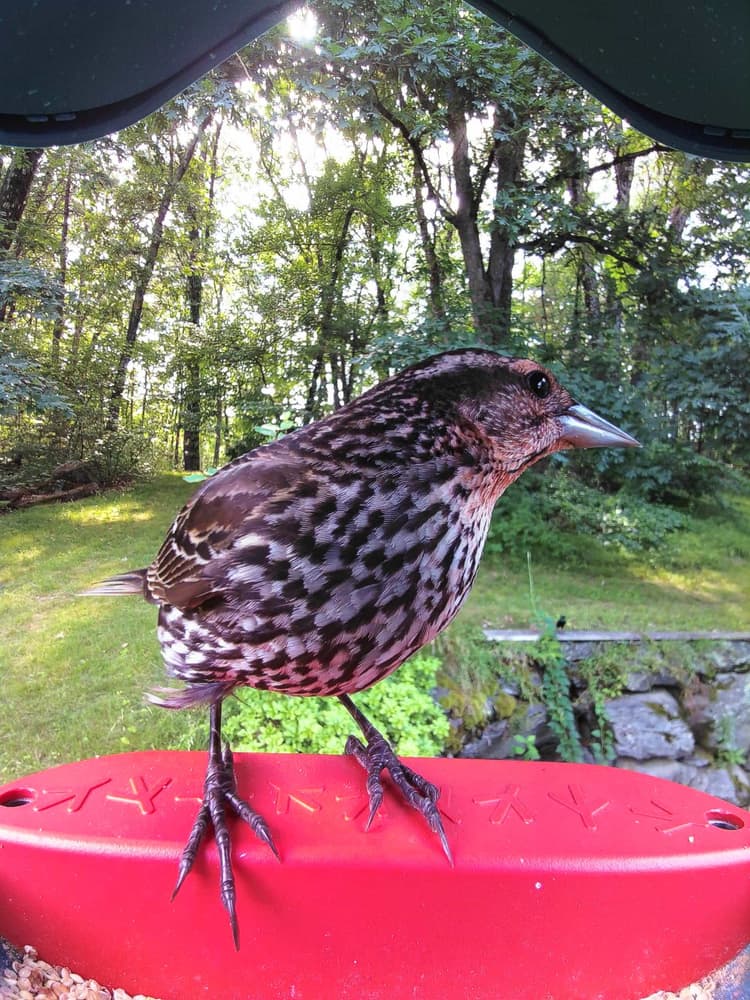
streaky brown feathers with a lighter belly
- •
slimmer, conical beak similar to the male's
- •
smaller size with a more streamlined appearance
What does a red-winged blackbird sound like?
The red-winged blackbird exhibits an eclectic range of vocalizations. Its signature song is a rich, musical "o-ka-leeee" often used to declare its territory. Its calls vary, featuring a rising pattern and including different types like chatter, chirp or chip, scream, trill, and whistle. These diverse sounds contribute to its unique sound repertoire, abandoning subtlety for striking, tuneful melodies.


Description
These birds are a familiar sight on telephone wires and herald the return of spring. During breeding season, they can get extremely territorial, and the size of their opponent is no object. They have been known to attack horses and even humans. A winter flock is a magnificent sight, as it can be made up of millions of birds! Starlings and other species of blackbirds sometimes join the party.
The red-winged blackbird can weigh between 32to75grams and be from16to25centimeters tall.
Red-winged blackbirds typically live for around 15 years. To put this into perspective, this is quite a long life-span compared across related species, such as the Eastern meadowlark with a lifespan of 10 years, or the American robin that can live for 14 years. Despite predation and environmental risks, red-winged blackbirds tend to outlast their relatives.
Did you know?
Most popular questions about red-winged blackbird
How to recognise a red-winged blackbird?
General appearance
The Red-winged Blackbird's general size ranges between 7 to 9 1/2 inches (18-24 cm). Its wings are broad and rounded with a rounded, square-tipped tail. With coloration varying from black, brown, orange, red to yellow, these birds are about the size of a Robin.
Male vs female
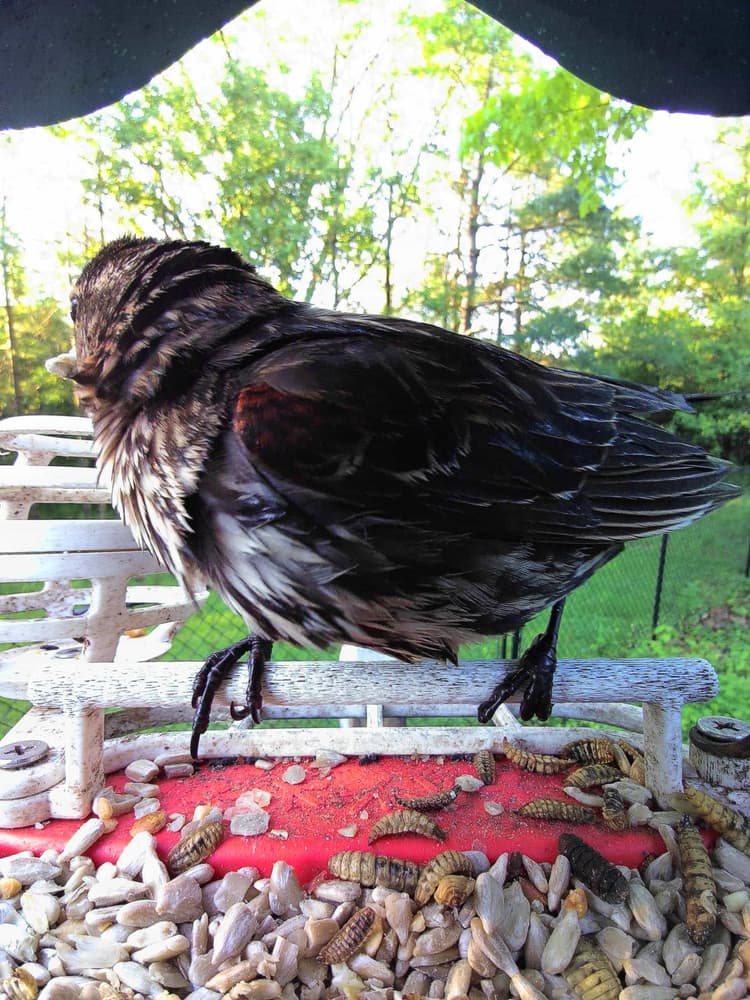
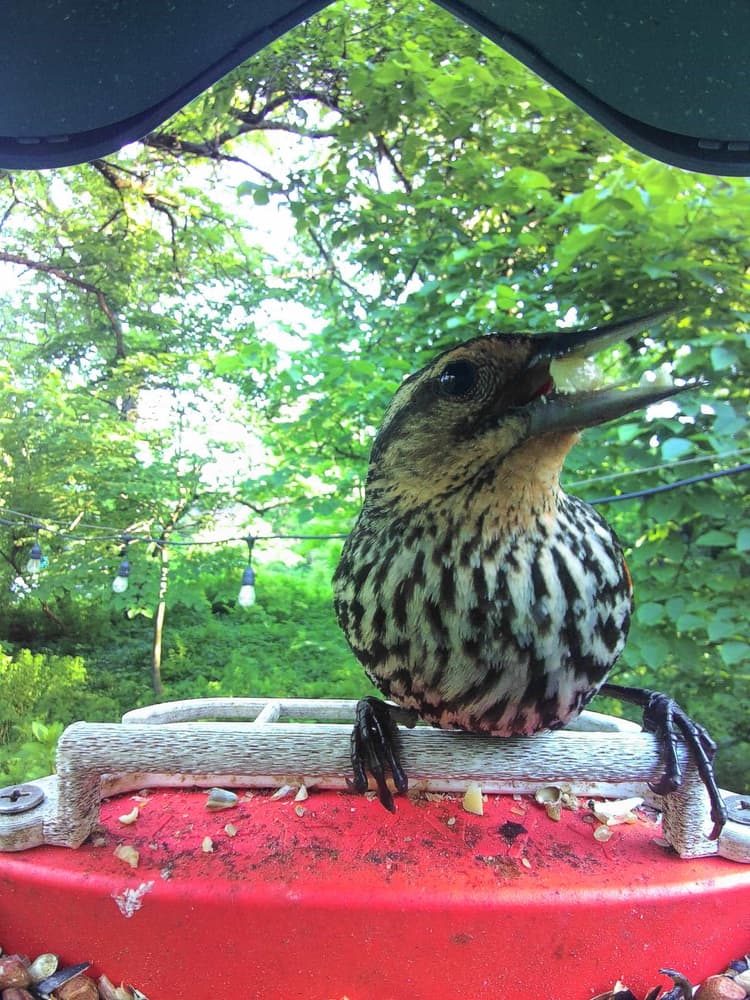
Male Red-winged blackbirds are noticeable with shoulder patches that may be either evident, particularly in song display, or mostly concealed by body feathers. These patches are typically bordered yellow, but in central California, these can be entirely red. Females, on the other hand, present very differently. They display streaky brown coloration with a buff eyebrow.
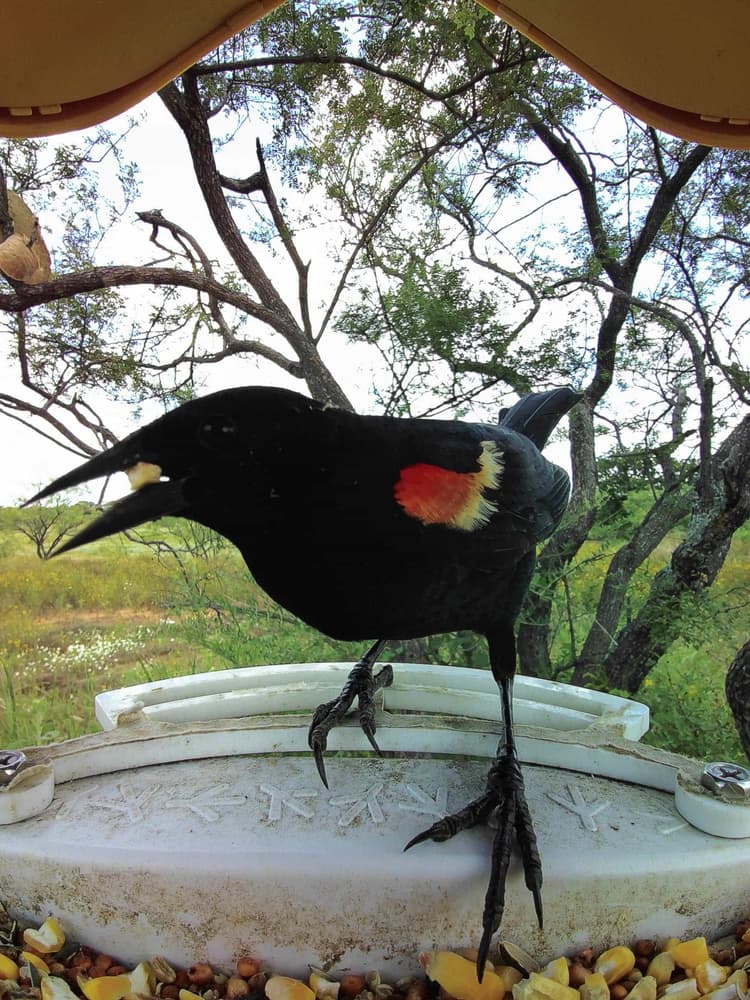
Male Red-Winged Blackbird
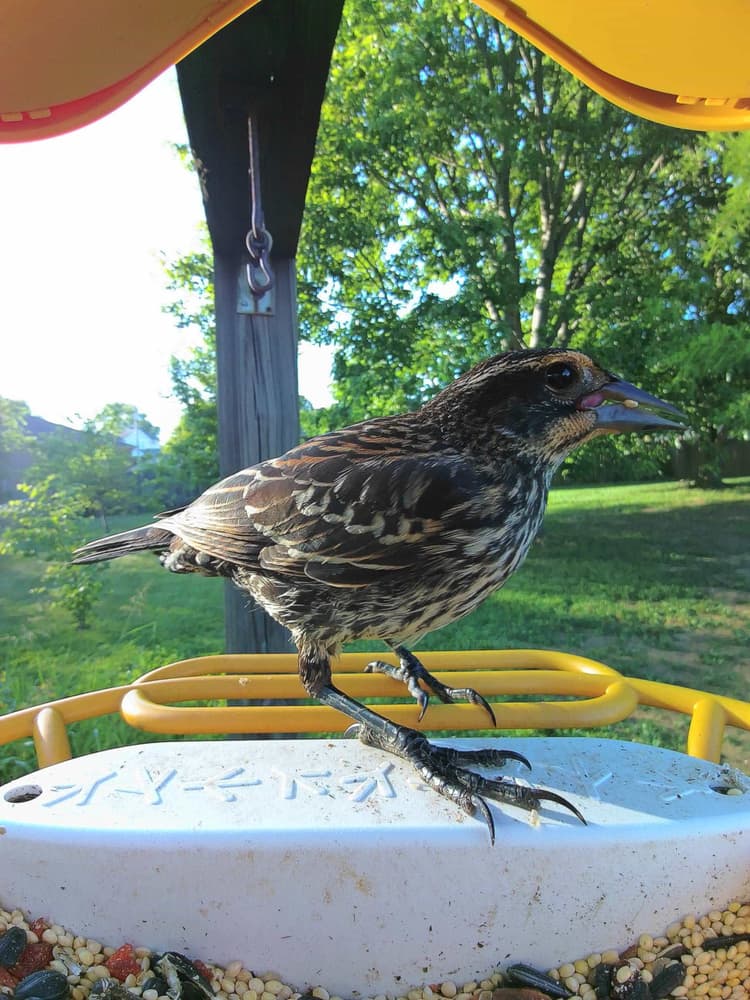
Female Red-Winged Blackbird
Juvenile
Younger red-winged blackbirds, like the females, appear streaky brown. They resemble sparrows but possess different behavior aids, darker lower belly, and a spikier bill distinguishing them from the common sparrows. With age and seasonal variations, their coloration and physical traits progress and develop into that of respective adult males and females.
Often mistaken for
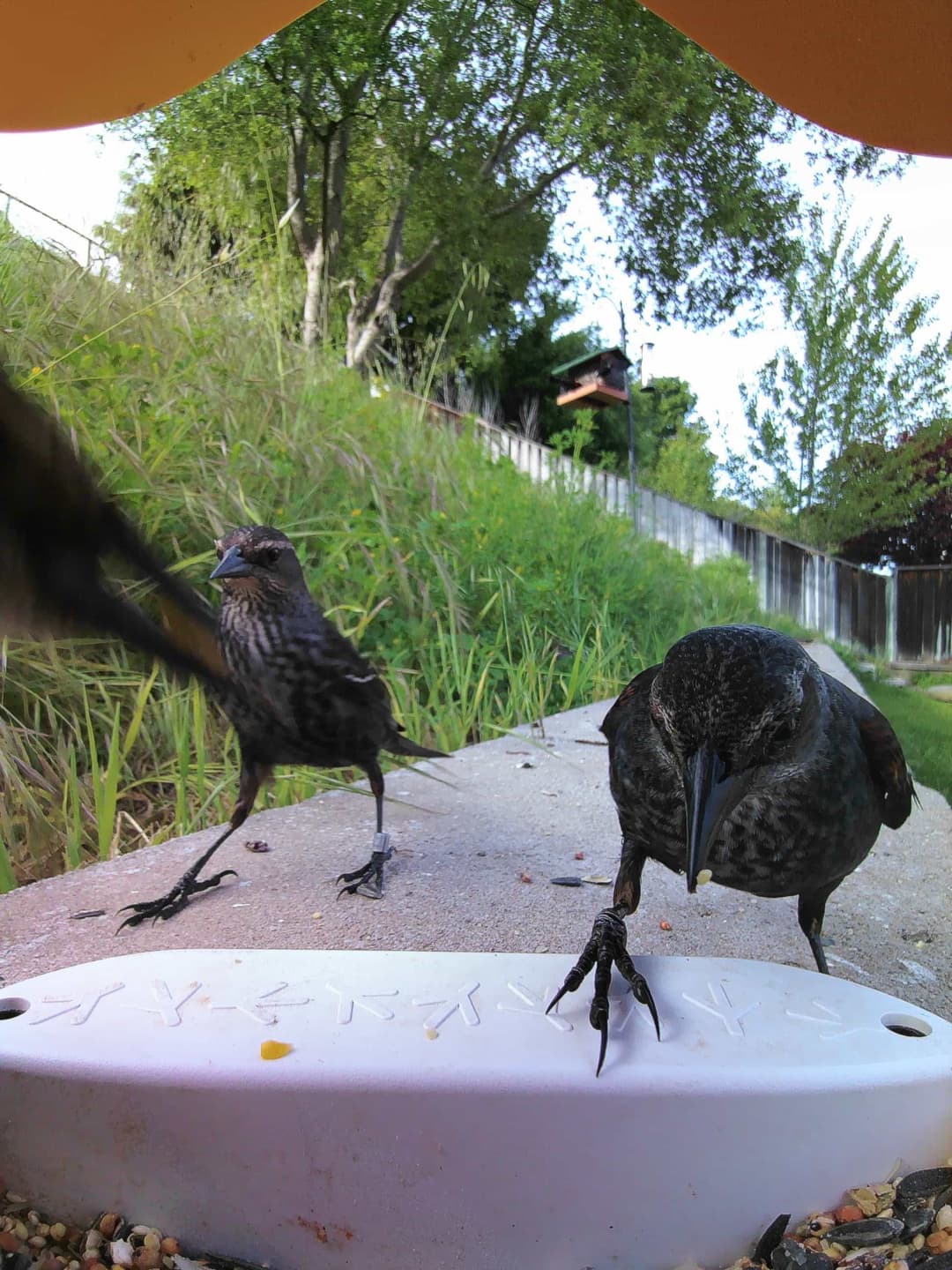
Tricolored Blackbird vs Red-Winged Blackbird
While both species have black plumage, the Red-Winged Blackbird features striking red and yellow shoulder patches, whereas Tricolored Blackbirds have white-edged wing patches. Listen for the call: Red-Winged Blackbirds have a sharp 'conk-la-ree' while Tricoloreds produce a rapid 'pit-pit-pit.'
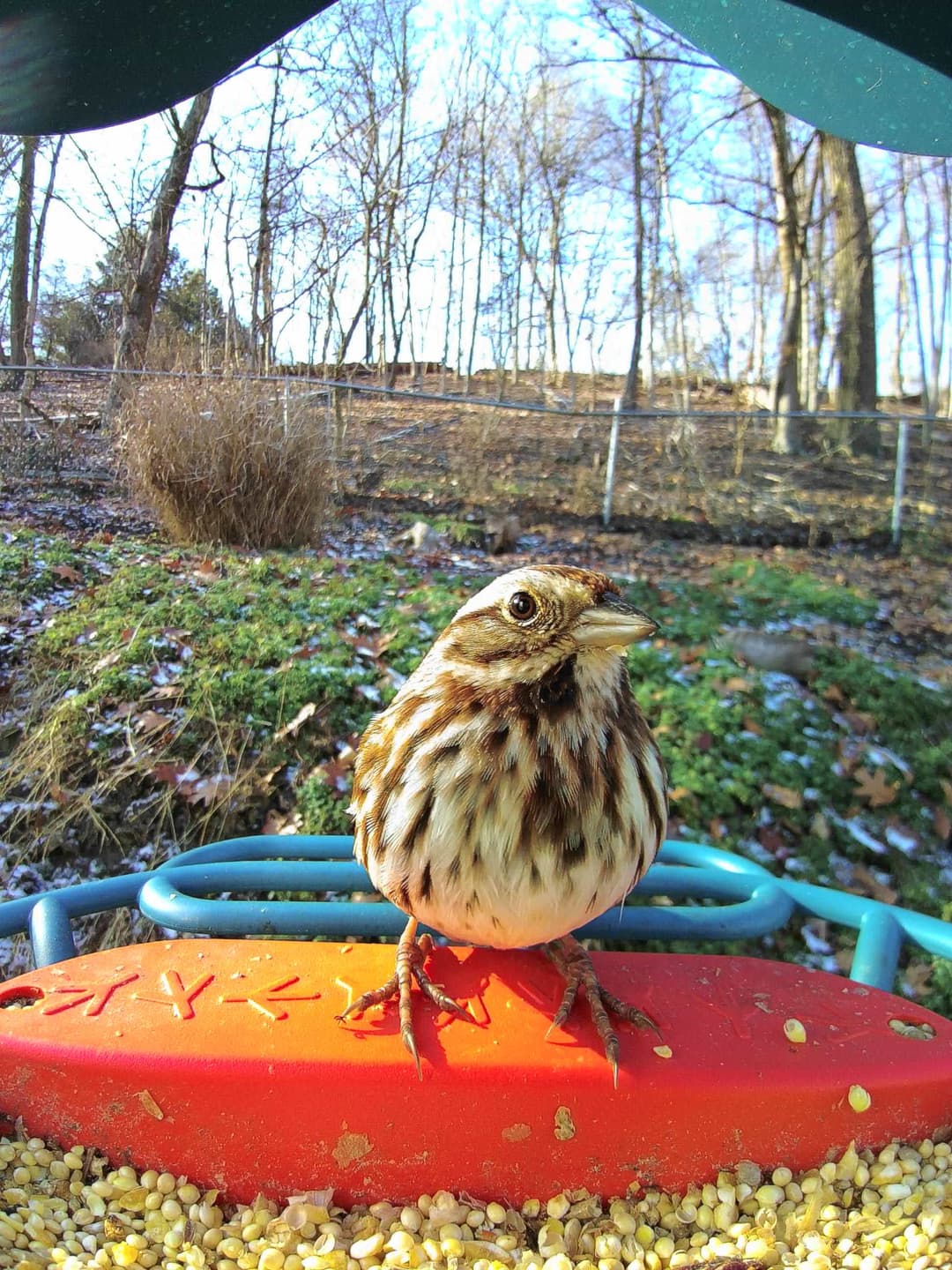
Song Sparrow vs Red-Winged Blackbird
Red-Winged Blackbirds are larger with a distinctive black body and colored wing patches. In contrast, Song Sparrows are smaller, brown, with heavy streaks on their chests, and lack the vibrant red and yellow markings. Their song is a series of melodious notes distinct from the Blackbird's harsher call.
Breeding and nesting habits of the red-winged blackbird
Mating behaviors
Male red-winged blackbirds defend territories and attract mates by perching on high stalks with fluffed feathers and partly spread tails. They prominently display red shoulder patches by lifting the wing's leading edge while singing. Males sing during a slow, fluttering flight and often have multiple mates.
Nesting details
Nests are placed in marsh growth like cattails or bulrushes, bushes or saplings near water, or dense grass in fields. The female builds a bulky open cup nest lashed to standing vegetation with materials like grass, reeds, leaves, and rootlets, lining it with fine grass.
Eggs and chick-rearing
Details on eggs and chick-rearing practices are not provided. To attract nesting red-winged blackbirds to gardens, create a habitat with dense vegetation, resembling marshy growth or field conditions close to water.
What does a red-winged blackbird like to eat?
Insects
Seeds
Natural diet
The red-winged blackbird primarily feeds on insects and seeds. In the summer, its diet consists mainly of various insects such as beetles, caterpillars, grasshoppers, as well as spiders, millipedes, and snails. Approximately three-fourths of the adult's annual diet is composed of seeds, which includes those from grasses, weeds, and waste grain. The bird also occasionally consumes berries and small fruits.
Bird feeders
Red-winged blackbirds commonly visit bird feeders where they are attracted to seeds and grains. They often feed on sunflower seeds, cracked corn, and millet. These birds readily adapt to available feed in backyard settings, making them frequent guests at feeders.
Enticing snacks for red-winged blackbirds
Red-winged blackbirds are known to love a variety of grains and small seeds. Bird Buddy seeds are recommended due to their tailored selection for each season, providing the right nutrition to attract these charming birds.
Choosing the right feeder
Red-winged blackbirds are very comfortable with platform feeders, but they also do not shy away from hopper-style feeders. Make sure the feeders are sturdy and placed in quiet, safe locations.
Fun tricks to lure them in
Adding a water feature such as a birdbath or fountain can do wonders. The sound of trickling water easily attracts these birds. Also, if you can play recordings of their calls, red-winged blackbirds are curious enough to drop by, and you might enjoy a live chorus right in your yard!
Where can you find red-winged blackbirds?
Based on Birdbuddy sighting data. The heatmap shows where Birdbuddy users have spotted this species.
Embed this map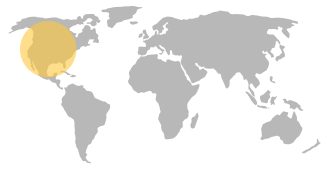
This map shows the full native range based on scientific range data.
Primary habitat
Red-winged blackbirds primarily inhabit marshes, particularly freshwater marshes, brushy swamps, rank weedy fields, and hayfields.
Additional range
In addition to primary habitats, they also venture into cultivated land and the outskirts of water bodies. They can sometimes be found in unexpected environments like farm fields, pastures, feedlots, and mudflats, especially outside of the breeding season.
Do they migrate?
The red-winged blackbird exhibits both migratory and non-migratory behavior depending on the region. In many areas, particularly in the southern United States and parts of the West Coast, red-winged blackbirds are present throughout the year and do not migrate. However, populations in the northern regions, such as the northern United States and southern Canada, undertake migration to avoid harsh winter conditions. In the north, red-winged blackbirds migrate southward as temperatures drop, with migration typically occurring in late fall. They travel in large flocks, often composed of hundreds or thousands of birds. These flocks move to more temperate regions, such as the southern United States and northern Mexico, where they spend the winter months. In spring, the migratory populations return northward quite early. Males are often the first to arrive in breeding territories, sometimes several weeks before females, to establish and defend territories. Key locations during this migration include stopover sites with ample food resources like wetlands, agricultural fields, and marshes, which provide necessary rest and refueling opportunities. Overall, their migration is a dynamic and complex journey reflective of their adaptability to different environmental conditions.
What is the role of red-winged blackbirds in nature and how to protect them?
Conservation status
The red-winged blackbird is classified as "abundant and widespread," indicating that it is a common species rather than vulnerable or endangered. Its vast population range reduces immediate conservation concerns. However, habitat loss due to wetland drainage and agricultural expansion can pose threats to its habitat. Key conservation efforts focus on preserving and restoring wetland environments, which are crucial for the bird's breeding and feeding. Managing pesticide use in agricultural areas also helps maintain its food supply and overall health.
Ecological role of red-winged blackbirds
Its role in the ecosystem
The Red-winged Blackbird plays a crucial role in various ecological dynamics. The bird's diet mainly consists of insects, particularly in the summer when it preys on beet up gravely offers pest control benefits by feeding on insects that may otherwise harm crops or vegetation, such as beetles, caterpillars, and grasshoppers. It also feeds on millipedes and snails, contributing further to natural pest control. In addition to insects, the blackbird consumes a substantial amount of seeds (approximately three-fourths of its annual diet), which aids in seed dispersal. This bird's eating habits involve the consumption of grass, weed, and waste grain seeds, which are later excreted in other areas, fostering plant growth and geographic distribution. Outside of their diet, these birds play a role in the territorial dynamic of their habitats. They aggressively defend their nesting territories, thereby affecting the spatial distribution and behavior of other bird species. Therefore, the Red-winged Blackbird has a significant impact on pest control, seed dispersion, and territorial dynamics within its ecosystem.
How to help protect red-winged blackbirds
Preservation tips
Habitat preservation strategies
Maintaining and protecting wetland areas, which are critical for the nesting of red-winged blackbirds, is crucial. Avoid fragmentation of these habitats, as this can lead to reduced nest success. Provide buffer zones around wetlands to reduce the impact of human activities. Management of invasive species that threaten the quality of these habitats such as Reed Canary Grass is also key to helping conserve the species.
Community science initiatives
Community involvement in conservation efforts can be highly effective. Engage local communities in birdwatching and citizen science projects focused on monitoring red-winged blackbird populations. Encouraging participation in programs like the North American Breeding Bird Survey can provide valuable data. This data can help identify population trends and potential threats, thus enabling early response and effective conservation measures.