Bulbul or African Red-Eyed Bulbul?
Here's how to tell the difference

Bulbul


African Red-Eyed Bulbul
Bulbul
Pycnonotus
Also known as: Nightingale
General appearance
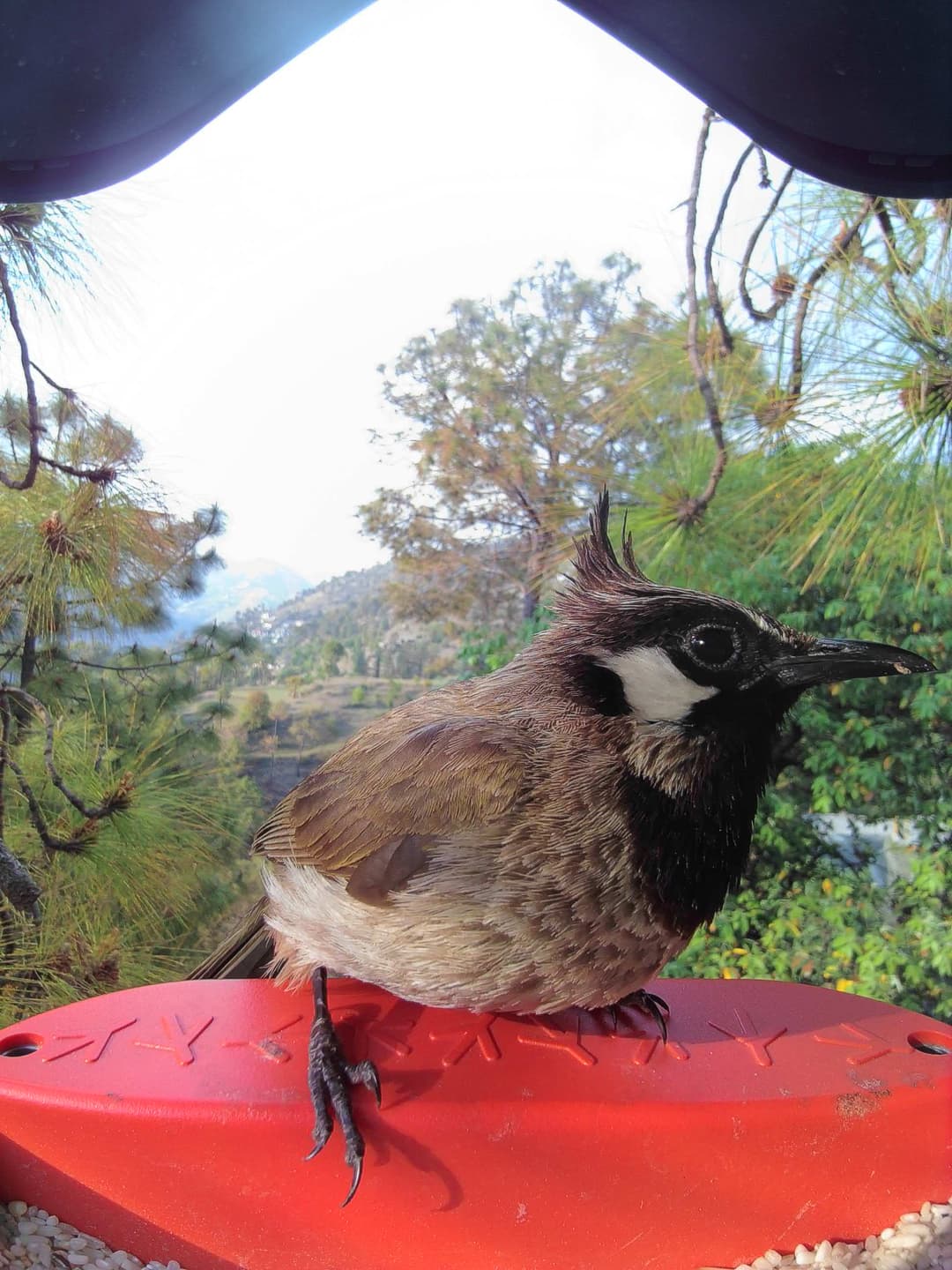
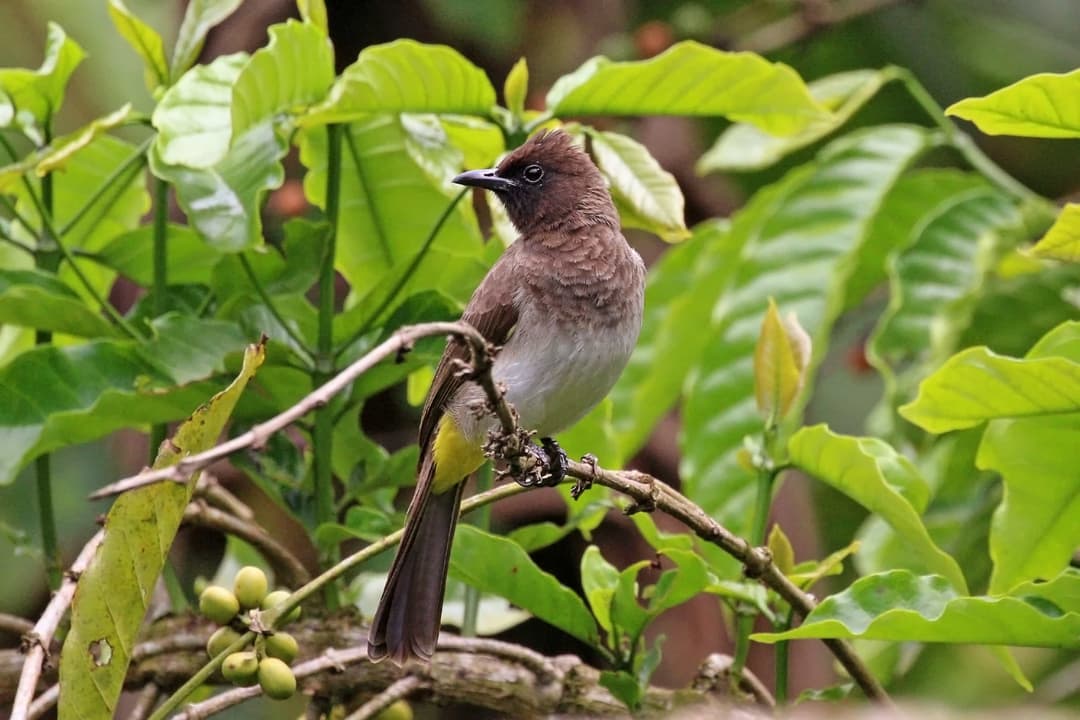
Bulbuls are small to medium-sized songbirds, often distinguished by a unique crest atop their heads. The coloration of their plumage varies greatly among species, but the common colors seen are brown, grey, or white, often with distinctive markings on the chest and belly. They have short necks, long tails, and relatively short and slender bills.
Male vs female
There are no significant differences in coloration or size between males and females of the bulbul species. Both sexes usually have similar plumage. Any difference, when present, can be subtle and often needs careful observation for detection. Furthermore, the mating pairs of bulbuls are often seen foraging together, which can make it challenging to separate the genders visually.
Juvenile
Juvenile bulbuls typically have a more subdued coloration than adults and may lack the crest seen in mature birds. They are often seen in the company of adults and can be distinguished by their earnest, yet less polished, song attempts. As they mature, juveniles will gradually acquire the coloration and distinguishing characteristics of adult birds.
Size
5.9 - 11.4 in/0.6 - 3.3 oz
There's more to learn about Bulbul
View full detailsAfrican Red-Eyed Bulbul
Pycnonotus nigricans
Also known as: Black-Fronted Bulbul
General appearance
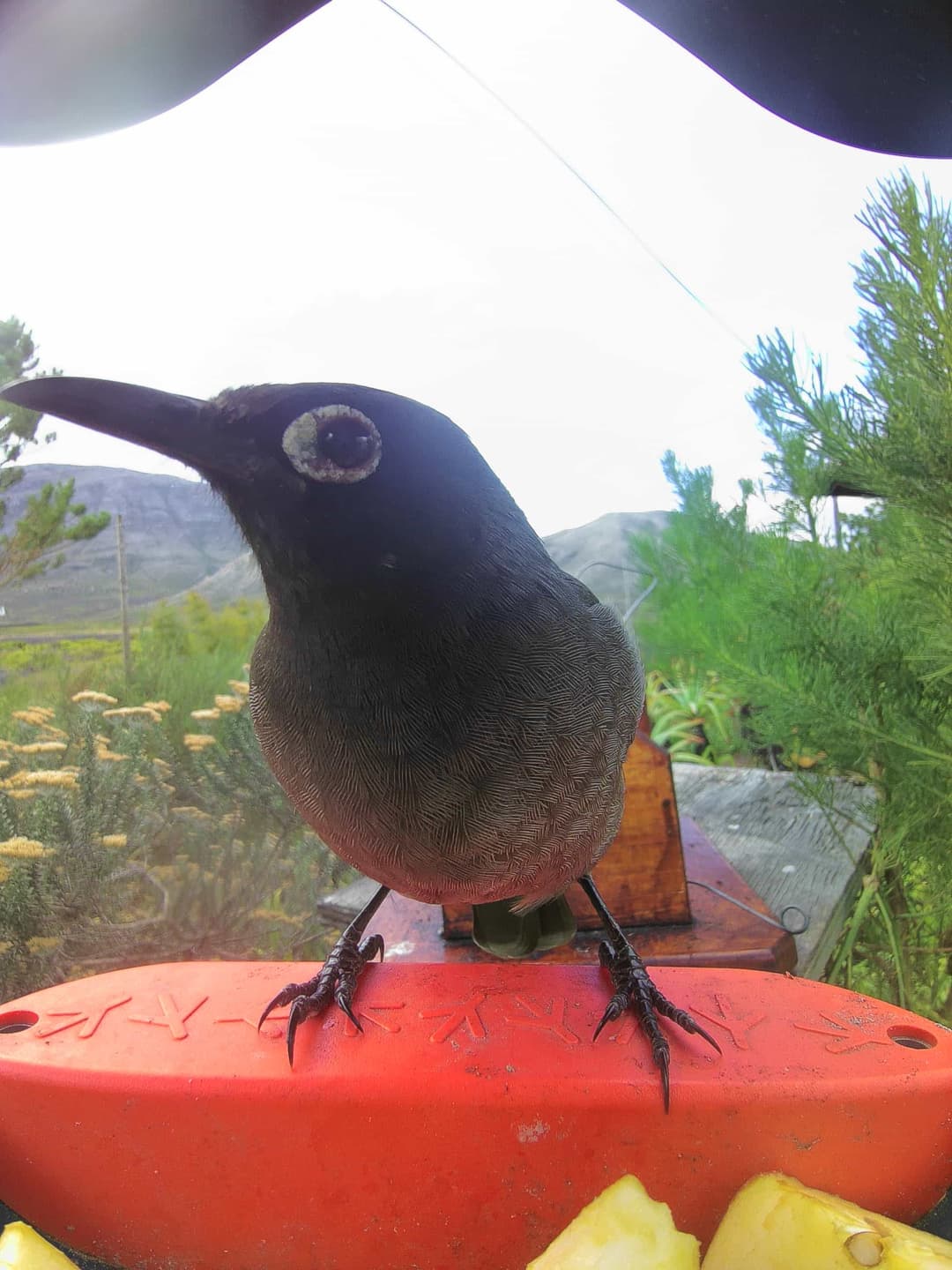
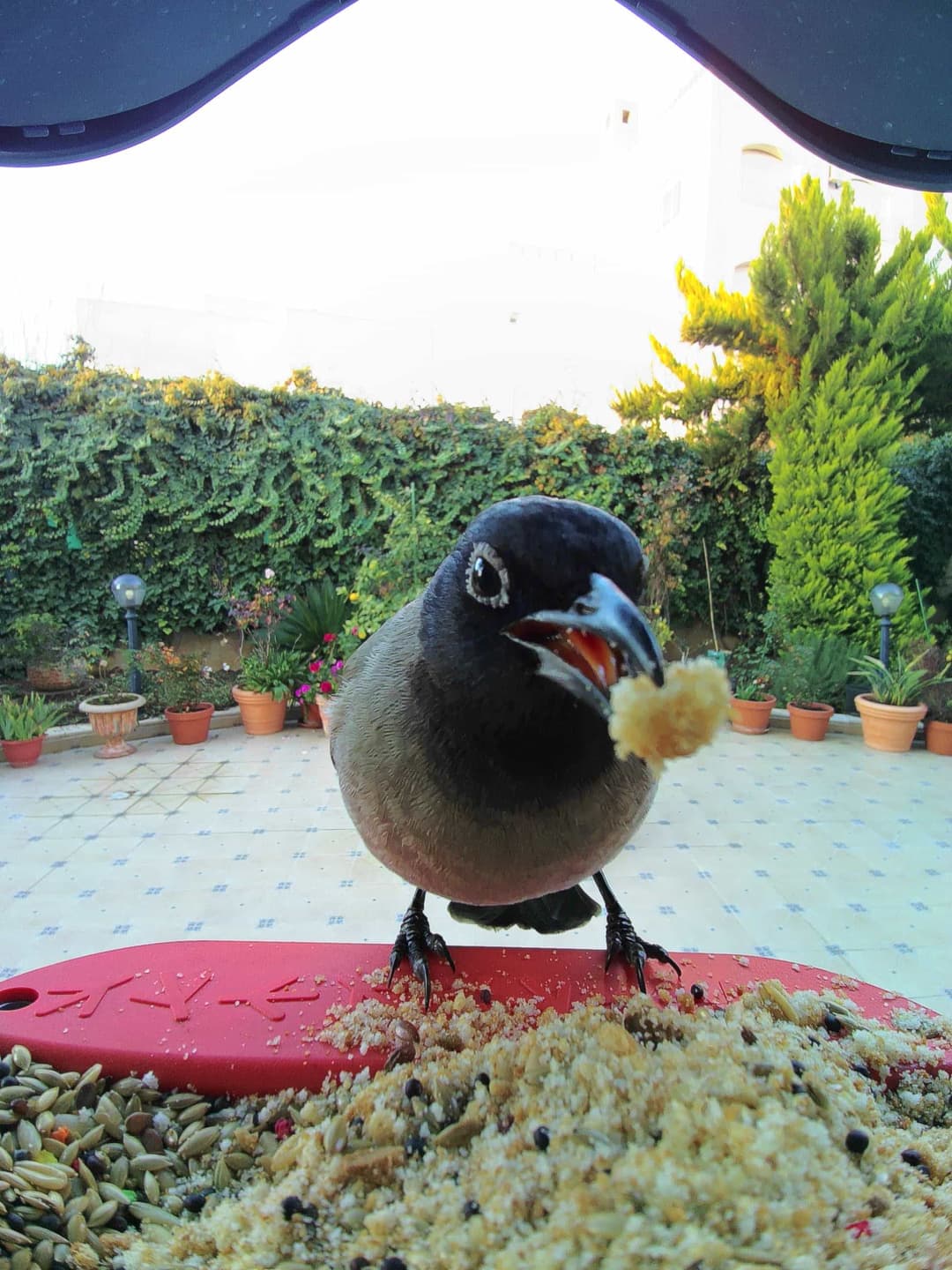
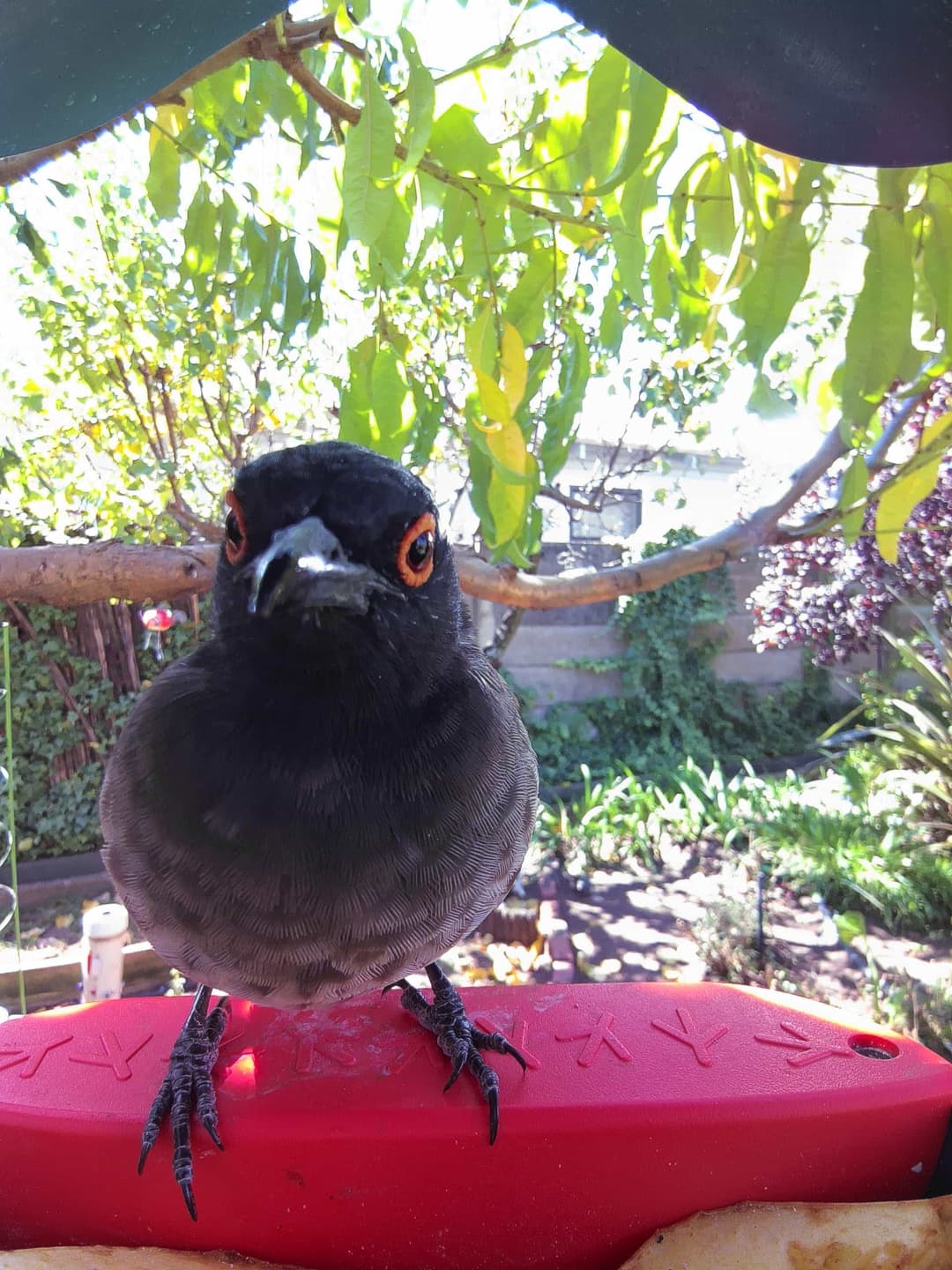
The African red-eyed bulbul is characterized by its medium size, nearly 20-25 cm in length, and its distinctive khaki-grey plumage. Easily noticeable are its crimson-red eyes, which aptly offers its name. It also has a distinct thin black crest above its eyes, giving it a capped appearance. Its tail and wings are darker, almost black. This species does not have significant seasonal variations.
Male vs female
Both male and female African red-eyed bulbuls share similar external features, making sexual dimorphism in this species less distinct. The males tend to be slightly larger in size compared to females. However, their coloration, red eye, and capped appearance are consistent across both genders. This feature makes it a bit challenging to distinguish between the sexes in the wild.
Juvenile
Juvenile African red-eyed bulbuls lack the vibrant coloration seen in adults. They have duller grey-brown plumage and their eyes are not yet the characteristic red, instead they have brownish eyes. Their crest is less pronounced, and it takes a few months until they acquire the distinctive adult features.
Size
7.5 - 8.3 in/0.8 - 1.3 oz
There's more to learn about African Red-Eyed Bulbul
View full detailsHow to tell the Bulbul from the African Red-Eyed Bulbul
Visual differences
Visually, both bulbuls share similar sizes; however, the African Red-Eyed Bulbul (7.5-8.3 inches, 0.76-1.32 ounces) is distinctly identified by its khaki-grey plumage, black crest, dark tail, and striking crimson-red eyes. In contrast, bulbuls generally have varied brown, grey, or white plumage, a unique crest, and lack the distinctive red eyes. Both species have no significant sexual dimorphism, but juvenile Red-Eyed Bulbuls are duller with brownish eyes, while juvenile bulbuls have muted colors and may lack a crest.
Key differences and behavior
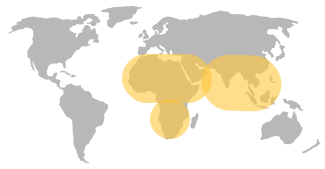
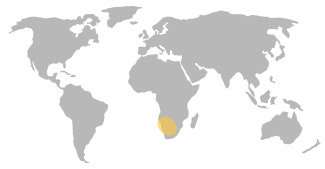
Bulbuls and African Red-Eyed Bulbuls share frugivorous diets and social behaviors, often seen in pairs or small groups, with similar mating rituals. However, the Bulbul is more widespread, inhabiting tropical and subtropical areas across Africa, Asia, and Oceania, while the African Red-Eyed Bulbul is primarily found in southern African savannas and woodlands. Both engage in courtship displays using songs, but the African Red-Eyed Bulbul displays elaborate flight postures. Nesting habits are alike, involving shrubs and trees, yet egg incubation for the former spans longer (12 days vs. ~12). Bulbuls adapt well to varied climates, including colder urban zones, whereas African Red-Eyed Bulbuls favor warmer, dry regions. The African Red-Eyed Bulbul has a fondness for water, while Bulbuls show flexibility in habitat adaptation, even colonizing urban landscapes. Both are attracted to sweet, fruit-based foods at bird feeders.
Still not sure? Here are more lookalikes!
Bulbul vs Himalayan Bulbul
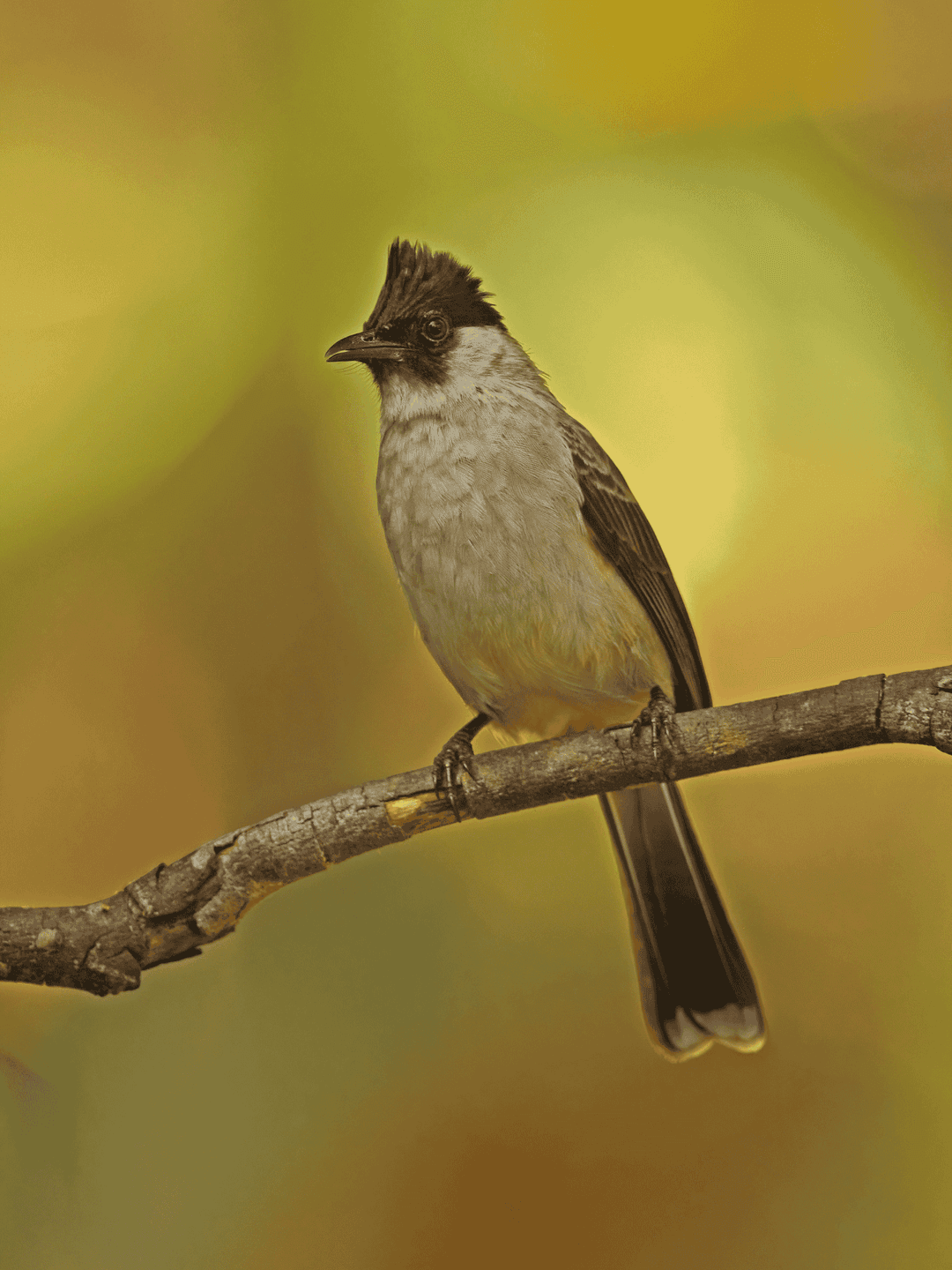
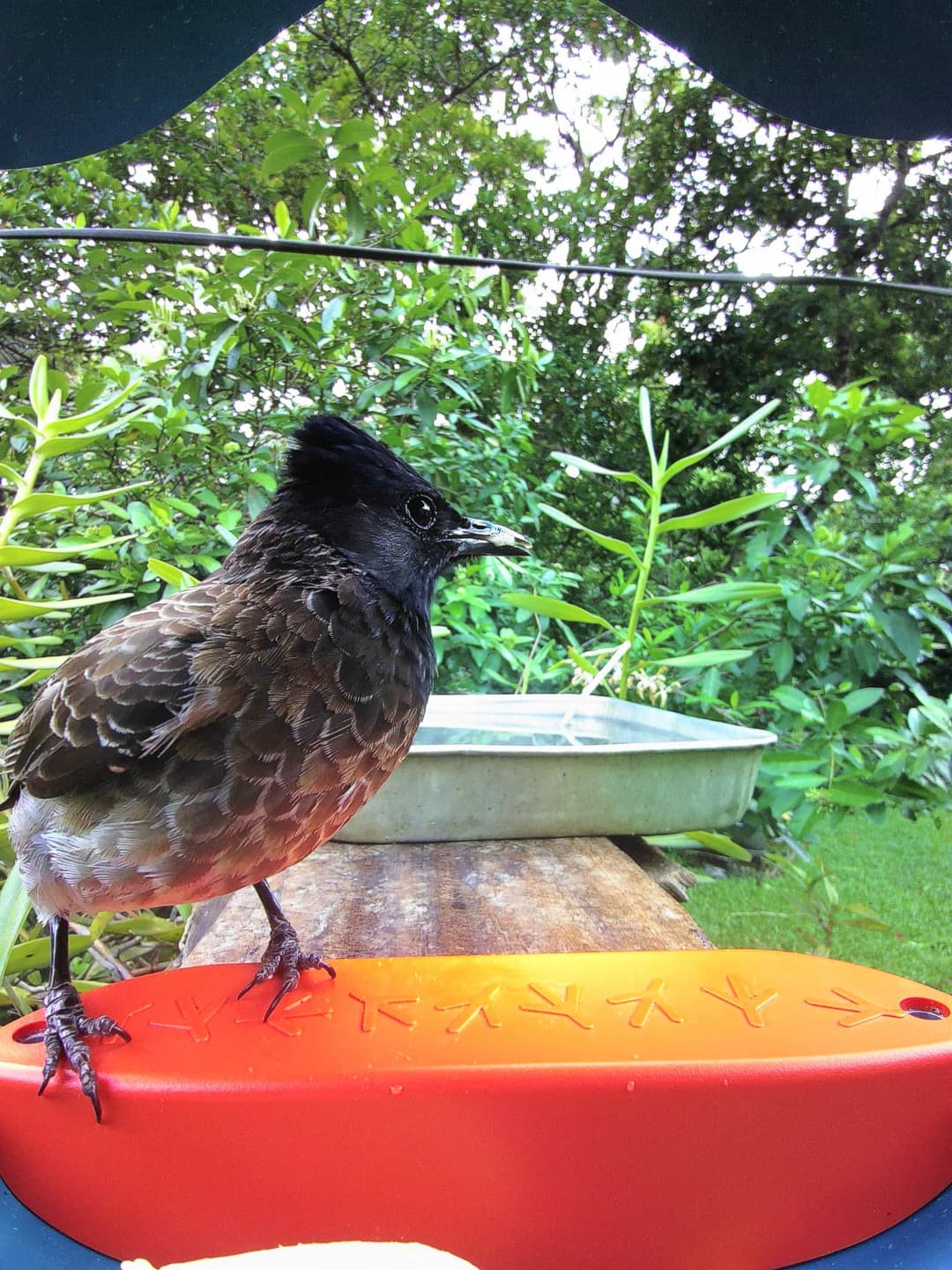
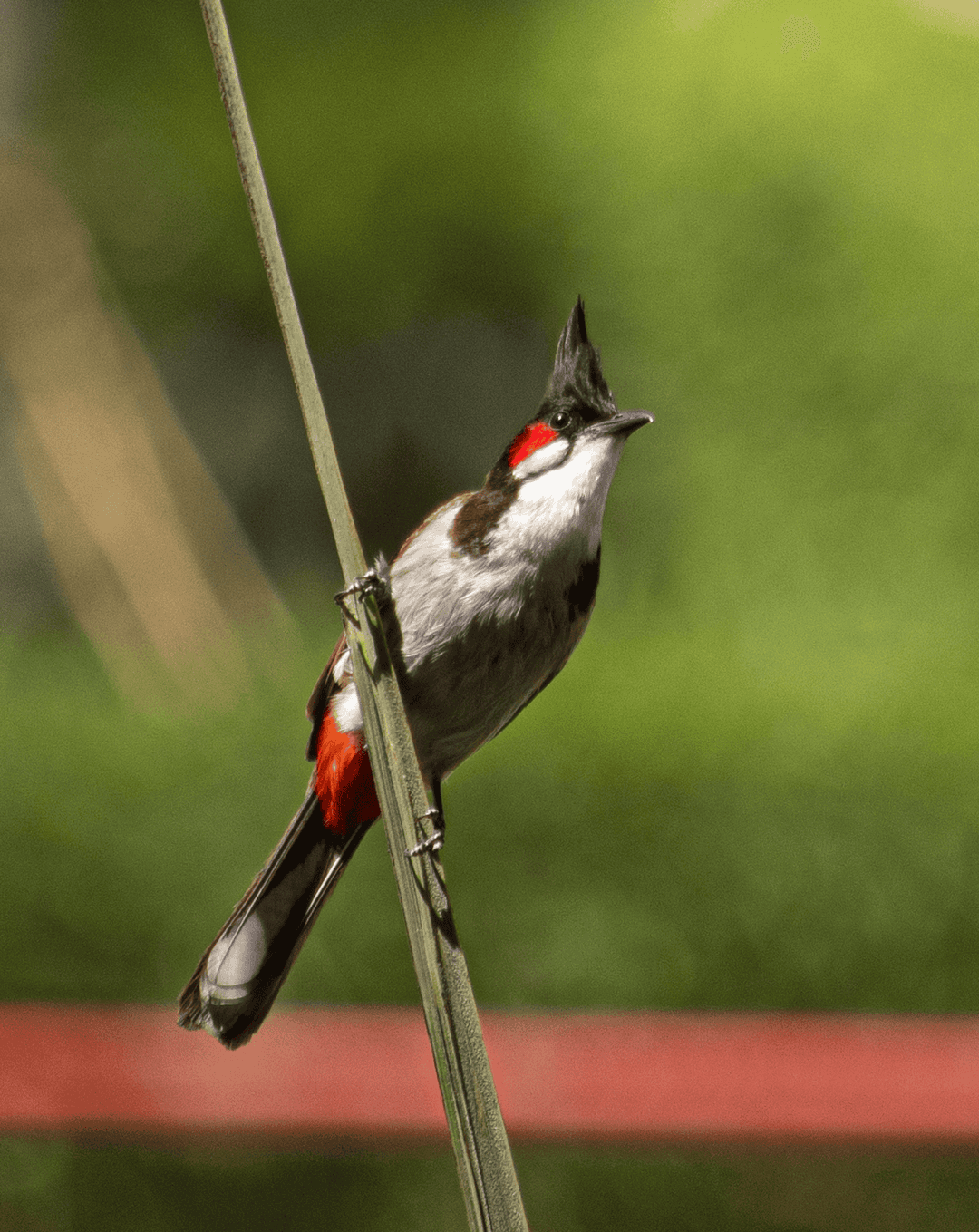
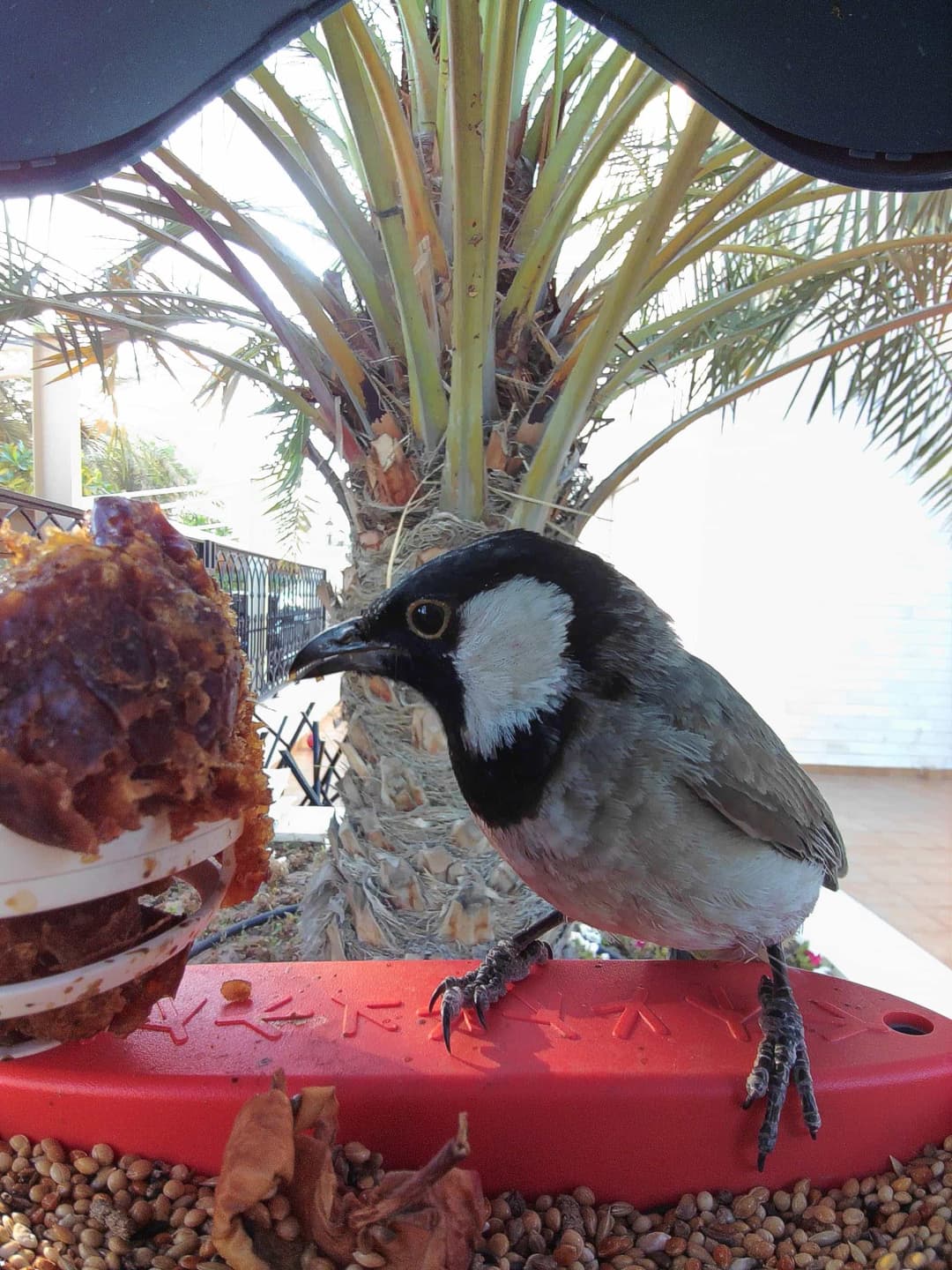
African Red-Eyed Bulbul vs Himalayan Bulbul
African Red-Eyed Bulbul vs Dark-Capped Bulbul
African Red-Eyed Bulbul vs Red-Vented Bulbul
African Red-Eyed Bulbul vs White-Spectacled Bulbul
Bulbul vs [Select a bird]

[Select a bird]
Pick a bird to compare
African Red-Eyed Bulbul vs [Select a bird]
[Select a bird]
Pick a bird to compare