Common Reed Bunting or American Tree Sparrow?
Here's how to tell the difference
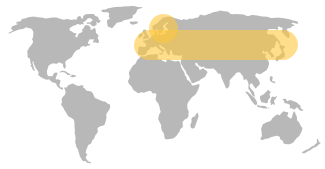


Common Reed Bunting


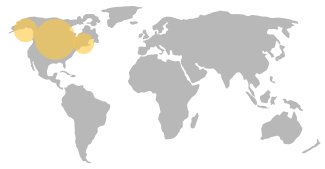
American Tree Sparrow
Common Reed Bunting
Emberiza schoeniclus
General appearance
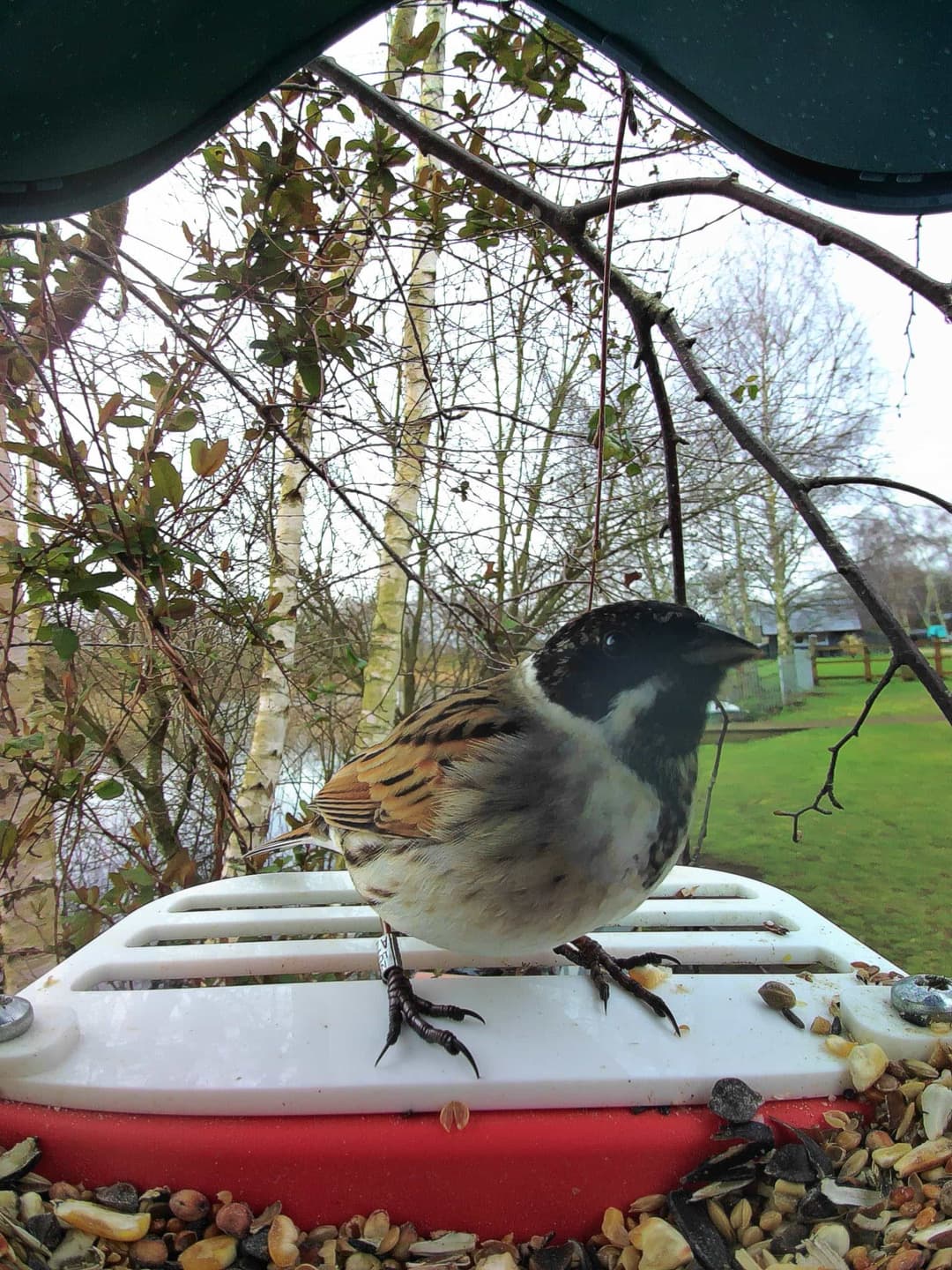
The Common Reed Bunting is a small bird species. It has a relatively hefty body, compared to a sparrow, with a sturdy beak. The bird is typically around 13.5-15.5 cm long, sporting a wingspan around 21-26 cm. Key colours are black, white, and a variety of browns. The plumage can be somewhat variable.
Male vs female
Male Reed Buntings tend to be more striking in appearance than their female counterparts. They possess a black head with white collar contrasted against a brown back, while females exhibit a more muted, uniform brown colour all over. The males lose their black colouring after the breeding season and resemble the females until the following spring.
Juvenile
Juvenile Reed Buntings look very similar to adult females. They have a mottled brown and cream appearance overall. Over time, they gradually develop into the more distinctive adult colourations as they mature.
Size
5.5 - 6.5 in/0.4 - 1.0 oz
There's more to learn about Common Reed Bunting
View full detailsAmerican Tree Sparrow
Spizelloides arborea
Also known as: Winter Sparrow
General appearance
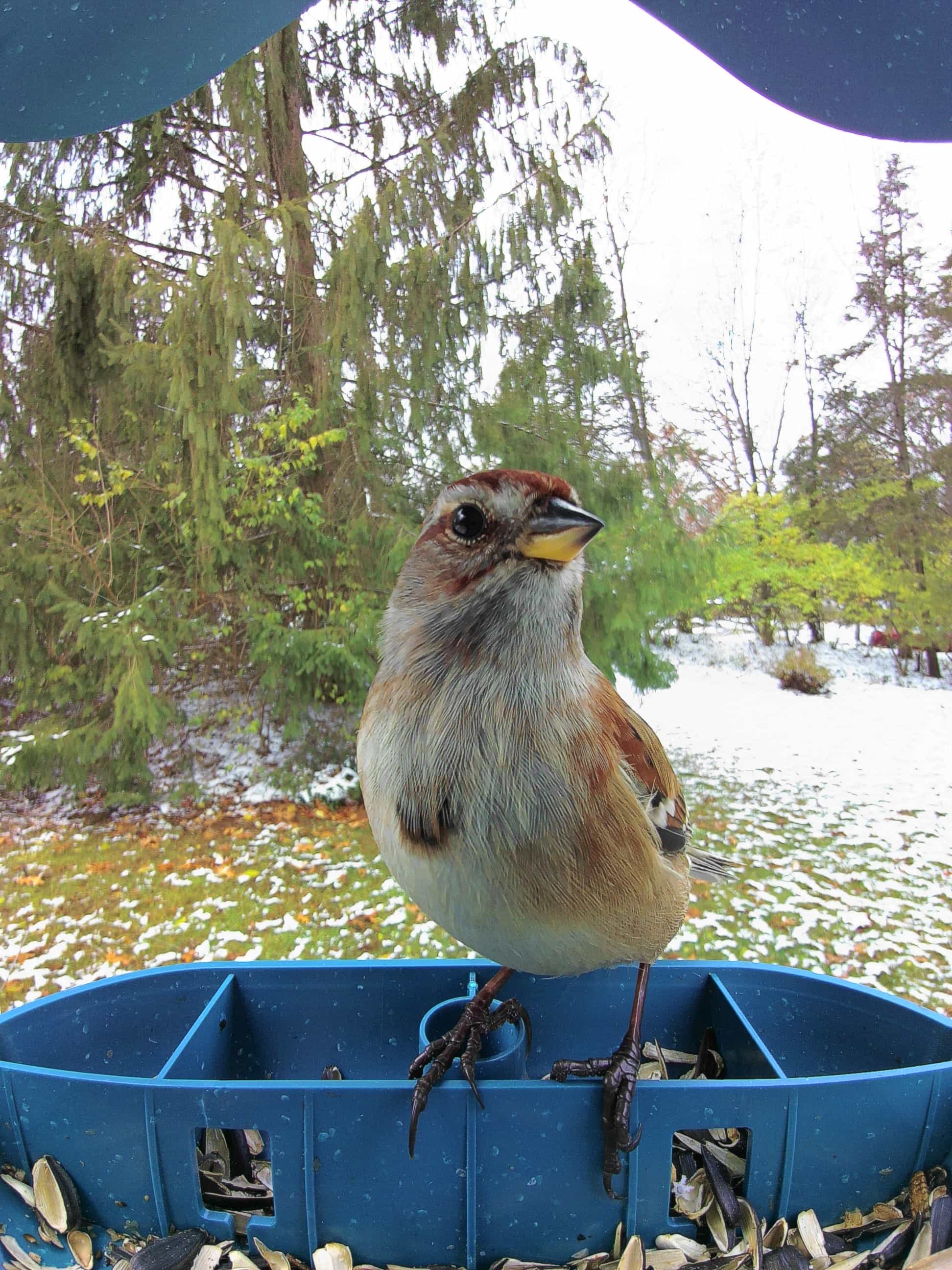
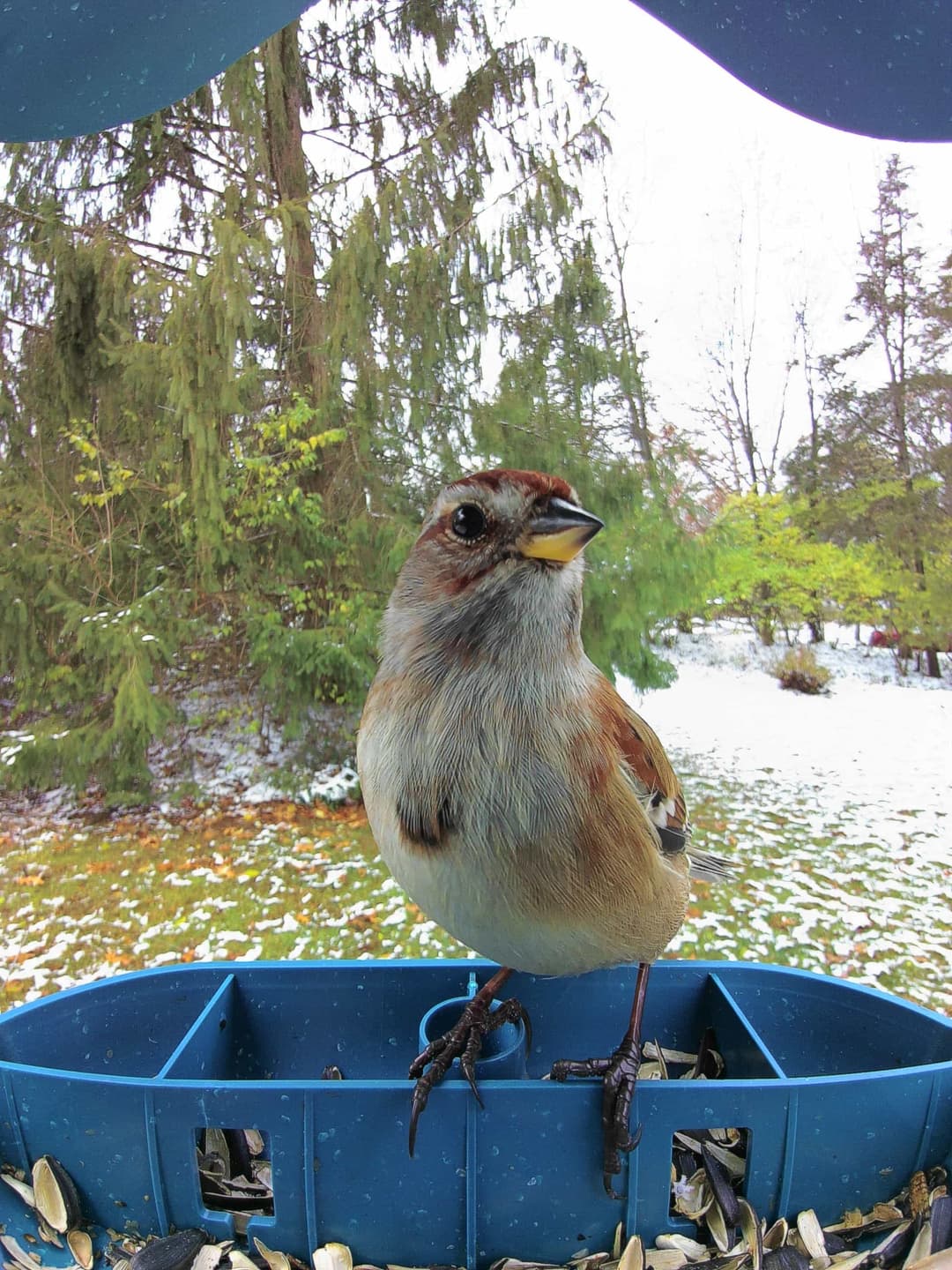
The American tree sparrow is a small, slender bird with a distinct rusty cap and gray face. A notable brown streak extends through the eye, and the bird has a bicolored bill with a dark upper mandible and yellow lower mandible. Its back and wings are brown with dark streaks, while the underparts are pale gray with a central dark spot on the breast. The tail is long and notched with two white wing bars that stand out.
Male vs female
There is minimal sexual dimorphism in American tree sparrows, meaning males and females look alike. Both genders share the same coloration and markings, making them difficult to distinguish based solely on appearance.
Juvenile
Juvenile American tree sparrows resemble adults but with slightly duller and less distinct markings. Young birds may have a more muted crown and face pattern. As they mature, their plumage becomes more defined, resembling the adults in coloration and characteristics.
Size
5.5 - 6.5 in/0.5 - 1.0 oz
There's more to learn about American Tree Sparrow
View full detailsHow to tell the Common Reed Bunting from the American Tree Sparrow
Visual differences
The Common Reed Bunting (5.3-6.5 inches) has a robust body and a thick beak, with males showcasing a black head and white collar against a brown back. The American Tree Sparrow (5.5-6.5 inches) is slender with a distinct rusty cap, gray face, and a brown streak through the eye. Tree Sparrows have a bicolored bill and a spotted gray breast, with two white wing bars. Reed Buntings exhibit sexual dimorphism, unlike the Tree Sparrows, whose males and females look similar.
Key differences and behavior
Common Reed Buntings and American Tree Sparrows exhibit distinct behaviors and habitat preferences. Reed Buntings favor wetlands and reed beds to avoid predators, even faking injury to protect nests. In contrast, Tree Sparrows nest on the ground in Arctic scrub and willow thickets, requiring 30% of their body weight in food daily to survive. Their courtship involves song displays, and both species nest in dense vegetation or shrubs. Reed Buntings primarily feed on seeds and insects, shifting to seeds in winter, similar to Tree Sparrows, who also adapt their diet seasonally. At feeders, both prefer seeds like sunflower and millet. Thus, one can differentiate them by habitat choice—Reed Buntings in wetlands and Tree Sparrows in tundra or brushy areas—and by Reed Buntings' predator distraction tactics not exhibited by Tree Sparrows.
Still not sure? Here are more lookalikes!
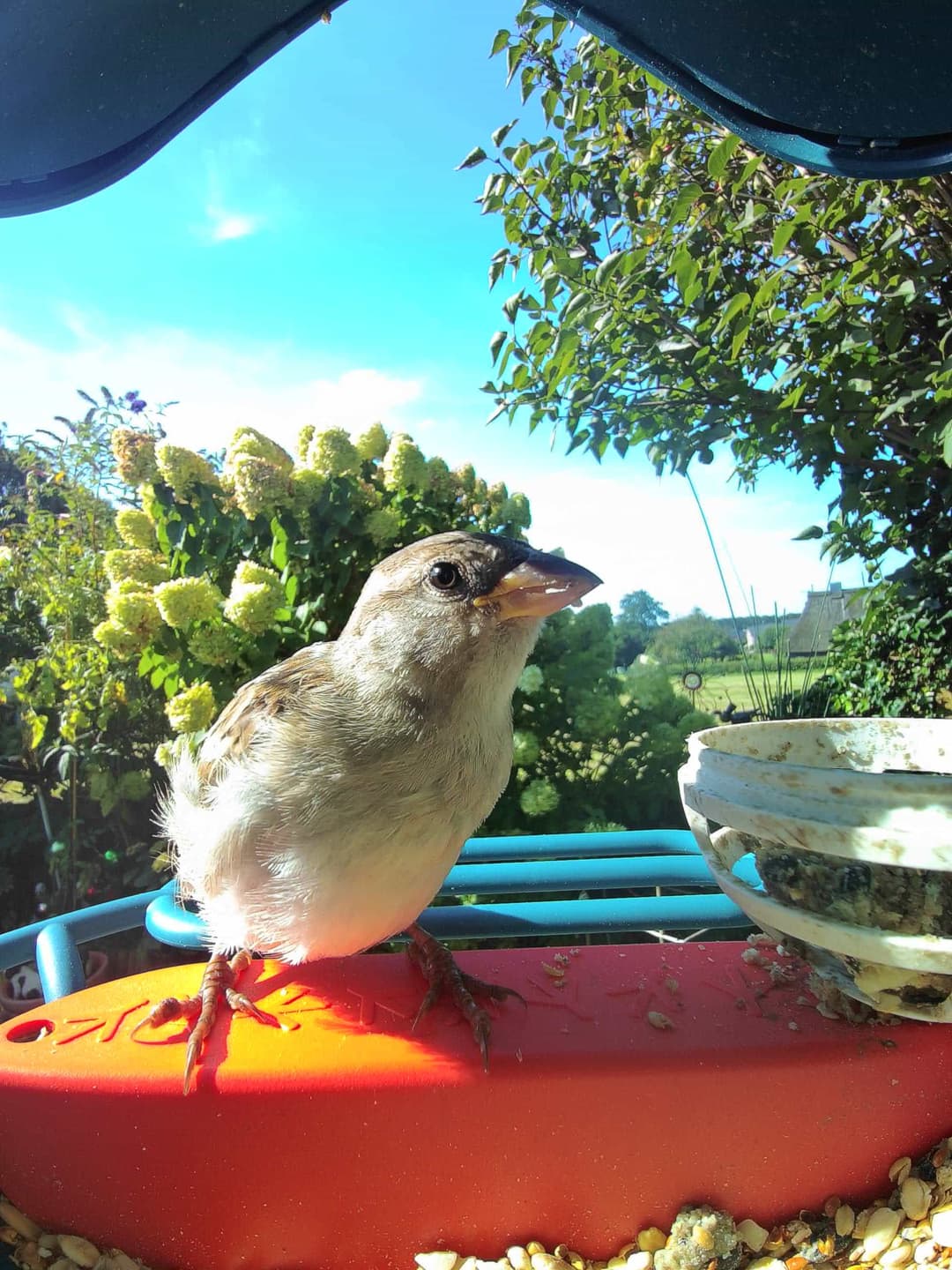
Common Reed Bunting vs House Sparrow
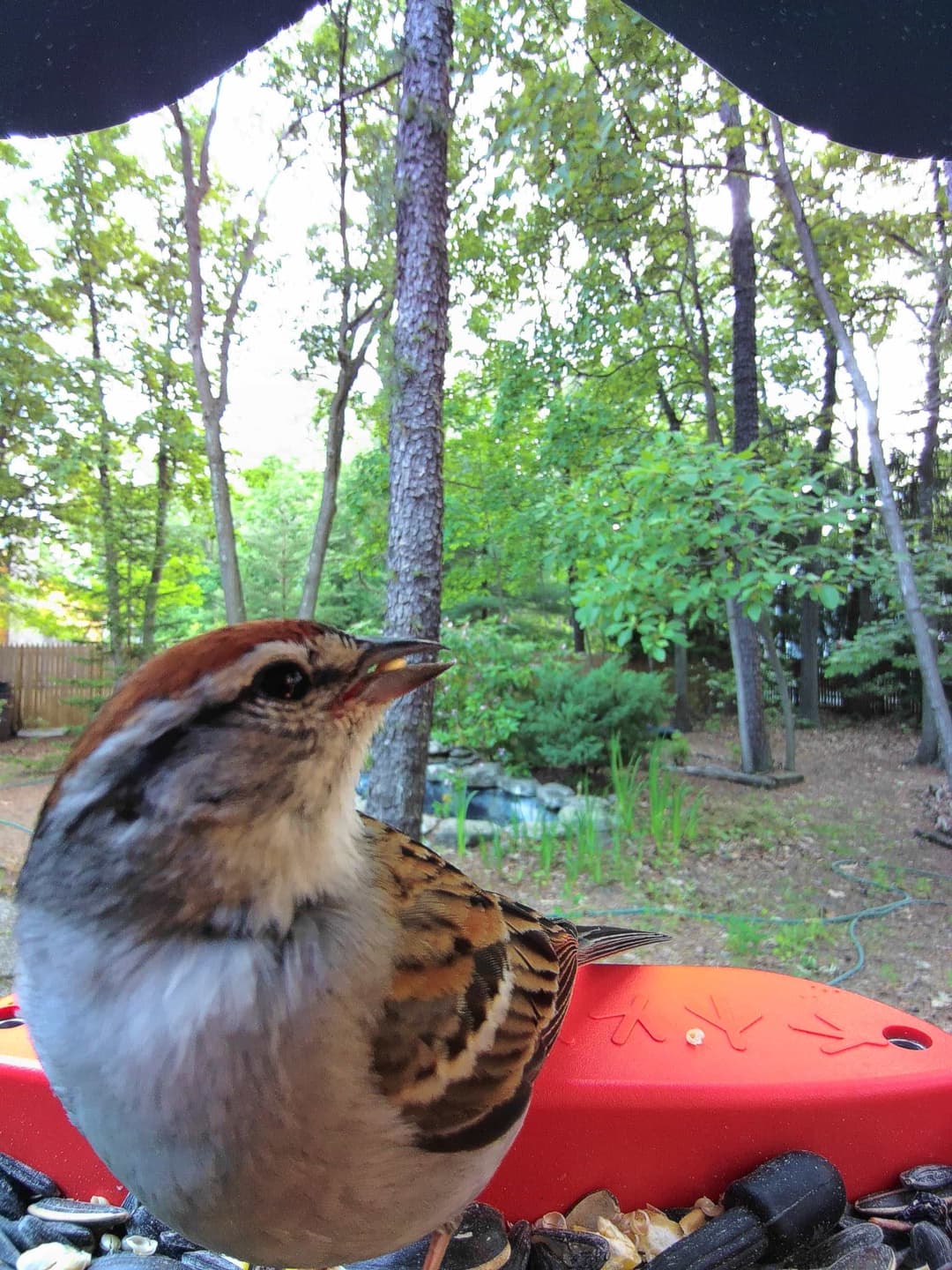
Common Reed Bunting vs Chipping Sparrow
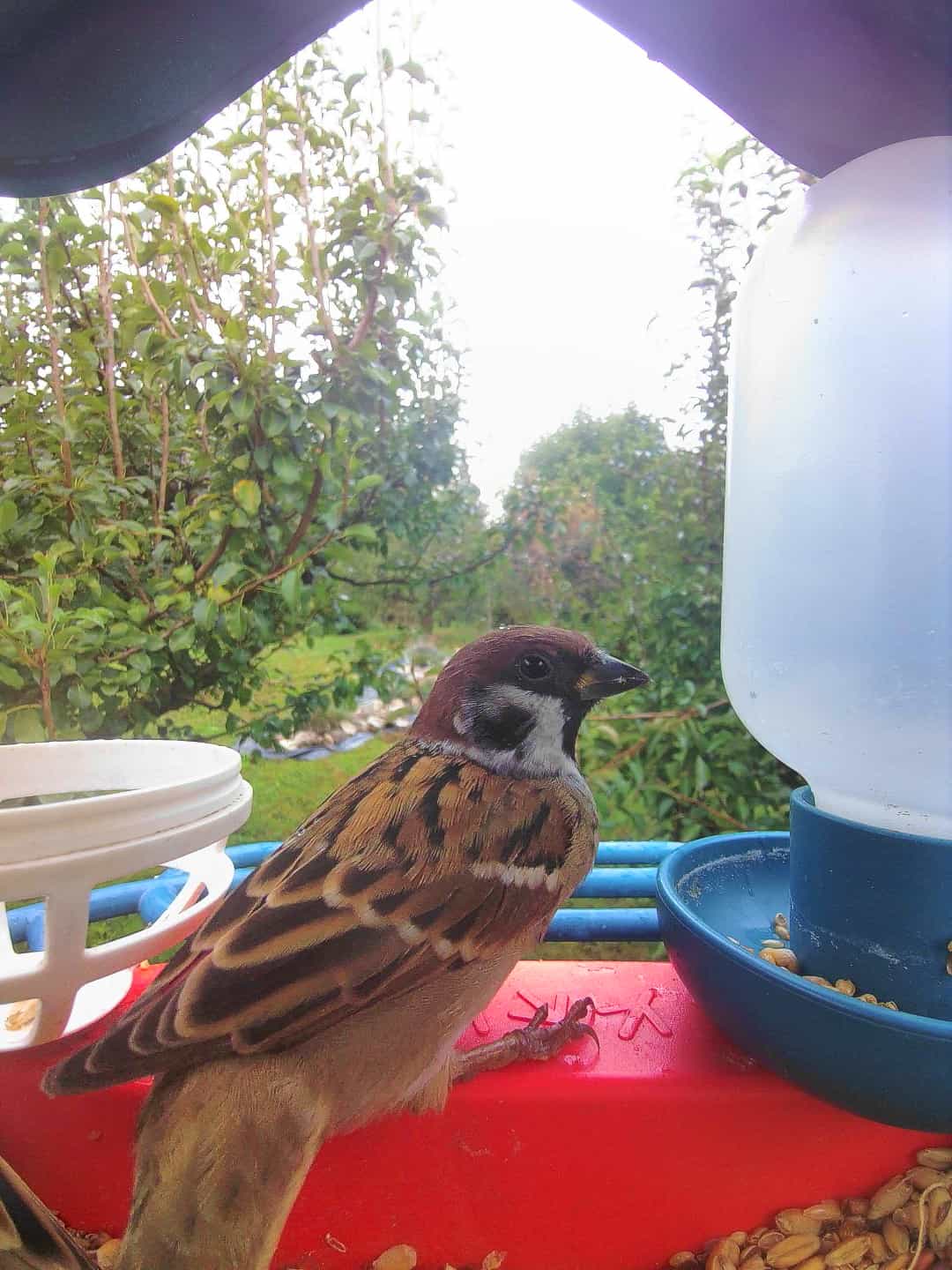
Common Reed Bunting vs Eurasian Tree Sparrow
American Tree Sparrow vs Chipping Sparrow
American Tree Sparrow vs Song Sparrow
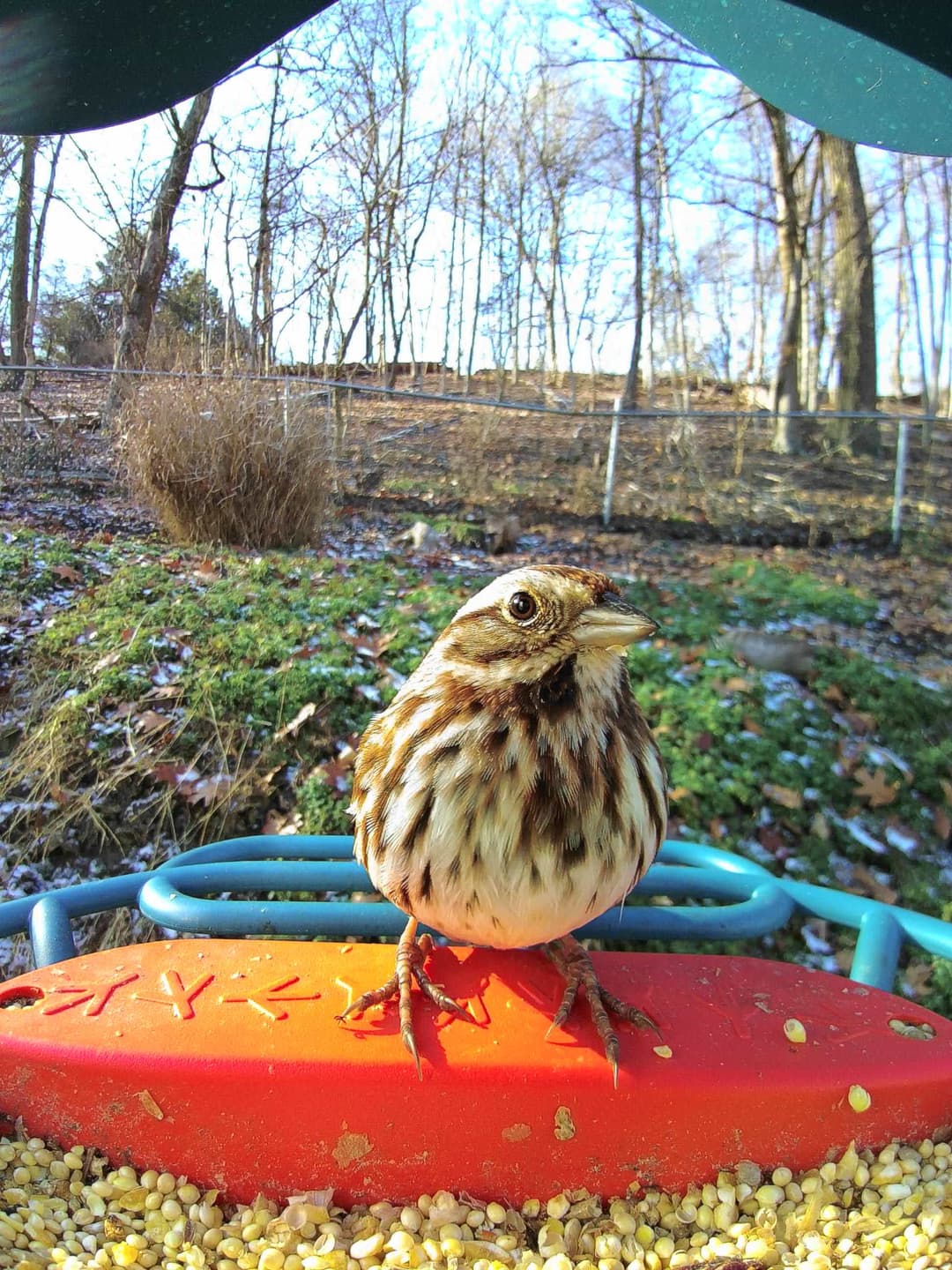
American Tree Sparrow vs Field Sparrow
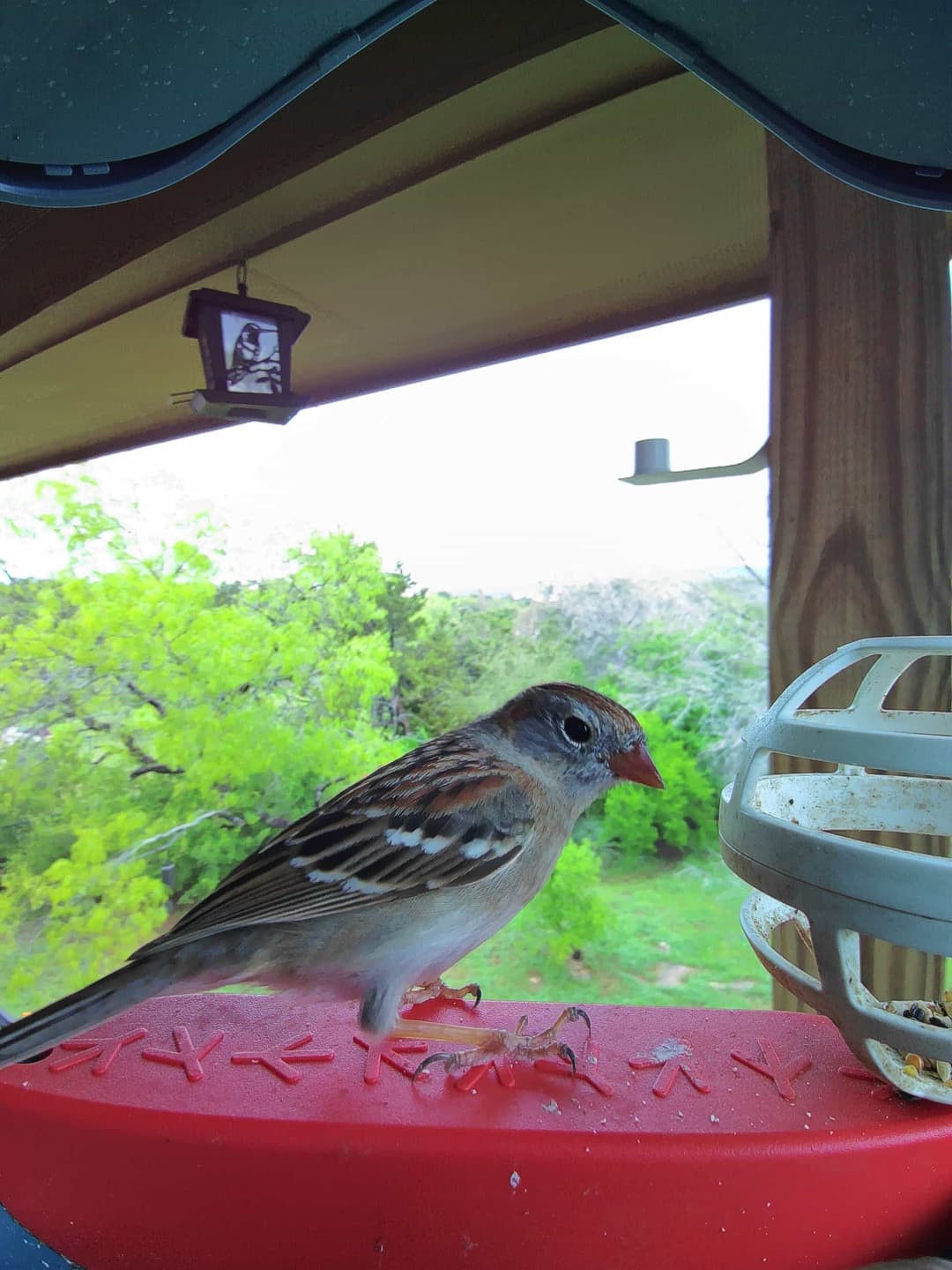
American Tree Sparrow vs Lark Sparrow
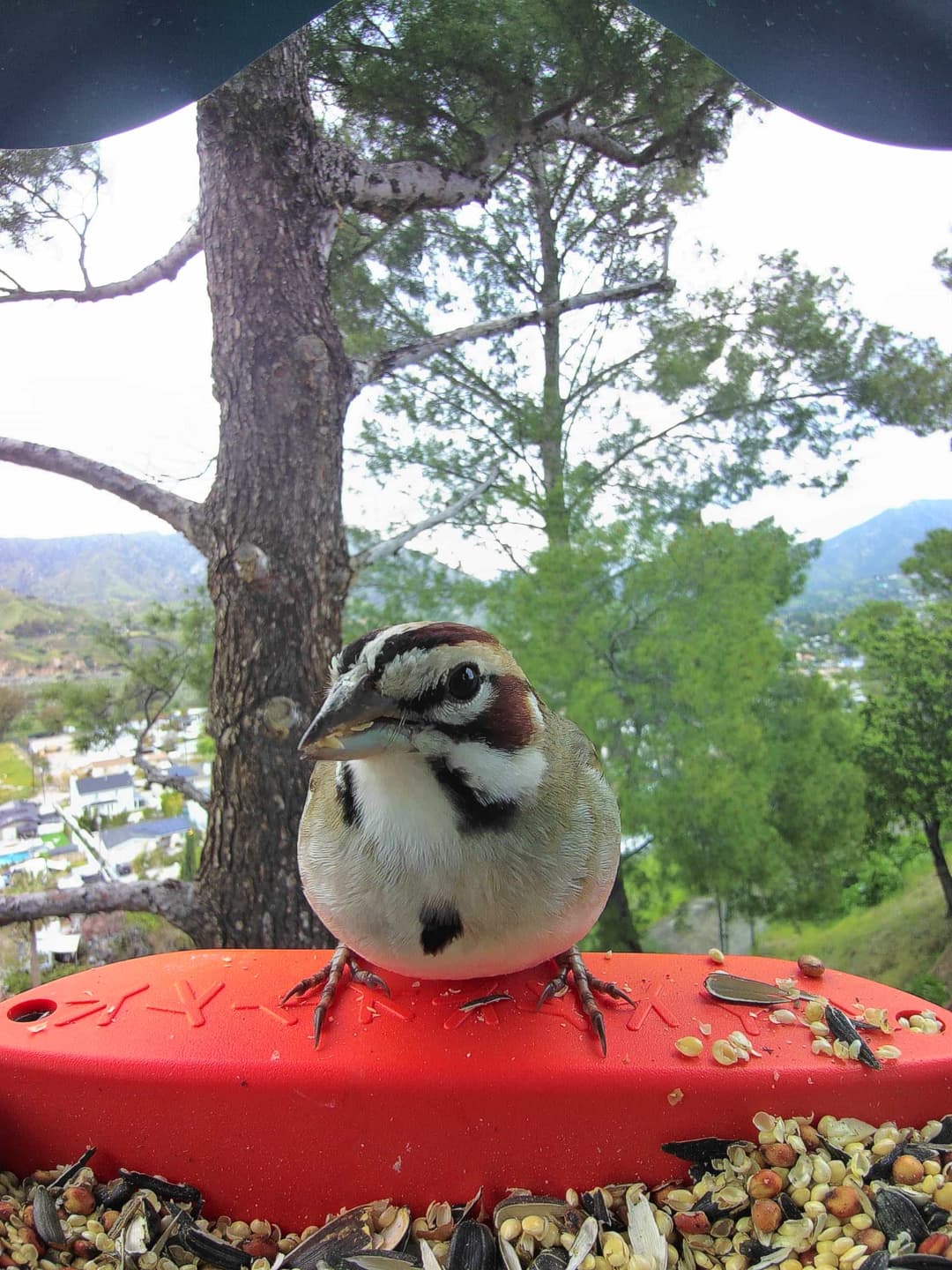
Common Reed Bunting vs [Select a bird]

[Select a bird]
Pick a bird to compare
American Tree Sparrow vs [Select a bird]
[Select a bird]
Pick a bird to compare