
Field Sparrow
Field Sparrow
Spizella pusilla


Quick Identification guide
Quick Identification guide
- •
Features a small, conical pink bill setting it apart from other sparrows
- •
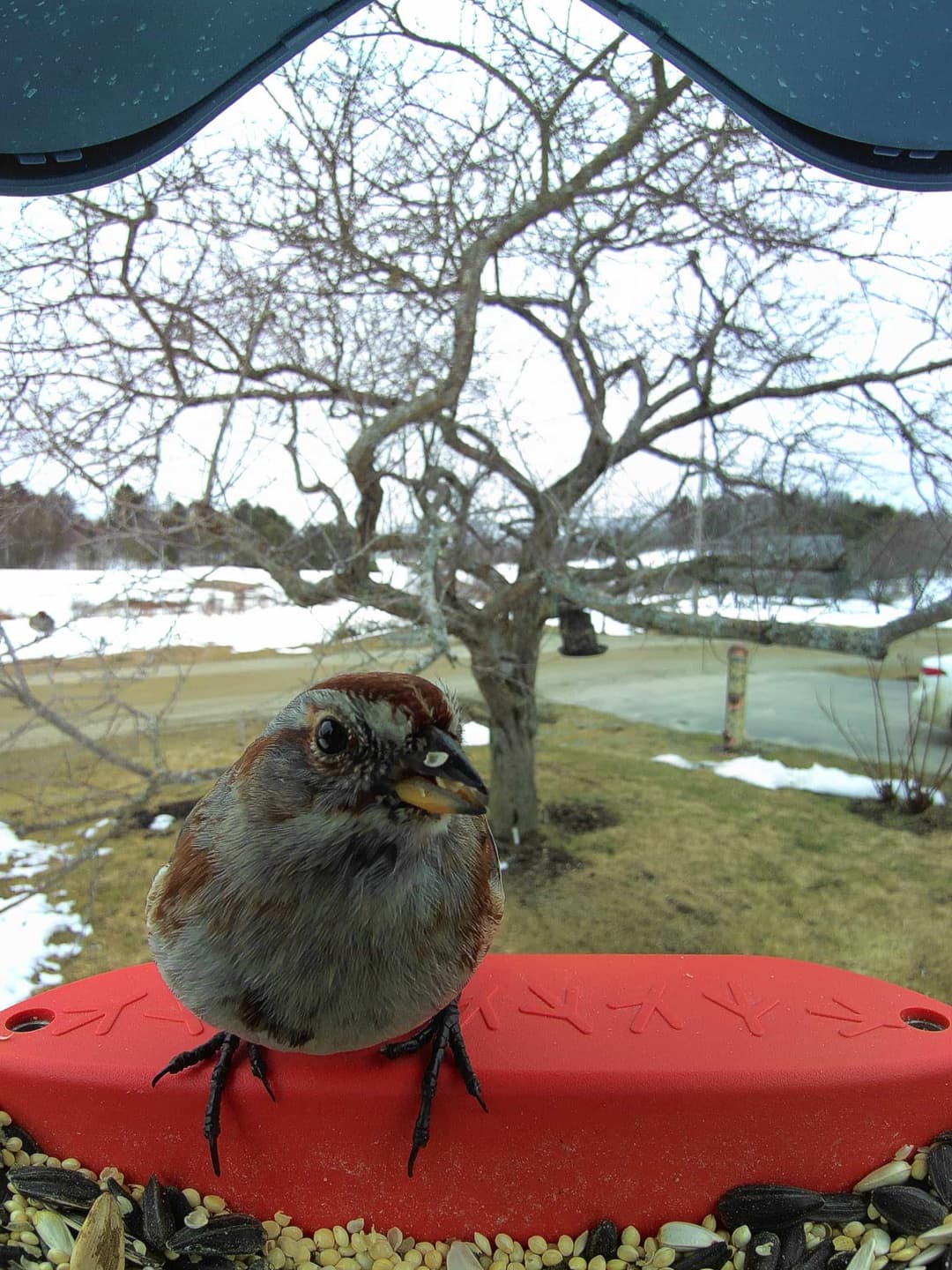
Exhibits rusty cap and pale gray face with a distinctive white eye ring
- •
Has a slender body with light brown upperparts and unmarked pale underparts
What does a field sparrow sound like?
The field sparrow's vocalizations are characterized by a series of soft, plaintive notes, all on the same pitch, that gradually accelerate to end in a trill. This call pattern is typically falling, and the types of sounds included in its repertoire range from chirps and chips to whistles. The bird's song carries a melancholy tone, emblematic of its distinctive voice in the wild.


Description
If you're a field sparrow, there's nowhere to go but up, nest-wise. These birds breed multiple times a season and build a new, higher nest each time. To woo all those lady sparrows, males waste no time and start singing as soon as spring starts. They don't stop until they find a mate! Their flirting is also pretty hands-on. They will fly at the female, sometimes even driving her to the ground. They love hanging out with their friends in a crue!
The field sparrow can weigh between 11to15grams and be from12.5to15centimeters tall.
The typical lifespan of a field sparrow is 2-3 years. Compared to related species, this is shorter; for instance, the song sparrow can live up to 11-12 years. These data show there is significant variability in lifespan within the sparrow family.
Did you know?
Most popular questions about field sparrow
How to recognise a field sparrow?
General appearance
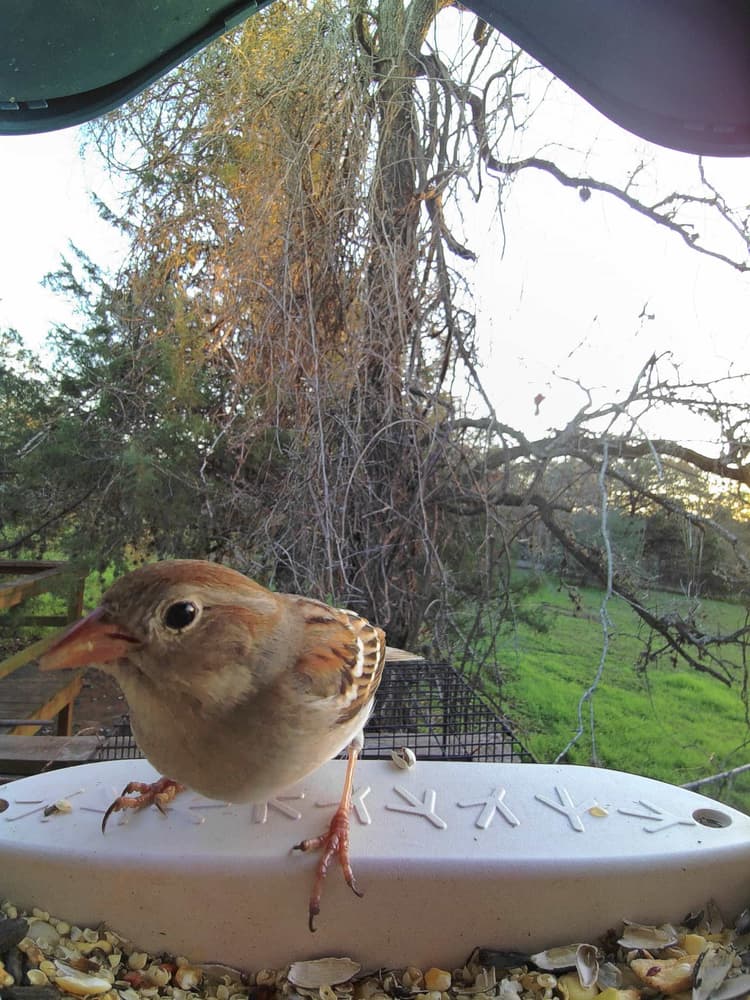
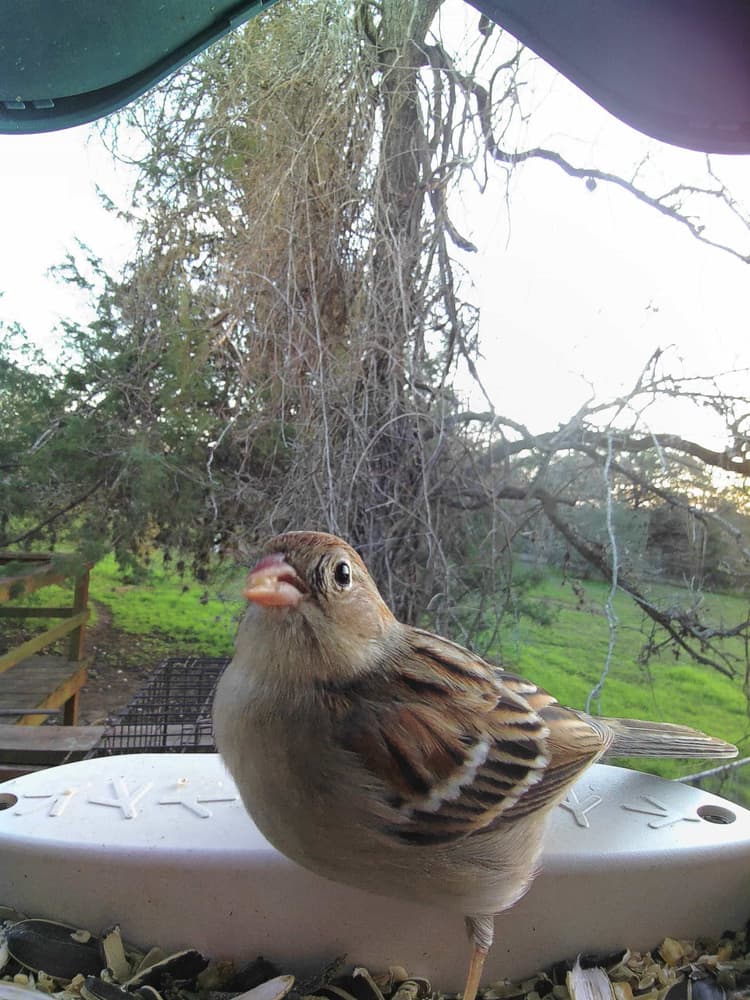
The field sparrow measures approximately 5 1/4 inches or 13 cm. It has a rusty cap and a pink bill. The bird sports a faint whitish eye-ring and a pale rusty eyeline. The plain face gives it an innocent expression. This bird seems long-tailed for its size. Its coloration includes black, brown, gray, pink, red, tan, and white. The sparrow's wings are broad while its tail can be notched, rounded, or square-tipped.
Male vs female
There is no information available distinguishing between the appearances of male and female field sparrows. Often with sparrows, such differences are subtle or nonexistent.
Juvenile
The description provided does not differentiate between the appearances of adult and juvenile field sparrows. For many bird species, juveniles can have muted coloration compared to adults, but more specific information would be needed to accurately describe a juvenile field sparrow. In winter, it can be confused with the chipping sparrow, which may also have a pink bill but exhibits a more prominent dark eyeline.
Often mistaken for
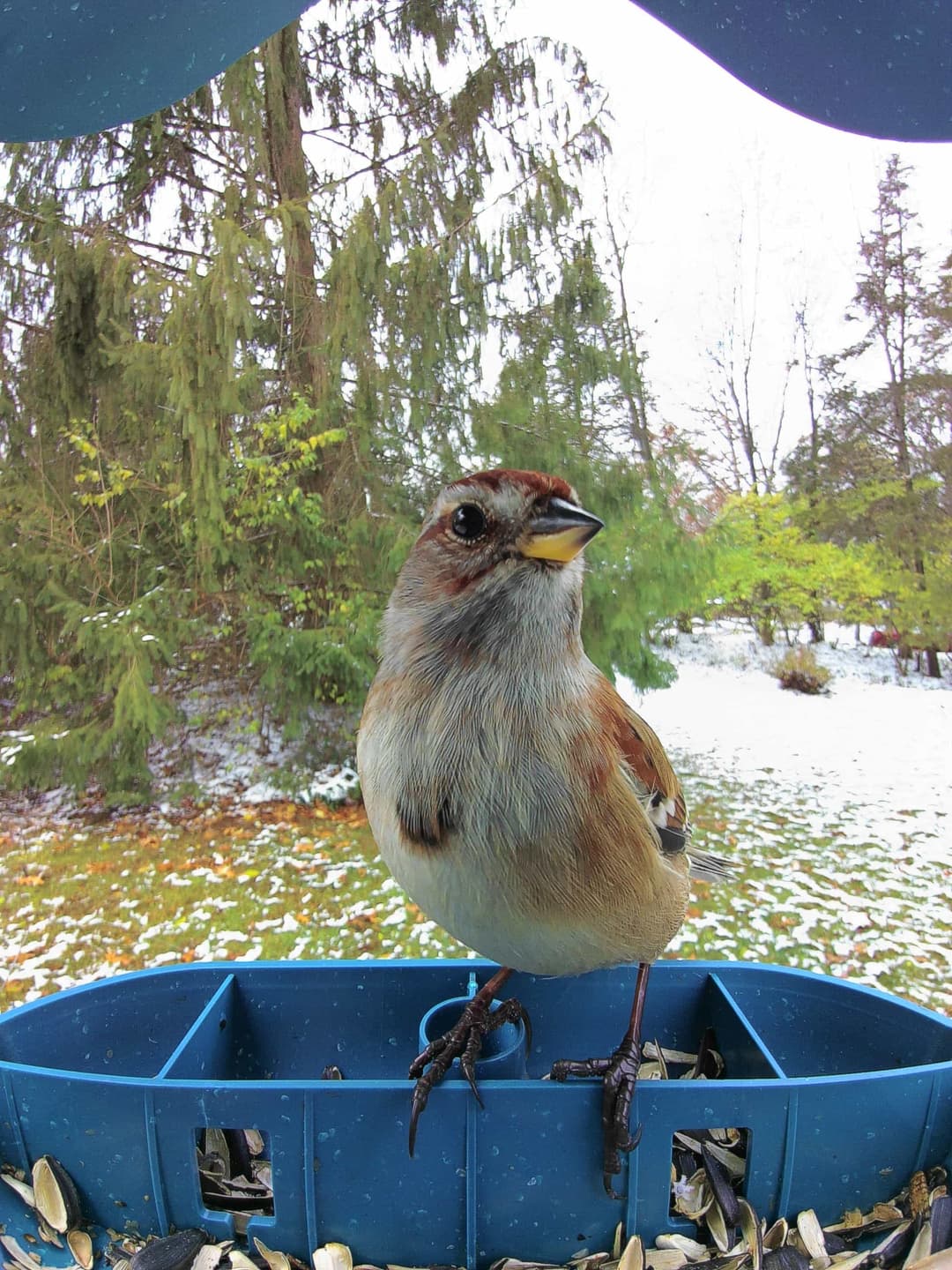
American Tree Sparrow vs Field Sparrow
Field Sparrows have a plain face with a distinct white eye-ring and pink bill. American Tree Sparrows have a central dark spot on the chest, and a bicolored bill: dark above, yellow below.
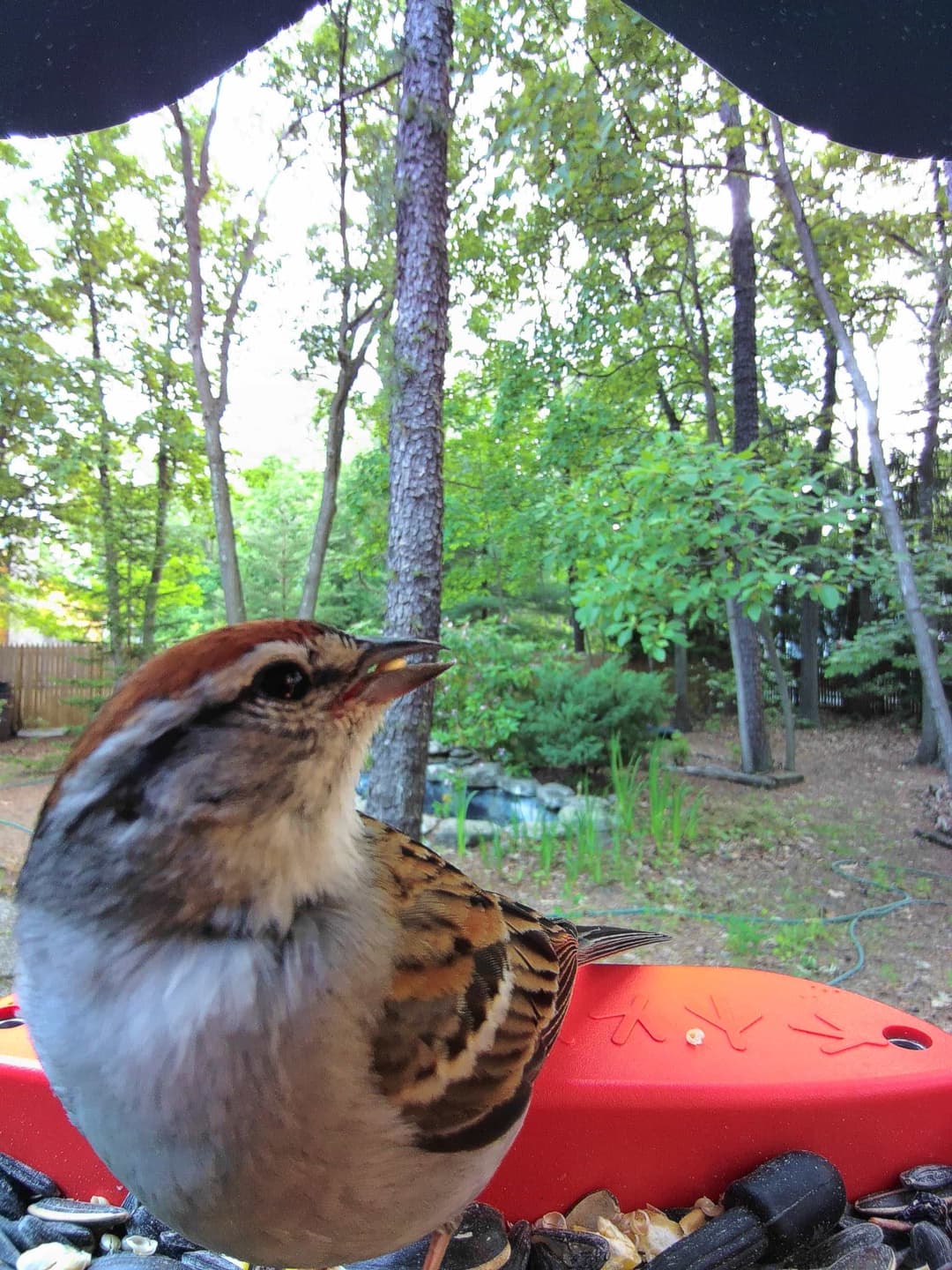
Chipping Sparrow vs Field Sparrow
Field Sparrows have a more muted, soft brown coloring with a clear breast and a pink bill. Chipping Sparrows sport a black line through the eye and have a rusty crown, with a grayish nape.
Swamp Sparrow vs Field Sparrow
Field Sparrows exhibit a plainer, less streaked appearance and a narrower, pink bill. Swamp Sparrows are more likely to be found in wet habitats and have a more prominent, streaked breast.
White-Crowned Sparrow vs Field Sparrow
Field Sparrows are smaller and have a pink bill. White-Crowned Sparrows are larger, with bold black and white stripes on the head and an orange or yellow bill depending on the age.

Breeding and nesting habits of the field sparrow
Mating behaviors
Male field sparrows defend their nesting territory through persistent singing, which serves as part of their courtship display. This behavior helps establish and maintain their breeding territory against rivals.
Nesting details
Nests are typically open cups constructed by the female, using grasses and lined with fine plant material and hair. Early nests are often placed on or near the ground within clumps of grass, dense low bushes, or saplings, while later nests tend to be positioned higher. The male may assist by gathering nesting materials.
Eggs and chick-rearing
Adults with chicks may perform a 'broken-wing' display to distract predators from their young. This protective behavior ensures the safety of their offspring, which are nurtured and fed until independent. Practical gardening advice for creating suitable habitats includes planting native grasses and low, dense shrubs to provide shelter and nesting sites.
What does a field sparrow like to eat?
Insects
Seeds
Natural diet
Field sparrows primarily consume seeds and insects. During winter, their diet is over 90% seeds, mostly from small grass seeds. In summer, while they continue to eat many grass seeds, insects account for over 50% of their diet. Nestlings are predominantly fed spiders, caterpillars, and insects, with grasshoppers being a notable component for larger young sparrows.
Bird feeders
Field sparrows are known to visit bird feeders, where they commonly consume small seeds, such as millet and cracked corn. They are attracted to feeders providing a selection of seeds that mimic their natural dietary preferences.
Choosing the right food
Field Sparrows prefer a diet that includes seeds and insects. To entice them, fill your bird feeder with Bird Buddy seeds. These seeds are specially selected by experts for each season, which can significantly improve your success rate in attracting these delightful birds. Bird Buddy seeds offer the best results in tempting a broad range of bird species including Field Sparrows.
Selecting suitable feeders
Feeders that offer a platform or tray are the most suitable for Field Sparrows. You can place the Bird Buddy seeds in these feeders. Ensure the feeder is placed in a quiet and secured location, far from predators, to make the sparrows comfortable and safe while they eat.
Creating an ideal habitat
Field Sparrows prefer grassy and weedy fields as their habitat. If your yard matches this description, you are in luck. If not, try to mimic this habitat by letting an area of your lawn grow long. Adding a bird bath and trees for nesting can also help make your yard more appealing to these birds. Before you know it, you'll be enjoying a lovely 'sing-along' with a flock of Field Sparrows.
Where can you find field sparrows?

Primary habitat
The field sparrow's primary habitat is bushy pastures, brush, scrub, second growth, woodland edges and hedgerows in open country.
Additional range
They are occasionally found near marshes' brushy edges or in open grassy fields with scattered shrubs. Their habitat selection is not limited to a specific season.
Do they migrate?
The field sparrow exhibits partial migratory behavior. This means that while some populations migrate, others do not. Specifically, the northernmost breeders of the field sparrow migrate south in the fall season. These birds typically breed in the northern regions of North America and, as the colder months approach, they move south for the winter. Their migration is generally oriented towards more temperate areas of the United States, avoiding the harsh conditions of northern winters. Southern breeders, on the other hand, may either migrate short distances or remain in their breeding territories throughout the year, effectively becoming permanent residents. This adaptability allows the species to occupy a wide range within North America. In the spring, in more northern breeding areas, the migration back is characterized by males arriving approximately 2-3 weeks before females. This early arrival of males is a common behavior among many bird species, allowing them to establish territories before the arrival of females. Key locations for migrating field sparrows include the more central and southern parts of the United States, where many spend the winter months before returning to their breeding grounds in the northern regions.
What is the role of field sparrows in nature and how to protect them?
Conservation status
The field sparrow is currently common and widespread across North America, although there has been an overall decline in its population in recent decades. While not yet considered vulnerable or endangered, the decline is concerning. Key threats include habitat loss due to urban development and changes in agricultural practices. Conservation efforts focus on habitat restoration and preservation of grasslands and open fields to support population stability. Monitoring and implementing land management practices that promote suitable habitat are crucial to prevent further decline.
Ecological role of field sparrows
Its role in the ecosystem
The field sparrow is an important part of the ecosystem, as it contributes to seed dispersal and pest control. Throughout different seasons, the diet of the sparrow varies, consuming more than 90% seeds in winter, predominantly small grass seeds, while in the summer their diet comprises of more than 50% insects. This means they help in controlling pests, as they feed on insects such as caterpillars and grasshoppers. Seed consumption also aids in the dispersal of plant species. The Field Sparrow's nesting behaviour effectively responds to threats from predators, displaying inherent wildlife resilience. Even amidst disturbance from predators, or parasitic invasion from Brown-headed Cowbirds, these birds exhibit a high degree of persistence, attempting to nest repeatedly. This behaviour promotes ecosystem diversity and dynamism, supporting the survival prospect of species in the face of ecological challenges. Finally, the mixed diet of the field sparrow potentially contributes to the biological control of unwanted insect species and the propagation of various plant species.
How to help protect field sparrows
Preservation tips
Habitat preservation strategies
Support field sparrow conservation efforts by preserving their natural habitat. This includes maintaining open grassy areas with low shrubs, as Field Sparrows often inhabit these types of environments. Avoid excessive mowing or intensive agricultural practices in these areas, which can destroy nesting sites. Creating buffer zones around their habitats can also prevent human disturbance.
Community science initiatives
To protect the field sparrow, community involvement is vital. Participating in bird counting events, such as the Great Backyard Bird Count or local Audubon Society Christmas Bird Counts, can help track field sparrow populations and monitor breeding success. Additionally, educating the community about the importance of respecting natural habitats can discourage harmful human activities. Planting native species in gardens can also provide additional resources for these birds.