
Common Reed Bunting
Common Reed Bunting
Emberiza schoeniclus


Quick Identification guide
Quick Identification guide
Male
- •
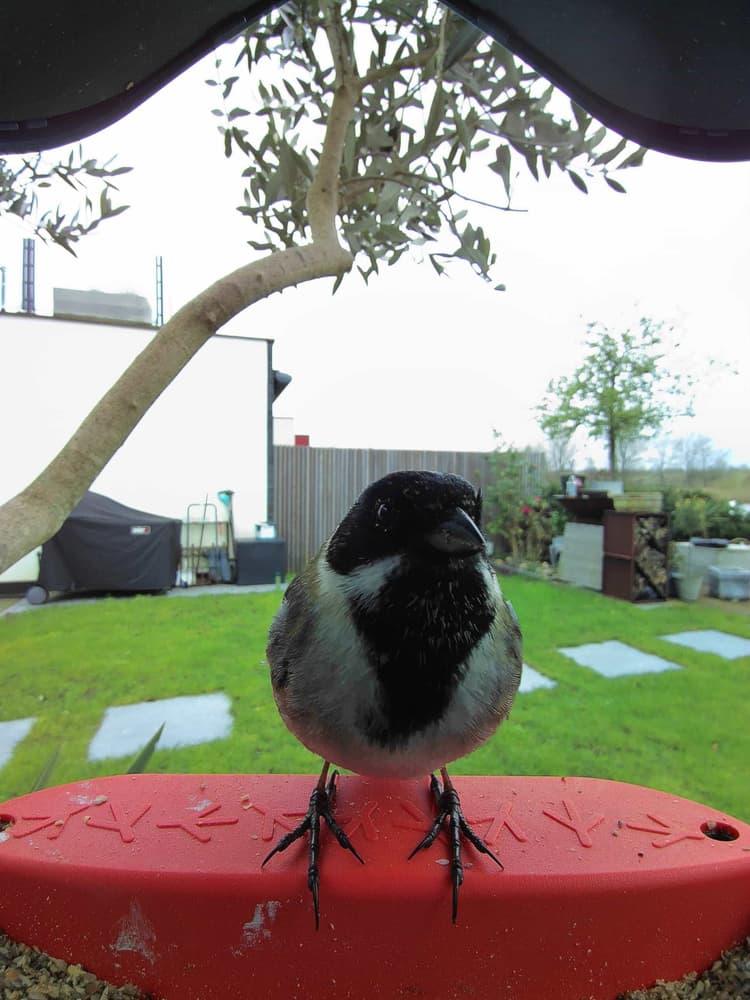
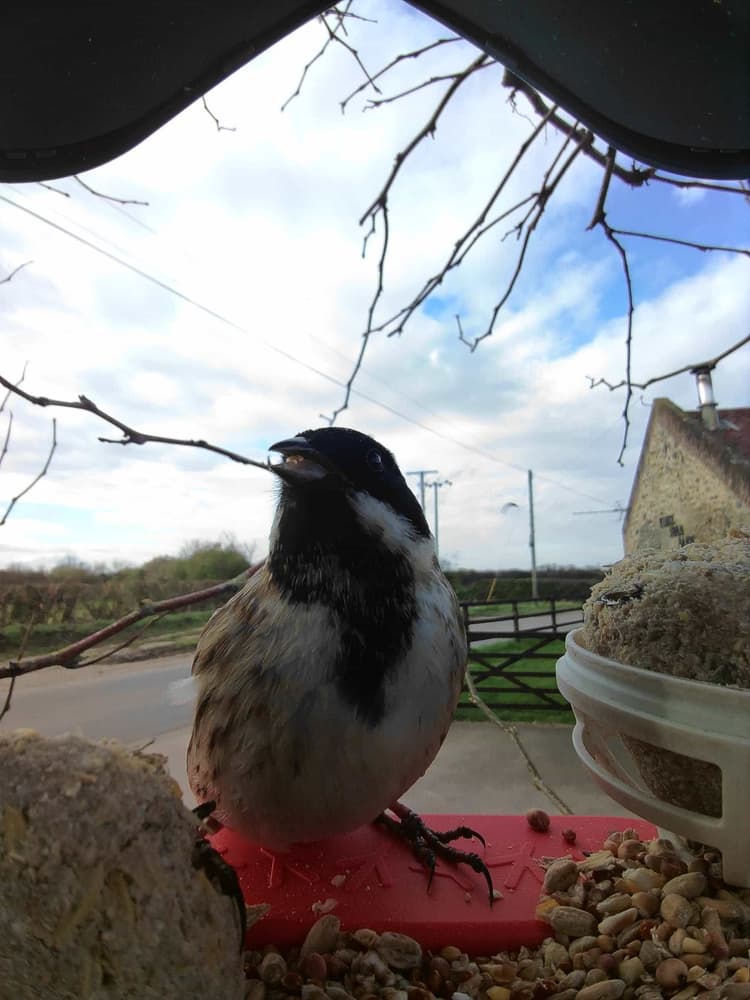
black head and throat contrasting with a white collar
- •
brown streaked back and chestnut wing patches
- •
A small, conical beak that is pale in color
Female
- •
soft brown plumage with dark streaks across the body
- •
pale underparts with a hint of buff on the breast
- •
A small, conical beak similar to that of the male
What does a common reed bunting sound like?
The common reed bunting's typical song is a repeated, simple and plaintive "zrip-zrip-tsrrrr" or "tee-tee-teezzzzz," which is usually sung from a high perch. Its call notes include an incisive "tik," a harsh "tschak," and a soft "seep," often used in flight. Male reed buntings can also demonstrate more complex and variable song patterns during the breeding season. The vocalizations of the common reed bunting significantly contribute to the soundscape of wetland habitats.


Description
Common reed buntings certainly see the value of lovely waterside accommodation. It keeps predators away, from one! And lots of neighbours do, as well. If a predator still decides to approach their roosting site, an adult will pretend to be hurt to draw them away from the nest, then fly away. Fooled you!
The common reed bunting can weigh between 10to28grams and be from14to16.5centimeters tall.
The common reed bunting typically lives for 2-3 years. However, according to the British Trust for Ornithology, the oldest recorded age is 11 years and 1 month. While this lifespan is slightly longer than some related species like the yellowhammer, it is relatively shorter when compared to others like the snow bunting, which can live upto 13 years.
Did you know?
Most popular questions about common reed bunting
How to recognise a common reed bunting?
General appearance
The Common Reed Bunting is a small bird species. It has a relatively hefty body, compared to a sparrow, with a sturdy beak. The bird is typically around 13.5-15.5 cm long, sporting a wingspan around 21-26 cm. Key colours are black, white, and a variety of browns. The plumage can be somewhat variable.
Male vs female
Male Reed Buntings tend to be more striking in appearance than their female counterparts. They possess a black head with white collar contrasted against a brown back, while females exhibit a more muted, uniform brown colour all over. The males lose their black colouring after the breeding season and resemble the females until the following spring.
Juvenile
Juvenile Reed Buntings look very similar to adult females. They have a mottled brown and cream appearance overall. Over time, they gradually develop into the more distinctive adult colourations as they mature.
Often mistaken for
House Sparrow vs Common Reed Bunting
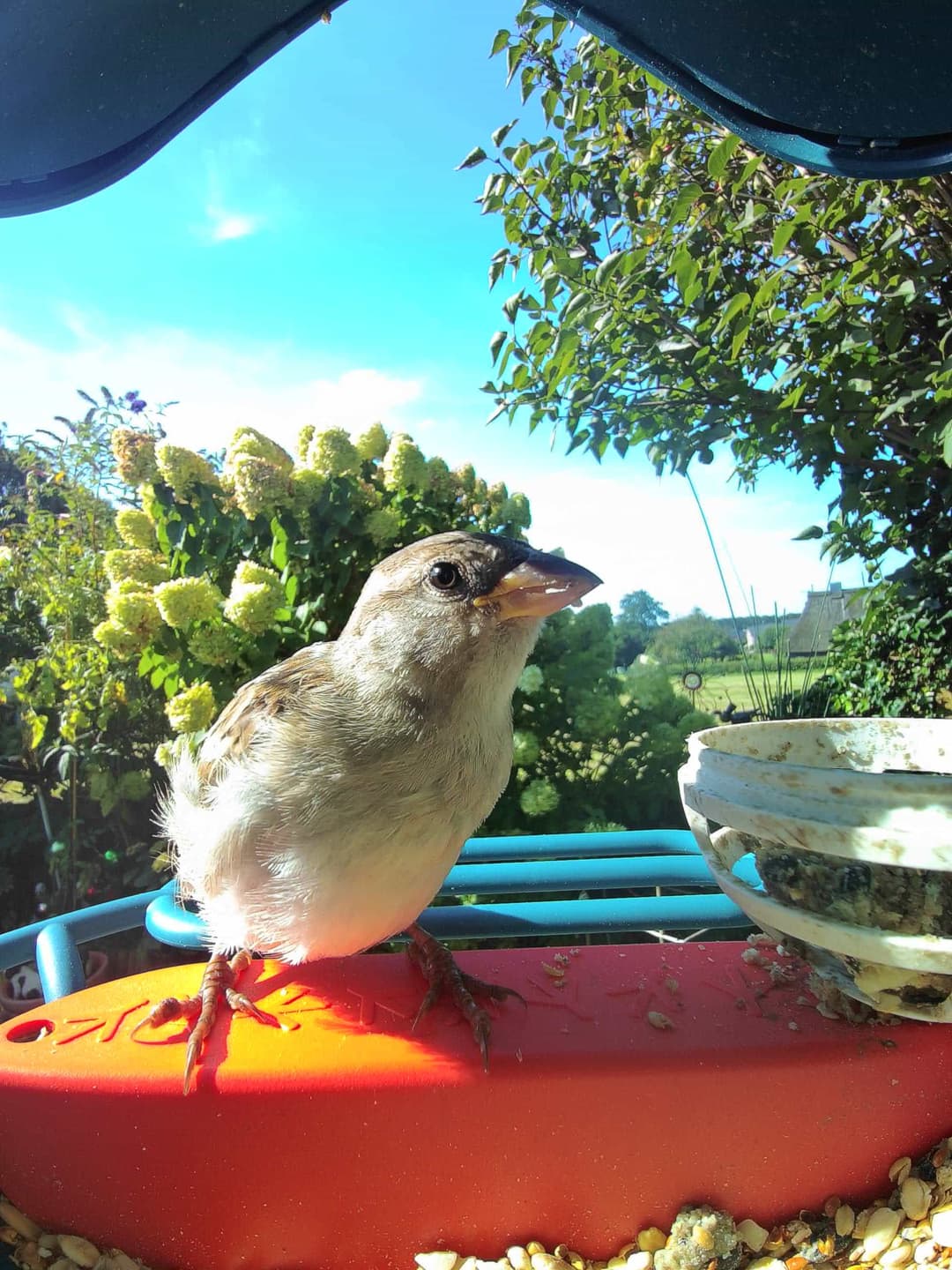
Although both the Common Reed Bunting and the House Sparrow have similar brown plumage, the Reed Bunting is distinguished by its white outer tail feathers and more streaked appearance. Male Reed Buntings often have a distinct black head and throat, which the House Sparrow lacks.
Chipping Sparrow vs Common Reed Bunting
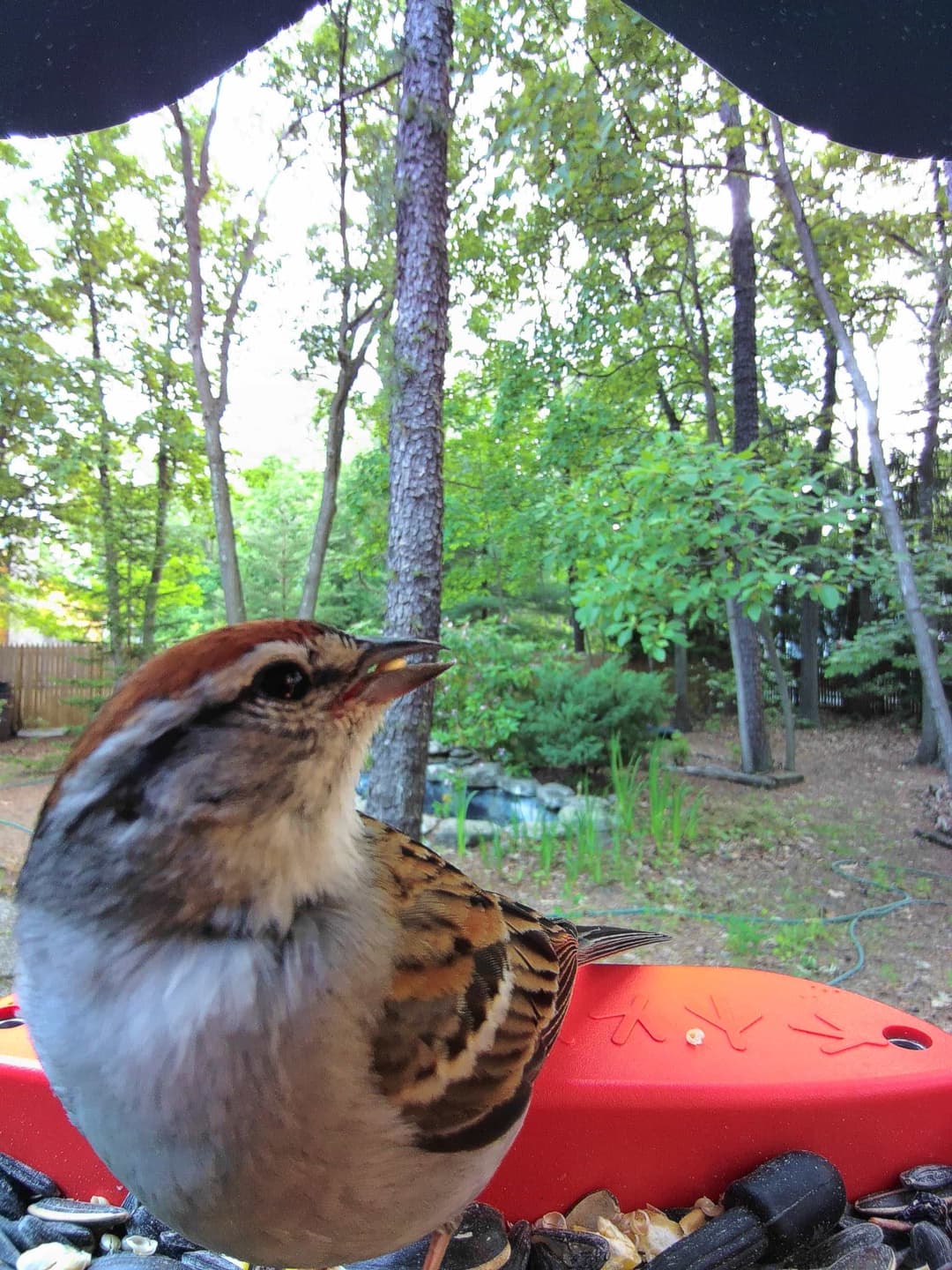
Both birds exhibit brown and streaked patterns. The Chipping Sparrow is smaller and has a rust-colored crown and distinctive black eye line, whereas the Common Reed Bunting has a more pronounced streaking and a black head typical in males.
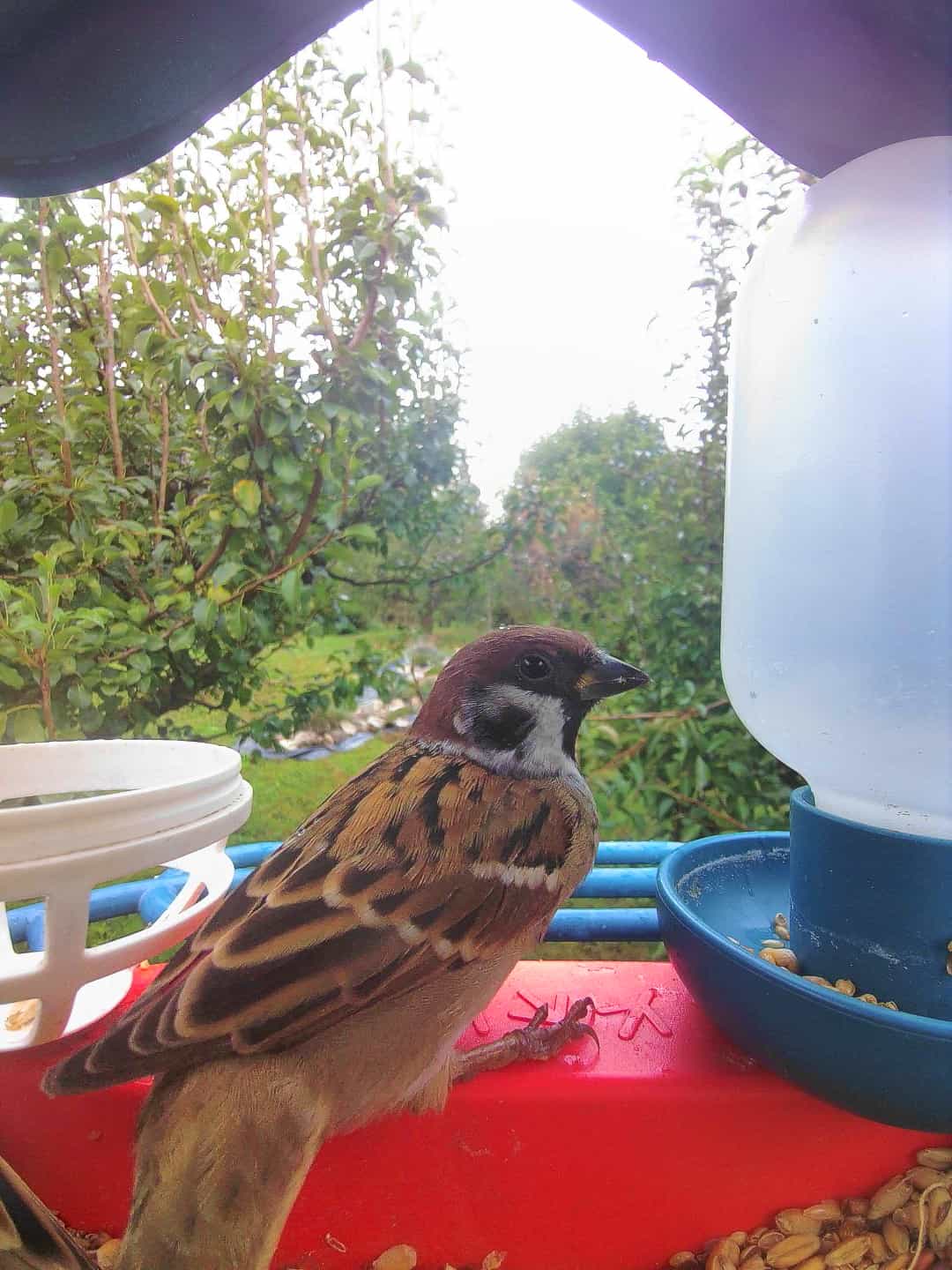
Eurasian Tree Sparrow vs Common Reed Bunting
While both share a similar habitat, the Eurasian Tree Sparrow can be differentiated by its distinct chestnut crown and black cheek patches, compared to the streaked brown appearance and black head of the male Common Reed Bunting.
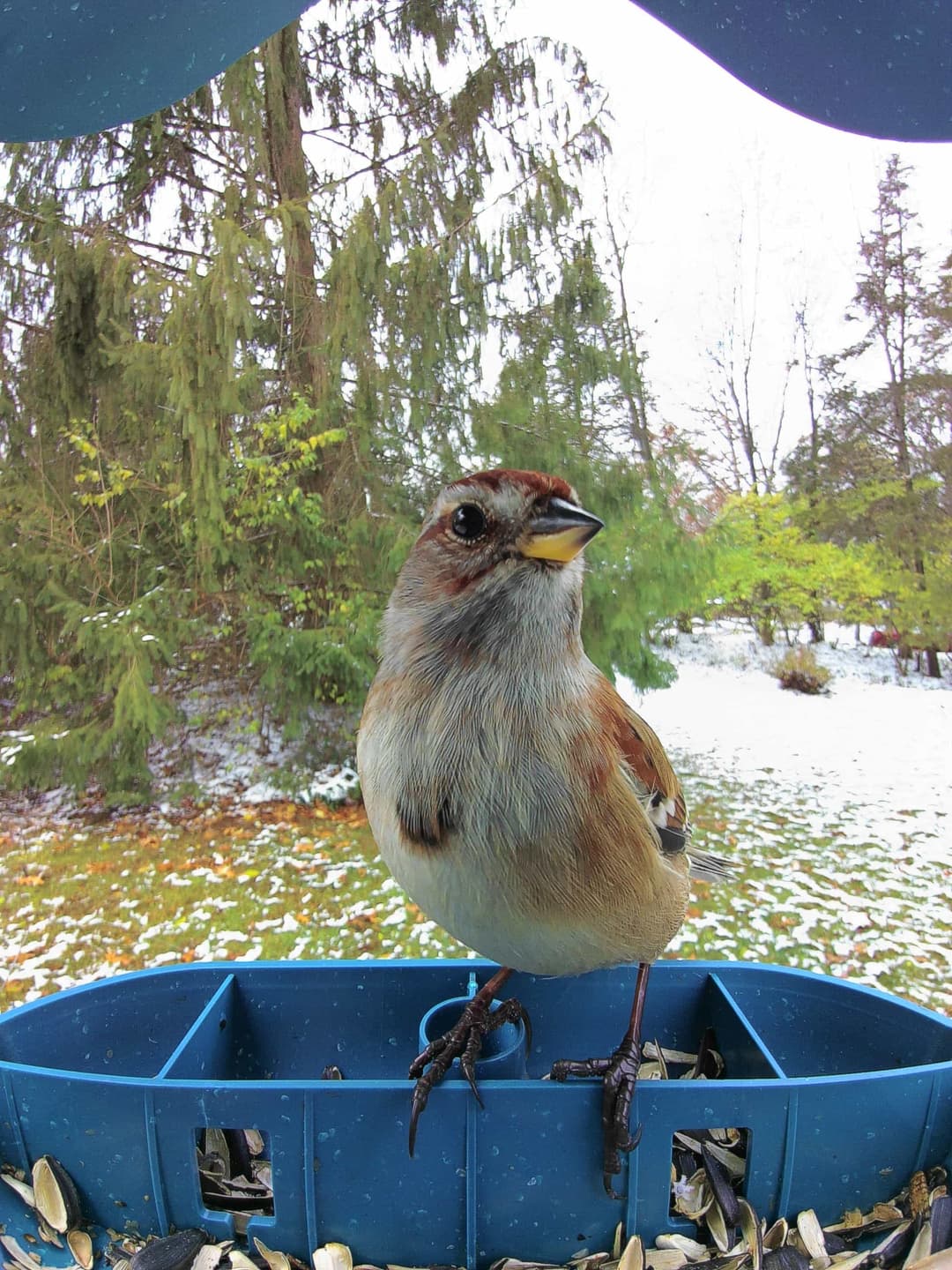
American Tree Sparrow vs Common Reed Bunting
The American Tree Sparrow and the Common Reed Bunting both have brown and streaked plumage. However, the American Tree Sparrow has a noticeable rusty cap and a distinctive black spot on its breast that the Reed Bunting does not have.
Breeding and nesting habits of the common reed bunting
Mating behaviors
Common reed buntings engage in a courtship involving song displays. Males sing from exposed perches to attract females and defend their territory. Courtship chases and display flights also occur.
Nesting details
Reed buntings typically nest in dense vegetation like reeds, tall grasses, or bushes near wetlands. Nests are cup-shaped and constructed from loose grass, reeds, and lined with finer materials. In gardens, provide dense shrubbery or tall grasses to support nesting.
Eggs and chick-rearing
Females lay 3-5 eggs, which are incubated for about 12-14 days. Both parents feed the chicks, which fledge approximately 10-13 days after hatching. Diets of insects and seeds support chick growth.
What does a common reed bunting like to eat?
Insects
Seeds
Spiders
Natural diet
The common reed bunting primarily feeds on seeds and invertebrates. During the breeding season, it consumes insects, spiders, and other small invertebrates, which provide essential proteins for reproduction. Outside the breeding season, it shifts focus to seeds, particularly those of grasses, reeds, and other wetland plants. This shift coincides with the scarcity of insects and helps sustain the bird through colder months.
Bird feeders
At bird feeders, the common reed bunting is known to eat seeds such as sunflower seeds and millet. It may occasionally consume suet when available. These foods are readily accepted as they mimic some of the seeds it naturally consumes in the wild. Providing a mix of seeds at feeders can help attract reed buntings to gardens, particularly in winter when natural food sources are diminished.
Attracting a reed bunting
Reed Buntings are a delight to see in our gardens. They are drawn to open water sources. Adding a birdbath or an elegant water feature can drastically increase the chances of them visiting your yard. Having a variety of native plants and shrubs in your garden can also provide them with the shelter they desire.
Feeding them right
Reed Buntings are real foodies. They love munching on seeds and for this purpose, nothing can beat the Bird Buddy seeds. These seeds are chosen by experts keeping all seasonal requirements in mind. These seeds ensure the reed buntings keep coming back for more.
Choose the right feeder
Reed Buntings are comfortable feeding on the ground, but they are also accustomed to hanging feeders. Opt for sturdy feeders as they prefer to hop in, pick a seed and hop out. This way, they have food and safety.
Add some music to your garden
Reed Buntings are known for their gorgeous songs and if you want them to stay for a sing-along, then place soft wind chimes around your garden. This will not only enchant the buntings but also create a peaceful ambience for you and your feathery guests.
Where can you find common reed buntings?
Primary habitat
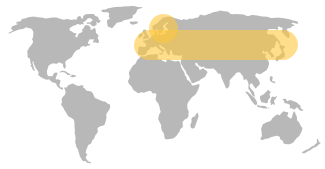
The common reed bunting typically inhabits wetland areas, specifically near reed beds or marshes across Europe and parts of Asia.
Additional range
In winter, they migrate south. They adapt to live in farmland and gardens, and surprisingly, in urban areas.
Do they migrate?
The common reed bunting exhibits both migratory and resident behaviors, depending on their geographic location. Populations in northern Europe, Scandinavia, and parts of Central Asia are migratory, while those in Western and Southern Europe generally remain resident or engage in short-distance movements. Migratory common reed buntings typically embark on their journey in the fall, around September to October, heading toward milder regions in Western Europe, the Mediterranean basin, and occasionally North Africa. These birds often travel southward along routes that traverse through France, the Iberian Peninsula, and Italy. Key wintering locations include the wetlands and marshy areas in southern Europe, such as the Camargue in France, the Ebro Delta in Spain, and the Po Delta in Italy. The return migration to the breeding grounds takes place between March and April. The timing can vary based on local weather conditions and food availability. During migration, reed buntings rely on stopover sites that provide ample food and shelter, including reed beds and riparian zones that mirror their breeding and wintering habitat preferences. With these movements, the common reed bunting adapts to seasonal changes, ensuring access to resources across its range.
What is the role of common reed buntings in nature and how to protect them?
Conservation status
The common reed bunting is currently listed as a species of Least Concern, indicating that it is relatively common and not immediately at risk. However, habitat loss due to agricultural expansion and wetland drainage poses significant threats. Conservation efforts focus on preserving wetland habitats and implementing agri-environment schemes to maintain and restore suitable environments. In some regions, changes in agricultural practices and climate change may also impact their populations. Protecting these habitats is crucial for sustaining populations and preventing future decline.
Ecological role of common reed buntings
Its role in the ecosystem
The common reed bunting, scientifically known as Emberiza schoeniclus, has significant roles in its ecosystem. One of the primary ecological roles is pest control. As a predominantly insectivorous bird, the common reed bunting helps in reducing pest populations by feeding on them. These birds largely prey on insects, spiders, and other invertebrates, thus playing an important role in keeping the balance of such species within their habitat. Further, like other buntings, they also aid in seed dispersal, often feeding on seeds and grains especially during winters and inadvertently leading to their dispersal. Moreover, their nests, constructed among reeds or on the ground, can offer natural material recycling as they decompose, and may provide a source of food or habitat for other species. They also contribute to the birdwatching tourism industry with their appealing black, white, and brown plumage. Overall, the common reed bunting plays several interconnected roles within its ecosystem, embodying both predator and prey roles, contributing to plant propagation, and providing aesthetic values.
How to help protect common reed buntings
Preservation tips
Habitat preservation strategies
Support the conservation of the common reed bunting by promoting habitat preservation. This includes fighting against deforestation, wetland draining and other activities leading to habitat destruction. Encourage reforestation and wetland restoration to provide natural habitats for these birds. Through government lobbying or participation in environmental NGO's, individuals can leverage regulations to protect such areas.
Community science initiatives
Get involved in community science initiatives focused on common reed bunting. This may include birdwatching groups which monitor reed bunting populations and movements. Data gathered can be useful for scientific research and conservation measures. Public education programs are also key to raising awareness about the reed bunting and its conservation needs. Encouraging local populations to take part in these initiatives by schools’ engagement in birdwatching activities can serve as a tool raising the next generation of conservationists.