American Tree Sparrow or Field Sparrow?
Here's how to tell the difference
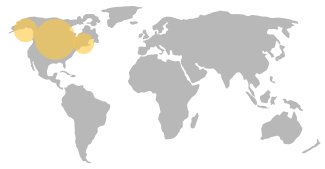

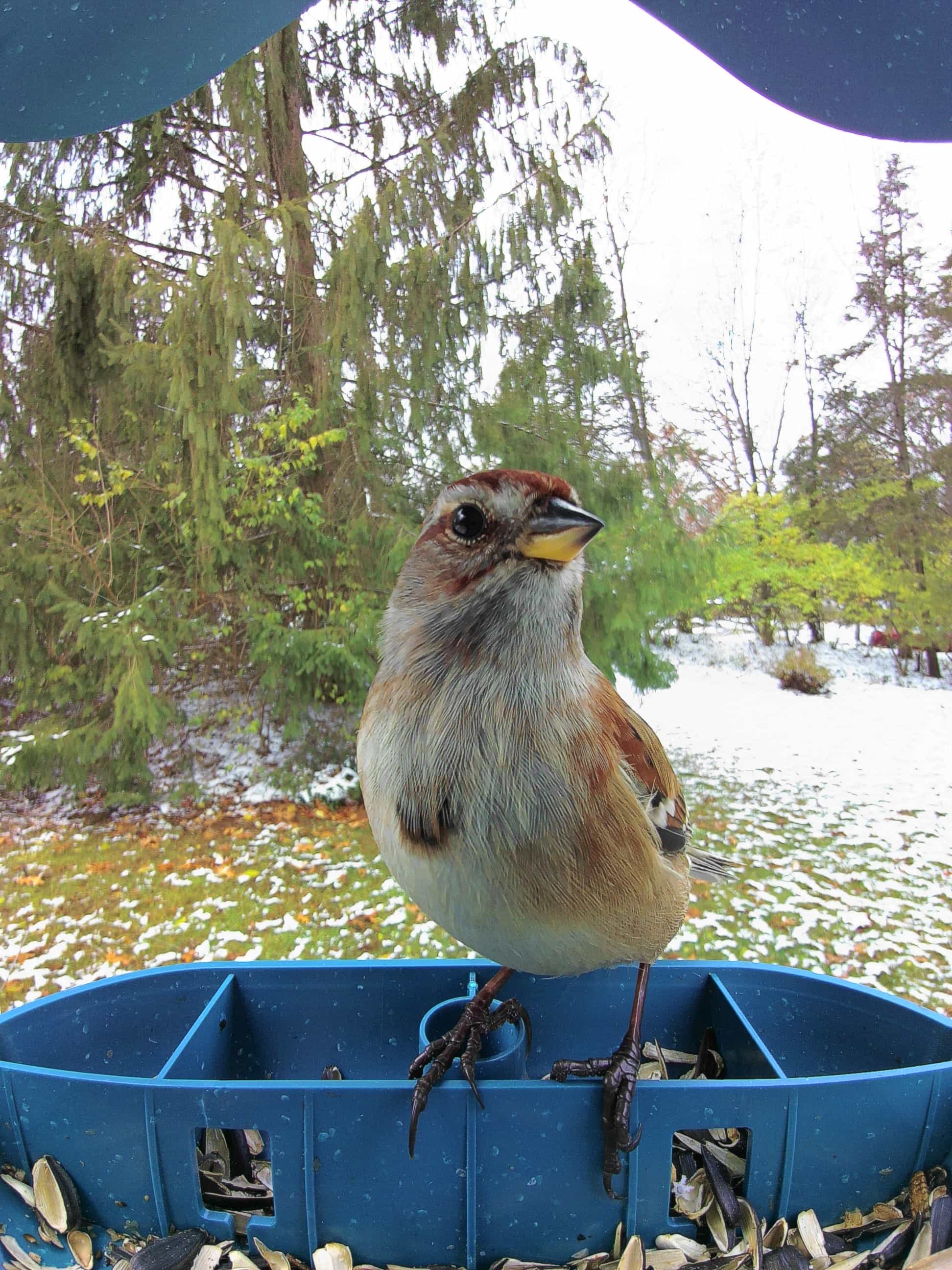


American Tree Sparrow
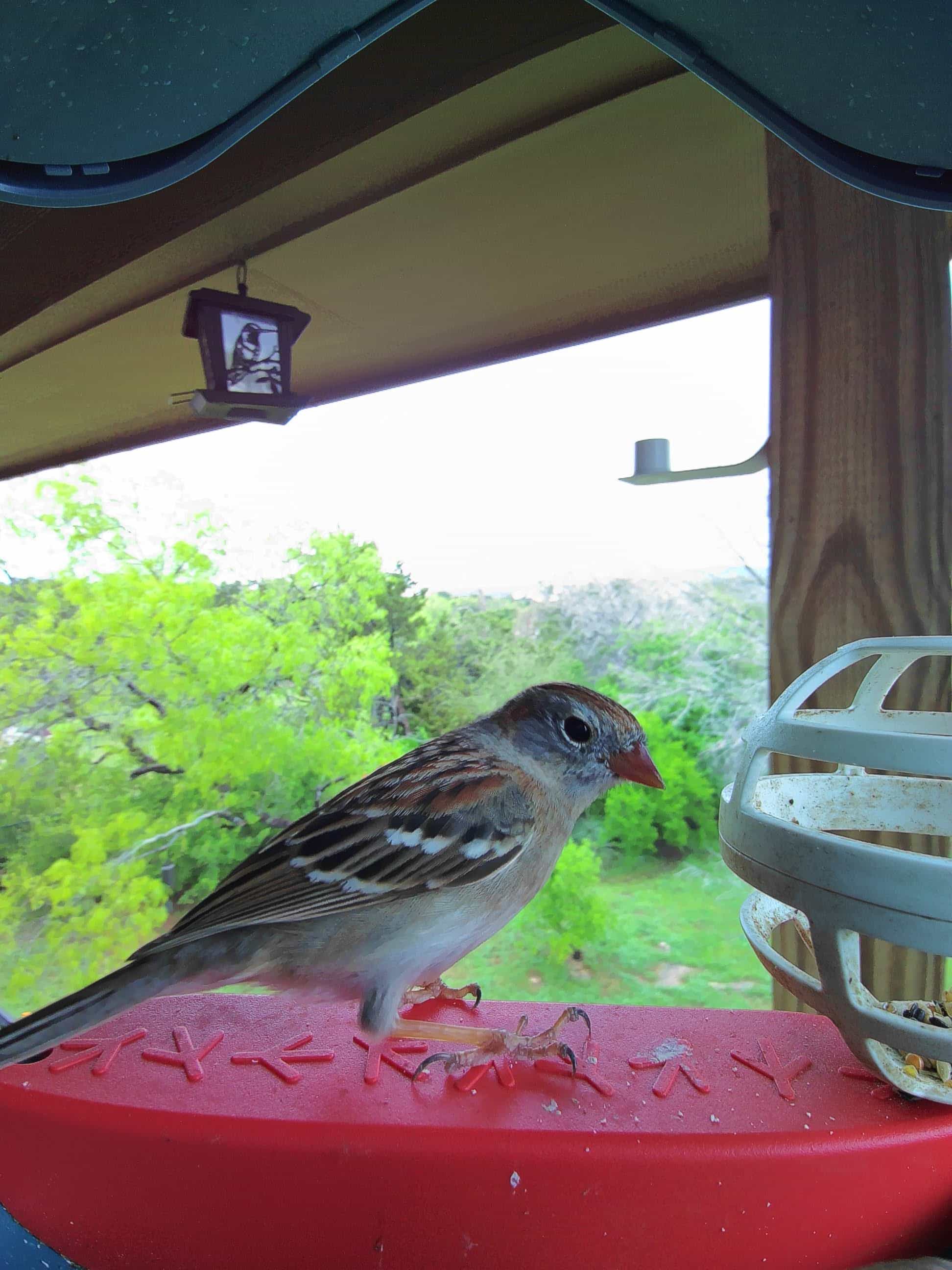


Field Sparrow
American Tree Sparrow
Spizelloides arborea
Also known as: Winter Sparrow
General appearance
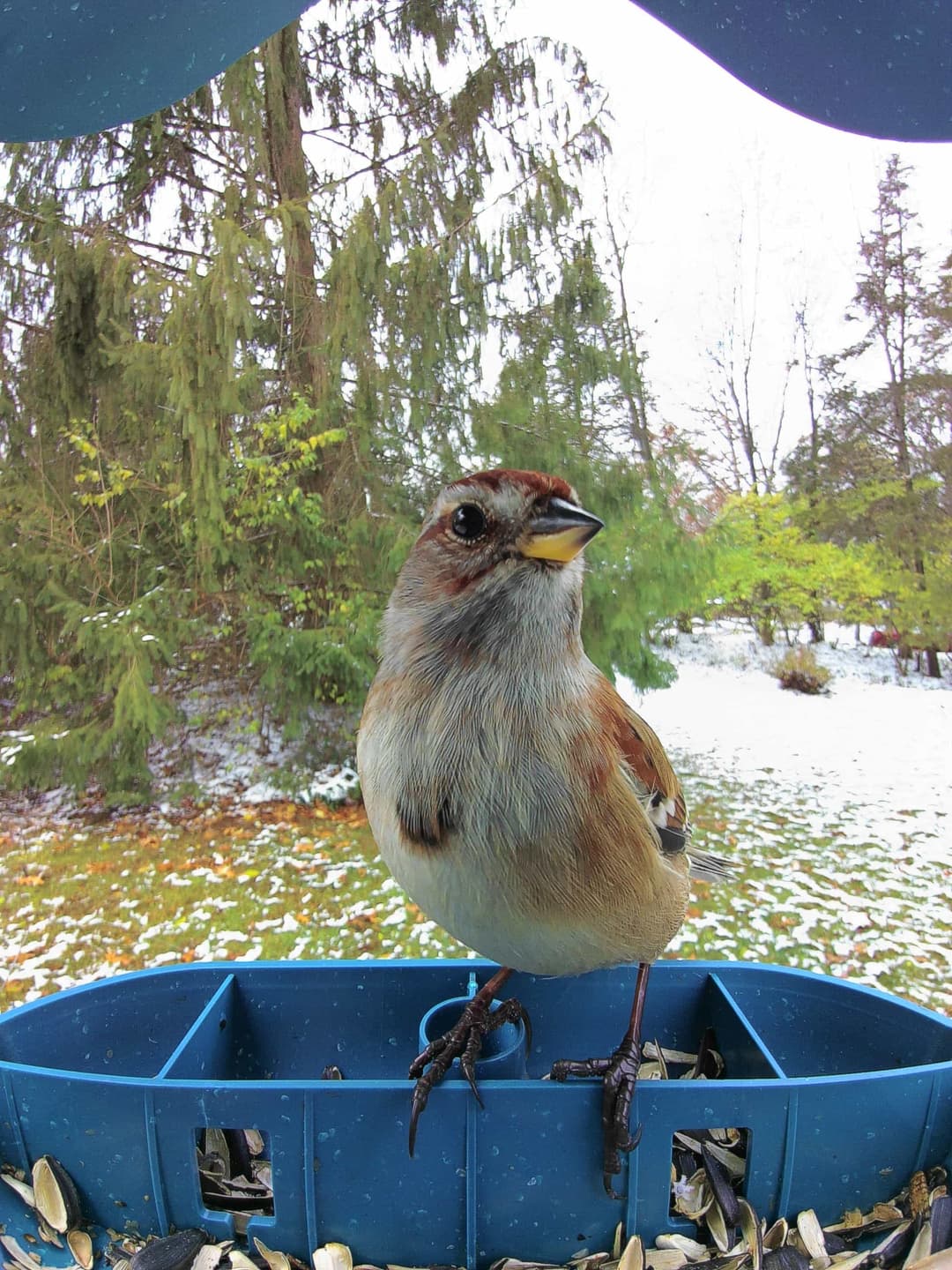
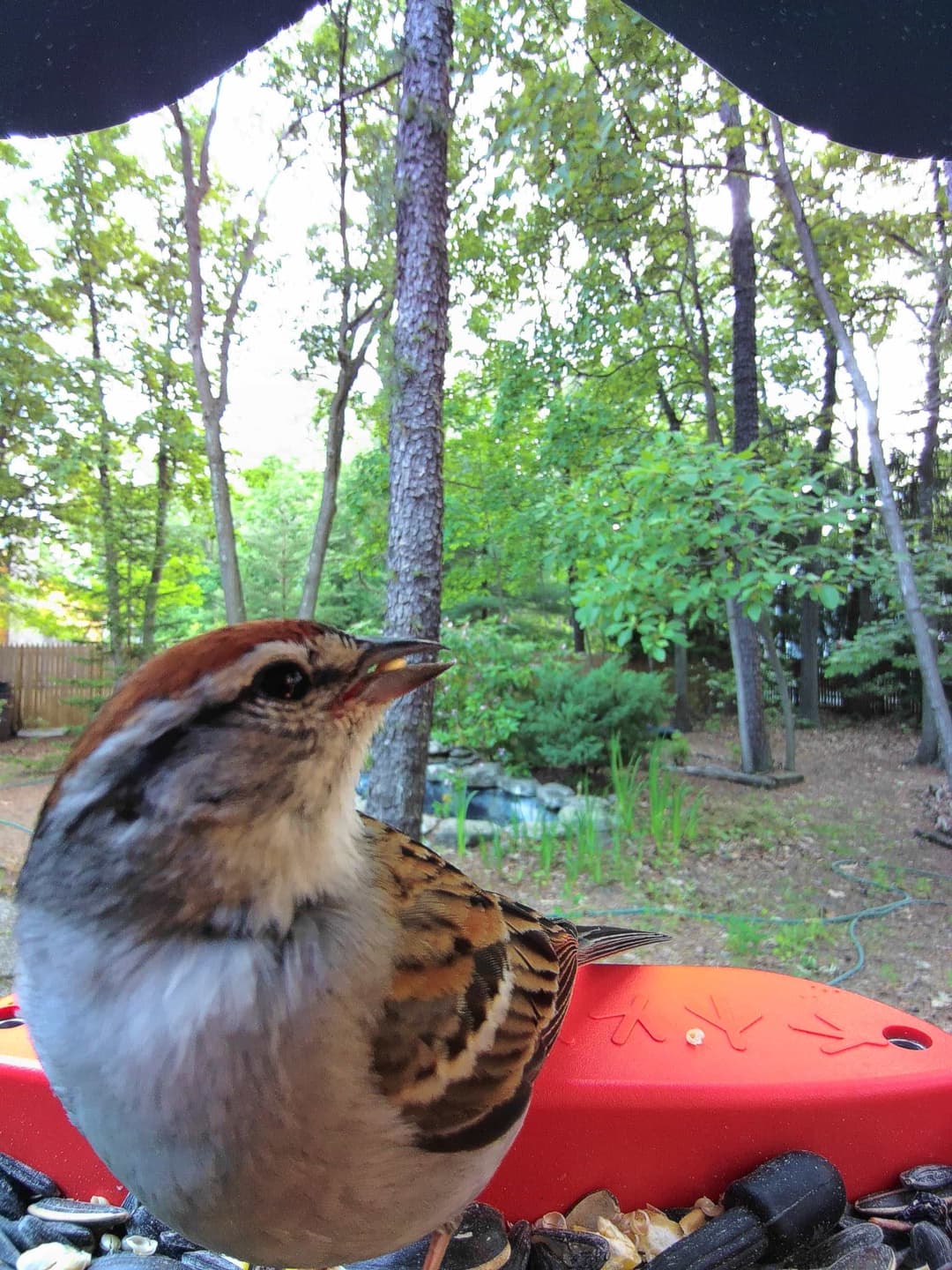
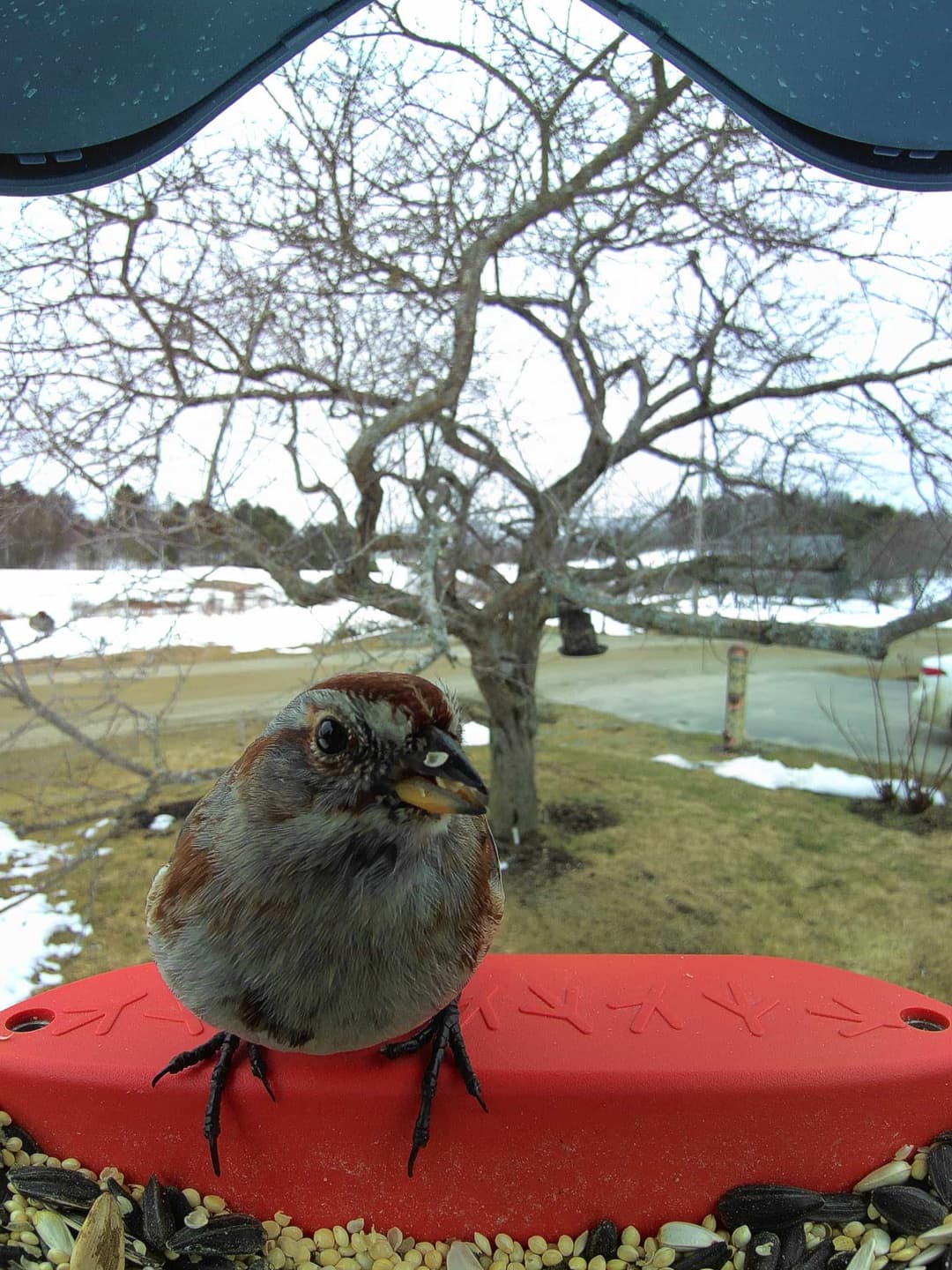
The American tree sparrow is a small, slender bird with a distinct rusty cap and gray face. A notable brown streak extends through the eye, and the bird has a bicolored bill with a dark upper mandible and yellow lower mandible. Its back and wings are brown with dark streaks, while the underparts are pale gray with a central dark spot on the breast. The tail is long and notched with two white wing bars that stand out.
Male vs female
There is minimal sexual dimorphism in American tree sparrows, meaning males and females look alike. Both genders share the same coloration and markings, making them difficult to distinguish based solely on appearance.
Juvenile
Juvenile American tree sparrows resemble adults but with slightly duller and less distinct markings. Young birds may have a more muted crown and face pattern. As they mature, their plumage becomes more defined, resembling the adults in coloration and characteristics.
Size
5.5 - 6.5 in/0.5 - 1.0 oz
There's more to learn about American Tree Sparrow
View full detailsField Sparrow
Spizella pusilla
General appearance
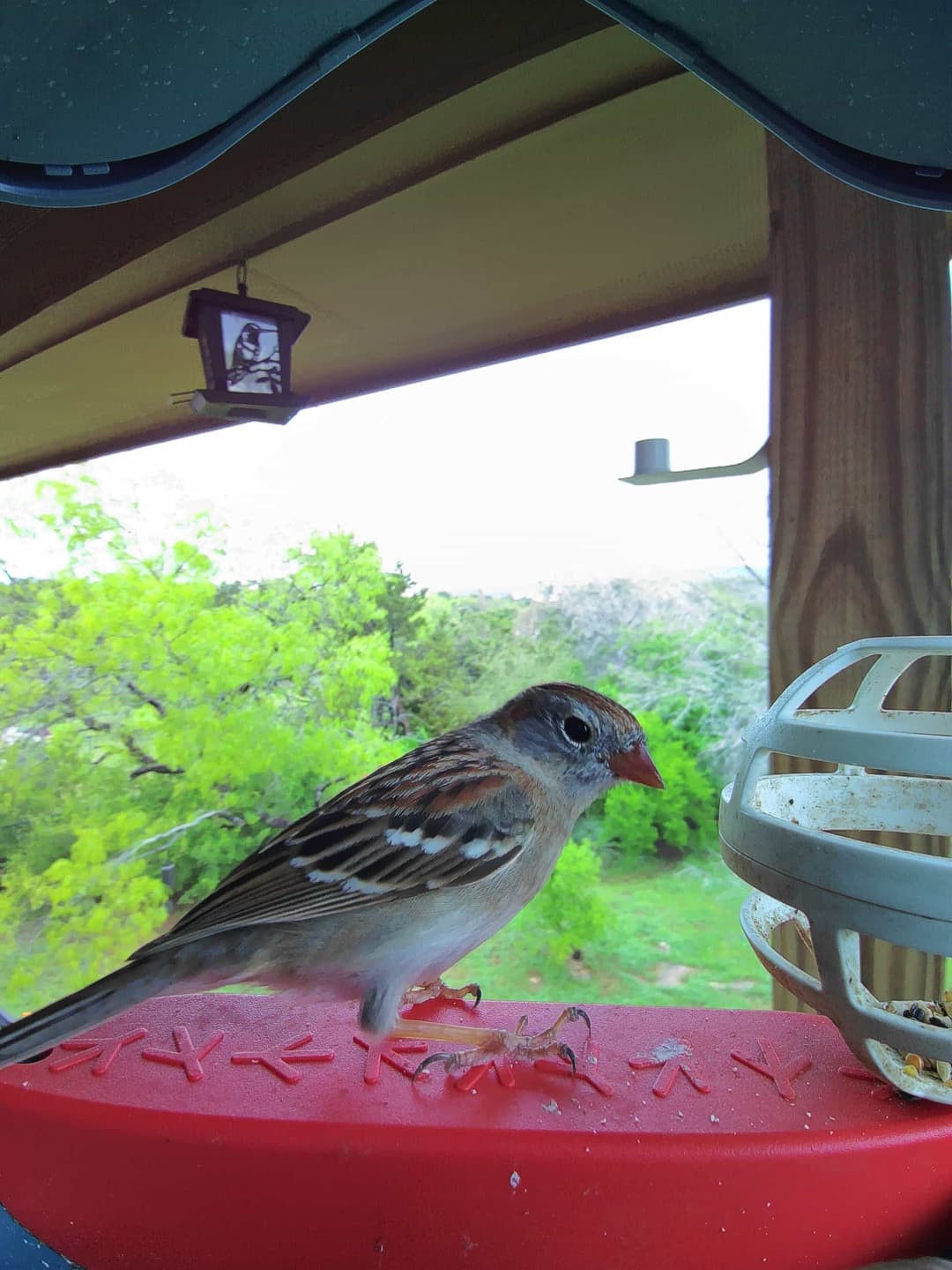
The field sparrow measures approximately 5 1/4 inches or 13 cm. It has a rusty cap and a pink bill. The bird sports a faint whitish eye-ring and a pale rusty eyeline. The plain face gives it an innocent expression. This bird seems long-tailed for its size. Its coloration includes black, brown, gray, pink, red, tan, and white. The sparrow's wings are broad while its tail can be notched, rounded, or square-tipped.
Male vs female
There is no information available distinguishing between the appearances of male and female field sparrows. Often with sparrows, such differences are subtle or nonexistent.
Juvenile
The description provided does not differentiate between the appearances of adult and juvenile field sparrows. For many bird species, juveniles can have muted coloration compared to adults, but more specific information would be needed to accurately describe a juvenile field sparrow. In winter, it can be confused with the chipping sparrow, which may also have a pink bill but exhibits a more prominent dark eyeline.
Size
4.9 - 5.9 in/0.4 - 0.5 oz
There's more to learn about Field Sparrow
View full detailsHow to tell the American Tree Sparrow from the Field Sparrow
Visual differences
The American Tree Sparrow is slightly larger, 5.5-6.5 inches, with a rust cap and gray face, featuring a brown eye streak. It has a bicolored bill, dark upper, yellow lower, and a central breast spot. The Field Sparrow, around 5 inches, has a rusty cap, pink bill, and pale rusty eyeline with a plain face. Both birds have rusty caps, but the Tree Sparrow’s gray face and distinct breast spot differ from the Field Sparrow’s more subdued features. Tail length and wing markings also vary, with the Tree Sparrow’s tail notched and two white wing bars.
Key differences and behavior
The American Tree Sparrow and Field Sparrow, both small North American birds, exhibit distinct behaviors and habitat preferences. American Tree Sparrows often reside in Arctic scrub and tundra, frequenting open fields and suburban areas in winter, while Field Sparrows prefer open country with bushy pastures and hedgerows year-round. Tree Sparrows eat 30% of their body weight daily, focusing on seeds in winter and insects in summer, with a preference for sunflower seeds at feeders. In contrast, Field Sparrows consume seeds and insects, prioritizing seeds in winter and feeding nestlings mostly insects. For nesting, Tree Sparrows build ground nests lined with animal hair, while Field Sparrows construct higher nests with plant material as the season progresses. American Tree Sparrows engage in song and flight displays for courtship, whereas male Field Sparrows continuously sing and engage more directly. Both require dense shrubs for nesting but differ significantly in territorial and mating behaviors.
Still not sure? Here are more lookalikes!
American Tree Sparrow vs Chipping Sparrow
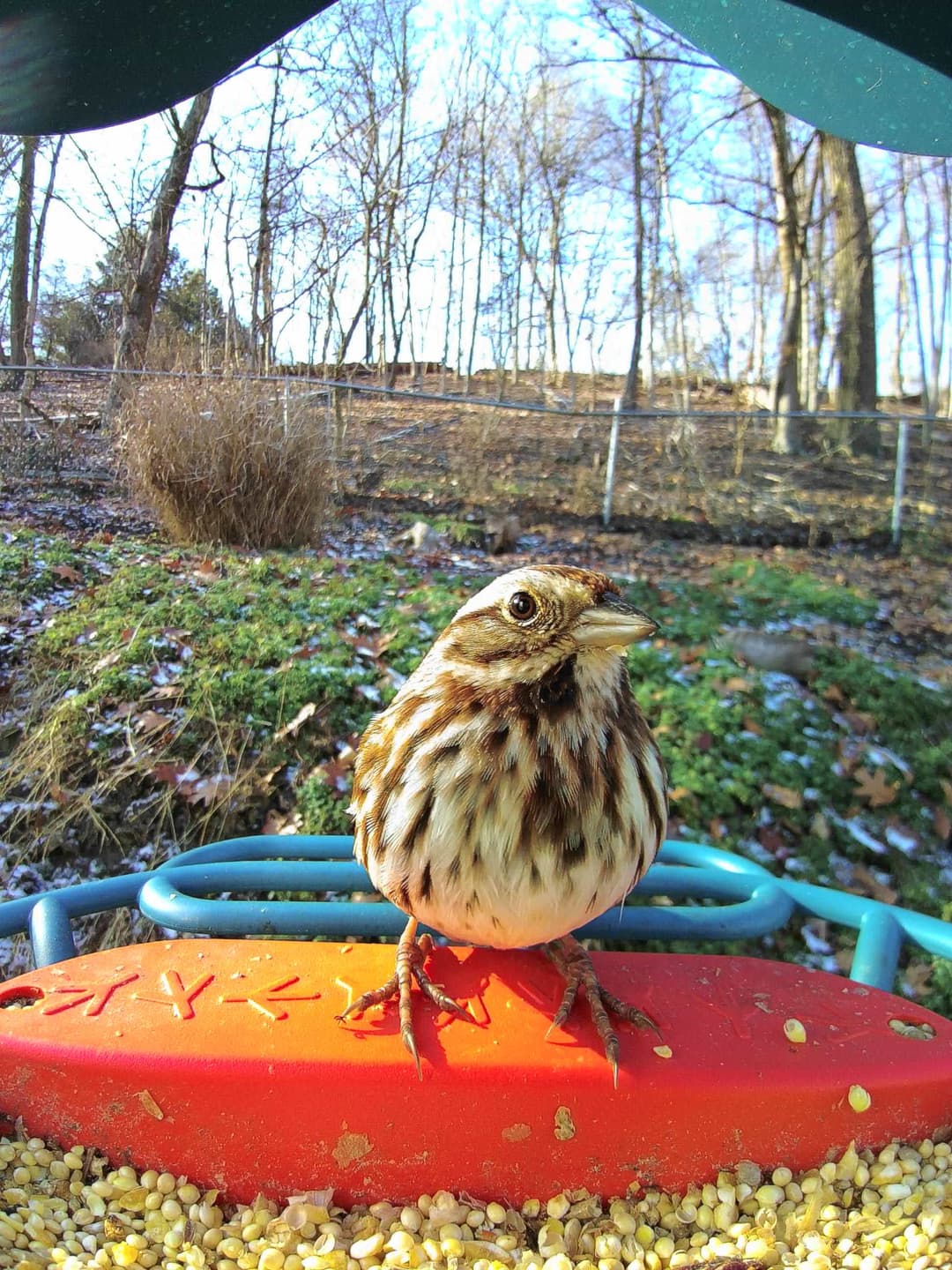
American Tree Sparrow vs Song Sparrow
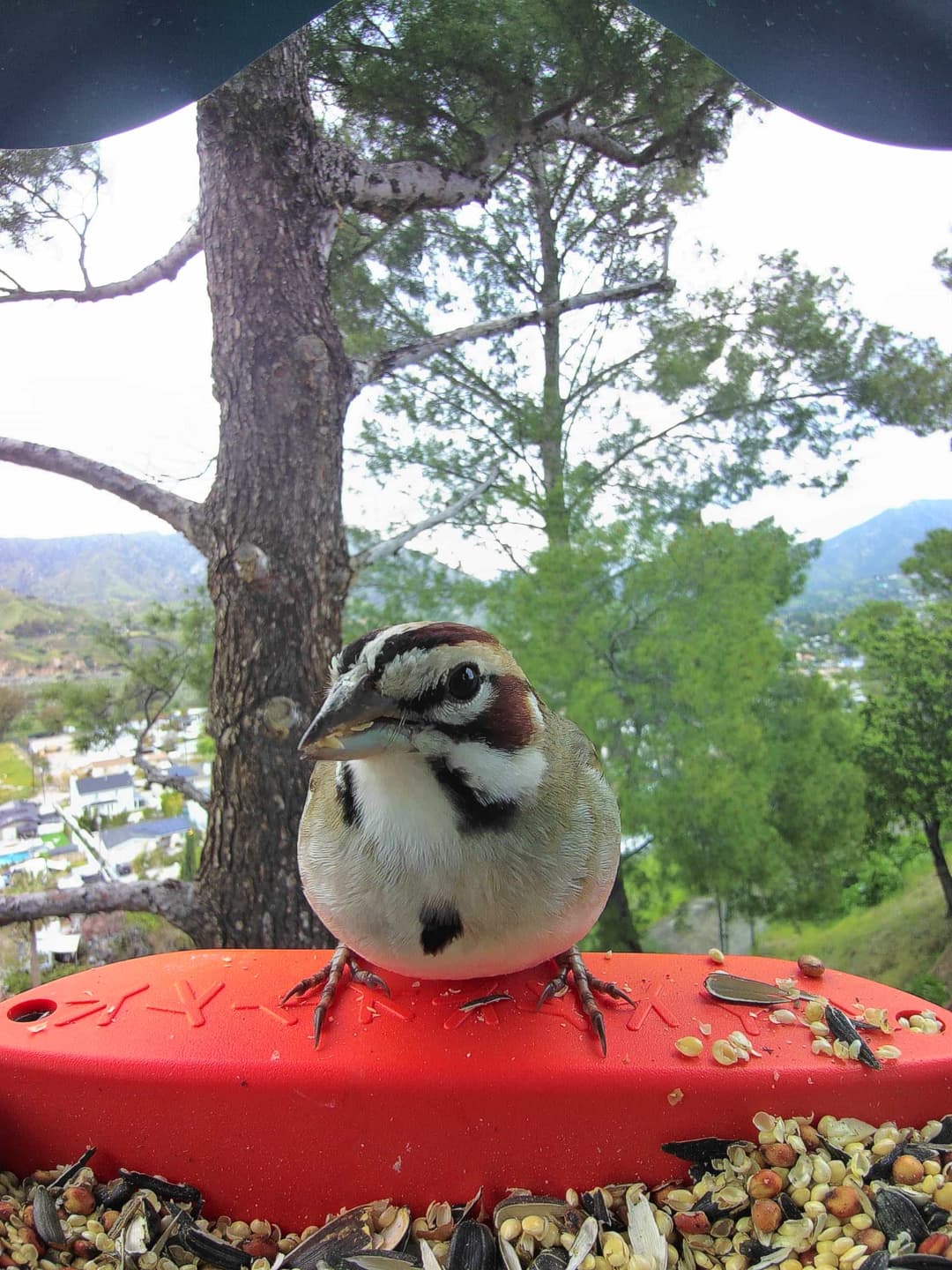
American Tree Sparrow vs Lark Sparrow
Field Sparrow vs Chipping Sparrow
Field Sparrow vs White-Crowned Sparrow

American Tree Sparrow vs [Select a bird]

[Select a bird]
Pick a bird to compare
Field Sparrow vs [Select a bird]
[Select a bird]
Pick a bird to compare