Common Reed Bunting or Chipping Sparrow?
Here's how to tell the difference
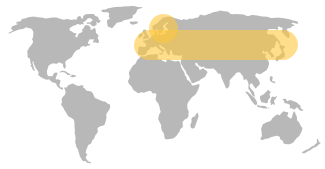


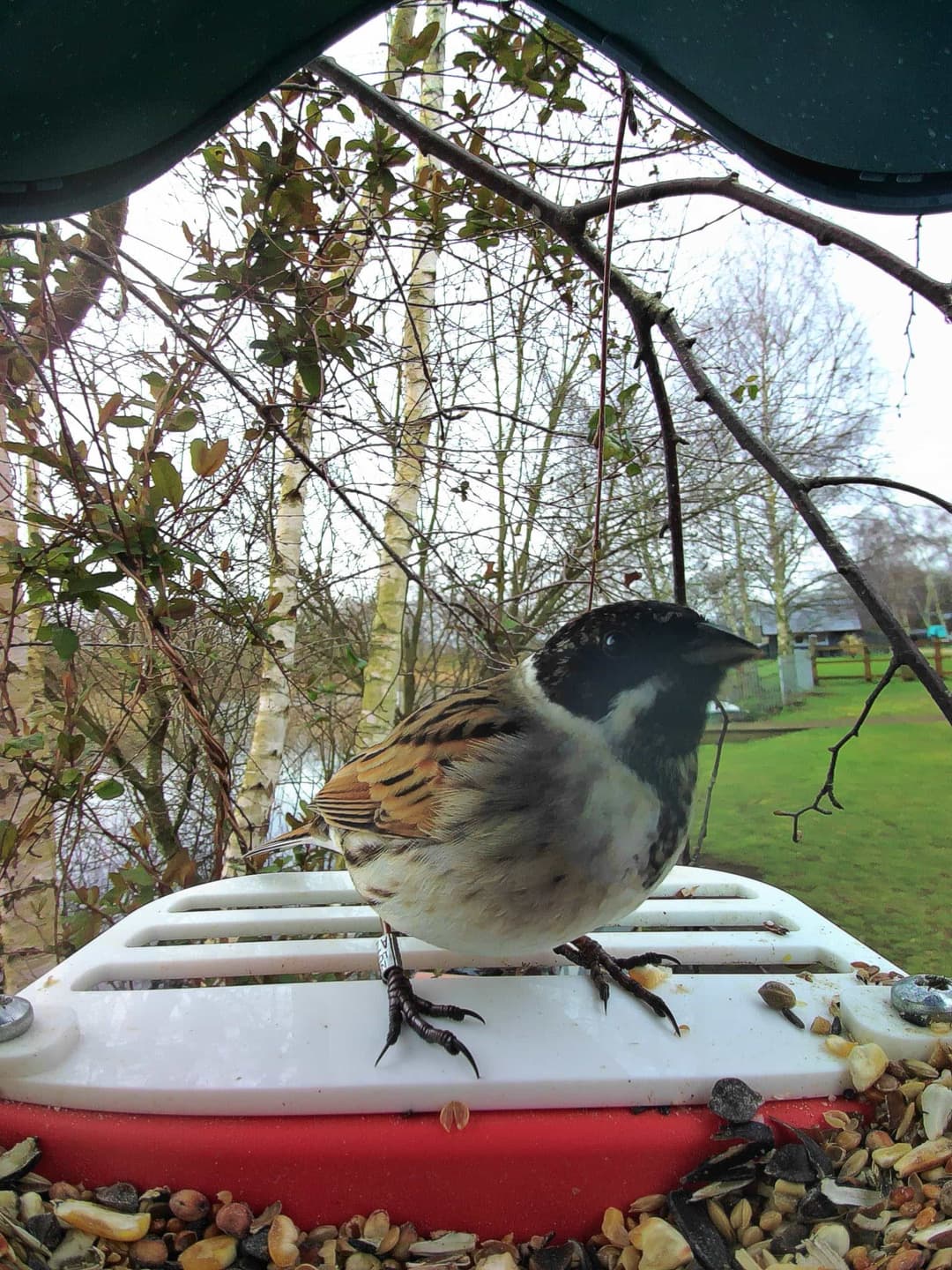
Common Reed Bunting
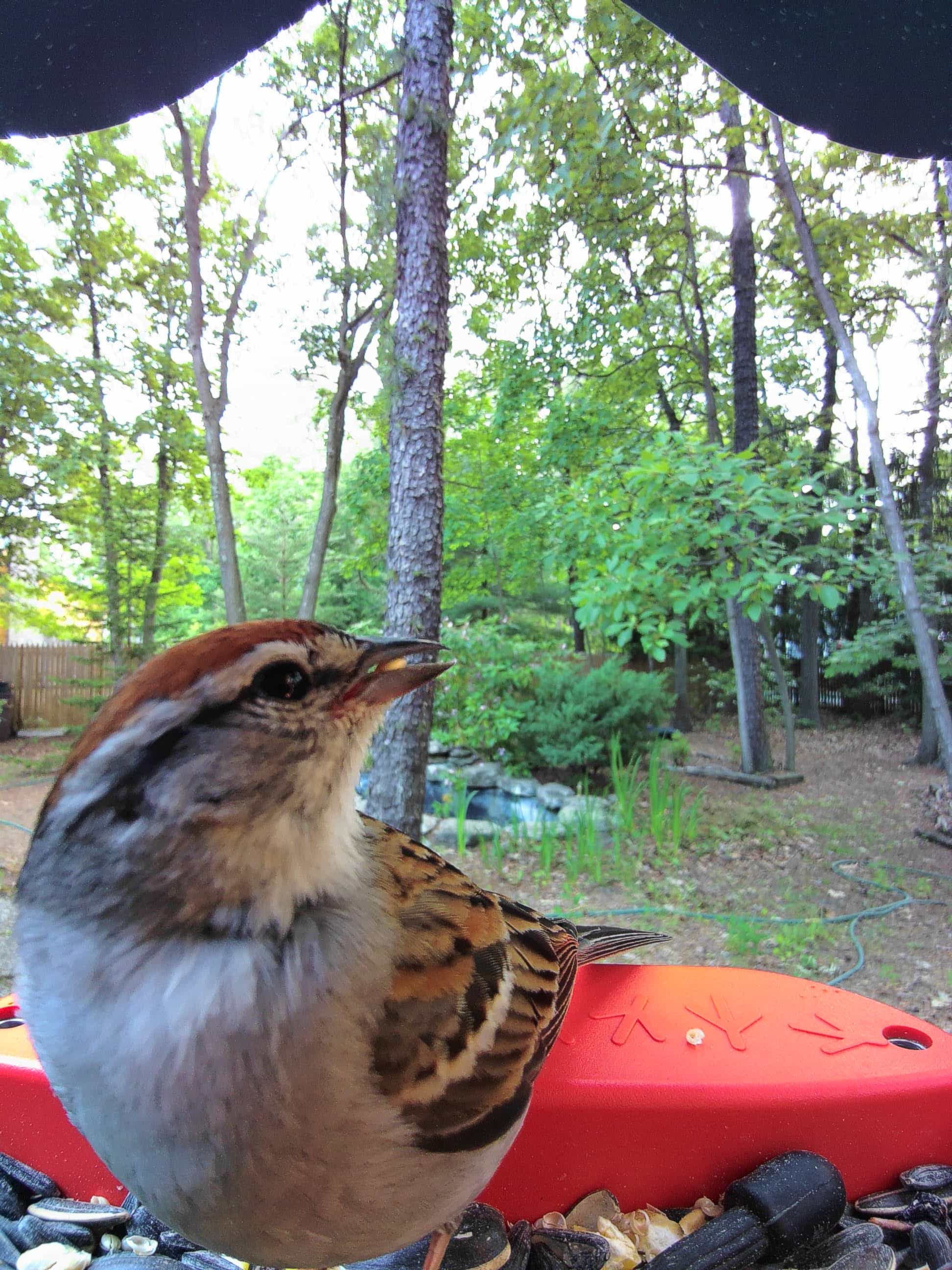


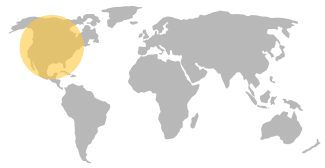
Chipping Sparrow
Common Reed Bunting
Emberiza schoeniclus
General appearance
The Common Reed Bunting is a small bird species. It has a relatively hefty body, compared to a sparrow, with a sturdy beak. The bird is typically around 13.5-15.5 cm long, sporting a wingspan around 21-26 cm. Key colours are black, white, and a variety of browns. The plumage can be somewhat variable.
Male vs female
Male Reed Buntings tend to be more striking in appearance than their female counterparts. They possess a black head with white collar contrasted against a brown back, while females exhibit a more muted, uniform brown colour all over. The males lose their black colouring after the breeding season and resemble the females until the following spring.
Juvenile
Juvenile Reed Buntings look very similar to adult females. They have a mottled brown and cream appearance overall. Over time, they gradually develop into the more distinctive adult colourations as they mature.
Size
5.5 - 6.5 in/0.4 - 1.0 oz
There's more to learn about Common Reed Bunting
View full detailsChipping Sparrow
Spizella passerina
General appearance
The Chipping Sparrow is a small 5-5 1/2 inch bird, equivalent to 13-14 cm. Sporting a blend of black, brown, gray, red, and white colors, it has a distinctive chestnut cap, white eyebrow, and black eyeline. Its wings are broad and the tail shape varies from notched, rounded to square-tipped. The bird's rump is gray, distinguishing it from Clay-Colored and Brewer's Sparrows that have brown rumps.
Male vs female
The Chipping Sparrow doesn't exhibit significant sexual dimorphism, meaning males and females have similar appearance. They both have less contrast in winter with their chestnut color partly obscured.
Juvenile
Young Chipping Sparrows are initially streaky and retain some of these streaks into fall. Dull fall juveniles can suggest Clay-Colored Sparrow and Brewer's Sparrow, but the gray rump identifies them as Chipping Sparrows. As they age, they acquire the characteristic colors and patterns of adult Chipping Sparrows.
Size
4.7 - 5.9 in/0.4 - 0.6 oz
There's more to learn about Chipping Sparrow
View full detailsHow to tell the Common Reed Bunting from the Chipping Sparrow
Visual differences
The Common Reed Bunting (5.5-6.5 inches) is bulkier with a sturdy beak and exhibits black, white, and browns, with males flaunting a black head and white collar. In contrast, the Chipping Sparrow (5-5.5 inches) is smaller, with a distinctive chestnut cap, black eyeline, and gray rump. Both sexes display similar coloration. The Reed Bunting's variable plumage contrasts the Sparrow’s consistent patterns. Additionally, the Chipping Sparrow's wings are broad, and its tail varies in shape compared to the Reed Bunting's more uniform tail contour.
Key differences and behavior
The Common Reed Bunting and Chipping Sparrow exhibit distinct behavioral and habitat preferences. The Reed Bunting thrives in European and Asian wetlands, using dense vegetation for nesting to evade predators, whereas the Chipping Sparrow is more versatile, adapting from North American open woods to urban areas. Reed Buntings demonstrate elaborate courtship with singing and flight displays, while Chipping Sparrows may display polygamous behavior with less dramatic courtship. Both species diet shifts seasonally from insects in the breeding season to seeds in colder months, often frequenting bird feeders. The Reed Bunting uses deception to protect its nest, whereas the Chipping Sparrow builds nests at varied heights and locations, sometimes adapting to human presence. Both birds breed in habitats offering dense vegetation, though as different times of year and environments dictate different strategies and adaptations.
Still not sure? Here are more lookalikes!
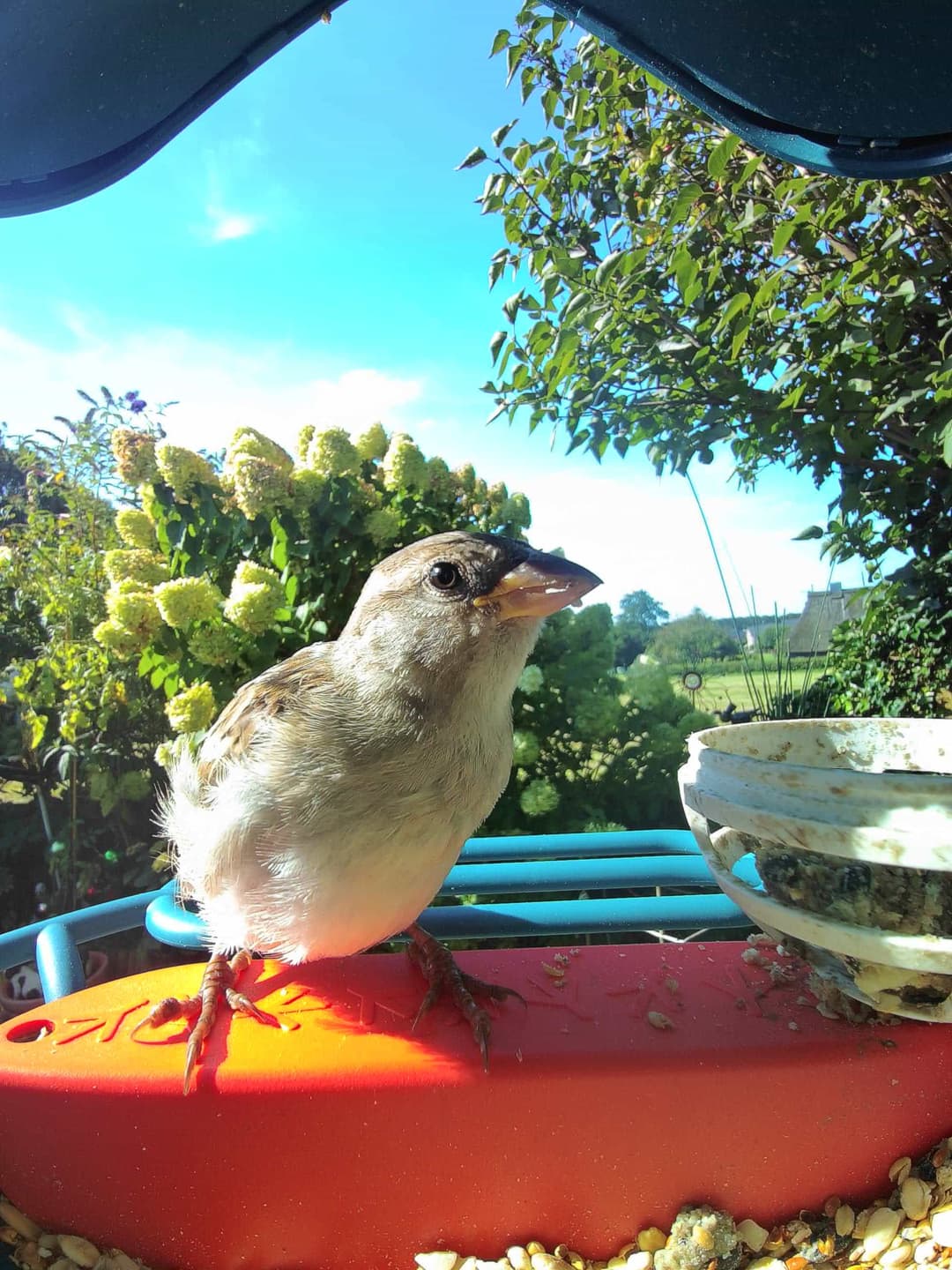
Common Reed Bunting vs House Sparrow
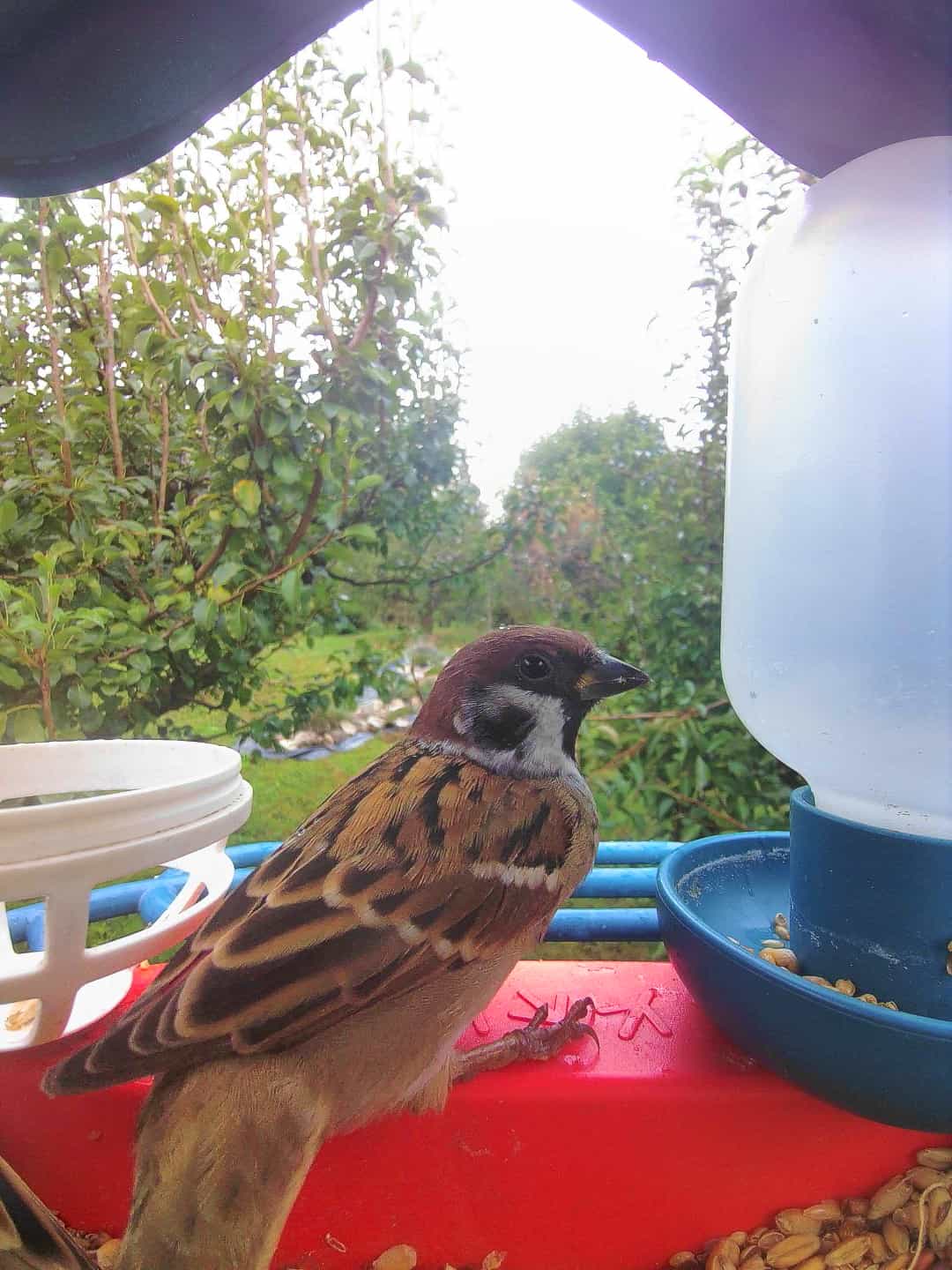
Common Reed Bunting vs Eurasian Tree Sparrow
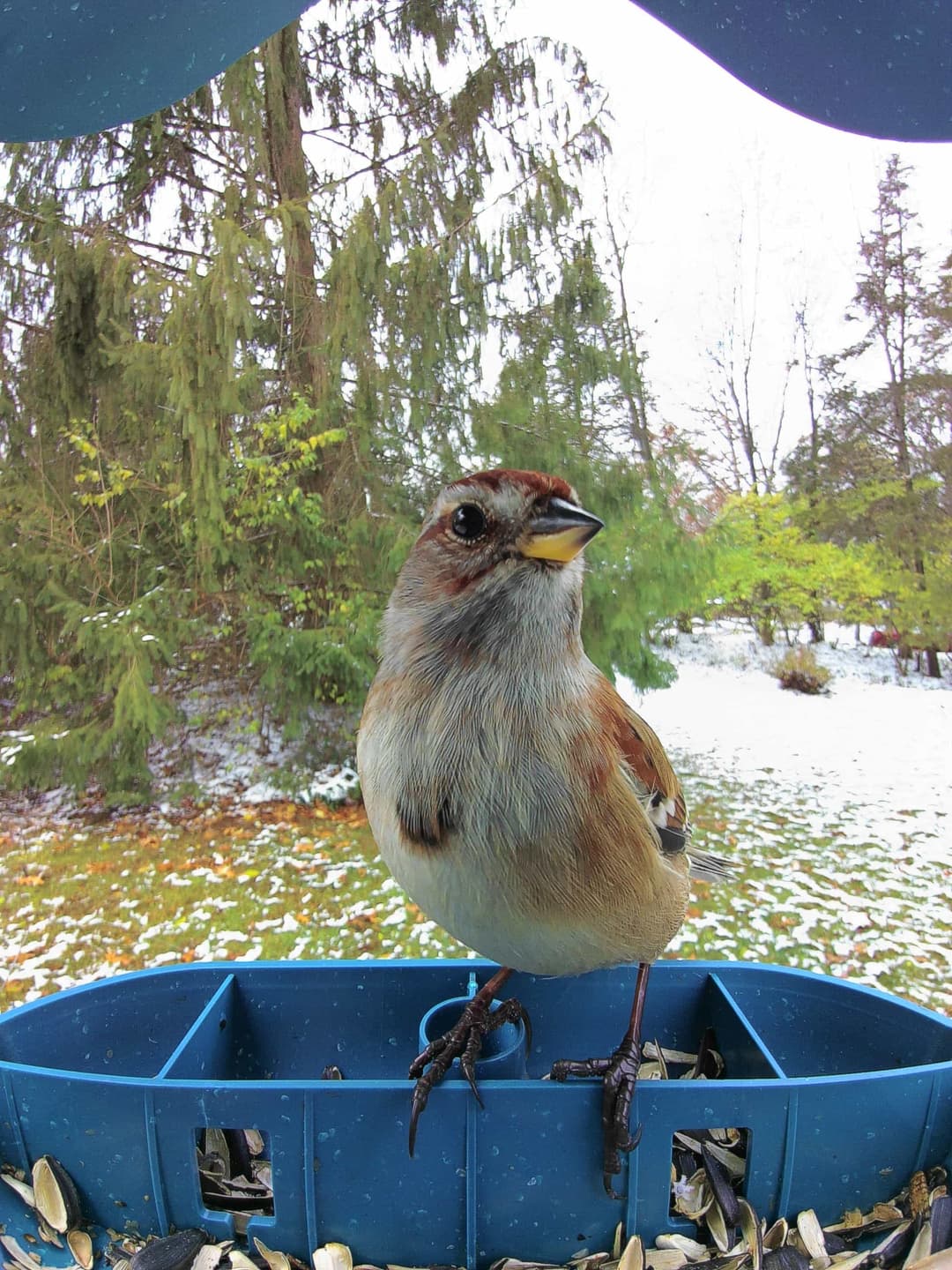
Common Reed Bunting vs American Tree Sparrow
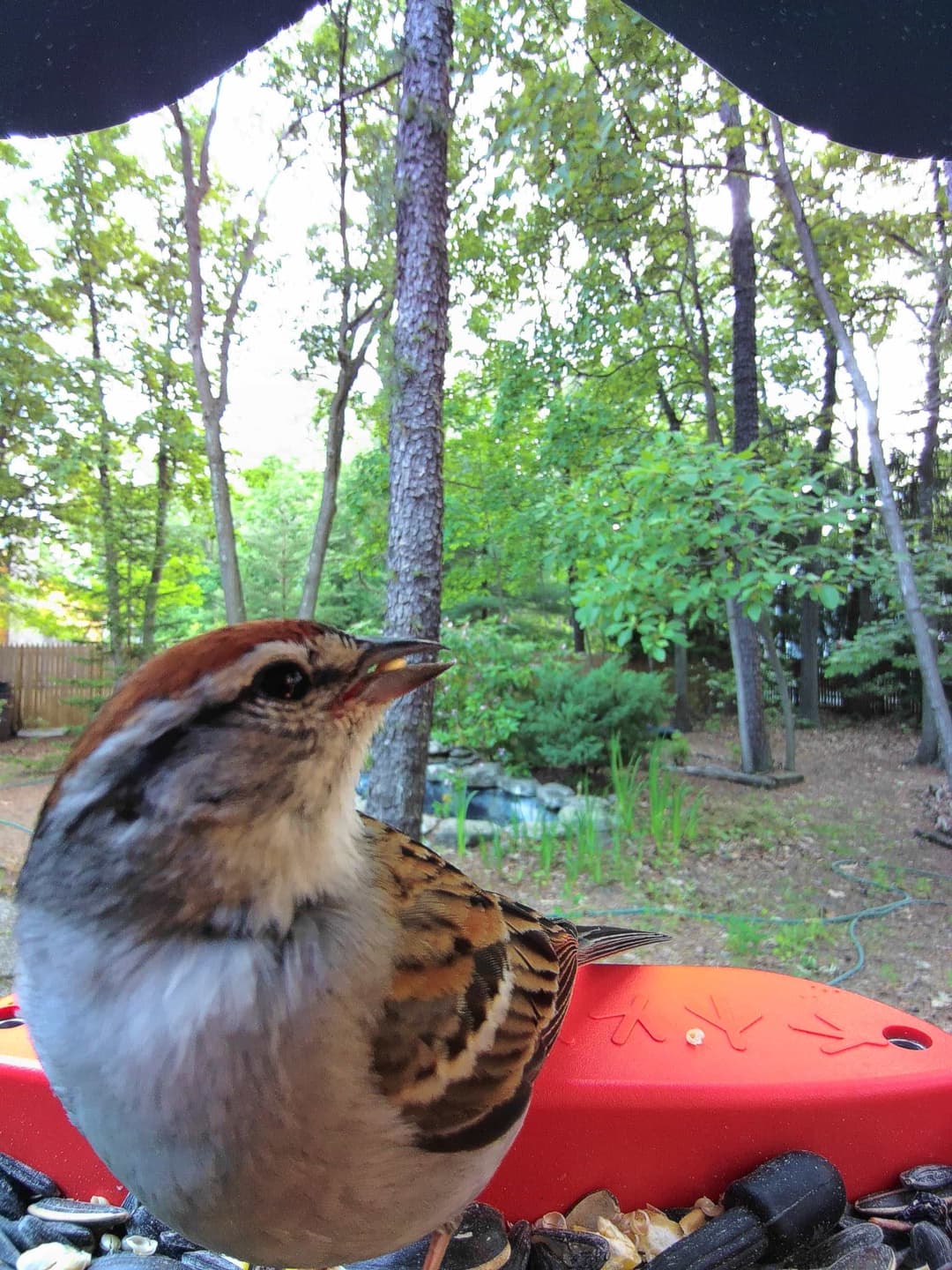
Chipping Sparrow vs American Tree Sparrow
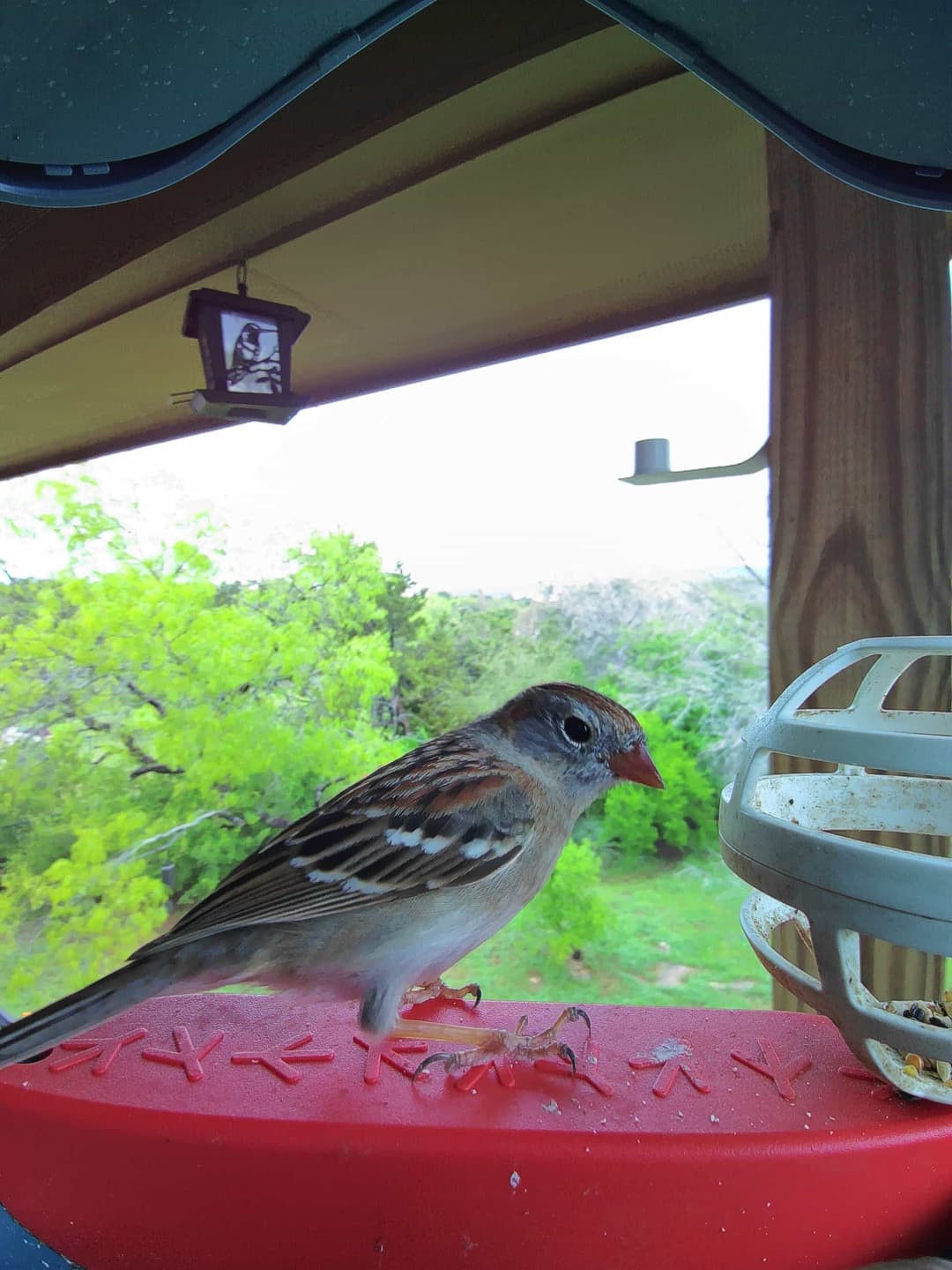
Chipping Sparrow vs Field Sparrow
Common Reed Bunting vs [Select a bird]

[Select a bird]
Pick a bird to compare
Chipping Sparrow vs [Select a bird]
[Select a bird]
Pick a bird to compare