
Lark Sparrow
Lark Sparrow
Chondestes grammacus


Quick Identification guide
Quick Identification guide
- •
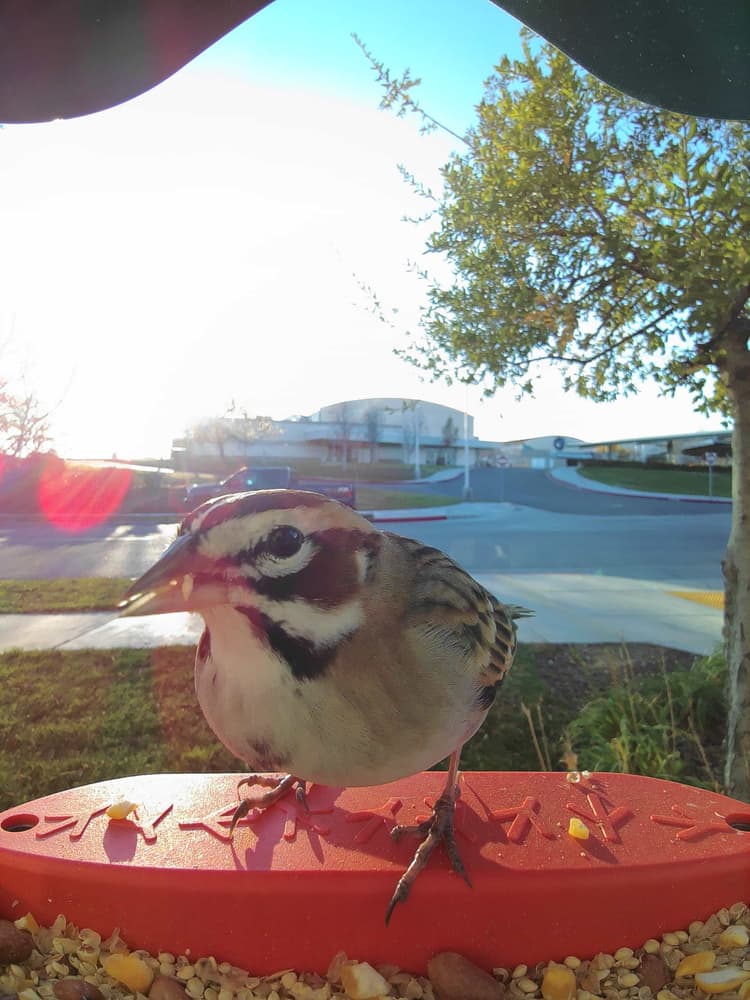
Features prominent chestnut-brown and black facial stripes with a distinct white central stripe running across the head
- •
Displays a white underside contrasted by dark-streaked brown upperparts
- •
Possesses a black-bordered white tail with white corners, making it distinctive in flight
What does a lark sparrow sound like?
The lark sparrow's vocalizations are complex and undulating, characterized by alternating sequences of buzzes and melodious trills. Typical calls include a variety of types, such as buzz, chirp or chip, rattle, trill, and whistle. These birds display an incredible range and variation in their singing patterns, executing intricate sound combinations to communicate.


Description
When courting, lark sparrows dance their pants off in a display that lasts up to five minutes. Well, they don't exactly dance. They do a hopping and crouching display that is unlike anything you've ever seen any other sparrow do! They can be very territorial at this time, but in winter, they form mixed species flocks with vesper sparrows and white-crowned sparrows.
The lark sparrow can weigh between 24to33grams and be from15to17centimeters tall.
The typical lifespan of the Lark Sparrow is about 7 years. Compared to other sparrows, this is slightly above average; for example, the Song Sparrow lives up to 11 years, but the House Sparrow has a typical lifespan of only 3 years. The longest-lived Lark Sparrow on record lasted for 9.6 years.
Did you know?
Most popular questions about lark sparrow
How to recognise a lark sparrow?
General appearance
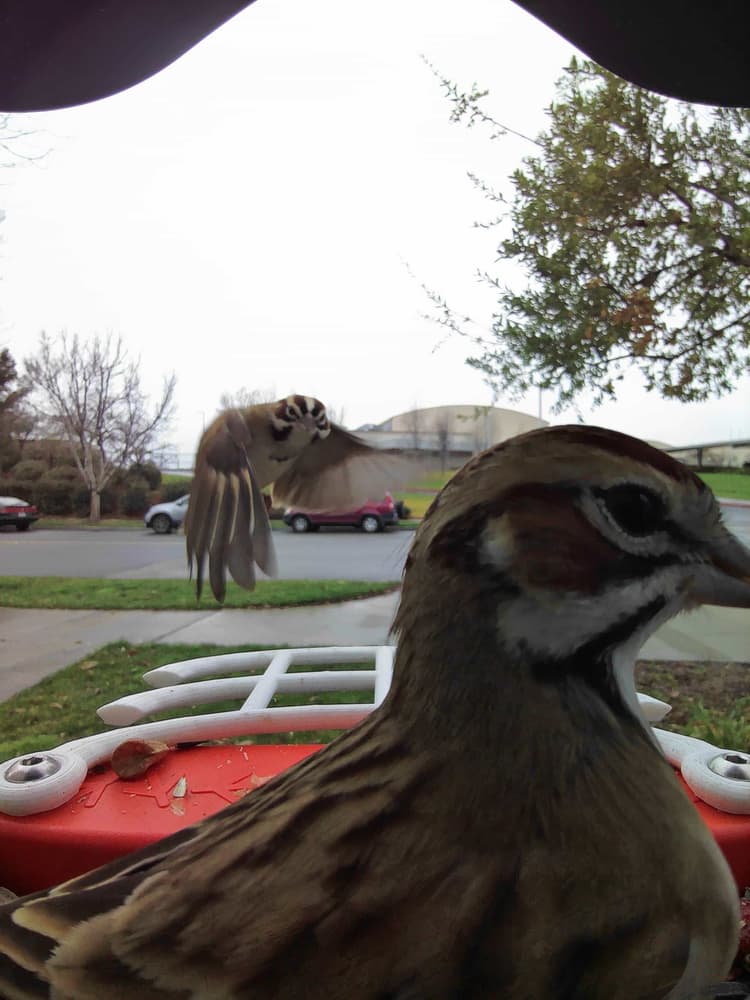
Lark sparrows are medium-sized sparrows with distinctive head patterns, featuring a chestnut crown and cheek patches bordered by white and black stripes. Their back is streaked brown, while the underparts are pale with a central dark spot on the breast.
Male vs female
Males and females are similar in appearance, with both sexes displaying the characteristic head pattern and plumage. Size and coloration differences are minimal, making them difficult to distinguish in the field.
Juvenile
Juvenile lark sparrows resemble adults but have a more subdued head pattern. Their plumage is generally duller, with streaked undersides rather than the adult's distinctive breast spot. Juveniles gradually acquire adult coloration as they mature.
Often mistaken for
Chipping Sparrow vs Lark Sparrow
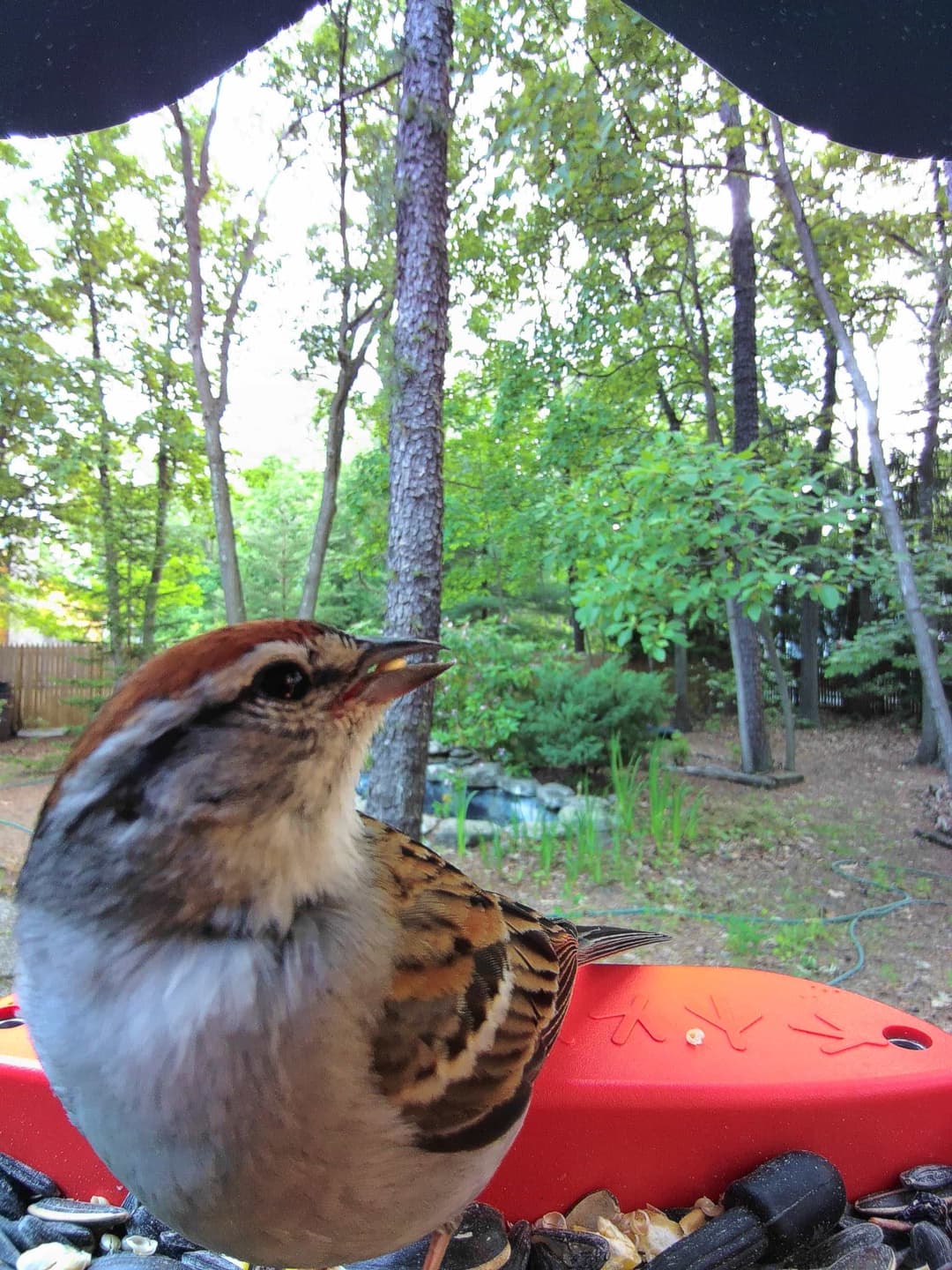
Lark Sparrows have a distinctive bold facial pattern with chestnut-colored ear patches and a white spot below their eye. Chipping Sparrows, on the other hand, exhibit a plainer face with a black eye line and a rust-colored cap. Lark Sparrows are generally larger and possess a longer tail with white corners, unlike the shorter-tailed Chipping Sparrow.
Vesper Sparrow vs Lark Sparrow
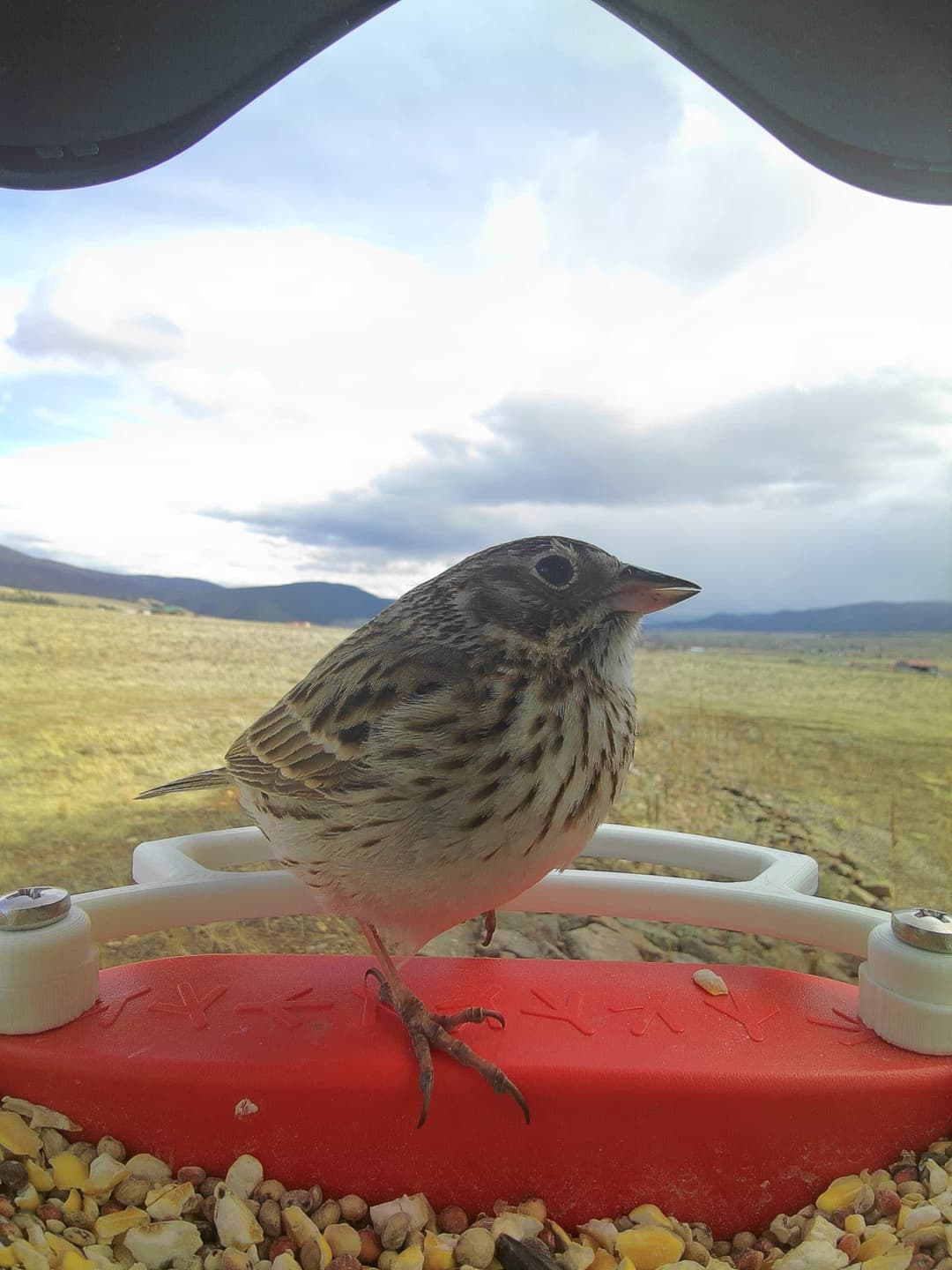
Lark Sparrows display a striking head pattern with a central crown stripe and chestnut cheek patches, while Vesper Sparrows have a less distinctive face with a pale eye ring. Vesper Sparrows also have white outer tail feathers and a streaky breast, in contrast to the bold face and plain breast with a central spot of the Lark Sparrow.
Breeding and nesting habits of the lark sparrow
Mating behaviors
During courtship, the male lark sparrow struts near the female with its bill pointed upward and tail fanned out to showcase the white corners. This display is intended to attract the female's attention and demonstrate fitness.
Nesting details
Both lark sparrow sexes participate in selecting the nest site; the male places twigs at potential locations while the female builds the nest. Nests can be on the ground near weed bases, in shrubs, low trees, or crevices in cliffs, and are often open cups of grass, weeds, twigs, lined with finer materials like grass, rootlets, and animal hair.
Eggs and chick-rearing
Lark sparrows lay eggs in the nests they build, which are carefully concealed for protection. Both parents are involved in incubating the eggs and feeding the chicks once they hatch. Creating a suitable garden habitat involves providing a mix of open ground and shrubby areas, ensuring a safe nesting environment.
What does a lark sparrow like to eat?
Insects
Seeds
Natural diet
The lark sparrow primarily feeds on seeds and insects. During winter, it relies heavily on seeds, including those from grasses, weeds, and waste grain. In summer, the bird's diet shifts to a higher intake of insects such as grasshoppers, beetles, and caterpillars, which provide essential nutrients. Young lark sparrows are primarily fed insects, supplemented with some grass seeds, to support their growth and development.
Bird feeders
While the provided information does not specifically address lark sparrows at bird feeders, they may be attracted to feeders that offer seeds similar to their natural preferences, such as millet or mixed seeds typically found in birdseed blends. They are less likely to focus heavily on feeders if other natural food sources are available.
Feeding the lark sparrow
Lark Sparrows are generally fond of different types of seeds. Their food preference includes the Bird Buddy seeds which have been expertly chosen for the season. They're likely to visit your yard if these seeds are available. Ensure that the feeder is stocked up with these seeds, not too high off the ground, as this bird species is often seen feeding low to the ground or on the ground itself.
Creating a lark sparrow-friendly environment
Make them feel welcome by creating areas in your yard with shrubs and small trees. These birds love areas abundant with low vegetation where they can easily forage for food and take cover. You can occasionally scatter seeds on the ground to further tempt them into your yard.
Encouraging lark sparrow sing-alongs
If you're interested in the melodic chirping of Lark Sparrows, you’ll be delighted to know that these birds are more apt to sing during the early morning hours. When setting up your feeding station, ensure that it is relatively quiet and undisturbed so that the sparrows can feel at ease and possibly burst into song while feeding.
Where can you find lark sparrows?

Primary habitat
Lark sparrows typically prefer open country with bushes, trees, pastures, farms, and roadsides. They generally favor nesting areas with open bare ground and taller plants, particularly in overgrazed pastures, sandy barrens, hedgerows near fallow fields, and brushy dry grasslands.
Additional range
In migration and winter, Lark sparrows inhabit similar areas to their primary environment. They can also be found in open weedy fields, sometimes including open pinyon-juniper woods.
Do they migrate?
The lark sparrow is a migratory bird that follows specific seasonal patterns. It migrates relatively late in the spring and early in the fall. During these migration periods, small numbers of lark sparrows appear along the Atlantic seaboard, primarily sticking to immediate coastal areas. In spring, the lark sparrow leaves its wintering grounds, which include the southern United States and parts of Mexico, traveling northward to its breeding territories in the central and western United States and southern Canada. The timing of this northward migration is typically later compared to other migratory species, as the birds wait for adequate environmental conditions and the availability of food. In fall, the migration reverses, with the birds again undertaking relatively late migration back to their southern wintering grounds. During this southward journey, some lark sparrows are observed along the Atlantic coastal areas, although their primary route does not heavily rely on this region. The Atlantic seaboard sightings primarily occur along the immediate coast, indicating a preference for this part of the landscape during migration. Overall, the lark sparrow's migratory behavior highlights a reliance on specific seasonal cues and geographic locations, ensuring successful relocation to suitable habitats for breeding and wintering.
What is the role of lark sparrows in nature and how to protect them?
Conservation status
The lark sparrow has declined or disappeared in some former nesting areas east of the Mississippi River, indicating potential regional vulnerability. However, it remains fairly common and widespread in the western United States. Its conservation status varies regionally: more vulnerable in the east but stable in western habitats. Key threats could include habitat loss and changes in land use. Conservation efforts should focus on habitat preservation and restoration in affected areas to ensure population stability, particularly in regions where declines have been noted.
Ecological role of lark sparrows
Its role in the ecosystem
The lark sparrow plays a crucial role in the ecosystem by controlling pests and aiding seed dispersal. The bird's diet mainly consists of seeds and insects. It feeds heavily on seeds during winters, contributing to seed dispersal and playing a role in the reproduction of many plants, including those of grasses, weeds, and grains. The ingestion and expulsion of undigested seed materials promote the growth of new plants in different locations. On the other hand, during the summer, lark sparrows consume many insects including grasshoppers, beetles, and caterpillars, acting as a natural pest control mechanism. This dietary habit helps in maintaining the balance of insect populations and prevents potential damage these pests can cause to vegetation. Furthermore, by feeding the young predominantly insects, lark sparrows also help control insect populations during breeding seasons. In terms of nesting, the bird's preference for diverse locations aids in the distribution of organic materials.
How to help protect lark sparrows
Preservation tips
Habitat preservation strategies
Contribute to the conservation of the Lark Sparrow by supporting efforts aimed at preserving their preferred habitats of open woodlands, fields, and grasslands. This could involve supporting land preservation initiatives, opposing deforestation, implementing sustainable farming methods and advocating for policies that respect biodiversity. Additionally, contribute to the restoration of degraded habitats by planting native grass and shrub species.
Community science initiatives
Participate in community science initiatives that help monitor and study Lark Sparrow populations. This might include entering bird observations into databases like eBird, conducting bird counts, or assisting with banding studies. These initiatives enhance our understanding of Lark Sparrow population trends and distribution, ultimately guiding effective conservation strategies. Spreading awareness in your community about the importance of these birds and their habitats can also be instrumental in their conservation.